Games for Speech Therapy a Late Talker Will Play

I am a parent sharing what worked at my house, not medical advice. For anything to do with your child's development or sensory needs, talk to your OT or doctor.
Some links here are affiliate links. If you buy through one, I may earn a small commission at no extra cost to you. As an Amazon Associate I earn from qualifying purchases. I only point to things I'd actually use with my own two.
Speech-building games are the backbone of informal speech therapy at home with a late talker, because a child who’s laughing will repeat a target word a hundred times without knowing it’s practice.
That genuine repetition inside play is what builds the bridge to first words, without the resistance that a formal drill session almost always brings.
I’m Nora Hayes, a former preschool aide and mom of a late talker, and below are 5 games I keep reaching for, what each game teaches, and the trick for turning almost any toy into speech practice without it feeling like work.
Why Play Beats Flashcards for a Late Talker
A quiet toddler does not need a drill. A late talker learns words the same way every kid does, by wanting something badly enough to ask for it, and play hands you that wanting on a plate.
Flashcards ask a kid to perform. Play asks a kid to want. When June was barely stringing two words together, she ignored every “say apple” card I held up, then begged “more, more, more” over a silly board game where she got to pop something. That begging is verbal practice. It just doesn’t feel like work.
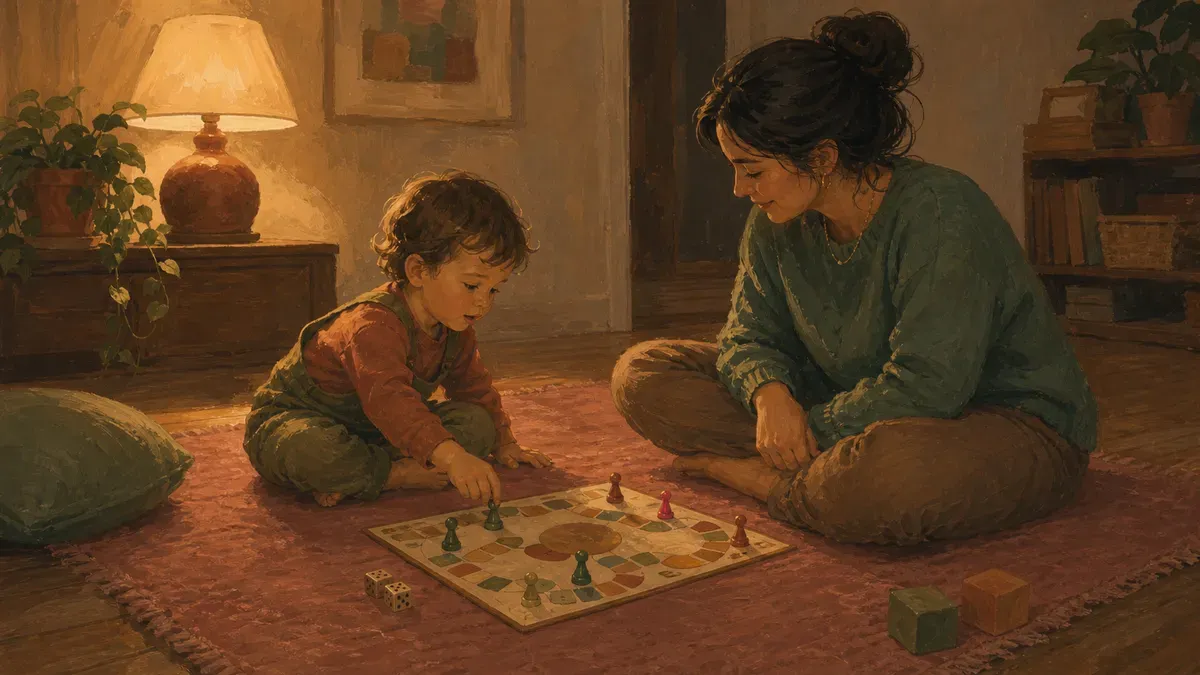
That’s the whole case for play-based learning. A game gives a kid a reason to talk and a hundred chances to repeat the same target words without anyone keeping score. You stack the deck with the vocabulary you want, then let the fun do the teaching.
Speech delay in toddlers can have a dozen causes, and a game won’t change any of them. But it will pull more words out of a reluctant talker in ten happy minutes than a pile of cards will in an hour of dread.
The best speech games don’t look like therapy at all, and that’s exactly why they work.
Still wondering when do babies start talking and what counts as behind? Start there. For more on building expressive language through play, browse our full library of communication and social skill resources.
How to Tell If Your Toddler Is a Late Talker
Before you pick a single game, it helps to know roughly where your kid stands. So here are the milestones worth watching, plus the one pattern that trips parents up most: the child who clearly gets everything but barely says a thing.
Milestones by Age, From 15 to 36 Months
Numbers calm a 2am brain, so let’s start there. The early speech and language milestones by age from the CDC’s Learn the Signs program put it plainly: by 15 months a toddler should try one or two words besides ‘mama’ or ‘dada’, and by 18 months, three or more words plus following a one-step direction without you pointing.
That’s a real spread. A 15 month old not talking at all is worth a note, but a 16 month old not talking much yet is often still inside the normal range, building comprehension before words pour out.
Keep watching the climb in expressive language and vocabulary:
- 18-20 months: a handful of words, growing fast. A 20 month old not talking and stuck under a dozen words deserves a closer look.
- By 24 months: roughly 50 words and the first two-word combos (“more milk”, “bye dada”) as sentence structure starts. A 2yr old not talking in pairs yet is the line many parents flag.
- By 36 months: short sentences strangers can mostly understand. A 3 year old speech delay shows up as missing this, and speech delay in 3 year olds is the most common reason families call someone.
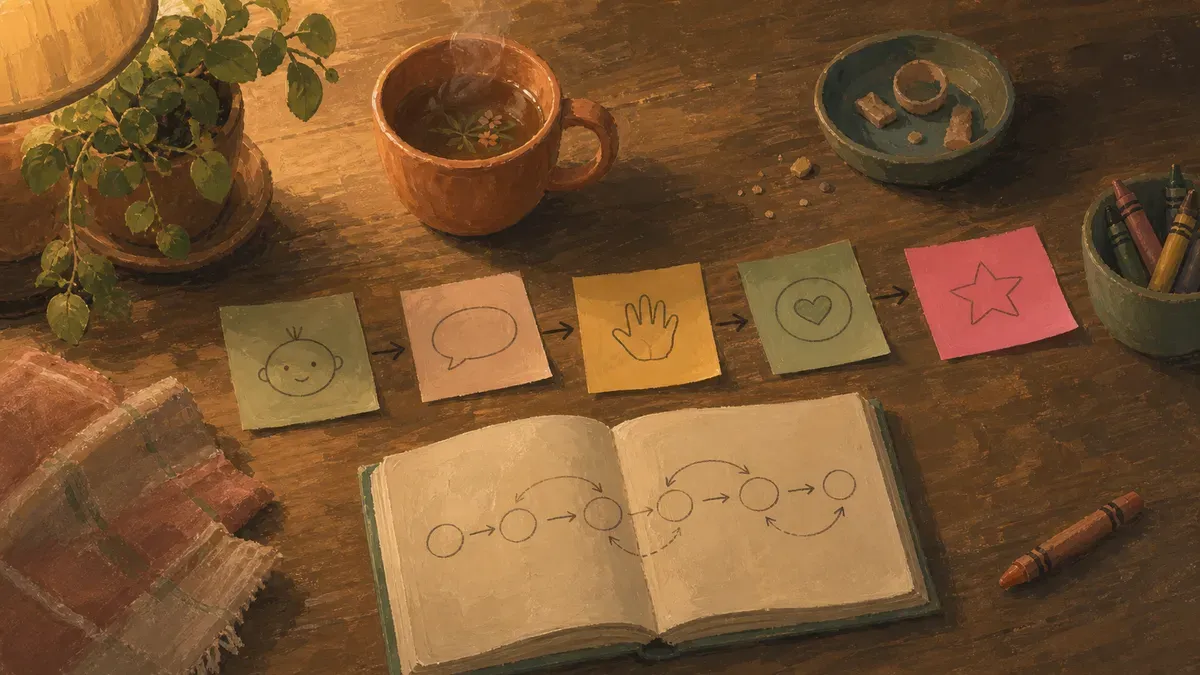
Speech delay in infants is harder to spot, but quiet babbling and little back-and-forth cooing are early threads worth pulling.
Understands Everything but Won’t Talk
Here’s the one that confuses everyone. A 2 year old not talking but understands you completely, following commands, pointing to the dog, fetching shoes, is showing a gap between receptive language (what they take in) and expressive language (what comes out).
That split matters. Understanding what causes each type of delay matters here: expressive language delay alone, with comprehension intact, tends to have a better outlook than a receptive language delay that pulls both sides down. I’ve watched plenty of kids in our living-room group sit firmly in the first camp.
Two other patterns show up a lot:
- Very active toddler not talking: too busy climbing the couch to slow down for words. Movement alone isn’t a warning sign.
- Einstein syndrome: a term Thomas Sowell used (you’ll see it spelled einstein syndrom too) for analytical kids whose speech stretches to age three or four before catching up.
Speech-Building Games Ranked by What They Teach
Not every game pulls the same lever. Some get a barely-verbal kid taking turns, some stretch single words into phrases, and a few are screen-based sound drills you use in small doses. Here’s how I sort them.
Best Games for First Words and Turn-Taking
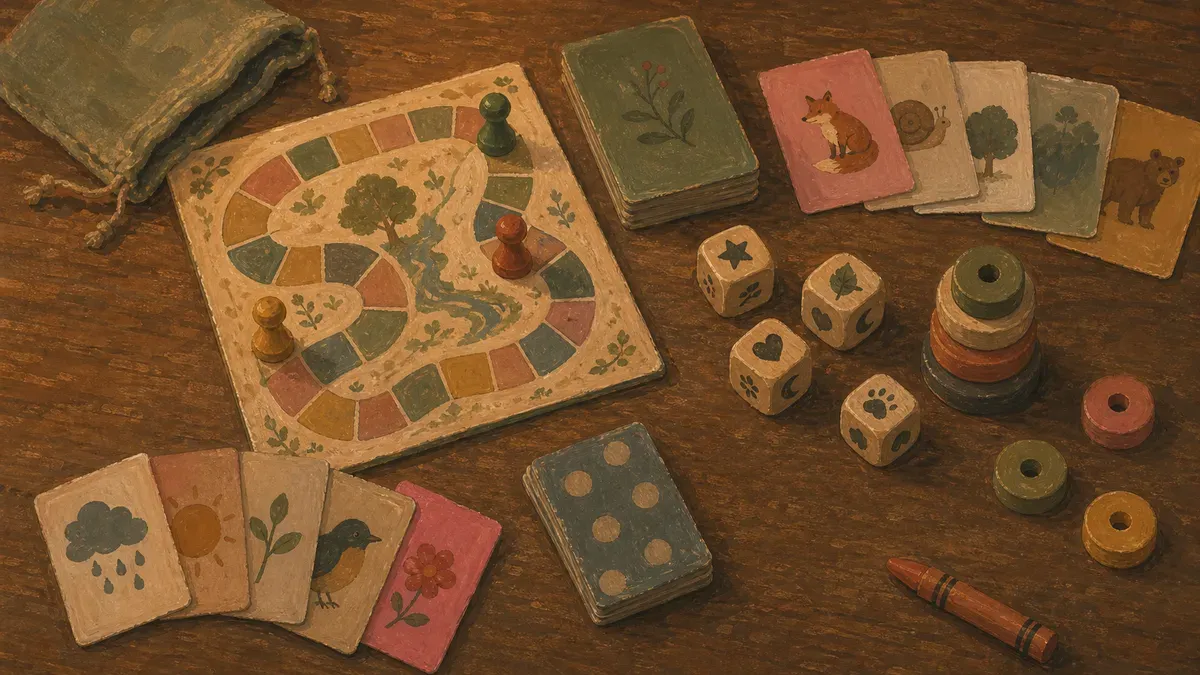
Start here if your kid says next to nothing. The goal isn’t sentences, it’s getting them to want a turn and pop out one word to get it. Zingo, Pop the Pig, and Pancake Pile-Up all do this without asking much language back.
Here’s what each one does:
- Zingo: slide the dispenser, a tile pops out, your kid grabs the matching picture and names it when they’re ready. Fast repetition, no pressure.
- Pop the Pig: pure cause-and-effect joy. It works especially well for 2-year-olds with speech delays who shut down the moment you ask them to talk, and the 1,000-plus parents who reviewed it clearly hit the same wall I did.
- Pancake Pile-Up: gentle turn-taking with a built-in reason to request. Target words: “pancake,” “go,” “my turn.” It’s an Amazon’s Choice pick sitting on more than 4,000 reviews, and my living-room group keeps dragging it back out.
At that stage I kept it dead simple: one word per flip. Verbal practice hides inside the fun, and that’s the whole point.
Each of these adds a new layer: color naming, asking, storytelling.
Here’s how these three phrase-builders compare at a glance:
| Game | What it grows | Best starting age | Parents’ rating |
|---|---|---|---|
| Candy Land | Color words, short sentences | 3+ | 4.8★, 37,000+ reviews |
| Go Fish | Requesting, WH questions | 4+ | 4.8★, 2,800+ reviews |
| Story Cubes | Describing, longer sentences | 6+ | 4.7★, 1,000+ reviews |
Candy Land wins on repetition for a toddler with delayed speech. Every color stop becomes a naming moment, and the short vocabulary stays predictable enough to actually stick.
Best Games for Building Phrases and Vocabulary
Once single words come easy, you want two-word combos and richer vocabulary. These three games quietly push describing and WH questions.
- Candy Land: “Red one,” “go up,” “my turn again.” The board keeps the vocabulary short and predictable enough to actually stick.
- Go Fish: Built for asking. “Do you have a fish?” becomes a script your kid borrows and reuses until it’s theirs.
- Rory’s Story Cubes: Roll the picture dice, describe what you see, string it into a tiny story. For older late talkers it’s a sentence-structure workout dressed up as silliness.
If I had to grab one for a kid stuck on single words, it’s Candy Land, an Amazon’s Choice with tens of thousands of parents behind it. The phrases are short, repeated, and built into every move.
Best Online and Screen-Free Sound Practice
For articulation and tricky speech sounds, two digital tools come up over and over:
- Ultimate SLP: turns drills into something a kid will actually sit through, with activities you can fold into normal moments using ultimate slp ideas like the breakfast routine.
- Pink Cat Games: auditory feedback and sound repetition on tap, especially useful for teletherapy sessions.
Now the honest part. Screens and speech delay are tangled together. A study presented at a 2017 pediatrics meeting, research on screen time and toddler language development, found each extra 30 minutes of handheld screen time a day came with a 49% higher risk of expressive speech delay.
So I use these as a side dish, not the meal. A few minutes of sound practice, then back to the table for hands-on play. Online therapy games and screen-based speech games earn their spot, but they don’t replace the messy, face-to-face stuff.
Turning Any Game Into Speech Practice at Home
The game is just the excuse. What pulls words out is what you do while you play, so here are the parent moves I lean on at the table, plus a low-pressure trick for the kid who has nothing to say yet.
Parent Moves That Pull Out Words
You do not need a degree to do this. The trick is to slow down and leave a gap.
When June reaches for a card, I hold it, look at her, and wait. That pause feels forever, but the silence is the invitation. Cutting the speech latency, the lag before a kid produces a word, often just means resisting the urge to fill it for them.
You say the target words once, clearly, then stop. Not “can you say more please?”, just “more.” Then narrate the play out loud like a sports announcer: “red. you got red. go.” Short, repeated, no quiz.

This is the heart of interactive activities for expressive language delay or disorder, and it is the part that moves the needle. Parent training that shifts how you respond to your child has been shown to improve speech and language outcomes, per research on parent-led language modeling. Your verbal practice at the table is doing real work.
Pairing Games With Communication Cards
For a kid who isn’t talking yet, asking them to speak during a game is asking for a meltdown. Give them another door instead.
Drop a few communication cards next to the board, a picture for “more,” “my turn,” “go,” “all done.” Now they can request and label by pointing or handing you a card, building expressive language and vocabulary before a single word arrives. The card is a bridge, not a crutch.
This works. A PubMed study on AAC with late talkers found each child’s output jumped more than 600% once a picture-based communication device was in play, with kids producing new words and even early combinations. Start small: pick the language concepts that come up every turn and make a card for each. If you want a ready set, here is 12 communication cards every nonverbal toddler needs to print and laminate tonight.
When to Stop Waiting and Call an SLP
Games buy you time and reps. They don’t replace a professional when something feels off, and you’re allowed to ask for help before you’re sure.
I waited too long with Eli, telling myself he’d catch up. The thing nobody told me: an evaluation costs you nothing but an afternoon, and you don’t need a doctor’s permission to start. Per early intervention referral guidance for speech delay, families can self-refer to their local early intervention program, and ASHA notes that between 40% and 50% of kids getting those IDEA services are there for speech and language.
Call when your gut says call. A few honest signals:
- Comprehension lags too, not just talking (they don’t follow simple directions)
- Words show up, then disappear
- Big frustration around not being understood
- Almost no gestures, pointing, or eye contact to connect
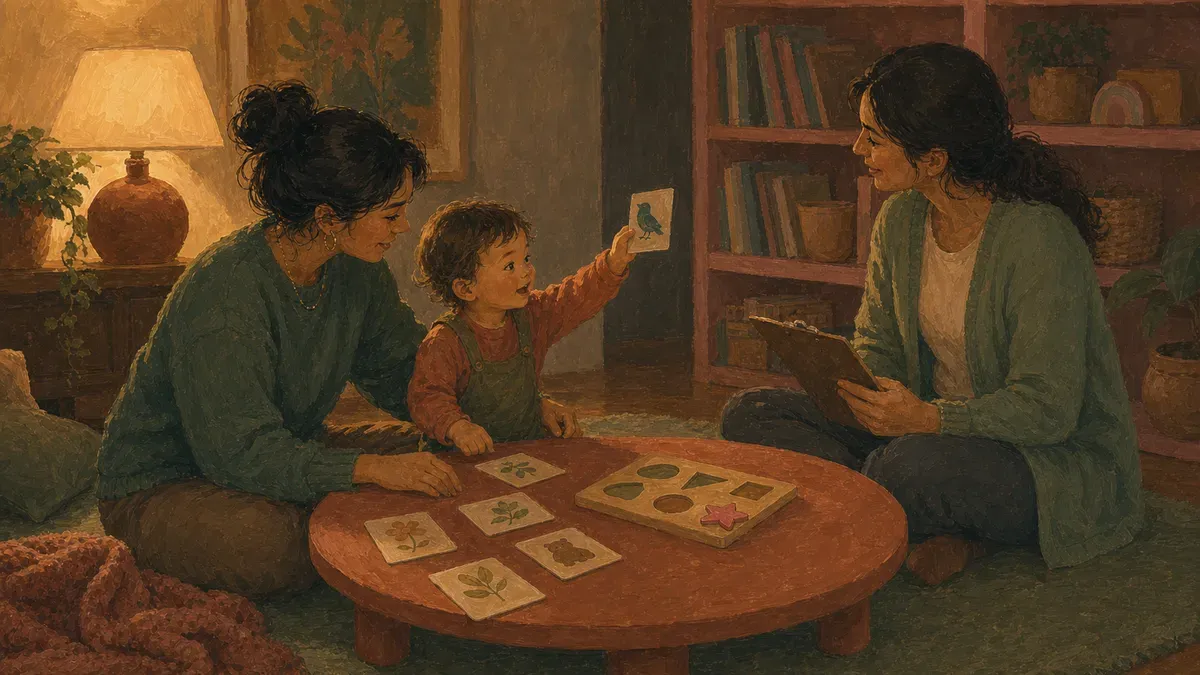
A speech-language pathologist won’t judge your living room. They’ll watch your kid play, set a few realistic language goals, and turn therapy sessions into more of the play you’re already doing. Keep modeling words and supporting communication social skills at home, lean on AAC devices if words are slow, and let the pro carry the worry for a bit.
Found this useful? Save it for the next rough afternoon.
Questions parents ask me about this
What games help a late talker build speech skills?
Turn-taking games are the best starting point because they create natural pauses where a child has to communicate to keep playing. Look for games that repeat the same words over and over, name familiar objects, or build simple phrases, since late talkers need lots of low-pressure reps of the same word before it sticks. Board games, card games, and storytelling games all work well when you slow down, pause expectantly, and model one word at a time. The simpler the game, the more room there is for actual talking.
Is my 2 year old not talking a sign of a speech delay or just a late bloomer?
At 24 months, most children have around 50 words and are starting to put two words together. If your two-year-old is well below that, or not combining words at all, that is worth flagging with an SLP, not waiting out. The key question is comprehension: a child who understands what you say but is not yet talking has a better outlook than one who is missing both. Either way, an evaluation is free through early intervention, and getting one now does not commit you to anything.
What causes speech delay in toddlers?
Speech delay has many causes, and most of them have nothing to do with intelligence. Hearing differences, differences in how the brain processes language, family history of late talking, and limited opportunity for back-and-forth conversation are all common threads. Some late talkers catch up on their own; others need targeted support to get there. Because the causes vary so much, the most useful thing you can do is get an evaluation rather than try to guess the reason.
Should I be worried about a 3 year old speech delay?
A three-year-old who is not yet speaking in short sentences is the most common trigger for a first SLP referral, and for good reason: by 36 months, most children are stringing words into simple phrases. Worry is not the right frame, but action is. At this age, early intervention services shift to school-based evaluation, and your district is required to provide one at no cost. The sooner you get the evaluation, the sooner you know what you are working with.
Can too much screen time cause speech delay?
Research has found an association between heavy screen exposure and expressive language delays in toddlers. The concern is not screens themselves but what they replace: face-to-face back-and-forth conversation is how early language develops, and passive viewing does not provide it. Reducing screen time and filling those minutes with interactive play, books, and conversation is the most practical thing a parent can do at home. This is one of the reasons that shared play and games have an outsized effect on early language.
How is expressive language delay different from receptive language delay?
Expressive language is what a child can say; receptive language is what they understand. A child with an expressive-only delay follows directions, points to things when named, and clearly gets what is going on, but their words lag behind. Receptive delay means the comprehension piece is also behind, which typically calls for more intensive support. If your toddler understands but stays quiet, that expressive-only gap is a better sign than one where both sides are delayed.
What is Einstein syndrome in late-talking children?
Einstein syndrome is a term coined by writer Thomas Sowell to describe a small group of bright children who are very late to talk but catch up fully, usually by ages three to four, without intervention. The pattern typically involves strong nonverbal problem-solving, solid comprehension, and a family history of late talking. It is real, but it is also rare, and it cannot be confirmed in advance. Using it as a reason to skip an evaluation is a gamble worth reconsidering, since an evaluation simply tells you where your child stands.
How much screen-free speech practice does a late talker need each day?
There is no magic number of minutes, but consistency matters more than duration. Short, frequent bursts of interactive play, say ten to fifteen minutes of focused back-and-forth conversation or a game together, add up faster than one long session per day. The goal is repeated exposure to target words in a low-pressure context, not drilling. Every book read aloud, every game played, and every narrated routine counts toward that total.
Written by
Nora Hayes
Mom of two and a former preschool aide. I share the screen-free sensory play and calm-down ideas I test at my own kitchen table, plus what the moms in my little meet-up swear by. A parent passing on what works, not a doctor or a therapist.
More about NoraKeep going
All Communication & AAC-
 Communication & AAC
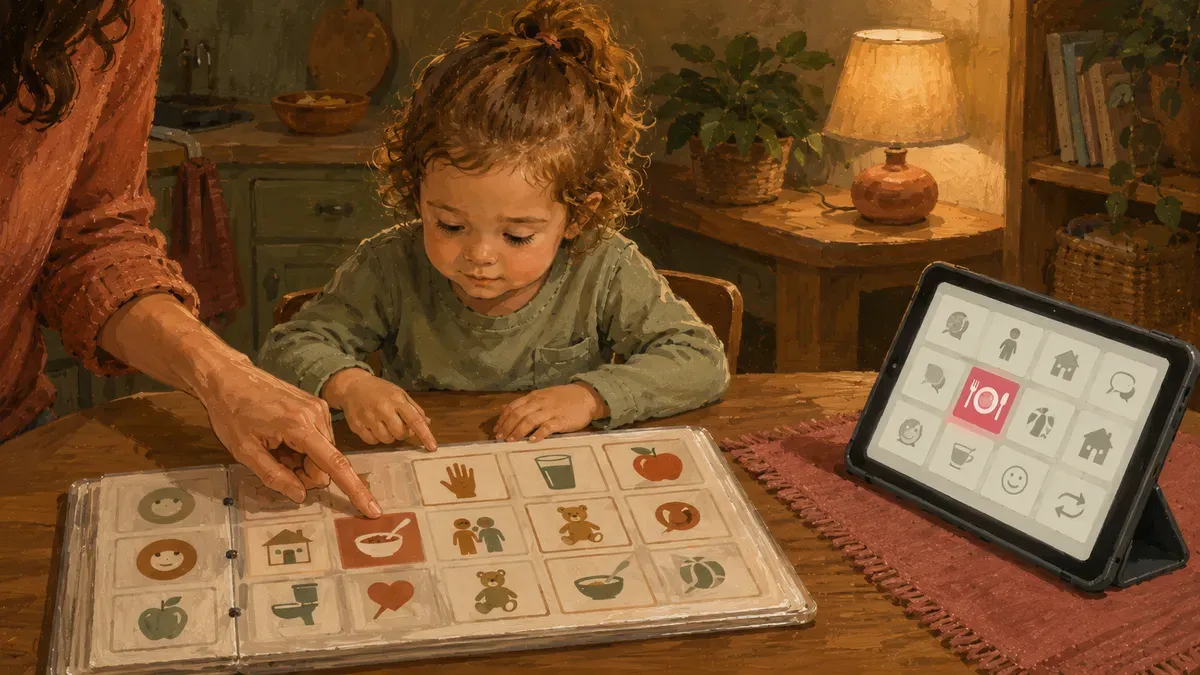
AAC Devices vs. PECS vs. Cards: Which Comes First
AAC devices, PECS, or cards first? See what each does, what it costs, and how to pick the right starting point for your child.
-
 Communication & AAC
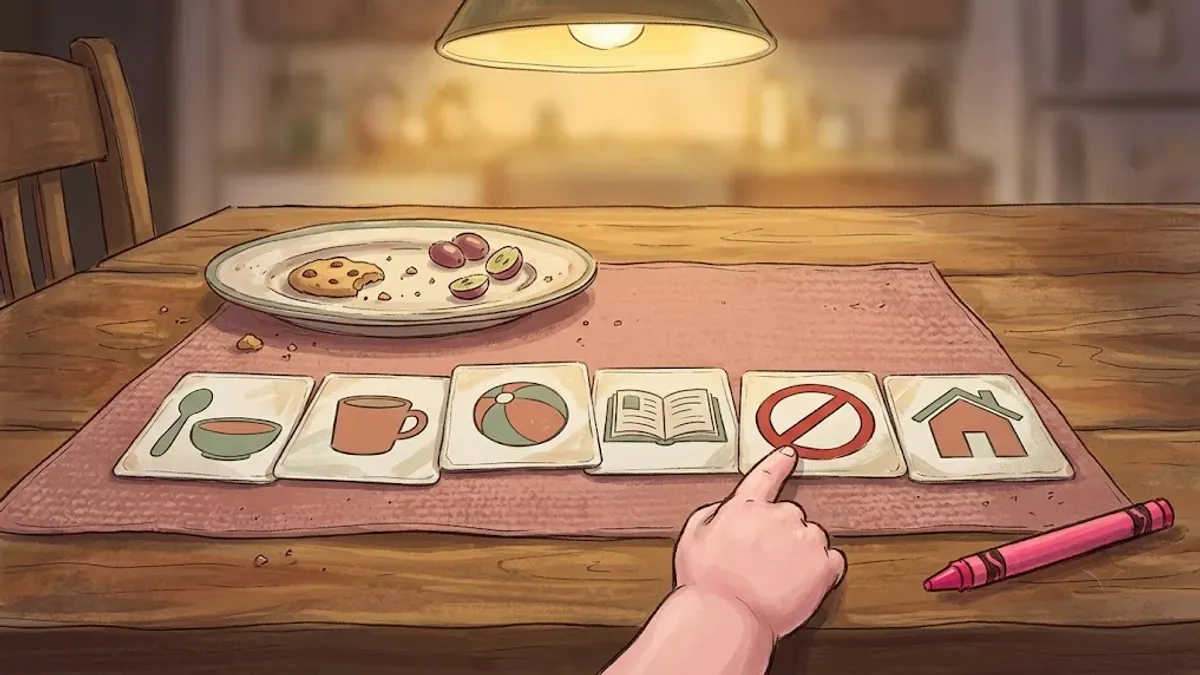
All Done PECS: 6 First-Word Cards to Cut Meltdowns
The all done PECS card is often a toddler's first word, and one of 6 first-word cards that halved our meltdowns. Print your own set free.
-
 Communication & AAC
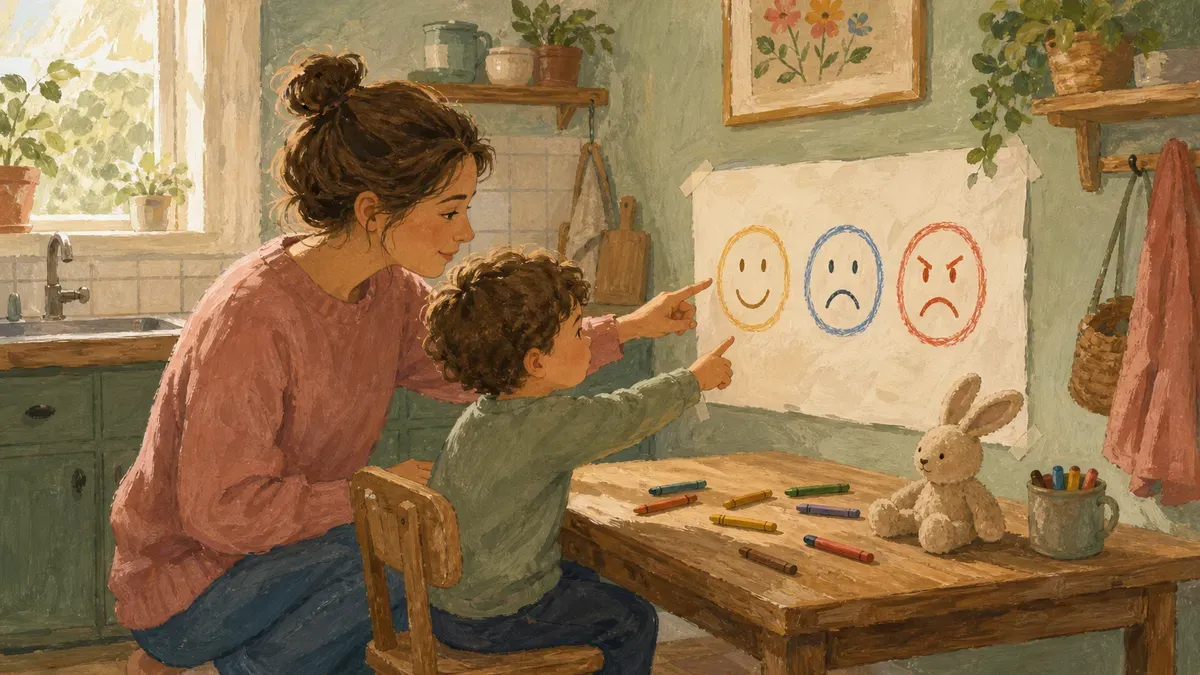
Second Step at Home: Teach Kids Big Feelings Daily
Second Step skills don't need a classroom. Turn 15 everyday moments at home into social-emotional learning that sticks. Start tonight at dinner.
-
 Communication & AAC
Nonverbal and Verbal: 12 Toddler Communication Cards
Your nonverbal and verbal toddler can point before they speak. See the 12 communication cards every fridge needs to cut meltdowns. Start today.