Ultimate SLP Practice Hidden in Daily Routines

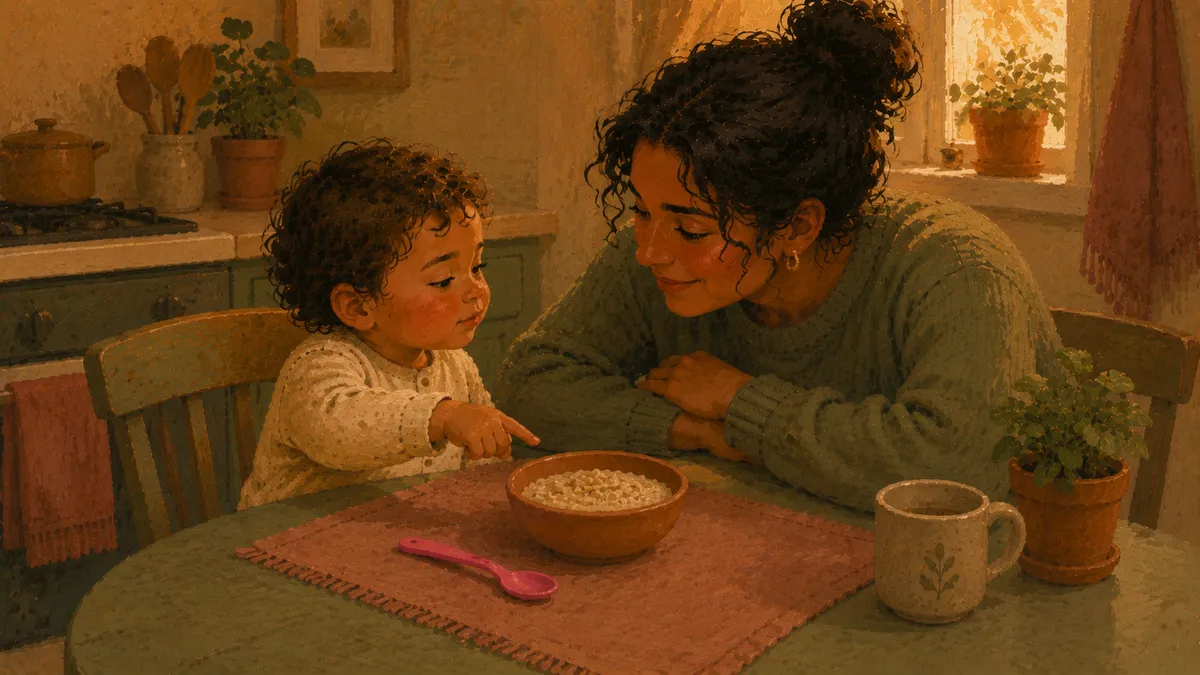
I am a parent sharing what worked at my house, not medical advice. For anything to do with your child's development or sensory needs, talk to your OT or doctor.
You can sneak real speech therapy activities into breakfast, bath time, and car rides without adding a single extra step to your day. Repetition inside familiar routines is the ultimate language-building move for a kid still finding words, because the context makes each word stick. I’m Nora Hayes, a former preschool aide raising an autistic seven-year-old, and this guide covers the exact routine moves an SLP would use, plus adjustments by age and for kids who aren’t talking yet.
The plan in brief:
- Narrate every breakfast step out loud and pause 5 seconds for your child to fill the word.
- Name body parts and pour-and-splash actions during bath, then wait for imitation.
- Turn the car into a labeling game: point, name, repeat the word three times per trip.
The 3-Step Routine Method That Replaces Flashcards
Here is the whole thing in one breath: narrate what your kid is doing, pause five seconds, then say the target word three times. That is the method. Everything below is just how to run those three speech exercises without it feeling like homework.
- Run a live commentary on what they are doing, in two- or three-word phrases.
- After each phrase, go quiet for five full seconds and let them try.
- Say the word you want them to learn at least three times inside one real exchange.

Narrate the moment as it happens
The first move is parallel talk, which is a fancy term for describing what your child is doing while they do it, out loud, in short sentences. They grab the spoon, you say “spoon.” They bang it on the tray, you say “bang, bang.” That is it.
The reason this beats drilling words on a card is that the word lands on a live action, so it actually sticks. Research on parent-led language modeling from ASHA found that parallel talk and similar indirect language techniques showed large effects on how many words kids use and how clearly they say them.
- Keep your phrase length one step above what they can already say, so a single-word kid gets a two-word model.
- Short, concrete phrases give them the exact words they will reach for next.
- One or two words beats a full sentence every time.
Narrate at their level plus one word, never a whole paragraph.
Pause and wait for the word
Now the part everyone skips. After you say a phrase, stop talking. Hold a silent beat, count to five in your head, and look at your kid like you are waiting for them to finish your sentence. That is expectant waiting, and it does the heavy lifting.
That pause feels eternal. You will want to fill it. Don’t. The silence is the invitation, and most kids need those few seconds to load up an attempt before the word comes out.
When you give kids more wait time, their responses come faster and better, and they stay more focused and on-task instead of checking out.
- Offer a simple prompt like “you want…”, then go quiet; a reach, a point, or a grunt counts as a real attempt.
- Understanding almost always shows up before speech does, so credit any sign they got the message.
- Supply the word only after the silence, so they get a clean model to copy next time.
Repeat the target word three times
Say it once and it floats right past. The fix is repetition, and the easy rule is to land your target word at least three times in one little exchange.
Watch how natural this can sound. “Banana. You want the banana? Here is your banana.” Three hits, one breakfast, zero drilling.
- Wrap the repeats inside real sentences so it never sounds like a drill.
- Looping the same book beats a fresh stack every night, because the word only sticks when it keeps showing up.
Language Learning journal research found that 3-year-olds learned and remembered new words a week later only when the same storybooks were read again and again, while kids who heard nine different books retained nothing. Boring for you, gold for them.
That is how vocabulary expansion actually happens at home, one word repeated until it is theirs. Articulation, the crisp pronunciation, sharpens later off the same repeated input. If you want this baked into ready-made play, these games for speech therapy run on the exact same loop.
Narrate, pause, repeat. Three speech therapy techniques, no cards, no prep. Run the loop tomorrow at breakfast and you will feel how fast it turns into second nature.
Breakfast-Table Speech Activities
Breakfast is the easiest place to start because the kid is already sitting, already hungry, and already wanting something from you. Here are three speech therapy tips for kids built into the meal: sparking a request, naming what is on the plate, and using the chewing they are doing anyway.
- Two-choice pause: give the kid a reason to reach for a word.
- Plate narration: say each word as the thing happens.
- Chew warm-up: tough textures wake up the jaw before talking.
Offer two choices to spark requests
Hold up two things and wait. Banana or yogurt. The blue cup or the green one. Cheerios or toast. You hold both up at the kid’s eye level and you say nothing for a beat.
That silence is the whole trick. A kid who could happily grunt and point now has a reason to reach for a word, because there are two options and only one is coming. Requesting is one of the first useful jobs language does, and the table hands it to you for free.
Take whatever they give. A point counts. “Nana” counts. A look at the yogurt counts. Then you say the full word back, hand it over, and you have just modeled the target. That give-and-take is where real communication skills grow, the kind of imitation that builds expressive language one breakfast at a time.
On the days you have nothing left, this is the one: two choices, one quiet second, hand it over.
If your kid asks with pictures instead, the same setup works on a board. We lean on the all done PECS routine when June wants to signal she is finished, and the choosing happens the same way.
Label textures, temperatures, and actions

Now narrate the plate. Breakfast is a tiny science lab and you have a built-in word bank sitting right there.
- Hot oatmeal
- Cold milk
- Crunchy toast
- Sticky jam Pour the cereal, stir the yogurt, squeeze the honey. Say the word as the thing happens, short and clear, then let your kid feel it and try it back. That is what language experience looks like in practice: words tied to something real your child just touched, tasted, or poured.
Food words matter more than they look. ASHA’s milestone data shows that by 19 to 24 months, kids should use and understand at least 50 different words for food, toys, animals, and body parts, so the bowl in front of you is loaded with the exact targets a toddler is supposed to be building.
You can stretch it further by playing with sounds. Try “crunch, crunch, crunch” on the toast, or “pop” on a blueberry. Hearing the same beginning sounds over and over is early phonological awareness, and at breakfast it just sounds like you are being silly.
Use chewing and blowing for oral motor work
Clearer speech runs on the same muscles your kid uses to eat, so let the meal do that work for you. No drills, no straws, no fancy kit.
Hard textures are the ones to reach for:
- Crusty toast
- A crisp apple slice
- A chewy bagel end
Working a tough bite around the mouth wakes up the jaw and tongue that sit behind cleaner sounds. Blowing on a too-hot bite of oatmeal does a little of the same, and it earns you a giggle.
Here is the honest part, because I would rather you skip the gimmicks. A systematic evidence review in the American Journal of Speech-Language Pathology found no evidence that nonspeech oral motor exercises, the blowing and sucking and resistance drills sold as speech fixes, actually treat a speech delay. The thing that builds clearer articulation is practicing real talking. So chew the toast, blow on the oatmeal, then get right back to naming it. The food is the warm-up; the words are the work.
Bath Time and Car Ride Language Wins
Breakfast isn’t the only slot hiding free practice. The tub and the back seat are two more spots where your kid is stuck in one place, hands busy or eyes forward, and that captive moment is where words land.
- In the tub: say each body part as you wash it, then wait for a copy.
- During bath songs: pick one with a gap at the end and hold the pause.
- On the road: narrate what passes the window and play I spy when they’re ready.
Name body parts and bath actions
Bath time is warm, slow, and the same every night, which is exactly why it’s gold for speech therapy for toddlers at home. The water relaxes a wound-up kid, and a relaxed kid copies you more.
So narrate the wash like a play-by-play. “Scrub the knees. Pour on the head. Splash, splash!” Touch the body part as you name it, because pairing the word with the spot you’re rubbing builds receptive language fast, the understanding comes before the saying.
Keep it to one word they can grab onto. Knees. Toes. Belly. When you hand over the cup, say “pour” and watch for it to come back at you, even as a grunt. That copying is imitation, and it’s the whole engine of vocabulary expansion.

The nice part is you’re not adding a single thing to your night. You’re already washing the kid. You’re just talking through it on purpose.
Sing and repeat predictable songs
If naming feels like too much some nights, sing instead. Same song, every bath, until it gets predictable, because that repetition is the point, not a bug.
Pick something with a clear last word and hold it. “Twinkle twinkle little…” then stop. Let the gap hang. A kid who knows the tune will fling “star” into that hole before they’d ever say it cold, and that held beat does the inviting for you.
The rhythm itself may be quietly doing work, too. A peer-reviewed study tracked in research on rhyme and early vocabulary found that how strongly babies responded to repeated rhymes in songs at 10.5 months lined up with how many words they were producing by 18 months.
- Rhyme and repetition aren’t just cute: they prime the brain to play with sounds, building the phonological awareness that words are made of pieces.
It doesn’t have to be a real song. Make up a three-word jingle about rinsing hair. The sillier and more repeated, the better it sticks, which is great news for any speech therapy toddler routine you have to run on no sleep.
Play I-spy and labeling games in the car
The car is the easiest classroom you own. Your kid is buckled, facing forward, with nothing to do, and that boredom is your opening for at home speech therapy that costs zero setup.
Narrate what rolls past. “Big red truck! Dog. There’s a dog.” Say the word, then say it again, modeling language the way you want it to come back. You’re not quizzing. You’re just labeling the world out loud while you drive.
- Once they’re into it, make it a game: “I spy something yellow,” then point at the bus and name it together.
Pointing and looking are huge here, the same gesture-then-word path that shows up early; if you’re tracking those first signals, our guide to when do babies start talking breaks down what to watch for. Either way, every point your kid makes is a try worth catching and naming back, and that’s the heart of in home speech therapy for children when you have no materials at all.
This one stretches expressive language because there’s no toy, no screen, nothing but words to fill the ride. A captive kid and a long red light builds more communication skills.
None of these need a plan. Wash, sing, drive, talk. The routine’s already happening, so let the words ride along.
Tailoring Routines by Age and to Non-Verbal Kids
The same wash-sing-drive-talk moves don’t land the same way on an 18-month-old and a chatty three-year-old, and they look different again for a kid who isn’t using words yet. Here’s how to aim the routine at the child in front of you, and how to tell when home practice has hit its ceiling.
What to expect at 18 months versus 3 years
Know the target and you’ll stop over-coaching a kid who’s right on track. For the under-twos, you’re building a word bank one label at a time. By the older end of that range, the bar lifts toward short combinations.
If you’re doing speech therapy for an 18 months old, the goal isn’t sentences. It’s single words showing up steadily, plus pointing, waving, and reaching to tell you things. New words should keep trickling in month over month. According to ASHA’s speech and language developmental milestones by age, children aged 19 to 24 months should use and understand at least 50 different words and start combining two of them, like “more water.”
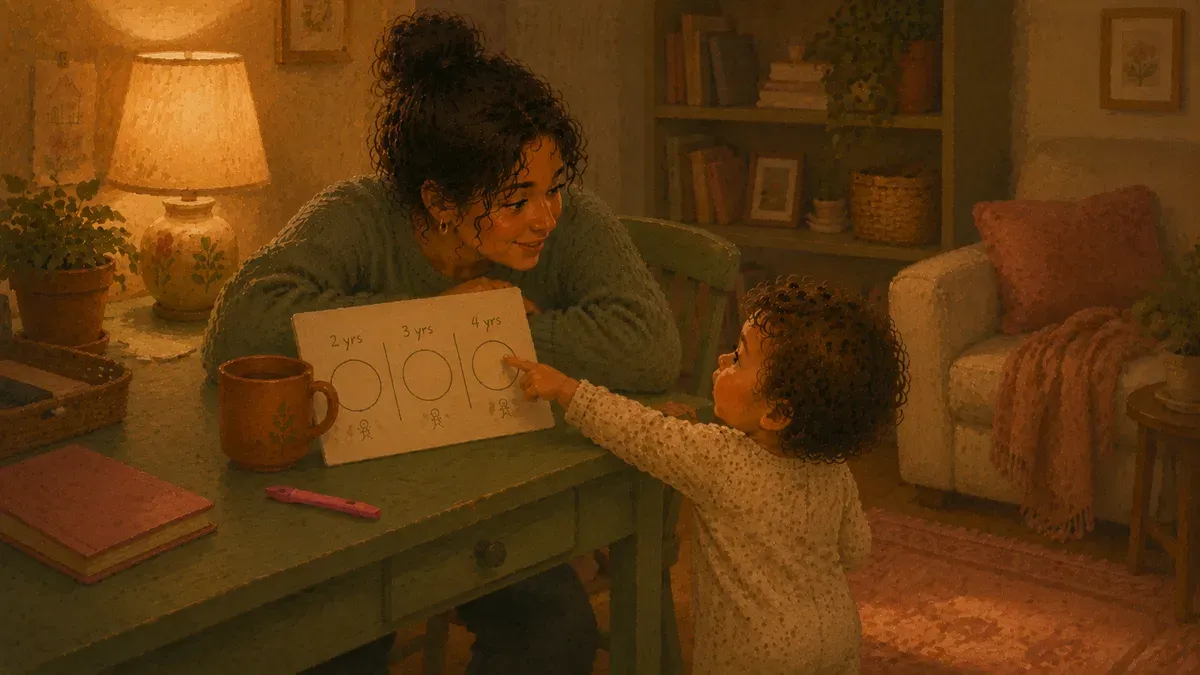
A three-year-old plays a different game. Speech therapy for a 3 year old leans on stringing words together and being understood by people outside the family. ASHA notes that by ages three to four, a child’s speech should be clear to most listeners, with sounds like t, k, g, f, and the -ing ending falling into place.
So at breakfast, an 18-month-old gets “banana” said three times and a long pause to fill. A late talker the same age who’s stuck on a handful of words for months, with few gestures, is a different story. That stall is exactly the flag for early intervention language therapy, and early intervention speech and language therapy works best before the gap widens, not after.
Adapting activities for non-verbal and autistic children
A kid who isn’t talking yet is still communicating, and the routine still works. You’re just widening what counts as a word. Speech therapy autism nonverbal practice means pairing your spoken model with a second channel the child can actually use right now.
Three easy swaps inside the moves you’re already doing:
- Pair a sign with the word. Say “more” while you make the sign, every single time, so sign language and speech ride together at the table.
- Hand over a picture or button to make the request. Let them tap “all done” to leave the tub instead of waiting on the spoken word.
- Honor any try as the answer, then model the spoken version back warmly.
The routine angle is well supported: a systematic review of AAC interventions for autistic children found that time delay and prompting built into specific daily routines are the methods most likely to show moderate-to-large effects, and that aided AAC teaches more than just requesting things. If you’re weighing your options, our guide on choosing between AAC devices and cards walks through what fits which kid.
For a child with a motor-planning piece like childhood apraxia of speech, lean even harder on that second channel while the mouth catches up, and ask the OT or SLP what to model. You’re protecting communication skills today, not waiting on perfect speech.
When daily routines signal a deeper speech delay
Home practice is powerful, and it has a ceiling. The honest tell is whether the child responds to it. A late talker usually does. New words trickle in, attempts climb, the routines slowly pay off over weeks.
What doesn’t budge is the signal to call in a pro. ASHA’s guidance on late language emergence points to the 18-to-30-month window and flags three patterns worth acting on:
- No new words coming in month to month
- Few or no gestures (pointing, waving, reaching)
- Weak understanding of what you say
Those warrant a referral, not another season of watchful waiting.
Getting on the books early matters more than people think. A 2000 PubMed study of 122 language-delayed infants found that by age three, 85% of the untreated group still showed a delay versus only 5% of those who got early help, a margin that makes a referral worth the call.
The right treatment path for a speech delay isn’t a verdict on your parenting or your kitchen-table work.
Therapy for a speech delay just adds a trained set of hands. For more on building communication into everyday play, browse our full communication and social skills hub, and trust your gut: you know your kid better than any chart does.
Tracking Progress and Knowing When to Get Help
You cannot tell if the breakfast-table stuff is working unless you write some of it down, and you cannot stay motivated if writing it down feels like homework. So keep the tracking dead simple, keep your practice kind, and learn the few signs that mean it is time to call in help.
Simple ways to track new words at home
Forget the developmental checklist app that pings you with anxiety. Keep one note on your phone, titled with your kid’s name, and add a word the day you first hear it. “Mo” for more counts. So does a sign, a sound effect, a consistent gesture. You’re tracking expressive language as it actually shows up, not as a clinic would score it.
The photo log is even lazier, and I love it for that:
- Once a week, record a ten-second video of an ordinary moment: snack time, bath, the car seat.
- No performance required. You’re catching real engagement so future-you has something to compare against.

Month three, you scroll back and hear a kid who used to point now say the word. That’s the payoff. Watching vocabulary expansion in your own kid’s voice carries you through the flat weeks far better than any chart ever could, because the proof is right there in your hand.
Do’s and don’ts of parent-led practice
Most parent coaching comes down to one swap: stop testing, start narrating. The fastest way to shut a kid down is to point at the dog and say “what’s that? what’s that? say dog.” That’s a quiz, and a tired toddler will simply walk away.
Here’s what helps versus what backfires:
- Do keep sessions short. Five real minutes beats a forced twenty.
- Do follow their lead. If they’re obsessed with the truck, talk trucks.
- Do model the word back warmly when they try, no test attached.
- Don’t correct harshly. “No, it’s spoon” stings; just say it right.
- Don’t demand a performance for grandma on the phone.
- Don’t load the most pressure onto the one talking moment of the day.
The goal is more turns and more joy, never a right answer on command.
When modeling language stays low-stakes, kids talk more, not less. Real engagement does the heavy lifting here. The minute it tips into a flashcard drill, you’ve lost the room, and you’ve undone the whole reason for building this into ordinary life.
When to bring in an SLP or telehealth
Home practice helps a lot of late talkers. When it doesn’t, that’s information, not failure. A speech-language pathologist exists for exactly this gap.
Loop one in when any of these applies:
- Words have stalled for months despite steady home practice
- Eye contact or back-and-forth is almost absent
- Your gut keeps nagging you about it
Trust the nag. A consult costs nothing but an hour, and most pediatricians can hand you speech language pathologist resources or an early intervention referral the same day.
Getting there is easier than it used to be. Speech therapy online has gone mainstream, and remote speech solutions are backed by solid research. A systematic review of telehealth speech and language intervention found no significant difference from in-person care on standardized articulation tests, with 73.68% of telehealth participants meeting or beating their goals after six sessions. For more on weaving these wins into daily play, see our communication social skills hub.
- The SLP coaches you on your couch, between naps
- No waiting-room meltdown required
- Sessions fit around your family’s actual day
Whether you ever book a session or not, guidance on early intervention services is worth a read so you know what’s out there. The earlier you ask, the more options you have, and asking is never the wrong move.
Found this useful? Save it for the next rough afternoon.
Questions parents ask me about this
What speech therapy activities can I do at home every day?
The most effective ones are already built into your day: narrate what you're doing at breakfast, pause five seconds to let your child try, and model the target word back warmly whether they got it or not. Bath time, car rides, and the dinner table are the highest-yield slots because they repeat every single day with no setup.
How much daily speech practice does a toddler actually need?
Short and frequent beats long and formal. A few minutes of intentional conversation during meals or bath time is enough to build real momentum. The goal is more back-and-forth turns across the day, not a dedicated practice session that stresses everyone out.
Can I find free or digital SLP activities to use at home?
Yes. Many speech-language pathologist websites, university extension programs, and family-resource centers offer free printables and activity guides. Telehealth SLP services have also expanded, and many coaches provide parent handouts as part of sessions, so even one appointment can give you a full activity toolkit to use at home between visits.
Are there Halloween or seasonal speech therapy activities for routines?
Any seasonal theme works well because it refreshes your vocabulary set without changing the method. Name the pumpkins, describe the textures of costumes, set up a two-choice request during pretend play. The routine stays the same: narrate, pause, model. The seasonal words are just a fresh layer on top.
How do I do speech therapy for an 18 month old who isn't talking?
At 18 months, single words plus gestures are the target. Pair a word with every gesture your child already uses, set up two-choice situations to invite a request, and narrate textures and actions during play and meals. If new words aren't appearing monthly and back-and-forth exchanges feel flat, that's the signal to reach out for an evaluation.
How do I keep my toddler engaged during speech activities?
Follow their lead, not your agenda. If they're interested in the spoon, narrate the spoon. The moment it feels like a test or a drill, most toddlers opt out. Keep turns short, celebrate any attempt (a point, a sound, or a look counts), and stop before they're done rather than pushing past the natural end of engagement.
When should I see a speech-language pathologist instead of practicing at home?
If you've been doing consistent home practice for several weeks and aren't seeing any new words, new sounds, or more back-and-forth, that's the clearest signal. A child who has little interest in communicating, whose speech clarity isn't improving, or who seems to have lost words they once had should be seen sooner rather than later. Asking for an evaluation is always the right move, and early intervention gives you the most options.
Written by
Nora Hayes
Mom of two and a former preschool aide. I share the screen-free sensory play and calm-down ideas I test at my own kitchen table, plus what the moms in my little meet-up swear by. A parent passing on what works, not a doctor or a therapist.
More about NoraKeep going
All Communication & AAC-
 Communication & AAC
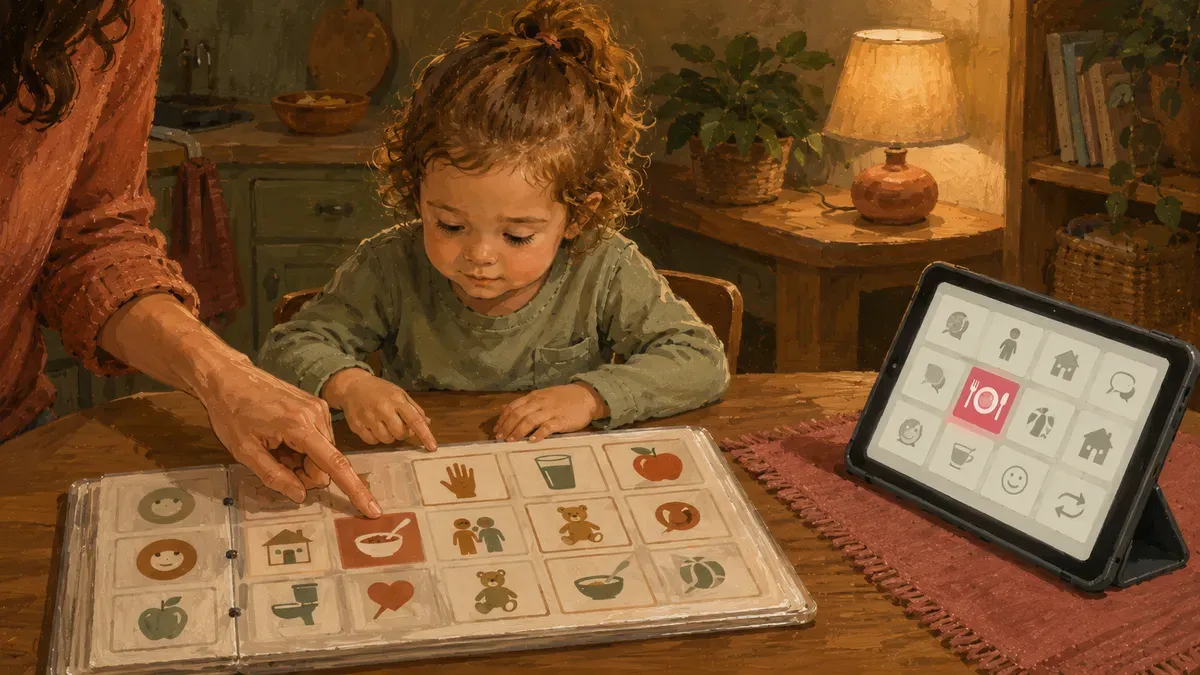
AAC Devices vs. PECS vs. Cards: Which Comes First
AAC devices, PECS, or cards first? See what each does, what it costs, and how to pick the right starting point for your child.
-
 Communication & AAC
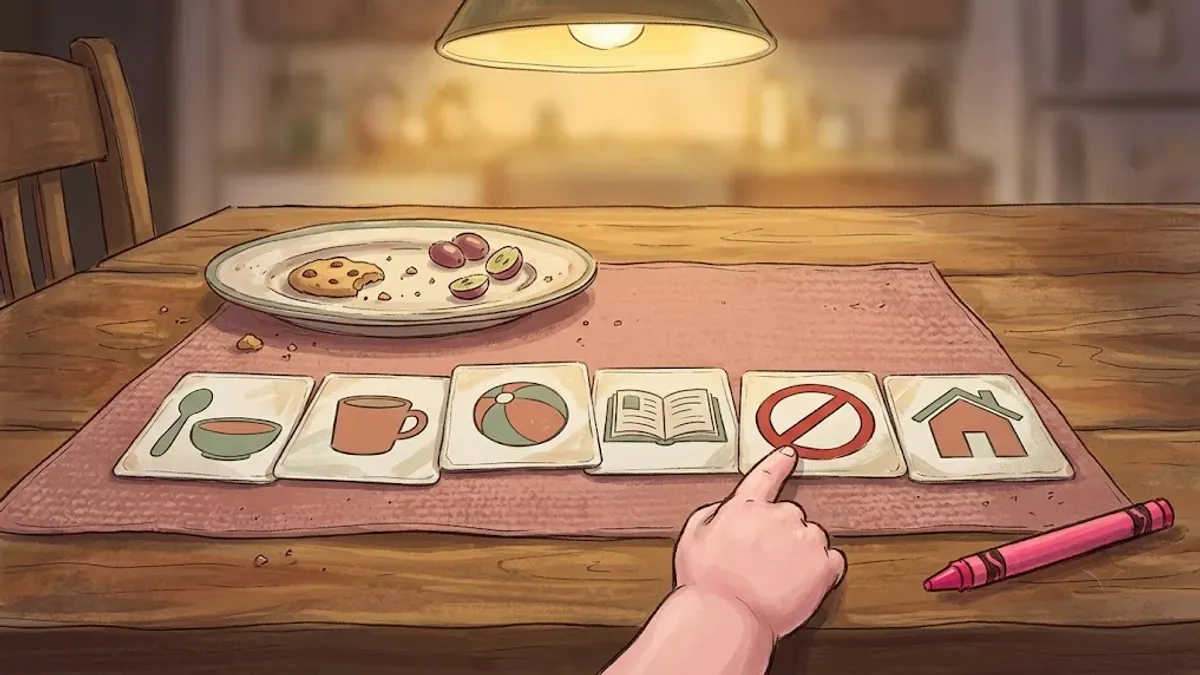
All Done PECS: 6 First-Word Cards to Cut Meltdowns
The all done PECS card is often a toddler's first word, and one of 6 first-word cards that halved our meltdowns. Print your own set free.
-
 Communication & AAC
Games for Speech Therapy: Picks for Late Talkers
Most speech games target school-age kids. These games for speech therapy pull words out of late-talking toddlers. Start playing tonight.
-
 Communication & AAC
Second Step at Home: Teach Kids Big Feelings Daily
Second Step skills don't need a classroom. Turn 15 everyday moments at home into social-emotional learning that sticks. Start tonight at dinner.