Feelings Chart for Toddlers Who Don't Have Words Yet

I am a parent sharing what worked at my house, not medical advice. For anything to do with your child's development or sensory needs, talk to your OT or doctor.
A toddler can feel furious, left out, or over-the-moon happy long before she can name a single one of those feelings. A 2023 study in Child Development found that toddlers understand emotions internally well before they can label them verbally, which means the feelings arrive months ahead of the words.
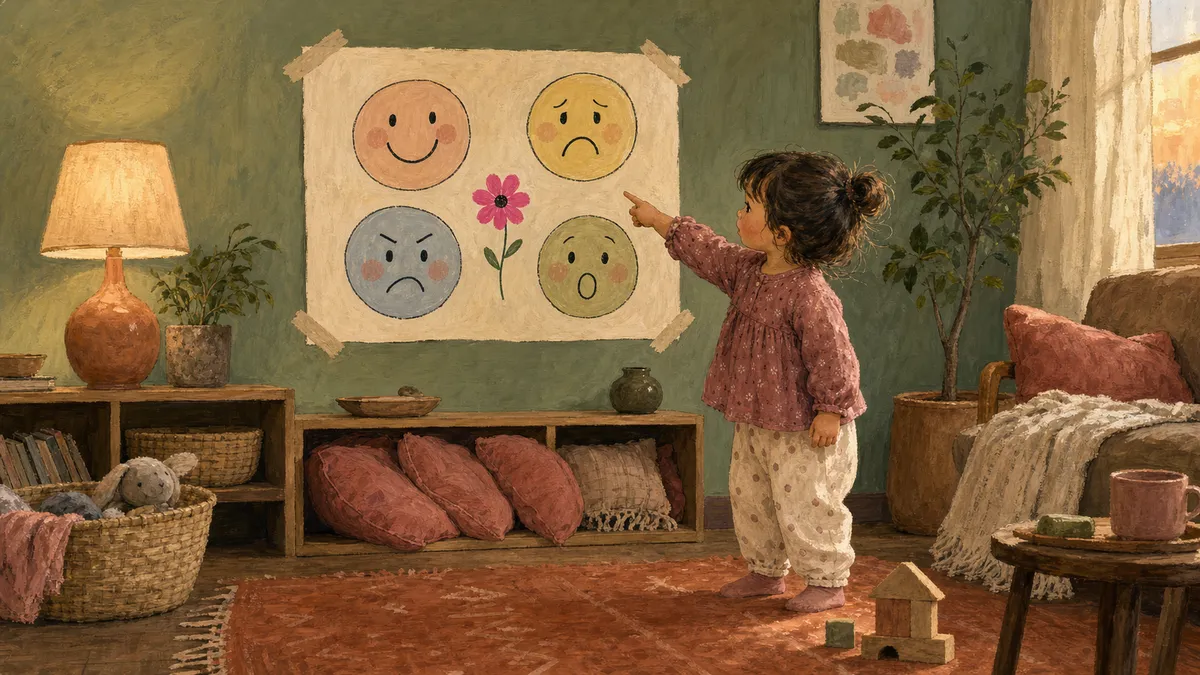
I’m Nora Hayes, a former preschool aide now home with my own two, and I’ve watched a simple feelings chart of four emotion faces give a wordless child a way to be understood, so here’s how to start one at home tonight.
The plan in brief:
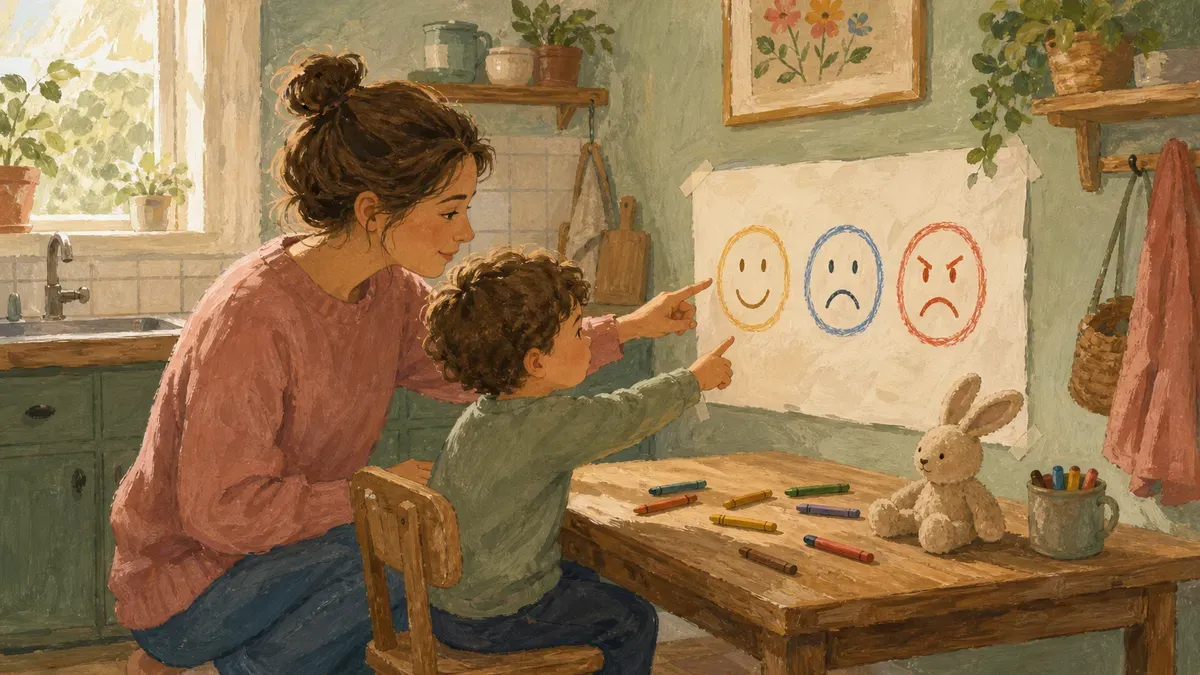
- Print a simple feelings chart with four to six clear faces and hang it at your toddler’s eye level.
- Model pointing to faces during calm moments: touch ‘happy’ when you smile, ‘sad’ when you frown.
- Guide your toddler’s hand to a matching face when emotions surface, then name it out loud.
Why Toddlers Struggle to Put Feelings Into Words
The Language Gap Between Feeling and Speaking
By 18 months, toddlers comprehend about 80 words but speak only 20, per MacArthur-Bates toddler emotional development milestones. Receptive outpaces expressive by months; emotional literacy trails further. Your child feels frustration long before they can name it.

How Emotion Pictures Bridge the Communication Gap
A picture board of emotions is a shortcut. Vallotton (2008) found preverbal children point to images to identify emotions like sad, scared, and happy before they can speak. Pointing turns an abstract feeling into something concrete, building communication social skills and emotional awareness.
How to Introduce a Feelings Chart to a Toddler Who Can’t Talk Yet
- Model during calm. Point, name, let them watch.
- Guide hand-over-hand. Land on the face, name the feeling.
- Celebrate any try. Even a look counts. Accuracy comes later.

Step 1: Model It During Calm Moments
Point to faces when your toddler is calm, not mid-meltdown. I modeled ours for a week at June’s eye level before she ever touched it.
Step 2: Point Together When Emotions Surface
When a feeling surfaces, guide their hand to the matching face and name it. You’re coregulating, not quizzing. Once pointing clicks, 12 communication cards every nonverbal toddler expand their vocabulary beyond feeling faces.
Step 3: Celebrate Every Attempt to Communicate
Respond warmly to any engagement: a glance, a grunt, a touch. Joint attention research in early childhood found that reinforcing any communicative attempt produced greater speech gains than correcting for accuracy. Emotions become reachable without a single word. Pictures do the work when words aren’t there yet. The connection is the win.
Choosing the Right Feelings Chart for a Pre-Verbal Child
The right chart lets your child point at what they feel.
Why Simple Faces Beat Complex Wheels
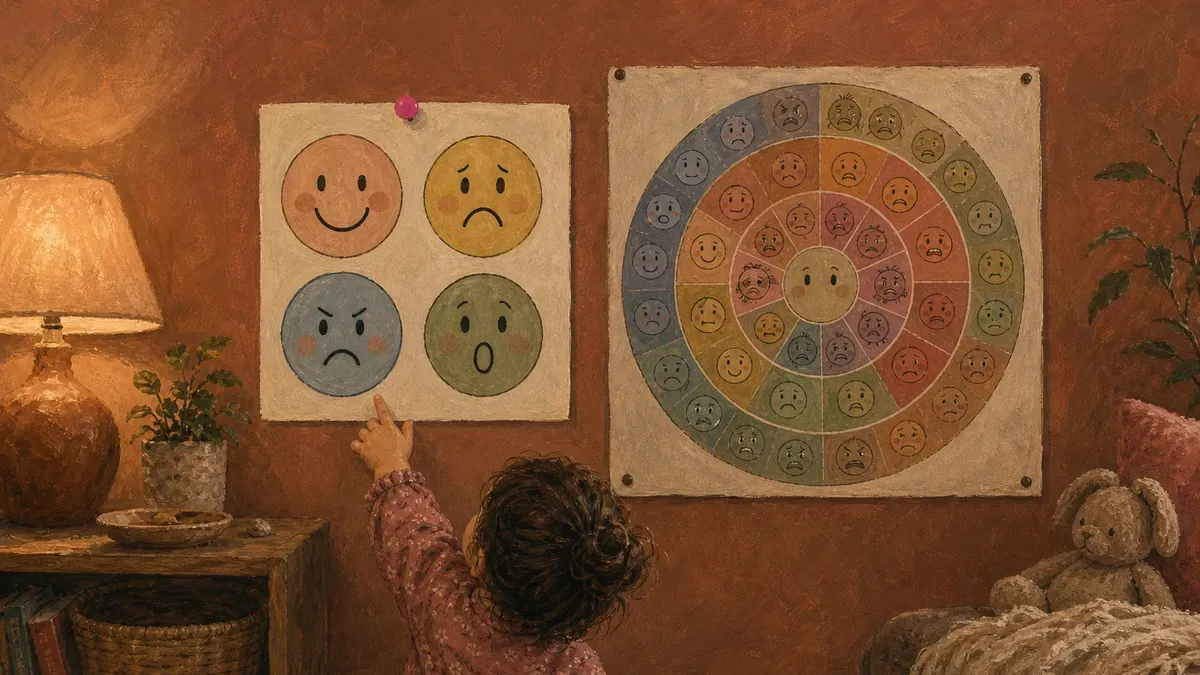
Four to six faces (happy, sad, mad, scared) beat the original Gloria Willcox feelings wheel. Nelson and Russell found toddlers guess randomly with too many options. The CAFE set validated six basic emotional expressions as most identifiable for young kids.
Paper on the Wall vs. Apps and Cards
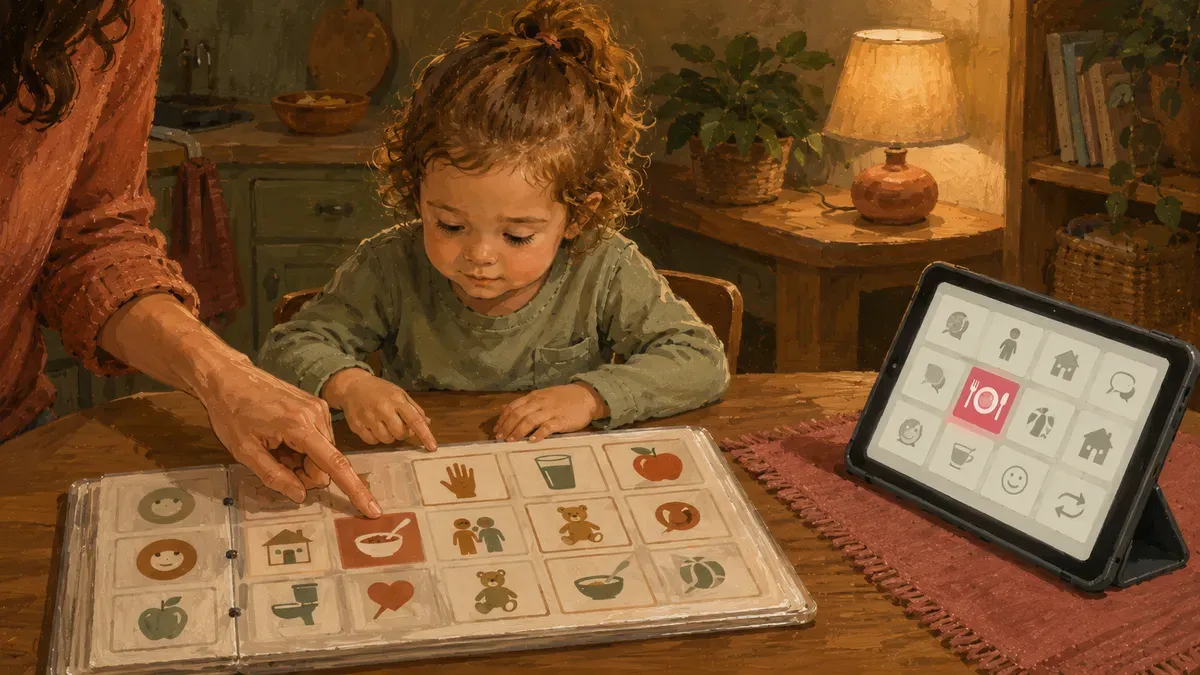
A printed one at child height needs no unlocking, no battery, no fetching. The AAP recommends zero screen time under eighteen months. You looking at one face together keeps joint attention; a screen fractures it. An Inside Out poster pulls in a reluctant kid. Once pointing sticks, communication cards carry it forward.
Making Your Own Feelings Chart and Extra Resources for Your Toddler
Pointing starts. Here’s what to put on the chart and what else helps when your child is ready.
The Six Faces to Include
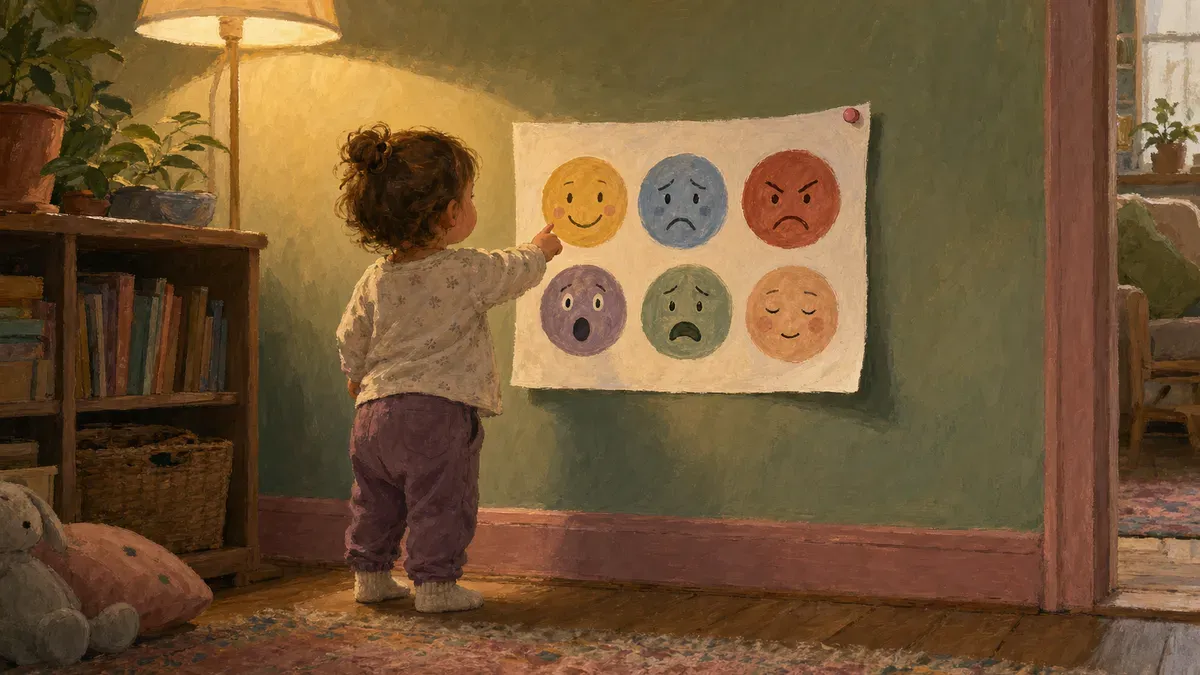
Draw or print six emotion faces on a blank sheet: happy, sad, mad, scared, surprised, tired. Label each in large text. That is genuinely all you need — a toddler reads the face, not the design. A circle arrangement adds range once the basics click.
Bonus Resources: Emotion Cards, Coloring Pages, and Wheels
The chart anchors you. Before you wonder when do babies start talking, pointing comes first. Emotion cards go in your bag for carry-over practice. Coloring pages and sheets pull double duty: a 2023 study in Child & Family Behavior Therapy found coloring predicts emotional regulation. Emotion pictures make matching games. Any of these keeps the conversation going.
Weaving Emotional Check-Ins Into Your Daily Routine
A chart works if you use it. Anchor check-ins to the rhythm you already have.
Making the Chart Part of Morning and Bedtime Rituals
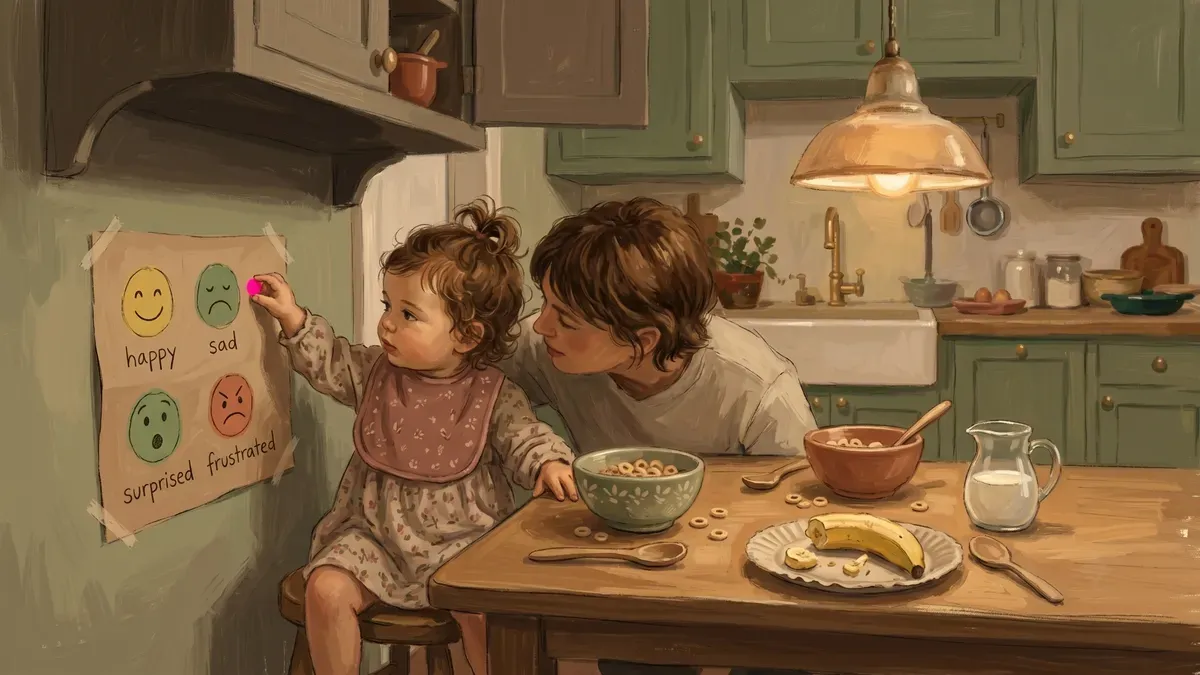
Point to it at breakfast and bedtime. Habit stacking: no new task, just a beat on a routine. Routines build self-regulation and emotional awareness, per University of Wisconsin research.
When to Move From a Basic Chart to a Feelings Wheel
When your child points to the right face and names feelings, try a feelings wheel. Dr. Willcox’s wheel adds rings to core emotions. An emotion sensation wheel maps feelings to body sensations. Keep a feelings chart for adults nearby to model the skill. See our full communication and social skills guide.
Found this useful? Save it for the next rough afternoon.
Questions parents ask me about this
What feelings chart works best for toddlers who can't talk yet?
A simple printed chart with four to six clear faces at child height. The full reasoning is in Choosing the Right Feelings Chart above.
Can a feelings chart help a toddler with a speech delay?
Yes. A feelings chart gives a child with a speech delay a way to communicate before the words come. When your toddler touches the sad face after a fall, that is emotional literacy happening in real time. Celebrate the attempt. The words will follow.
How do I know if my toddler actually understands the emotions on the chart?
Watch what they do, not what they say. If your toddler consistently points to the mad face when a sibling grabs a toy, or to the happy face during a favorite song, they are getting it. Understanding almost always shows up before naming. You will see it in their pointing and their body language before you hear it in their words.
Should I use a feelings chart during a tantrum?
No. During a full-blown meltdown, your toddler's brain is not in learning mode. Save the chart for calm moments. Use it after the storm passes to look back together. "You were really mad when we had to leave the park. That was this face." That is where the real teaching sticks.
What emotions should be on a toddler's first feelings chart?
Start with four to six core emotions: happy, sad, mad, scared, and if you have room, surprised and tired. Those six faces cover a lot of toddler ground. You can add more specific emotions later, once pointing to the basics feels natural to your child.
Can feelings charts help toddlers with autism?
Yes, and for many autistic toddlers, they can be especially useful. Visual supports often line up with how an autistic brain processes information best. A clear image of a face stays still on the wall. It does not change expression mid-sentence the way a real face does, and your child can return to it as many times as they need.
At what age can a toddler start using a feelings chart?
You can introduce a feelings chart around 18 to 24 months. Even if your toddler is not pointing with clear intent yet, seeing you use it plants the seed. Walk over to the chart yourself during calm moments and point. "Mama feels happy right now." They are watching and absorbing long before they join in.
How can I combine a feelings chart with baby sign language?
Point to the face on the chart, then do the sign together. The chart gives the visual anchor and the sign adds a motor piece. For a toddler who learns best by doing, that combination can click faster than either one alone. A handful of emotion signs paired with the chart is plenty to start.
What if my toddler ignores the feelings chart completely?
Do not push. Leave it up, model it for yourself, and let it become part of the background. Walk over and point to a face when you feel something. Some kids need weeks of watching before they engage. Others ignore it for a month and then suddenly point to three faces in one afternoon. Low pressure always wins.
Written by
Nora Hayes
Mom of two and a former preschool aide. I share the screen-free sensory play and calm-down ideas I test at my own kitchen table, plus what the moms in my little meet-up swear by. A parent passing on what works, not a doctor or a therapist.
More about NoraKeep going
All Communication & AAC-
 Communication & AAC
AAC Devices vs. PECS vs. Cards: Which Comes First
AAC devices, PECS, or cards first? See what each does, what it costs, and how to pick the right starting point for your child.
-
 Communication & AAC
All Done PECS: 6 First-Word Cards to Cut Meltdowns
The all done PECS card is often a toddler's first word, and one of 6 first-word cards that halved our meltdowns. Print your own set free.
-
 Communication & AAC
Games for Speech Therapy: Picks for Late Talkers
Most speech games target school-age kids. These games for speech therapy pull words out of late-talking toddlers. Start playing tonight.
-
 Communication & AAC
Second Step at Home: Teach Kids Big Feelings Daily
Second Step skills don't need a classroom. Turn 15 everyday moments at home into social-emotional learning that sticks. Start tonight at dinner.