
The gentle nudge that runs the day
Reward and chore charts a kid wants to chase
Sticker charts and token boards that work because the win lands the same week.
Reward and chore charts
noun
A reward chart and a chore chart are the same simple thing wearing two hats: a square of paper on the fridge where a kid earns a sticker for doing the thing. The reward chart sparks one new habit, like brushing teeth without the nightly standoff. The chore chart tracks the jobs that just keep coming, the toys and the laundry and the cup that never makes it to the sink.
Routines & Charts, the latest
-
 Reward & Chore Charts
Age Appropriate Chores by Age (Toddler to Teen)
Most kids handle real chores younger than you think. Get age appropriate chores by age, from 3-year-olds to teens, and start building habits today.
-
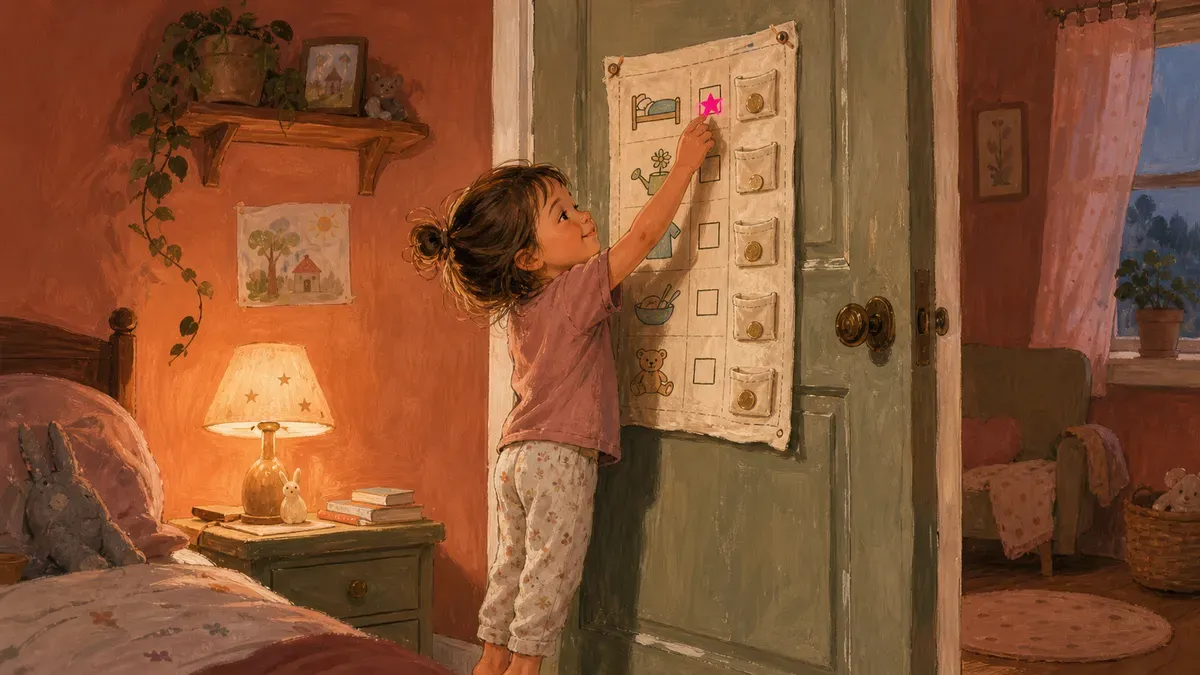 Reward & Chore Charts
Allowance Chore Chart: How to Start With Little Kids
Set up an allowance chore chart that ties money to effort: paid-vs-unpaid rules, prices by age, 100 chore ideas, and the best charts. Start today.
-
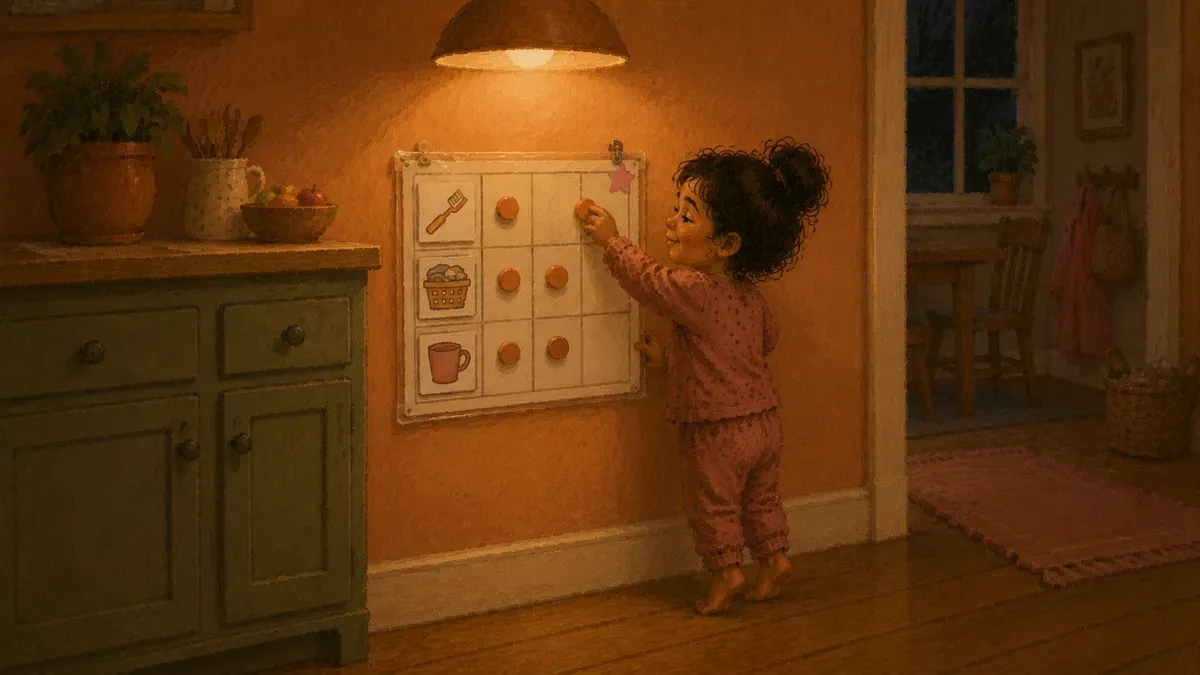 Reward & Chore Charts
Childrens Chore Chart Printable with Pictures
Pre-readers can't follow word lists, but they can follow pictures. Free printable chore chart for toddlers and preschoolers, ready to laminate.
-
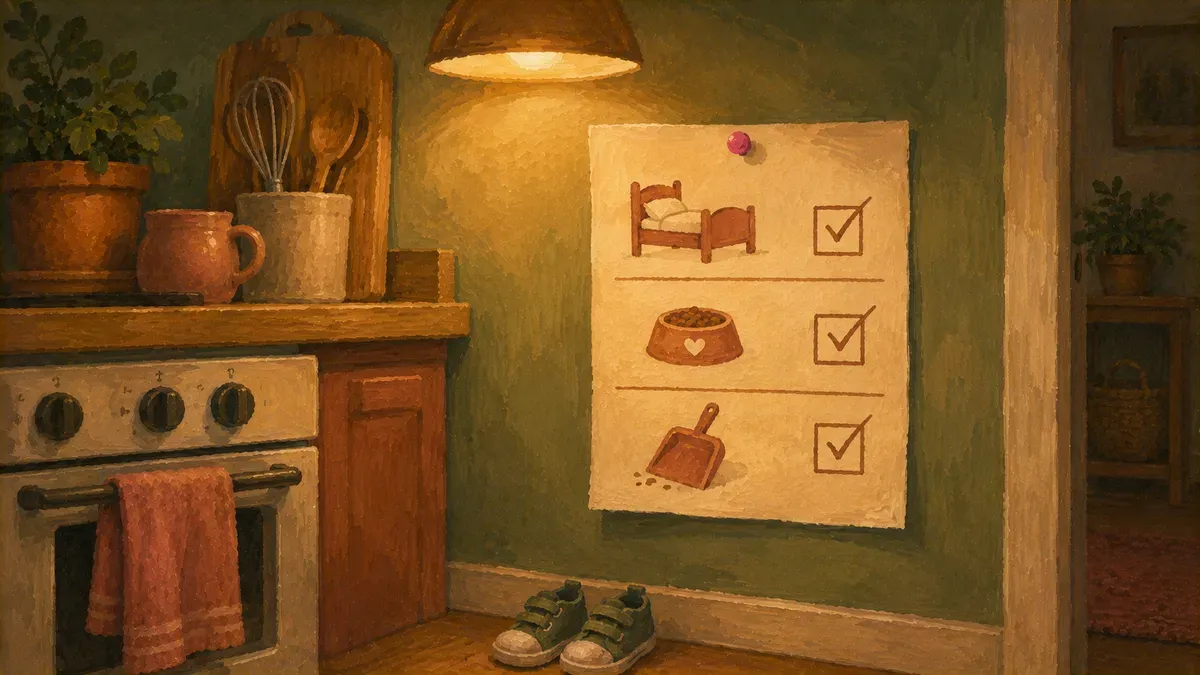 Reward & Chore Charts
Chore Chart vs Reward Chart: Which One Your Kid Needs
Chore chart, reward chart, or responsibility chart? Find out which fits your child's age, build one in 5 steps, and snag a free template.
-
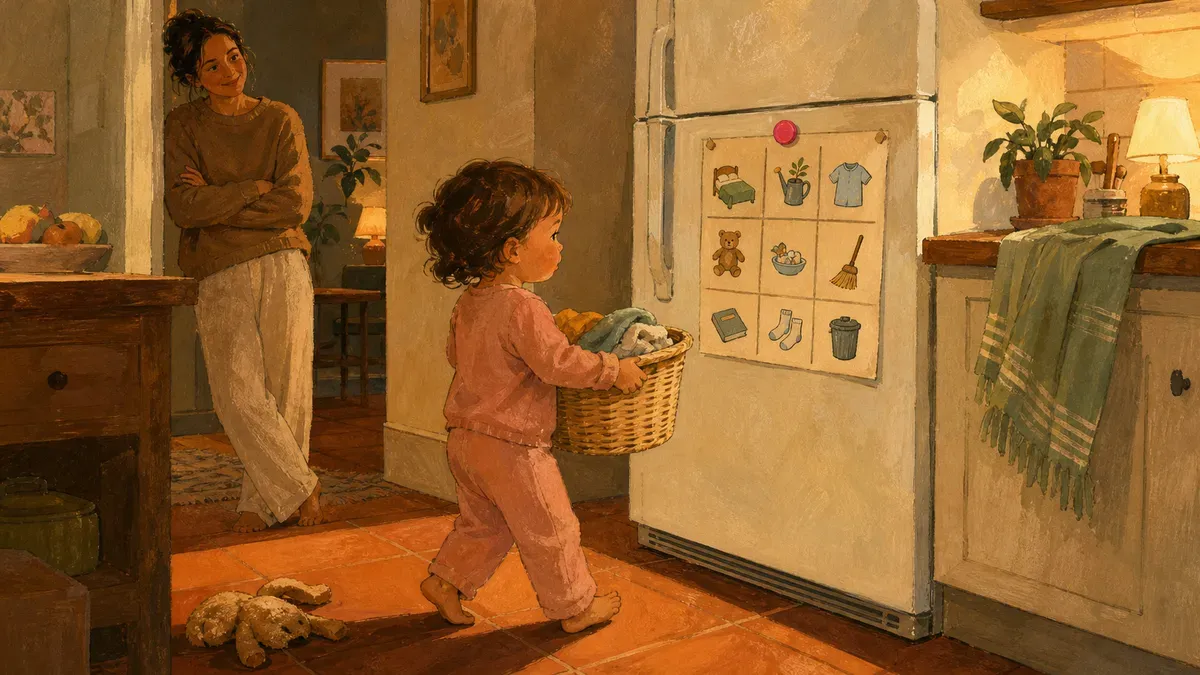 Reward & Chore Charts
Chore Chart for Kids by Age: What Each Age Can Do
A 2-year-old can really help. See what a chore chart for kids should include at every age, plus charts that stick. Start today.
-
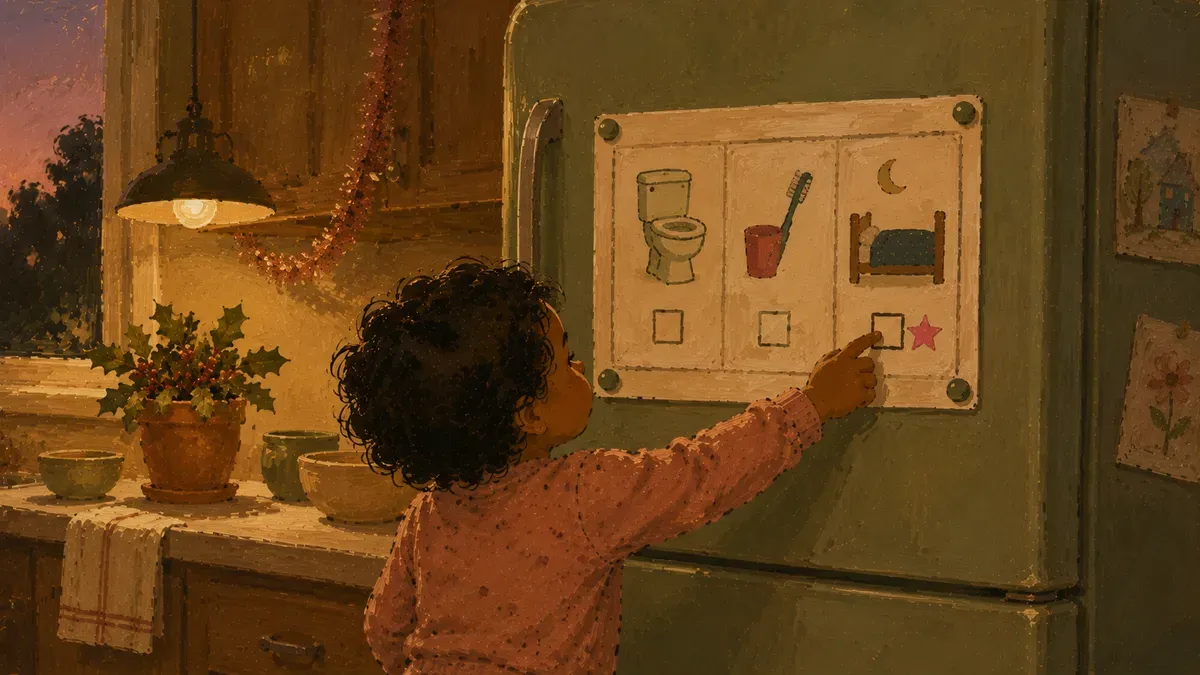 Reward & Chore Charts
Routine Chart Survival: Keep Kids on Track at Christmas
Holidays blow up bedtime in a week. Use a routine chart to keep the potty and sleep routine alive through Christmas chaos. Get the 4-step plan now.
-
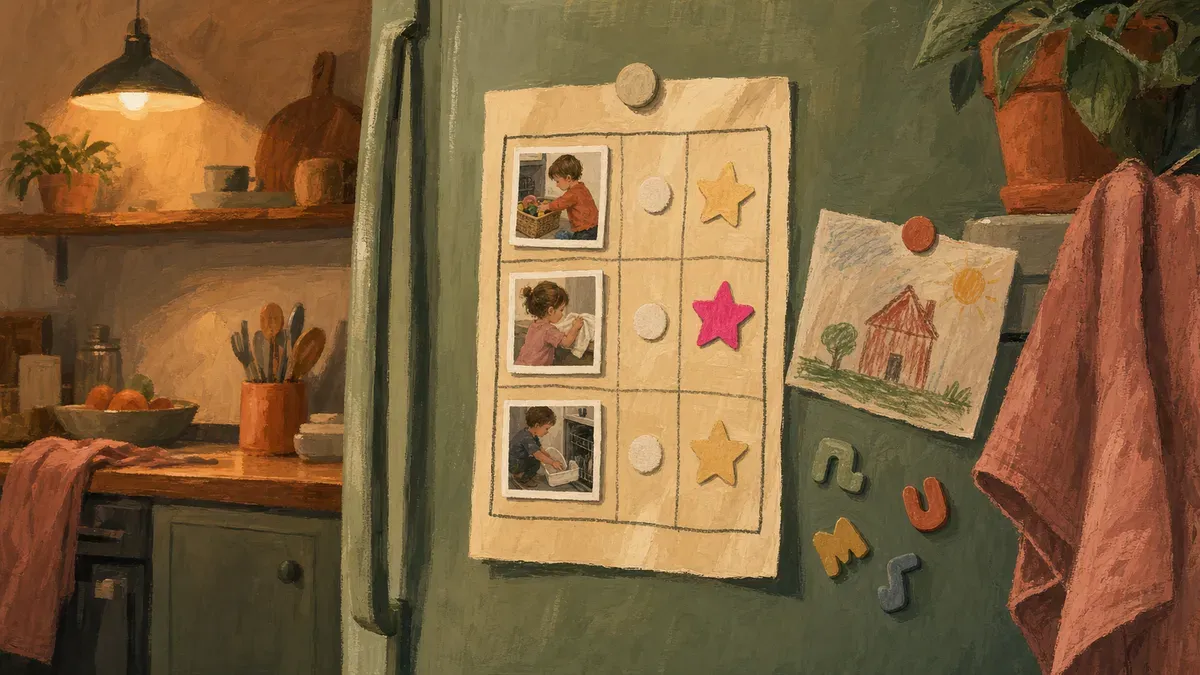 Reward & Chore Charts
How to Make a Chore Chart a Toddler Won't Quit
Make a chore chart your toddler can't quit, even at 5-minute patience. Instant rewards, picture tasks, 3 jobs that build habits. Start today.
-
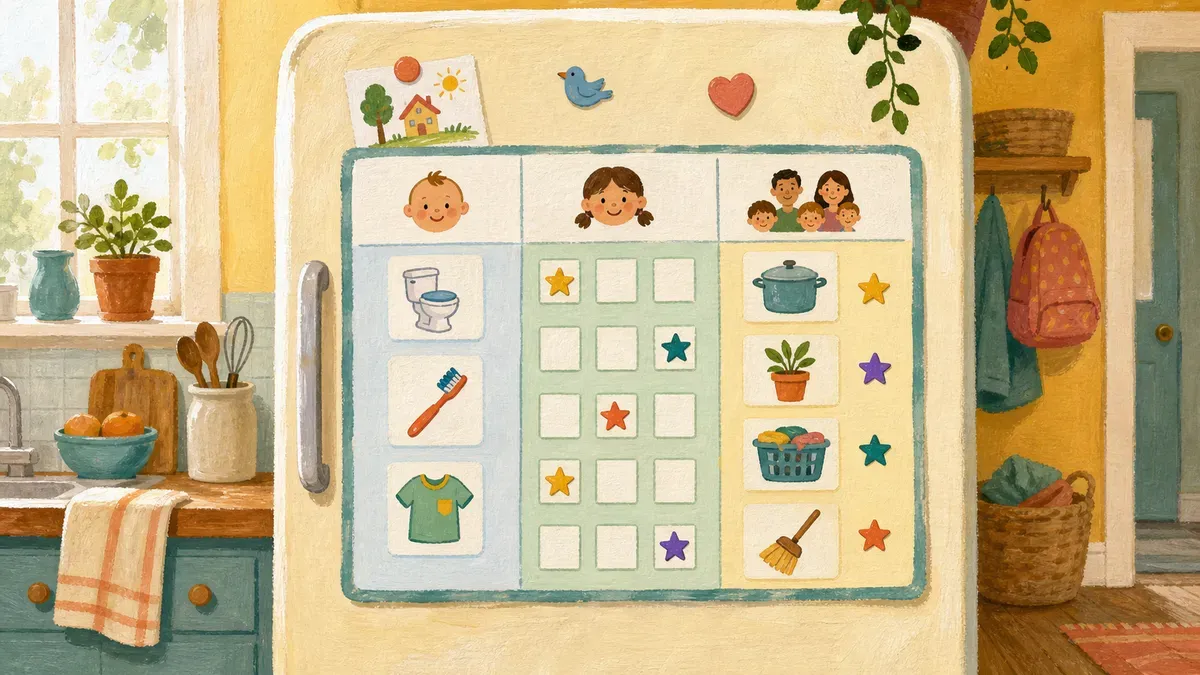 Reward & Chore Charts
Family Chore Chart: One Chart for Mixed-Age Kids
Stop juggling three charts. Build one family chore chart for potty, chores, and routines across two ages. One sheet, three lanes.
-
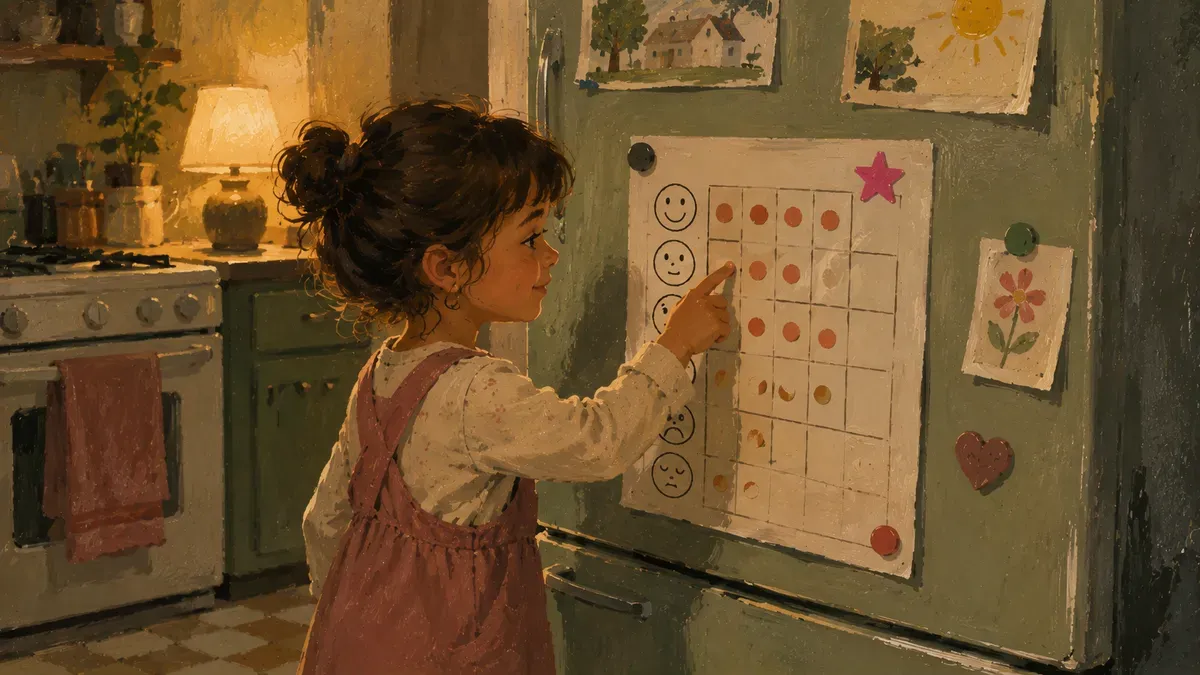 Reward & Chore Charts
Kindergarten Behavior Chart That Builds Calm Habits
A kindergarten behavior chart builds calm-down habits, not just compliance. Learn the 3-step setup that helps kids manage big feelings tonight.
About this guide
This page is the chart kind, not the morning-routine kind the hub covers. How to build one that a three-year-old actually keeps up with, what to put on it at each age, the sticker-vs-allowance question every parent hits, and the one timing rule that makes or breaks the whole thing with little kids. Start it for a toddler around two, and keep it dead simple, because a chart with ten boxes is a chart nobody fills in.
How to make a reward chart a little kid actually sticks with
Pick one or two things, not ten. One habit you are building (teeth, shoes on, stay in bed) or two or three jobs that already half-happen on good days. A loaded chart overwhelms a young kid and ends up blank by Wednesday.
Draw the task, do not just write it. A toothbrush, a toy bin, a hamper. Pre-readers follow a picture in a second, and the icon is what lets a two- or three-year-old run the chart without you reading every line.
Reward fast, especially under four. Hand over the sticker the moment the job is done, not at the end of the week. A young kid cannot connect a star today to a prize on Sunday, so the quick handoff is the entire mechanism. Daily beats weekly here.
Let your kid pick the payoff, and lean social. Stickers, a star they place themselves, ten minutes of a favorite game, story time, helping with dinner. Praise and your attention land harder than a toy for most little ones, and they cost nothing.
Put it where everyone walks past. Fridge, bedroom door, wall at kid height. A chart in a drawer does nothing. Seeing the row fill up is the pride that keeps a kid coming back to it.
Mark the wins only, and reset clean. Never pull a sticker off for a bad moment, because earned progress a kid can lose teaches the wrong lesson. Wipe it weekly, start fresh, let the rough days pass untouched.
What goes on the chart, by age
- Toddlers, two to three:one-step jobs with an obvious result: toys in the bin, dirty clothes in the hamper, cup to the sink, feed the pet a scoop. Three tasks, tops. Pictures, not words. The point is starting and finishing on their own, not the quality of the job.
- Preschool and kindergarten, four to six:set the table, make a simple bed, put shoes away, a behavior you are working on like a calm-down step before the meltdown lands. They can follow a posted picture-plus-word chart with less prompting. This is the sweet spot for paper stars and tokens.
- Early elementary, seven and up:wipe counters, help with laundry, dishwasher duty, a written checklist they read themselves. This is the age allowance starts to click, when a kid can connect earning to spending and a weekly payout makes sense.
- Paid versus unpaid, if you do allowance:keep two piles. Self-care and cleaning their own mess stay unpaid, because that is just living in a family. Paid jobs are the real extras above and beyond. Write the price next to each paid task, pick one payday, pay only what got done.
Charts shape habits, they do not fix behavior, and they are not a behavior plan. If a chart keeps failing, do not pile on stricter rules or take earned stickers away, and skip charts that punish. For a child with sensory differences, autism, ADHD, or any behavior you are genuinely worried about, your pediatrician, OT, or a behavior specialist is the right call, not a sticker grid.
Quick answers on this one
What is the difference between a reward chart and a chore chart?
A reward chart targets one habit you are trying to build, like brushing teeth without a fight, and it retires once that habit sticks. A chore chart tracks the ongoing jobs a kid is responsible for, the dishes and laundry kind that never really end. Plenty of families run a third version, a responsibility chart, that blends daily routine and chores onto one grid. Same stickers, different job. If you are stuck, here is which one your kid actually needs.
What age can a kid start a reward or chore chart?
Around age two for the simplest version, once a kid follows a one-step direction like "put the toy in the bin." At two and three they will not run it solo yet, you walk through it together for a few weeks while the picture chart makes the routine visible. Real independent use lands closer to three or four. Keep it to two or three picture tasks the whole time, because a young kid's working memory fills up fast.
Should I give a sticker every time, or save the reward for the end of the week?
Every time, especially under four. A toddler cannot link a sticker today to a prize on Sunday, so saving it up means the connection between doing the job and getting the payoff never forms. Aim to hand over the sticker or token within about thirty seconds of the task being done. Weekly point totals and bigger saved-up rewards start working for early school-age kids, not little ones.
Should I pay my kid an allowance for chores?
That is a family call, and both ways work if you stay consistent. What tends to backfire is paying for every single chore, because it teaches a kid to expect money before they help and basic responsibility turns into a negotiation. A common fix is to split it: family jobs stay unpaid, and a separate short list of optional extras can earn a small amount. Allowance usually makes more sense once a kid is around seven and can connect earning to spending, and there is a gentler way to start allowance with little kids before then.
My kid loved the chart for a week, then quit. What now?
Normal, and almost always a sign the chart got too big or the reward got too slow. Cut it back to one or two tasks your kid can actually finish, and speed the payoff back up so the win is immediate again. Swap a stale reward for something they help choose, and lean on praise and your attention, which outlast any prize. If it still flops, the chart may not be the tool for that behavior right now, and that is fine.
Free printables, coming soon
Want these as printables?
I am slowly turning activities like these into free print-and-go pages. Tell me where to send them and you will get an email the day each one is ready.
One email when there's something worth printing. Unsubscribe anytime.