Water Sensory Bin Ideas Safer Than Water Beads

Some links here are affiliate links. If you buy through one, I may earn a small commission at no extra cost to you. As an Amazon Associate I earn from qualifying purchases. I only point to things I'd actually use with my own two.
I’m Nora Hayes, a former preschool aide and mom of two, and I’ve run this exact water sensory bin more times than I can count on the days I had nothing left.
The plan in brief:
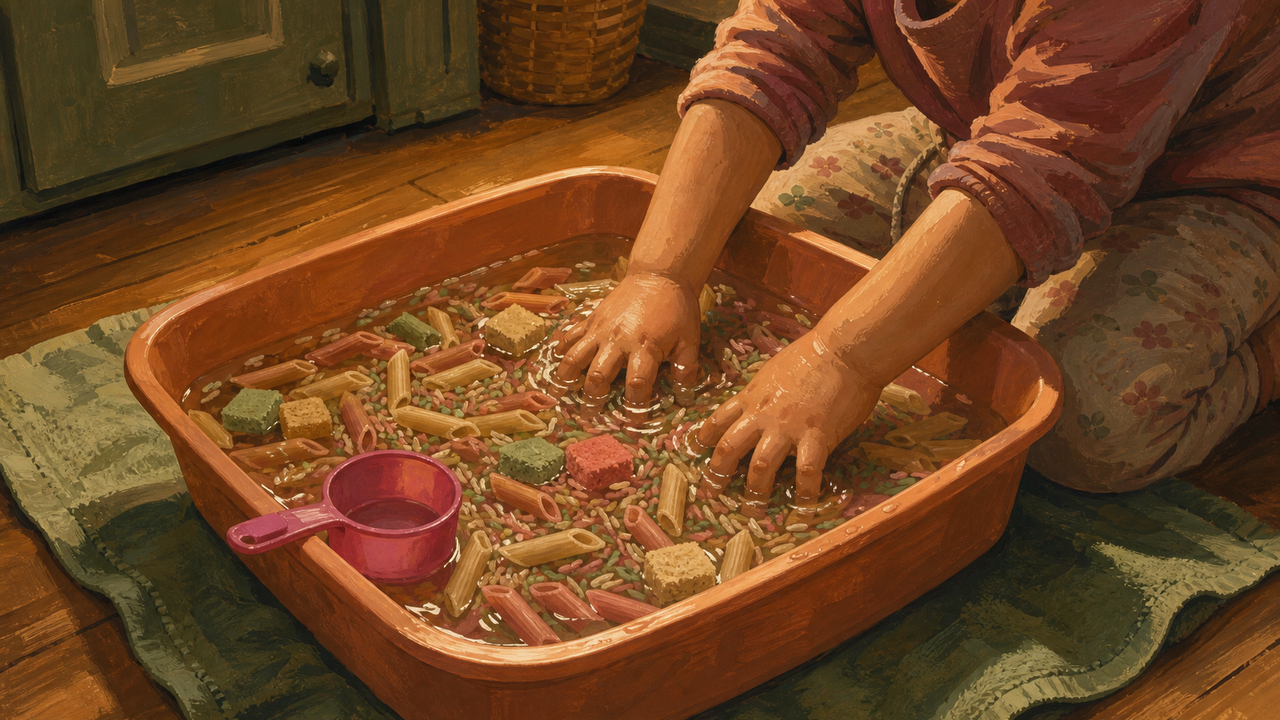
- Fill a shallow tub with 2 inches of water at body temperature
- Skip water beads; add taste-safe fillers like ice cubes, sponges, or cooked pasta
- Drop in scoops, cups, and funnels, then sit close and supervise the whole time
Below you’ll get the five-minute setup, why water beads worry me for little ones, eight fillers that feel just as cool, and a few themed ideas to keep the play going.
How to Set Up a Water Sensory Bin in 5 Minutes
You don’t need a craft store run or a Pinterest-perfect tray for this one. Here’s the container and base to start with, the cheap tools that make plain water interesting, and the two-minute rules that save your floor.
- Grab a shallow plastic tub (under-bed bin, dishpan, or roasting pan) and fill it with two inches of body-temperature water.
- Set it on the floor on a towel, or take it outside.
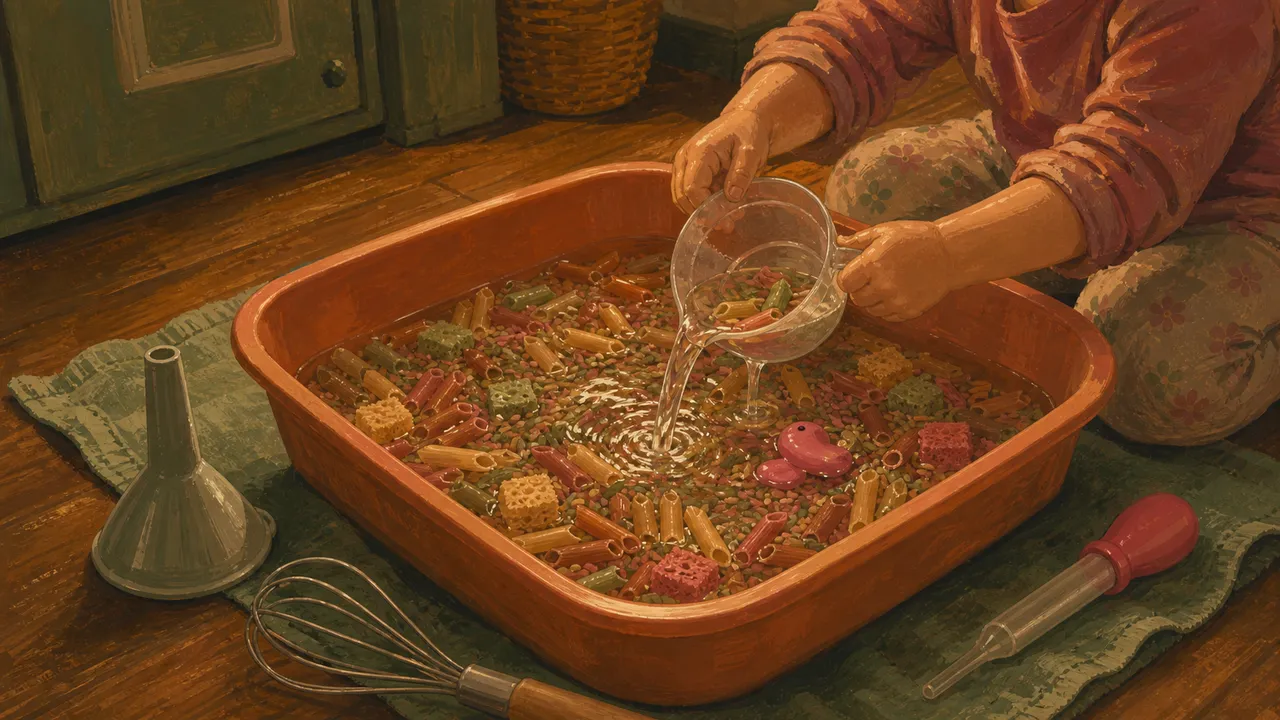
- Raid the kitchen for tools: measuring cups, funnels, a turkey baster, a whisk, a ladle.
- Set three rules before they touch it: stay within arm’s reach, towel down first, one tub at a time.
Gather Your Container and Base
Grab a shallow plastic tub. An under-bed storage bin works, so does a dishpan or a clean roasting pan, and if you’ve got a low-sided container already holding toys, dump it out and use that. Rather just buy the right shape? The shallow plastic storage tub I reach for has low sides and a footprint that slides under a bed, and 4,500-plus parents landed it at 4.6 stars using theirs for exactly these grab-and-go jobs. The base material is the easy part: two inches of body-temperature water, nothing fancier. Skip cold, skip hot, just warm enough that little hands stay in it.
That’s the whole base. Water sensory play is the one setup where the plain version beats every kit you can buy.
Add Tools for Pouring and Scooping
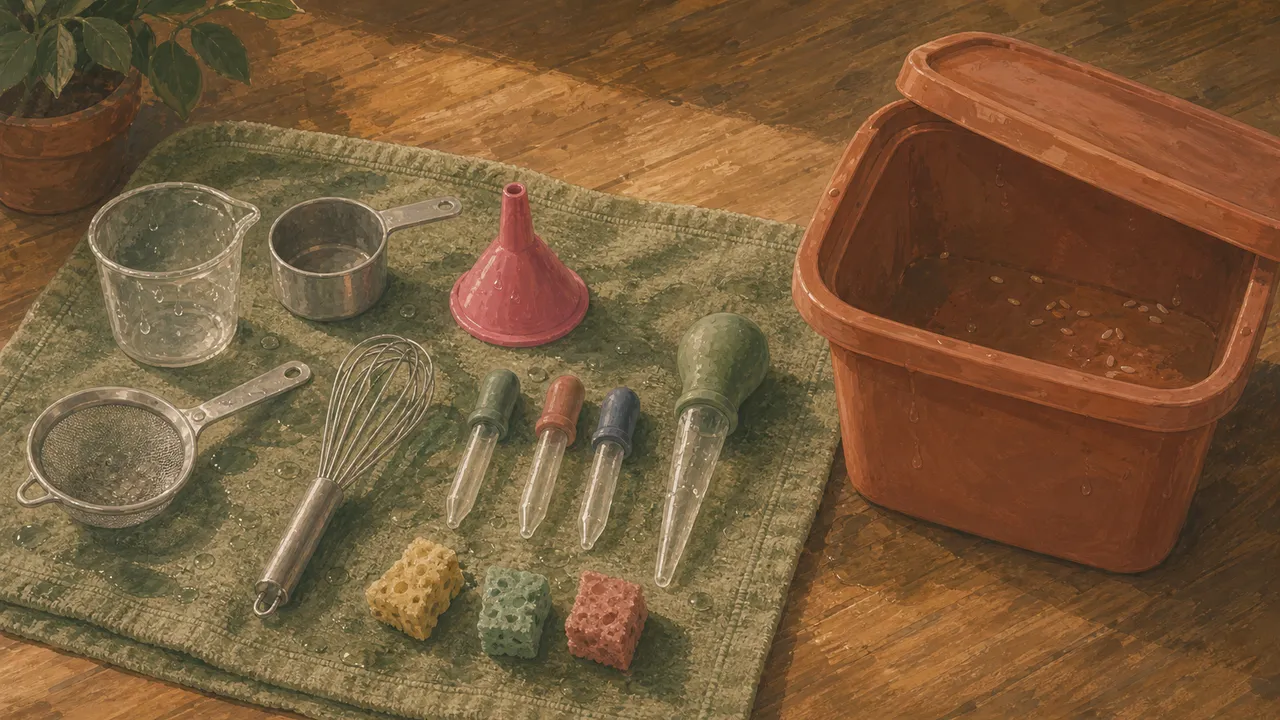
Now raid the kitchen and the bathtub. The tools are what turn a tub of water into twenty minutes:
- Measuring cups and a couple of funnels
- Pipettes or a turkey baster for the drip-and-squeeze crowd
- Bath squirters and a whisk for froth and splash
- A slotted spoon, a ladle, an old yogurt cup
If you’re tired of fishing your good measuring cups back out of the bin, a dedicated sensory bin pouring and scooping tool set covers the scoops, cups, and funnels in one go. It’s earned Amazon’s Choice and a 4.6-star average from more than 19,000 buyers, which tells you it survives a lot of dumping.
All that pouring isn’t just busywork. Scooping and transferring builds grip, pinch strength, and the precision that feeds straight into writing and dressing later, as occupational therapists at The OT Toolbox explain. For more ready-made combos, see our guide to sensory bins for toddlers.
Set the Ground Rules Before They Splash
Three rules keep this calm. You stay within arm’s reach the whole time, no exceptions, because water and toddlers need eyes on them. Towel goes down first, every single time, so the cleanup is one wipe instead of a mopping job. And one tub at a time, no refills mid-play, so the splash zone stays a zone.
Set those before they touch the water and the sensory experience stays a hands-on win, not a wet-floor headache. If you want the full walkthrough, here are my notes on building diy sensory bins that toddlers actually stick with.
Why Water Beads Are Risky for Toddlers
A water bin works because everything in it is simple and safe. Water beads look the same way, and that’s exactly the problem.
The Choking and Swallowing Hazard
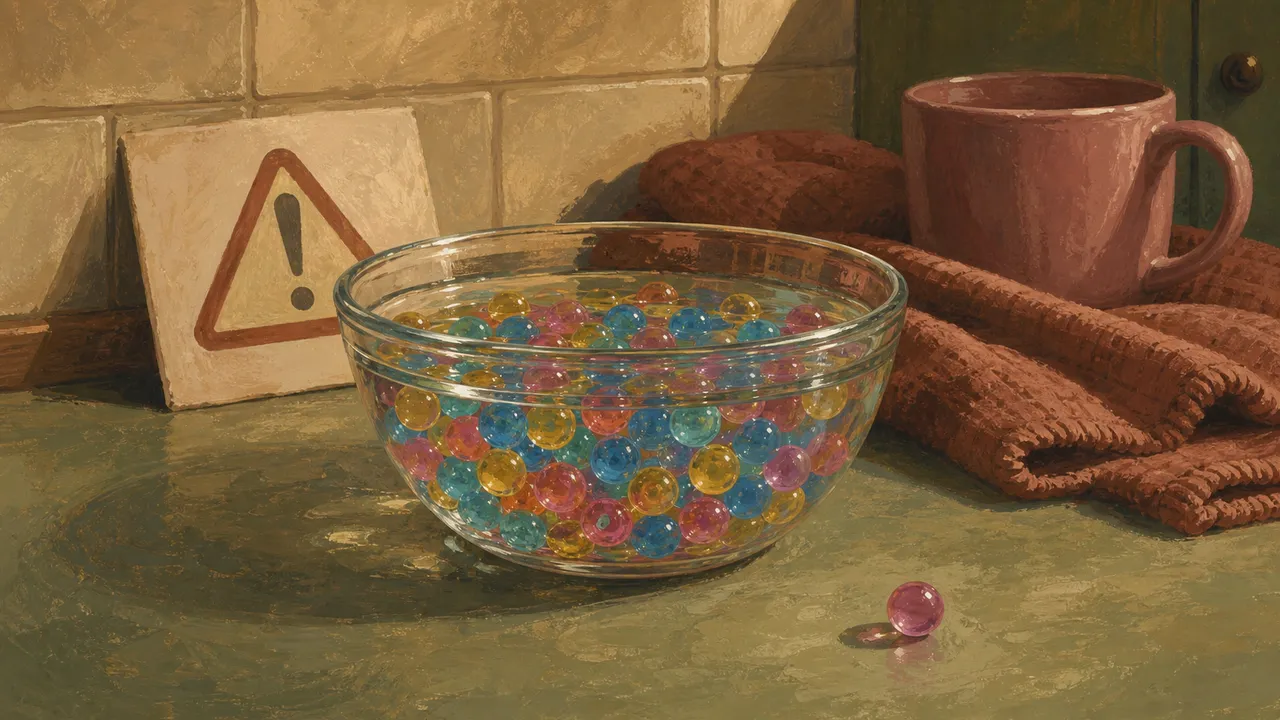
Water beads start small, but they don’t stay that way. Once swallowed, they absorb fluid and keep expanding inside the digestive tract. A toddler who swallows one won’t show symptoms right away, so parents often don’t know anything is wrong until there’s a blockage.
The numbers make this concrete. Child safety data on water bead injuries from an AAP conference found that 84% of 89 pediatric patients who swallowed water beads required abdominal surgery, and standard X-rays detected the beads in only 5.4% of cases. According to Nationwide Children’s Hospital’s Center for Injury Research and Policy, children under 5 made up 90% of hospital admissions from water bead incidents. For toddlers who still mouth things, sensory play with water beads is not a safe option, full stop.
When Water Beads Can Be Okay
Pediatric guidance on choking hazards in young children from the AAP’s HealthyChildren.org supports legislation to ban water beads marketed for children and recommends households with young children not keep them at home. Cincinnati Children’s Hospital adds that any child who still mouths objects should avoid them entirely, regardless of age.
If your child is 5 or older and has reliably stopped mouthing things, water beads sensory play is something some families do with close supervision. Under that bar, skip them. There’s a whole list of options in taste safe sensory play that gives you the same cool, squishy texture with none of the risk.
8 Taste-Safe Fillers That Feel Just as Cool
Skip the beads and you lose nothing. The options below give you the same squishy, slippery, textured play with zero swallow risk. These sensory bin fillers split into two camps: cool and squashy, or foam, float, and bubble.
Slippery and Squishy Swaps
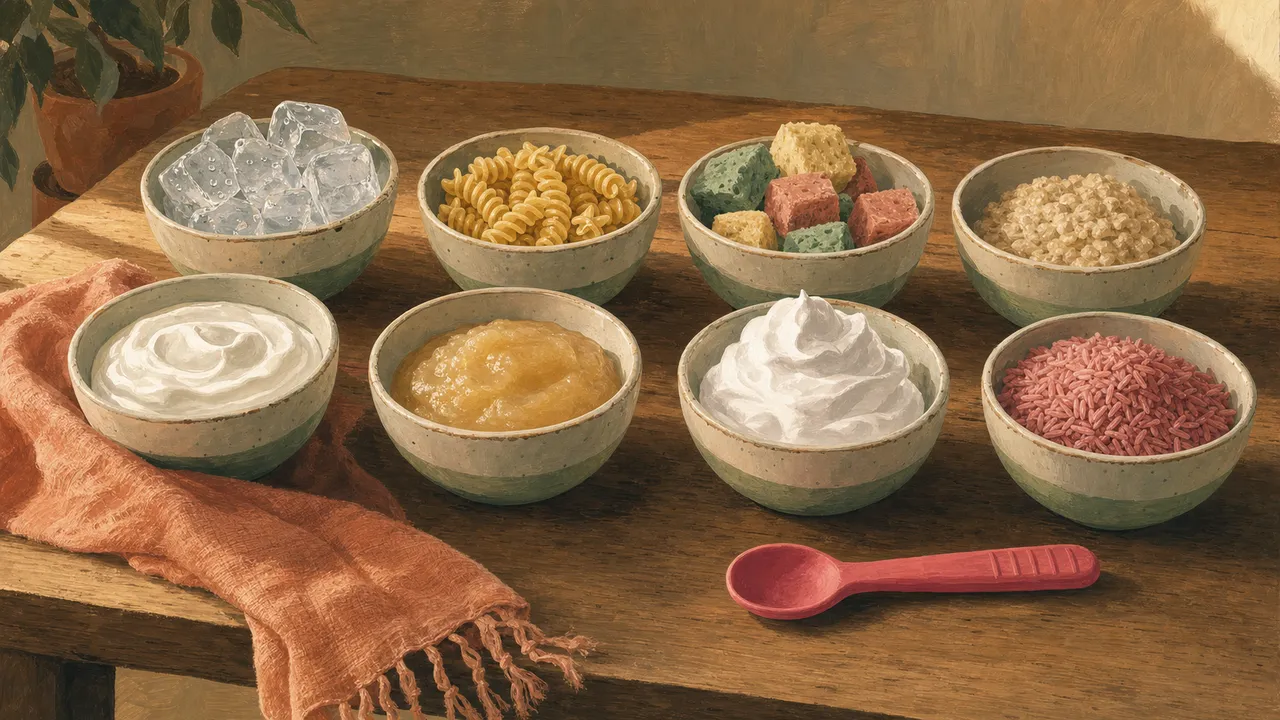
- Ice cubes: drop a handful into a shallow tub and your toddler gets temperature contrast, that satisfying clink, and the fun of watching them melt. Thirty seconds of setup.
- Cooked pasta: penne or rotini hold their shape and feel genuinely weird. Cook a big batch, let it cool, and pour it in.
- Cut sponges: slice a kitchen sponge into cubes, soak them, and let your kid squeeze the water out. That wringing motion works the hand hard, and most kids will repeat it.
- Cooked oatmeal: cool it to room temperature and it turns thick and gloopy, just the texture a sensory-seeker wants both hands in.
- Plain yogurt: smooth, cool, and safe to eat. Thick Greek yogurt has a slow-squish resistance close to what water beads offer.
- Applesauce: no prep, cheap, and easy to tint with food coloring for a themed bin. Good for babies still putting everything in their mouths.
Foam, Bubbles, and Floating Fun
Whisked soap foam turns a plain water bin into something kids treat like a science experiment. Two tablespoons of dish soap, a quarter cup of water, high speed for a minute or two until stiff peaks form, then pile it on top. Tear-free bubble bath soap is gentler if your toddler tends to get it near their eyes.
Kids will poke the foam, hide things inside it, and drag nature materials through the bubbles.
Slime and Stretchy Sensory Play Without the Mess
Foam floats and nature bits sink, but slime does something different: it pulls, stretches, and holds its shape just long enough to feel satisfying before collapsing. These two subsections cover a borax-free recipe and the containment tricks that make it a realistic weeknight option.
A Taste-Safe Slime Recipe
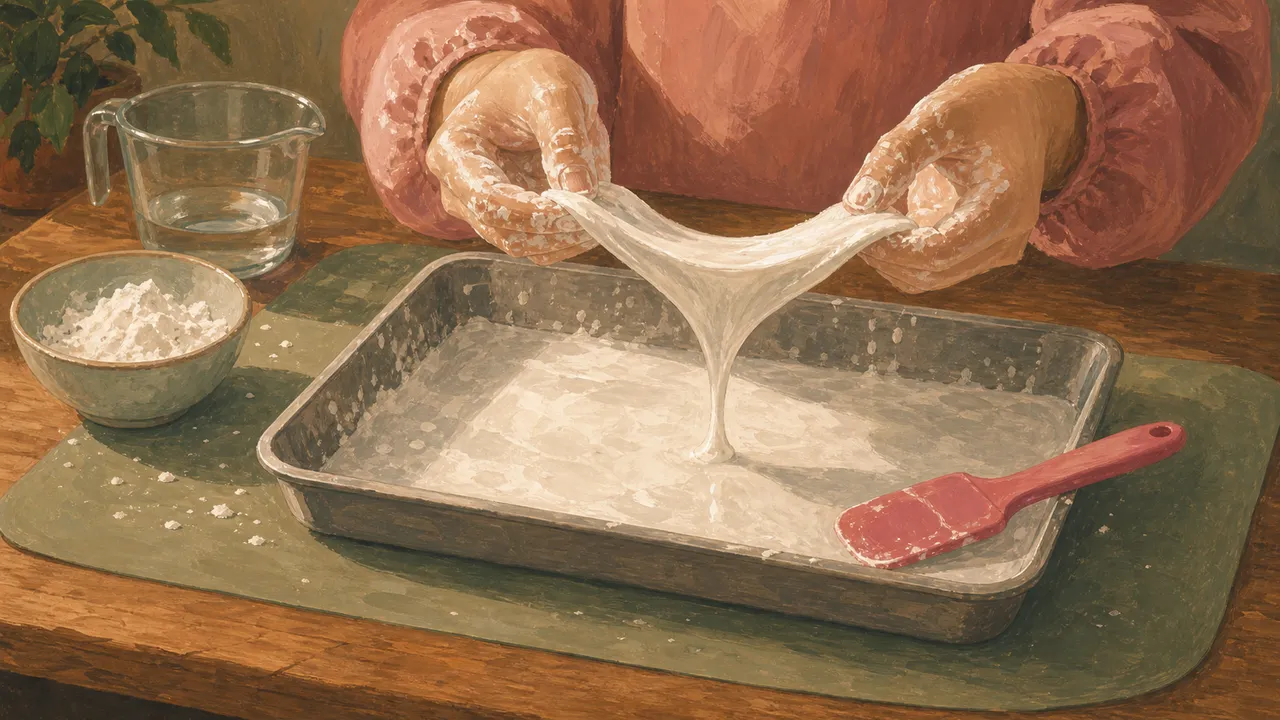
The simplest version uses two parts cornstarch to one part water, mixed until it moves like thick batter. Cornstarch slime is a hands-on learning staple because it shifts between solid and liquid depending on how hard you press, which is genuinely strange and satisfying for a toddler.
For kids still mouthing things, chia seed slime is the safer call: cooked chia seeds, a splash of water, and a drop of food coloring. Borax-free and edible, with a texture weird enough to hold attention for a solid stretch. Pudding-based slime works too if you want something that smells like dessert and needs zero special ingredients.
All three deliver that stretchy sensory experience without chemicals that make conventional slime off-limits for toddlers.
Keeping Slime Sensory Play Low-Mess
A rimmed baking sheet is your best friend here. Slime on the tray, tray on the table, and you’ve already contained most of the drift. A vinyl placemat underneath handles the rest.
Smocks matter more with slime than with water. An old button-down shirt worn backwards does the job. Roll the sleeves.
- Keep a lidded food container for each type so they don’t merge into one mystery blob.
- Cornstarch slime keeps a few days in the fridge.
- Chia slime, about two days.
Those small habits are what make slime sensory play feel manageable rather than like a project. For more sensory-friendly materials and activities that stay contained, check out our guide to indoor sensory play for fine motor skills setups that work on real weeknights.
Themed Water Bin Ideas Your Toddler Will Love
Once you have the fillers and the containment sorted, a theme gives the whole bin a direction. Two that come up constantly in our group: the ocean bin and the color-mixing bin.
Ocean and Under-the-Sea
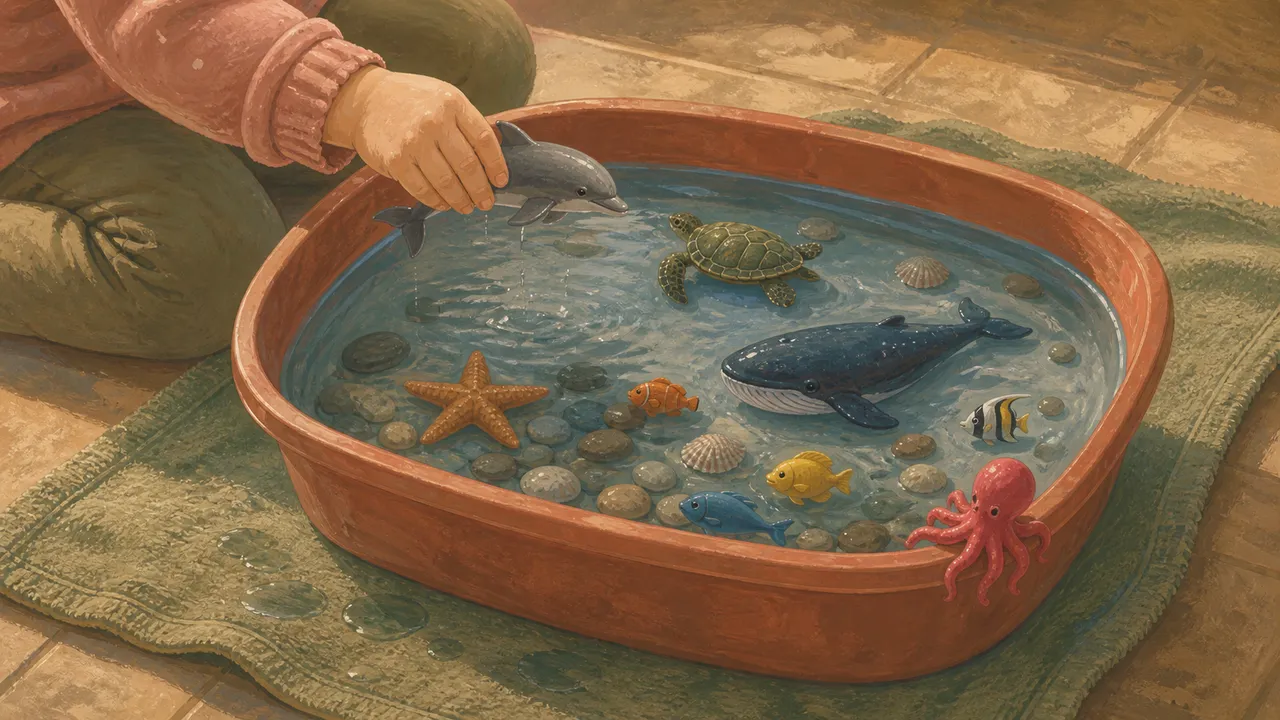
Fill your tub, add a few drops of blue food coloring, and toss in whatever ocean creatures you have. A Safari TOOB sea animal set is the one we use, a tube of tiny whales, turtles, and sharks that has quietly earned 4.5 stars from 100-plus parents, but any plastic sea life from the dollar bin is fine too. Drop in a few shells and a couple of smooth rocks.
Then run the sink-or-float challenge. Hand one object at a time and ask: “Sink or float?” Let them guess before it hits the water. That predict-then-test habit is how STEM learning starts, and preschoolers will run through every object in the bin without a single prompt from you.
For a full setup walk-through, see our guide on setting up an ocean sensory bin toddlers love.
Color Mixing and Rainbow Water
Set out three small cups of water, one with red food coloring, one yellow, one blue. Hand over a spoon and an empty cup and step back.
Toddlers start combining colors almost immediately, usually by accident. Red and yellow makes orange. Yellow and blue makes green. You can name what’s happening, but you don’t have to. The sensory exploration drives the whole thing on its own, and the color awareness builds without any instruction.
A white coffee filter dropped in at the end makes a good keepsake. The dye wicks out in streaks and they genuinely want to show everyone.
Cleanup, Storage, and Stretching the Play
The fun part doesn’t have to end in a soggy mess on your floor. Get the cleanup down to five minutes and this bin becomes something you’ll actually pull out again.
Fast Cleanup and Dry Storage
Drain the water right in the tub using a mesh strainer held over the sink. It catches any floating naturals, pasta bits, or sponge pieces so nothing clogs the drain. A cheap one does the job, and the set I keep for this sits at 4.8 stars across 1,400-plus reviews, the highest mark of anything in this article. Pat the tools dry and give the container a quick wipe. Once everything is dry, drop it all into a lidded tote: tub, tools, extras together. Stack it somewhere you can grab it fast, a low cabinet, a mudroom shelf, wherever is closest to where you play.
Refreshing the Bin So It Stays Fun
The bin itself never changes; what goes in it does. Swap the filler weekly and it lands like a brand-new activity every time.
Here’s what to rotate between sessions:
- Filler: sponges, chia slime, shells, cooked pasta, ice cubes, soap foam
- Tools: measuring cups, pipettes, a whisk, funnels, spoons
- Theme: ocean week, color-mixing week, rainy-day week
A loose theme gives it direction, and even a toddler who blew through the bin in three minutes last month will sit longer. Hands-on learning stretches furthest when the bin keeps surprising them.
Found this useful? Save it for the next rough afternoon.
Questions parents ask me about this
What water sensory bin ideas are safer than water beads?
Ice cubes, cooked pasta, soap foam, and cut sponges all give toddlers that satisfying texture-rich experience without the swallowing risk. Float natural materials like leaves and pebbles for a sink-or-float twist. Any filler your child can eat, or that won't swell inside them, is a safe starting point.
At what age is a water sensory bin safe for babies and toddlers?
You can start a water bin at any age as long as you keep the water shallow, stay at arm's reach the whole time, and use taste-safe fillers. Two inches of body-temperature water is enough for small hands to scoop and splash. The rule for fillers is the same as for food: if they can't eat it, it doesn't go in.
How do I stop my toddler from drinking the water in the bin?
You probably won't stop them entirely, which is exactly why plain water (or water with a little tear-free bubble bath for foam) is the go-to filler for toddlers who still mouth everything. Keeping play sessions short and supervising closely is more realistic than trying to enforce a "don't drink it" rule with a two-year-old.
What can I use instead of water beads in a sensory bin?
Cut sponges and cornstarch slime are two easy starting points, and most parents already have one or the other at home; cooked pasta, soap foam, and ice cubes round out the list if you want more variety. For kids who love the squish factor, cornstarch mixed with water makes a stretchy, mouthable slime. Cut sponges work well for children who want something to squeeze and wring out.
How do I keep a water sensory bin from making a huge mess?
Lay a towel down before you start and set only one tub out at a time. Keep tools small so kids aren't flinging water across the room, and do the activity near the kitchen or bathroom where cleanup is fast. Setting a visual timer lets kids know when the bin closes, which cuts down on the end-of-play scramble.
Are water sensory bins good for kids with sensory processing differences?
For a sensory-seeker, a water bin gives hands-on input that helps them settle before transitions or during a high-energy stretch. For a child who finds textures uncomfortable, starting with plain warm water and no added fillers lets them ease in on their own terms. Follow the child's lead and don't push a filler they resist.
How long can I leave water sitting in a sensory bin?
Plain water is fine for a few hours of active play, but standing water in a warm room grows bacteria fast, so drain it at the end of the session. If you added soap or food coloring, the same rule applies: drain, rinse, and let the tub air dry before storing. A lidded tote keeps the bin clean between uses but it's for storing dry fillers and tools, not sitting water.
Written by
Nora Hayes
Mom of two and a former preschool aide. I share the screen-free sensory play and calm-down ideas I test at my own kitchen table, plus what the moms in my little meet-up swear by. A parent passing on what works, not a doctor or a therapist.
More about NoraKeep going
All Sensory Bins-
 Sensory Bins
Sensory Bin Fillers: 20 Pantry Items You Own Now
Skip the craft store: 20 sensory bin fillers already in your pantry tonight, sorted by texture, mess level, and age. Start one in minutes.
-
 Sensory Bins
sensory integration occupational therapy intervention: ADHD
Turn sensory integration OT into a home calm-down bin for ADHD kids. Task cards, bin ideas, and a setup that works on the hard days.
-
 Sensory Bins
Indoor Sensory Play: 18 Low-Mess Setups That Work
Dreading the cleanup? These indoor sensory play setups stay on the mat, work in apartments, and reset in minutes. Start tonight.
-
 Sensory Bins
Sensory Play 2 Year Olds: 12 Bins That Hold Focus
Most sensory bins lose a 2-year-old in 90 seconds. These 12 sensory play ideas for 2 year olds actually hold attention. Start one tonight.