Easy Sensory Activities for Tired Days

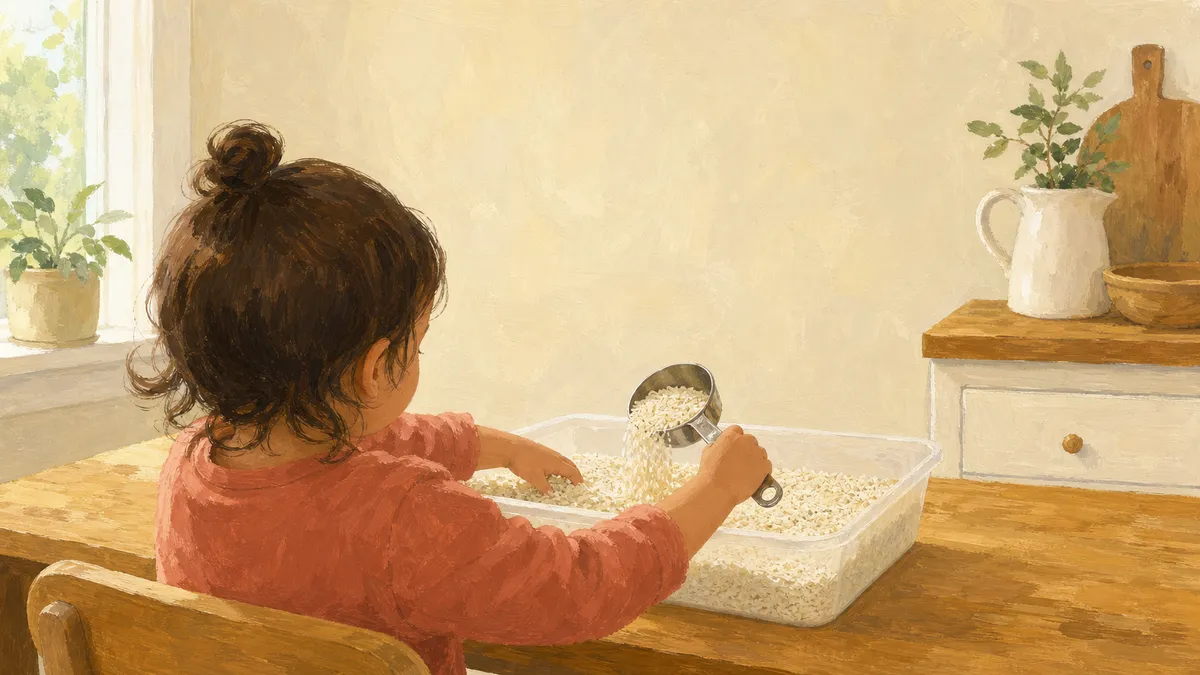
The fastest easy sensory activities for toddlers are the ones you can pull together from your own pantry in under ten minutes: a bin of dry rice with a few measuring cups, a tray of water and sponges, or a muffin tin and a scoop of dry beans.
I’m Nora Hayes, a former preschool aide raising an autistic sensory-seeker, and the setups in this post are the ones my own two kids actually reach for, not the styled versions that look good on a screen.
Below you’ll find grab-and-go pantry bins, mess-free options for anxious days, the taste-safe rules that keep little ones safe, what to try when your kid won’t engage, and a cleanup plan so you’ll do it again.
Why 10 Minutes Is All You Really Need
Ten minutes is not a warmup. It’s the whole session.
A short burst of sensory play does the same thing a longer one does: it gives your kid’s hands something to do, settles a nervous system that’s been revving all morning, and creates a pocket of quiet you can actually use. Michigan State University Extension puts sensory play at the foundation of the skills children build toward reading, writing, and problem-solving. You don’t need an hour of structured activity to tap into that. You need a bin and ten minutes.
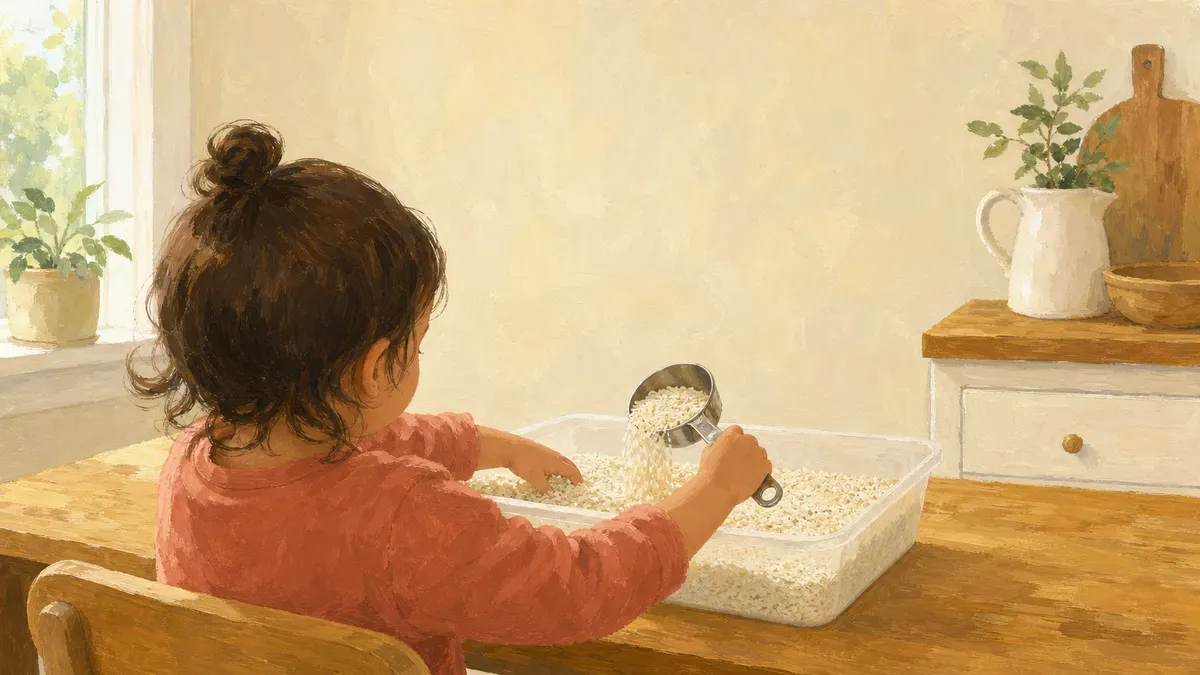
Here’s what actually happens in a good ten-minute setup. The first two minutes, your kid pokes at it and figures out the rules. The middle stretch, they’re in it. Scooping, pouring, sorting, squishing, whatever the bin invites. That repetitive motion is the fine motor work and the emotional regulation payoff happening at the same time. The last few minutes, they’ll either wind down naturally or dump everything on the floor. Both count as a successful session.
Brain development doesn’t care about your ambitions for the afternoon. Quick setup beats the elaborate activity you never get around to. The sensory bins for toddlers you’ll find in this guide are built around that idea: nothing complicated, nothing that needs a trip to the craft store.
Grab-and-Go Bins From Your Pantry
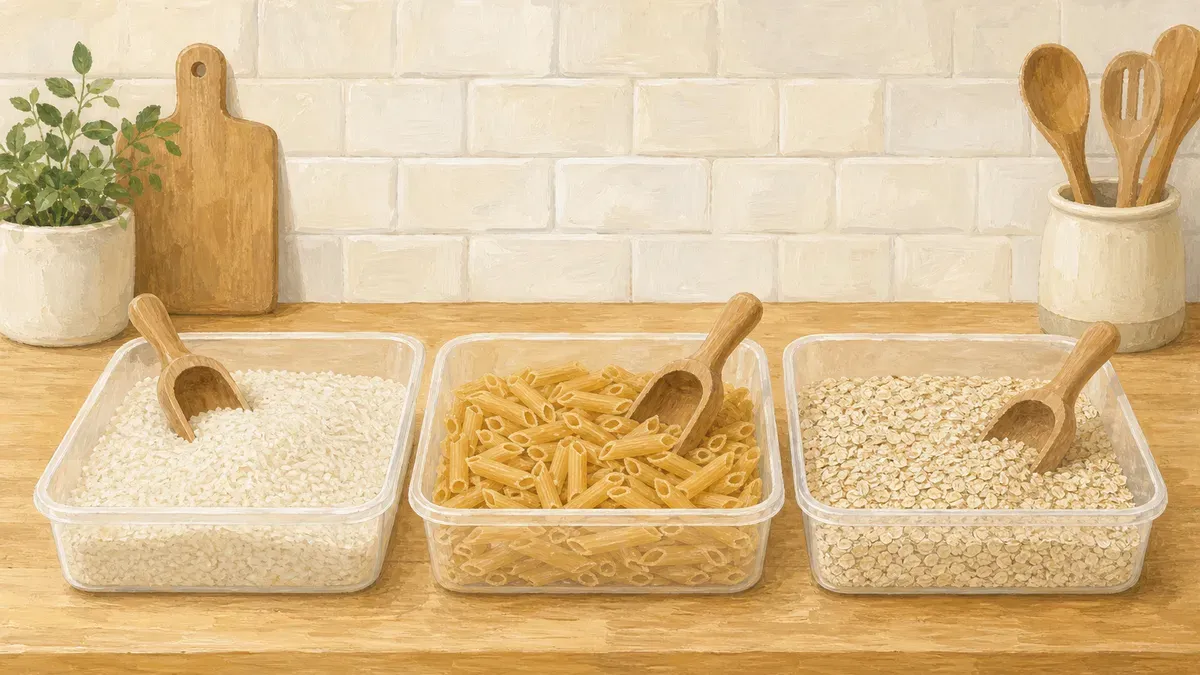
Open the cupboard and you already own three sensory bins. Here’s how rice, then pasta and beans and oats, and a quick word on color turn five minutes of setup into a busy toddler.
Dry Rice With Cups and Scoops
Dump uncooked rice in a plastic tub, drop in a couple of measuring cups, and walk away. That’s it. June will scoop, pour it back, scoop again, and stay there longer than any toy I’ve bought her.
The scooping is the whole point. Pouring rice from a cup into a bowl is real fine motor work, the kind of arm-and-hand control that takes practice to refine. The OT Toolbox notes that scooping and spoon use sharpen up between 15 and 18 months as kids gain steadier control of their arms with cups and bowls.
Keep these easy sensory bins low to start. A shallow layer of rice means less on the floor while little hands learn the wrist flick that keeps it in the cup, and the tactile feel of it running through their fingers is half the draw.
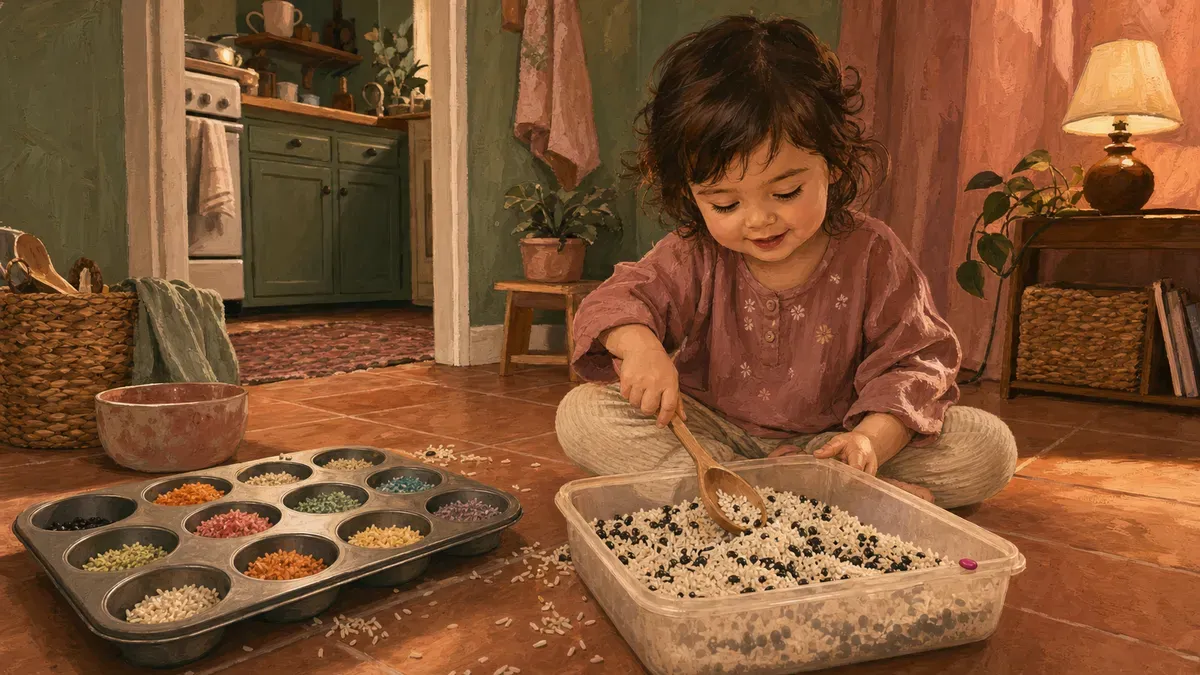
A cheap muffin tin turns one rice bin into six tiny scooping stations.
Dry Pasta, Beans, and Oats
Same tub, new filler, brand new activity. Swap the rice for dry pasta, dried beans, or oats and the texture under their fingers changes completely.
The sound changes too, and that’s half the fun. Beans rattle and clatter, oats whisper, pasta tubes knock together like little drumsticks. That kind of auditory play, filling a cup and listening to the difference, helps a toddler start telling one sound from another.
These are some of the easiest sensory activities for toddlers precisely because the materials live in your pantry. Rotating household ingredients keeps the same setup feeling new, so one tub gives you a week of different sensory experiences.
A Quick Note on Dyeing Fillers
Colored rice photographs beautifully and, yes, the kids love it. Just know it pushes you past the ten-minute promise.
Dyeing rice means food coloring, a bag, and then a wait while it dries on a cookie sheet so the color sets instead of smearing onto little hands. That’s a rainy-afternoon project, not a tonight-at-5pm rescue.
So save it for the weekend. If you want to try color mixing later, dye a few small batches in different shades and let them blend in the tub. For tonight, plain rice does the job and nobody’s fingers turn blue.
Water and Mess-Free Setups for Anxious Days
Some days a bin of rice is the last thing a wound-up kid wants on the floor, and the last thing you want to sweep up. On those days you go quieter and cleaner, with setups that soothe instead of stir up.
The 2-Minute Sensory Bottle
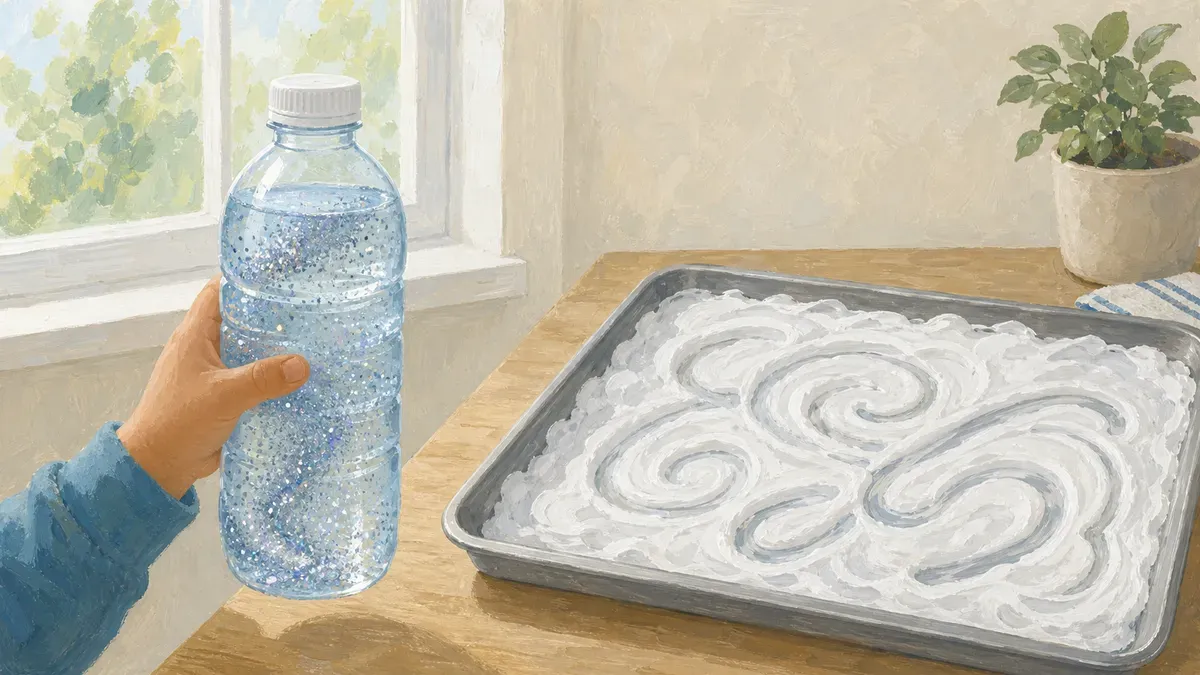
Grab a clear plastic bottle, the kind your water comes in, and fill it most of the way with warm water. Add a spoonful of glitter, a drop of food coloring, and a squeeze of clear glue or dish soap so the glitter drifts slow instead of sinking fast. Cap it tight, then glue the lid shut if your kid is a determined opener.
That’s it. You’ve made a sealed, no-spill soothing tool in about two minutes.
What makes sensory bottles work is the watching. A kid mid-spiral can’t always hear “calm down,” but they can follow swirling glitter with their eyes until their breathing slows to match it. The visual does the work, and that quiet focus is the start of emotional regulation. Keep one in your bag and one near wherever the hard moments tend to happen.
Shaving Cream on a Tray
When they want to dig in but you can’t face a real mess, squirt a mound of unscented shaving cream onto a baking tray and smooth it flat. Now they’ve got a whole canvas for finger drawing, swirls, letters, smushing it back together and starting over.
It feels wild and looks messy, but it stays put. The tray catches everything, and shaving cream is washable off skin, tray, and table with a single wipe.
Drop a dot of food coloring in two corners and you’ve got quiet color mixing too, blue swirling into yellow under their fingers. This tactile play has another payoff: regular messy play can help a kid get more comfortable with textures over time, which sometimes shows up later as more patience with scratchy clothes or new foods. Skip it if your kid hates sticky hands. Some do, and that’s fine.
Low-Mess Bag and Bin Tricks
For the truly low-mess days, seal it up. Squirt two blobs of paint into a zip-lock freezer bag, press out the air, tape the top, and tape the whole thing to a window or the floor. They squish and smear and mix colors with nothing on their hands.
The other trick is location. Set your usual bin inside an empty bathtub and let the spilled rice or beans fall where a quick rinse handles it.
- Paint bag: color mixing with nothing to clean
- Bin in the tub: contained indoor sensory play, washable cleanup
- Always within arm’s reach for supervision
Keep watch either way. Sealed isn’t the same as unsupervised, especially with the little ones.
Keeping It Safe and Taste-Safe
The rule that covers almost everything: if it’s small enough to swallow, it stays out of the bin. Guidance on choking hazards for young children under U.S. federal regulations defines a small part as anything that fits inside a cylinder 2.25 inches long by 1.25 inches wide (roughly the size of a toddler’s throat), and no product for children under three may legally contain one. That same standard is a useful gut-check when you’re pulling household ingredients off the pantry shelf.
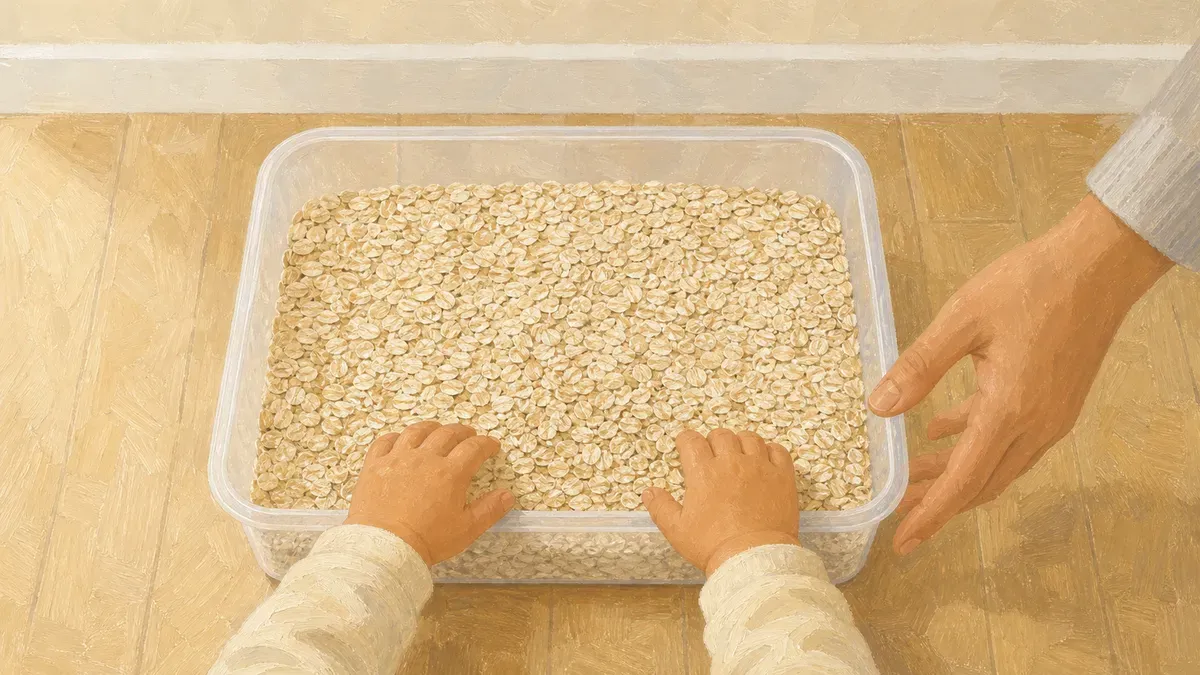
Under 18 months, keep it even simpler. The Caring for Our Children national health and safety standards note that sensory table activities aren’t developmentally appropriate before 18 months, because the hazards outweigh the benefits at that age. Save the bin for when they’re older; for the littlest ones, a wet washcloth or a chilled teether covers the tactile craving safely.
For easy sensory activities with toddlers old enough for a bin, here’s what works and what doesn’t:
- Taste-safe fillers: oats, cooked pasta, flour, plain cornmeal, water. All edible, all fine.
- Household ingredients to skip: dry beans for under-twos (choking hazard), glitter (lungs), kinetic sand if they’re still mouthing everything.
- Supervision: stay close. The activity is ten minutes; you’re there for all ten.
Nothing in the bin needs to be exotic. The pantry version is usually the safest one.
What to Do When Your Toddler Won’t Engage
Some kids walk up and plunge both hands in. Others stand at the edge and stare like you’ve set out a trap.
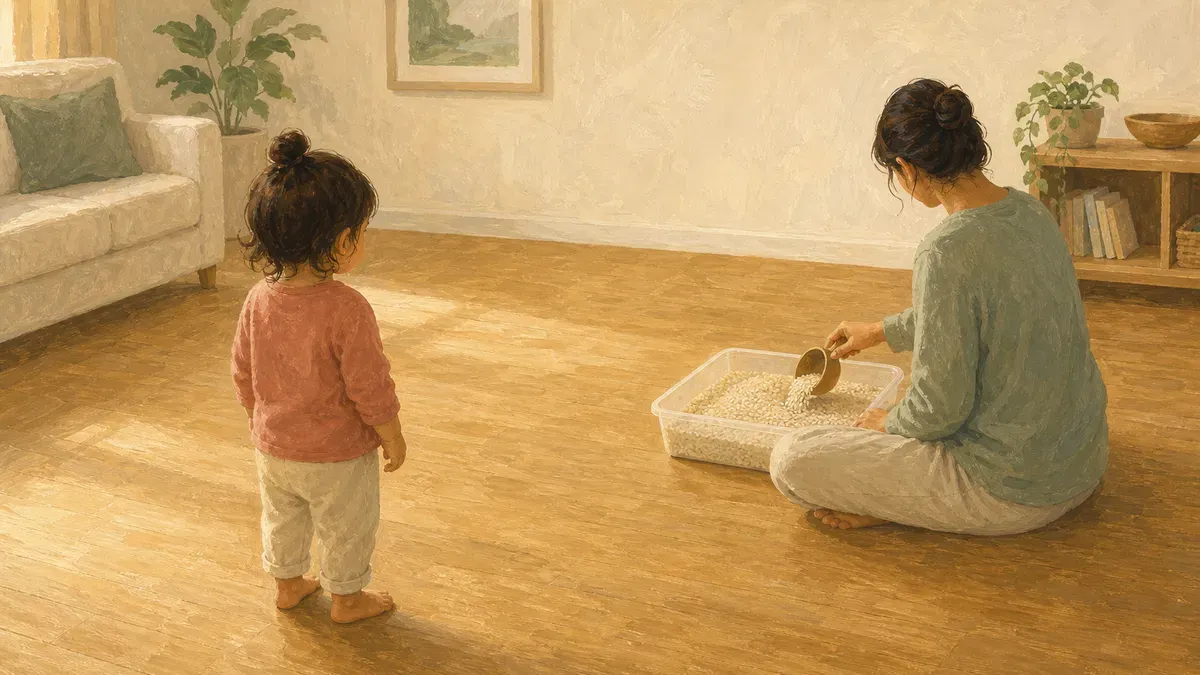
If your toddler won’t touch the bin, that’s not failure. That’s useful information. A kid who hangs back is telling you the texture is too much right now, and the fix is to make entry feel optional.
Sit next to the bin yourself. Pour, scoop, let the rice or beans run through your fingers without any invitation for them to join. Sensory exploration starts with watching someone else do it safely. At our house, June spent two full sessions just handing me cups before she ever put her hand in.
When they’re ready to try, a tool is your best friend.
- A spoon or cup keeps their hand out of the texture until they choose to go in.
- A small scoop introduces cause and effect: pour in, watch it fall out, try again.
- That’s problem-solving, even if they never go bare-handed.
For kids with stronger sensory avoidance, gradual exposure is the method occupational therapists use. Occupational therapy tips for sensory hesitation explain how starting with low-intensity stimuli and slowly stepping up lets the brain adjust and reduce sensitivity over time. At home, the approach is simpler than a clinic.
- Keep supervision low-key and the bin optional.
- No pressure to stay or touch anything.
- If they bail after two minutes, let it go and reset for tomorrow.
The win isn’t full participation on day one.
Quick Cleanup and Reusing Your Setup
The fastest cleanup is the one you planned before you started. Before the rice hits the bin, slide a dollar-store shower curtain liner under the whole setup. When play is done, pick up the corners, funnel the mess back into the container, and done. Thirty seconds.
For the bin itself, rinse it if you used water materials, wipe shaving cream off with a damp cloth, and let it air out with the lid off. Nothing needs to be washed with soap every session. A quick wipe and you’re back to baseline.
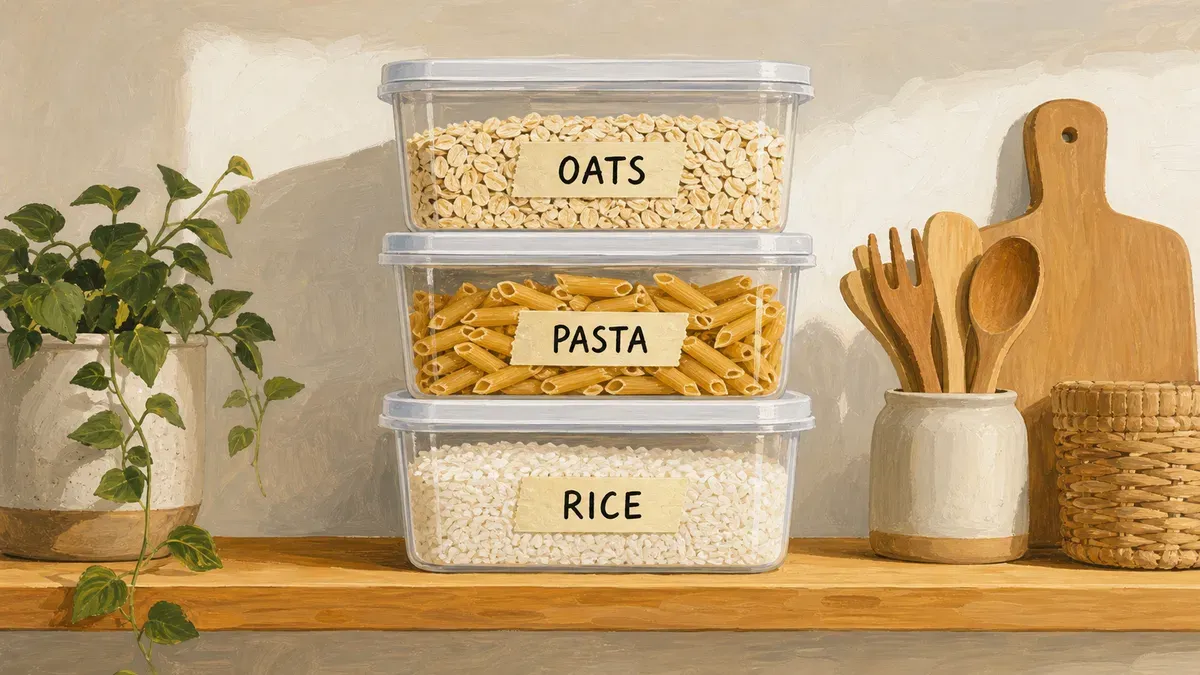
Storage is where most people overthink it. Any lidded container works: a repurposed bin from your pantry, a shoebox, a gallon ziplock for smaller fillers. Label it with masking tape. Dry materials like rice, oats, and cornmeal stay fine at room temperature between sessions. Utah State University Extension notes that dry beans in a standard food-grade bag stay good for a year or more, so the same materials you used today will be there next month.
Rotation keeps the whole thing fresh without buying anything new.
- Pull out the rice bin this week, the pasta bin next week
- Swap the tools instead of the filler: a spoon becomes a scoop becomes a funnel
- Add one color or one small object to a bin you’ve already used and it registers as brand new to a toddler
You don’t need a Pinterest-organized shelf. One labeled container per filler, stacked in a cabinet, is the whole system. Set it up once, and next time you need ten minutes, it’s already ready.
Found this useful? Save it for the next rough afternoon.
Questions parents ask me about this
What are the easiest sensory activities to set up fast?
A rice bin is the fastest starting point: pour uncooked rice into a shallow container, add a few cups or spoons, and you're done in under two minutes. Shaving cream on a baking tray and a zip-lock paint bag taped to a window are the next easiest, both zero-rinse setups. If your toddler is under two, a small bin of oats or cooked pasta gets you there just as quickly and keeps everything taste-safe.
What household items make the best quick sensory bins?
Uncooked rice, oats, dry pasta, cornmeal, and flour are the pantry staples worth keeping on hand. For tools, muffin tins, wooden spoons, measuring cups, and small containers from your kitchen all work. You don't need to buy anything special to get started; what's already in your cabinet is usually enough for a full ten-minute session.
Are dry rice and pasta sensory bins safe for toddlers?
For kids two and older who are past the mouthing stage, yes. Under two, dry beans and uncooked rice carry a choking risk, so the safer swap is oats, cooked pasta, or cornmeal. The rule of thumb: if a piece could fit in your child's throat, it stays out of the bin. Stay present for the whole session regardless of what's inside.
How do I keep a 10-minute sensory activity from making a huge mess?
A shower curtain liner spread under the bin catches most spills and shakes out in seconds. Setting the bin inside an empty bathtub is the other easy fix for fillers like rice or oats. Keep the rice layer shallow so there's less to scatter, and do the cleanup right away while it's still contained. For days when mess isn't an option, the zip-lock paint bag or shaving cream on a tray are both genuinely mess-free.
How long should a toddler play with a sensory bin?
Ten minutes is a complete session. Some kids bail in two, especially at first, and that still counts. There's no minimum. If your child stops engaging, they're done; you wrap it up and try again tomorrow. Expecting longer play out of the gate, especially with a hesitant or sensory-avoidant kid, usually just adds pressure that makes the next session harder.
How do I store sensory bin fillers so I can reuse them?
Rotate one filler per week so the same bin stays interesting. One labeled container per filler keeps that easy. Dry fillers like rice, oats, and pasta keep at room temperature for a long time in a sealed bin or jar. Wipe the bin between sessions rather than washing it every time unless something wet was involved. Rotate tools or drop in a new small object to refresh the setup without replacing anything.
What sensory activity calms an overwhelmed toddler quickly?
A sensory bottle, a sealed clear bottle filled with water, glitter, food coloring, and a little glue, is the fastest regulation tool when a meltdown is building. For a sensory-seeking kid who needs to move before they can sit, heavy work first, like pushing a laundry basket or carrying something with both arms, tends to settle the nervous system faster than any bin.
Written by
Nora Hayes
Mom of two and a former preschool aide. I share the screen-free sensory play and calm-down ideas I test at my own kitchen table, plus what the moms in my little meet-up swear by. A parent passing on what works, not a doctor or a therapist.
More about NoraKeep going
All Sensory Bins-
 Sensory Bins
Sensory Bin Fillers: 20 Pantry Items You Own Now
Skip the craft store: 20 sensory bin fillers already in your pantry tonight, sorted by texture, mess level, and age. Start one in minutes.
-
 Sensory Bins
sensory integration occupational therapy intervention: ADHD
Turn sensory integration OT into a home calm-down bin for ADHD kids. Task cards, bin ideas, and a setup that works on the hard days.
-
 Sensory Bins
Indoor Sensory Play: 18 Low-Mess Setups That Work
Dreading the cleanup? These indoor sensory play setups stay on the mat, work in apartments, and reset in minutes. Start tonight.
-
 Sensory Bins
Sensory Play 2 Year Olds: 12 Bins That Hold Focus
Most sensory bins lose a 2-year-old in 90 seconds. These 12 sensory play ideas for 2 year olds actually hold attention. Start one tonight.