Sensory Play Toys: 15 Bin Tools for Fine Motor

Some links here are affiliate links. If you buy through one, I may earn a small commission at no extra cost to you. As an Amazon Associate I earn from qualifying purchases. I only point to things I'd actually use with my own two.
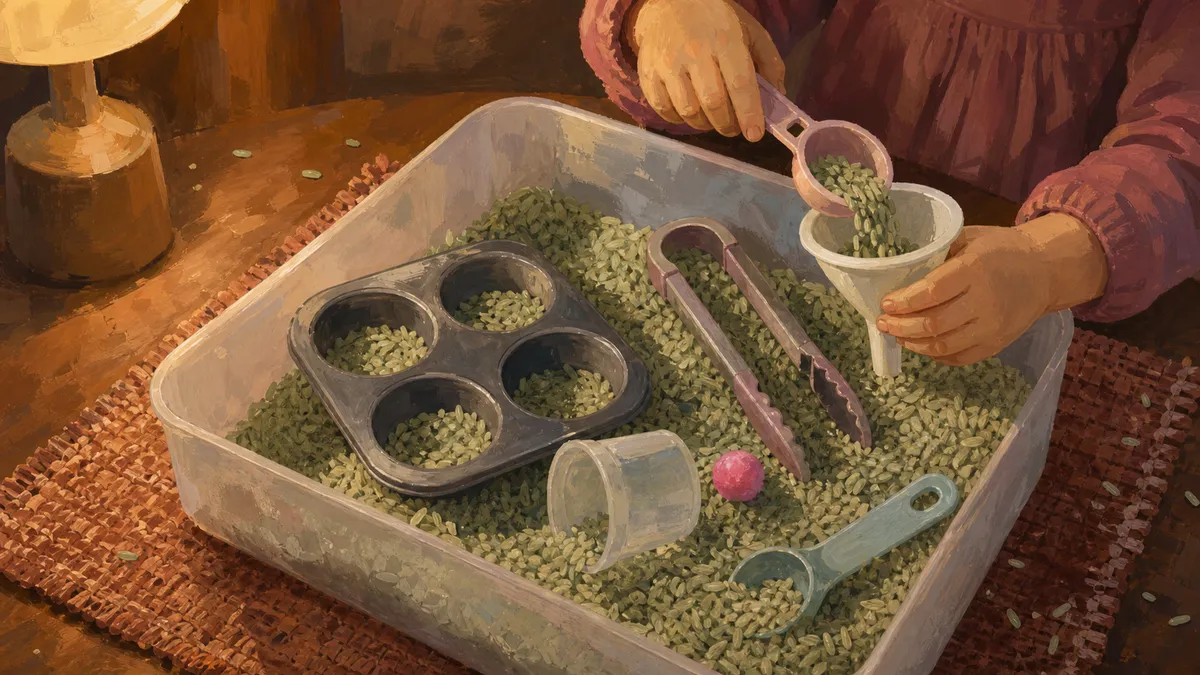
The sensory play toys that actually build your toddler’s fine motor skills are the cheap ones already in your kitchen, scoops, tongs, and tweezers that train the same little pinch a pencil needs later. I’m Nora Hayes, a former preschool aide who’s run hundreds of these setups with my own two kids, and I’ll save you the guesswork on which few tools earn a spot in the bin.
Most cost under a dollar, though a couple are worth a small splurge, and I note which ones below alongside the exact skill each builds.
What Fine Motor Skills Sensory Bin Tools Actually Build
A scoop, a pair of tongs, and a tweezer build the exact hand muscles your kid will use to hold a pencil, and they do it while it feels like play. Here is what is actually happening in those little fingers, and why the tool matters more than the bin.
Grasp, Strength, and the Skills That Lead to Writing
Every time your toddler pinches a pom-pom out of the rice, they are rehearsing the pincer grasp, the thumb-and-index pinch that, per these developmental milestones for fine motor skills, shows up around 10 to 12 months and leads straight into the tripod grip used for writing.
Scooping dried beans builds hand strength. Squeezing a dropper builds finger control. Holding the bin steady with one hand while the other digs builds bilateral coordination, the two-hands-working-together skill that later lets a kid hold paper down and write at the same time.
Then there is the quiet one: in-hand manipulation, the shuffling of small objects inside the palm without the other hand helping. That is the same move a child makes turning a pencil to erase. All of it adds up to writing readiness, and none of it looks like a worksheet.
These are the same sensory skills a kindergarten teacher will later call “pencil grip,” practiced two years early in a bin of rice.
Why a Tool Beats Bare Hands in the Bin
Bare hands in a bin feel great and calm a wound-up kid, but they let the fingers off easy. A fistful of rice asks nothing of the grip. The hand just grabs.
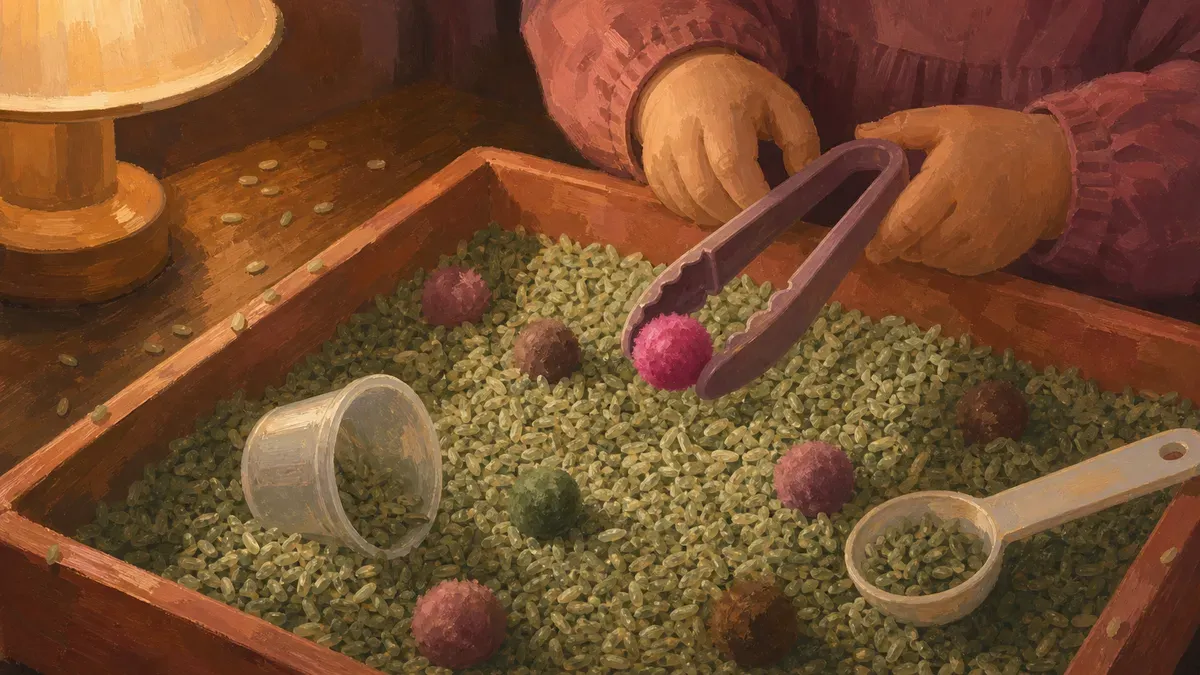
Drop a tweezer or a scoop into the same bin and the work changes. Drop a tool in and the demands change immediately:
- Pincer grip: the tong or tweezer is too small for a fist, so thumb and two fingers take over
- Controlled release: opening the tongs over the right cup, not the floor
- Tactile discrimination: feeling for the one bead among the beans
That is the difference between passive play and real sensory motor activities. I have watched June, my three-year-old, dump rice with her hands for ten happy minutes and build nothing, then chase the same beads with finger tongs and visibly concentrate, tongue out, the whole time. The tool is what turns the bin into a dexterity workout. If you are just getting started, our guide to sensory bins for toddlers covers the base setups these tools drop into.
The 15 Best Sensory Bin Tools, Ranked by Skill
The best sensory bin tools are the cheap ones that force a specific hand movement, ranked here from whole-hand grabbers up to two-handed fiddly work. We sorted them by the skill they build, so you can grab the ones that match where your kid is right now.
Scoops, Spoons, and Funnels for Whole-Hand Strength
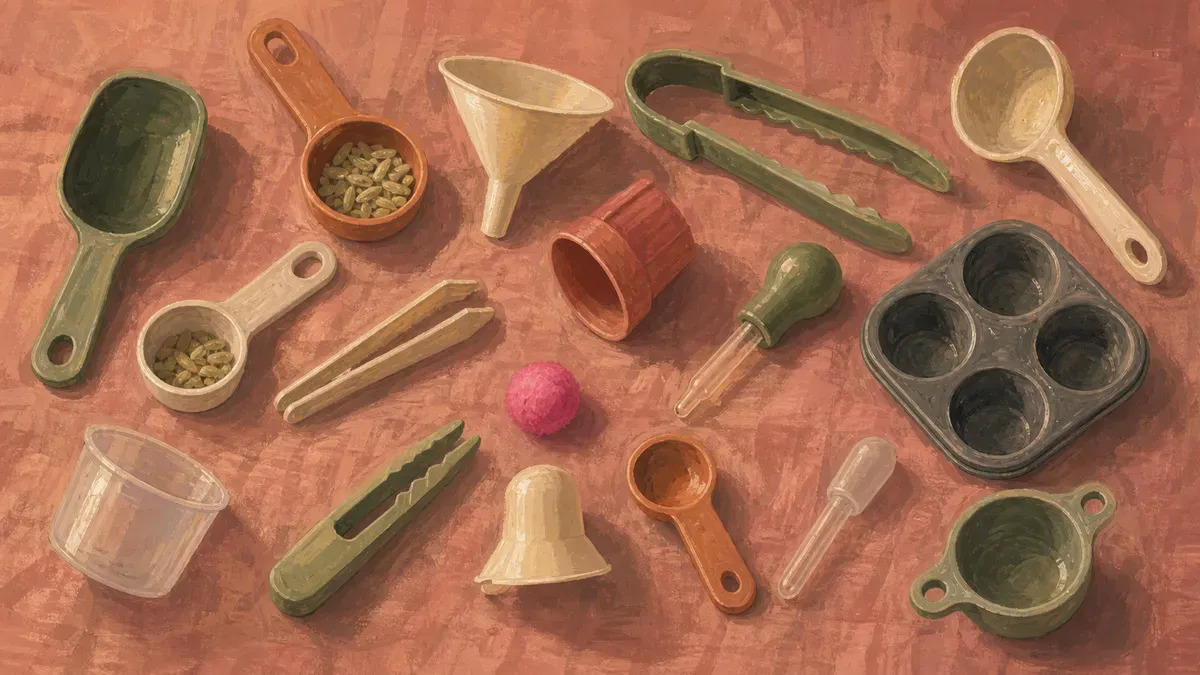
Start here if your toddler still grabs with a whole fist. A handful of dollar-store scoops, a set of measuring spoons, and a couple of funnels are the cheapest sensory play equipment you can buy, and they do the most foundational work.
- Pouring and filling load the muscles behind grip and wrist rotation, and just holding a scoop firms up the small arches of the hand
- Scooping with a spoon adds wrist and finger control on top, the base strength that has to land before any of the precise finger work
My go-to is a $1 plastic measuring set and a funnel from the baking aisle. June will pour dry rice from cup to funnel for a solid fifteen minutes, and that whole-hand grasp work is quietly building the dexterity she needs later. Pair them with the right base and you are set; our list of sensory bin fillers you already have covers what to scoop.
Tongs, Tweezers, and Droppers for Pincer Precision
Once the hand is strong, you switch to tools that isolate the thumb and two fingers.
- Long tongs first: they fit a kid who still grabs with a whole hand
- Drop to smaller tweezers and finger tongs once they are ready to refine finger use
- The smaller the tool, the more it blocks a fist grip and forces the pincer grasp
The tong I actually keep in the bin is a set of kid easy-grip tweezers, the chunky kind with finger-placement grooves that steer little fingers into a pinch instead of a fist. They come twelve to a box in six colors, so a lost one isn’t the end of the world, and they hold a 4.8-star average across nearly 500 reviews.
For squeeze-and-release work, the Learning Resources Twisty Droppers (Set of 4) are the interactive bin toys I reach for, and they’re an Amazon’s Choice pick to boot. They squeeze colored water in and out, which trains finger control and in-hand manipulation at once. The four droppers run 6 inches long and are sized for ages 2 and up; we grabbed ours for a water-bead bin, and the twist heads survived a full summer of being chewed and dropped on the kitchen tile.
Sorting Cups, Squigz, and Helping Hands for Two-Handed Play
The last tier is two-handed work, where one hand holds while the other does the fiddly part.
- Sorting cups: scoop beads into separate cups to build the bilateral coordination that starts showing around eighteen months
- Fat Brain Squigz: suction-pop play that trains shoulder stability and grip at the same time
For an all-in-one upgrade, the Learning Resources Helping Hands Fine Motor Tool Set (LER5558) puts every tier of tool in a single kit. We pulled the gator grabber out for a pom-pom sort and it became Eli’s favorite, mostly because it looks like a tiny dinosaur, and the in-hand manipulation came free with the fun.
If your kid is 3 or older and ready to work through all four tool types in the same session, this is the kit that covers every stage without a second trip.
Both picks are built for different ages, so here is how they compare:
| Product | Age | Parents’ rating | Best for |
|---|---|---|---|
| Learning Resources Twisty Droppers (Set of 4) | 2+ | 4.7★, 700+ reviews | squeeze-and-transfer practice |
| Learning Resources Helping Hands Fine Motor Tool Set (LER5558) | 3+ | 4.6★, 19,000+ reviews | all-in-one pincer and bilateral play |
Go Twisty Droppers for a precise squeeze-and-transfer toddler, and the Helping Hands kit when you want every tool in one box for an older preschooler.
Why Most of These Cost a Dollar (and Where to Find Them)
Here’s the part nobody selling sensory kits wants you to know: the drawer next to your stove holds half this list, and the dollar store stocks most of the rest. The next two stops sort the freebies from the few splurges actually worth your money.
Kitchen Drawer and Dollar Store Swaps
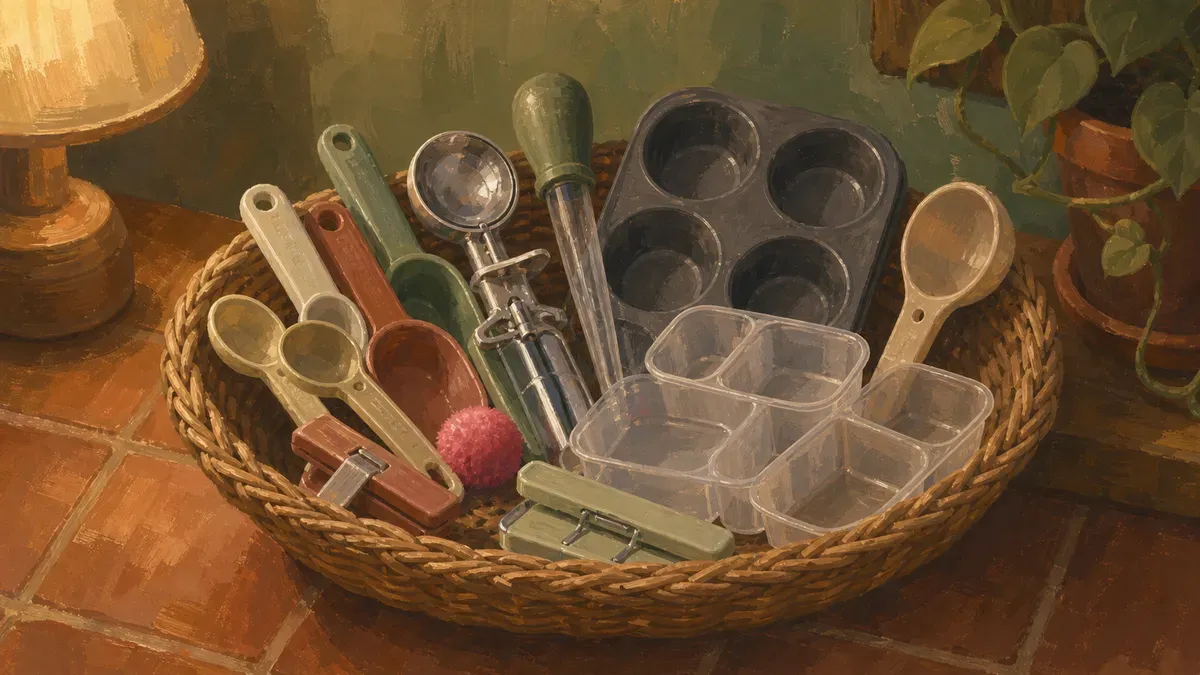
Before you add anything to a cart, open that kitchen drawer. An ice cream scoop, a turkey baster, a stack of ice cube trays, a muffin tin, the measuring spoons you never bake with. Every one of those is a fine motor tool wearing a kitchen disguise.
The dollar store carries the rest. Large tweezers, chip clips, divided trays, little lidded containers, all sitting on shelves for under a dollar each. Those plastic swaps do the same tactile, scoop-and-pinch work as the purpose-built versions, minus the branded markup.
I ran a whole muffin-tin pom-pom sort with June using a baster and a divided tray that together cost me two bucks, and she stuck with it longer than she ever has with anything fancy. The point of a sensory bin isn’t the tool. It’s the developmental win of small hands doing real work.
Raid the kitchen first, hit the dollar store second, and buy a branded tool only when both come up empty.
If you’re starting from scratch, my walkthrough on how to set up diy sensory bins pairs these swaps with a base your toddler will actually dig into.
Target Sensory Toys and Branded Tool Sets Worth the Splurge
A few picks earn the upgrade. When a dollar-store baster cracks or a flimsy clip won’t hold a pom-pom, that’s your signal to spend. The Target sensory toy aisle is a reliable place to look, and the Fat Brain Squigz starter set holds up to rough toddler hands far better than anything I’ve found for a buck; the 24-piece set has cleared ten thousand reviews.
The one branded set I’d hand a parent who wants it solved in a single box is the Learning Resources Helping Hands Fine Motor Tool Set. It’s an Amazon’s Choice with more than nineteen thousand reviews behind it, and the box holds four tools that cover every tier: the Gator Grabber tweezers, the Handy Scoopers, a set of Twisty Droppers, and the Squeezy Tweezers. The plastic is thick enough that Eli’s dropped it more times than I can count and it hasn’t cracked, which is more than I can say for anything I’ve grabbed off a dollar-store shelf. It costs more than a dollar-store handful, so check the current price on Amazon, but it’s the cheapest way I’ve found to skip the hunt entirely.
Two things to check before you buy:
- BPA-free plastic: check the label, because not every “kids” product is
- Drop-test durability: if it feels flimsy in your hand at the store, it won’t survive a toddler
How to Match a Tool to Your Toddler’s Age and Stage
The right tool isn’t the fanciest one, it’s the one your kid’s hands can actually work right now. Start big and clumsy, then shrink the tool as their grip gets sharper.
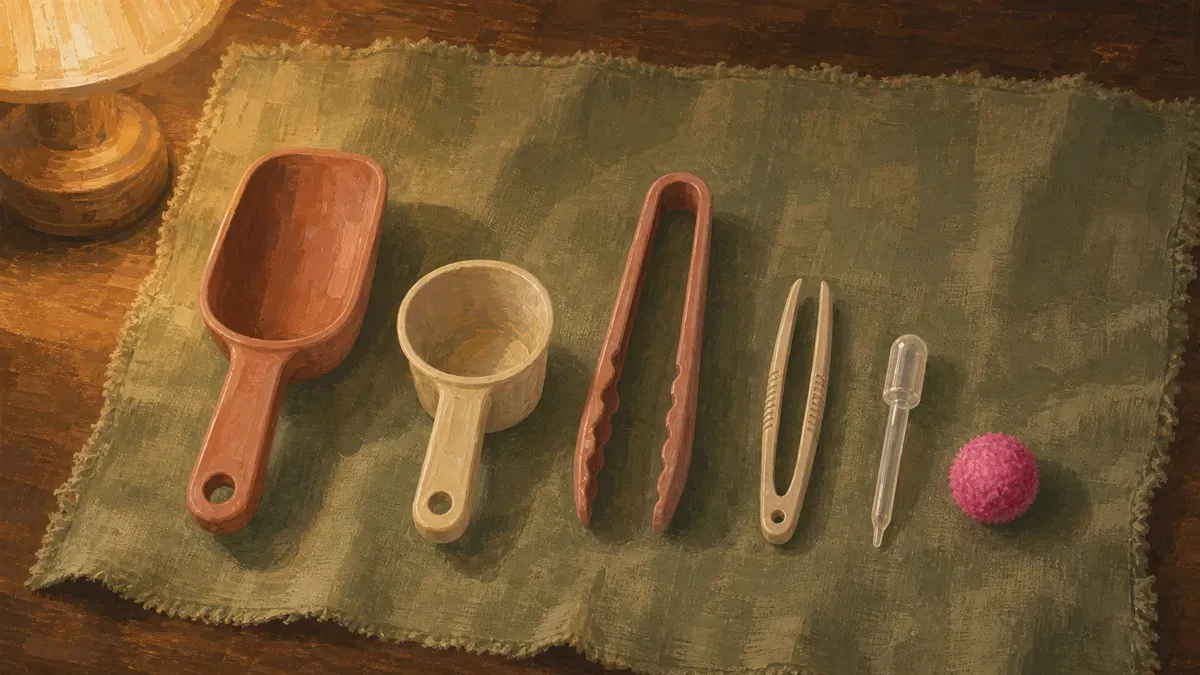
Whole-Hand Tools for the Youngest Hands
For the littlest hands, give them something they can grab with a fist. A young toddler isn’t pinching yet, they’re scooping, dumping, and carrying with the whole palm wrapped around the handle.
Big-grip scoops, chunky cups, and a wide ladle are the right sensory bin tools here. That whole-hand hold is the baseline grasp development they build on, the same fist-around-the-object grip babies start with before the thumb ever joins in. Before the pinch develops, whole-hand tools look like a fist wrapped around a measuring cup, scooping and dumping without any thumb separation at all.
Under two, assume everything goes in the mouth, because it will.
So if your kid still mouths materials, keep the filler edible. Dry oats, plain rice they can spit out, or cooked-and-cooled pasta all work, and our guide to taste safe sensory play walks through more options. Match the tool to the stage, the filler to the mouth.
Precision Tools as the Pincer Grasp Emerges
Once that fist starts to refine, the tools shrink. That thumb-and-finger pinch shows up around 10 to 12 months and keeps refining through the second year.
That’s your cue to graduate to tweezers, small tongs, and droppers that demand real finger control. The Learning Resources Twisty Droppers (Set of 4) are my pick once the pinch is solid.
Watch for the frustration ceiling, though. If the dropper keeps missing and your kid melts down, the fine motor skills aren’t there yet. Step back to a fat tong or a scoop, win for a week, then try again. Backing down isn’t a loss, it’s how you keep them in the bin instead of flipping it.
Make the Tools Last: Cleanup, Storage, and Play Extensions
Buying the tools is the easy part. Keeping them from disappearing into the rice and stretching one bin into a week of play comes down to two habits: storing them so they survive, and giving your kid a reason to reach for them again.
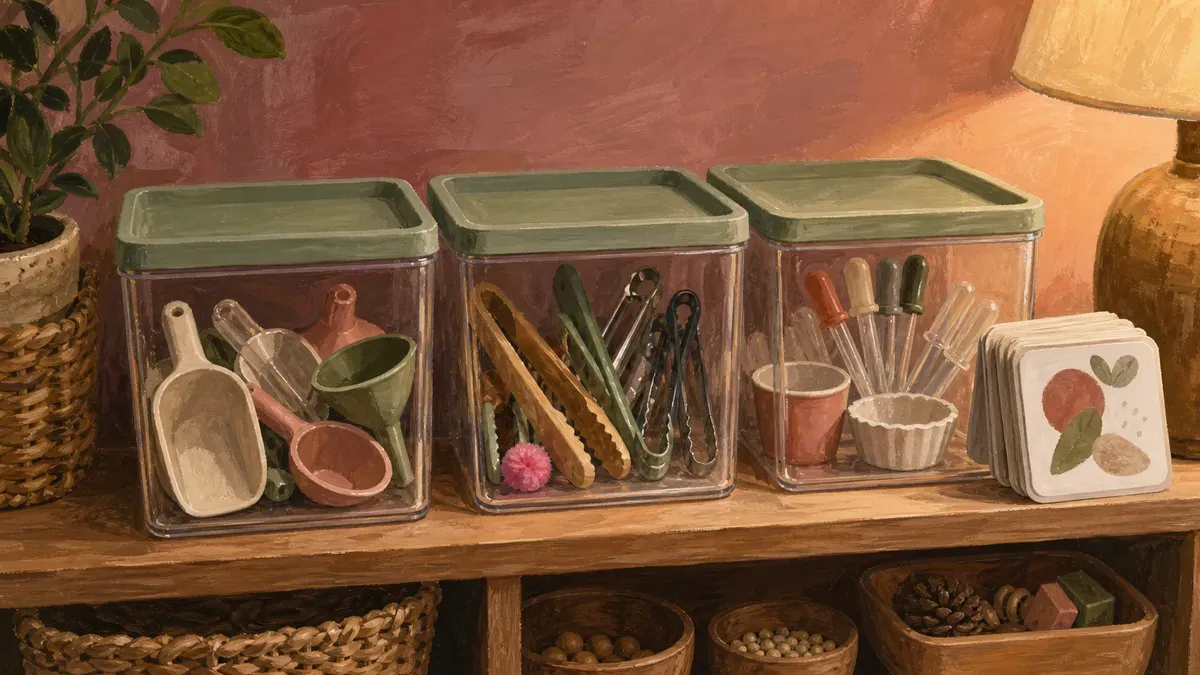
Storing and Cleaning Small Tools Without Losing Them
Small tools vanish. A tong here, a dropper buried under a sensory bin of dyed rice, and by next week you’re hunting through the toy box again.
The system that finally stuck at my house: a quick rinse in warm soapy water after a wet bin, a towel and an hour on the drying rack, then sorted by type into clear labeled containers. Droppers in one, scoops in another, tweezers and tongs together.
- Rinse and air-dry before anything goes back in the box
- Sort by tool type, not by bin, so you grab fast
- Label the lids so a non-reader can put them away too
Clear bins matter for a developmental reason beyond tidiness: when your kid can see the tools, they ask for them. Out of sight is out of play.
Task Cards That Stretch One Tool Into Ten Activities
One pair of tongs is one activity until you give it a job. Hand a bored toddler a card that says sort the pom-poms by color or count five into the cup, and that same tong becomes a fresh challenge every time.
Same tool, new goal, repeated fine motor reps without you inventing a game on the spot, and it slows a frantic dump-and-flip into something steadier on a hard afternoon.
Keep a stack of laminated cards right in the storage bin so play sets itself up. I lean on a printable set I found in the actually sensory bin 25 task card collection for this, and the rest of the setup lives in our complete guide to building toddler sensory bins.
Found this useful? Save it for the next rough afternoon.
Questions parents ask me about this
Which sensory play toys build fine motor skills in toddlers?
The tools that do the most work are ones that force a specific grip: tongs, tweezers, droppers, small scoops, and funnels. Each one demands a different combination of finger control, hand strength, and wrist movement. Skip anything that rewards dumping over transferring, and you'll get more fine motor payoff per session.
At what age can a toddler start using sensory bin tools like tongs?
Whole-hand scoops and cups can start as early as twelve months alongside taste-safe fillers. Tongs sized for little hands typically come in around eighteen months to two years, once a child can squeeze and release on purpose. Precision tools like tweezers and droppers are better saved for two-and-a-half and up, when the pincer grasp has had time to solidify.
Are dollar store sensory bin tools safe for toddlers?
Most are, with one check: squeeze the handle and look for flex or cracking. Flimsy plastic that snaps creates a sharp edge fast. Clips, scoops, and divided trays from the dollar section hold up fine for supervised play; just skip anything with very small parts for kids still putting things in their mouths, and swap out anything that starts to splinter.
What sensory toys does Target carry for fine motor play?
Target's sensory toy section typically carries squeeze-and-transfer tools, small tong sets, and activity kits designed for toddler grip strength. The selection rotates seasonally, but the early childhood aisle and the dollar spot are both worth checking. BPA-free and drop-resistant construction are the two things to look for on the packaging.
How do I get my toddler to use the tool instead of dumping the bin?
Start with a bin that has less in it. A full bin invites the dump. Give them a clear destination too, a muffin tin, a bowl, a counted line of spots, so there's somewhere to put what they're moving. If they still go straight to hands, that's fine; let them explore first, then reintroduce the tool once they've had their dump moment.
Which sensory bin tools work best for a child with autism or sensory needs?
It depends on whether the child seeks or avoids sensation. Sensory-seekers often love squeeze tools and heavy work like filling a full cup, while sensory-avoiders do better with tools that keep hands clean, tongs instead of bare fingers, a scoop instead of pouring by hand. Start with whatever keeps them regulated; skill-building follows once they're calm and willing.
How do I clean and store small sensory bin tools?
Rinse under warm water right after play before the filler dries inside hinges or squeeze tips. Let everything air-dry completely, a dish rack works well, before sealing them away. Clear labeled containers sorted by tool type make it easy for kids to pull out what they want and put it back without your help.
Written by
Nora Hayes
Mom of two and a former preschool aide. I share the screen-free sensory play and calm-down ideas I test at my own kitchen table, plus what the moms in my little meet-up swear by. A parent passing on what works, not a doctor or a therapist.
More about NoraKeep going
All Sensory Bins-
 Sensory Bins
Sensory Bin Fillers: 20 Pantry Items You Own Now
Skip the craft store: 20 sensory bin fillers already in your pantry tonight, sorted by texture, mess level, and age. Start one in minutes.
-
 Sensory Bins
sensory integration occupational therapy intervention: ADHD
Turn sensory integration OT into a home calm-down bin for ADHD kids. Task cards, bin ideas, and a setup that works on the hard days.
-
 Sensory Bins
Indoor Sensory Play: 18 Low-Mess Setups That Work
Dreading the cleanup? These indoor sensory play setups stay on the mat, work in apartments, and reset in minutes. Start tonight.
-
 Sensory Bins
Sensory Play 2 Year Olds: 12 Bins That Hold Focus
Most sensory bins lose a 2-year-old in 90 seconds. These 12 sensory play ideas for 2 year olds actually hold attention. Start one tonight.