All About Me Sensory Bin and 29 More Weekly Themes

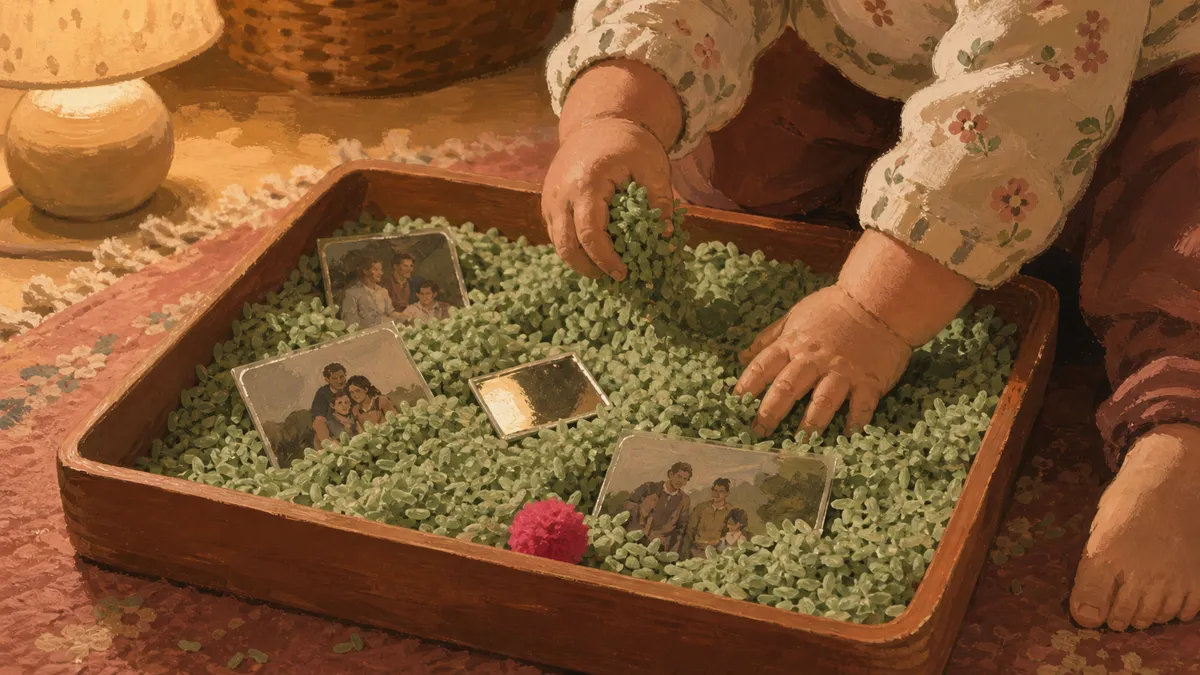
An all about me sensory bin is a tub of taste-safe fillers and small objects built around your toddler, their name, their face, their body, their family, so they get their hands in something while quietly learning who they are. That matters because a kid figuring out “this is me” is doing real developmental work, and a bin turns it into ten busy minutes instead of a worksheet.
I’m Nora Hayes, a former preschool aide who’s run hundreds of these with my own two and a living-room group of moms.
This is the one bin that anchors the rest, and below it kicks off 30 weekly themes, the seasonal ones, the world-around-them ones, the skill-builders, plus a no-burnout way to actually rotate through all of them.
What an All About Me Sensory Bin Actually Is
The Identity-Themed Setup, Filler and Loose Parts
A shallow tray, a base filler, and a handful of objects chosen specifically for the child in front of you: that’s the whole setup.
The filler is usually something simple, like dyed rice, kinetic sand, or plain oats. On top of it, or buried inside it, go the loose parts that make the bin personal: a small mirror tile so your toddler can see their own face, laminated family photo cards they can dig out and name, a few emotions counters with simple faces on them, and body-part cards or mini figures to sort and match.
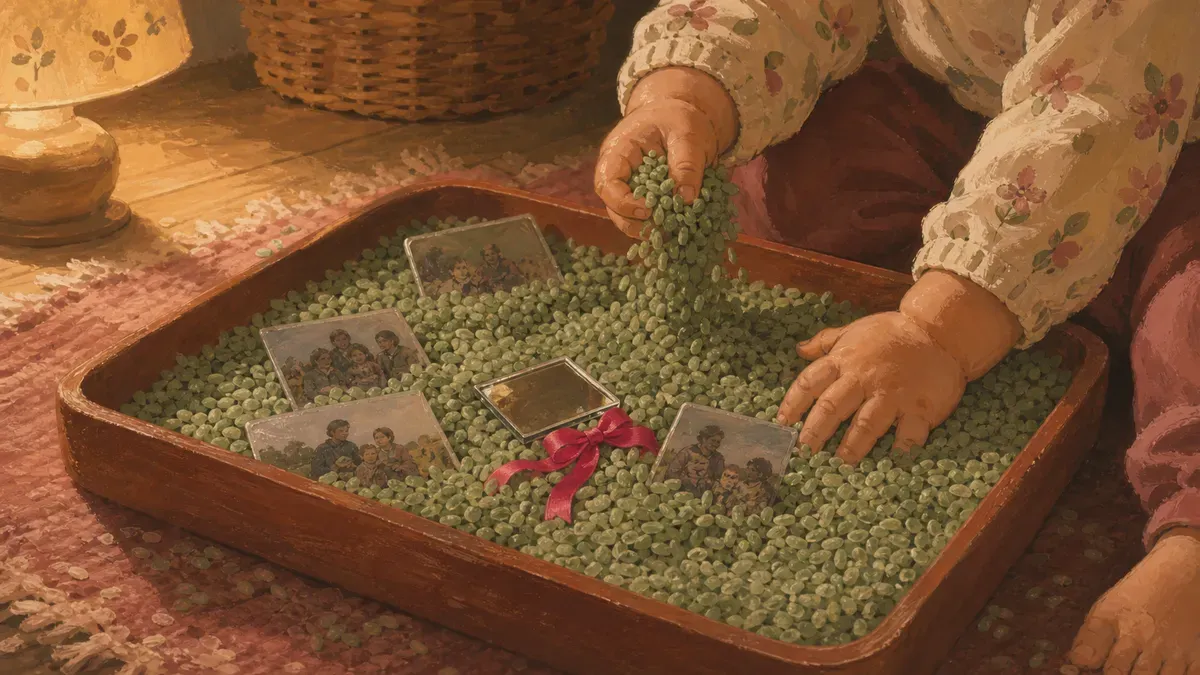
The mirror matters more than it looks. Research on mirror self-recognition in toddlers shows that self-recognition typically emerges between 18 and 24 months, right when most kids start playing with these bins. Giving them a mirror in the bin isn’t padding. It’s meeting a developmental moment.
Why It Works for Toddlers Under Three
The short answer: it meets them where they are.
Happiestbaby puts the average attention span of a 2-year-old at 4 to 6 minutes, and a 3-year-old at 6 to 8 minutes. An all about me bin wraps up in exactly that window, which means it ends before the meltdown starts, not during one.
A few things happen in those minutes:
- Scooping and pouring builds fine motor skills.
- Naming family photos in the bin supports language development.
- Sorting the emotions counters (happy, sad, silly) builds emotional vocabulary that feeds into social skills.
This is what the research on play-based learning and child development from the AAP describes directly: open-ended play promotes language, social-emotional development, and the self-regulation skills tied to brain development.
For sensory ideas that actually hold a toddler’s attention, the personal angle is the hook. You can find a full breakdown of base fillers and setup options in our guide to sensory bins for toddlers and in the sensory bins overview. A bin full of random objects is just a bin. A bin with their grandma’s photo buried in the rice? They’ll dig for ten minutes.
Build Your First Bin: Bases, Fillers and Safety
What goes inside the bin matters as much as the object you buried in it. Two quick things to nail: picking a filler that fits your setup, and keeping it safe for your kid’s age.
Fillers You Probably Already Own
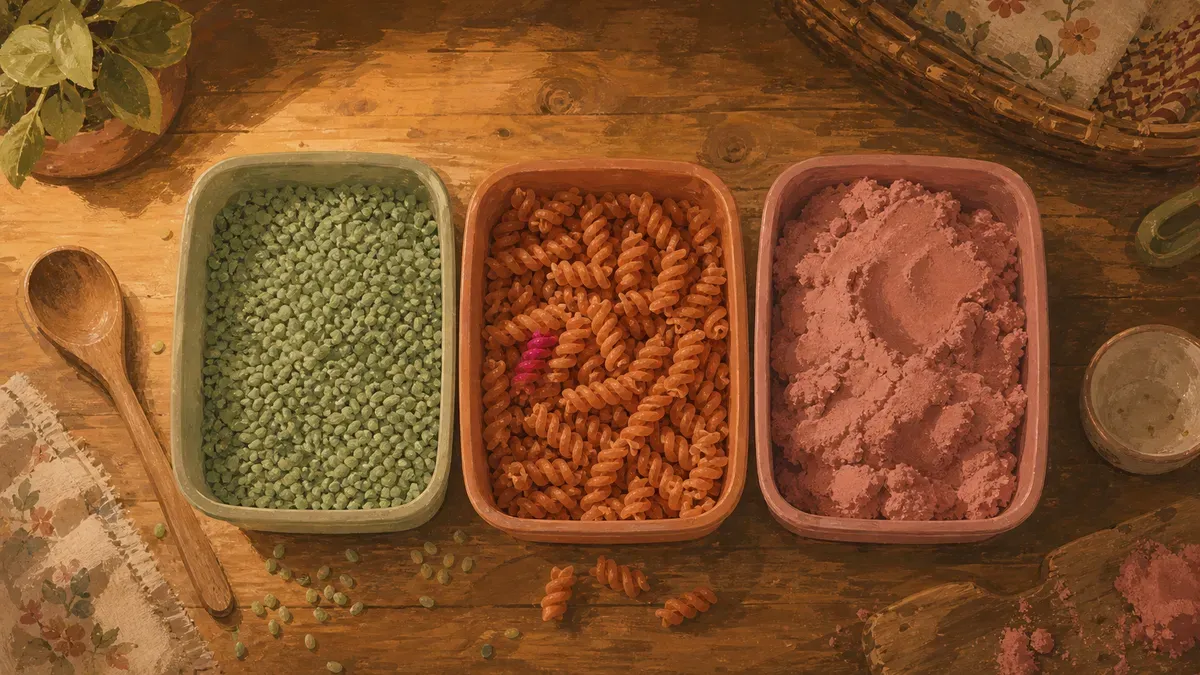
Rice is the classic for a reason: cheap, quiet enough for indoors, and satisfying to scoop and pour. A pound of dry white rice fills a shoebox-sized bin perfectly. Add a spoon and a muffin tin and you have sensory table ideas that hold attention for a solid stretch.
- Dried pasta (rotini or penne): harder, clickier texture; easier for small hands than long noodles
- Oats: softer than rice, almost no mess when they spill; good for indoors without a mat
- Cloud dough (flour plus a small amount of oil): moldable and clumpy like wet sand
- Oobleck (cornstarch and water): solid when you press it, liquid when you don’t; the wildcard that costs almost nothing
- Water beads: popular squishy option for older toddlers, but serious safety caveats apply (next section)
For a full breakdown of what’s already in your pantry, the guide to sensory bin fillers covers 20 options with cleanup notes.
Choking Hazards and Taste-Safe Swaps
The size rule for toddlers: anything that fits entirely into a cylinder about the width of a young child’s expanded throat is a federal hazard for under-3s. Federal small-parts regulations define that standard, and it’s the most practical safety filter you can apply to hands-on play.
Water beads, dry beans, buttons, coins, and small figurines all fail that test. For any child who still mouths materials (most kids under two, plenty of three-year-olds too), taste-safe fillers are the only option: oats, dry cereal like Cheerios, cooked rice, and plain water are the go-tos.
If you wouldn’t let them eat it unsupervised, it doesn’t go in the bin. Full stop.
10 Themes for the Toddler Who Loves the World Around Them
Once the safety rules are second nature, the fun part is picking a world your kid is already obsessed with. These ten activities lean into the stuff toddlers point at, talk about, and beg you to watch on repeat.
Animal and Nature Worlds
Start where their wonder already is: animals.
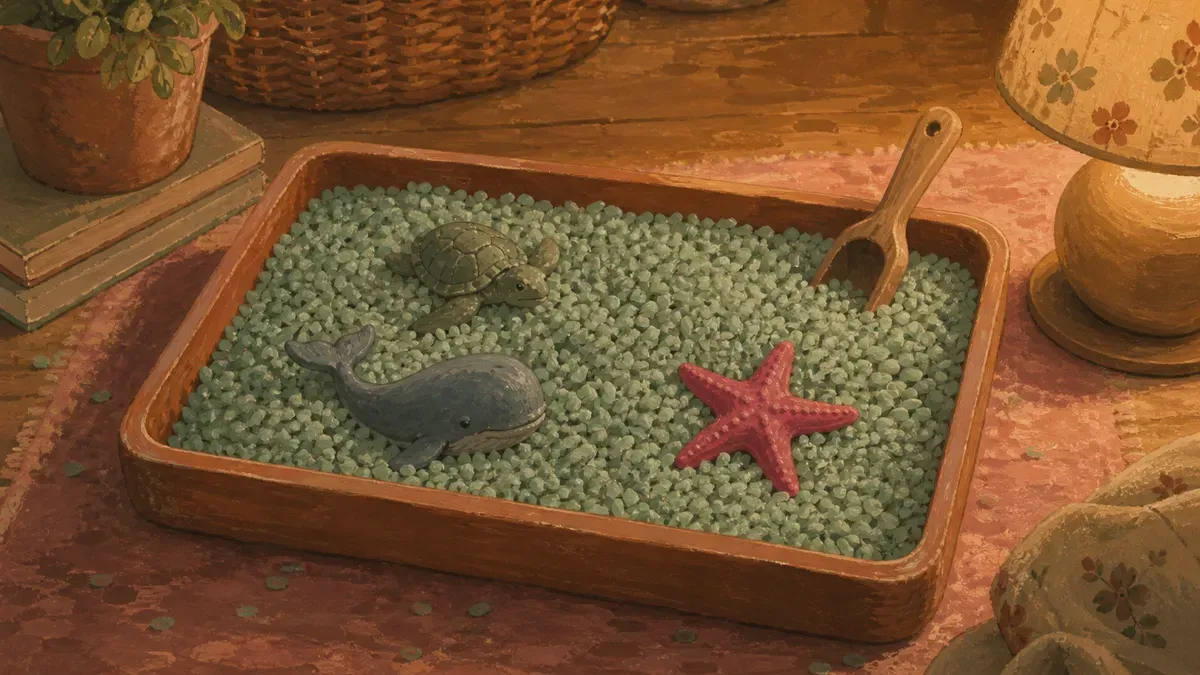
- Ocean bin: blue-and-green dyed rice, plastic sea creatures, a few shells, a small scoop. (Busy Toddler’s rice-dyeing method uses 1 tbsp white vinegar per cup, a squeeze of food coloring, dried 30-45 minutes. Full water version: ocean sensory bin toddlers setup.)
- Farm bin: green-dyed rice or split peas as grass, barnyard animals, craft-stick fence, tiny bucket.
- Bug garden: soil-colored beans or kinetic sand, rubber insects, leaves, a magnifying scoop.
- Dinosaur bin: brown rice or oats for dirt, dino figures, rocks to bury and excavate.
All four run on the same loop: scoop, pour, sort the animals by type. That sorting is sneaky good for language, naming and grouping as they play.
More sensory bin ideas grow out of whatever animal phase your kid is in this month.
Vehicles, Construction and Imaginative Play
Then there’s the truck kid. The one who narrates every garbage day and parks cars in a line on the windowsill. Build for that.
They scoop gravel into the truck bed, drive it across the bin, dump it out, repeat.
For the vehicles section, each bin style lends itself to a different kind of play:
- Construction bin: black beans, brown rice, or crushed cereal as the base; dump trucks, diggers, smooth stones to haul.
- Road bin: a strip of tape on a tray, dry pasta as cargo, vehicles to load and unload.
- Car wash: soapy water, sponges, toy cars; plan for wet and set it on a towel.
All that digging and pouring is quiet fine motor work dressed up as a wrecking crew.
For pretend-play bins, hand over the props and step back.
The theme matters less than the movement. These sensory play ideas all give a busy toddler a reason to dig, pour, and tell themselves a story while their hands do the work.
Follow the obsession, build the bin around it, and you rarely have to sell it twice.
10 Seasonal and Holiday Bins to Rotate Through the Year
The seasons do the planning for you. Your toddler already notices the leaves changing and the snow piling up, so the bin almost builds itself, fall through spring.
- Fall (orange rice, pinecones, mini pumpkins)
- Halloween (plastic spiders, googly eyes, black bin)
- Christmas (red-and-green pasta, jingle bells, wooden ornaments)
- Winter snow (blue-and-white rice or sensory ice cubes)
- Easter (plastic eggs, fake grass, pastel rice)
- Valentine’s Day (foam hearts, heart erasers, muffin tin sorting)
- St. Patrick’s Day, spring garden, and birthday bin
Fall and Winter Setups
Start where they’re already looking, which in October is the backyard. A fall bin loves orange or brown dyed rice with small pinecones, fake leaves, and dried corn tossed in, the same mix you’ll find on sensory n stuff’s seasonal roundup. Add a few mini pumpkins and a scoop, and you’ve got a tray that matches the walk you just took.
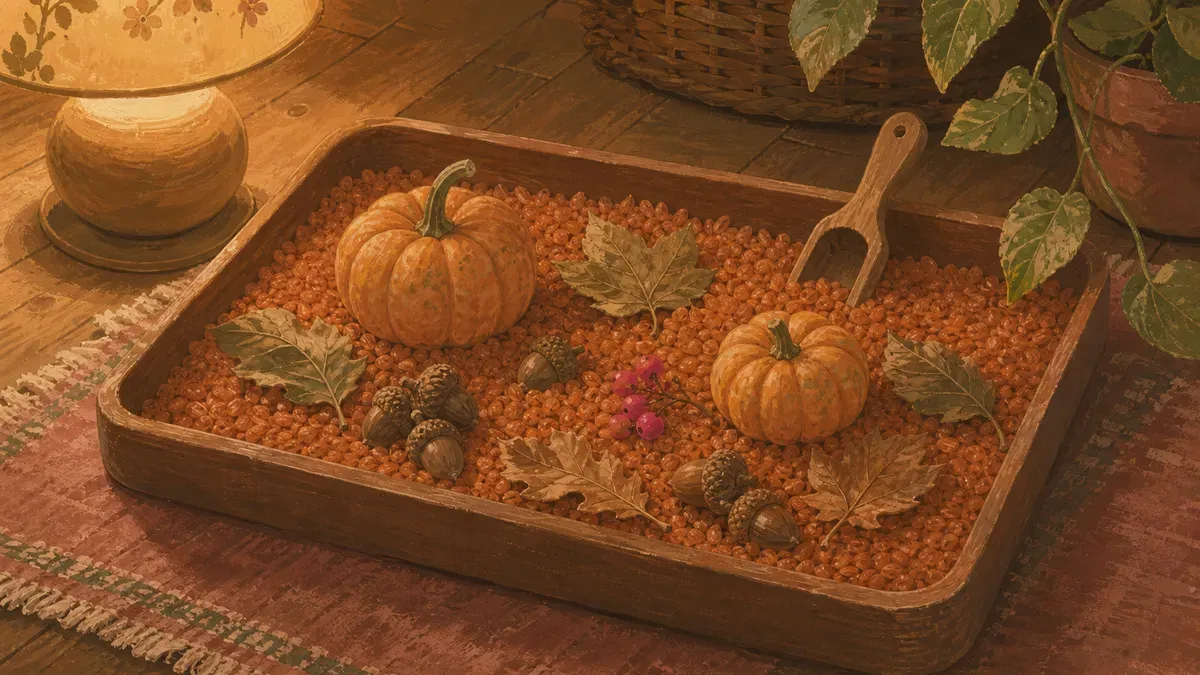
Halloween is the same base with a costume change.
Match the filler to what they see outside the window, and the play idea sells itself.
These cold-weather setups are stuck-inside gold, and if you want a full walk-through, my guide to fall sensory bins for toddlers breaks the autumn one down step by step.
Spring Holiday and Celebration Bins
Spring flips the whole mood. The colors get loud, and the holidays come fast.
Hide a pom-pom inside each egg and you’ve turned a sensory tray into a counting game without trying.
Valentine’s leans pink and red, with foam hearts and heart erasers, or buttons swapped in if your kid still mouths things. Set out a muffin tin and let them sort the hearts by size or color.
These bright, themed sensory ideas carry a lot of hands-on counting and sorting if you let them. Set it out, name the colors, and the math sneaks in while they play.
10 Skill-Building and Learning Bins
The play that sneaks in math can sneak in letters and feelings too. These ten lean into the skills your toddler is already circling, with a learning angle hiding under the scooping and pouring.
Letters, Numbers and Colors
These are the bins that quietly do back to school work without a worksheet in sight.
- Alphabet hunt: foam letters buried in dyed rice, tongs to dig, name each letter as it surfaces
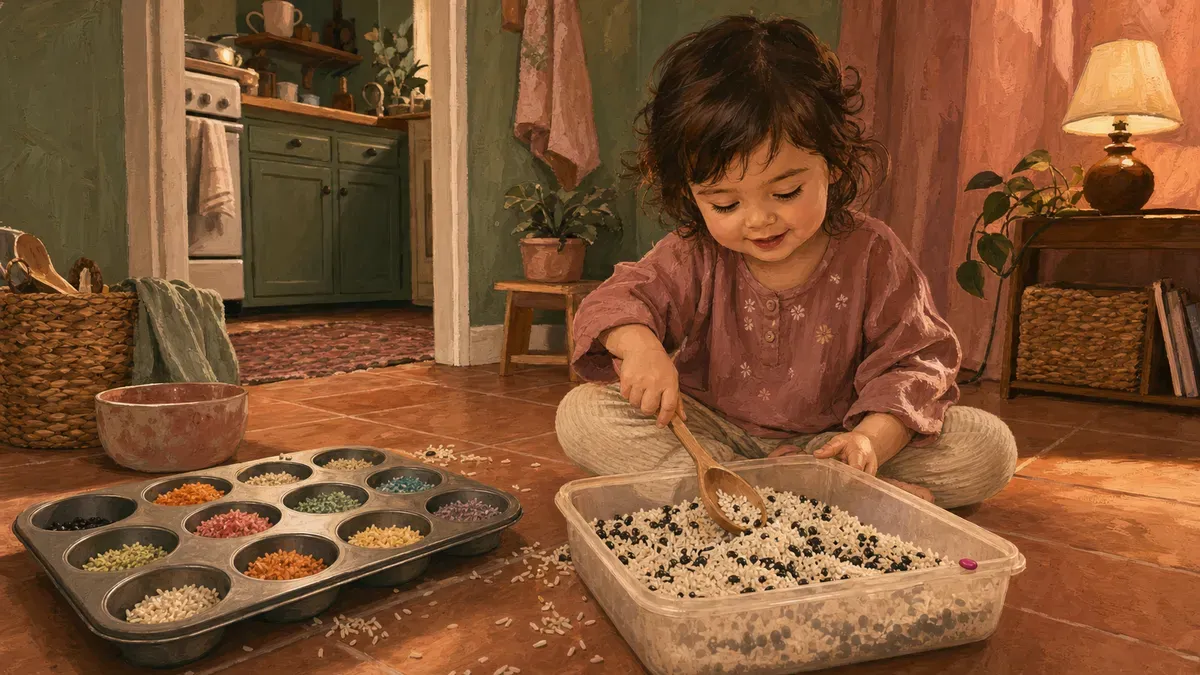
- Counting game: beans poured into numbered muffin tins, one scoop per cup
- Color sort: mixed pom-poms in the middle, small labeled cups by shade
The grabbing and dropping is real fine motor skills practice, the kind of grip work that builds toward kindergarten readiness.
The Cleveland Clinic notes that tactile sorting and matching with small objects builds fine motor grip and supports early literacy.
In my experience, the counting and naming piece follows naturally once the hands are busy. Bean-to-muffin-tin transfers sneak in number sense the same way the alphabet hunt sneaks in letters.
The why behind it sits in those early childhood fine motor development milestones if you want the longer read.
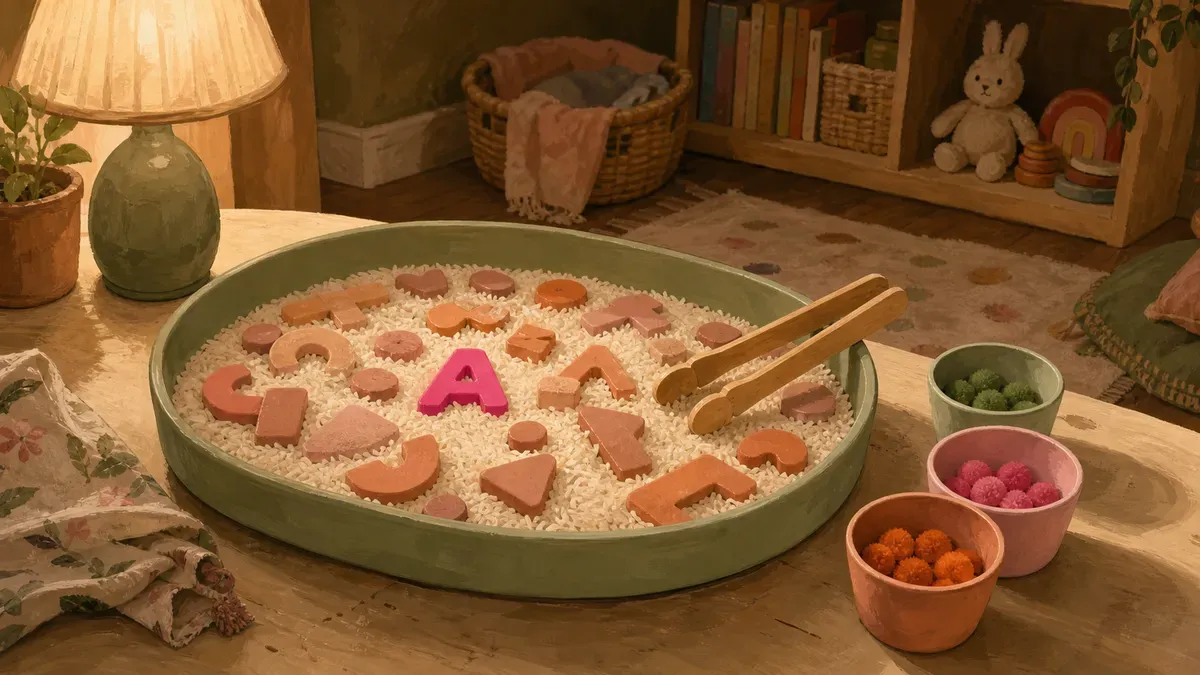
You don’t need fancy gear, but the right scoops help. My favorite cheap setups lean on tongs, mini scoops, and a muffin tin, and I rounded up the best sensory play toys that pull double duty as learning tools.
Emotions and Self-Awareness Bins
The all about me theme doesn’t have to end at faces and family photos. You can stretch it into the harder, quieter learning: how my body works, who’s in my family, what I feel.
If you already have emotions counters from your All About Me bin, tuck them into oats instead and let your toddler dig one out. That shift in medium changes the whole feel of the activity. Fishing out a laminated happy face from a bin of oats and saying the word aloud is a different experience than sorting cards on a table, and for kids who need their hands busy first, the sensory layer helps.
Family bins lean on photos and figures, sorting who’s big and who’s small, who lives where.
Quick ways to build out this subsection:
- Emotions dig: emotions counters buried in oats, dig and name
- Body awareness: wooden people, mirror tiles, hand-shape cutout to trace
- Family sort: family photos or figures, sort by size or household
Matching a face to a word, talking about who loves you, naming the wobbly feelings before they boil over. It’s gentle, it counts, and it sticks better than any flashcard.
Run All 30 Themes Without Burning Out
Thirty themes sounds like a part-time job. It isn’t, because the secret is reuse, not invention: a tight rotation up front and a five-minute teardown after, and the bins basically run themselves.
A Weekly Rotation You Can Actually Keep
One bin a week.
You’re not building thirty bins, just three or four base fillers dressed differently. Plain rice carries the All About Me tray, the alphabet hunt, and the spring garden. Dye half of it and you’ve covered fall, Halloween, and Valentine’s. Cooked oats handle the taste-safe weeks for the little mouthers.
The rotation isn’t a calendar: pick the theme that matches the season, the holiday, or whatever your kid is fixated on that week.
- Weeks 1-10: the world-around-them themes, one base of plain rice
- Weeks 11-20: seasonal and holiday, rotating two dyed colors
- Weeks 21-30: the skill-building bins, same fillers, new loose parts
- Pick a base filler: plain rice, dyed rice, or cooked oats covers almost every theme.
- Add the week’s loose parts to dress the filler for the theme.
- Swap in a fresh theme every Monday, one bin, one week, thirty themes total.
- At the end of the week, sift the filler out through a colander and seal it for next time.
If you want it penciled in with a theme for every week, I keep a sensory bin rotation system ended bored ready to print.
Cleanup and Storage Between Bins
The difference between a habit and a one-time craft is what happens when the bin is done. At my house, teardown is a five-minute job, and it’s the reason next week’s setup takes minutes instead of an afternoon.
Hold a colander over a big zip-lock and sift. The rice falls through into the bag, the buttons and figures and pom-poms stay behind, and you’ve separated your filler from your loose parts without picking through anything by hand.
Dry fillers like dyed rice don’t need the fridge. Sealed in their own labeled container, they keep practically forever. Loose parts go in a second box, sorted by theme.
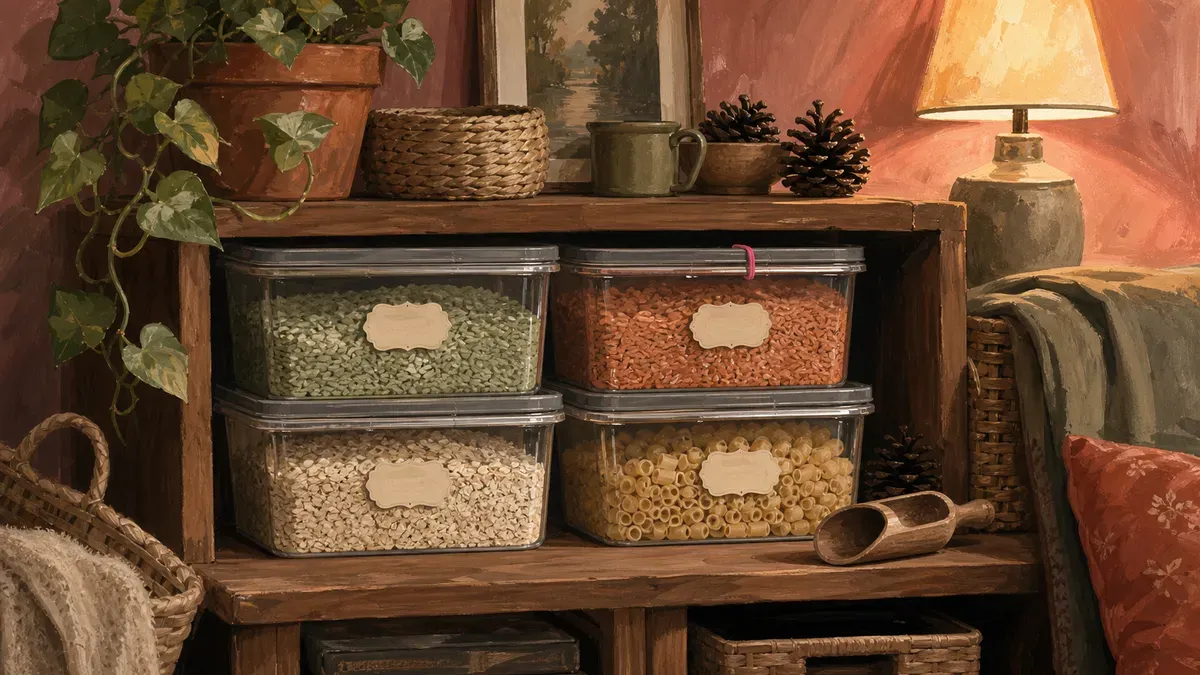
Line those up on one shelf and the hands-on activities stop being a project. Pull a bin, pour the rice, drop in this week’s pieces. You’re playing in two minutes.
Found this useful? Save it for the next rough afternoon.
Questions parents ask me about this
What is an all about me sensory bin for toddlers?
The bin uses a simple filler (rice, oats, or pasta) and small objects pulled from a toddler's own world: family photos, a mirror tile, wooden figures, pictures of their face. The point is personal connection. When the bin is about *them*, a toddler engages longer and talks more than they would with a generic theme.
What age can toddlers start using sensory bins?
Most kids are ready somewhere between 12 and 18 months, as long as the filler is taste-safe and any loose parts are big enough to pass the toilet-paper-tube test. Under two, expect mouthing and short bursts of play, and supervise the whole time. By age two most toddlers can explore a bin for several minutes before moving on.
How do I keep my toddler from eating the sensory bin filler?
Under two, skip the problem entirely: use only edible fillers like dry oats, Cheerios, cooked rice, or plain water. These can go in the mouth without panic. With older toddlers you can introduce dyed rice or pasta, but you still watch the whole session. If your child is a consistent mouther past two, stay with taste-safe options until the habit fades on its own.
What is the cheapest filler for a toddler sensory bin?
Dry oats from a bulk bag cost almost nothing and are taste-safe, pour beautifully, and clean up in a sweep. Dry rice and dry pasta are close seconds. All three come from the same pantry shelf and outlast any specialty sensory product. Buy the pantry version first and only upgrade if your child is genuinely bored with the basics.
How do I clean up and store sensory bin materials between uses?
A colander over an airtight container sifts the filler out in under a minute, and the rotation section covers the full process for keeping everything labeled and ready for next week.
Are sensory bins safe for toddlers who are sensory seekers or texture averse?
Yes, with adjustments. A sensory-seeker often digs right in and benefits from heavier, messier options like cloud dough or oobleck that give more input. A texture-averse child may need to start with a spoon or scoop and never touch the filler directly, and that is completely fine. Follow the child's lead. A bin your kid explores from two feet away still counts as a win.
How long should a toddler play with a sensory bin?
However long they stay interested, which is often shorter than you expect. Most toddlers move on in four to eight minutes and that is developmentally normal, not a sign the bin failed. If it ends in two minutes, that is still two minutes of hands-on exploration. Some kids will stay much longer when the theme clicks for them. Let them leave when they're done.
Written by
Nora Hayes
Mom of two and a former preschool aide. I share the screen-free sensory play and calm-down ideas I test at my own kitchen table, plus what the moms in my little meet-up swear by. A parent passing on what works, not a doctor or a therapist.
More about NoraKeep going
All Sensory Bins-
 Sensory Bins
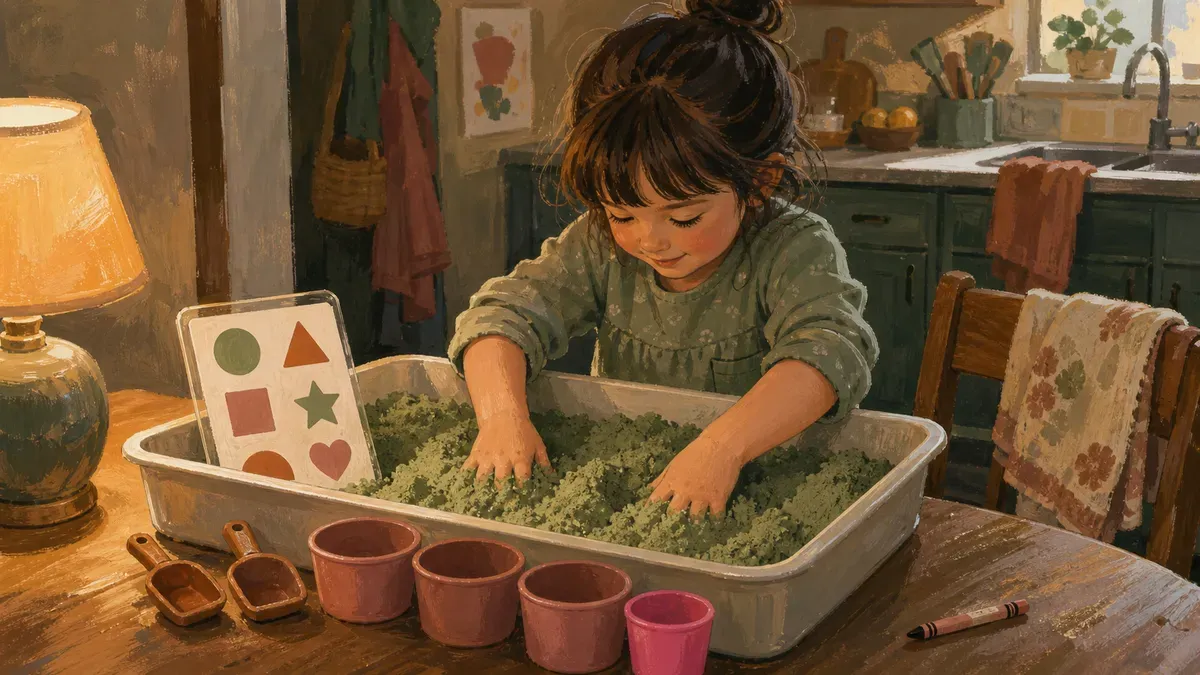
Sensory Bin Fillers: 20 Pantry Items You Own Now
Skip the craft store: 20 sensory bin fillers already in your pantry tonight, sorted by texture, mess level, and age. Start one in minutes.
-
 Sensory Bins
sensory integration occupational therapy intervention: ADHD
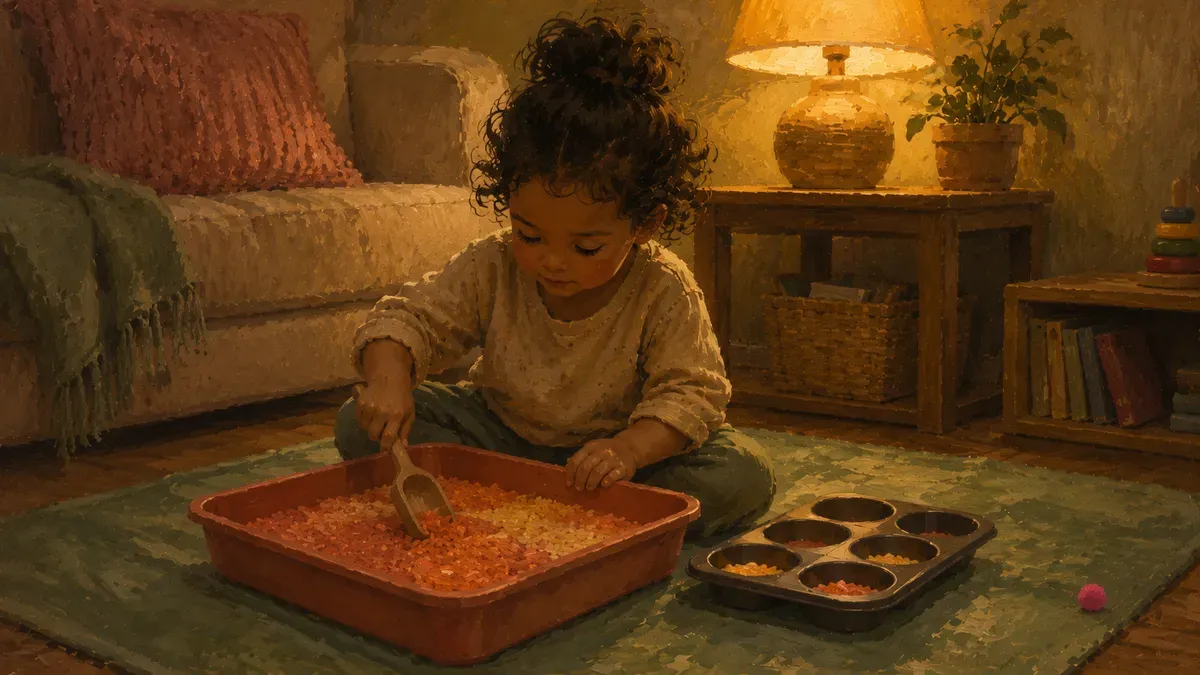
Turn sensory integration OT into a home calm-down bin for ADHD kids. Task cards, bin ideas, and a setup that works on the hard days.
-
 Sensory Bins
Indoor Sensory Play: 18 Low-Mess Setups That Work
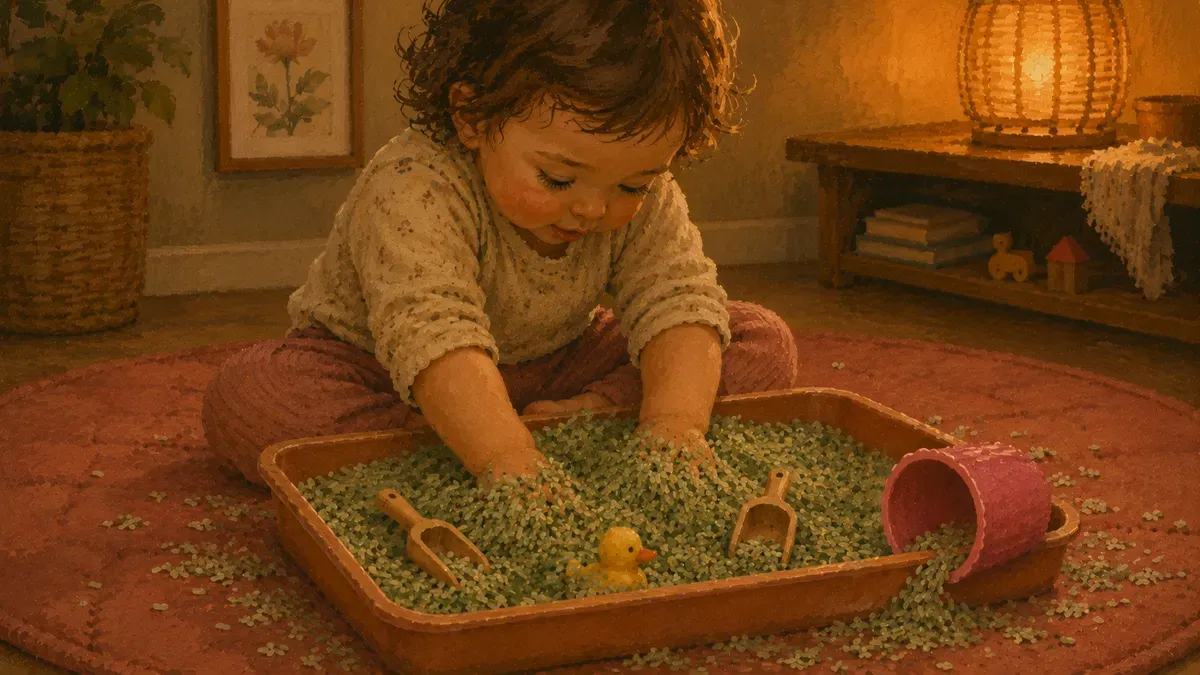
Dreading the cleanup? These indoor sensory play setups stay on the mat, work in apartments, and reset in minutes. Start tonight.
-
 Sensory Bins
Sensory Play 2 Year Olds: 12 Bins That Hold Focus
Most sensory bins lose a 2-year-old in 90 seconds. These 12 sensory play ideas for 2 year olds actually hold attention. Start one tonight.