Printable First Then Board: The Two-Card Trick

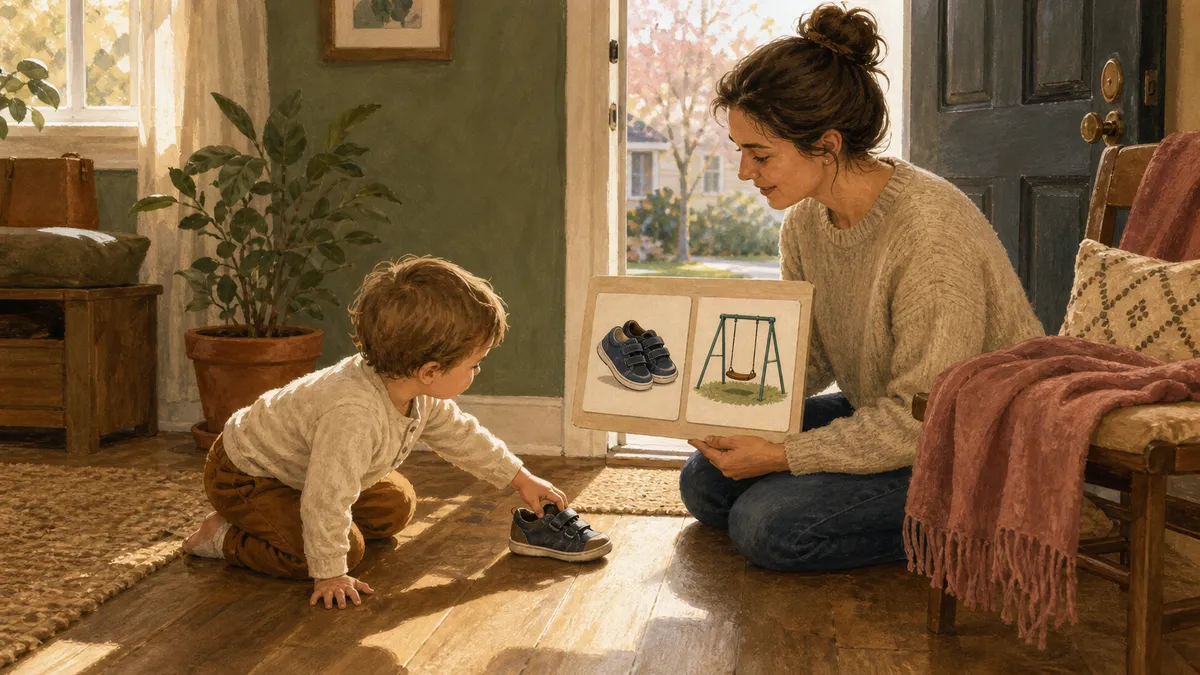
A printable first then board is two cards side by side: the thing your kid has to do first, then the thing they want, so a hard transition stops being a fight. You point at the left card and say one short line, “First shoes, then park,” and the deal is sitting right there in front of them instead of getting lost in a meltdown.
I’m Nora Hayes, a former preschool aide raising an autistic seven-year-old, and below I’ll show you how to use a board tonight, print and build your own, and fix it on the days it stops working.
Three moves make it work:
- Match a tough task with a reward they actually want
- Say the script once and point to each card
- Flip the done card and deliver the reward immediately
What a First Then Board Actually Is
Before you can use one tonight, you need to know exactly what you’re working with. It’s simpler than it sounds.
Just Two Cards: First This, Then That
A first then board holds exactly two picture cards, side by side. One shows the task. One shows the reward. That’s the whole thing.
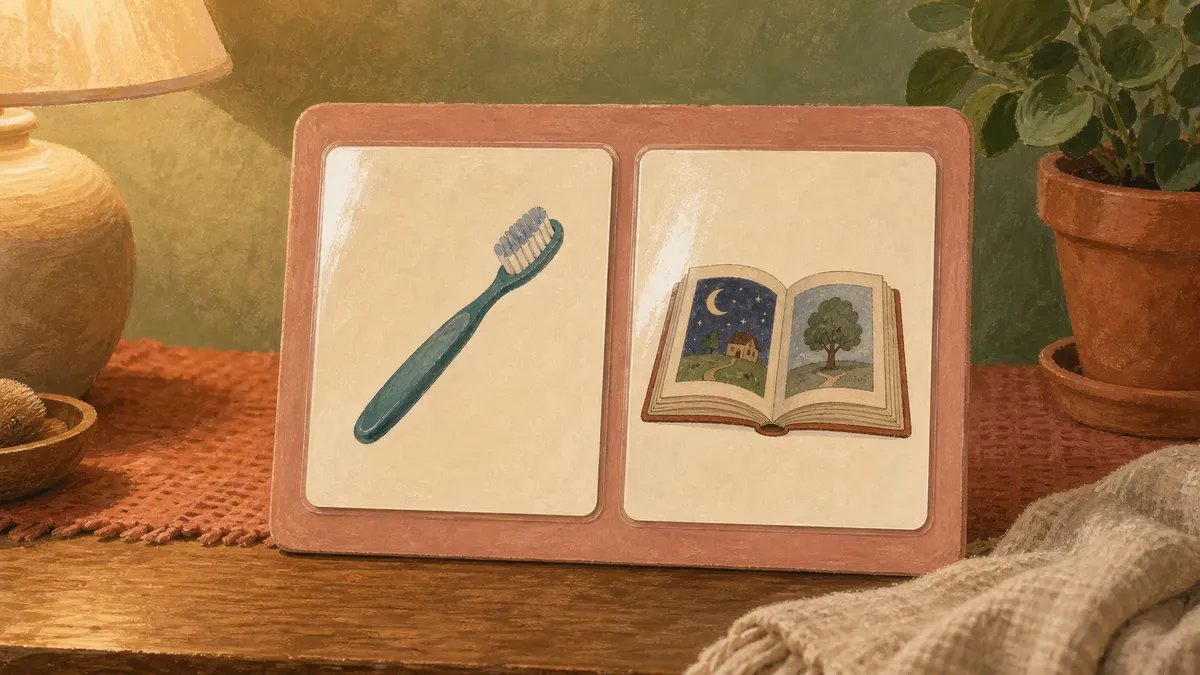
The left card is what happens first: brush teeth, put on shoes, sit at the table. The right card is what comes next: story time, tablet, a favorite snack. Your child sees the sequence in one glance, no reading required. OCALI’s guidance on visual supports for transitions describes it as a visual support showing “what the individual will do first and then what to do next” using photographs, picture icons, or written words.
When you use a first then template, printed or digital, the picture symbols do the talking. You say the words once: “First shoes, then outside.” Point to each card. Done.
Why Less Beats More on a Rough Day
A full visual schedule can show the whole day in eight or ten picture cards. On a calm morning, that works. On a rough one, it overwhelms.
When a child is already dysregulated, executive functioning takes a hit. They cannot hold a sequence of six steps in mind while also managing the feeling that everything is too much. A two-card board solves that by collapsing the day down to one decision: do this, get that.
The predictability is what helps. Knowing what comes next cuts the anxiety around hard transitions. You are not asking them to trust the whole day, only the next five minutes. For kids who need more support with visual schedules routines throughout the day, a first then board is the entry point, not the destination. Start here, especially on the hard days, because proactive beats reactive every time.
How to Use a Printable First Then Board, Step by Step
- Load the board: one task card (non-preferred), one reward card (genuinely wanted).
- Say it once out loud while pointing to each card in order.
- When the task is done, mark it complete on the board.
- Deliver the reward immediately so the connection sticks.
Pair the Right Task With the Right Reward
Get this pairing right and the board does the heavy lifting for you. The “first” card is the non-preferred task, the thing your kid would happily skip: shoes, teeth, cleanup. The “then” card is a genuinely preferred activity, something they’d choose on their own.
Shoes, then park. Teeth, then a story. Coat on, then the tablet. That’s the shape of it.
This isn’t a trick I made up. It’s the Premack Principle, the idea that a thing your kid loves can power a thing your kid resists, first described by David Premack back in 1959.
The motivation has to be real, though. If “then” is something they’re lukewarm about, the reinforcer falls flat and the board loses its teeth. Pick the stuff they ask for on their own.
The Exact Words to Say
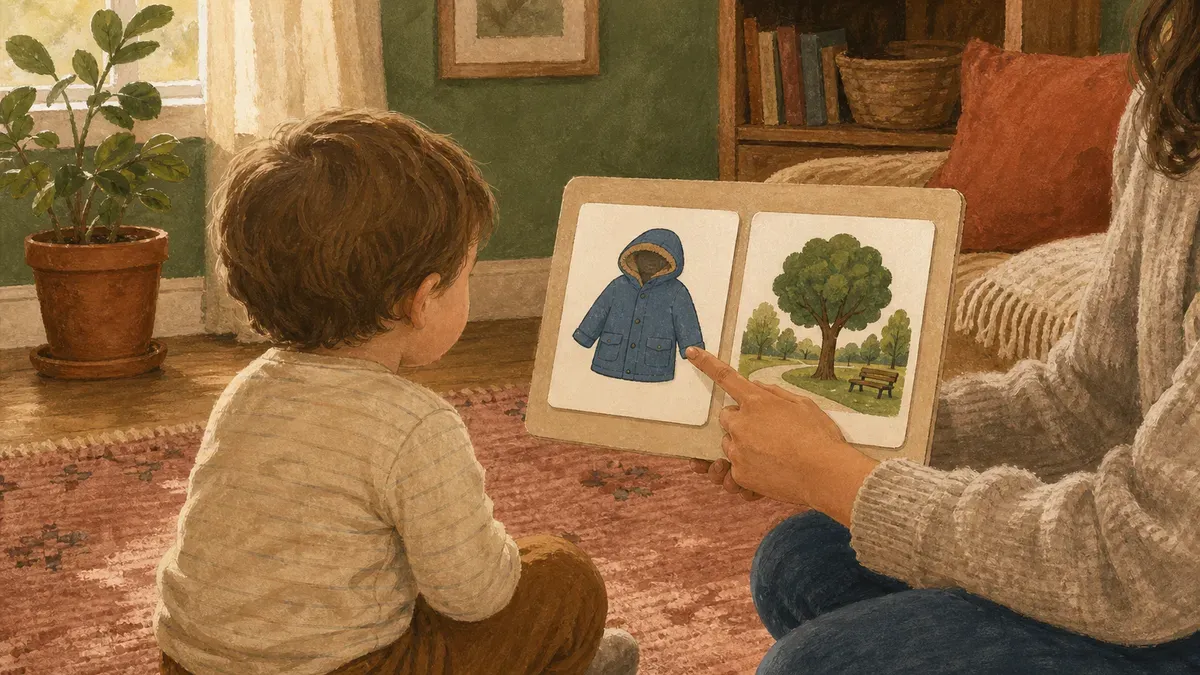
Now you say it, simply and the same way every time. “First teeth, then story.” Point to the first card as you say “teeth,” point to the second as you say “story.” That’s it.
The pointing matters more than it looks. It locks the words to the visuals, so a kid who’s overwhelmed, non-verbal, or just not listening still gets the message through the pictures.
Say it once, then stop talking. Repeating it, bargaining, or piling on more words buries the one clear cue under noise.
Over time you’ll lean on the cards more and your voice less. That’s prompt fading, and it’s the goal: the visual supports carry the communication so you’re not narrating every transition. If you’re ready to scale this up, our visual schedule template takes the same logic across the whole day.
Mark It All Done and Deliver Fast
The second they finish the first task, mark it done. Flip the first card face-down, slide it off, or drop an all done visual over the top, whatever your printable gives you. The kid needs to see that part is over.
Then hand over the reward right now. Not after you wipe the counter, not in five minutes. ABA research is clear that a reinforcer has to land immediately and reliably after the task, or the connection between doing-the-thing and getting-the-thing goes fuzzy, especially for young kids.
Speed is what builds trust in the board. Deliver fast a few times and your kid learns the board doesn’t lie. Once they believe it, the next transition gets easier, which is the whole point.
Print, Laminate, and Build Your Board
A board your kid trusts has to survive being grabbed, dropped, and chewed on a little. Here’s how to put the board together so it lasts, then how to shrink it down for the days you’re nowhere near home.
- Print on cardstock and cut the cards apart.
- Laminate every piece with 5 mil pouches and add velcro so the cards swap in seconds.
- Build a pocket-sized version for the bag, car, and grandma’s house.
Print the Board on Cardstock
Draw or type your two cards, print them on cardstock, not regular paper, so they hold up to little hands and stay stiff enough to point at.
Don’t overthink the paper weight. Vistaprint’s paper guide notes that most home printers choke on anything heavier than 110 lb (300 gsm) cardstock, since it’s too stiff to bend through the machine. Stay in the lightweight-to-mid range and your printer will feed it fine.
If you want to swap in your own pictures, the printable blank visual schedule template lets you build a picture schedule around your kid’s actual routine. Print the board base and the cards, then cut them apart.
Laminate and Add Velcro So It Lasts
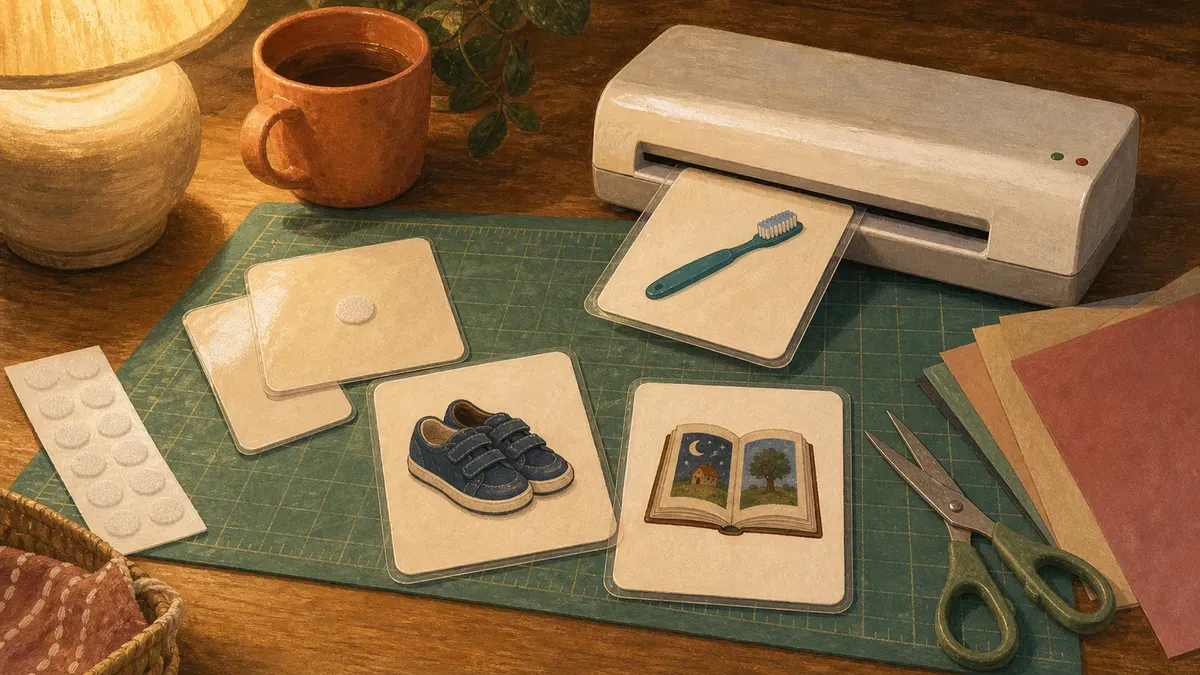
This is the step that takes the physical board from “lasted a week” to “still here in March.” Laminate every piece, base and cards both.
For cards that get handled this hard, reach for 5 mil pouches. Color Vision Printing recommends that thickness for flashcards and classroom cards, because they survive the daily grab-and-drop without splitting at the edges.
Then the velcro. Stick the soft loop side onto your board base and the rough hook side on the back of each card. Now the cards swap in seconds, and a kid who likes to peel things off has something safe to peel. Laminated cards plus velcro is the combo that actually survives a toddler.
Make a Travel Version for On the Go
The board that saves your evening at home is useless if it’s sitting on the kitchen counter when the meltdown hits the cereal aisle. So make a second one that travels.
Print the cards smaller, laminate them, and stick them on an index card or a strip of velcro in your bag. Pocket-sized, store-ready. For the car and grandma’s, a digital board on your phone works too: snap photos of the same cards and keep them in an album.
Same routine, same transitions, wherever you are. The system only earns trust if it shows up everywhere your kid does.
Who It Helps and When to Reach for It
The same system that works car-to-home also works child-to-child. A first then board fits two very different situations, and you don’t need a diagnosis to use one.
Autistic and Neurodiverse Kids
For autistic children, visual supports aren’t a nice-to-have add-on. The National Clearinghouse on Autism Evidence and Practice lists visual supports among 28 evidence-based practices for autistic people, with outcomes spanning communication, self-help skills, and reducing interfering behavior from preschool through adulthood. That’s a broad research base, and a first then board sits squarely inside it.
The reason comes down to how many autistic learners process information: pictures anchor meaning in a way that spoken words often can’t, especially mid-transition when a child is already dysregulated. A verbal “put on your shoes” competes with everything else in the room. Two picture cards, pointed to in sequence, carry the message without the noise.
For a sensory-seeker like Eli, the board also cuts the power struggle:
- He knows what’s coming.
- He knows what he gets.
- The meltdown often never starts.
When you’re ready to expand from two cards to a fuller daily rhythm, our visual schedule autism resources show you the next step.
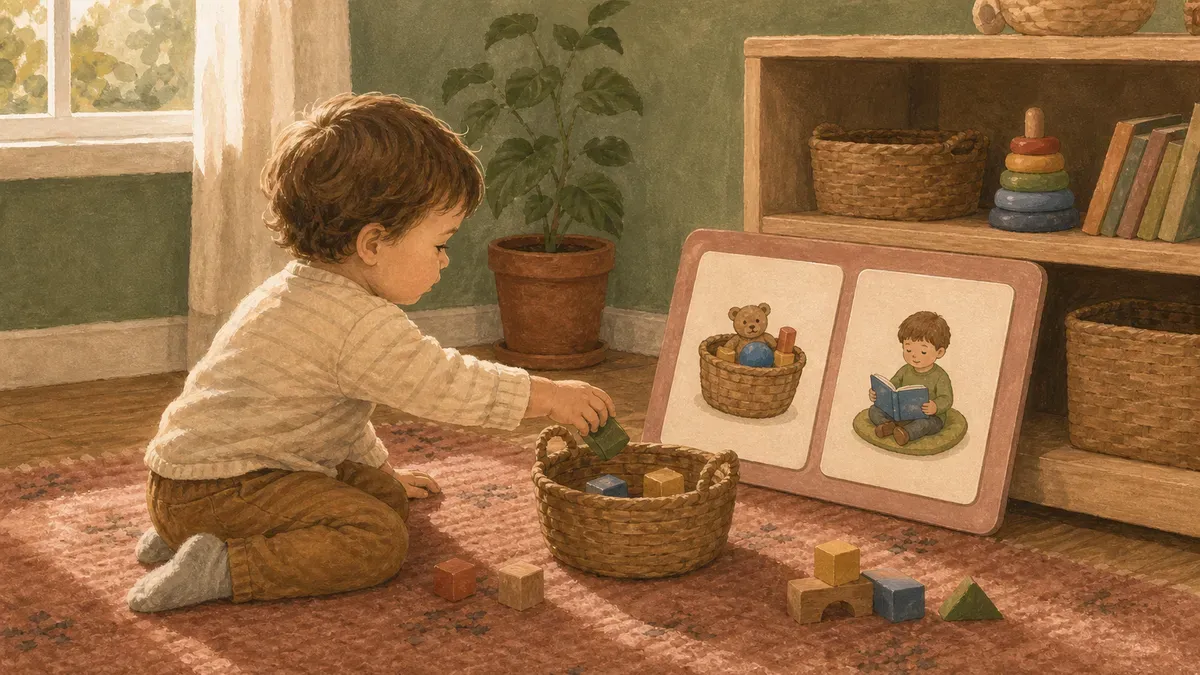
Neurotypical Toddlers on Overwhelming Days
No diagnosis needed here. Toddlers live in a world that moves too fast and explains too little, and transitions are where that friction lands hardest. An early childhood transitions study on ERIC found that roughly 19-25% of a preschool day involves transition activities. Every one of those handoffs is a moment where things can unravel, for any kid.
A two-card board shrinks the overwhelm to just the next thing. It’s useful when the routine collapses (sick day, holiday week), when a child consistently refuses one task, or on the days when predictability has gone out the window and a full daily schedule feels like too much to set up. Two cards is enough.
Browse our full library of visual routine guides when you’re ready for more structure. For now, the board is enough.
When the Board Stops Working: Quick Fixes
Most hiccups come down to two things: the reward isn’t pulling hard enough, or your child is ready for more sequence. Here’s how to fix both.
The Child Refuses Even After Seeing It
Check the reward first. If the preferred activity on the then card stopped being exciting last week, the board has no power. Pick whatever your child asks for unprompted and swap that in.
Next, look at the first card.
- If the non-preferred task needs a skill your child doesn’t have today, refusal is the honest answer.
- “Clean your room” is not a first-card task. “Put five blocks in the box” is.
- Trim the ask until success is near-certain, then build back up.
On prompt fading: if you’ve been showing the board AND narrating every step, try pulling back the words. Point to each card, say the script once, stop. Some kids lean on the verbal cue instead of reading the pictures, and removing it pushes them toward the visual.
A controlled study on visual schedules found that problem behavior during transitions persisted when reinforcement wasn’t adjusted alongside the visual support. The board and the reward have to work together.
Adding a Third Step: First, Then, Next
Once two cards work reliably for several days, add a third card after Then, giving you a first-then-next chain.
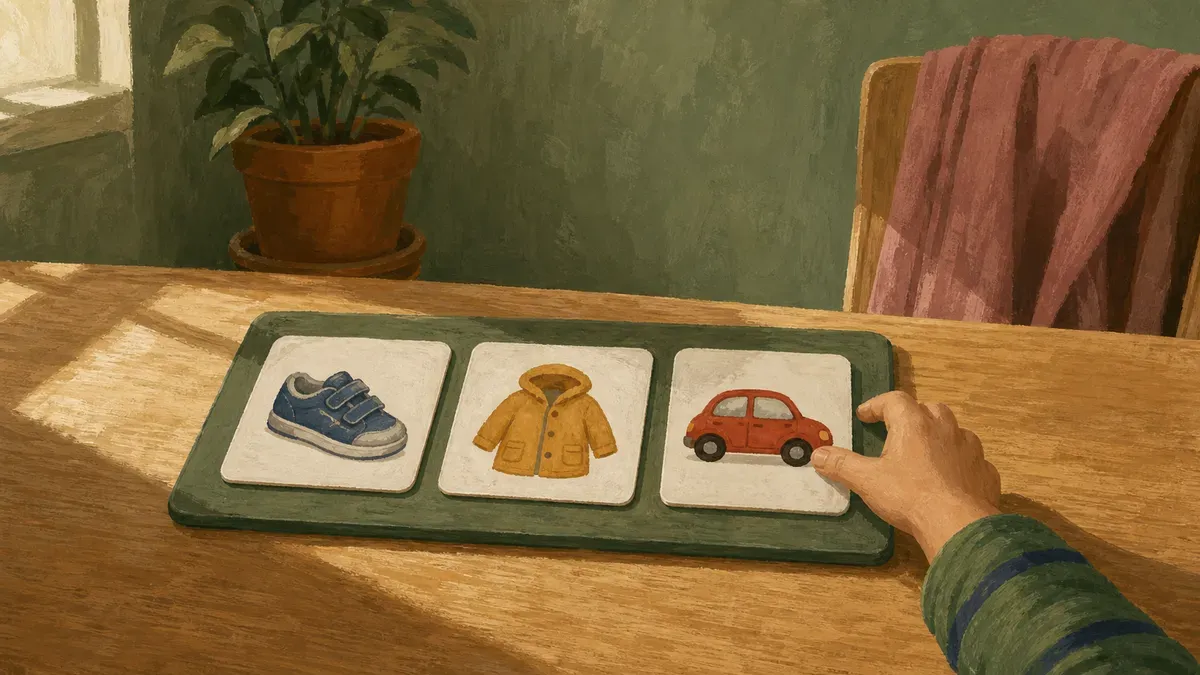
Three steps works when your child finishes the two-card version without pushback or reminders. If two cards still cause friction some days, stay there. A children’s morning routine chart follows the same sequencing logic and slots in naturally once the three-card format clicks.
Three cards handles a small daily schedule chunk without a full picture schedule’s overhead. For many kids it’s a stopping point, not a stepping stone.
Found this useful? Save it for the next rough afternoon.
Questions parents ask me about this
How do you use a printable first then board with kids?
Place the first card on the left and the then card on the right, say the phrase once while pointing to each card, then follow through the moment the first task is done. Delivering the reward immediately matters most (no waiting, no bargaining), so your child learns the board always tells the truth. Start with a short, easy task and a reward they genuinely want right now.
What age can a child start using a first then board?
Most kids can follow a picture-based two-card board by around 18 months to 2 years, as long as the images are clear and the reward is something they want in the moment. There is no firm lower limit. Follow your child's lead and simplify if needed. Some toddlers catch on within a few tries; others need a week of repetition before the pattern sticks.
What is the difference between a first then board and a full visual schedule?
A first then board shows exactly two steps: one task, one reward. A full visual schedule lays out a whole sequence of activities across a morning or a day. The two-card version is easier to start with because it narrows a child's world to just what happens next, without the overwhelm of ten steps ahead. Move to a longer schedule only after the two-card version works reliably.
Can you use a first then board with a non-verbal child?
Yes, it often works best for non-verbal kids precisely because the pictures carry the message without words. Point to each card as you say the script, but do not expect a verbal response. The visual combined with the gesture is enough for most children to understand what comes next and what they are working toward.
What should you put as the 'then' reward on the board?
Choose something your child actually wants right now, not what you think they should want. Common picks are a favorite snack, screen time, a specific toy, outdoor play, or an activity like bubbles or music. If the board stops working, the reinforcer is usually the culprit. Watch what your child runs toward on a free afternoon and swap that in. The best reward is the one that gets your kid moving.
How is a first then board different from a token board?
A token board requires a child to earn several tokens before receiving a reward, so the payoff is delayed across multiple tasks. A first then board delivers the reward after just one task, making it a better starting point for younger children or kids who struggle to wait. Once your child understands that completing work leads to a reward, a token board can extend the wait and build toward bigger goals.
Written by
Nora Hayes
Mom of two and a former preschool aide. I share the screen-free sensory play and calm-down ideas I test at my own kitchen table, plus what the moms in my little meet-up swear by. A parent passing on what works, not a doctor or a therapist.
More about NoraKeep going
All Visual Schedules-
 Visual Schedules
Visual Schedule Printable: 20 Picture Cards + Free PDF
Visual schedule printable with the 20 picture cards every toddler home needs. Free PDF to download, print, and start using tonight.
-
 Visual Schedules
Visual Schedules: A Beginner's Guide for Parents
Most visual schedules fail before day three. Learn how they work and build your first board in 5 steps your child will actually follow. Start today.
-
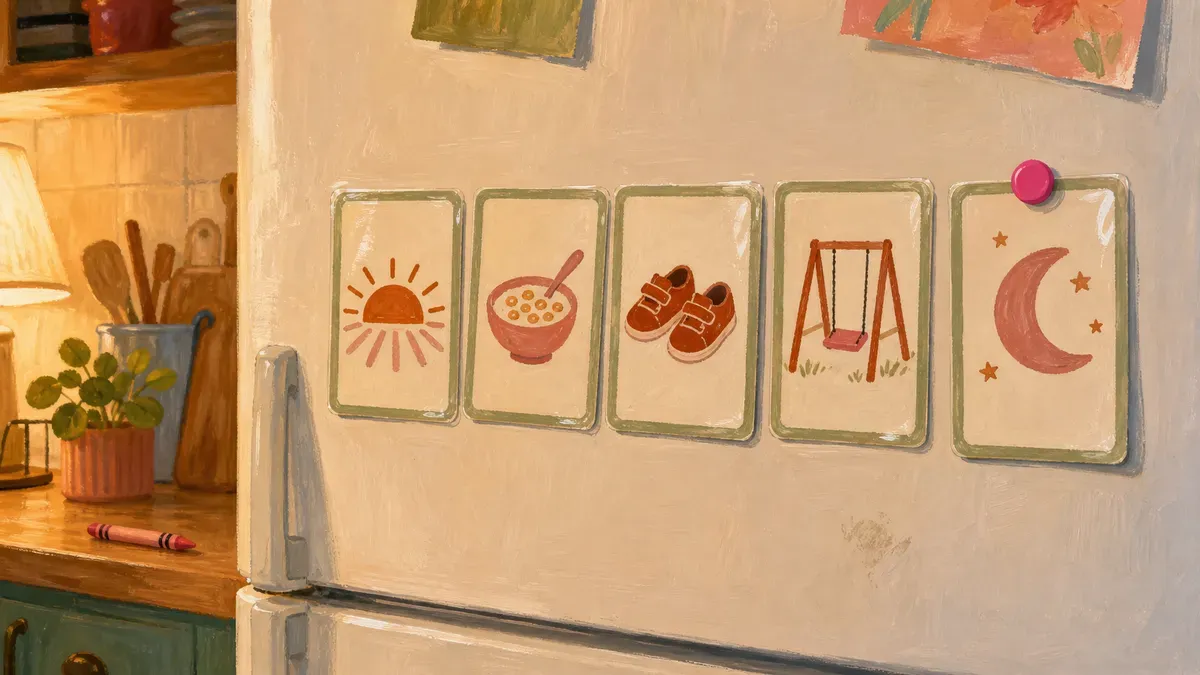 Visual Schedules
Toddler Schedule: Build One With Picture Cards
Your 2-year-old can't read a clock yet. Build a toddler schedule with picture cards in 5 steps that stop nap fights and meltdowns. Start today.
-
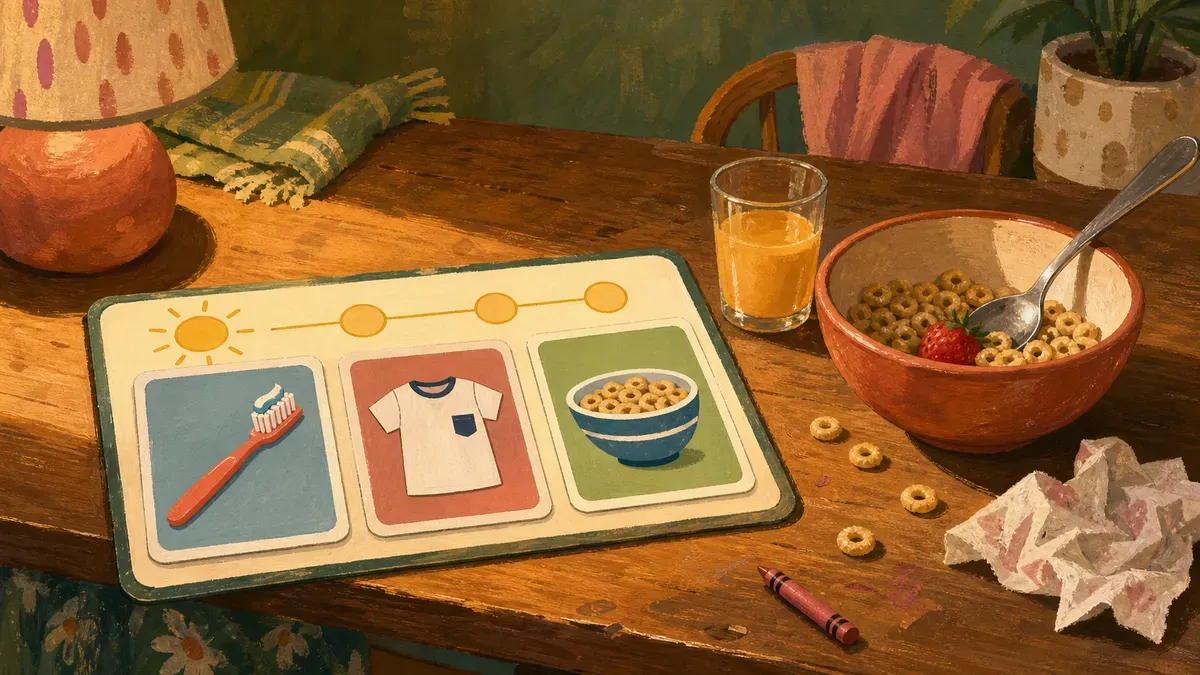 Visual Schedules
Free Printable Daily Routine Chart Kids Will Follow
Grab a free printable daily routine chart your child will actually follow, plus picture cards and tips to make any routine stick. Download now.