Visual Schedule Template: Build One Toddlers Follow

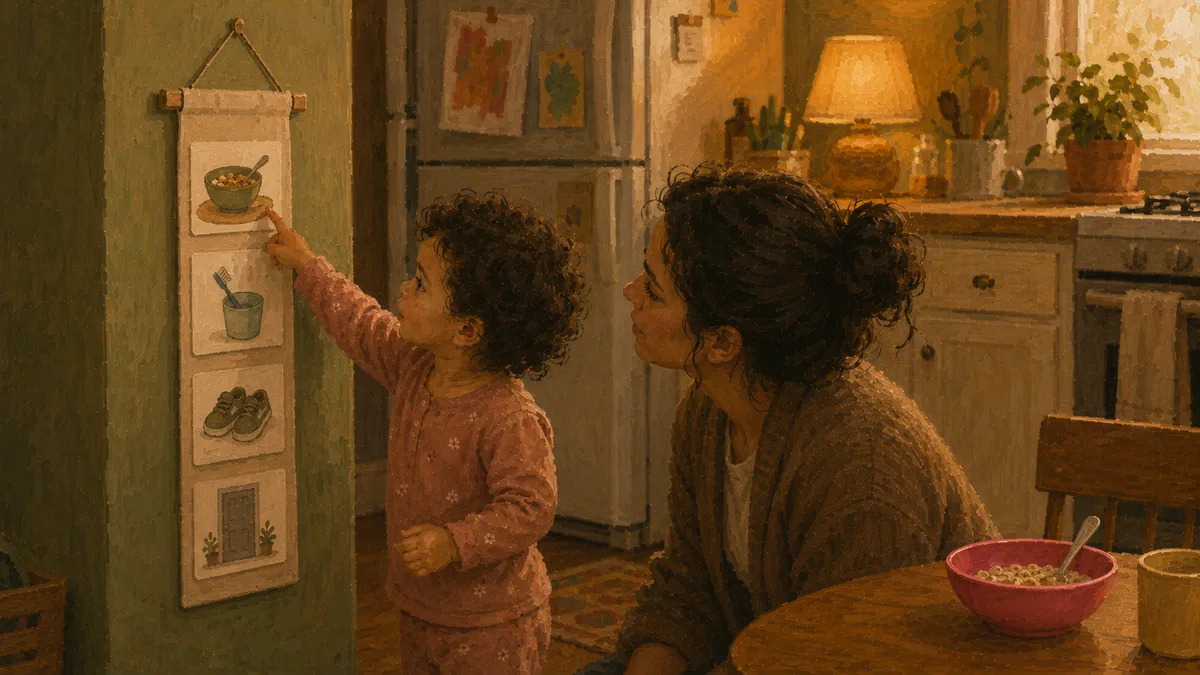
A visual schedule template for toddlers works best when you start small: pick four to six moments your kid already knows and give each one a picture. Toddlers can’t tell time, but they can follow pictures, and that one swap cuts most transition meltdowns. I’m Nora Hayes, a former preschool aide and mom of two, and below I’ll cover how many pictures to use, what materials survive small hands, and how to get your first set of cards ready tonight.
The plan in brief:
- Pick 4 to 6 daily moments your toddler already knows, not the whole day
- Print or draw one picture card per step and arrange them top to bottom
- Walk through the board with your toddler once each day for the first week
What a Visual Schedule Is and Why Toddlers Need One
A visual schedule is a row of pictures that shows your toddler what happens next. Morning card, breakfast card, teeth card, shoes card. That’s it. No words, no clock, no explaining three times while they melt down by the door.
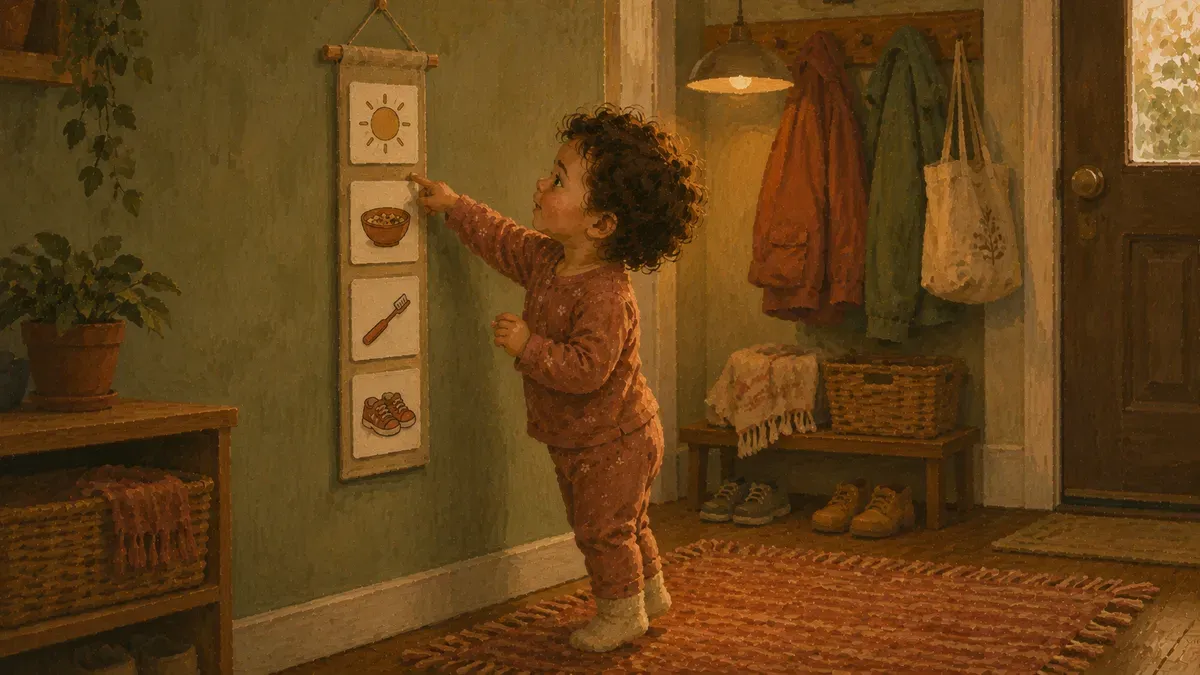
- Toddlers have no working sense of time. “In a few minutes” means nothing to them.
- “After breakfast, shoes” is concrete. A picture says it better than words can.
- When the argument starts, you point to the card instead of repeating yourself. That shift alone cuts a lot of the friction out of daily transitions.
Predictability matters more than most people expect. Research on predictable routines and child development found that consistent routines were linked to longer sleep, fewer night awakenings, and stronger emotional and behavioral regulation in young children. That predictability does real work:
- For kids who can’t read a clock, the schedule makes the routine visible and concrete.
- For a toddler with sensory needs or anxiety, it removes the surprise from transitions. That’s often where a meltdown starts.
You can find the full foundation in our beginner’s guide to visual schedules or explore the broader topic of visual schedules routines for more ideas.
How to Make a Visual Schedule Template in 5 Steps
Here is the whole method in one breath: pick the moments that matter, give each one a picture, then stack and walk through the strip. Creating this takes one evening. Below, those three stages break down exactly what to do.
- Pick 4 to 6 daily anchor points your toddler already knows
- Match each one to a clear picture card
- Mount the strip, then walk it together for the first week
Choose the Moments Worth Charting
You do not chart the whole day. You chart the moments where your toddler keeps getting stuck.
Pick 4 to 6 anchor points and stop there. Wake up, breakfast, get dressed, nap, bath, bed. That is a full daily routine for a two-year-old without a single extra card to lose.
The reason to keep it short is simple: a wall of fifteen steps reads like noise to a kid who cannot tell ten minutes from an hour. Map the morning routine and the wind-down, the two spots where transitions go sideways, and let the messy middle stay loose.
Think of it as the task sequence your kid already half-knows, just made visible. You are not inventing a new day. You are drawing the one you already live.
Make or Print the Picture Cards
Now give each moment a face. One clear picture per step, and only one.
You have three honest options for the schedule cards, and none of them needs talent:
- A free printable from a third-party site. Fastest path. challengingbehavior.org has a home routine cards set you can print, cut, and laminate in ten minutes.
- Real photos. Snap your own kid eating, in the tub, climbing into bed. A non-reader decodes their own face instantly.
- Simple drawings. A bowl, a toothbrush, a bed. Stick-figure level is fine.
The one rule for every visual cue: a toddler who cannot read should know what it means at a glance. If you have to explain the picture, it is too busy.
Keep the picture cards the same size so the finished strip looks like a sequence, not a scrapbook. Whatever printable template or photo set you use, clarity beats cute every single time.
Arrange, Mount, and Walk Through It
Order the cards in the sequence your day actually runs. Top-to-bottom is the layout I reach for first, because Brightwheel notes that vertical schedules mimic reading direction and feel more intuitive to young children than left-to-right. Either works; pick one and stay consistent.
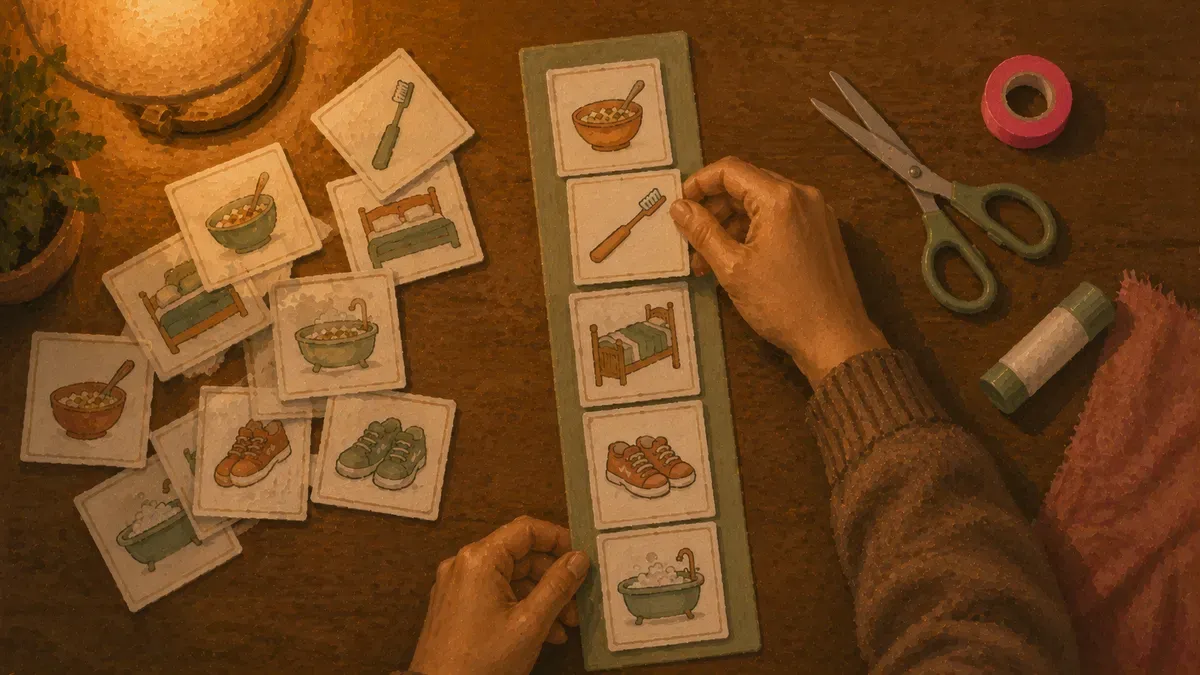
Mount the board low, at your toddler’s eye level, not yours.
A schedule they cannot see is a schedule for you, not them.
Tape it by the door or the breakfast table, wherever the routine building actually happens.
This is how predictability gets built and how smooth transitions stop being a hope and become a habit.
Give it that first week before you judge it. The board is not magic on day one. The board earns its keep when the routine holds.
How Many Pictures Your Toddler’s Schedule Should Have
Less than you think. That’s the honest answer, and most parents go too big on the first try.
Brightwheel’s guidance on visual schedules recommends starting with 2 to 3 picture cards, then working up gradually, stopping at 8 to 10 max, because more than that stops reading like a routine chart and starts feeling like a wall of demands.
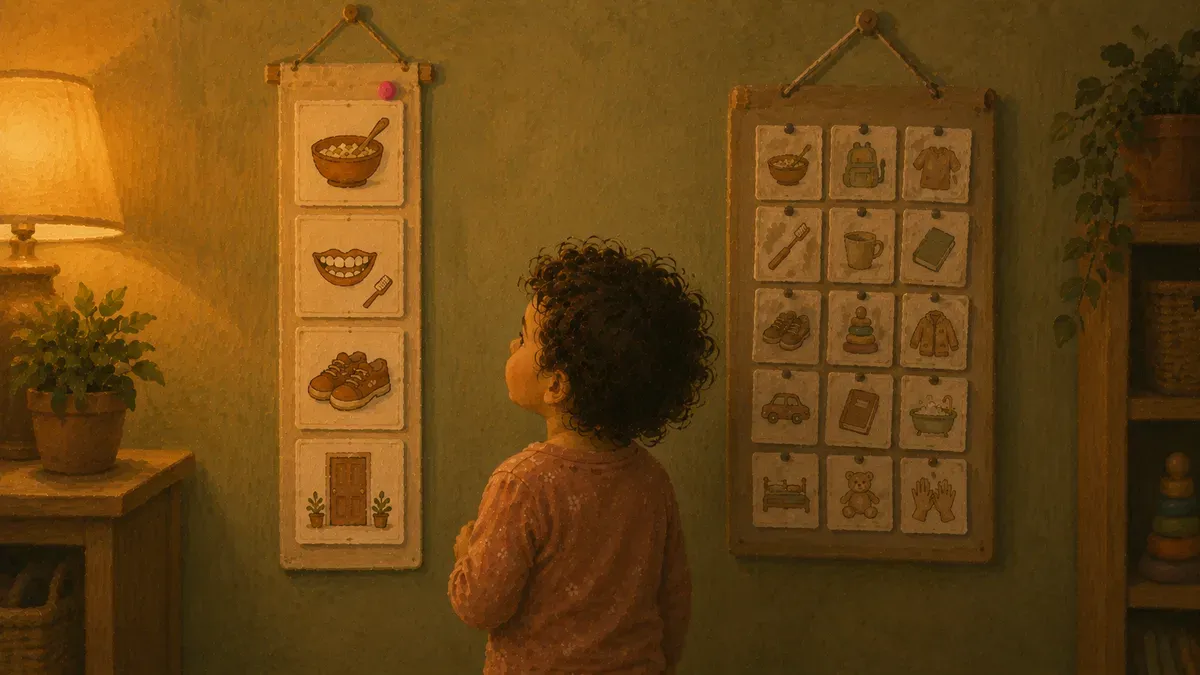
A 4-card board covers breakfast, teeth, shoes, out the door. That is a complete morning task sequence. A 12-card board covers the same ground with six extra steps your toddler will skip entirely.
For a 2-year-old who isn’t tracking a longer sequence yet, a first-then board often works better, and you can add cards only when they’re ready.
Start with two or three. Watch what your child actually uses. Add one card at a time when the existing ones feel automatic. That is how a toddler routine chart grows without overwhelming the kid it’s supposed to help. For more on many pictures should toddlers visual schedule at different ages, that guide breaks it down by stage.
Best Materials for a Toddler Board That Survives
The prettiest setup in the world means nothing if it’s on the floor by Tuesday. Before you laminate a single card or buy a frame, pick your system. The material decides how much flexibility your routine chart actually has down the road.
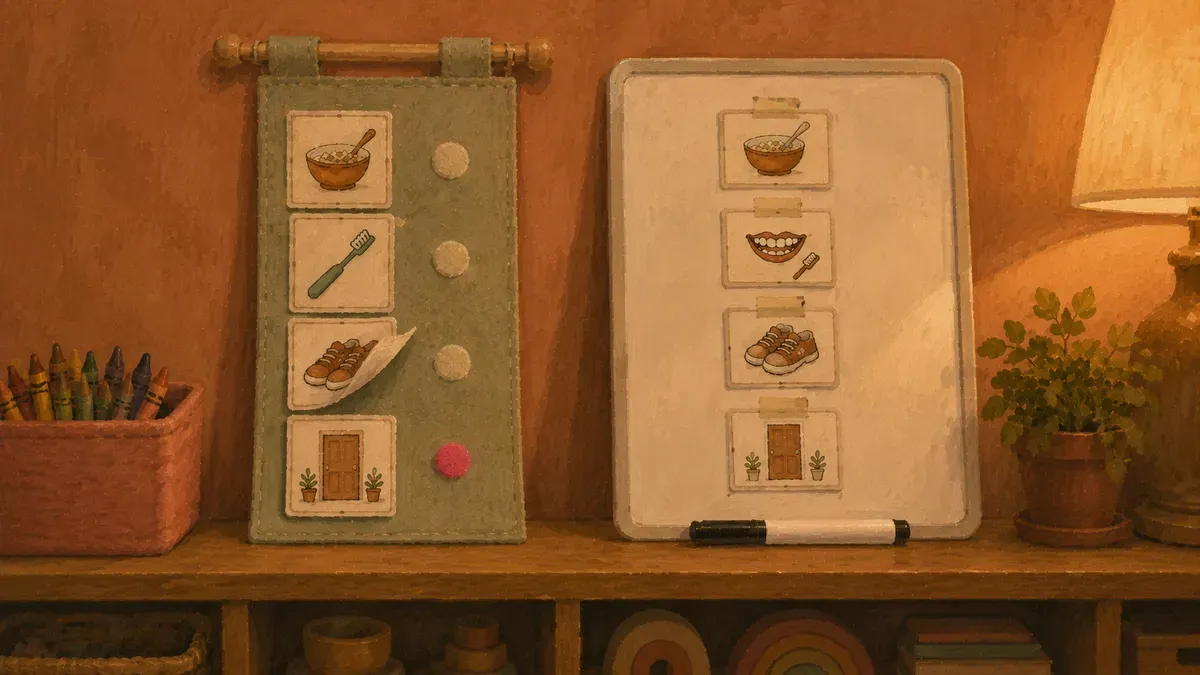
Three setups work for most families:
- Velcro on a felt or fabric strip. Cards pop on and off without tape or magnets. Easiest for schedule customization: swap a card when the routine shifts, and the board still looks clean. A felt strip costs almost nothing and hangs at toddler height with two thumbtacks.
- Laminated cards in a pocket chart or binder schedule. Lamination makes cards nearly indestructible. A binder schedule travels (good for families with daycare drop-off, therapy days, or weekend routines that look different from weekday ones). Slip the cards into clear pockets, pull them out to flip or reorder.
- Dry-erase board with printed cards. Tape cards down and write the day’s plan around them. Easiest to reset. Not great for routine consistency if your kid needs to physically move cards to signal “done.”
If you’re not sure which format fits your setup, this printable blank visual schedule template comparison breaks down the trade-offs side by side.
Whatever you choose, the visual cues need to survive a two-year-old. Laminate or use cardstock in a pocket. Cards that rip get ignored.
What to Do When Your Toddler Ignores the Schedule
A board that survives a two-year-old still has to win a two-year-old. If the schedule is getting ignored, that’s not failure. It’s feedback.
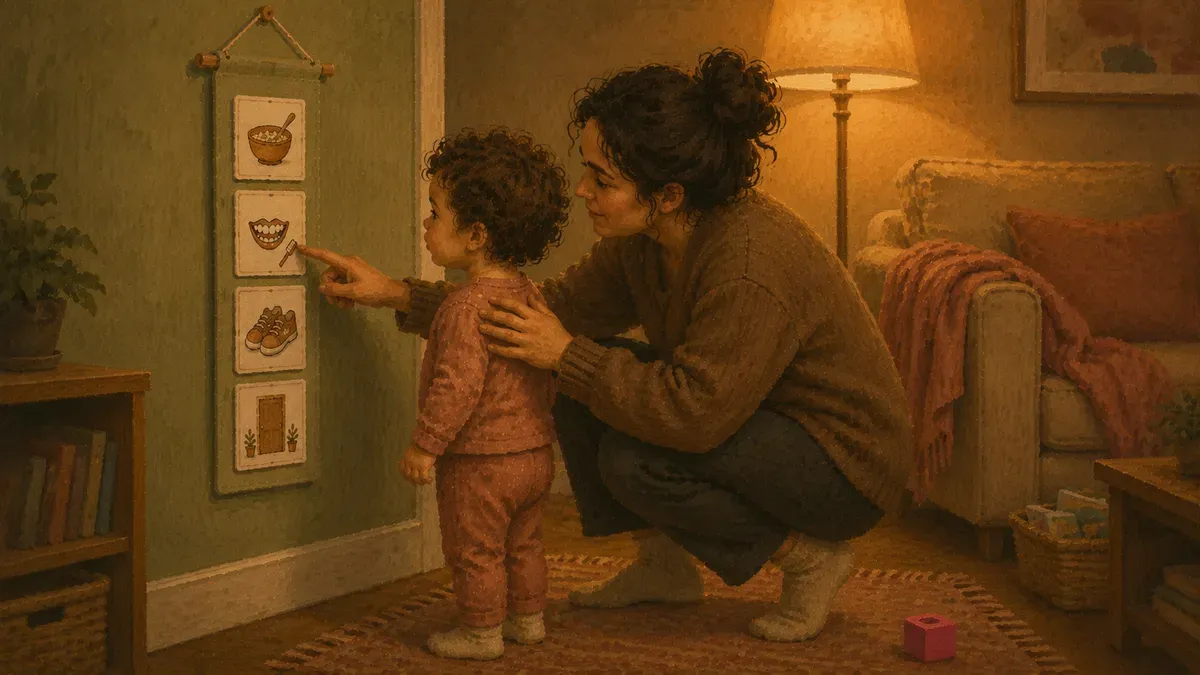
The most common reason it stops working: the transition catches them off guard. Research on transition supports consistently points to one fix: pair the visual card with an advance warning so kids can see the change coming instead of just reacting to it. Child Mind Institute’s expert advice on managing toddler transitions goes further: give countdowns at 20, 10, and 5 minutes before the switch, not just one warning at the end.
Beyond timing, a few fixes cover most situations:
- They’re not ready for a full sequence. Drop back to a first-then board. One thing now, one thing next. That’s the whole schedule for a kid who shuts down at four cards.
- The cards don’t match the day. A card for the park on a rainy Tuesday is confusing. Keep a few extras so you can swap fast without a power struggle over what the board says.
- The routine changed and nobody told the board. Update it before the day starts, not mid-transition.
- The walkthrough isn’t consistent. The board earns trust through repetition. Point at each card together every morning for a week and it clicks.
For a deeper look at toddler wont follow visual schedule 9, including specific meltdown prevention strategies for sensory-sensitive kids, that post covers the hard days. Smooth transitions rarely happen by accident; they come from the same boring routine, done again.
Where to Get Free Visual Schedule Templates and Printables
Free is the right place to start. Before you spend anything, try a printable template and see which cards your kid actually stops to look at.
One free download worth bookmarking early: challengingbehavior.org offers a home routine cards set and a full visual supports guide you can print today. It covers picture schedule cards for the most common daily moments (breakfast, getting dressed, brushing teeth) and holds up to laminating.
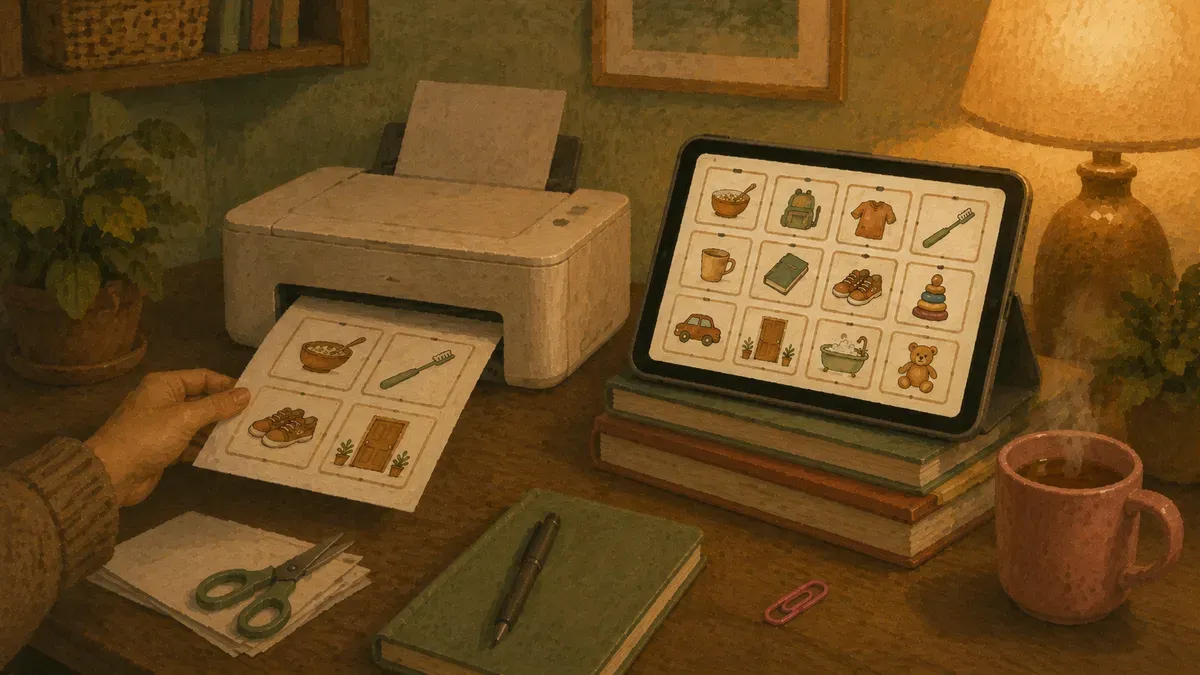
Google Images and Teachers Pay Teachers both have free picture schedule cards in basic clip-art style. They work fine for a first try. Real photos of your own home tend to stick better for sensory-sensitive kids, but clip-art beats a blank routine chart while you’re figuring out what works.
If you want a ready-made set built specifically for toddlers, a ready-made toddler schedule pack skips the assembly entirely. It’s pre-sequenced and ready to laminate. For everything else, our complete visual schedules library keeps all the guides and card ideas in one place so you’re not hunting across three tabs.
Found this useful? Save it for the next rough afternoon.
Questions parents ask me about this
Where can I find a visual schedule template for toddlers?
Free printable options exist through early childhood organizations and parent resource sites. Search for "routine picture cards" or "toddler visual schedule cards" and you'll find downloadable PDFs you can print and laminate at home. If you want something already sequenced and sized for toddlers, ready-made packs with pre-drawn cards skip the cutting-and-assembling step entirely. The body sections of this article link directly to both free and ready-made options.
At what age can a toddler start using a visual schedule?
Most toddlers can begin with a simple two-card first-then board somewhere around 18 months, as long as the pictures are clear and the sequence is short. A full four-to-six card routine works better once they're closer to two or two-and-a-half and already recognize familiar images. Start small and add cards gradually as each step becomes automatic.
Should I use real photos or drawings on the picture cards?
Either works, and the right choice depends on your child. Real photos of your actual kitchen, your specific coat hook, your family's bathroom tend to land faster for kids who are very concrete or who are just starting out with the schedule. Clip-art style drawings generalize better across locations and are easier to swap when routines change. Try real photos first and switch to drawings if your child reads them just as easily.
How do I handle days that break the normal routine?
Update the cards before the day starts, not once you're already in it. A midday swap catches a kid off guard the same way a surprise transition does. If you know Saturday looks different, pull out the cards that don't apply and rearrange before breakfast.
Do visual schedules work for non-verbal toddlers?
Yes, and they're often especially helpful for kids who aren't using words yet to process what comes next. The whole point of the schedule is to remove the need for verbal explanation during a transition. Point to the card, gesture to the next step, and let the picture carry the message. Many families raising non-verbal kids find the schedule reduces frustration on both sides because the sequence is visible, not something the child has to hold in memory.
How long until a visual schedule actually starts working?
Expect about a week of daily walkthroughs before it clicks. The first few days you'll feel like you're narrating a routine nobody is listening to. Most kids start anticipating the next card somewhere around day four or five. That shift is the sign the board is doing its job. If it's been two weeks with no traction, check two things: whether the card images are clear enough to decode at a glance, and whether the sequence has too many steps for where your child is right now.
Written by
Nora Hayes
Mom of two and a former preschool aide. I share the screen-free sensory play and calm-down ideas I test at my own kitchen table, plus what the moms in my little meet-up swear by. A parent passing on what works, not a doctor or a therapist.
More about NoraKeep going
All Visual Schedules-
 Visual Schedules
Visual Schedule Printable: 20 Picture Cards + Free PDF
Visual schedule printable with the 20 picture cards every toddler home needs. Free PDF to download, print, and start using tonight.
-
 Visual Schedules
Visual Schedules: A Beginner's Guide for Parents
Most visual schedules fail before day three. Learn how they work and build your first board in 5 steps your child will actually follow. Start today.
-
 Visual Schedules
Toddler Schedule: Build One With Picture Cards
Your 2-year-old can't read a clock yet. Build a toddler schedule with picture cards in 5 steps that stop nap fights and meltdowns. Start today.
-
 Visual Schedules
Free Printable Daily Routine Chart Kids Will Follow
Grab a free printable daily routine chart your child will actually follow, plus picture cards and tips to make any routine stick. Download now.