Potty Training Chart Ideas That Won My Stubborn 2-Year-Old

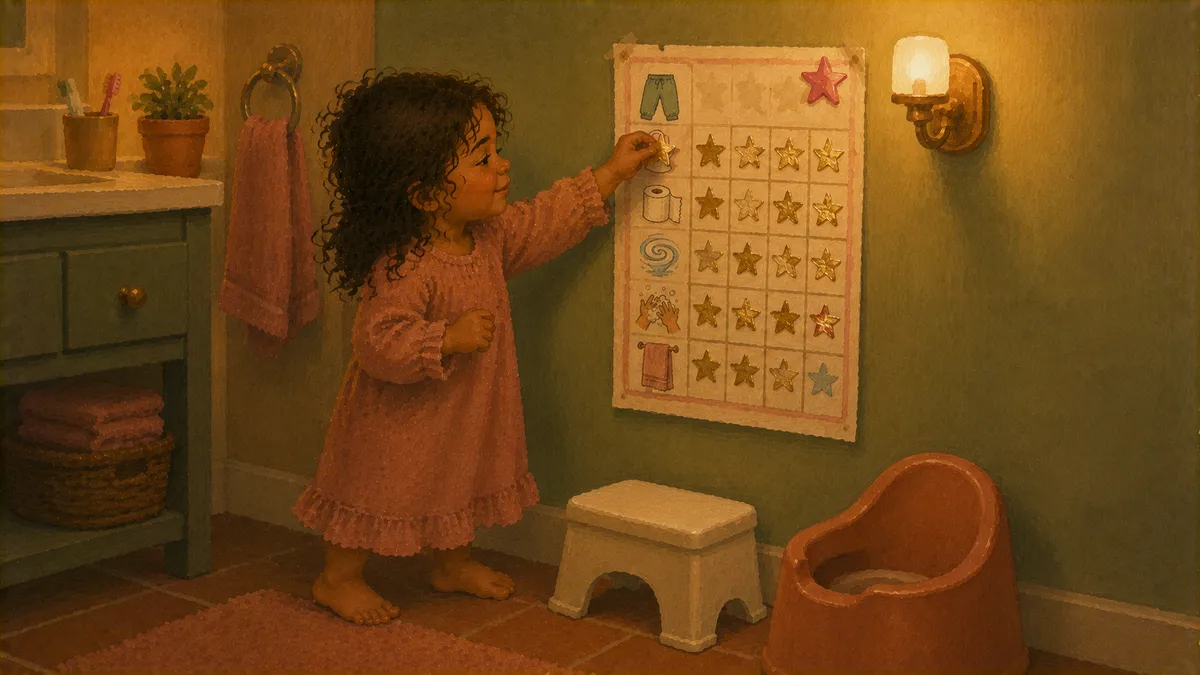
The potty training chart ideas that finally clicked for a resistant kid share three things: a theme she already loved, a sticker she earned the instant she sat, and one behavior tracked at a time so the wins came fast. I’m Nora Hayes, a former preschool aide and mom of two, and I’d burned through a sad printout of a frog and a roll of grocery-store stars before any of it stuck with my June at two. Below is the exact setup that worked, the themed chart variations worth copying, a no-cost DIY version, and what to do the week your stubborn toddler decides stickers are beneath her.
The plan in brief:
- Pick one chart theme your child already loves (dinosaur, Paw Patrol, princess) and hang it at their eye level by the toilet.
- Reward immediately with a sticker the second they sit, not hours later, and add a small prize at every 5 stickers.
- Track just one behavior at a time so wins come fast, then add the next step once that one sticks.
Set Up a Potty Chart That Sticks in 5 Steps
That order matters. Skip a step and the chart becomes wall decoration by Thursday. Here is how it actually runs:
- Pick the chart she’ll point at. Dinosaurs, a favorite show, her own name in bubble letters. If she’s excited to look at it, you’ve already won half the battle.
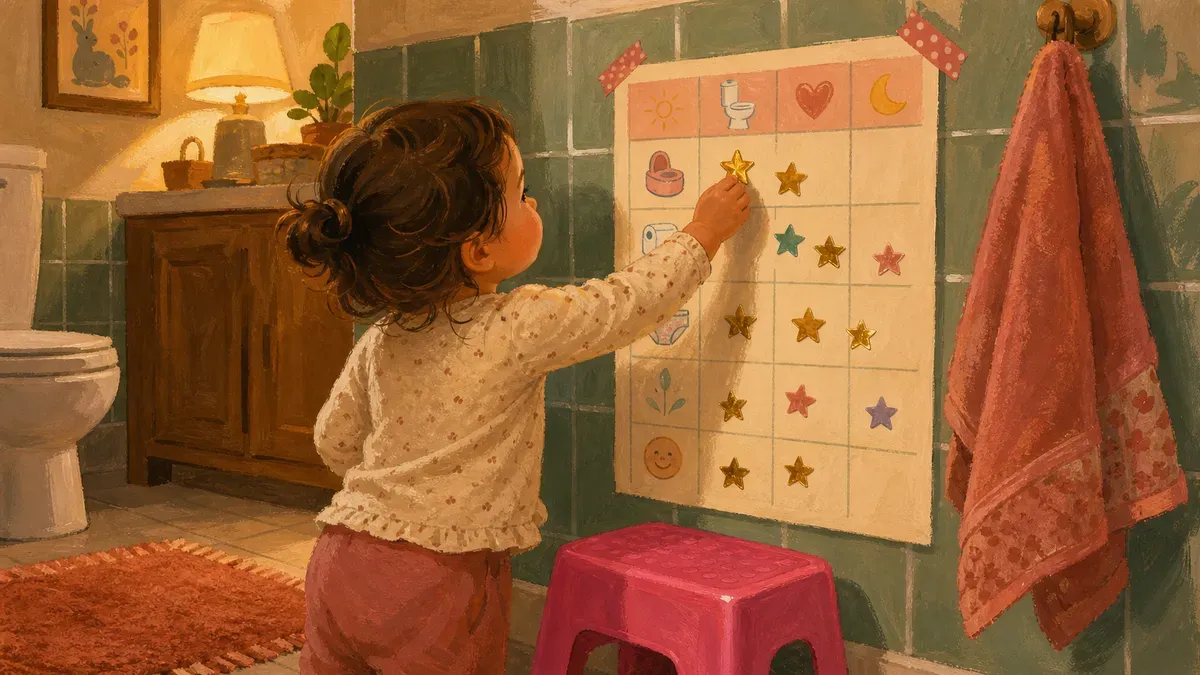
- Hang it at her eye level, by the toilet. Not your eye level. Down where a three-year-old can see the empty squares waiting and reach up to fill one herself.
- Sticker the instant she sits. Not after lunch, not at bedtime. Right then. Research on delay of gratification in young children notes that the ability to wait out a longer delay for a bigger reward doesn’t really show up until ages three to four, so for the youngest trainees, deferred prizes fall flat. Immediate rewards are the engine. The sticker is the motivation.
- Stack toward a small prize. Every five stickers earns something little: a bath toy, a sticker pack, ten minutes at the park. Positive reinforcement she can see coming keeps her sitting.
- Track one behavior, full stop. Just sitting on the potty, or just staying dry. Pile on three goals and you’ll confuse her and yourself.
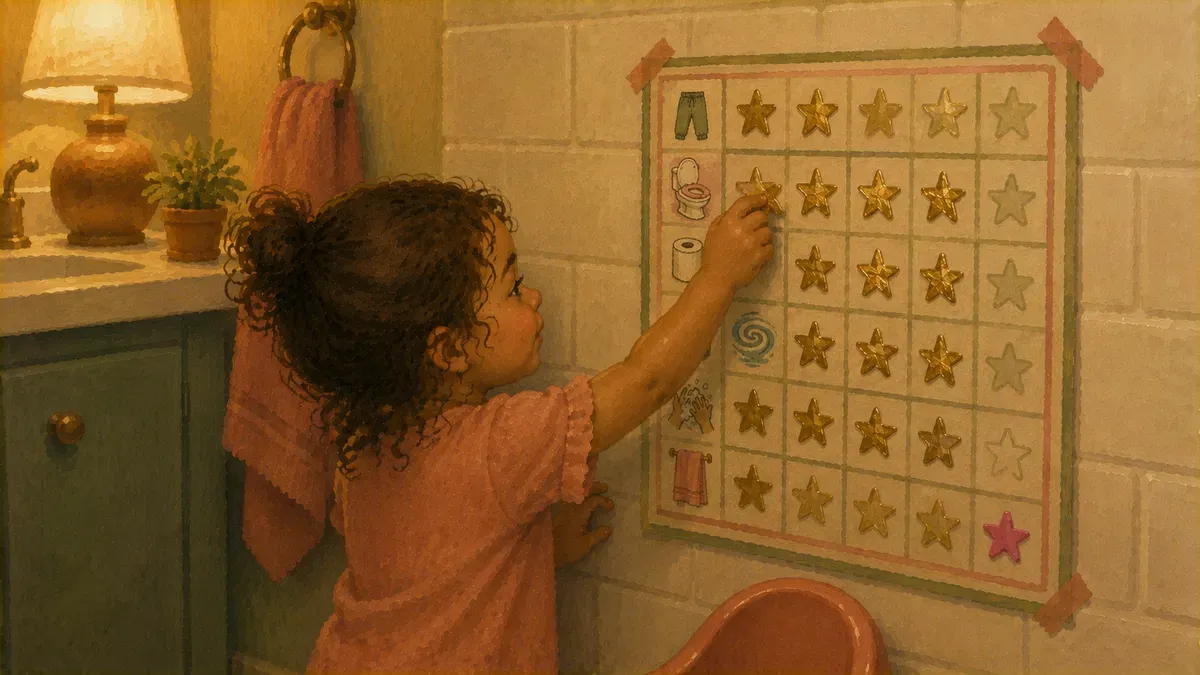
Run it this way for a week before you tweak anything. The first stretch of potty training is about the habit, not the squares filled. Show up consistent, and the chart starts pulling its weight.
Potty Training Chart Ideas Worth Stealing
A chart only works if your kid actually wants to fill it, and that comes down to the design. Three styles win again and again with the toddlers in our group: charts built around a character she’s obsessed with, path charts that turn the toilet into a finish line for visual kids, and tiered reward charts where the squares climb toward something bigger. Steal whichever fits the kid in front of you.
Themed Character Charts Kids Beg to Fill
The fastest way to make a toddler want to sit? Put a face they love on the chart. A kid who fights the potty will run to it when filling in a row of paw prints or rocket ships is the reward.
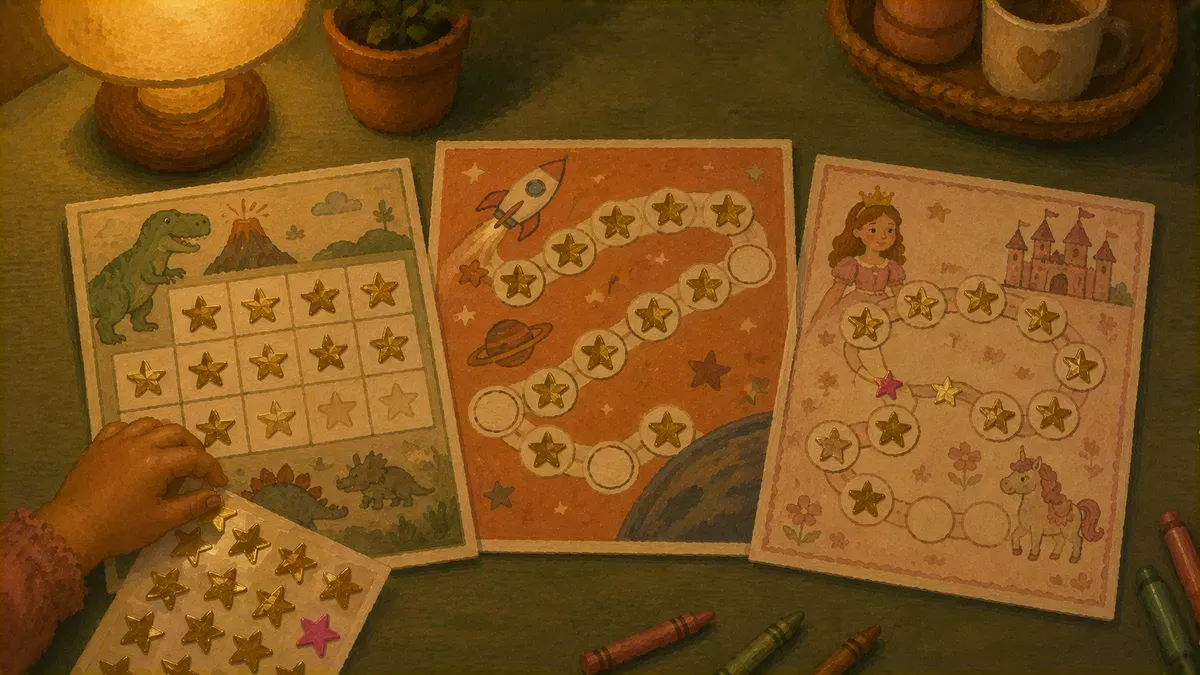
Match the design to whatever they’re obsessed with this month:
- PAW Patrol for the pup-rescue crowd. The franchise now builds its content with education experts aligned to early-learning standards, per the Hechinger Report, so it’s more than fluff.
- Dinosaurs or trucks for the kid who roars and crashes everything.
- Princesses or mermaids for the dress-up lover.
Grab a ready-made potty training sticker chart in their favorite theme, or pair a blank one with our ideas for a potty training reward chart to keep the stickers exciting.
Path and Goal Charts for Visual Kids
Some kids couldn’t care less about a cartoon face. What hooks them is seeing how close they are to the finish line.
This is a journey chart: a winding path with a prize at the end, and a token your toddler moves forward with every success. Each step they slide that token closer, the goal feels more real. That pull is the goal-gradient effect, the same reason you walk faster the closer you get to home.
It’s the most visual way to track progress and shines for kids who think in pictures.
- A racecar driving toward a checkered flag
- A rocket climbing to the moon
- Stepping stones across a river to a treasure chest
Pick a milestone they’ll actually chase.
Reward Charts That Build to a Bigger Prize
Stickers lose their shine by day four. A tiered reward chart fixes that by stacking small daily wins toward one named, drool-worthy goal at the top. Decide it together and write it on the chart where she can see it.
Swap out the little rewards along the way so she doesn’t get bored of the same bath toy by row two.
- A specific milestone reward she picked (the bubble bath set, the dump truck)
- Small, rotating prizes between stickers so nothing goes stale
- A “halfway there” moment she can point to
Let the bigger prize do the work.
Make Your Own DIY Potty Chart at Home
You don’t need to buy anything. A piece of cardstock, a marker, and a sheet of stickers from the dollar bin will outperform half the pretty charts online, because your kid had a hand in making it.
- Grab paper, a ruler, and any markers.
- Draw a grid of boxes, ten or so, big enough for a toddler thumb to land a sticker without missing.
- Write her name across the top with whatever she’s into this week.
- Hand it to her to color, let her scribble in the margins, and let her pick the sticker theme. The chart she helped build is the chart she wants to fill.
Here’s the part most DIY versions skip: the fun design matters more than the neat lines. A wobbly racecar she drew beats a perfect printable she’s never seen.
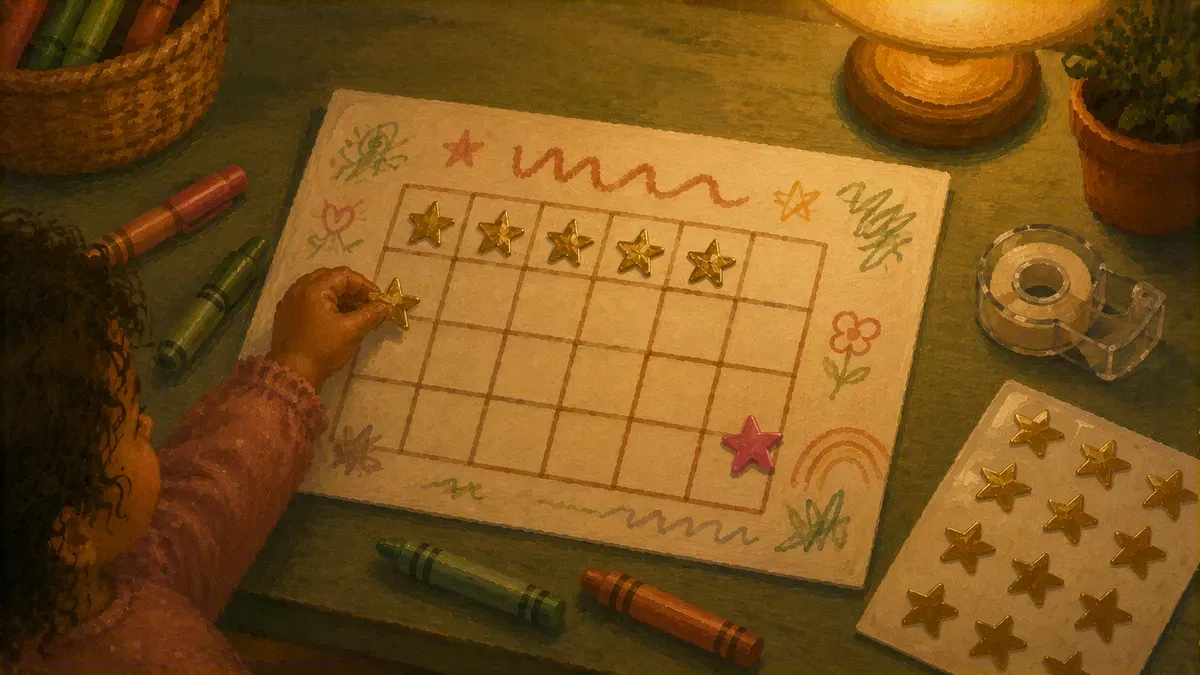
No crafting energy tonight? That’s most nights. You can skip the markers entirely and draw a quick grid on any blank paper — ten boxes, her name at the top, done in two minutes. Same payoff, zero setup.
Keep the stickers cheap and plentiful. Foil stars, smiley faces, whatever’s in the junk drawer. The sticker is the reward, so the second she sits, it goes on the chart while she watches.
One honest warning from my own kitchen table: a homemade chart on printer paper tears and curls fast. Tape it to a piece of cardboard or laminate it with clear packing tape, or you’ll be redrawing it within days.
When the Chart Stops Working on a Stubborn Toddler
Sometimes you do everything right, the chart is laminated, the stickers are out, the prize is named, and your kid just stops caring by day four.
Switch Up the Reward Before You Switch the Method
When the stickers stop landing, a worn-out prize is usually the culprit, not a defiant kid. NIMH’s definition of reward satiation applies here: the fix is rotation, changing what the stickers earn before you rebuild anything.
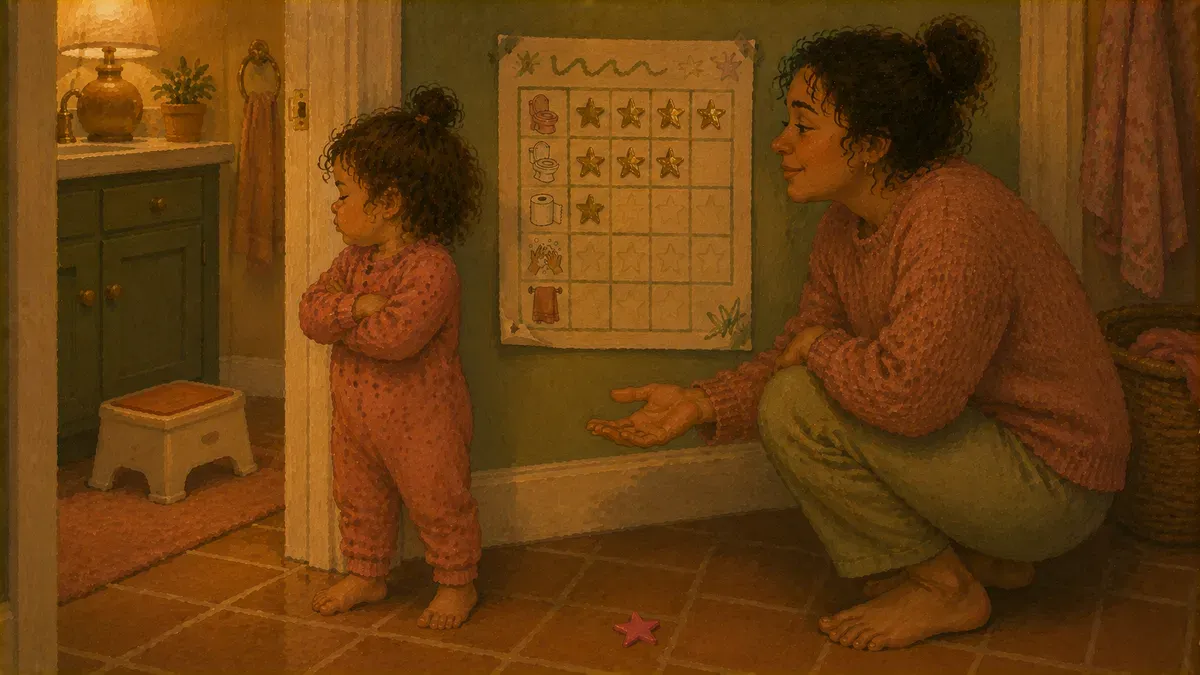
Try one swap:
- A grab-bag prize box she picks from, blind
- Ten minutes of special time, just the two of you
- A fresh theme on the reward chart, dinosaurs traded for unicorns
- A loud, silly celebrate-the-win moment: clap, dance, ring a bell
If your kid has ADHD, motivation fades faster, and when adhd and potty training collide the swap matters more.
Check Readiness Before You Push Harder
If your toddler fights every sticker, no motivation hack fixes a kid who isn’t ready yet, and pushing harder just turns the potty seat into a battle.
Before you scrap anything, watch for the readiness signs the American Academy of Pediatrics lists:
- Staying dry for two hours or more
- Grunting, freezing, or squatting before they go
- Following a simple direction like “go sit”
- Asking for big-kid underwear
Missing most of these, the accidents aren’t defiance, so back off the chart for a few weeks and let her come to it.
Keep Progress Going After the First Wins
The chart fills up, the accidents thin out, and then a different question lands: what now? This is where a lot of parents quietly drop the system, the kid backslides, and everyone’s confused. Don’t yank the supports the second things click.
Keep the chart up, but let it fade on its own terms. Once sitting on the potty is routine, stop rewarding the sit and start celebrating the dry day. A full week with no accidents, then a sticker. That shift keeps the progress tracking meaningful instead of automatic.
Name the next milestone out loud and make it feel like graduating, not quitting:
- Move from a sticker-per-sit to a sticker for staying dry all morning
- Add nighttime as its own goal, separate from daytime
- Swap the chart for big-kid underwear they picked themselves
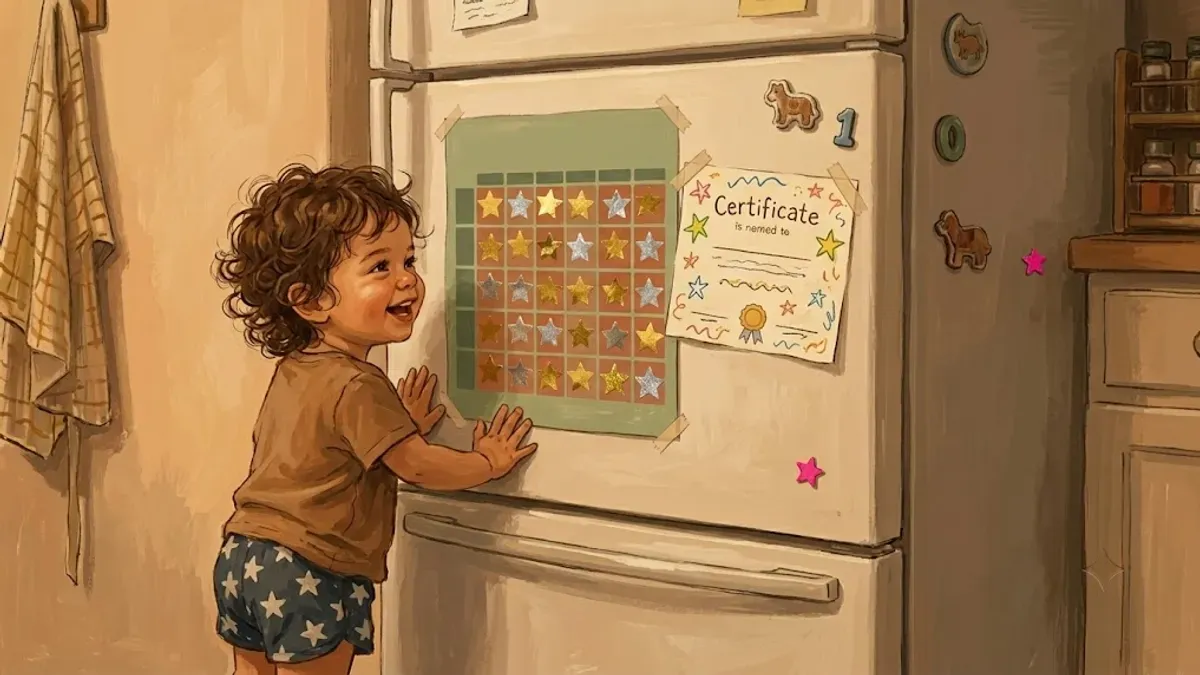
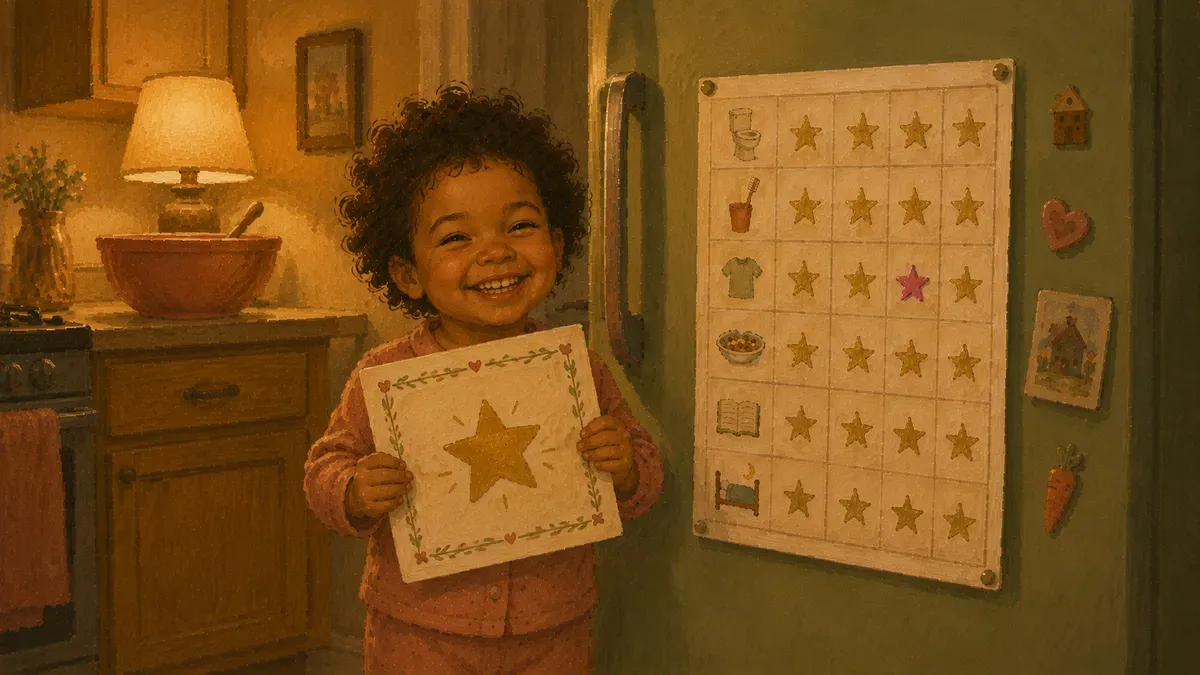
Underwear is the real prize here. Let your kid choose the pair at the store, because choosing it makes wearing it matter. A finished chart taped to the fridge plus a wobbly homemade certificate gives them something to point at for weeks.
Regression happens. A cold, a new sibling, a move, and suddenly you’re back to accidents. That’s not failure, it’s a pause. If a stall drags on past the toddler years, what to do with a 3 year old not potty trained walks through it. For everything else, the rest of our potty training guides are here when you need them.
Found this useful? Save it for the next rough afternoon.
Questions parents ask me about this
What are some good potty training chart ideas that actually work?
The ones that work share one thing: your kid wants to fill them. Put a character your toddler already loves on the chart, or use a path that moves a token toward a finish-line prize so a visual kid can see how close they are. Match the style to the child in front of you, not the prettiest option you saw online.
How do you use a sticker chart for potty training?
Hang it at your child's eye level right by the toilet, and hand over a sticker the second they sit, while they watch you stick it on. Track one behavior at a time so a little kid isn't confused about what earned the reward. Run it unchanged for about a week before you tweak anything, because the early days are about building the habit, not chasing a high count.
What are good prizes for potty training?
Keep the everyday reward immediate and small, then let a handful of stickers add up to a bigger one. A simple rhythm that works is a little prize after every five stickers: a bath toy, a fresh sticker pack, or ten minutes at the park. Rotate the in-between prizes so your kid doesn't get bored of the same bath toy two weeks in.
At what age should you start using a potty training chart?
Start when the readiness signs show up, not on a birthday. Look for staying dry for two hours or more, the physical tells like grunting or squatting, following simple directions, and showing interest in big-kid underwear. If most of those are missing, accidents are about timing rather than defiance, so hold off and keep it low-key for a few weeks.
What are the downsides of potty training sticker charts?
The main one is that the reward goes stale. A kid who loved stickers in the first few days can stop caring once the novelty wears off, which looks like defiance but is usually plain boredom. Swap what the stickers earn before you assume the whole system failed, and give the new reward a few days to land.
How do you use a potty chart for night-time potty training?
Treat staying dry overnight as its own separate goal with its own reward, not part of the daytime chart. Nighttime dryness depends on the body, so it tends to come later than daytime success and on its own timeline. Keep the chart calm and pressure-free here, and reward the dry morning rather than every trip to the toilet.
Should you keep the chart up after an accident or regression?
Keep it up. A slide after a cold, a new sibling, or a move is a pause, not a failure, and yanking the chart away tends to make backsliding worse. Stay low-key, keep rewarding the wins as they return, and let your kid point to the progress they already made.
Written by
Nora Hayes
Mom of two and a former preschool aide. I share the screen-free sensory play and calm-down ideas I test at my own kitchen table, plus what the moms in my little meet-up swear by. A parent passing on what works, not a doctor or a therapist.
More about NoraKeep going
All Potty Training-
 Potty Training
Potty Training Reward Chart: 20 Ideas Under $3
Skip the toy aisle: build a potty training reward chart with 20 ideas under $3 you already own. Grab the plan that motivates a stubborn toddler.
-
 Potty Training
How to Potty Train a Boy (and How a Girl Differs)
How to potty train a boy in 3 to 6 months: the readiness signs, the step-by-step method, and the small things that differ for girls.
-
 Potty Training
Potty Training Sticker Chart Printable (Free Download)
Free potty training sticker chart printable that survives travel and routine resets. Print, sticker, reward, reuse anywhere. Download now.
-
 Potty Training
Potty Training Certificate: A Just-Do-This Guide
Charts skip the finish line. Make a potty training certificate that gets your toddler over the line for real. Print yours tonight.