Potty Training Reward Chart: 20 Cheap Rewards

Some links here are affiliate links. If you buy through one, I may earn a small commission at no extra cost to you. As an Amazon Associate I earn from qualifying purchases. I only point to things I'd actually use with my own two.
Handing over a small reward the instant your toddler uses the potty is what turns a chart from wall decoration into something your kid actually races to the bathroom for, and you’re in good company reaching for it: in a July 2025 University of Michigan poll, 53% of parents named incentive rewards as a top potty training method. I’m Nora Hayes, a former preschool aide who’s now run a potty training reward chart with both my own kids and the moms in my living-room meet-up.
Below you’ll find the 4-step setup, 20 under-$3 rewards, how to match them to your specific toddler, and how to fade the whole thing out once it’s done its job.
The plan in brief:
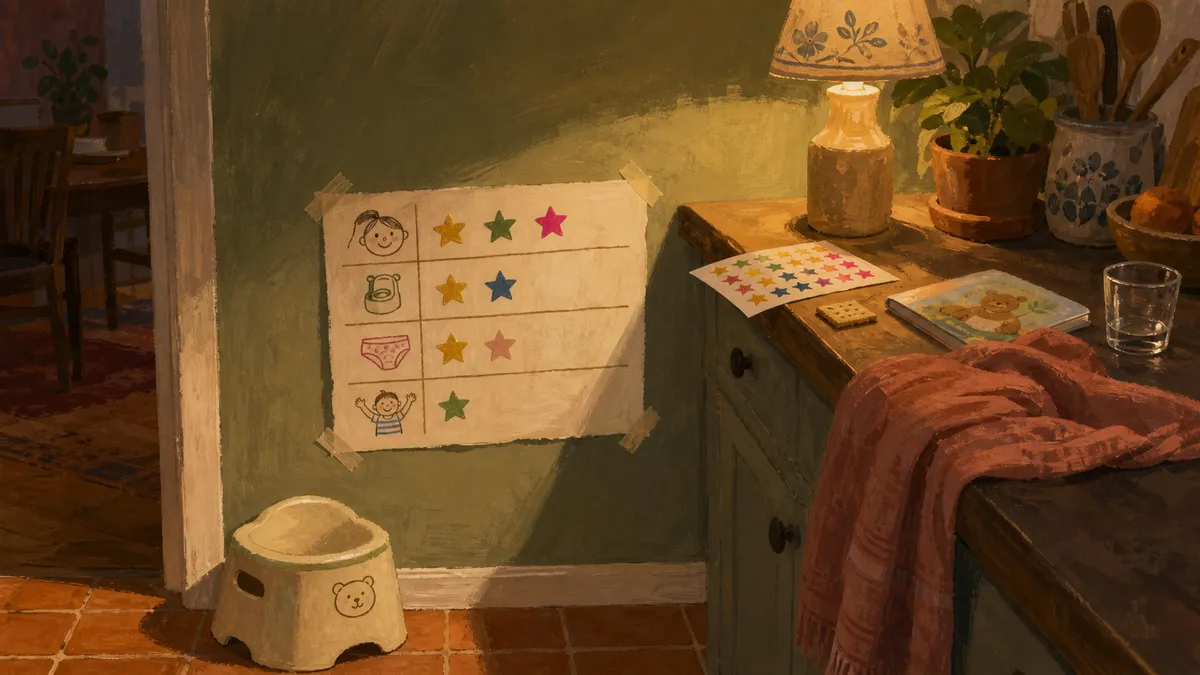
- Hang a sticker chart at your toddler’s eye height and add one sticker the instant they use the potty.
- Pair each sticker with an under-$3 reward you already own, handed over within 10 seconds.
- After 5 to 7 straight wins, swap daily rewards for a weekly prize, then fade the chart entirely.
Set Up a Reward Chart That Actually Works in 4 Steps
The whole system lives or dies on setup, and setup takes about ten minutes at the kitchen table. Get these four steps right and the chart does the heavy lifting for you. Skip one and you end up with a sad sticker sheet curling off the fridge by Thursday.
Here’s the four-step version you can do tonight, start to finish:
- Make the chart with your kid, not for them. Let them pick the theme, the marker color, where the boxes go. A sticker chart your toddler helped build is a sticker chart they actually care about. Five minutes of buy-in saves you a week of nagging.
- Tape it at eye-level in the bathroom. Down low, where they can see it from the potty without you lifting them. The point of positive reinforcement is they connect the win to the spot, so the chart goes where the action happens, not on the fridge across the house.
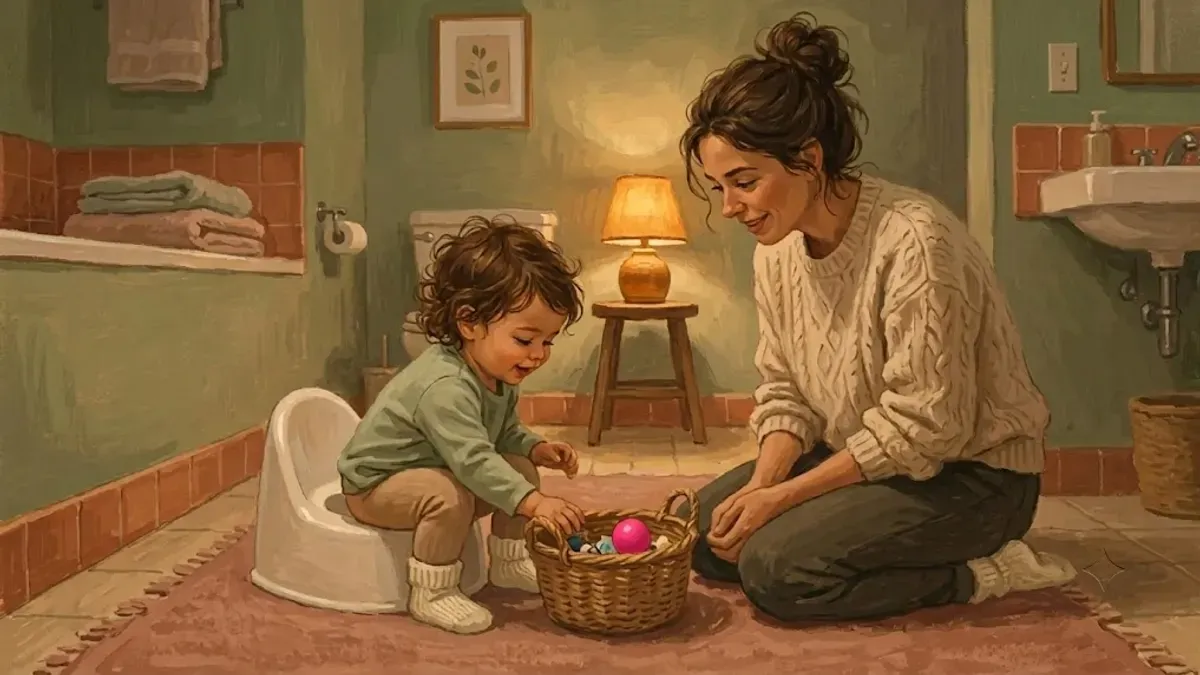
- Stock your reward right there. A little basket of tiny prizes within arm’s reach. The immediate reward only works if you can hand it over fast, so you’re not hunting through a junk drawer mid-celebration. (Step two of this guide covers 20 under-$3 ideas you already own.)
- Celebrate every single try. Sticker, hug, a goofy potty dance, whatever. The AAP’s expert advice on timing immediate rewards for toddlers leans on praise over treats, and honestly, your delighted face is half the reward. Each sticker is a small milestone, so treat it like one.
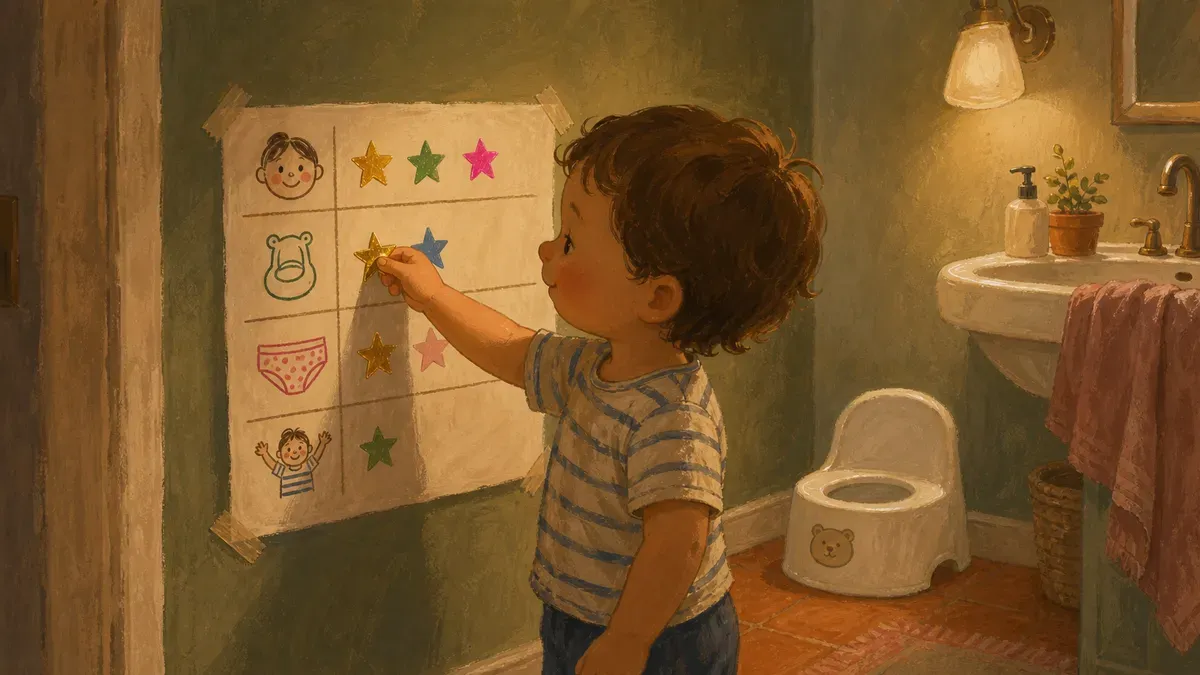
That’s it. No laminator, no Pinterest-perfect printout required, though a ready-made potty training sticker chart saves you the marker step on a rough morning. The chart is just the frame. Want the bigger picture on where this fits, start with our potty training overview, then come grab your rewards below.
20 Potty Training Rewards Under $3 You Already Own
Here they are, and not one of them needs a special trip to the store. It runs from totally free (a high-five, a dance, a loud “you did it”) to pantry snacks and junk-drawer finds, with a few dollar-store grabs and one underwear upgrade that doubles as its own reward.
Free Wins: Praise, High-Fives, and a Victory Dance
The cheapest rewards on this whole list cost zero dollars, and for a lot of toddlers they land harder than any sticker. A two-year-old isn’t chasing a prize. They’re chasing your face lighting up. That’s the engine.
The catch is timing. Praise only works if it lands the second they finish, not at bedtime when you remember to say it. By the end of the day, a toddler can’t connect a “good job” back to the thing they did this morning. In my experience, praise only sticks when it lands right then.
Reach for these the instant they hop off:
- A loud, ridiculous “YOU DID IT!” with both arms in the air
- A victory dance you make up on the spot, sillier the better
- A high-five, a fist bump, a squeeze
- A made-up potty song with their name in it
- A phone or video call to grandma so they get to report the news
- Letting them wave and say “bye-bye!” as it flushes
Stack a few of these and you’ve got real potty training prizes that build a little proud, capable feeling every single time, no shopping required.
Pantry and Junk-Drawer Treats Under $1
Some kids light up at a cheer. Others want something in their hand, and that’s where your kitchen earns its keep.
The classic is one M&M or a single chocolate chip. One. A toddler does not need a handful to feel like they won, and a single piece keeps the treat from turning into a snack negotiation at the potty.
Past candy, raid what’s already on the shelf:
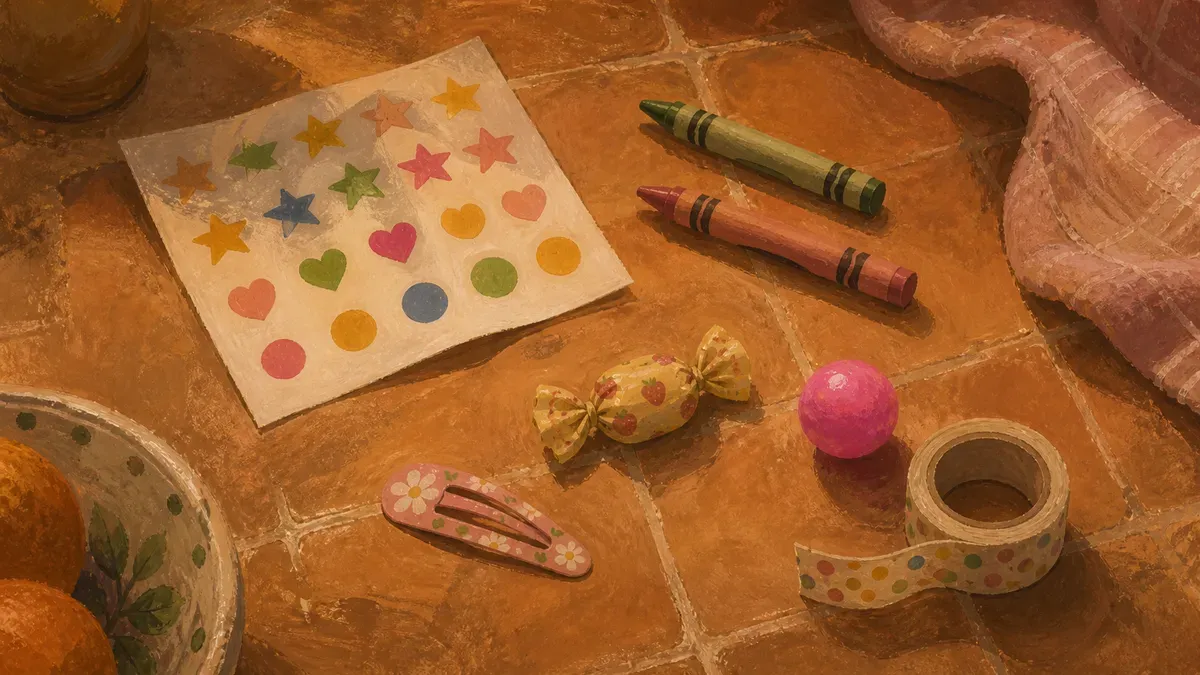
- A couple of crackers or a few cereal pieces, handed over the second they’re done
- A peel-and-stick from any sticker sheet (the ones that pile up from birthday cards work great)
- A strip of washi tape stuck to the back of their hand like a tiny badge
- One balloon, blown up right there, because nothing says “you did it” to a three-year-old like a balloon appearing out of nowhere
- A stamp on the hand, if you’ve got a stamp pad floating around
The trick is the same as the loud-cheer crowd: the food treat or the little object has to land as an immediate reward, not a “later.” Grab it, give it, move on.
Dollar-Store Finds and Big-Kid Underwear
A few rewards are worth an actual dollar or two, and the dollar store is where you grab them on the cheap. Keep the haul small and the handoff fast, same as everything else on this list:
- A single foam sticker or a puffy gem sticker (fancier than the sheet stickers, still pennies each)
- A glow bracelet or a stretchy rubber animal from the party aisle
- A mini bubble wand the size of your thumb
- A page from a coloring or sticker book set
- A stamp from a self-inking shape stamper
The one buy I’d never skip is character underwear, and it pulls double duty: a reward and the actual training tool. A toddler who picks out a pair with their favorite character on the waistband suddenly has skin in the game. Nobody wants to ruin their dinosaurs.
That pull is real, not just cute. The C.S. Mott Children’s Hospital National Poll names the move to big-kid underwear as a milestone-based incentive parents lean on right alongside small rewards.
Let your kid choose the pack. A 10-pack of character training underwear runs cheap per pair and carries you through the accident-heavy week when you first ditch diapers, no laundry marathon every afternoon. The set I point people to sits at 4.7 stars across 800-plus reviews, so you’re not betting on a mystery brand, and you can check the current price on Amazon.
How to Match Rewards to Your Toddler
The kid who shrugs at a sticker chart needs a different approach than the one who melts down when the routine shifts without warning. The next two parts cover the cases I get asked about most: the strong-willed kid who couldn’t care less about a sticker, and neurodivergent kids, where the reward itself often matters less than how predictable and immediate you make it.
Strong-Willed Kids Who Shrug at Stickers
The strong-willed kid isn’t being difficult on purpose. A reward you picked feels like your idea, and their whole project right now is having ideas of their own.
So hand the choice back. Let them pick the prize themselves, every single time. That small act of control is doing more motivating than the toy ever could.
Two moves that work when the usual reward system falls flat:
- Mystery box. A shoebox of cheap odds and ends, lid taped shut, one reach-in grab per win. The not-knowing is the hook, not the trinket.
- Earned privileges. Skip the object. Trade a potty win for picking the bedtime book, the dinner plate color, who pushes the elevator button.
Research in the journal Motivation and Emotion found that toddlers raised with autonomy-supportive parenting, offering real choices followed rules better a year and a half later, while controlling approaches backfired.
If your kid also has a diagnosis in the mix, adhd and potty training needs its own playbook, coming up next.
Neurodivergent Kids: Autism and ADHD
Where a strong-willed kid wants control, an autistic or ADHD toddler usually wants to know what comes next.
Autism Speaks suggests a simple First-Then board, like “First bathroom, then bubbles,” and notes that rewards delivered fast tend to speed skill acquisition. You can draw that on an index card, or grab a First-Then board with swappable picture cards, an Amazon’s Choice set with 900-plus parent reviews behind it, if a wipe-clean version holds up better in your bathroom. Either way, hand the prize over the second they finish, not a beat later.
For an ADHD kid who gets so absorbed they miss the body cues, the chart isn’t the problem, the timing is. Set a gentle timer and try a bathroom trip roughly every 30 minutes, which Autism Speaks flags as a common move for kids who forget when distracted.
Match the prize to their sensory profile:
- Sensory-seeker: something to squeeze or fidget with, like a 35-piece sensory fidget set they only get after a win; 8,500-plus reviews say it holds up to real toddler hands.
- Sensory-avoider: one sticker, quiet handoff, no loud victory dance.
Same words, same spot, same fast handoff, every time.
When Rewards Stop Working and How to Phase Them Out
One morning the sticker gets a shrug. The dance gets an eye-roll. That’s not your kid backsliding, that’s reward fatigue, and it means the potty itself has finally become the habit. The prize did its job. Now it’s in the way.
Pull back gradually, not all at once. Yank every reward overnight and you can rattle a routine that took weeks to build. Stretch the gap instead:
- Reward every single use, the way you started.
- Then once a day, a small win at bedtime for a dry, accident-light day.
- Then once a week, a bigger prize for staying on track.
- Then nothing tangible, because the independence is its own payoff.
Getting the timing right on each step matters:
- Each step usually holds for a week or two of steady wins before you stretch it.
- Move forward when your kid is on a roll, not when they’re wobbly.
- A few accidents in a row means hold the current step a few more days.
Keep the chart up even as the prizes thin out. The marks tell the story your toddler can see: look how many days you did this on your own. That visible progress carries more weight than the next sticker ever did. If your printout is looking rough by now, grab a free potty training sticker chart printable and keep the streak going on a clean one.
Watch for the day they head to the bathroom without announcing it for a sticker. That’s the finish line. No more chart, no more basket, just a kid who left the diaper behind and didn’t make a ceremony of it.
Accidents creeping back doesn’t mean starting over.
- Don’t panic and don’t reload the whole reward system.
- Regression is normal around a new sibling, a move, or a cold.
- Go back one step for a week, then fade again.
For the full picture from first day to last, our complete potty training guide walks the whole road.
Found this useful? Save it for the next rough afternoon.
Questions parents ask me about this
What rewards work best on a potty training chart?
The ones you can hand over in seconds, every single time. Most toddlers chase your reaction more than any object, so a loud cheer, a high-five, or a made-up victory dance often beats a treat. When you do want something tangible, keep it tiny and instant: one cracker, a sticker, a stamp on the back of the hand. The reward that lands fast wins over the fancy one that comes later.
How long should you use a potty training reward chart?
Until your kid stops caring about the reward, which is the good kind of problem. Once they string together five to seven wins in a row without an accident, the habit is forming and you can start fading. Stretch the rewards from every potty trip, to once a day, to once a week, holding each step for a week or two before you stretch again. The chart can stay up longer than the prizes, because seeing the marks pile up is its own motivation.
What do you do when potty training rewards stop working?
First, don't panic, a shrug usually means the habit stuck, not that you failed. That's your cue to fade the rewards rather than hunt for a bigger prize. Stretch the gap between rewards step by step instead of cutting them off cold, and keep the chart visible so progress still feels real. If a kid genuinely tunes out the reward you picked, hand the choice back and let them pick the next one themselves.
Should you reward a toddler for pooping in the potty too?
Yes, and honestly that one deserves a little extra fanfare. Pooping on the potty is harder and scarier for a lot of toddlers, and plenty will pee fine for weeks before they'll go number two. Treat it like a real milestone with the same fast, immediate reward you use for pee. If they're holding it or hiding to poop, ease off the pressure and keep celebrating every attempt, even the near-misses.
Are candy and food rewards bad for potty training?
Not bad, just not the only tool, and not the strongest one. Pediatric toilet-training guidance leans toward praise over treats, and praise costs nothing and never runs out. If you do use food, keep it small and rare, one piece is enough, and resist the urge to size up when the novelty wears off. Used in small doses alongside cheers and stickers, a treat is fine, it just shouldn't carry the whole plan.
At what age can a toddler understand a reward chart?
Most kids get the idea around two to three, once they can connect doing the thing with getting the sticker. The younger the child, the faster that reward has to land, because a toddler can't link a sticker at bedtime to a potty trip from the morning. Keep it simple: one win, one mark, one reward, right now. If your kid clearly doesn't connect the chart to the action yet, they're probably a bit early, and that's fine.
How do you handle accidents on a reward chart without punishing?
Stay neutral, clean up together, and move on, no removed stickers and no lectures. Taking a mark away teaches shame, not bladder control, and a kid who feels watched for failure often digs in harder. Name the next chance instead: "That's okay, let's try for the potty next time." Save your energy and your celebration for the wins, and let the accidents pass quietly.
Written by
Nora Hayes
Mom of two and a former preschool aide. I share the screen-free sensory play and calm-down ideas I test at my own kitchen table, plus what the moms in my little meet-up swear by. A parent passing on what works, not a doctor or a therapist.
More about NoraKeep going
All Potty Training-
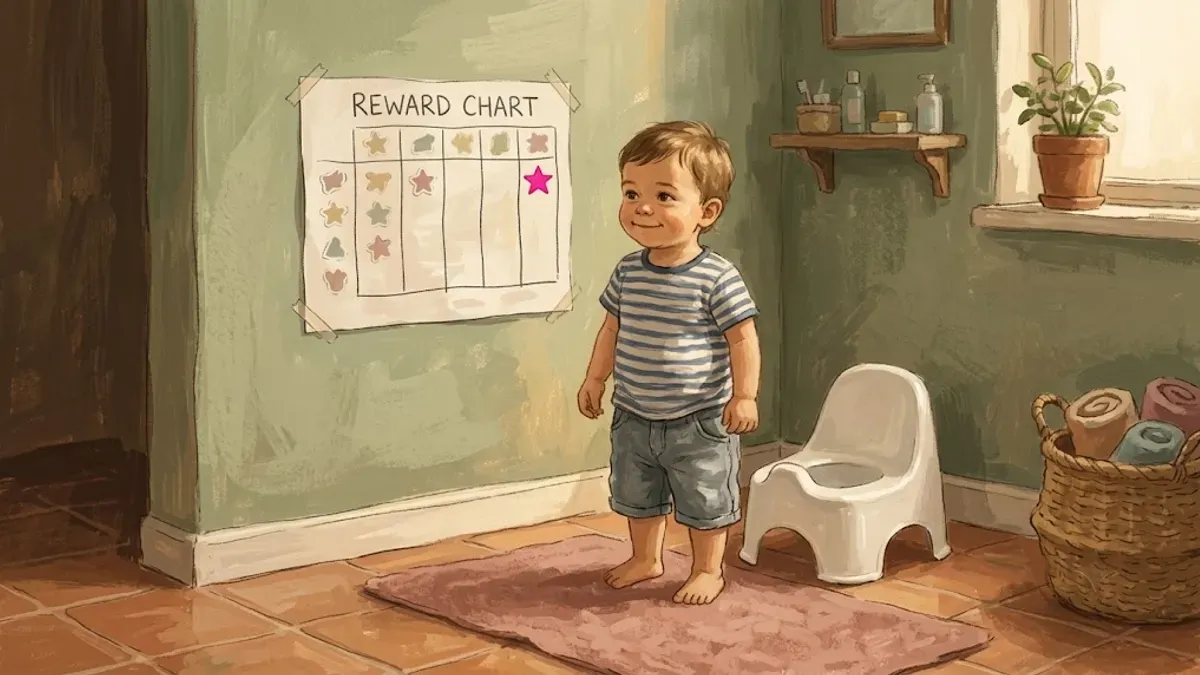 Potty Training
How to Potty Train a Boy (and How a Girl Differs)
How to potty train a boy in 3 to 6 months: the readiness signs, the step-by-step method, and the small things that differ for girls.
-
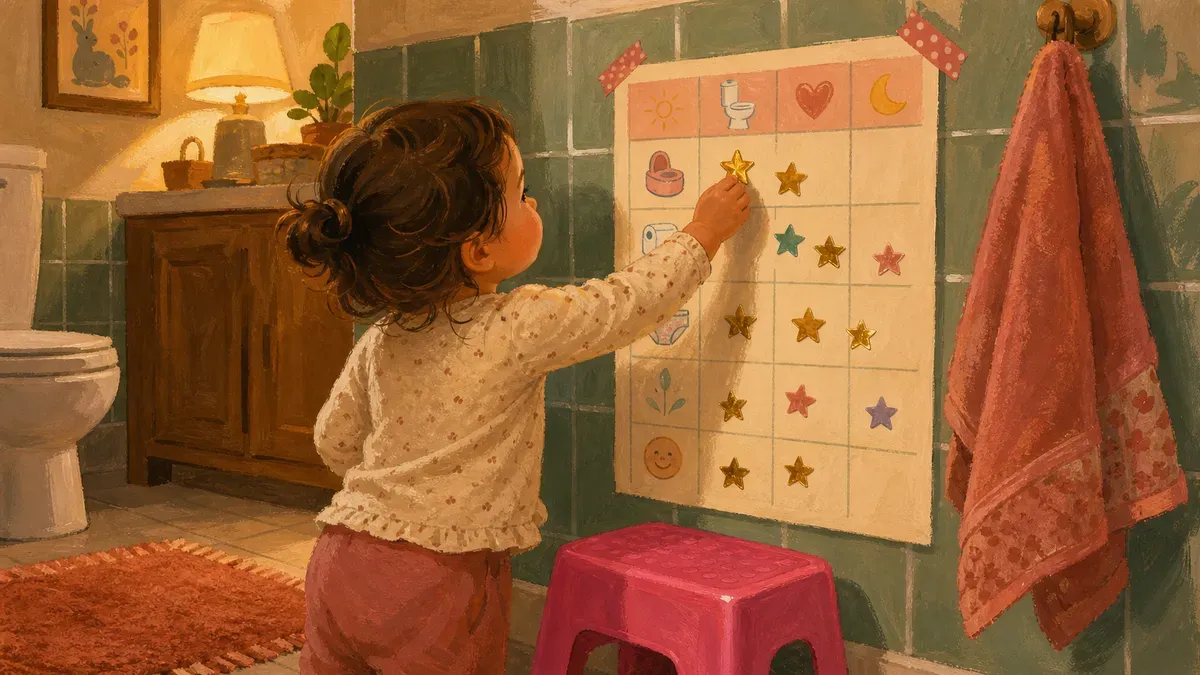 Potty Training
Potty Training Sticker Chart Printable (Free Download)
Free potty training sticker chart printable that survives travel and routine resets. Print, sticker, reward, reuse anywhere. Download now.
-
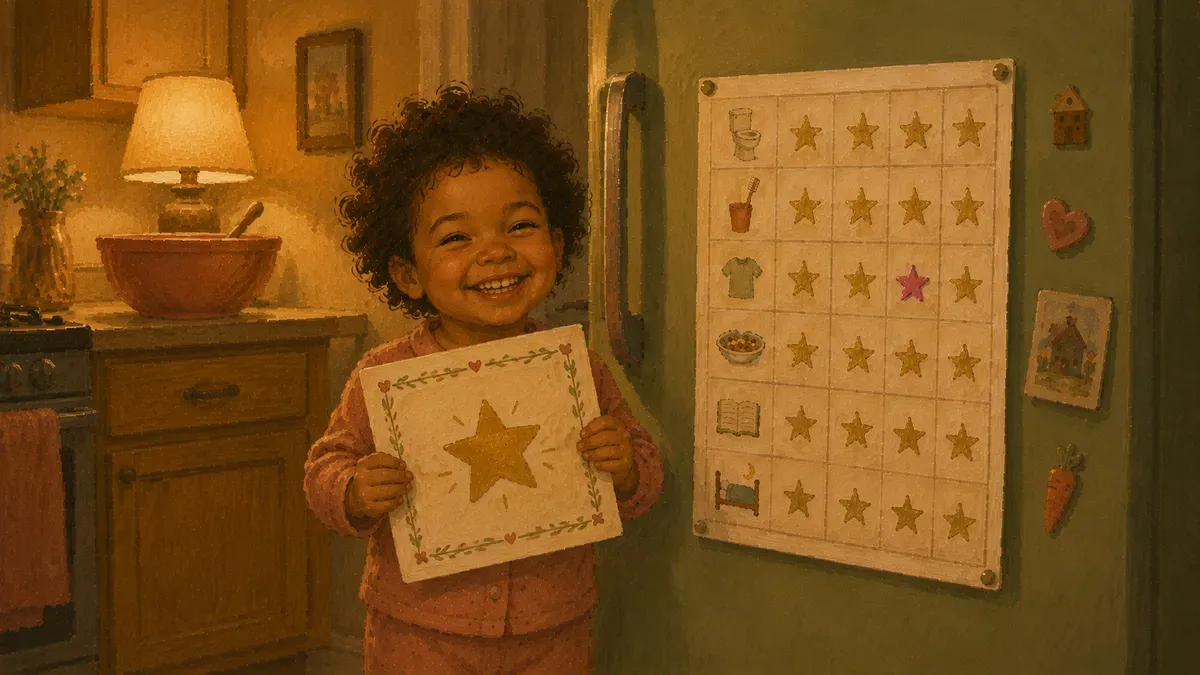 Potty Training
Potty Training Certificate: A Just-Do-This Guide
Charts skip the finish line. Make a potty training certificate that gets your toddler over the line for real. Print yours tonight.
-
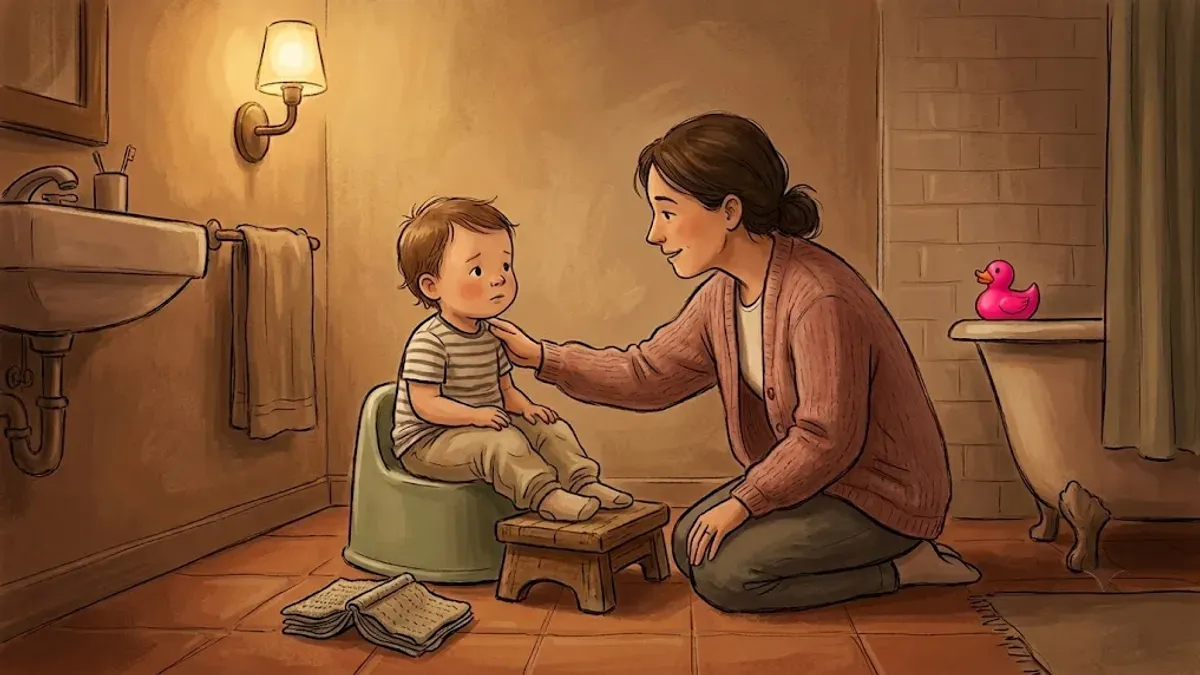 Potty Training
Poop in the Toilet: Why Kids Pee Fine but Won't Poop
Kid pees fine but won't poop in the toilet? Here's why it happens, plus the exact steps that fix it without a fight. Start tonight.