ADHD and Potty Training: When the Chart Stops Working

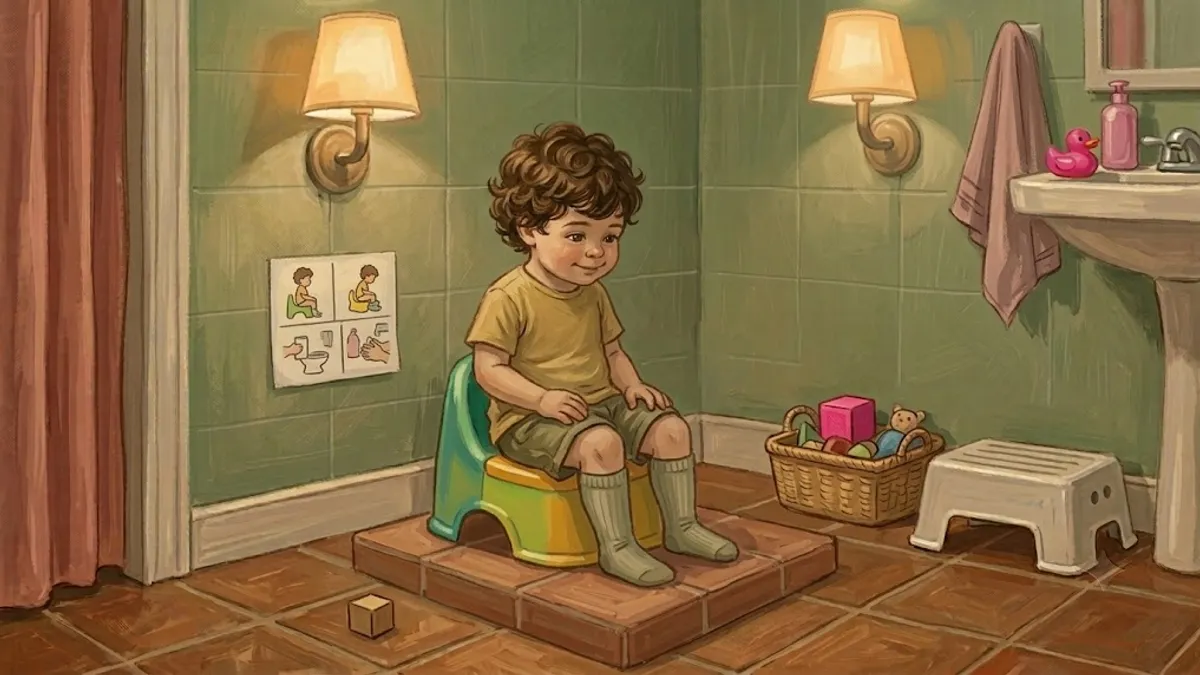
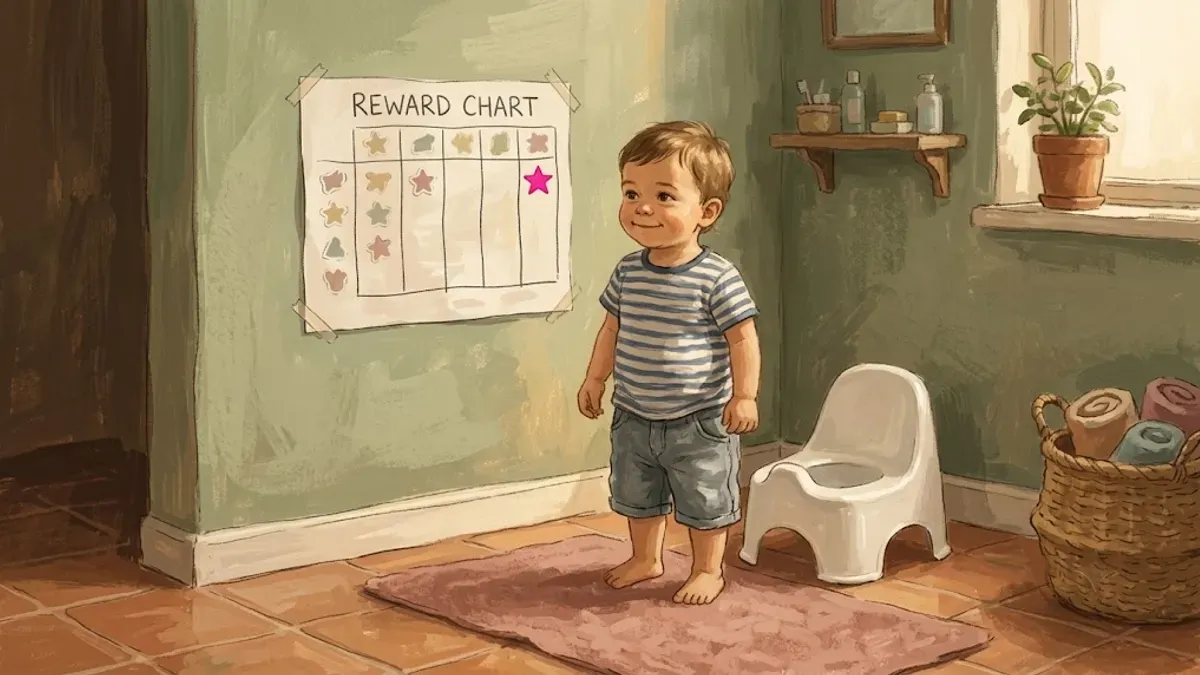
The reward chart stopped working because an ADHD brain runs on right-now, and a sticker earned today for a prize on Friday is too far away to feel real. I’m Nora Hayes, a former preschool aide raising a sensory-seeking kid, and I’ve watched that gap turn an excited toddler bored of the chart in about four days flat.
This article covers why the chart loses its pull, what actually motivates a kid who needs the payoff immediately, and the potty training tricks that hold up after the novelty wears off.
Why ADHD Makes Potty Training Different
Before any trick works, you need to understand what’s actually happening in your child’s body. Two things make potty training harder for a kid with ADHD than it is for a neurotypical kid: a delayed signal from body to brain, and a brain that’s not going to pause a fun activity just because the bladder says so.
The Brain-to-Bladder Signal Delay
When a typical child needs to use the toilet, the message travels fast enough that they have time to stop, walk down the hall, and get there. For many kids with ADHD, that signal arrives late. This is an interoception issue: interoceptive differences mean the brain has a harder time reading internal body signals accurately. The urge doesn’t register until it’s urgent.
A 2025 systematic review found diminished interoceptive accuracy in children and adolescents with ADHD compared to typically developing peers in 3 of 5 studies examining this.
- The child isn’t getting a clear signal until it’s nearly too late.
- When accidents happen, that’s not defiance or laziness.
- The plumbing works fine. The signal chain doesn’t.
CHADD notes that core ADHD traits like impulsivity and distractibility cause children to ignore internal body signals, which also helps explain why kids with ADHD are more than 20% likely to have chronic constipation compared to peers.
Impulse Control and Hyperfocus Pull Attention Away
Even when the signal does land, acting on it is a different problem.
Impulse control is weak in ADHD, but so is the ability to break out of hyperfocus. A child deep in a puzzle or a game of blocks isn’t choosing to ignore the urge. Their brain literally cannot interrupt the loop long enough to redirect to the bathroom. They feel the signal, and then the next interesting thing happens and it’s gone.
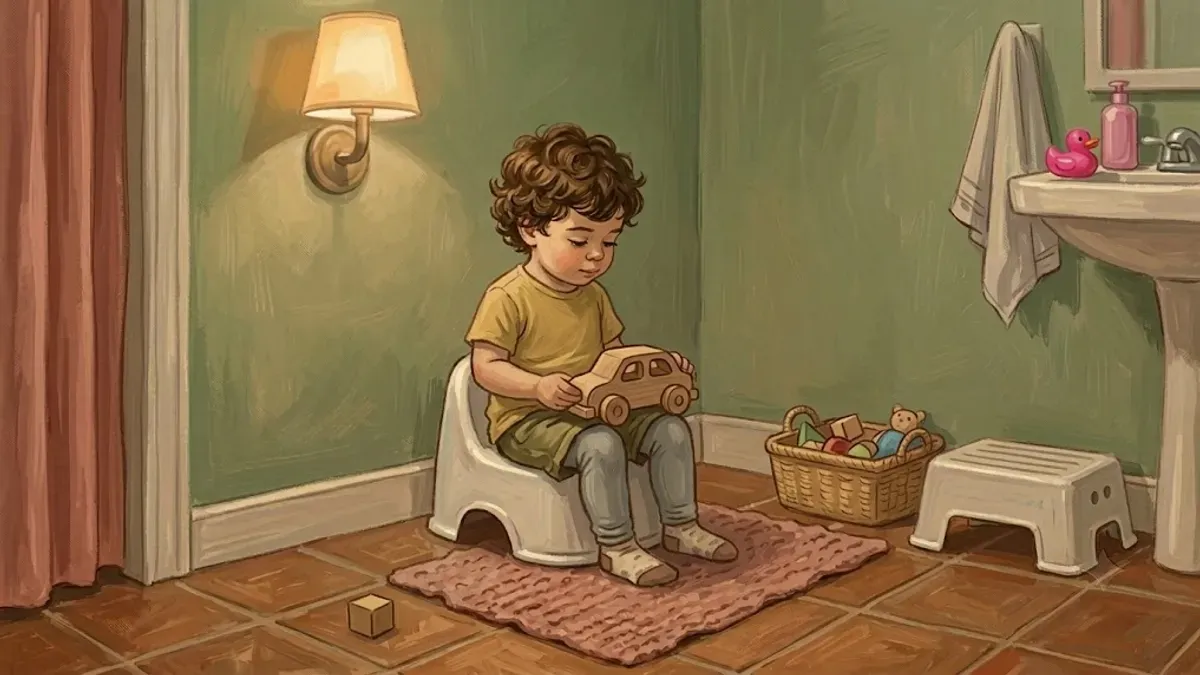
This is different from demand avoidance, where a child resists the transition itself. Hyperfocus pull is more automatic than that. The child isn’t saying no. They’re just… somewhere else.
- Hyperfocus accidents look exactly like accidents from not caring. They’re not.
- Shame doesn’t fix a wiring issue.
- What helps is removing the decision: scheduled trips, an external timer, something that interrupts before the urge becomes an emergency.
Why the Reward Chart Stopped Motivating Your Child
Removing the decision helps with the getting-there problem. But even a kid who makes it to the bathroom can lose interest in the whole system fast. Two things kill the potty training reward chart before the sticker row ever fills up.
The Reward Lost Its Novelty
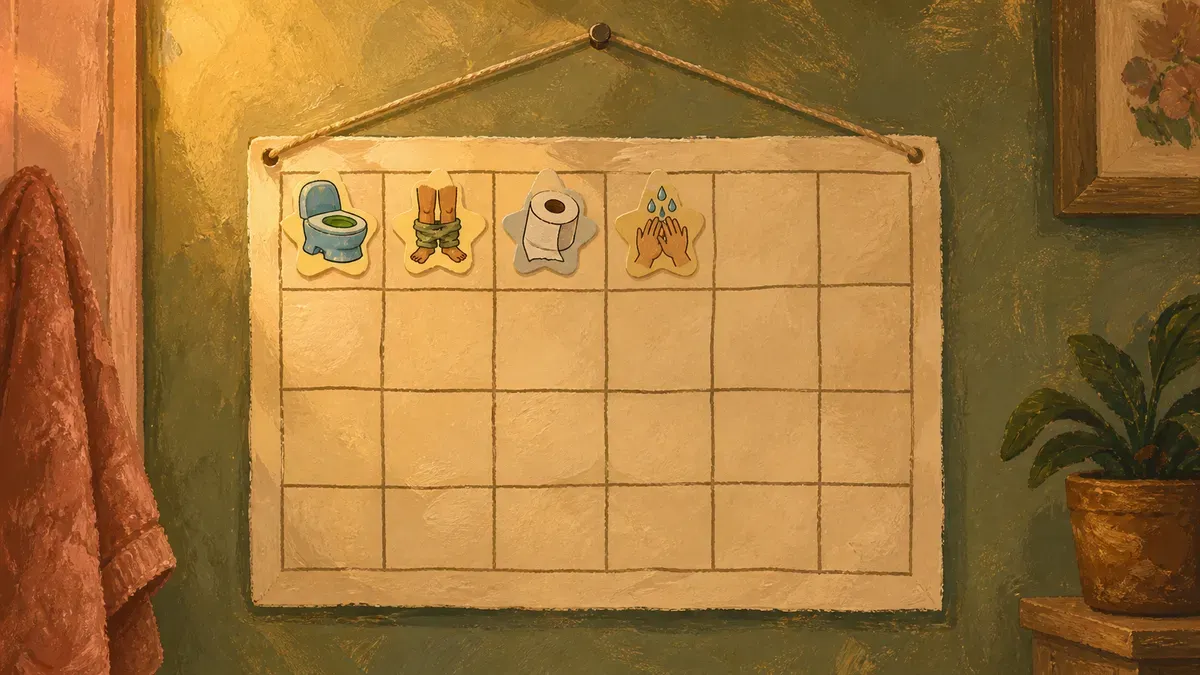
The first time Eli got a sticker, he was genuinely excited. He asked for another one immediately. By day four, he walked past the chart without a glance.
That’s not attitude. ADHD brains habituate to static, predictable reward systems faster than neurotypical brains do. Neuroimaging research found depressed dopamine activity in the caudate nucleus and limbic regions of children with ADHD, the brain areas that drive motivation and make a reward feel worth chasing. When those circuits are already running low, a sticker on a grid stops triggering anything meaningful after a few days. Novelty gone, pull gone.
This is why the positive reinforcement approaches that work well for neurotypical kids flatline here. The child isn’t choosing to tune it out. The brain’s dopamine-driven reward circuitry just isn’t firing the same signal anymore.
Delayed Rewards Don’t Land for ADHD
Even if novelty held, there’s a second problem: the prize at the end of the week is basically fiction to an ADHD brain.
A meta-analysis across 26 choice-delay studies found that children with ADHD much more strongly preferred smaller immediate rewards over larger delayed ones compared to neurotypical peers, with this preference most pronounced in children ages 3 to 7. That’s exactly the potty training window.
What a week-end prize asks for is enormous: do the thing now, feel nothing now, trust that something good arrives in six days. Impulse control is already thin. Demand avoidance can flare when the payoff feels distant. For a three-year-old with ADHD, Friday might as well be hypothetical. The reward has to land in the same moment as the win, not tonight, not tomorrow.
ADHD-Friendly Potty Training Tricks That Actually Stick
So if the chart on the fridge is dead weight, what actually moves a kid with ADHD? Three things have earned their spot in our house: rewards that hit now, a body to copy, and turning the whole thing into a game.
- Ditch the Friday prize and swap in something from a grab bag, right at the sink, right when they wash up.
- Sit with them so they have a body to mirror, and let a timer decide when it’s time to try.
- Race, aim at a target, sing a goofy song. Hide the ask inside something they actually want to do.
Switch to Instant, Rotating Rewards
The payoff has to land the second they wash their hands, not Friday. Clinical guidance for kids with ADHD says long-term incentive systems tend to fall flat and that rewards should be given immediately to do anything at all, because the brain can’t hold motivation toward a far-off prize.
So keep a grab bag by the sink. A bouncy ball, a sticker, a wrapped fruit snack, one silly fact read off a card. The reward itself isn’t the point; the surprise is. ADHD burns through novelty fast, so rotate what’s in the bag every couple of days before it goes stale.
That little hit of dopamine right at the win is what builds the habit. It works with their impulse control instead of against it, and positive reinforcement only sticks here when it shows up on time.
Use Body Doubling and Timed Sits
Kids with ADHD often miss the internal “go now” signal, so stop asking them to rely on it. Two things do the heavy lifting: a body to mirror, and a clock instead of a bladder.
Body doubling just means someone sits too. A parent on the edge of the tub, an older sibling on a potty next to them, even a doll going through the motions. Peer modeling and co-regulation take the pressure off the kid to figure it out alone.
Pair that with timed toileting built into the routine. The same clinical guidance recommends a sit about 30 minutes after meals, while the gastrocolic reflex is doing the work, for roughly 10 minutes each time. The schedule decides, not the child, and that quietly removes the one call their wiring struggles to make.

Make It a Game, Not a Demand
Push an ADHD kid to “go potty now” and you often get a flat no. That’s demand avoidance, and the way around it isn’t more firmness, it’s play. Figuring out how to make potty training feel fun is mostly about hiding the demand inside a game.
Race to the bathroom. Drop a target in the bowl to aim at. Sing the same goofy thirty-second song every sit. Let them pick which silly walk gets them there. The novelty pulls them in, and a kid who’s laughing isn’t bracing against you.
Keep it loose and swap the game out when it stops landing. Flexibility beats a rigid script, and play lowers the anxiety that turns a sit into a standoff. If your child fights every single attempt, that can also be one of the signs your child is not ready for potty training yet, and that’s okay too.
Setting Up a Sensory-Friendly Bathroom and Visual Routine
The tricks in the last section only work if your child can actually get into the bathroom without shutting down. For a lot of ADHD and autistic kids, that room is the problem before the toilet is.
Calm the Sensory Triggers
The bathroom is a sensory gauntlet: the flush sounds like a vacuum, the light is fluorescent and harsh, the seat is cold plastic. Any one of those can tip a child with sensory sensitivities into demand avoidance before they’ve even tried.
According to research on autism and sensory processing, up to 75% of individuals with ASD report light and visual sensory sensitivity, and common bathroom triggers include loud flushing sounds, bright lights, cold toilet seats, strong smells, and rough toilet paper.
The fixes are low-effort:
- Swap to a warm-toned bulb or keep a nightlight on instead of the overhead
- Add a step stool so their feet aren’t dangling, which cuts the anxiety around sitting
- Flush for them after they’ve left the room if the sound is the trigger
A sensory-friendly bathroom doesn’t need a renovation. Walk through it like your kid and remove the two or three things making it feel unsafe.
Anchor the Routine with Visual Supports
When the bathroom feels manageable, the next problem is sequence. ADHD kids struggle with internal time sense, so “go potty before we leave” lands as abstract instruction with no steps attached.
A picture-based potty training visual schedule makes the routine external and predictable. Step one: walk in. Step two: pull down pants. Step three: sit. Each card is one action, posted at eye level. A 2025 peer-reviewed commentary found that visual schedules help children by providing a sense of orientation, control and mastery in an otherwise overwhelming situation, reducing anxiety through predictable sequencing.
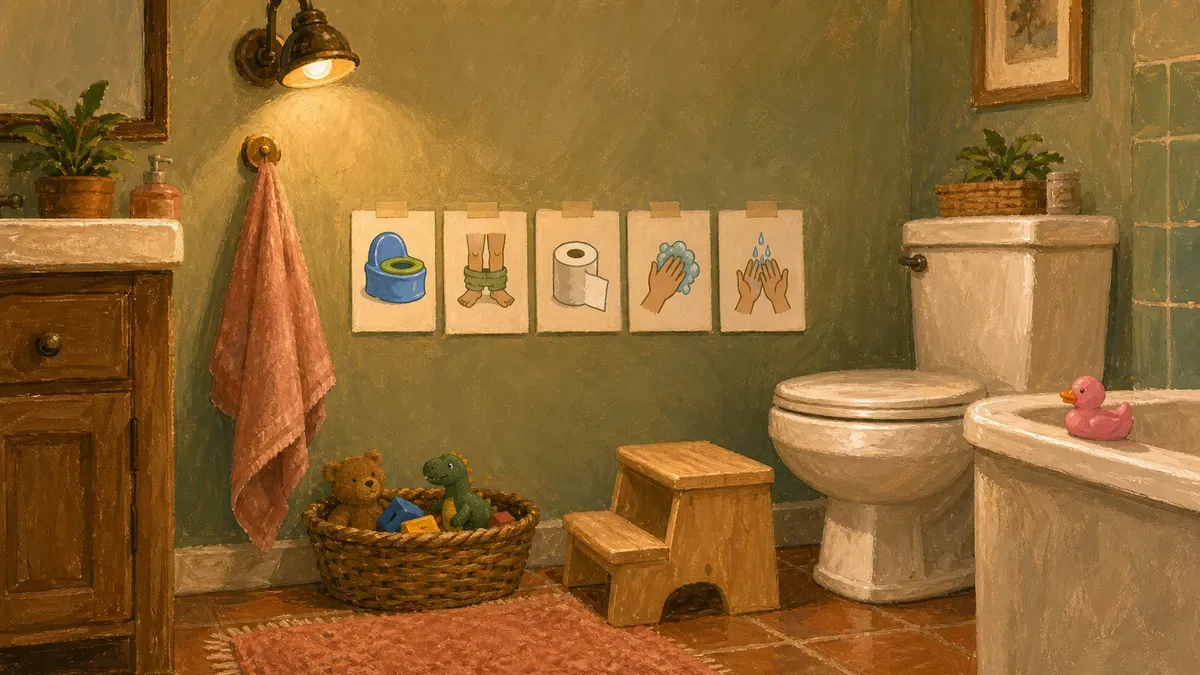
Social stories work alongside the visual schedule. A short, first-person story with pictures lets a child rehearse the bathroom routine before they’re in the moment. For more on combining these tools, potty training autism spectrum strategies covers the approach in detail. PECS-style visual supports need no special training to start, just a printer and a laminator.
Night Training and Knowing When to Get Help
Daytime wins don’t automatically carry into nighttime, and with ADHD, the gap can stretch for a year or more. Here’s what’s driving that, and the signs that mean it’s time to bring in a professional.
Why Night Dryness Takes Longer with ADHD
Night training is a different animal. During deep sleep, the brain signals the pelvic floor to hold urine until morning, but that signal develops more slowly in kids whose nervous system matures later. ADHD adds another wrinkle: the same interoceptive delays that cause daytime accidents don’t pause when the lights go out.
Pediatric advice on toilet training readiness found bedwetting prevalence of 12.52% in children with ADHD versus 3.56% without, nearly 3.5 times higher, and those same children were less likely to receive treatment.
That stat points to two things:
- Bedwetting with ADHD is not a discipline problem, and it’s not clinical incontinence.
- It’s a developmental timeline, one that will close on its own schedule.
Push for continence too soon, and you mainly create anxiety on top of an already slow process.

When to Loop in a Pediatrician or OT
A few situations mean it’s time to call your pediatrician:
- Progress has stalled for several months, or regression follows a stretch of success.
- Your child is refusing to engage at all.
- Constipation screening raises concern, OTC treatments fail after one month, or symptoms return within 3-6 months of stopping treatment (CHADD specifically flags this pattern).
Constipation is also more common with ADHD, and it directly disrupts bladder control.
An OT is worth a call when bathroom anxiety or sensory issues are stalling what daytime strategies alone can’t fix.
Asking for help isn’t failure. Once the daytime routine is solid, our complete potty training guide and how to night train potty have the step-by-step.
Found this useful? Save it for the next rough afternoon.
Questions parents ask me about this
How do you potty train a toddler with ADHD when charts don't work?
Skip the end-of-week reward entirely and move the payoff right to the sink. Instant grab-bag rewards and timed sits every 30 minutes after meals (both covered above) work far better than end-of-week prizes. Keep the routine consistent, swap in novelty when the current game loses its spark, and expect a slower timeline than the books suggest.
At what age can a child with ADHD be potty trained?
Most children with ADHD reach daytime readiness somewhere between three and four, though it often lands later than for neurotypical peers. Night dryness can lag much longer, sometimes well into elementary school, because it depends on deep-sleep signaling that matures on its own schedule. There is no fixed target age. Readiness signs matter more than the calendar, and pushing before those signs appear usually adds stress without gaining ground.
Does ADHD medication affect bladder control during potty training?
Stimulant medications can sometimes reduce appetite and thirst, which affects how much fluid a child takes in and in turn affects bathroom frequency. Some families notice fewer accidents on medication days simply because the child is more able to pause and respond to body cues. If you notice a significant change in bathroom patterns after starting or adjusting medication, bring it up with the prescribing doctor rather than adjusting the potty routine on your own first.
How do I move my ADHD child from pull-ups to underwear at daycare?
Talk to the room teacher before you switch so they can build timed trips into the day. Send a full change of clothes every day and frame accidents to the staff as expected, not remarkable. Posting a visual schedule or first-then card in the room gives the child a clear cue for what comes next. A visual schedule or first-then card the teacher can point to helps the child know what comes next without a back-and-forth in a busy room.
Is it normal to feel burned out from extended potty training?
Completely normal. Potty training a child whose brain processes urgency and reward differently takes longer, requires more creative problem-solving, and involves more setbacks than standard advice accounts for. Give yourself permission to take a short pause if both of you are hitting a wall. Regression after a break is rarely permanent, and coming back rested usually goes better than grinding through.
How should I respond to potty accidents without making things worse?
Neutral and quick. "Oops, let's get you changed" is the whole script. Accidents happen because of interoception delays and attention gaps, not defiance, so a calm reaction keeps the bathroom from becoming a stress trigger. Save any problem-solving for a low-key moment later, not right after the accident, and focus it on what might help next time rather than what went wrong.
What should I do about constipation during ADHD potty training?
Start with basics: more water, more fiber, and cutting back on dairy if it's a daily staple. Constipation is genuinely more common in children with ADHD and can stall potty training entirely because discomfort builds aversion to sitting on the toilet. If over-the-counter options don't resolve it within about a month, or if it keeps coming back within a few months of stopping treatment, that is worth a conversation with your pediatrician rather than continuing to troubleshoot alone.
Written by
Nora Hayes
Mom of two and a former preschool aide. I share the screen-free sensory play and calm-down ideas I test at my own kitchen table, plus what the moms in my little meet-up swear by. A parent passing on what works, not a doctor or a therapist.
More about NoraKeep going
All Potty Training-
 Potty Training
Potty Training Reward Chart: 20 Ideas Under $3
Skip the toy aisle: build a potty training reward chart with 20 ideas under $3 you already own. Grab the plan that motivates a stubborn toddler.
-
 Potty Training
How to Potty Train a Boy (and How a Girl Differs)
How to potty train a boy in 3 to 6 months: the readiness signs, the step-by-step method, and the small things that differ for girls.
-
 Potty Training
Potty Training Sticker Chart Printable (Free Download)
Free potty training sticker chart printable that survives travel and routine resets. Print, sticker, reward, reuse anywhere. Download now.
-
 Potty Training
Potty Training Certificate: A Just-Do-This Guide
Charts skip the finish line. Make a potty training certificate that gets your toddler over the line for real. Print yours tonight.