How to Potty Train a Boy: What Changes for Girls

Some links here are affiliate links. If you buy through one, I may earn a small commission at no extra cost to you. As an Amazon Associate I earn from qualifying purchases. I only point to things I'd actually use with my own two.
Sit him down first, every time, and only teach standing-up aim once he’s reliably peeing seated, because chasing a stream around the bathroom on day one trains nothing but your mop. I’m Nora Hayes, a former preschool aide who ran this whole circus twice at home with my son Eli and my daughter June, and the honest truth is the boy and girl playbooks are about 90 percent the same, with a couple of small swaps that actually matter. This guide walks the step-by-step method for a boy, flags exactly where a girl’s training differs, and sets your expectations: only 40 to 60 percent of kids are fully trained by 36 months, per the AAFP, so a slow start is normal, not a failure.
The plan in brief:
- Watch for readiness around 22 to 30 months: dry for two hours, hiding to poop, asking to be changed
- Run the method sitting-first for both kids, then teach a boy to aim standing once seated peeing is reliable
- Pick one start date, ditch daytime diapers, and reward every success for the first three to six months
When Boys and Girls Are Ready (and the Age Gap Between Them)
Before any of that works, your kid has to actually be ready, and readiness has almost nothing to do with the number on the birthday cake. Below we’ll sort the signs that genuinely predict a smooth start from the ones that don’t, why boys tend to come to the party a little later, and where most girls land when they begin.
The Readiness Signs That Actually Predict Success
Forget the birthday. A kid who’s developmentally ready will show you, and the signs are the same whether you’re working with a boy or a girl.
Here’s what I watch for before anyone starts potty training:
- Stays dry two-plus hours or wakes up dry from a nap. This is the big one. A dry diaper that long means bladder control is coming online, the single most useful readiness sign you’ve got.
- Hides to poop, or grunts and goes quiet in a corner. That awareness of the urge is bowel control showing up before they can name it.
- Pulls at a wet or dirty diaper, or tells you they need a change. They’ve noticed wet feels bad. That’s the door opening.
- Watches you in the bathroom and wants in on it.
The American Academy of Family Physicians puts hard numbers on the dry-diaper milestone: girls hit it around 26 months on average and boys around 29 months. Same skill, a few months apart.
None of these are about being smart or behind. They’re developmental milestones that arrive on their own schedule. If your toddler hits maybe one of these, that’s your answer, and there’s no shame in waiting. I’ve written more on reading the signs your child is not ready for potty training and why pausing is often the right call.
Wait for the body. The motivation follows.
Why Boys Often Start a Few Months Later
Boys tend to lag girls by a couple of months, and that’s normal, not a problem to fix. If you’re wondering when to start potty training a boy, the honest answer is later than your friend’s daughter, usually. Plan around readiness, not a number on the calendar.
A longitudinal study of 267 toddlers found boys first showed interest in the potty around 26 months versus 24 for girls. Small gap. It widens later: the AAFP puts reliable underwear management at about 33.5 months for boys and 29.5 for girls. So if your son rounds 30 months and isn’t there yet, you’re inside the range, not behind it.
Why the lag? Bladder control and the interest to act on it tend to come online a little later for boys. The developmental milestones run on their own clock.
So for the average age to potty train a boy: think a range, roughly 30 months and up, with plenty trained earlier and plenty later. There’s no deadline. Watch his readiness signs, and start when the body’s ready.
Typical Starting Age for Girls
Girls tend to get there a little sooner. Many are showing the same readiness signs by 22 to 24 months, and a lot of parents start potty training their girl somewhere in that window. The average age to potty train a girl lands a bit earlier than a boy, but “earlier” is a tendency, not a rule.
Daytime dryness gives you a real marker. In one study tracking 267 kids, Schum and colleagues put the median age girls stayed dry during the day at 32.5 months, against 35.0 for boys. Close, just shifted.
So what age to start potty training a girl? When she hits the signs, whether that’s 22 months or 30.
A girl who’s ready early is still ready because of the signs, not the calendar.
Chronological age is the loosest guide there is. The developmental milestones, dry stretches, hiding to poop, asking to be changed, are what tell you she’s ready, same as her brother.
How to Potty Train a Boy Step by Step
Ready is the green light. Once your son hits those signs, the method itself is short, and you can start it this week.
Here’s the whole thing: gather a few supplies and circle a start date, get him sitting and peeing on the potty reliably first, then add standing and aiming once that part sticks. Sit before stand, every time.
Gather Supplies and Pick a Start Date
Get the gear bought before you say a word to your toddler. Scrambling for supplies mid-week is how a good start falls apart.
You’ve got two routes for the actual potty. A standalone potty chair sits low to the floor, so a 2 year old climbs on without help. The one I steer people to is an Amazon’s Choice pick, 4.8 stars across 4,300-plus parents. A toilet seat adapter that comes with its own step stool clips onto your real toilet, so little feet have somewhere to push and you skip buying the stool separately (4.6 stars, 1,400-plus reviews). Either works. I used the floor potty with June and the adapter with Eli, and the only thing that mattered was which one my kid would actually park himself on.
Then stock up:
- A handful of training underwear in a character he’s into (the wet feeling is the whole point, so skip pull-ups during the day)
- A roll of paper towels and a cleaner you don’t mind using ten times
- A small treat or sticker for the reward, ready by the toilet
Now circle one start date and clear that day. No outings, no big plans. If you want a structured runway, the 3 day potty training method gives you one. Pick the day, commit to it, and don’t drift.
Build the Sitting Routine First
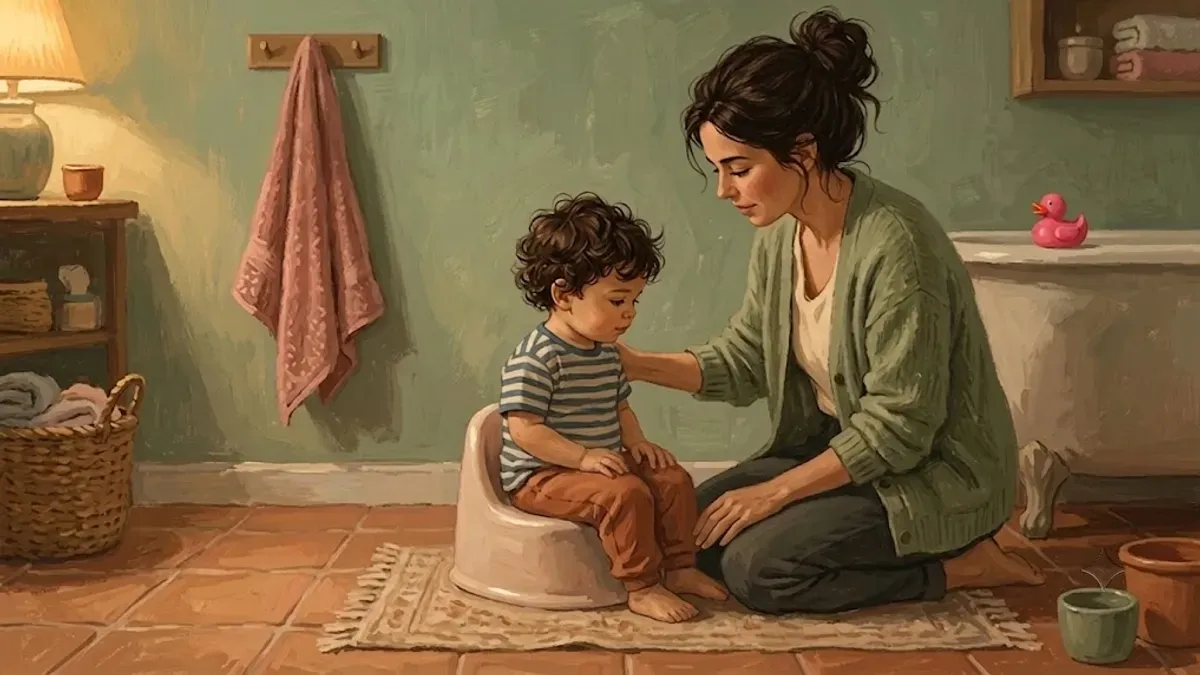
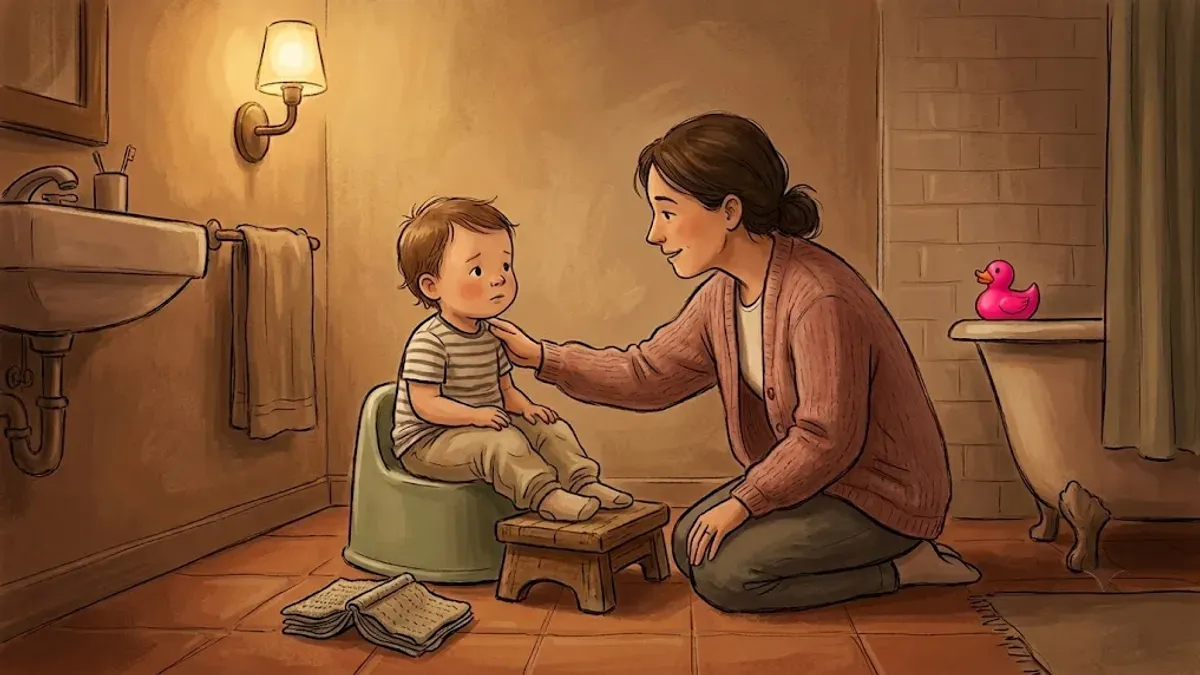
Day one, he sits. Standing comes later. The best way to potty train a boy is to teach him to pee sitting down first, because a kid on the potty for any reason is also a kid who’ll empty his bowels there, and aiming while you’re still figuring out the whole thing is one job too many.
Build the day around predictable sits:
- Right after he wakes up, and after every nap
- Twenty minutes after meals, when things tend to move
- Before you leave the house for anything
Keep each sit short. A minute or two, not a standoff. If nothing happens, he gets up, no big deal, you try again at the next window. Real daytime training is just this loop run all day with the diaper off so the wet feeling lands.
When something does land in the potty, you make a small fuss. That positive reinforcement is doing the heavy lifting in the early weeks. Bowel movements often show up on this schedule before steady pee control does, so don’t read a dry morning as failure. You’re teaching a toddler boy where it all goes, and accidents are part of the lesson, not a sign it isn’t working.
Add Standing and Aiming Once Sitting Sticks
Resist the urge to rush him to standing. Sitting empties both bladder and bowel, so keep him seated until peeing on the potty is boring and routine. Push standing too early and you get two new problems at once: missed poops and a bathroom that needs a wipe-down.
When sitting sticks, here’s how to potty train a boy step by step into standing:
- Have him stand at the toilet or a floor potty with a splash guard, hips close.
- Make aiming a game. Drop a few flushable potty training targets in the bowl (the dinosaur ones win, 4.7 stars and 350-plus reviews), or just float a couple of cereal pieces if you’d rather not buy a thing.
- Tell him to knock them down. Standing urination clicks faster when it’s a contest, not a chore.
A week or two of aiming practice and most of the spray sorts itself out. Expect a messy floor while he figures out the angle. That’s normal, not backsliding.
Keep poops on the seat for now. Sitting for bowel movements stays the default long after he’s standing to pee.
The Real Differences Between Training a Boy and a Girl
So far the method has run mostly the same for either kid. The handful of places where a boy and a girl really do part ways are physical, not behavioral, and they’re worth knowing before you start. Below, the standing-and-aim piece that only applies to boys, and the front-to-back wiping habit that matters most for girls.
Sitting vs Standing and Aim
Girls sit, full stop. There’s no standing phase to teach, no aim to practice, which quietly makes the early days of learning how to potty train a girl simpler. Boys sit too, at first. Standing and aiming come later, and only after seated peeing is a solid habit.
That order matters. When you sit a boy down, one trip empties the bladder and the bowel at the same time. Rush him to stand and the poops get skipped, because he hops off the second the pee is done. Keeping him seated buys you the harder win, and if your kid will pee but clamps up on the rest, our notes on getting a kid to poop in the toilet go deeper.
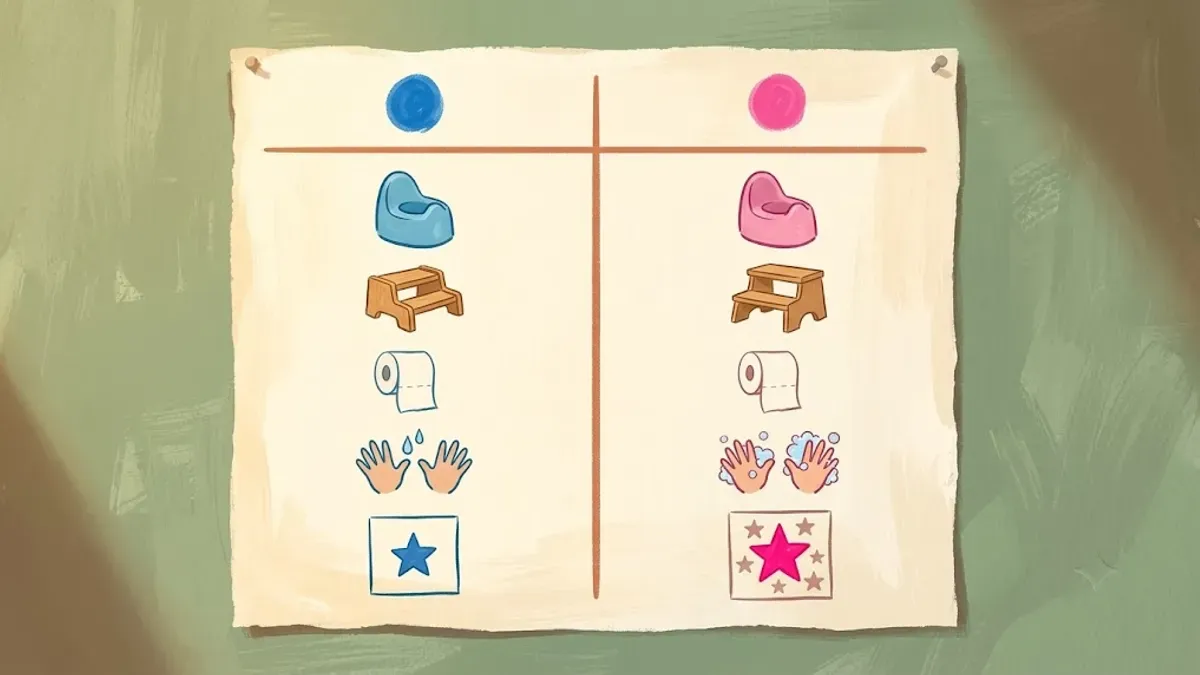
Here’s the split at a glance:
| Step | Girls | Boys |
|---|---|---|
| Sit to pee | Always | First, until reliable |
| Standing urination | Never | Added after sitting sticks |
| Aiming practice | Skipped | Once standing begins |
| Bowel movements | Seated | Seated, even after standing |
The wiping habit girls need, and the research on preventing urinary tract infections in young girls behind it, comes next.
Wiping, Hygiene, and UTI Prevention for Girls
This is the one step that has no boy version. Girls have a shorter urethra sitting closer to the anus, so Nemours KidsHealth recommends teaching girls to wipe from front to rear, never back to front, to keep bacteria away from the urethra and lower UTI risk.
A two-year-old won’t get this clean on her own, and that’s fine. You wipe for her at first, saying the direction out loud every time. “Front to back, always.” The habit sticks long before the hand control does.
When you’re learning how to potty train a 2 year old girl, fold this into the same readiness signs you already watch for. Same sit-to-pee routine as a boy, plus this one front-to-back rule.
| Hygiene step | Girls | Boys |
|---|---|---|
| Wipe direction | Front to back, every time | No direction rule |
| Why it matters | Keeps bacteria from the urethra | Not applicable |
That’s the whole difference. Everything else stays shared.
Tips, Rewards, and Equipment That Help Either Way
Past the differences, the gear and the bribery work the same for everyone. A reward your toddler actually wants does more heavy lifting in those first weeks than any fancy setup, so it’s worth getting right. And what they wear matters too: the underwear and pants you pick can either help the wet feeling register or quietly undo your week. Here’s what’s earned a spot in our bathroom, and what to skip.
Rewards That Keep a Toddler Motivated
Gear gets the credit, but in the early weeks the reward does the heavy lifting. Good news for tired parents: positive reinforcement works the same for both, so the same handful of potty training tips for boys carries straight over as tips for potty training girls. No gendered playbook here.
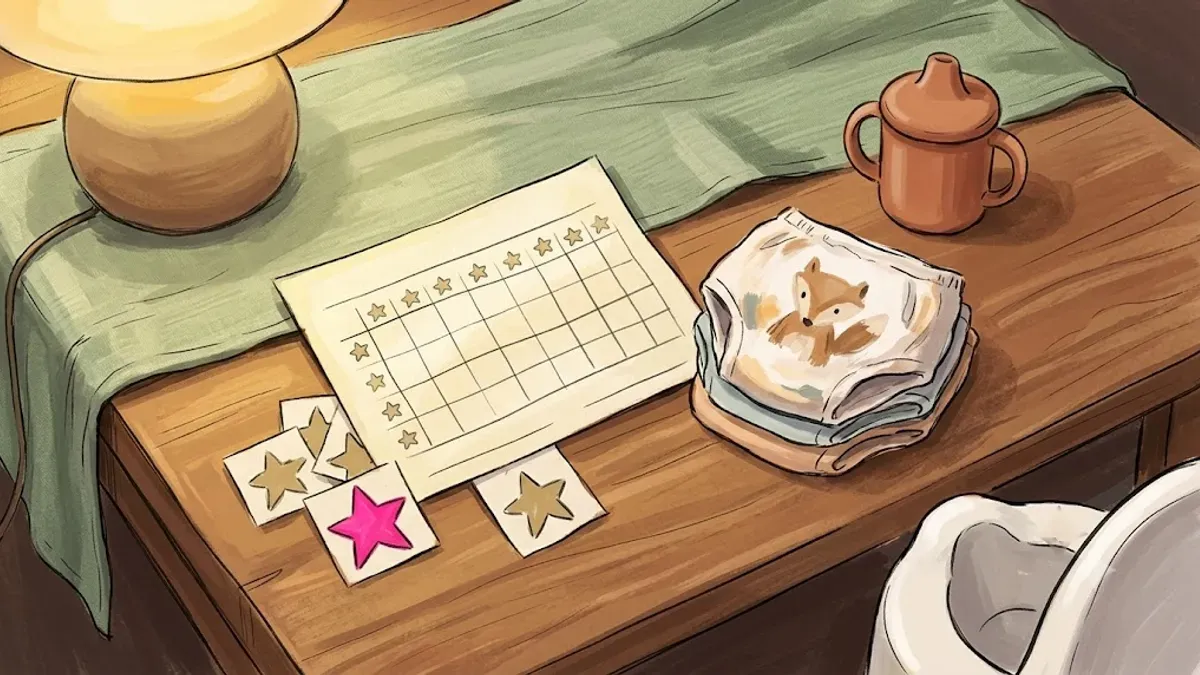
Two cheap winners ran my whole first month with June, and they’re the best way to potty train a girl or a boy when nothing else clicks:
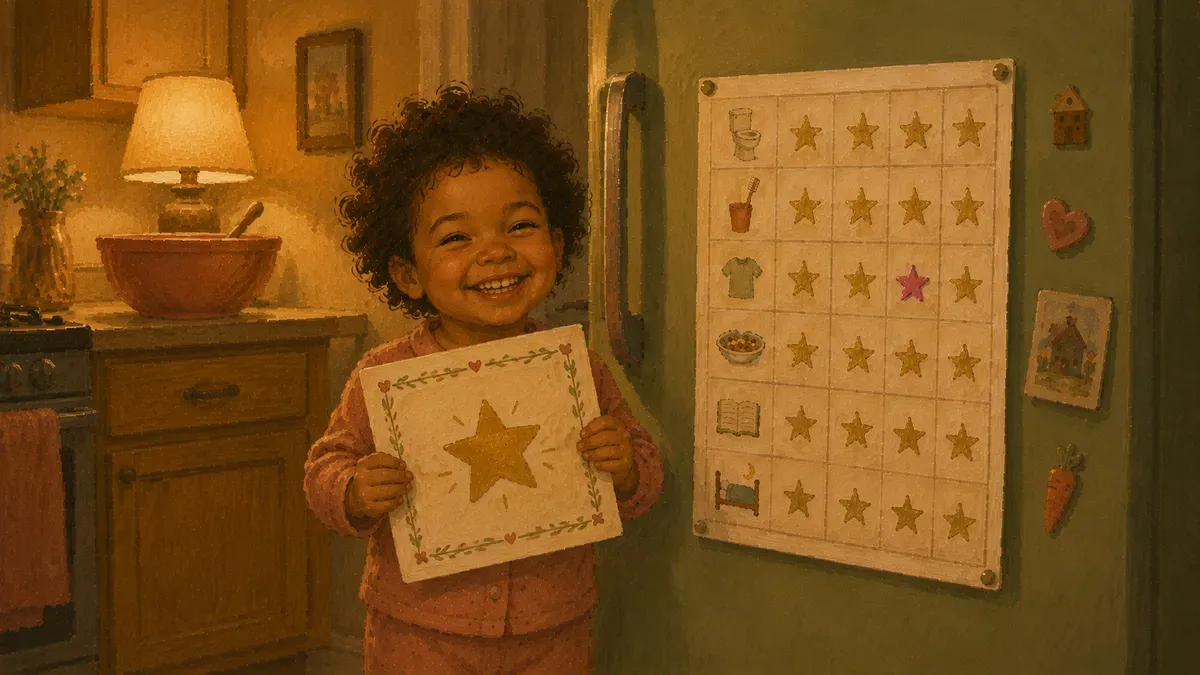
- A sticker chart by the toilet. One sticker per success, and let them stick it on themselves. The reward chart turns an invisible win into something they can see and point at.
- Character underwear. “Let’s keep Bluey dry” lands harder than any lecture. Kids do not want to soak a favorite face.
The catch: praise and stickers only work when they’re instant. Hand it over while they’re still on the potty, not after the pants come back up. For chart options, here’s a potty training sticker chart breakdown.
Choosing Training Underwear and Pants
Gear matters less than the reward, but the right underwear is what makes the wet feeling register. That’s the whole job. You’ve got two camps:
- Padded training underwear (trainers) hold a small accident without soaking the floor, but they still feel wet, so your kid learns the cause and effect. This is what I’d start with for either a boy or a girl.
- Pull-ups absorb like a diaper, which is great for car rides and naps and terrible for daytime learning. Save them for outings, not the living room.
For potty training pants, look for thick cotton your toddler can yank up and down alone. The independence speeds things up more than any feature on the package.
The sneaky win is character designs. Boys’ potty training underwear with Mickey on it, or the girl’s Minnie training underwear, turns into motivation by itself; both are Amazon’s Choice at a 4.8-star average across a wild number of parents (39,000-plus and 34,000-plus reviews). Those two are the pull-up style, so keep them for outings and naps and let the padded trainers carry the daytime learning. A toddler who picked the pattern guards it like treasure. Buy a few pairs, expect to lose some to the wash, and let the cartoon do the nagging.
Handling Accidents, Nights, and How Long It Takes
Underwear, rewards, and gear set the stage. The messier truth nobody warns you about is what comes after the wins start landing: the puddle on the kitchen floor, the wet bed at 5am, the weeks that stretch longer than you planned. None of that means you’re failing. Below I’ll walk through riding out accidents and setbacks without making your kid feel bad about them, then why nighttime is the last thing to click and roughly how long the whole stretch really takes.
Accidents and Setbacks Without Shame
When the puddle happens, your face is the lesson. Keep it flat. “Pee goes in the potty, let’s clean up,” hand them a paper towel, move on. No sigh, no lecture, no “again?” A scolded kid starts holding it out of fear, and that backfires fast.
Expect a backslide too. A move, a new sibling, a rough week can send a trained kid back to accidents for a stretch. That regression is common. A Mott Poll survey found 33% of parents hit it after early success, and the AAP says it usually clears in days or weeks once you spot the trigger.
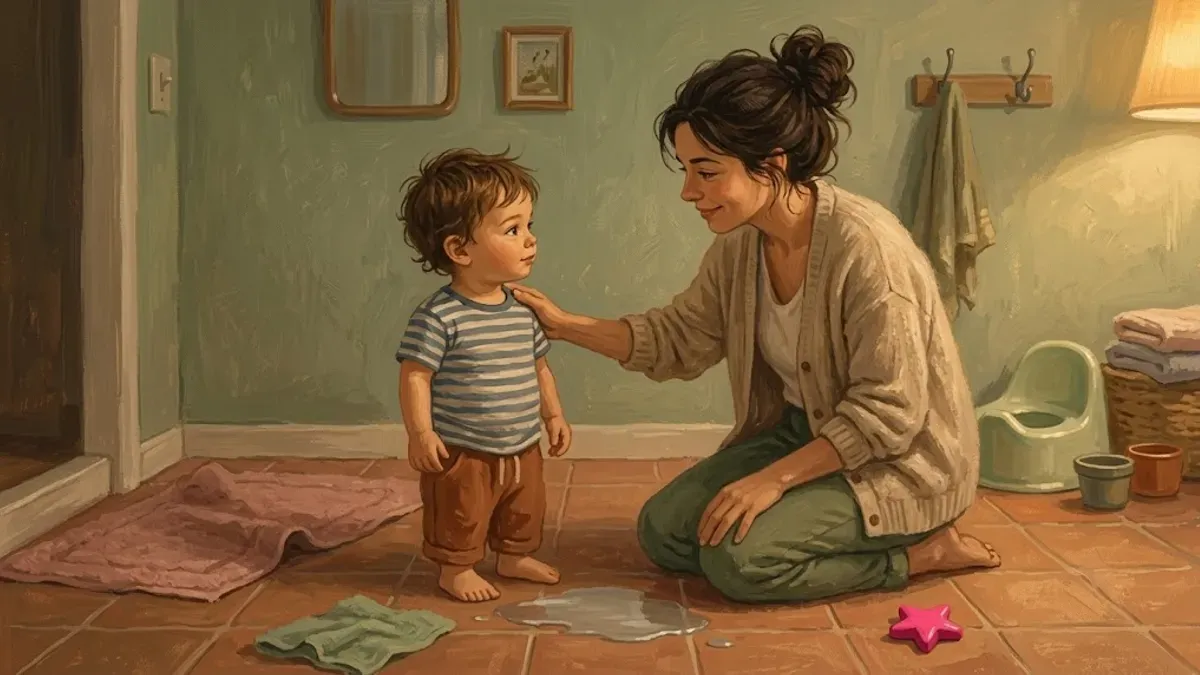
So don’t tear up the plan. Keep the same sits, the same positive reinforcement, the same calm. If accidents drag on for weeks, our full potty training guide digs deeper, and how to night train potty comes next.
Nighttime Comes Last, and How Long the Whole Thing Takes
Dry days don’t mean dry nights. Bladder control while he’s awake and bladder control while he’s asleep are two different skills, and the sleeping one shows up on its own clock, sometimes months or years later. So you tackle nights last, after daytime is solid.
For how long the daytime part itself takes to potty train a boy, plan on a few months of steady practice, not a long weekend. The actual sit-and-go lesson clicks fast for some kids; staying reliably dry without accidents takes longer.
Nights are their own animal. Keep him in pull-ups or a dry-diaper backup overnight long after daytime training sticks, and don’t read a wet bed as failure. Wetting at night is normal well past the toddler years. Around 20% of kids still wet the bed at age 5, and up to 10% at age 7, and it’s 2 to 3 times more common in boys than girls, per the AAP. Nighttime training waits until his body is ready, no pushing.
Found this useful? Save it for the next rough afternoon.
Questions parents ask me about this
How do you potty train a boy step by step?
Pick one start date, clear your calendar, and lose the daytime diapers so he can feel wet. Then run the same loop all day: sit him on the potty after waking, after naps, twenty minutes after meals, and before you leave the house. Make every success a small celebration while he's still sitting there. Once seated peeing is reliable, you can add standing and aiming, but not before, or he'll skip his poops.
Is it harder to potty train a boy than a girl?
Not harder, just a little later and with one extra step. Boys tend to show readiness signs a few months after girls and add the standing-and-aiming phase that girls skip entirely. The actual method is nearly identical: sit first, reward fast, expect accidents. If your boy is dragging compared to a friend's daughter, he's on a normal timeline, not behind.
Should a boy learn to pee sitting down or standing up first?
Sitting first, every time. One seated trip empties his bladder and his bowel, so you teach both jobs at once and skip the aiming puzzle in the early days. Standing too soon usually means he hops off after peeing and forgets the poop. Add standing only once seated peeing is solid, and keep bowel movements seated even after he's aiming for fun.
What age should a 3 year old boy be potty trained?
Plenty of boys aren't fully daytime trained at three, and that's well inside the normal range. Readiness shows up in signs, not on a birthday: staying dry a couple of hours, hiding to poop, telling you he's wet. If those signs are there, start the routine. If they're not, waiting a few weeks costs you nothing and saves you a fight.
How do you handle potty training regression after a new baby?
A new sibling is one of the most common triggers for accidents to come roaring back, and it almost always passes. Keep your face flat and your script short, hand him a paper towel, and don't sigh or say "again." Hold the routine steady: same sits, same praise, same calm. Once the big change settles, the accidents usually settle with it.
How do you coordinate potty training with daycare?
Tell his teachers your exact routine and ask them to run the same sit schedule and the same calm response to accidents. Send him in real trainers, not pull-ups, so the wet feeling registers there too, and pack way more spare clothes than feels reasonable. Consistency across both places is what makes it click. A kid trained one way at home and another at daycare just gets confused.
What should you do if your child refuses to poop on the potty?
Keep poops seated and don't turn it into a battle, because pressure makes a withholder clamp down harder. Let him sit relaxed after meals when his body is already primed, and keep your reaction quiet whether he goes or not. Some kids will pee fine for weeks before the poop piece clicks, and that gap is normal. If he's holding for days or it's painful, check in with his doctor.
Written by
Nora Hayes
Mom of two and a former preschool aide. I share the screen-free sensory play and calm-down ideas I test at my own kitchen table, plus what the moms in my little meet-up swear by. A parent passing on what works, not a doctor or a therapist.
More about NoraKeep going
All Potty Training-
 Potty Training
Potty Training Reward Chart: 20 Ideas Under $3
Skip the toy aisle: build a potty training reward chart with 20 ideas under $3 you already own. Grab the plan that motivates a stubborn toddler.
-
 Potty Training
Potty Training Sticker Chart Printable (Free Download)
Free potty training sticker chart printable that survives travel and routine resets. Print, sticker, reward, reuse anywhere. Download now.
-
 Potty Training
Potty Training Certificate: A Just-Do-This Guide
Charts skip the finish line. Make a potty training certificate that gets your toddler over the line for real. Print yours tonight.
-
 Potty Training
Poop in the Toilet: Why Kids Pee Fine but Won't Poop
Kid pees fine but won't poop in the toilet? Here's why it happens, plus the exact steps that fix it without a fight. Start tonight.