Daycare Potty Training: Works at Home, Not There

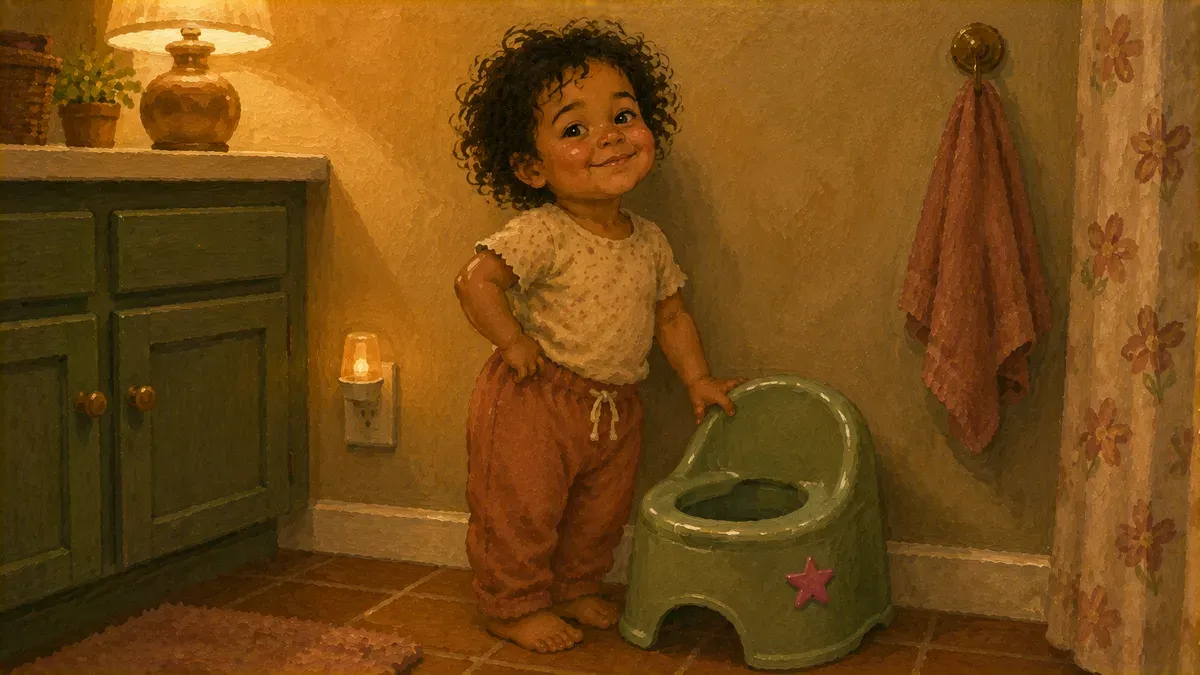
When your kid is dry all day at home and comes back from daycare in soggy pants, the problem usually isn’t the training, it’s the gap between the two places. I’m Nora Hayes, a former preschool aide who potty trained two of my own, and the fix starts with one move this week: get the daycare’s exact bathroom-break schedule in writing.
I’ll cover why the same trained child has accidents at daycare, how to hand caregivers exactly what they need to keep the routine going, and how to handle an accident without it becoming a setback.
The plan in brief:
- Ask the daycare for their potty policy and exact bathroom-break schedule in writing this week
- Hand caregivers your child’s real potty signals and the words they use at home, on one page
- Match the equipment, clothing, and reward your child gets at daycare to the home setup
Close the Gap in Three Steps
The fix is mostly logistics, not a do-over on the potty training you already nailed at home. These three moves carry most of the load: get the routine in writing, hand over your kid’s real signals, and match the gear so daycare feels like home.
- Nail down the daycare’s schedule and who owns your child’s bathroom breaks.
- Give caregivers a one-page cheat sheet covering your child’s cues, vocabulary, and timing.
- Align the physical setup and reinforcement so the daycare bathroom feels familiar.
Get the Daycare’s Bathroom Routine in Writing
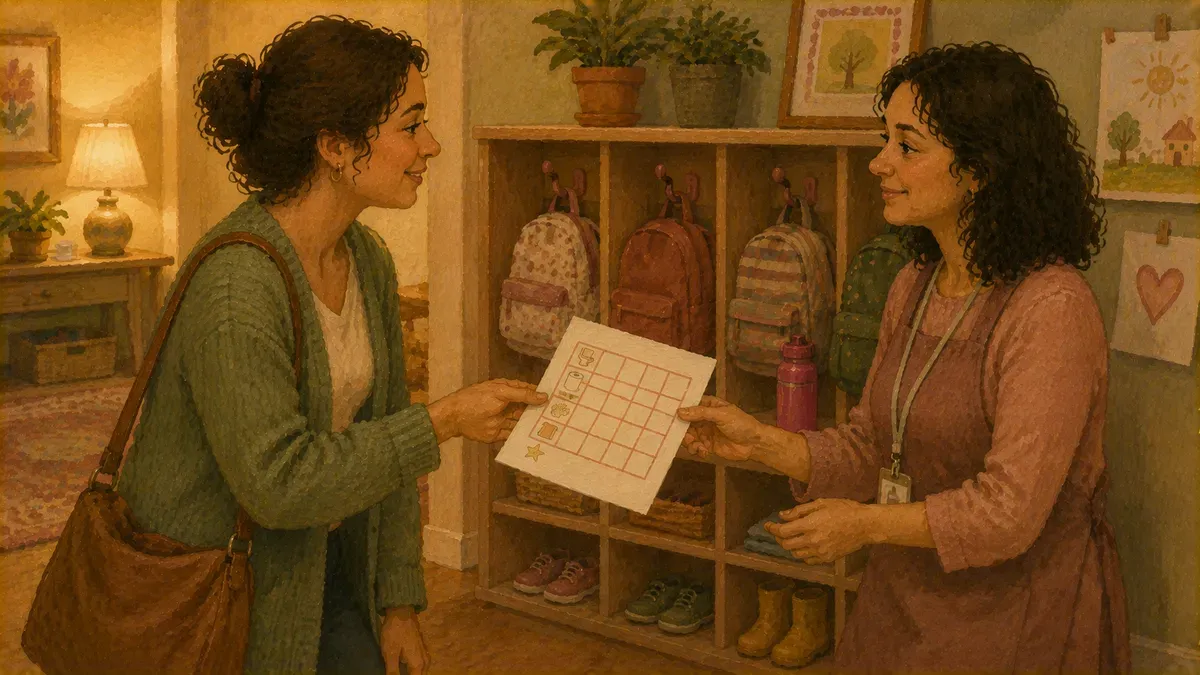
Ask for the written potty policy. Most centers have one, and it tells you how often kids get offered the toilet, whether they sit on a schedule or wait for a child to ask, and what happens after an accident.
Then get the actual times. Not “we take them regularly,” but the clock: after drop-off, before snack, after lunch, before nap. A peer-reviewed article in Paediatrics & Child Health recommends that every caregiver keep a consistent approach to toilet learning, with sits at fixed moments like after waking and after meals. Those are the exact pegs you want your daycare provider hanging the routine on.
Last, name one person. In a room of three or four caregivers, your kid’s routine slips through the cracks unless someone owns it.
Ask which teacher is the point person for your child’s bathroom breaks, then put your follow-up questions to that one person.
A single owner keeps the schedule from dissolving the second the floater covers a lunch break.
Pass On Your Child’s Real Signals and Words
Here is what the staff can’t guess: how your kid tells you they have to go. There is no universal signal. Some children go quiet, some get the wiggles, some grab themselves, some just say the word a beat too late.
So write it down. One page, handed over at drop-off, that lists three things:
- The pre-pee cues you actually see (crossed legs, sudden stillness, that face)
- The exact words your child uses, including their anatomical terminology, so nobody is decoding “I need the thing”
- Their typical timing for bowel movements, since most kids go like clockwork and a caregiver who knows the window can offer the toilet before it is urgent
The words matter more than parents expect. If you say “pee” at home and the teacher says “potty,” your kid may not connect the two while their bladder control is still a new, fragile skill. A toddler busy reading the room has fewer brain cells left for communication about their own body.
Get everyone using the same vocabulary and you have removed one whole layer of friction.
Match Equipment, Clothing, and Rewards
Kids generalize a skill poorly. The toilet that works at home and the unfamiliar one at daycare can read as two different tasks to a three-year-old.
Close that gap on three fronts:
- Seat: If your child uses a small toilet seat insert or a potty chair at home, ask whether daycare has the same setup. A dangling-feet adult toilet is genuinely harder to relax on.
- Clothes: Send loose-fitting pants they can yank down alone. Overalls, tight jeans, and anything with a stiff button turn a 10-second trip into a too-late scramble.
- Rewards: Tell the staff exactly what positive reinforcement you use. A sticker, a high-five, a specific song.
Equipment alignment and reward alignment do the same job: they make the daycare bathroom feel like the one your kid already conquered. You don’t need daycare to copy your home down to the towel color. You need the few things your child leans on to be there, predictable, every single time. That predictability is what carries the skill across the parking lot and through the door.
Why Daycare Triggers Accidents When Home Doesn’t
Same kid, same skill, two different outcomes depending on the building. The reasons split into three: the room itself pulls their attention away, the setting makes them clamp down and hold, and sometimes it isn’t daycare at all but a bigger change underneath.
A New Bathroom and a Busy Room Break Concentration
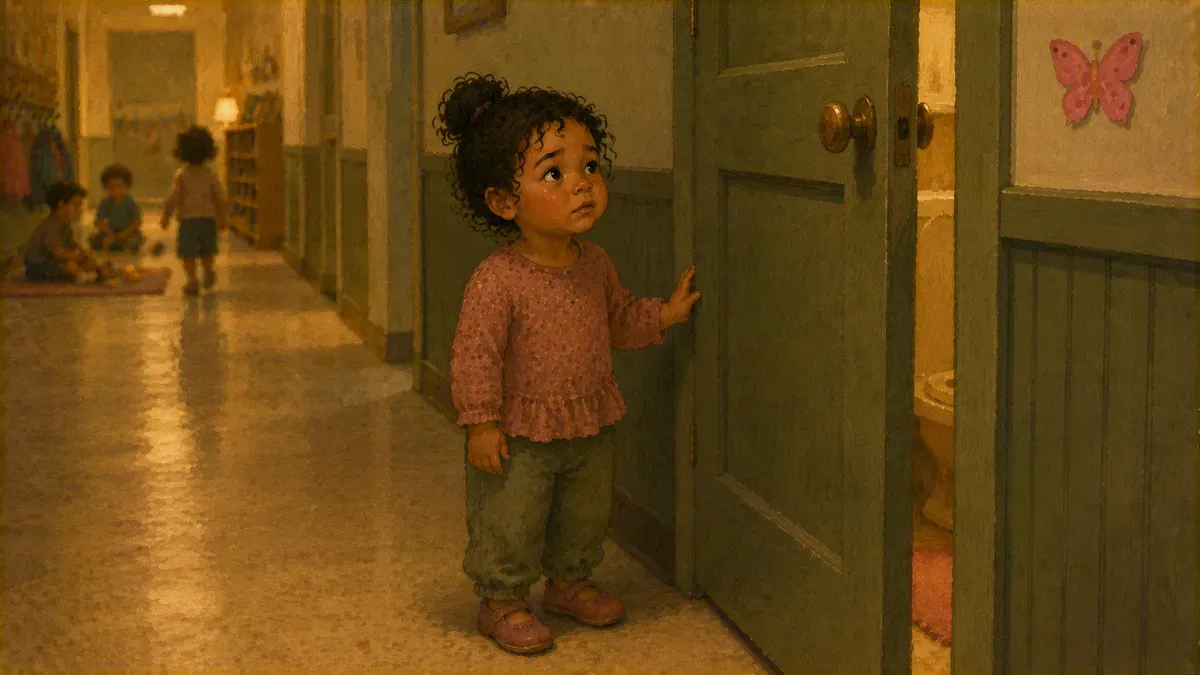
A freshly-trained kid isn’t running on autopilot yet. They feel the early signal, remember they’re supposed to act on it, then walk themselves to the toilet. At home that chain is quiet enough to hear. At daycare, it isn’t.
That noise matters more than it looks. Research on child auditory distraction found that novel environmental sounds pull young children off-task more than they do older kids or adults, with the youngest showing the strongest effect.
- Unfamiliar bathroom, different toilet height than home
- A room full of loud kids pulling at their attention
So your child is mid-block, mid-song, mid-friend, and the small “I need to go” signal gets drowned out by everything else competing for the same attention. They aren’t ignoring it. They genuinely miss it.
The transition is the weak point, not the readiness. A kid who reliably reads their potty signals at home can lose the thread the second the room gets busy and the toilet seat looks wrong.
Holding It Until the Body Can’t
The other version of this is quieter, and it sneaks up on you. Some kids don’t miss the signal at all. They feel it, decide the daycare bathroom feels wrong or they don’t want to leave what they’re doing, and they hold.
Scripps Health explains that children sometimes withhold stool because they don’t want to stop playing or because an unfamiliar bathroom scares them, and that holding it long enough eventually makes them lose control of those muscles.
- Hours later the accident hits, sudden and hard to explain
- That’s not a backslide; the consistency you built at home is still there
The setting just talked your kid into overriding it, and the body only cooperates with holding for so long.
When It’s Real Regression, Not Just Daycare
Here’s how to tell a daycare stumble from the real thing. A daycare-specific wobble travels with the building. The accidents cluster there, the weekends and home days stay dry, and the pattern lines up with the busy-room and holding causes above.
True regression looks different. HealthyChildren.org from the American Academy of Pediatrics names the real triggers: a new sibling, a recent or coming move, or a major illness or family disruption. Those don’t stay at daycare. They follow your child home and show up everywhere.
So before you overhaul the daycare routine, run the quick gut-check:
- Are accidents tied to daycare, or happening at home too?
- Did anything big change lately, a baby, a move, an illness?
- Was the potty training and accidents pattern there from the start, or new this week?
If the dry days only happen away from daycare, you’re looking at a transition problem you fix with consistency, not a readiness problem. If accidents are everywhere and a big change is in the mix, treat it as regression and ease off the pressure for a bit. And if your gut says the whole thing started too early, it’s worth revisiting the signs your child is not ready for potty training before pushing harder.
Talking to Caregivers So the Routine Actually Sticks
Knowing why the gap happens only helps if the information reaches the people on shift. Two moments do the heavy lifting: a clean handoff at drop-off, and a calm comeback for the days a teacher pushes back.
The Drop-Off Handoff That Takes 60 Seconds
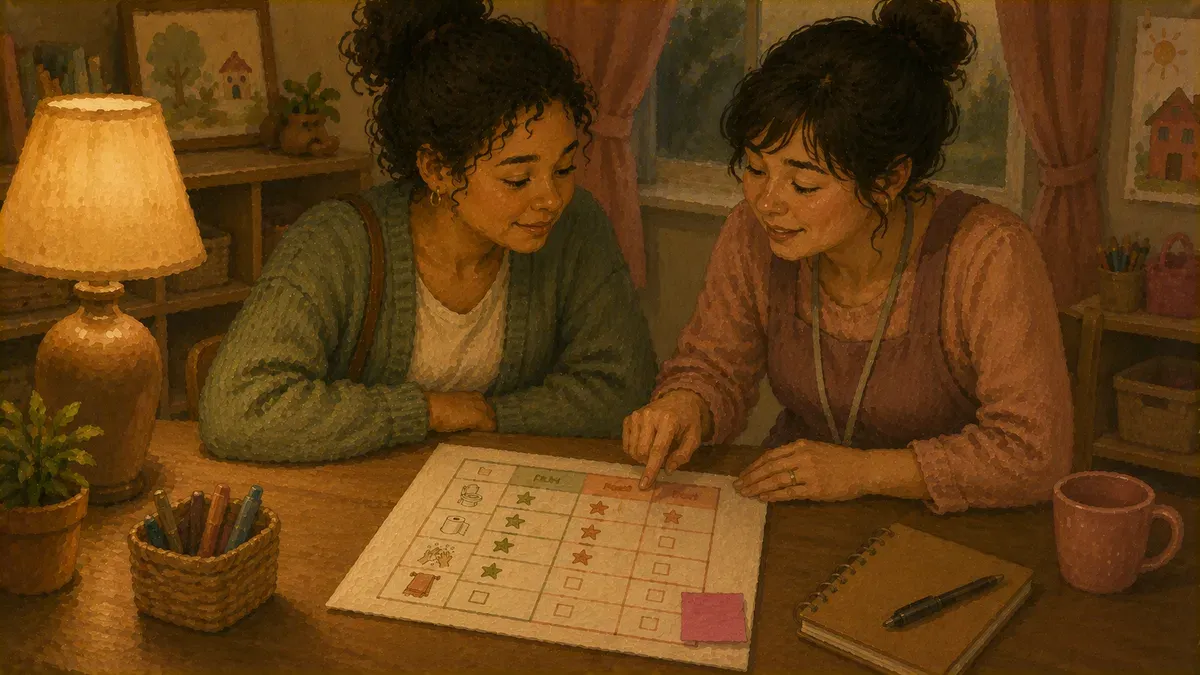
The morning rush is the worst time to say anything important, which is exactly why you need a tiny script you can rattle off without thinking. Hand the caregiver three facts, every day, in the same order.
- Last night: “Dry through dinner, one accident at bath time.”
- Fluids so far: “Big water bottle on the way in, so expect a full bladder by 9:30.”
- Timing: “She usually poops mid-morning, so a sit around 10 helps.”
That is the whole handoff. Sixty seconds, said the same way each morning, so it becomes a rhythm instead of a favor you’re asking. Consistency at the door is what lets the schedule inside the room hold. If you want a head start on framing these expectations early, my notes on getting ready for preschool potty expectations cover the groundwork.
Scripts for When Staff Won’t Cooperate
Sometimes you hand over the plan and a teacher shrugs it off. Pushback usually sounds like “we take the whole class at set times” or “she’ll tell us when she needs to go.” Don’t argue the policy. Anchor back to your child.
Try: “I hear you. The catch is she’s still learning to feel the urge, so she won’t ask yet. A quick reminder at 9:30 and after lunch is all she needs.” You’re not fighting the routine, you’re slotting your child into it.
When it still isn’t landing, go to your point person, the one caregiver who owns the routine, and keep it short: “Can we make those two reminders her thing this week? I’ll send a tiny card for the bathroom.” Naming a single daycare provider to carry it beats hoping the whole room remembers. Calm, specific, repeated. That’s the script.
Handling Accidents at Daycare Without the Setback
Even with the script running smooth, an accident will happen, and how the room handles it decides whether you lose a day or shrug it off. Two things carry you here: what’s waiting in the cubby, and how everyone reacts when the floor gets wet.
Pack the Cubby and Pick the Right Pants
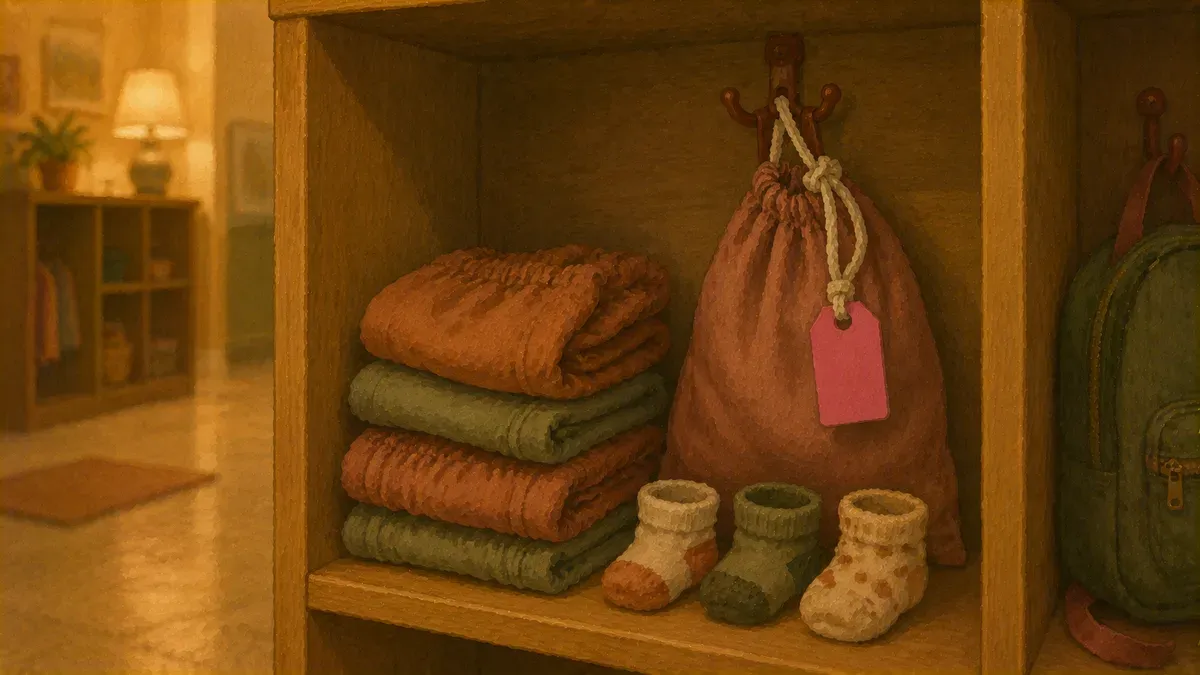
Overstock the cubby. Send more than you think you’ll need, because the staff isn’t doing laundry mid-shift, and a kid in damp clothes ends up uncomfortable and self-conscious.
My floor for what goes in: at least three full changes, socks included, plus a labeled wet bag for the soggy stuff to come home.
- Three or four sets of underwear and bottoms
- A change that goes on fast, so your child is back in dry clothes before they have time to feel embarrassed about the accident
- A wet bag or gallon zip-top for what comes home
- Spare socks, since wet shoes mean wet feet
The pants choice is the real call. If the center allows underwear, send underwear, since cotton lets your child feel the wet and learn from it.
Center policy shapes the rest of the pants decision.
Some centers set a clothing policy of their own, and there’s no rule forcing the matter, so the policy is whatever your center decides. If they require pull-ups for naps or outings, treat those as a backup layer, not the daytime default, and ask that training pants or underwear stay on the rest of the time so the signal that tells your child to go stays clear.
Keep Everyone’s Reaction Neutral
The wet pants matter less than the face above them. A sigh, an eye-roll, a “not again” lands as shame, and shame is what turns one accident into a string of them.
- “Whoops, let’s get you dry,” said flat, no drama
- Fresh change, straight back to play
- No lecture, no hovering, no big production
Head Start’s guidance on managing potty accidents tells caregivers to skip language or reactions that embarrass a child, and to watch their tone and body language, not just their words.
Ask your caregiver to mirror exactly that, so the reaction your child gets is the same one they get at home. That consistency across both places is what keeps a stumble from sliding into real regression.
Save the praise for the dry days. A quick win on the potty, marked on a potty training sticker chart, does more for momentum than any reaction to a miss ever will.
Motivating Your Child Differently at Daycare
The potty is the same; the room around it isn’t. A reward that lights your kid up at home can fall flat in a noisy classroom, so give daycare its own motivation and let the other kids carry some of the weight.
Use a Daycare-Only Chart or Reward
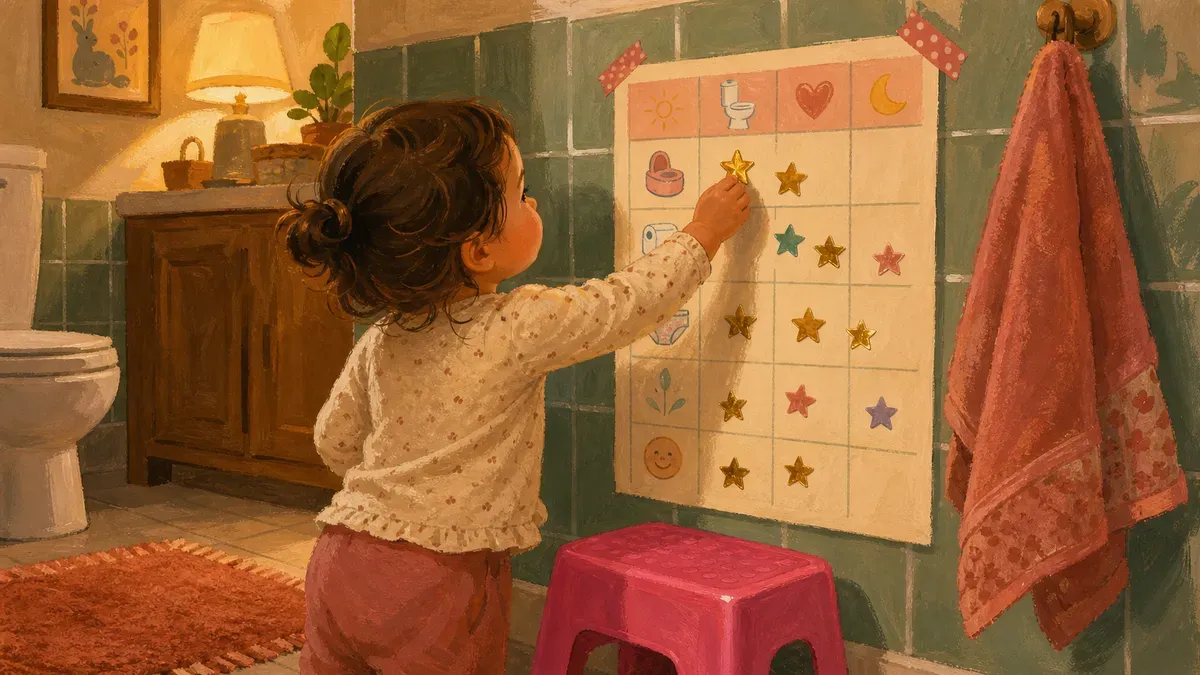
Make the daycare wins their own thing. A separate sticker chart that lives in the cubby or on the bathroom wall tells your child that staying dry there counts, and it gives the caregiver something concrete to point at the second it happens.
Keep it dead simple so a busy room can actually run it: one sticker per dry check, a tiny prize at the end of the week. The schedule does the work, the chart marks it, and that bit of positive reinforcement stays consistent across both places.
Ask the staff to celebrate the same way you do at home, in the same words. If you want fresh ones the classroom can copy, steal a few ideas for a potty training reward chart that travel well.
Let Peer Influence Do the Heavy Lifting
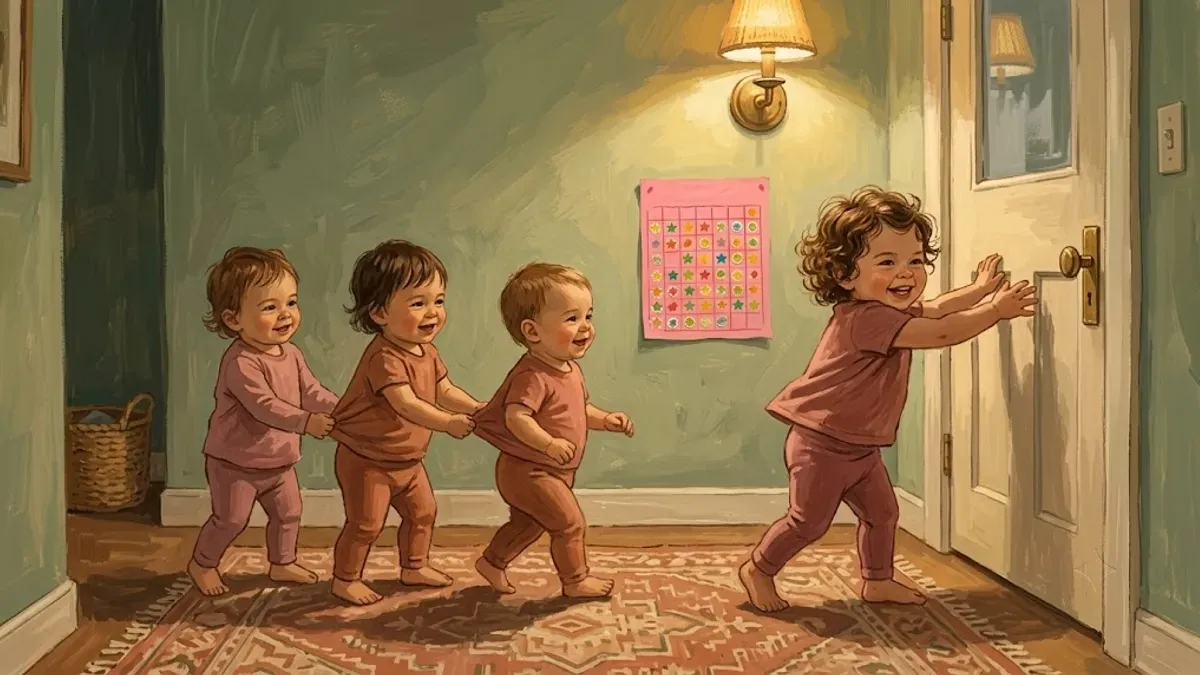
Here is the part you can’t recreate at home. At daycare your kid watches a whole line of preschool friends march off to the potty and come back proud, and that pull is real.
The American Academy of Pediatrics notes that by the preschool years peer pressure alone can motivate a child to train himself, and that pointing out how most classmates are already out of diapers can spark independent toilet use.
So let it work.
- Ask the caregiver to fold your child into the group potty break, not pull them aside separately.
- Keep the tone warm, and never shame the kid still figuring it out.
- Let them watch the other kids. Watching does more than nagging ever will.
For the home side of all this, lean on our complete potty training guide to walk you through the rest, step by step.
Found this useful? Save it for the next rough afternoon.
Questions parents ask me about this
How do you handle potty training consistency between home and daycare?
Get the same routine running in both places: fixed break times, the same words for going potty, and the same response to accidents. Write it down in a one-page summary and give it to your point-person caregiver. When the signals, vocabulary, and schedule match, your child's body doesn't have to recalibrate between environments.
Should I use pull-ups or underwear for my child at daycare?
Underwear is the better training tool because your child can feel when they're wet and start connecting cause and effect. Pull-ups absorb so well they can stall that learning, so save them as a backup layer for nap time rather than wearing them all day. Check your center's clothing policy first, since some require pull-ups or extra changes in the bag.
Why does my toddler only have accidents at daycare and not at home?
The daycare room is louder, busier, and full of distractions, and the toilet is unfamiliar. Kids that age have a hard time reading their own signals when something exciting is happening around them. A predictable break schedule, where a caregiver takes them at set times rather than waiting for them to ask, usually closes most of that gap.
What if my daycare won't follow our potty training routine?
Ask for the center's written potty policy and build your request around that, so the conversation is about supporting your child rather than changing the classroom. Name one point-person caregiver to own the routine, and anchor the ask to your child's specific cues. If you hit a wall with your immediate caregiver, route the request through the director.
How long should daycare accidents last before I worry?
A couple of weeks of more frequent accidents while your child adjusts to the new environment is typical. If accidents are still happening several weeks in with no improvement, or if they start happening at home too, take a closer look. Accidents that stay daycare-only during an adjustment window almost always sort themselves out.
Can starting daycare cause potty training regression?
It can, especially when daycare is a big change in your child's daily routine. Any major transition can shake a skill that hasn't fully locked in yet. Give it a few weeks with consistent support from both home and caregivers before calling it a regression. True regression tends to spread beyond daycare and stick around; a short wobble in one setting usually resolves on its own.
Is my child ready to be potty trained at daycare?
If they're reliably staying dry at home, recognizing the urge before it happens, and can pull pants up and down without much help, they're ready to practice at daycare too. The daycare setting doesn't need a different readiness bar than home. What it does need is a caregiver who knows the routine and takes your child to the bathroom on a schedule instead of waiting for a signal that might get lost in the noise.
Written by
Nora Hayes
Mom of two and a former preschool aide. I share the screen-free sensory play and calm-down ideas I test at my own kitchen table, plus what the moms in my little meet-up swear by. A parent passing on what works, not a doctor or a therapist.
More about NoraKeep going
All Potty Training-
 Potty Training
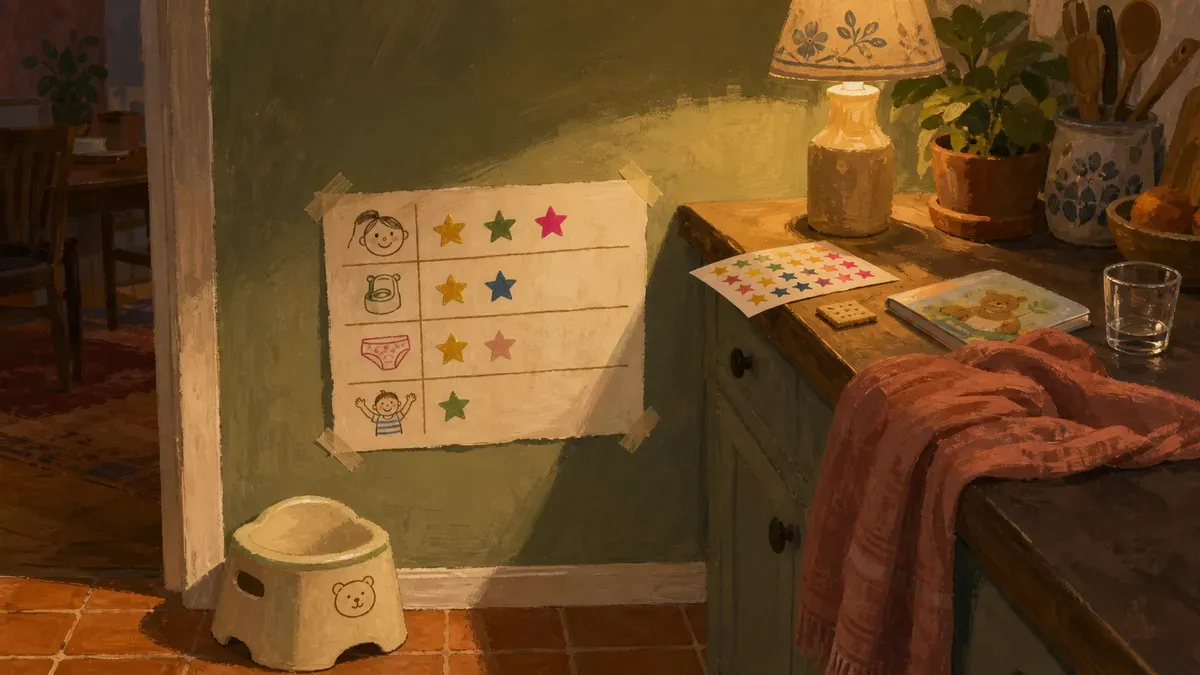
Potty Training Reward Chart: 20 Ideas Under $3
Skip the toy aisle: build a potty training reward chart with 20 ideas under $3 you already own. Grab the plan that motivates a stubborn toddler.
-
 Potty Training
How to Potty Train a Boy (and How a Girl Differs)
How to potty train a boy in 3 to 6 months: the readiness signs, the step-by-step method, and the small things that differ for girls.
-
 Potty Training
Potty Training Sticker Chart Printable (Free Download)
Free potty training sticker chart printable that survives travel and routine resets. Print, sticker, reward, reuse anywhere. Download now.
-
 Potty Training
Potty Training Certificate: A Just-Do-This Guide
Charts skip the finish line. Make a potty training certificate that gets your toddler over the line for real. Print yours tonight.