Paw Patrol Potty Training: Make the Chart a Mission

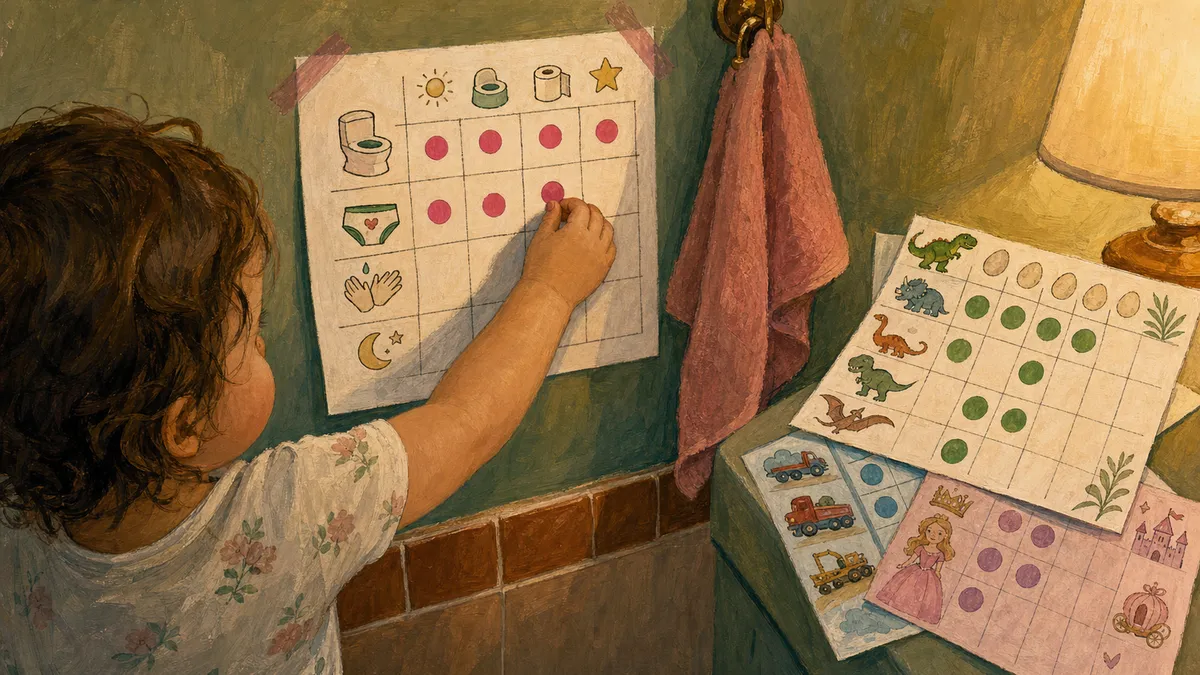
I’m Nora Hayes, a former preschool aide and mom who’s run potty training twice now.
A themed potty chart works because it hands your toddler’s obsession the steering wheel: dinosaur, truck, princess, or Paw Patrol stickers turn every trip into a mission they actually want to complete.
When motivation is tied to something they already love, potty training stops being a battle and starts being a game. Below you’ll find how to set up a themed chart step by step, pick the theme that actually grabs your kid, and keep it working when the novelty wears off.
The plan in brief:
- Print or grab a chart in your toddler’s obsession (Paw Patrol, dinosaur, truck, princess) before day one.
- Frame each potty trip as a ‘mission’ that earns one sticker toward a named character reward.
- Cash out the finished chart for a real prize within 1-2 weeks, then retire the chart.
Why a Character Theme Beats a Plain Potty Chart
A plain sticker grid works right up until your toddler stops caring about plain stickers, which is usually about four days in. The difference with a character theme is whose idea it feels like: a generic chart asks your kid to want a sticker, while the right character makes the whole thing their idea.
When a Generic Sticker Grid Stops Working
It hands out a sticker for sitting on the potty, and a sticker is just a sticker. The novelty wears off by day three, the reward stops feeling like a reward, and you’re back to bribing or begging. The C.S. Mott Children’s Hospital found in its February 2025 national poll on potty training that 33% of parents saw their toddler regress after seeming fully trained.
A character flips that: the trip to the potty becomes a chance to help their favorite face, and suddenly independence is something they own. If you want the layout that made this click, see my potty training chart ideas before you start the actual potty training routine.
How a Favorite Character Hijacks Motivation
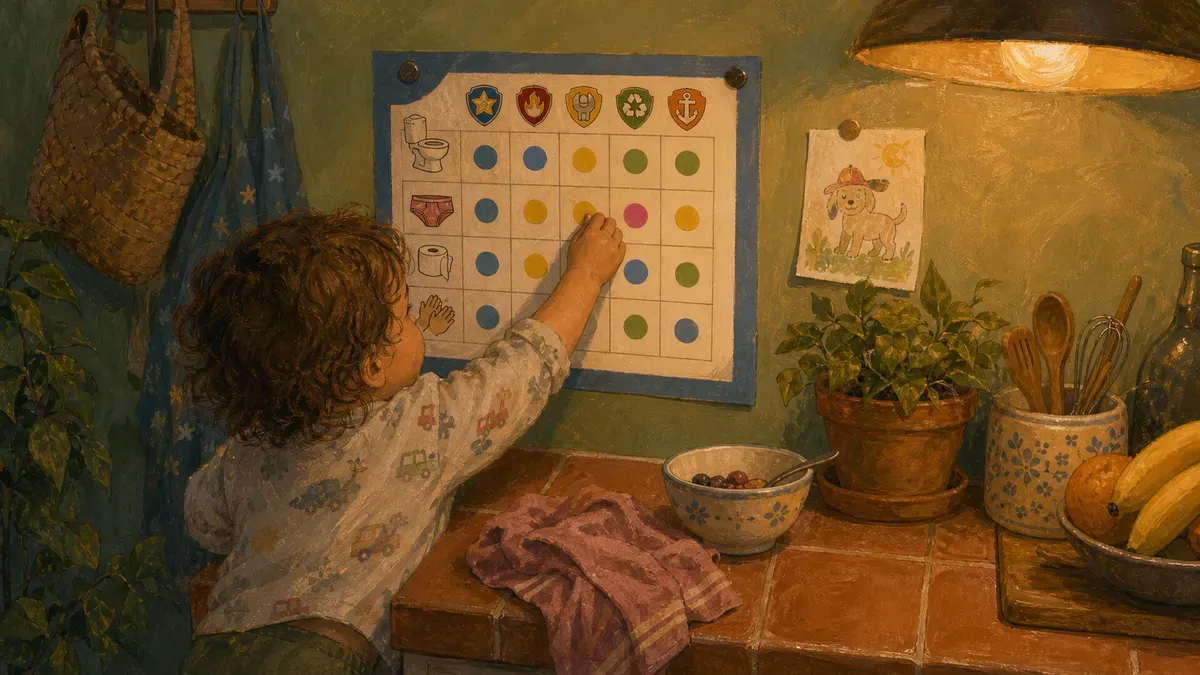
A sticker of the character your kid talks about all day long? You’re not inventing motivation here, you’re borrowing the attachment already sitting in your toddler’s head.
That pull runs deep: In a University of Louisville study, 4-year-olds picked broken toys stamped with a familiar character over brand-new plain ones up to 74% of the time.
Put the character your kid already adores at the finish line and the progress toward it reads like a real milestone.
Here’s what shifts when the chart has the right character on it:
- The potty trip feels like their idea, not yours
- Each sticker adds up to something that actually matters to them
- The chart keeps working past day three, when a plain grid has already quit
Set Up Your Themed Potty Chart Step by Step
Knowing why it works is the easy part. Building the thing takes about ten minutes at the kitchen table, and you can have it on the fridge before bedtime. Below, you’ll print the chart and gather your stickers, reframe every potty trip as a quick mission, then lock in one goal your toddler is actually racing toward.
Get Your Supplies Ready the Night Before
Gather your supplies the night before, not mid-accident. Grab the chart first. Draw a simple grid of around ten squares on plain paper, or search Pull-Ups’ site for free themed charts if your kid leans more toward a Bluey theme. A hand-drawn grid plus character stickers works just as well as anything printed.
Then stock the rewards. You want a small pile of stickers showing the exact character on the chart, not random stars. A Bluey potty training chart needs Bluey stickers, full stop.
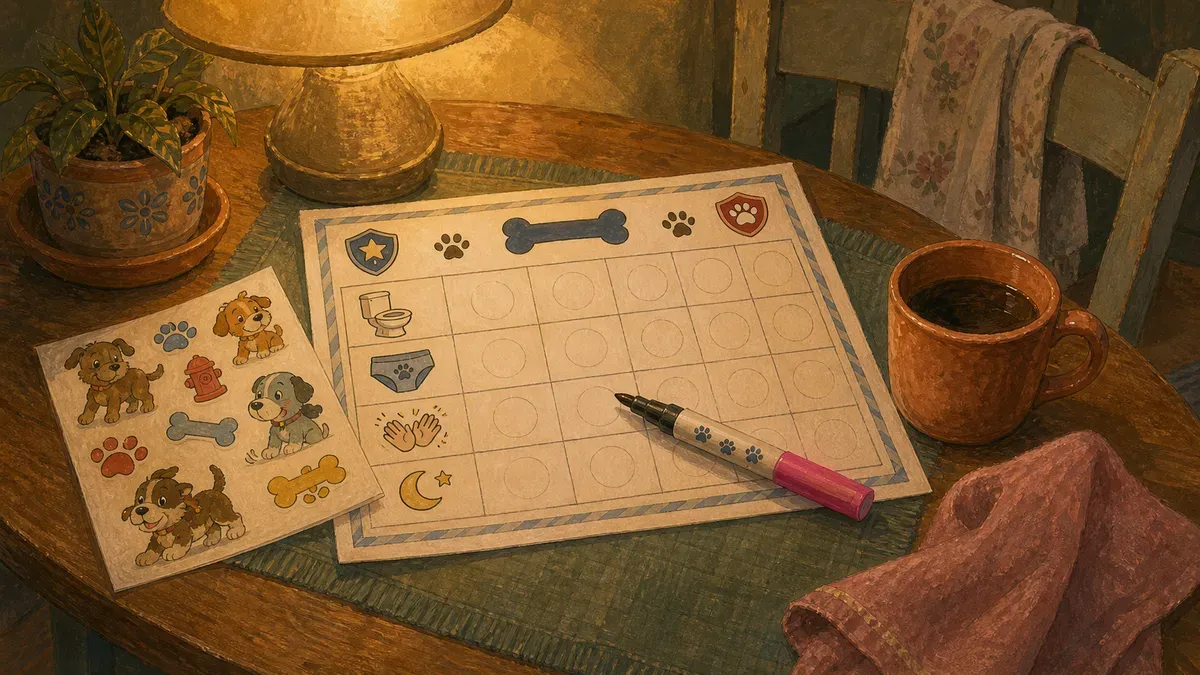
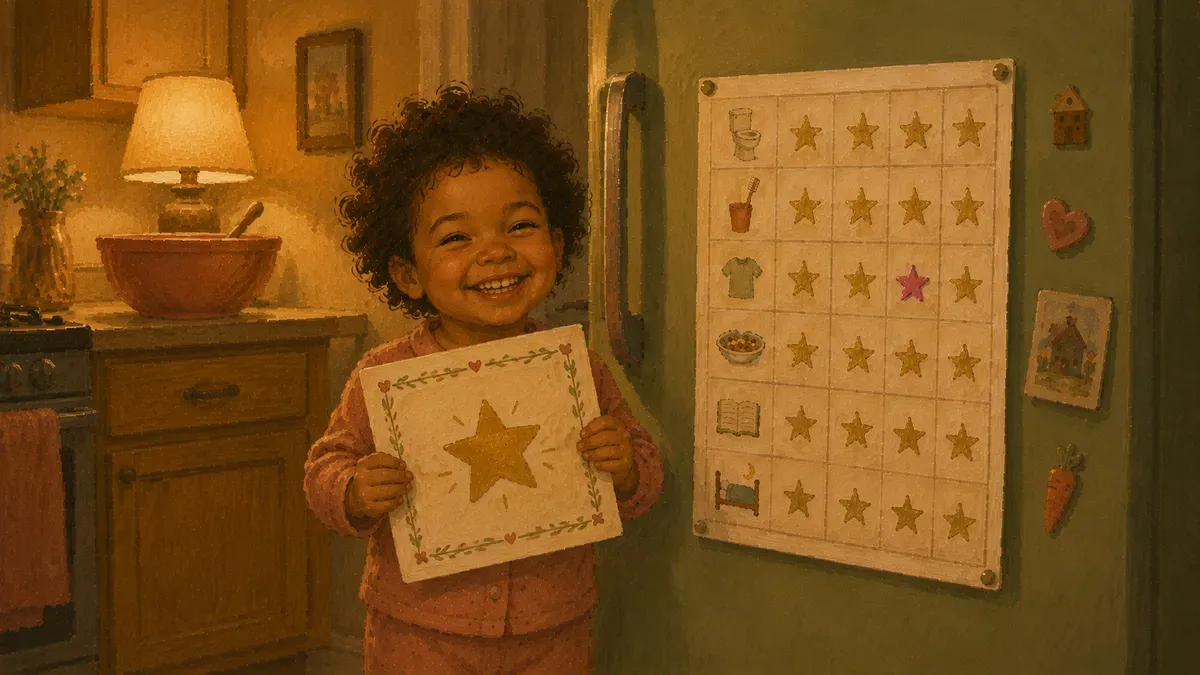
Print on regular paper, tape it to the fridge at toddler eye level, and set the sticker sheet right beside it. Done before bedtime.
Turn Each Potty Trip Into a Mission
Next morning, the ritual is the whole job. Walk your toddler to the bathroom and announce the mission in their character’s voice. “Chase needs you on the potty, ready for action.” They sit. They go. They earn one sticker, and they get to press it onto the chart themselves.
That last part matters. The hand placing the sticker is the kid’s, not yours.
Run it the same way every trip:
- Say the mission aloud before they sit, not after they’re already there.
- One successful trip earns one sticker; no trip, no sticker, no fuss.
- Hand them the sticker and let them place it while you count the empty squares together.
Watching the rows fill toward the prize is the payoff that keeps a paw patrol potty training chart pulling. Each filled square is a milestone they can see, and the reward feels closer every trip.
Set the Goal and the Payoff
Pick the number before you tape anything up. A first chart that needs ten stickers to fill is plenty. Make it 30 and your kid loses the thread long before the last square, because the finish line feels imaginary. You can always print a second one.
Now name the prize, and keep it on-theme. Keep the prize on-theme: a small figure, a sticker book, or an episode on the couch works perfectly when it matches the character on the chart. The character your kid already loves makes the reward concrete instead of some vague “treat later.”
Tell them straight: fill every square, earn the toy. That single sentence is the whole engine. They can see the goal, they can see the progress, and each success carries real weight toward something they actually want.
Pick the Theme Your Toddler Actually Cares About
The whole thing runs on your kid’s actual obsession, not the one you wish they had or the one that matches your bathroom decor. So before you print anything, get honest about who they’d cross the room for: the Disney crowd, the action heroes, or the dinosaur-and-truck camp that narrates every drive to daycare.
Disney Favorites: Minnie, Mickey, and Princesses
Disney is the safe bet when your toddler can’t name one obsession but lights up at half the catalog.
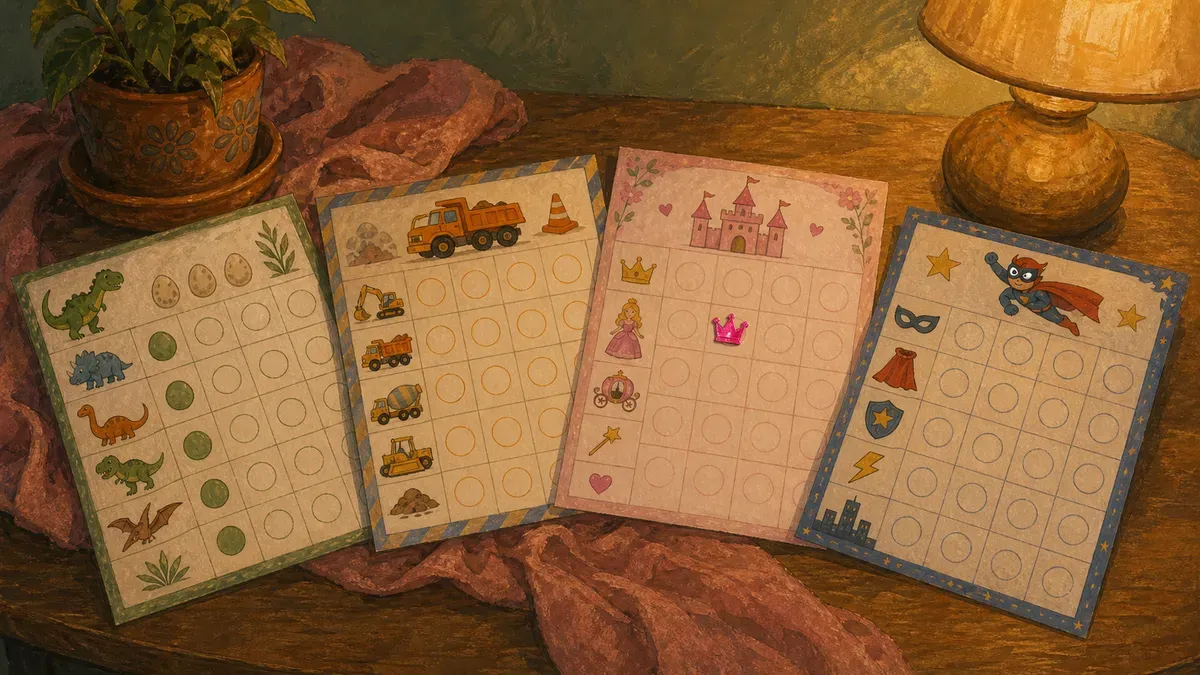
Three easy reads on which way to go:
- The kid who hauls a Minnie plush everywhere and points at every bow. A Minnie Mouse potty training chart gives that bow-obsessed toddler a familiar face cheering each trip.
- The one who claps for the classic shorts-and-gloves crew. Mickey Mouse charts work for the early Clubhouse fans, the kids who’d rather the boy mouse than the princesses.
- The dress-up kid living in plastic heels. A princess chart, Elsa, Moana, Belle, lets you swap whichever royal owns their heart this month.
Not sure? When you’re genuinely stuck, hand them two options and see which one they grab first.
Pick the one they already adore, then let it do the cheering.
Action Heroes: Spiderman and Paw Patrol Pups
Some kids don’t dress up. They rescue. They’re the ones webbing the couch, sending the pups on a mission to save a stuffed cat from under the table.
For the superhero kid, a Spiderman potty training chart turns every trip into a save-the-day moment. “Quick, Spidey, before the bad guys get there.” Silly works.
The rescue-obsessed kid doesn’t need much convincing when every chart square is another mission completed. The pups already run on missions, so the framing writes itself, and the property topped Circana’s global preschool toy rankings for 2024 per Spin Master’s earnings report.
Quick read on which way to go:
- Webs the furniture, narrates fight scenes, owns a mask: Spiderman chart.
- Lines up the pups, plays rescue, quotes “no job too big”: Paw Patrol chart.
- Loves both: print whichever they grabbed last at the store.
The reward and the motivation are already baked into the play. You’re just pointing it at the bathroom.
Dinosaurs, Trucks, and Vehicles for the Obsessed
Some kids skip princesses and pups entirely. They want the T-Rex, the dump truck, the train. If that’s your toddler, you already know the obsession runs deep, and that obsession is exactly what you put on the fridge.
Research published in PMC found about 30% of kids under six develop “extremely intense interests,” with vehicles among the most common, often starting around 18 months. That’s prime potty-training age, and it’s a lane the big-brand charts barely touch.
So build the chart around what they already love:
- A dinosaur potty training chart for the kid who roars at breakfast, naming each sticker a different dino as the rows fill
- A train potty training chart for the engine-obsessed, every square one stop closer to the station
- A digger or fire-truck grid for the construction-and-rescue crowd
No licensed character needed. The dino or the truck carries the whole thing, and each filled square is a milestone they actually care about.
Keep the Chart Working When Motivation Dips
Even a chart your toddler picked themselves loses its shine after a week or so, and that’s when the wheels usually come off. Here’s how to keep it pulling once the first thrill fades: refresh the reward before they stop caring, ride out accidents without making them a thing, and pack the chart away before it overstays its welcome.
Refresh Rewards Before the Novelty Wears Off
Around the one-week mark, you’ll watch the stickers stop pulling. The squares are half full, your toddler shrugs, and you’re tempted to scrap the whole thing.
Don’t. Escalate the payoff instead.
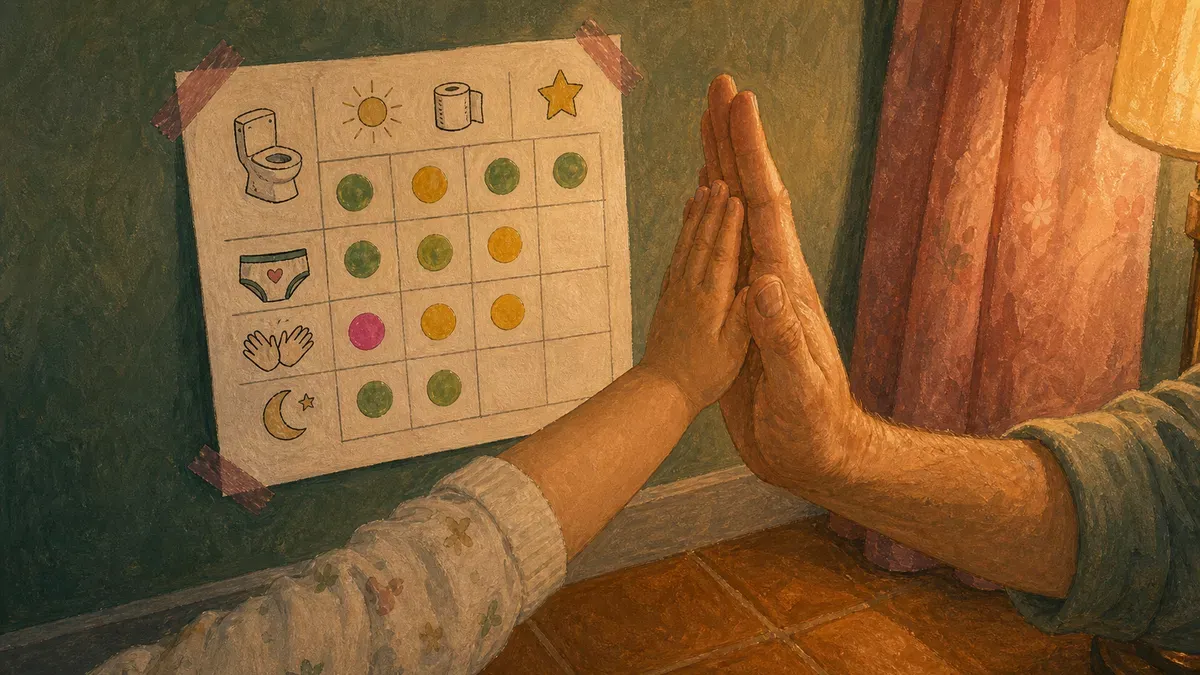
Add a small character prize box: a few dollar-store dinosaurs, a single Skye figure, a sticker book they don’t have yet. Each milestone now cashes out for a surprise pull, and the progress feels worth chasing again. It’s the same fix that helps with adhd and potty training too, not just themed charts that have run their course.
If you’re stuck for ideas, our potty training reward chart round-up keeps every prize cheap and screen-free.
Handle Accidents and Regression Without Drama
Accidents will happen, and so will the week your fully-trained kid suddenly forgets the whole deal. It’s normal. 33% of parents in the Mott Poll reported their child seemed fully trained but then started having accidents, so plan for it instead of panicking.
The one rule that matters: never peel off a sticker they already earned. Those squares are wins, banked. Taking them back tells the kid the mission was a lie, and the chart loses its pull overnight.
When an accident happens, skip the lecture. Clean up, shrug, and aim them back at the character. “Chase doesn’t quit after one miss, let’s catch the next one.” Re-anchoring to the mission they already love does more than any scolding.
Keep the routine steady, keep the praise on the wins, and ride it out. Patience here beats pressure every time.
Know When to Retire the Chart
The chart was never the point. The habit is. Once your toddler heads to the potty on their own, makes it through most days without accidents, and stops asking about stickers, the chart has done its job. Let it fade. Drop a square here and there, then quietly pull it off the fridge. You want the kid owning the routine, not chasing the next prize, and that shift from sticker-chaser to independent potty-goer is the milestone worth celebrating.
One last thing: loop in daycare. Tell the teachers the chart’s retired and your toddler is flying solo, so the same expectation follows them everywhere. Consistent routine across both places keeps the progress sticking instead of unraveling the second you part ways.
Themed Charts vs. the Bigger Potty Training Picture
The squares filling up is the fun part; what you really want is a kid who heads to the bathroom on their own.
A Chart Is a Tool, Not the Whole Plan
The chart is the spark, not the engine. It buys motivation, but it can’t tell you whether your kid is actually ready to start. That part comes first. The American Academy of Pediatrics recommends following pediatric guidance on potty training readiness signs, with those signs typically appearing around 18 months and training working best nearer 24. Push before they show up and no character on earth saves you.
Stack the chart on a real foundation. Pair it with a reward your kid already loves, a steady routine, and whichever method fits your family. The chart is one motivation layer inside our complete potty training roadmap, and it shines when a potty training sticker chart supports the plan instead of carrying it alone.
Where to Go Once the Chart Is Filled
A full chart is a real milestone. Celebrate it, then keep going, because potty training rarely ends the day that last sticker lands.
The complete roadmap at our complete potty training roadmap walks you through readiness, daily routine, nighttime, and the messy in-between the chart never touched. The chart did its job: it bought you buy-in and visible progress when the goal felt far off. Keep showing up and let your kid carry the routine the chart taught them.
Found this useful? Save it for the next rough afternoon.
Questions parents ask me about this
Is there a Paw Patrol themed potty training chart for toddlers?
Yes, plenty exist, and you've got two easy routes. Grab a ready-made themed chart with the pups already on it, or print a blank sticker grid and stock matching character stickers so every square earns a familiar face. Either way, the rule is the same: the stickers have to match the exact show your kid loves, or the magic doesn't land.
What age should you start using a themed potty training chart?
Start when your toddler shows readiness signs, not when the calendar says so. Most kids show the first signs in early toddlerhood and are ready to actually train closer to age two, though it varies a lot from kid to kid. A themed chart works best once your child can stay interested in a goal for a few days, so wait until they're genuinely curious about the potty before you tape one to the fridge.
How many stickers should a toddler earn before getting a reward?
Keep your first chart short, around ten stickers, so the finish line stays reachable. A long grid kills motivation before your kid ever gets close, and a toddler who can't see the end stops trying. Once they fill that first short chart and cash out the prize, you can stretch the next one a little longer if they're still into it.
What if my toddler loses interest in the character chart?
Don't scrap the chart, raise the stakes. Most charts lose their pull after about a week, so when the stickers stop working, add a small surprise prize the kid pulls each time they hit a milestone. A cheap themed toy tied to the character usually relights the spark, and tying the prize back to the character they already love keeps the whole thing feeling worth it.
Are themed potty charts better for boys or girls?
Neither, and that's the wrong question. What makes a themed chart work is matching it to your child's actual obsession, not their gender. A kid who lives for diggers needs a truck chart, a kid who plays rescue needs a hero or pup chart, and a kid who's deep into dinosaurs needs dinosaurs, no negotiating. Follow what they reach for in the toy aisle, not what the box is marketed toward.
Can I make my own potty training chart instead of buying one?
Absolutely, and it costs almost nothing. Draw a simple grid of around ten squares on plain paper, tape it at your toddler's eye level, and pair it with stickers of their favorite character. The homemade version works just as well as a polished one as long as the character matches the obsession and your kid gets to place each sticker themselves.
Do themed potty charts work for kids with special needs?
They can, especially for a child who latches hard onto a favorite character or theme. A clear, visual chart with a familiar face gives some kids a concrete goal they can actually see filling up, which helps when abstract rewards don't click. Every child is different, so follow your kid's lead and your care team's guidance, and lean on the theme they're already obsessed with rather than forcing one you picked.
Written by
Nora Hayes
Mom of two and a former preschool aide. I share the screen-free sensory play and calm-down ideas I test at my own kitchen table, plus what the moms in my little meet-up swear by. A parent passing on what works, not a doctor or a therapist.
More about NoraKeep going
All Potty Training-
 Potty Training
Potty Training Reward Chart: 20 Ideas Under $3
Skip the toy aisle: build a potty training reward chart with 20 ideas under $3 you already own. Grab the plan that motivates a stubborn toddler.
-
 Potty Training
How to Potty Train a Boy (and How a Girl Differs)
How to potty train a boy in 3 to 6 months: the readiness signs, the step-by-step method, and the small things that differ for girls.
-
 Potty Training
Potty Training Sticker Chart Printable (Free Download)
Free potty training sticker chart printable that survives travel and routine resets. Print, sticker, reward, reuse anywhere. Download now.
-
 Potty Training
Potty Training Certificate: A Just-Do-This Guide
Charts skip the finish line. Make a potty training certificate that gets your toddler over the line for real. Print yours tonight.