Potty Training Sticker Chart: Make It Work Without Candy

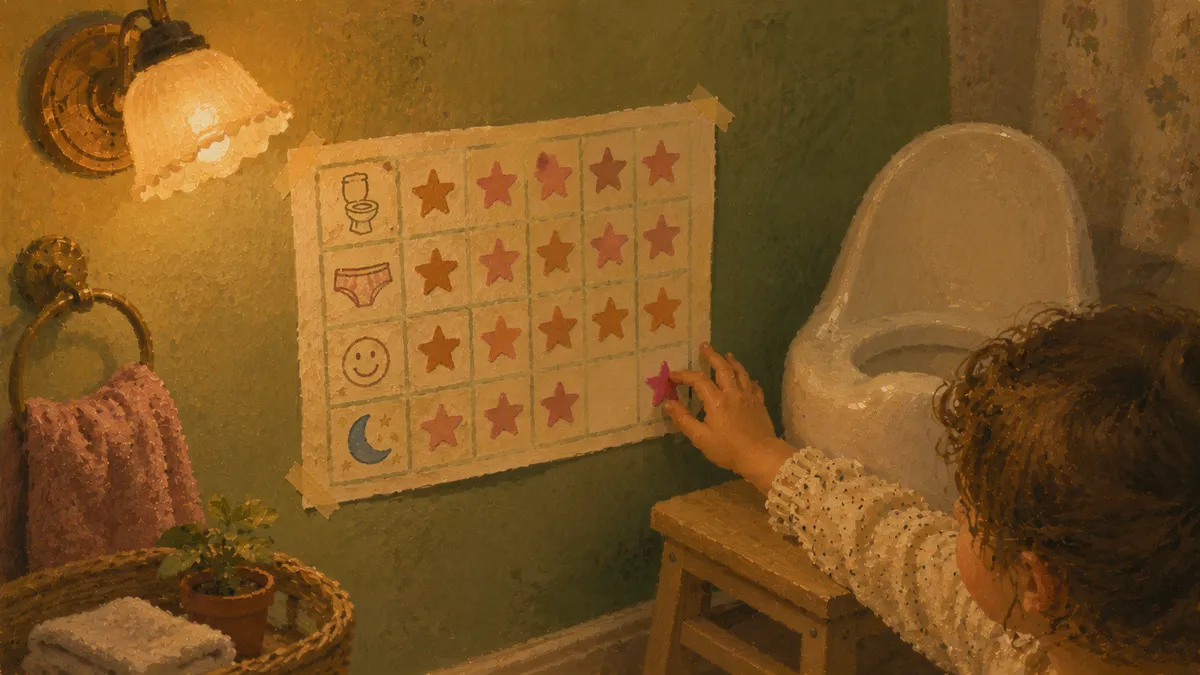
A potty training sticker chart is a simple wall chart where your toddler earns a sticker every time they sit, try, or go, and trades a small stack of them for a tiny prize. It works because a three-year-old will do almost anything for a sticker they can watch filling up a row, no candy required.
I’m Nora Hayes, a former preschool aide who has run this exact chart with my own two and the kids in our living-room sensory group, and below I’ll walk you through setup, what to reward, where to get a chart, and when to quietly retire it.
The plan in brief:
- Hang the chart at your toddler’s eye level, right next to the potty.
- Hand over one sticker the second they sit, try, or go.
- Trade 5 stickers for a small, non-candy prize.
How to Set Up a Potty Training Sticker Chart in 5 Steps
The whole setup comes down to three moves: decide what earns a sticker, hang the chart where your toddler can reach it, and reward the second it happens. Get those right and the rest runs itself.
- Decide exactly which action earns a sticker, and never change it mid-day.
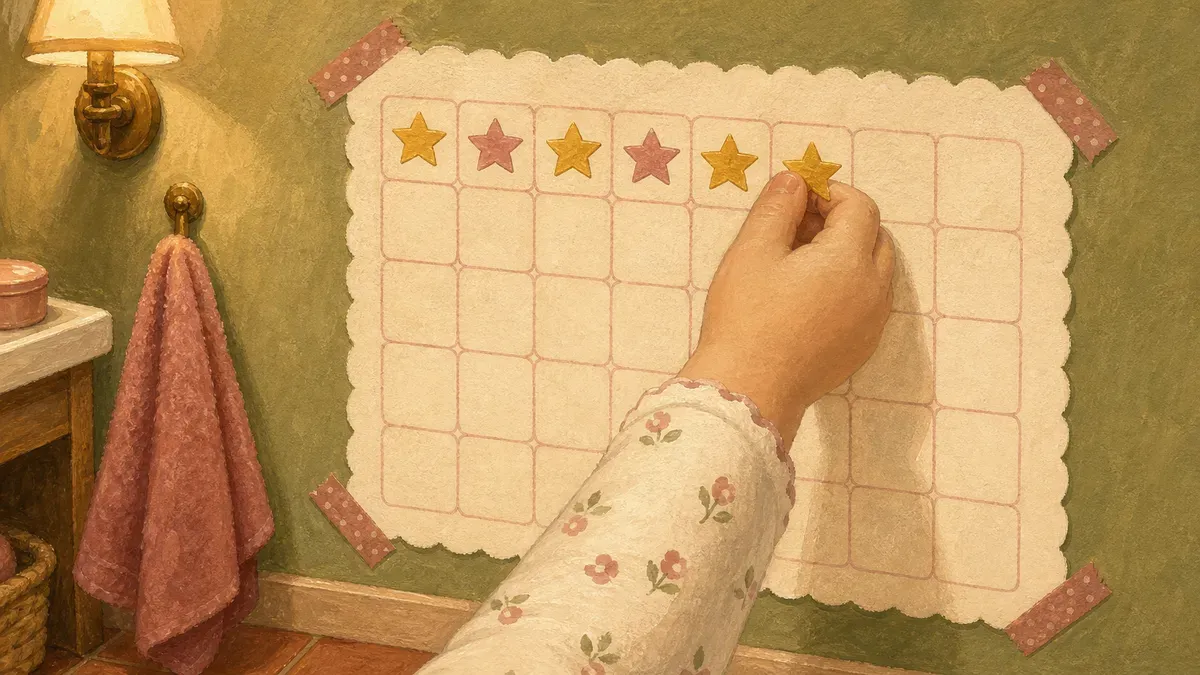
- Tape the chart low on the bathroom wall so your toddler can reach it without you.
- Hand over the sticker the moment the behavior happens, then celebrate.
Pick the Behavior Each Sticker Rewards
Before you tape anything up, decide one thing: what exactly wins a sticker? The options narrow fast: - Sitting on the potty
- Trying (any attempt counts)
- An actual go There’s no wrong answer, but you have to pick and stick with it, because a toddler can’t follow a rule that changes by the hour.
When we started potty training with stickers for June, I made the mistake of moving the goalpost on day two. Sticker for sitting in the morning, sticker only for a real go by dinner. She was three, and the confusion showed on her face. So I went back to one rule: sit and try, get a sticker.
A Psychology Today clinical summary on sticker charts says reward systems work best when parents make it clear what behavior you are working to change and hand over the reward every single time it happens. That consistency is the milestone, not the potty itself. Match the behavior to where your kid actually is. A nervous sitter earns one for sitting. A confident one earns it for the go.
Hang It at Your Toddler’s Eye Level
The chart belongs on the wall, not the fridge. Tape it right next to the potty seat at a height your kid can see and touch without help, so adding the sticker is their job, not yours. That ownership is half the magic.
Pull-Ups’ potty training resource tells parents to hang the chart in the bathroom at the child’s eye level and let the child place their own stickers. Pull-Ups says bathroom height and child-placed stickers. I’d go a step further: - Hang it low, around 30 inches off the floor for a 2-year-old (they average about 34 inches tall)
- Position it so your kid walks up to it on their own, not something you hold and point at
- Let them press the sticker on themselves; the act of doing it is the reward
Reward Immediately and Celebrate the Win
Timing is everything here, and “everything” is barely an exaggeration. The sticker has to land the instant the behavior happens, not after you’ve washed hands or finished a sentence. At this age, a delayed reward is basically no reward.
Operant conditioning research reviewed on ResearchGate found that in toddlerhood, immediate concrete reinforcement shapes behavior most powerfully, while abstract or delayed consequences barely register. The AAP echoes it in their pediatric guidance on potty training readiness: rewards land best when they’re immediate and consistent during the early learning phase.
So celebrate on the spot, every time: - A little cheer
- A high five
- “You did it, go pick your sticker” June used to grin at the chart like she’d won something, and honestly, she had. The visible progress is what keeps a toddler coming back to the potty tomorrow.
How a Sticker Chart Actually Works on a Toddler
A toddler can’t hold an abstract idea like “I’m getting better at this,” but they can absolutely see a row filling up. Here’s why that little strip of stickers does the heavy lifting, and how you stack it toward something bigger.
Why Visual Progress Motivates
Tell a 3-year-old “good job, you’re really improving” and it floats right past them. Show them four stickers in a row with one empty space left, and suddenly they’re tugging your hand toward the bathroom. That’s the difference a visual tool makes.
The chart turns something invisible into something countable. Each sticker is proof they can touch, point at, and brag about to Grandma on the phone. Research on positive reinforcement in toddlers traces this to Dr. Alan Kazdin of the Yale Parenting Center, who spent decades showing that catching a kid in a good moment and marking it right away is what drives behavior change at this age.
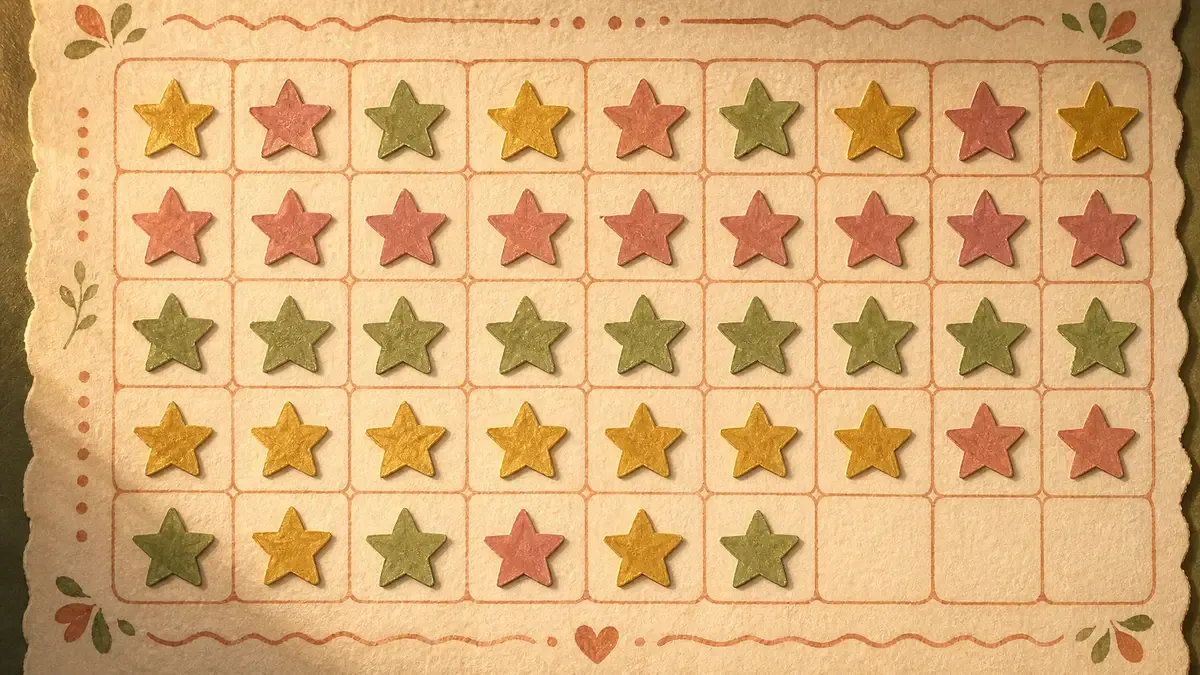
When June could watch her own progress stack up, the tracking became the game. She wasn’t sitting on the potty for me anymore. She was doing it to fill her row.
Turning Stickers Into a Bigger Reward
One sticker per try is the daily win. The bigger pull is what a stack of them buys.
Set a small goal, say five stickers, then trade the full row for a tiny prize. A new sticker pack, choosing the bedtime book, ten minutes of bubbles in the tub. The chart layers a quick win onto a slightly bigger milestone without ever turning into a candy bribe or an Amazon haul.
Keep the prize close, not weeks away, because a toddler who can’t see the finish line gives up before they reach it.
Keep that reward system cheap and fast. June’s first “big” prize was a small bubble wand, and she lost her mind over it. For more ideas at this price point, our potty training reward chart round-up and our complete potty training guide both lean candy-free and budget-friendly.
Candy-Free Rewards and Treats That Still Motivate
You don’t need a candy jar to get a kid to the potty. Below: the cheap swaps that worked at my house, and how to pick a sticker your kid actually races to earn.
Healthier Swaps for Candy
The best part about going candy-free? Most of these cost nothing and you already own them. June never once asked for an M&M when the prize was blowing bubbles in the backyard.
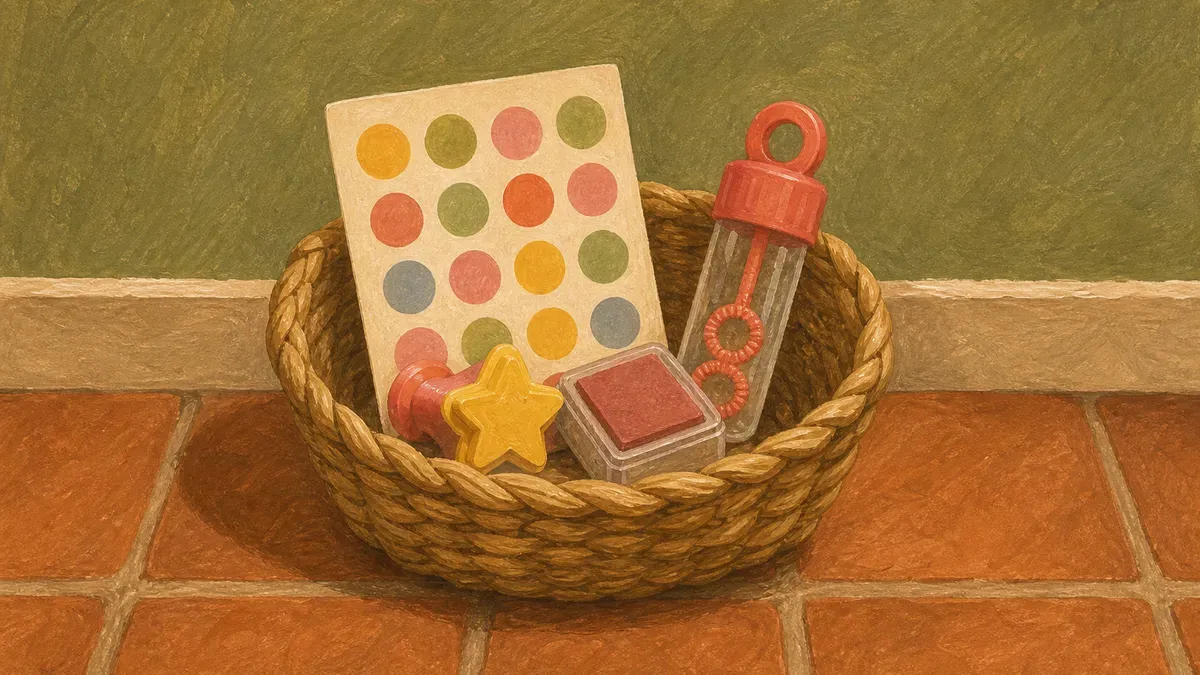
Here’s the rotation that kept her motivated without a single sweet:
- An extra sticker or a hand-stamp (the cheapest dopamine hit there is)
- A few minutes of her favorite show, queued up and ready
- Bubbles on the back step
- A walk to the park, named out loud as “the potty park”
- One small toy from a potty training prizes box she only got to dip into for a win
Cleveland Clinic pediatrician Dr. Sniderman says toddlers respond just as well to non-sugary potty training treats like stickers, building blocks, or a trip to the park. There’s a real reason to skip the sweets, too. The American Heart Association caps added sugar for kids over 2 at 6 teaspoons a day, and a week of candy bribes burns through that fast. A stamp on the hand does the same celebrating job for free.
Choosing Stickers Kids Get Excited About
Not all stickers land the same. The trick is making the sticker itself the prize, so you skip the food reward entirely.
Tie it to whatever your kid is obsessed with this month. For June it was puffy unicorns; for a sensory-seeker in our group it was the shiny holographic ones that catch the light. When the design is a character they love, they’ll sit just to earn it.
Big brands lean on this. Pull-Ups makes officially licensed Mickey and Minnie printable charts for exactly that reason, turning the sticker into the draw. You don’t have to buy licensed, though. A dollar-store sheet of dinosaurs or Bluey lookalikes works fine if it’s the thing your kid points at in the aisle. Let them help pick the potty training stickers. The ones they chose themselves get earned the fastest.
Get a Printable Chart or Make One at Home
So you’ve got the rewards and the stickers sorted. Now you need the actual chart, and there are two roads: print a ready-made one, or build it tonight from whatever’s in the junk drawer.
Use a Ready-Made Chart
A printable potty training sticker chart is the lazy-genius move. Someone already did the design work, so you skip straight to printing and taping it up.
The pull is the fun design. Themed grids with trucks, rainbows, dinosaurs, the kind of thing your kid will actually want to fill. There are loads of free instant downloads out there, from plain weekly grids to themed reward paths, no design skills required on your end.
Run one off on regular copy paper and it’s on the bathroom wall in under five minutes. No laminator, no Pinterest crafting session. The whole point is to start tonight.
DIY a Chart With What You Already Have
No printer? No problem. A homemade chart works exactly as well, and your toddler genuinely does not care that it’s freehand.
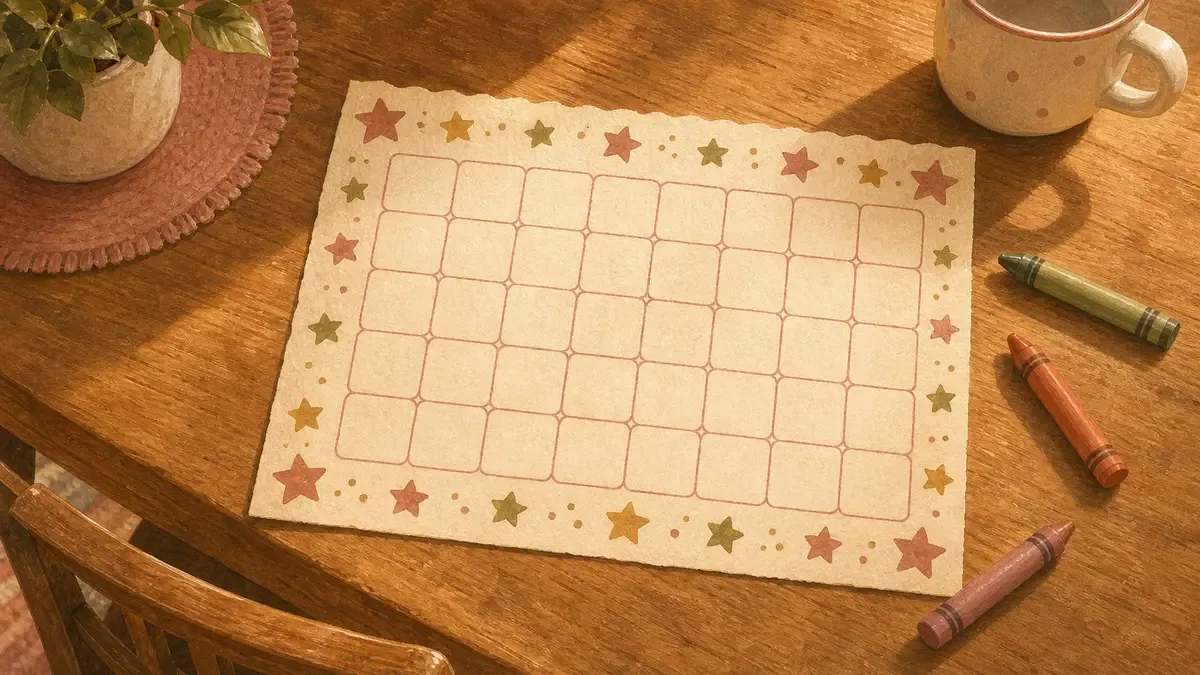
Grab a piece of paper, a marker, and draw a grid. Ten boxes, twenty, whatever fits your prize goal. That’s the whole visual tool, right there.
The trick is letting your kid in on it. Let them scribble in the margins, color the boxes, decide where the potty training chart stickers go. A kid who helped make their chart is way more invested in filling it. A chart they helped make gets filled faster than any glossy one.
The fun design here isn’t store-bought polish. It’s the doodle your kid added at the kitchen table. Stickers do the heavy lifting either way, so don’t overthink the paper underneath them.
Keep It Working and Know When to Stop
A sticker chart is a tool, not a forever fixture. Two things eventually happen: the stickers lose their pull, and your kid simply doesn’t need them anymore. Here’s how to handle both.
When the Chart Stops Motivating
You’ll know the magic has faded when the chart stops earning a glance.
The reward system had gone stale, and that’s normal. A few things tend to bring it back:
- Swap the stickers for a new theme she’s into this week.
- Bump up the prize at the top of the stack so finishing a row means something again.
- Drop the ask entirely if the stakes feel too high. Sometimes lowering the bar is the real fix.
Accidents are a different beast. A run of them after a new baby, a move, or a cold usually isn’t the chart failing. The AAP notes that regression after a stressor is common and usually doesn’t last very long, resolving in days to weeks when you stay calm and positive. Don’t yank the chart in frustration. Hold your consistency, reset the expectation, and let the wobble pass. For more refresh tactics, these potty training chart ideas saved more than one stuck week at my house.
Weaning Off the Chart Once Trained
The goal was never a kid who pees for prizes. It was a kid who just goes, chart or no chart.
Start spacing the stickers out once the routine holds on its own. Behavioral guidance reviewed in clinical psychology sources suggests phasing out the chart once your child hits the target around 85% of the time, then slowly thinning out how often a sticker shows up.
The step-down usually looks like this:
- Sticker for every success, then only for dry mornings, then for a whole dry day, then a quiet “you did it” with no chart at all.
Most kids fade off the chart in two to four weeks once the routine holds on its own. If the milestone feels fragile, a single proud sticker for a tough day is always allowed. For the bigger picture on retiring the routine, our potty training guide walks the whole arc.
The chart’s job is to make itself unnecessary. When your kid keeps going dry without glancing at it, you’ve reached the finish line. Take it down, keep the last sheet of stickers, and call it done.
Found this useful? Save it for the next rough afternoon.
Questions parents ask me about this
How does a potty training sticker chart actually work?
Your child earns a sticker the moment they complete the target behavior, whether that's sitting on the potty, trying, or going. The sticker goes on the chart right away so they can see the row filling up. Once they collect enough stickers, they trade them in for a small prize. The visible progress is what drives the habit, not the prize itself.
At what age should I start using a sticker chart for potty training?
Most kids are ready somewhere between 18 months and 3 years, but readiness matters more than age. Look for signs like staying dry for longer stretches, showing interest in the toilet, or telling you when they've gone. A chart works best once they understand the simple cause-and-effect: sit on the potty, get a sticker.
How long should I use a potty training sticker chart before stopping?
Most families can start fading the chart once their child is consistently hitting the target without much prompting, which often happens within a few weeks to a couple of months. Space the stickers out gradually rather than stopping cold. The goal is for going potty to feel routine on its own, so the chart quietly becomes unnecessary.
What do I do if the sticker chart stops working?
First, check whether the behavior you're rewarding is still the right one. If your child has mastered sitting but the chart still requires it, they may be bored rather than resistant. Try swapping the sticker theme or changing the prize, since novelty resets motivation fast. If accidents have increased after a stressor like a move or a new sibling, hold steady with calm consistency rather than raising the stakes.
Should the sticker chart be different for a boy versus a girl?
The chart itself works the same way regardless of gender. What changes is the theme and the sticker choice. Let your child pick the stickers or the chart design and the motivation takes care of itself. A boy obsessed with trucks and a girl obsessed with unicorns both respond to the same mechanic once it features something they love.
Can I use a sticker chart for nighttime potty training too?
Nighttime dryness is largely developmental and tends to arrive later than daytime training, sometimes by a year or more. A sticker chart can support it if your child is already waking up dry most nights and just needs a little encouragement. For kids who are still soaking through overnight, the chart won't speed up biology, so it's worth waiting until nighttime readiness shows up on its own.
Does a sticker chart work for a neurodivergent or special needs toddler?
Visual reward systems are often a strong fit for kids who think in pictures or respond well to clear, predictable routines. Pair the chart with a simple first-then visual (first potty, then sticker) to make the sequence concrete. Keep the sticker and prize immediate and sensory-friendly if your child has strong sensory preferences. Every kid is different, so follow your child's lead and adjust the setup rather than the core idea.
Written by
Nora Hayes
Mom of two and a former preschool aide. I share the screen-free sensory play and calm-down ideas I test at my own kitchen table, plus what the moms in my little meet-up swear by. A parent passing on what works, not a doctor or a therapist.
More about NoraKeep going
All Potty Training-
 Potty Training
Potty Training Reward Chart: 20 Ideas Under $3
Skip the toy aisle: build a potty training reward chart with 20 ideas under $3 you already own. Grab the plan that motivates a stubborn toddler.
-
 Potty Training
How to Potty Train a Boy (and How a Girl Differs)
How to potty train a boy in 3 to 6 months: the readiness signs, the step-by-step method, and the small things that differ for girls.
-
 Potty Training
Potty Training Sticker Chart Printable (Free Download)
Free potty training sticker chart printable that survives travel and routine resets. Print, sticker, reward, reuse anywhere. Download now.
-
 Potty Training
Potty Training Certificate: A Just-Do-This Guide
Charts skip the finish line. Make a potty training certificate that gets your toddler over the line for real. Print yours tonight.