Montessori Practical Life Activities by Age

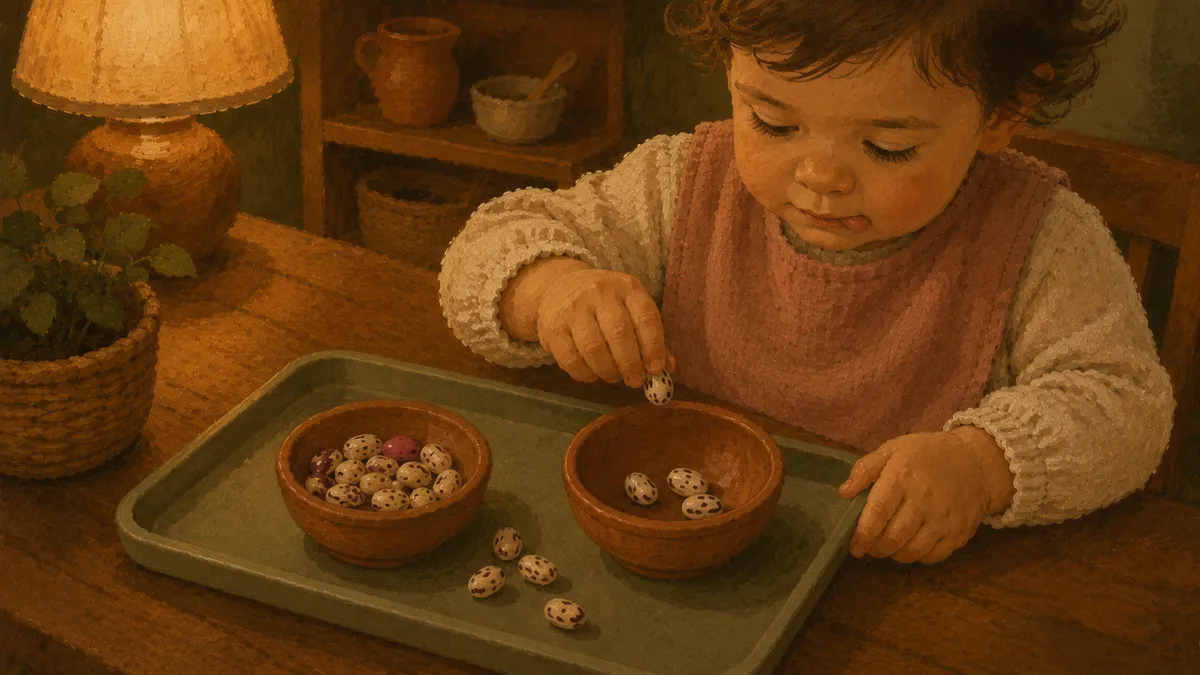
The right Montessori practical life activities change with your child’s age: scooping and carrying objects at one, real pouring and dressing frames for a toddler, and chopping, sweeping, and setting the table by preschool. I’m Nora Hayes, a former preschool aide and mom of two, and the reason age matters this much is that early childhood is the first of Montessori’s four planes of development, the absorbent-mind stretch when these everyday skills click most naturally.
I’ll walk you through what to offer at each stage from 12 months to 5 years, and you can start today with a step stool and the real kitchen tools in your drawers (no classroom or expensive materials needed).
What Montessori Practical Life Activities Are (And Why They Matter)
Practical life is the Montessori term for the ordinary work of caring for yourself and your space: pouring water, buttoning a coat, wiping up a spill, all scaled down to a child’s hands. It splits into four tidy areas, and the real point of all of it isn’t the clean floor you’re probably picturing.
The Four Areas of Practical Life
Montessori sorts practical life into four buckets, and you’ll recognize all of them from your own kitchen. Here’s what each one covers:
- Care of self: washing hands, brushing hair, and the dressing frames that isolate one fastening at a time (buttoning, zipping, snapping, buckling, lacing, hook-and-eye).
- Care of the environment: watering a plant, wiping the table, sweeping crumbs, feeding the cat.
- Grace and courtesy: saying please, waiting a turn, carrying a tray without plowing into a sibling.
- Control of movement: walking slowly with a full glass, setting a chair down without the scrape, putting things down gently.
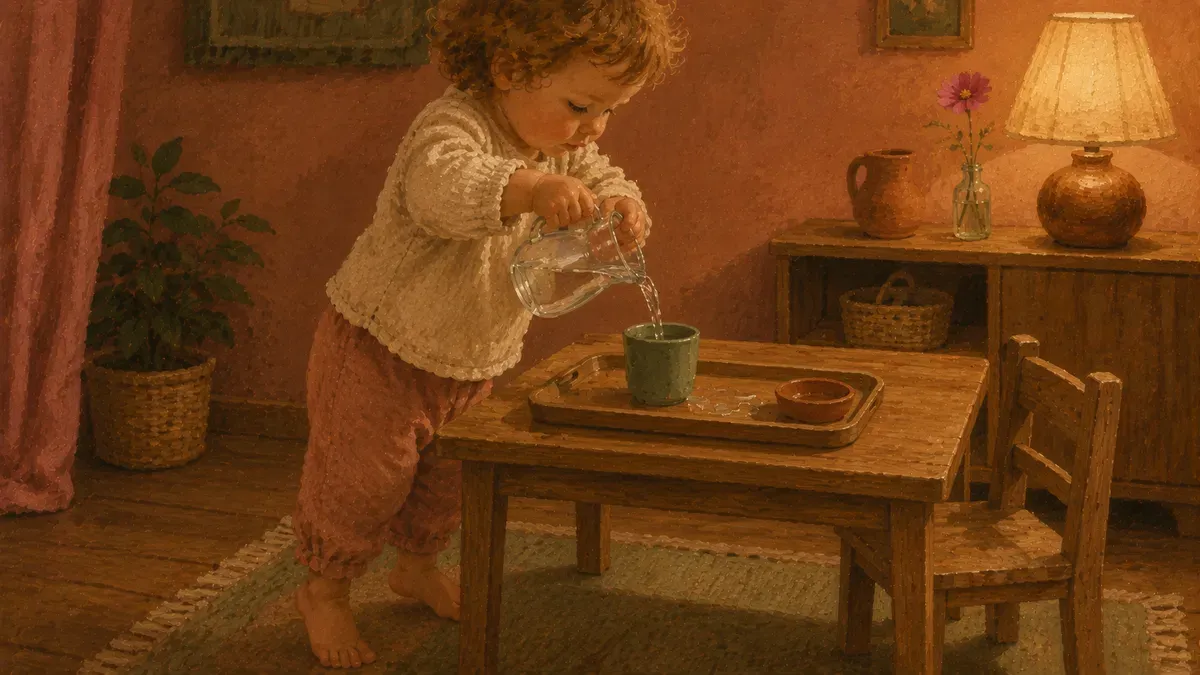
What ties them together is the prepared environment, with tools that are real, child-sized, and within reach, so a toddler can do the thing instead of just watching you. A low shelf, a step stool at the sink, a pitcher she can actually lift.
You don’t need a classroom; you need a drawer she’s allowed to open.
For ready-made ideas, this list of practical life montessori activities is a good start.
What Practical Life Actually Builds
Here’s the part that surprised me most: the spilled water and the half-swept floor aren’t the point. The real work is happening in your child’s brain and hands. When a toddler pours from one little pitcher to another for the tenth time in a row, she’s building concentration (the ability to lock onto one task). That kind of focus is child development you can watch in real time.
- Coordination: precise hand control built through real, repeated movements.
- Independence: the confidence that stacks up each time she finishes something alone.
That’s the real Montessori contribution: not a cleaner floor, but a kid who is learning she can do things.
Montessori teachers sometimes boil it down to four words: order, concentration, coordination, independence. - These four qualities are the foundation everything academic gets built on later. Don’t jump in to help with something she believes she can manage herself, because the struggle is where the growth lives.
If you’d rather not build the trays from scratch, these montessori activities printables give you a head start.
So when the pouring is slow and messy, resist the rescue. The water wipes up. The competence she’s stacking does not.
When Does Montessori Start? Age Ranges and What to Expect
So what age does Montessori start? Earlier than most parents guess. There’s no real minimum. It begins the day a baby starts reaching and grasping, though hands-on practical life usually clicks into place around twelve to fifteen months.
Sensitive period: a stretch when the brain is wide open to one particular skill, and the engine behind Montessori’s age groupings.
Montessori never sorted kids by a single birthday-based grade; it follows where a child actually is. What to expect at any age is humbler than the Pinterest version.
- Minutes of focused work, not hours
- A few spills per session, basically guaranteed
- Gains you only notice weeks later
That’s also why the Montessori age groups look odd if you’re used to one grade per year. Classrooms run in three-year, mixed-age bands, and the American Montessori Society maps childhood development across four planes (0-6, 6-12, 12-18, and 18-24 years), splitting the youngest into a 0-3 community and a 3-6 community. In the preschool room where I worked, the twos and the fours shared one shelf, and no skill stayed with one age group for long.
- A younger toddler watched an older one pour, no instruction needed
- An older preschooler cemented the skill by passing it on
- The little ones learned to button by shadowing the fours, long before I sat down to teach it
Those blended Montessori school ages are the design, not a scheduling quirk.
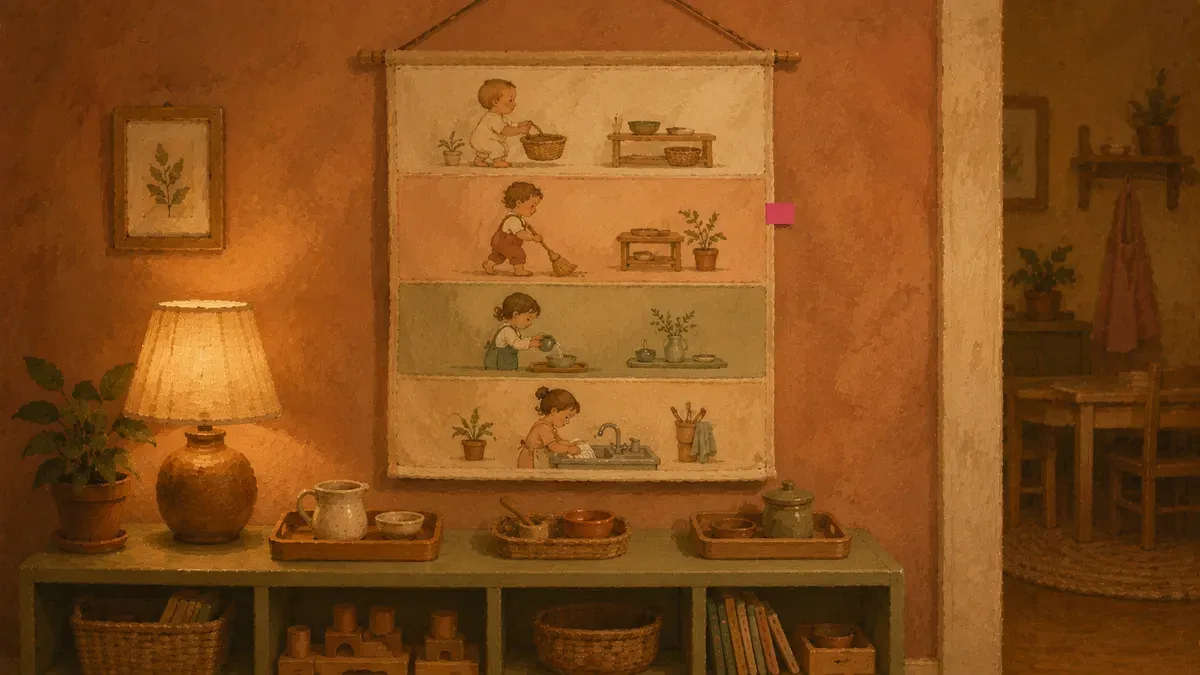
Here’s the rough Montessori age range for practical life at home, stage by stage. Match the tray to the child in front of you, not the number.
| Stage | Age | What it looks like | Watch for |
|---|---|---|---|
| Infant-toddler | 12-18 mo | Carrying, dropping, first pours | Short bursts, plenty of spills |
| Toddler | 18 mo-3 yr | Dressing frames, scooping, wiping | A real hunger for order |
| Preschool | 3-5 yr | Buttoning, food prep, sweeping | Long, quiet concentration |
If you take one line from that chart, take this: don’t chase the calendar, follow the child.
Want the philosophy behind the stages before you sort out ages? Start with what is montessori for the groundwork. Offer the age-appropriate tray, watch what lands, and let real child development set the pace.
Practical Life for 1-Year-Olds: 12 to 18 Months
Here’s the part that surprises people: a freshly-walking one-year-old is ready for real work. Not worksheets, not flashcards. Work. Around 12 months, when those wobbly first steps turn into purposeful toddling, a child can start wiping a surface, dropping spoons into a basket, and carrying things from one room to the next. This is where Montessori for a one-year-old actually begins, and it begins with the body.
That’s no accident. This whole stretch sits inside the sensitive period for movement (roughly birth to two and a half years), when a baby is wired to refine both gross motor skills and the finer ones. It’s why real, child-sized tools beat plastic toys every time. One-year-olds build control of movement by moving the whole body through a task with real objects: a small pitcher, a real sponge, a basket with some weight in it.
So keep it simple and physical. A few Montessori activities for a 1 year old that earn their keep:
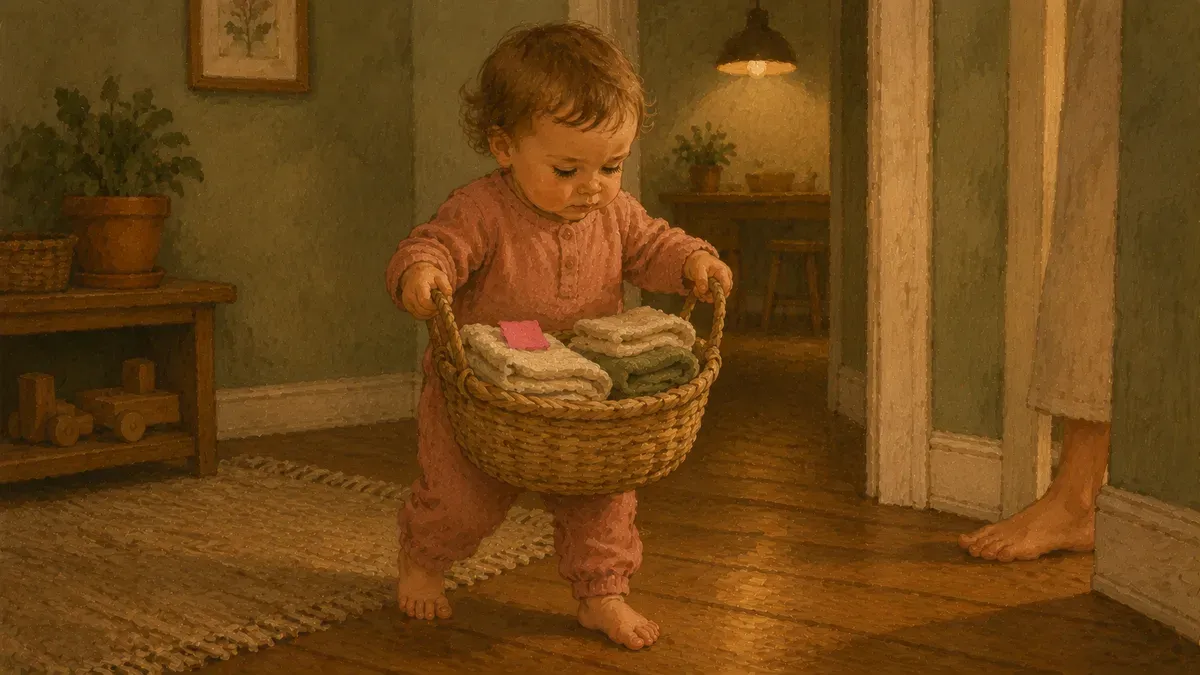
- Carrying a basket: hand your 15-month-old a small basket of folded washcloths to haul across the room. June ran this exact loop at that age, back and forth, dead serious about it. Heavy work, big payoff, zero mess.
- Dropping and posting: spoons into a cup, balls into a box. They’ll do it, dump it, do it again, and that repetition is the point, not a problem.
- Wiping a surface: a damp cloth and a low table. Show it once, then hand it over.
- Filling and emptying baskets: blocks, board books, anything safe. Toddlers love putting things in and taking them out; let them.
- Hand washing: by 18 months, a step stool and a real bar of soap turns a chore into a favorite activity to do with a busy toddler.
- Pouring: dry first, a little rice between two small bowls. Spills happen. That’s the work, not a mess to scold.
Real and child-sized is the whole game here. A small jug they can actually lift, not a toy version of one.
One word for the infant-and-toddler crowd nervous about a real cup or a glass jar: scaled-down does not mean dangerous. The education isn’t in the object; it’s in the trust you hand over with it. Montessori for infants leans on this: real things, used for real.
Expect to demonstrate slowly, then step back. They will repeat it endlessly one day and ignore it the next. Both are fine. At this age, two minutes of focus is a win, and the spills are just proof your one-year-old is doing the work.
Practical Life for Toddlers: 18 Months to 3 Years
Somewhere around eighteen months, something shifts. The one-year-old who dumped the basket now wants to carry it across the room, set it down, and put each cloth back where it goes. Around this age a toddler wants to finish a real job start to finish (pour the water, wipe the spill, return the cloth) and will happily follow and repeat a two- or three-step sequence until it sticks. That’s your opening.
This is the stretch where practical life gets genuinely useful. Somewhere in the two-to-three window it hits a kind of golden age: your kid is motivated to do the real thing (pouring, spreading, washing produce), not a plastic version of it. - Match the task to the hands, using small real tools.
- Give one clear job at a time.
- Back off and let them work through the struggle.
A few activities for an 18 month old at home that actually earn their keep:
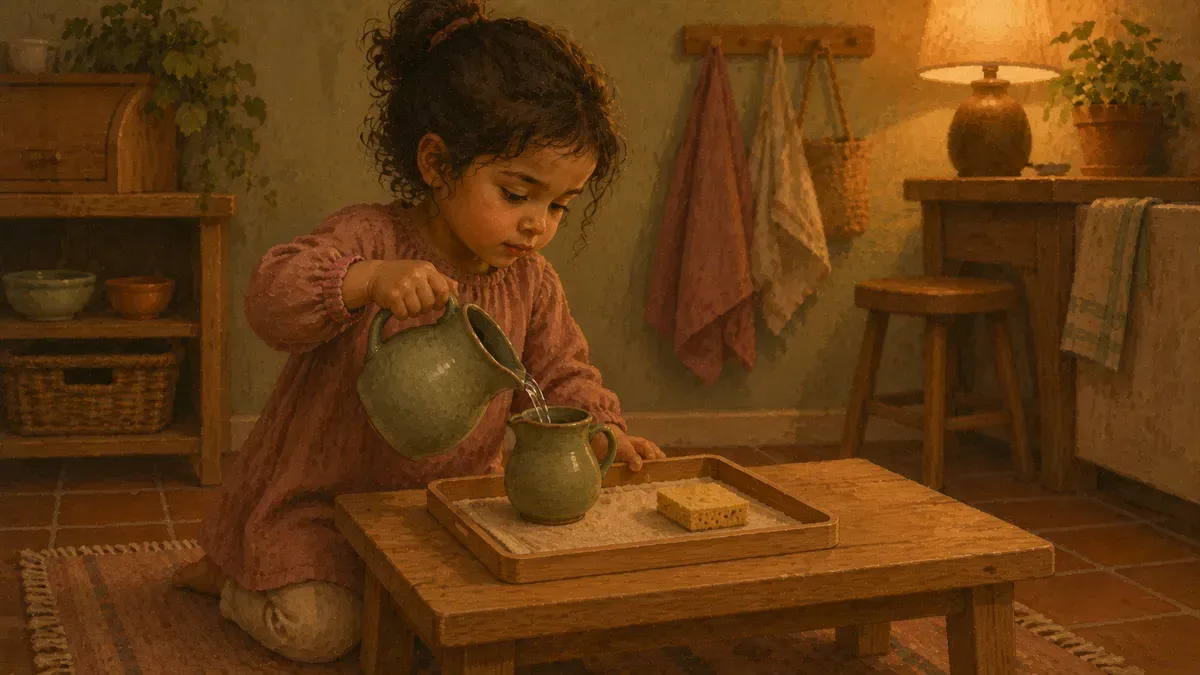
- Pouring: a small pitcher, a splash of water, a tray to catch the mess. Dry beans first if you’re not ready for puddles. This is the one I’d start with.
- Spreading: soft butter or cream cheese, a child-safe knife, one slice of bread. Real food preparation, and the snack is the reward.
- Washing produce: a bowl of water, a vegetable brush, a few potatoes. Mine would scrub one potato for ten minutes, concentration you didn’t know was in there.
- Wiping and sweeping: a child-sized cloth or a little broom. Care of environment starts with cleaning up their own crumbs.
- Dressing: big buttons, a coat to hang, velcro shoes. Self-care, and every bit they do is a bit you don’t have to.
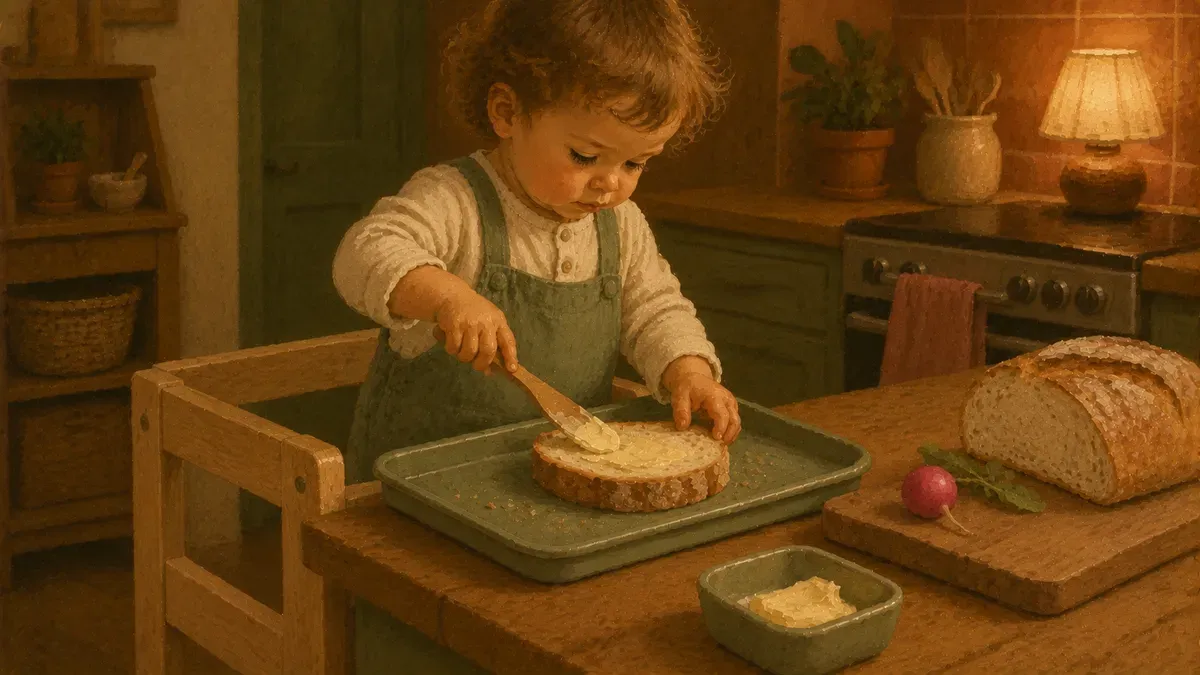
All of this builds real fine motor skills, but honestly the bigger payoff is the face they make when they realize they did it themselves. For more in this band, here’s a fuller list of montessori activities for 2 year olds, plus a rundown of the montessori practical life toys for toddlers actually worth owning.
The repetition is where the skill lands, even when you’re down to your last clean cloth.
Practical Life for Preschoolers: 3 to 5 Years
By three, the spills slow down and something better shows up: your kid wants a real job, not a pretend one. The pouring and wiping they drilled as toddlers becomes the warm-up for the actual work: making their own snack, setting the table, washing the dishes they just dirtied. This is the stretch where practical life stops looking like play and starts looking like a small person running their corner of the house.
The big leap at this age is food preparation, and it earns its keep because it’s three skills folded into one. A preschooler spreading their own toast or peeling a carrot is practicing control of movement, carrying real responsibility, and, when they make a snack for a sibling or pass a plate around the table, picking up grace and courtesy without a single lecture.
- Child-sized tools make it real: a spreader, a peeler, a child-safe knife sized for small hands.
- The kitchen is where focus and real-world readiness get built, one meal at a time.
Here’s where I’d point a preschooler:
- Snack prep. Spreading, peeling, slicing a banana with a butter knife, scooping into a bowl. They eat what they make, which is the whole motivation.
- Serving others. Pouring water for a guest, passing food around, offering the first slice to someone else (grace and courtesy in disguise).
- Real household chores. Loading the dishwasher, wiping the table after a meal, sorting laundry by color, watering the plants. Boring to you, thrilling to them.
- Washing dishes. A step stool, a sink of warm soapy water, their own cup and plate. Expect a wet floor, lay down a towel, and let it happen.
- Setting and clearing the table. A placemat with the outline of a fork and plate turns it into a job they can finish alone.
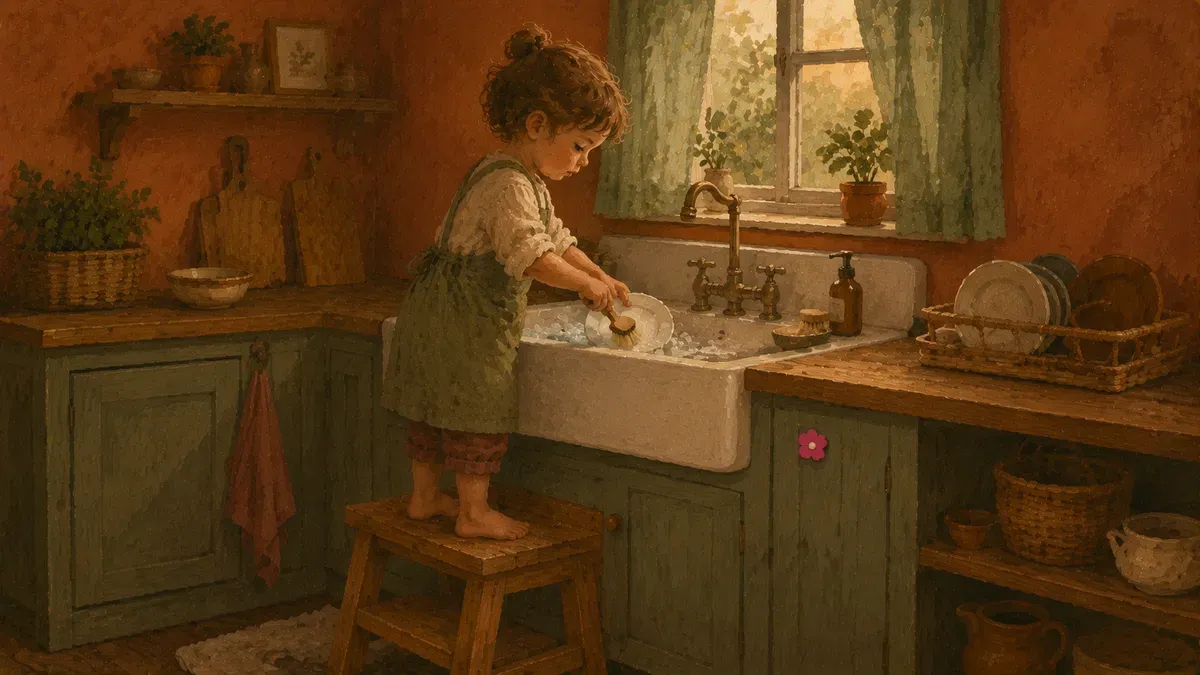
The shift to watch for: they can now carry a task start to finish and clean up after themselves, and the cleanup is half the point. For a longer list of jobs that fit this stage, my montessori activities for 3 year olds breakdown sorts them by skill.
Don’t over-engineer it. The dishes are already dirty and the table already needs wiping. Hand them the work you were about to do anyway and let them finish it, even when it’s slower.
The Materials You Actually Need (and What to Skip)
Here’s the part nobody selling you a pricey wooden starter set wants to say out loud: you already own most of what you need. Practical life runs on real tools, not toys. Child-sized versions of the things you already use every day.
- Small pitcher
- Sponge cut to toddler size
- Sturdy glass (yes, a real one)
- Metal spoon
Montessori practical life materials lean on wood, metal, glass, and fabric over plastic, partly because they’re real, partly because a glass that can actually break teaches care in a way a sippy cup never will. Child-sized matters here for a plain reason: tools that fit small hands frustrate them less, so they stay with the work.
That’s the quiet genius: a built-in control of error.
Pour too fast and water hits the table. The spill is the feedback, no correction from you required. The child sees it, slows down, tries again. Plastic toys that beep and light up do the opposite; they do the noticing for the kid, so there’s nothing left to figure out.
Which brings me to what to skip. The plastic baby activity center (the saucer ringed with spinning, beeping attachments) is the thing I’d quietly pass on. The kid mashes buttons and nothing real happens. Practical life is the opposite: one clear job, a real result, purposeful work that actually goes somewhere.
So how do you set it up?
- A low open shelf the child can reach
- A few trays out at a time, each holding one activity
- Rotate what’s on it as interest shifts
That’s the whole prepared environment. Not a themed playroom, just a tidy spot that says “this is yours, you can get it yourself.”
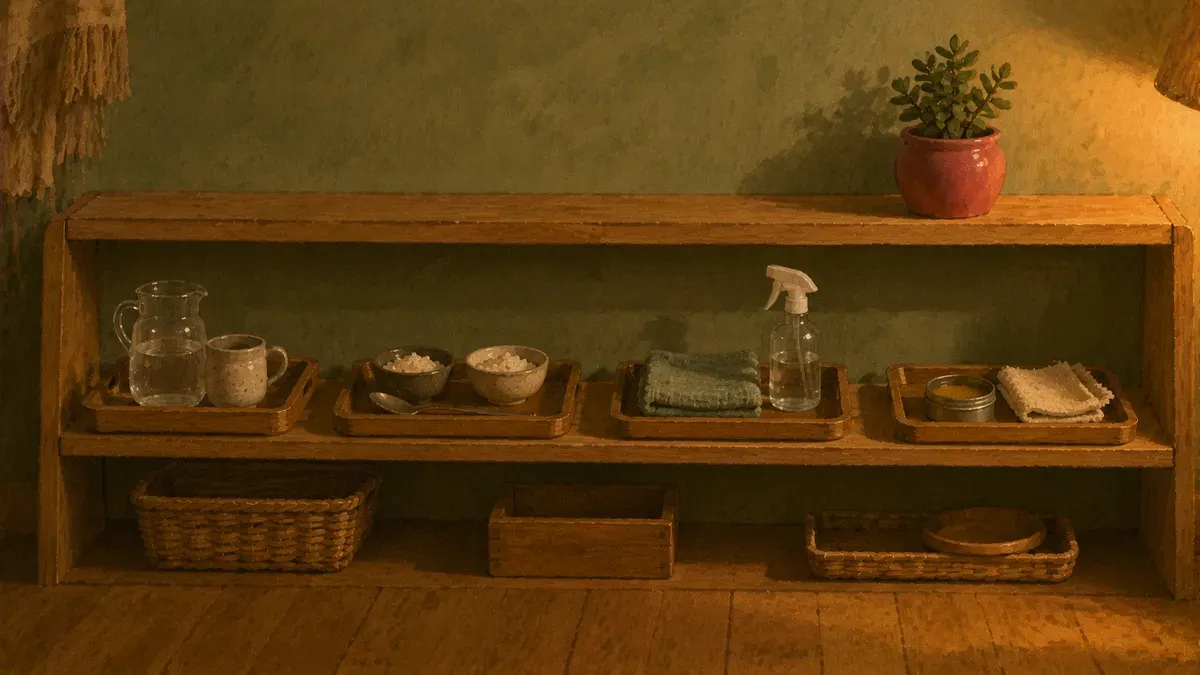
Start with the pantry: rice, a funnel, two bowls, a spoon. Add a real cloth for wiping and a child-sized pitcher when they’re ready to pour. If you’d rather print ready-made trays by age, my montessori activities printables lay them out, and the montessori self care activities go deeper on dressing and hand-washing. Buy the shelf, skip the saucer, and let the pantry do the rest.
Found this useful? Save it for the next rough afternoon.
Questions parents ask me about this
What are Montessori practical life activities, and which ages benefit most?
Real household tasks (pouring, wiping, folding, food prep) that give children purposeful work with their hands and their environment. Every age from about 12 months through 5 years benefits, but toddlers between 18 months and 3 years are often in the sweetest spot. The activities build concentration, coordination, and independence as natural byproducts of just doing the job.
Can you do Montessori practical life at home without buying special materials?
Yes, completely. A pitcher, a bowl, dry rice from the pantry, and a cloth are enough to run most of the core activities. The materials Montessori schools use are thoughtfully sized and plain, but a small real cup, a spreading knife, and a low shelf serve the same purpose. Start with what you own before buying anything.
How long should a single practical life activity hold a toddler's attention?
Two to five minutes is completely normal for a 12-to-18-month-old; older toddlers and preschoolers may stretch to 10 or 15 minutes, especially with a task that has a clear start and finish. The goal is not duration. It's that the child chose the work, repeated it, and put it away. A two-minute session still counts.
What's the difference between practical life and sensorial Montessori activities?
Practical life covers real household tasks: pouring, sweeping, washing, food prep, dressing. Sensorial activities are specifically designed to isolate one quality (weight, texture, color, sound) so the child can compare and categorize it. Practical life is the foundation; sensorial builds on the focus and fine motor control that practical life develops.
Do practical life activities work for sensory-sensitive or neurodivergent children?
Many do, with some adjustment to materials and setup. Sensory-seekers often take to water play, heavy carrying tasks, and kneading dough. Sensory-avoiders may need dry-only materials, shorter sessions, and less visual clutter on the shelf. Follow your child's lead on what they will touch and for how long. The framework adapts.
How many practical life activities should be on the shelf at once?
Three to five trays at a time is a workable range for most toddlers and preschoolers. Too many choices stall engagement. A child who walks away immediately often just needs fewer options. Rotate when interest drops, not on a fixed schedule.
What are the most common mistakes parents make when starting practical life?
Stepping in to finish the job because it is taking too long. The slow, imperfect attempt is exactly where the learning happens; rescuing the child cuts that short. The other common one is skipping real tools. Plastic imitations that do not function properly frustrate a child who can feel the difference between a toy broom and a real one.
Written by
Nora Hayes
Mom of two and a former preschool aide. I share the screen-free sensory play and calm-down ideas I test at my own kitchen table, plus what the moms in my little meet-up swear by. A parent passing on what works, not a doctor or a therapist.
More about NoraKeep going
All Montessori-
 Montessori
Montessori Activities for 3 Year Olds That Build Skills
At 3, kids crave real work, not toys. These Montessori activities for 3 year olds build focus, coordination, and independence. Start one today.
-
 Montessori
Step by Step Montessori 3-Part Cards Walkthrough
Confused by 3-part cards? This step by step Montessori walkthrough shows the exact order to present them so your child matches and self-corrects.
-
 Montessori
Sensorial Montessori Activities That Calm Toddlers
Sensory-seeking toddler heading for a meltdown? These 10 sensorial Montessori activities calm and refocus little hands fast.
-
 Montessori
Practical Life Montessori: 20 Kitchen Activities
Practical life Montessori starts in your kitchen. Get 20 no-buy activities using spoons, jars, and bowls you own. Set up a tray today.