Montessori Environment at Home: No New Toys Needed

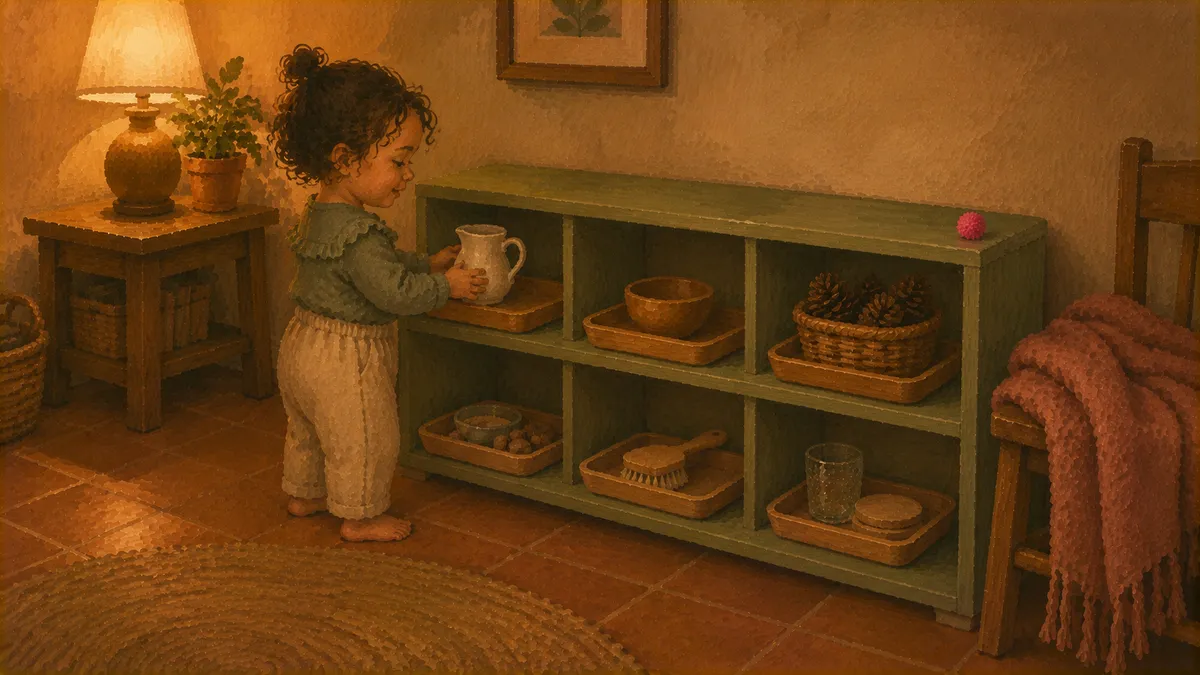
Yes, you can build a real Montessori environment at home with the wooden spoons, baskets, and bowls already sitting in your kitchen. I’m Nora Hayes, a former preschool aide who has run hundreds of these setups with my own two kids, and the secret was never the toys, it was the shelf and the few things on it.
This guide covers what a Montessori space actually is, the handful of principles behind it, why fewer materials beat a crowded toy box, and how to get your first shelf set up tonight without buying a thing.
What a Montessori Environment Actually Is
A Montessori environment is a space set up so your child can do things by themselves, on purpose. Below is what that really means, and why it works just as well in your living room as in any school.
The Prepared Environment in Plain Terms
Strip away the buzzwords and a Montessori environment is a room arranged for a small person instead of a tall one.
- Things sit low.
- Things sit within reach.
- A child can get the activity, do it, and put it back without tugging on your sleeve.
Maria Montessori landed on this after watching kids fumble in a world built for grown-ups. She noticed children experience frustration in an adult-sized world, so she scaled the furniture down and put the shelves where little hands could find them. She called the result the prepared environment.
That is the whole idea, and it is genuinely child-centered. You prepare the space ahead of time so the child can lead the activity. The point is independence, not perfection. When the setup does the heavy lifting, self-directed play follows on its own, and that quiet stretch of focus is what people mean when they tie Montessori to child development.
A prepared environment is just a space scaled to your child, set up so they can choose, use, and tidy on their own.
Why It Works at Home, Not Just in a Classroom
Here is the part nobody tells you: none of this needs a classroom. The Montessori Foundation says outright that the same principles apply to the home environment, and the requirements are plain. Child-sized table, a chair your kid can climb into alone, low shelves they can comfortably reach. That is it. No specialist gear.
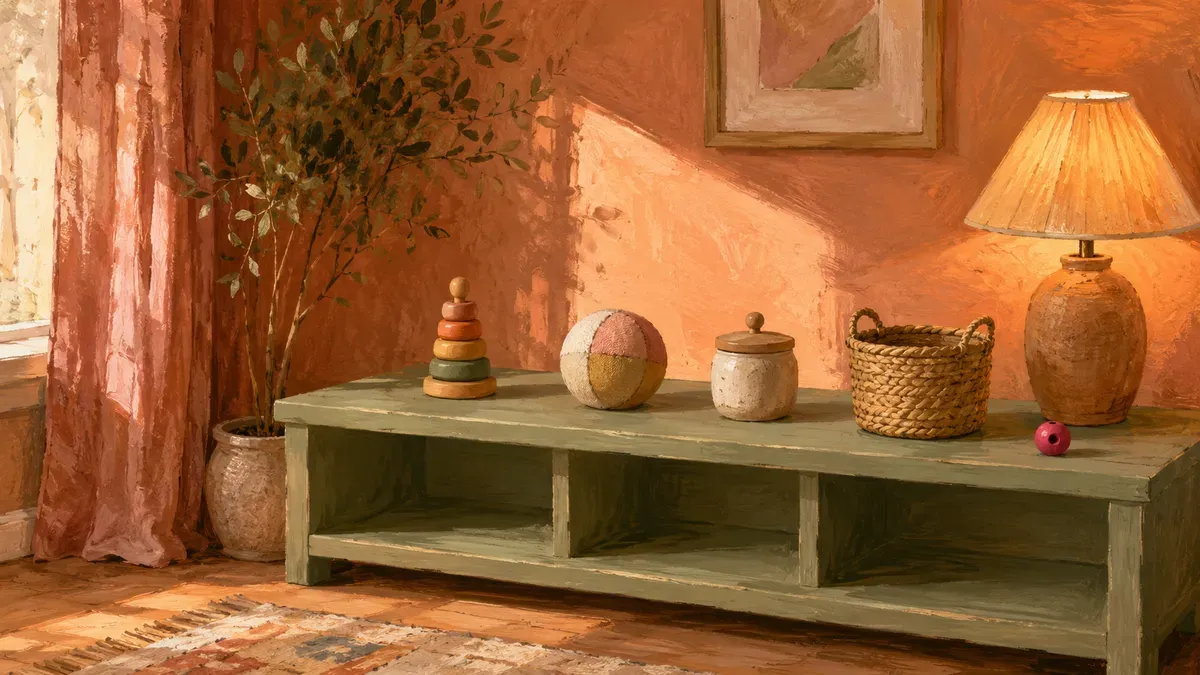
What makes it Montessori is not the price tag, it is access and intention. A bottom drawer your three-year-old can open counts. A corner of the bookshelf, cleared to a few things, counts. The magic was never in the equipment.
It also runs on a quiet balance Montessori folks call freedom within limits. You set the structure, which things are out and where they live, and inside that the child picks. That bit of order is exactly what lets child-led learning happen without the whole room sliding into chaos.
Start with one shelf and a handful of things they already love. If you want the full walk-through, my guide to what is Montessori at home covers the first setup step by step, and you can pull ideas from these montessori activities printables when you are ready to swap things in.
The Six Principles That Make It Work
Strip Montessori down to the parts that actually do the work and you get six ideas: freedom, order, beauty, nature, movement, and self-correction. Here is how the three that matter most at home play out on a real shelf with a real kid.
Freedom Within Limits and Order
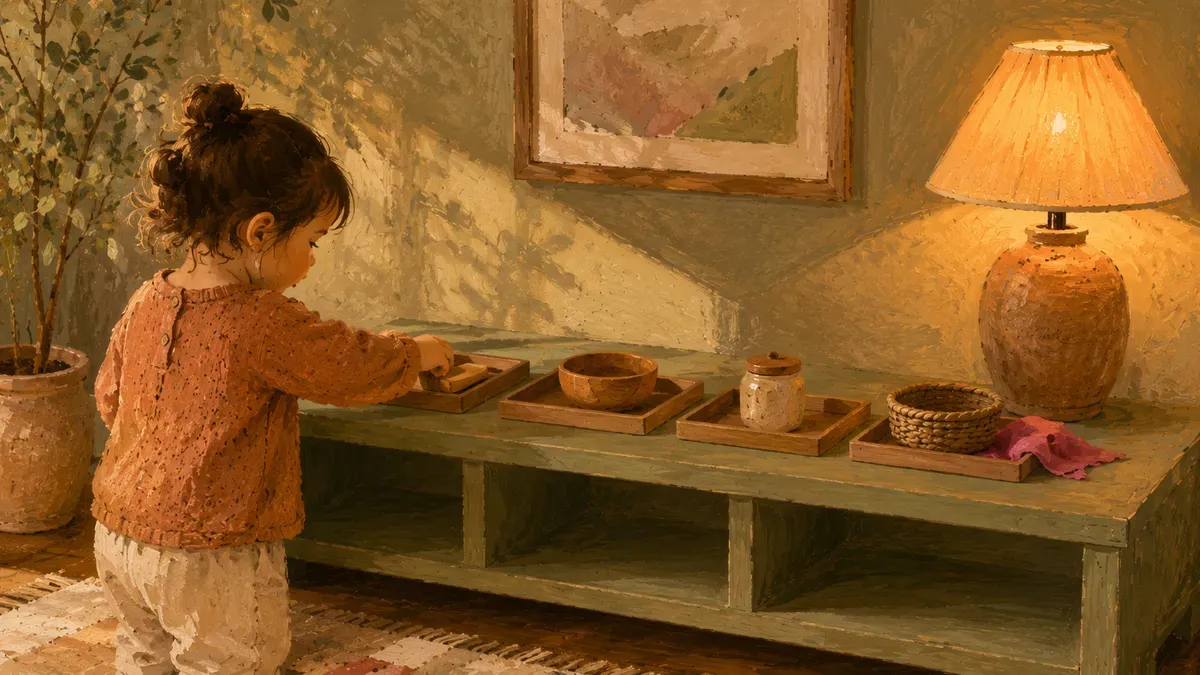
Give a toddler the whole toy bin and they freeze. Give them four trays they can reach and they pick one. That is the structure doing its job: you decide what is on the shelf, the child chooses inside it.
The freedoms are specific, not a free-for-all. A peer-reviewed paper indexed in ERIC names four built into the prepared space, and you can read the research on child-led learning and the prepared environment yourself: freedom to move, to choose, to communicate, and to repeat the same work as long as they want. The limit is plain. They cannot hurt themselves, anyone else, or the room.
Order is what keeps that calm:
- Every tray has one home and goes back to the same spot.
- That predictability lets the child focus on the work, not on hunting for it.
And it is why you follow your kid’s pull toward one tray instead of steering, which is the heart of child agency, and the maria montessori theory behind following the child and trusting their lead.
Beauty, Simplicity, and Nature
Fewer things, better things. That is the part people skip when they picture Montessori as expensive wooden everything.
The principle is real objects over plastic clutter.
- Natural materials, simple things: a wooden bowl, a small glass jar, a basket of pinecones, a tray with one job.
- A calm shelf reads as calm to a kid who gets overwhelmed fast.
- Real things they can touch and feel, that’s the minimalism doing its quiet work.
And fewer is not just an aesthetic. A University of Toledo study put toddlers in a room with four toys, then sixteen, and the four-toy room won: longer stretches of play and more inventive ways of using each toy. Pile on the options and play gets shallow and frantic. Pare it back and they go deep. Three or four things on the shelf, the rest in a closet on rotation. That is the move.
Movement and Self-Correction
A Montessori shelf assumes the kid will get up, carry the tray, kneel, pour, spill, and carry it back. Movement is not the disruption. It is the lesson, and it is why the whole setup rewards hands-on learning over sitting still.
The other half is self-correcting materials, the autodidactic ones that tell the child they are wrong without adult commentary.
- A puzzle piece that only fits one way.
- A jug that overflows if they pour past the line.
The feedback is built in, so the learning runs on their own steam instead of a running commentary of “not like that.”
This is more than a nice idea. A 2025 Frontiers in Education study of a Montessori classroom found kids controlling what, how, when, and where they worked, run by materials that gave their own error feedback without an adult stepping in. Your job shifts. You set up the tray, then you sit on your hands and let the spill teach the lesson.
What Makes a Toy ‘Montessori’ (and What You Already Own)
There’s no badge, no factory stamp, no committee that blesses a toy as the real thing. So before you spend a dime, here’s the short list of what actually earns the label, and then a tour of the stuff already sitting in your kitchen drawers.
The Traits of a Montessori Material
What is a Montessori toy, really? It comes down to a quick checklist, and a wooden spoon passes it as easily as anything in a $40 box. The traits that matter, drawn from guidance on age-appropriate play and development:
- One clear job. It does a single thing, so your kid isn’t fighting flashing lights and a song to figure out the point.
- Real, not pretend. Things from the actual world over fantasy and cartoons.
- Self-correcting. The material shows the mistake on its own. A peg that won’t fit the hole tells the truth without you saying a word.
- Natural where it can be. Wood, fabric, metal. The natural aesthetics part isn’t just pretty, it gives little hands more to feel.
- Child-sized. Light enough to carry, small enough to grip.
That last one is why so much hands-on learning starts in the kitchen. A toddler can lift a measuring cup. They cannot lift the stand mixer.
Here’s the freeing part: there’s no certification, no official Montessori seal anywhere. Any household object that hits those marks counts. The sensorial work, the pouring, the sorting, it all qualifies if the item does its one honest job.
Household Objects That Already Qualify
Walk through your house and you’ll trip over Montessori materials you didn’t know you had.
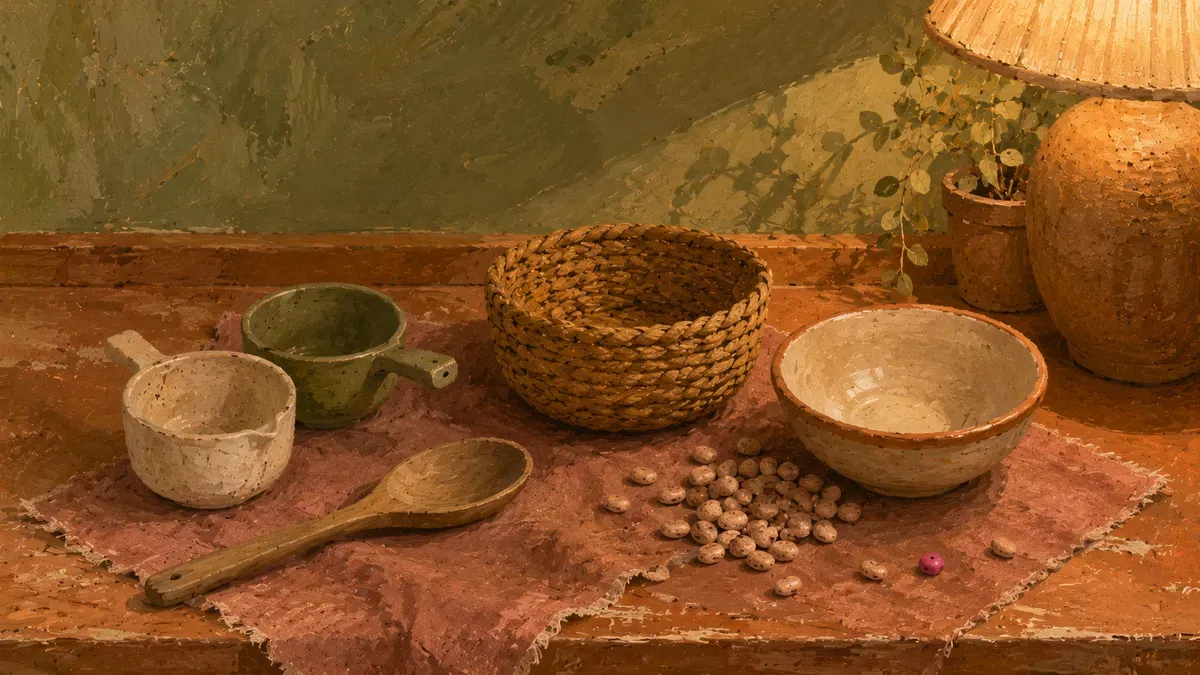
The kitchen is the goldmine. Practical life is just real chores, scaled down, and you already own every prop. Two small bowls and a spoon become left-to-right spooning. A pitcher of dry beans poured into another pitcher is classic dry pouring, the kind Montessori Academy lists as a starter activity done with common kitchen items, no specialist purchase needed. A damp sponge and a puddle becomes wiping practice.
The bathroom holds more. A small mirror, a hand towel they can fold, a cup for rinsing. Child-sized by accident.
The craft drawer rounds it out. Wooden clothespins clipped onto a basket rim build a real pincer grip. Cardboard rings, fabric scraps for matching, a muffin tin for sorting buttons by color. That’s sensorial work for free.
The wins hiding in your cupboards beat anything you’d order online, and if you want to see how parents keep these everyday objects fresh on the shelf, that’s the whole idea behind what are montessori toys when they live in your own kitchen. Buy nothing. Shop your own house first.
Setting Up the Shelf With What You Have
You don’t need to buy a single thing to start. Here’s how to pick the spot, load three or four activities, and keep the shelf interesting for months by swapping instead of shopping.
- Pick a low shelf or bookshelf your kid can already reach.
- Load three or four trays, each with one task and everything it needs.
- Rotate activities from a closet bin when interest fades.
Pick the Shelf and the Spot
The shelf you need is probably already in your house, holding board books or sitting empty in a closet. A low bookshelf turned on its side, a cube organizer, even a sturdy cardboard box with the flaps cut off will do the job.
The one rule that matters: your kid has to see and reach everything without you. Low shelves at their level, not yours. For a 1 to 3 year old, Montessori furniture guidance puts the top of the shelf at roughly 24 inches, never above their eye line, so the whole prepared environment reads as theirs and not a grown-up cabinet they’re allowed to borrow from.
- Next to the couch or in the corner of their room, wherever they drift on a normal afternoon.
- Not in a room nobody uses. A shelf out of sight gets ignored.
Keep it sparse and tidy. The order is the point here, not the decor. Empty space around each tray is what makes a child-sized setup feel calm instead of cluttered, and a little minimalism does more for play than a packed shelf ever will.
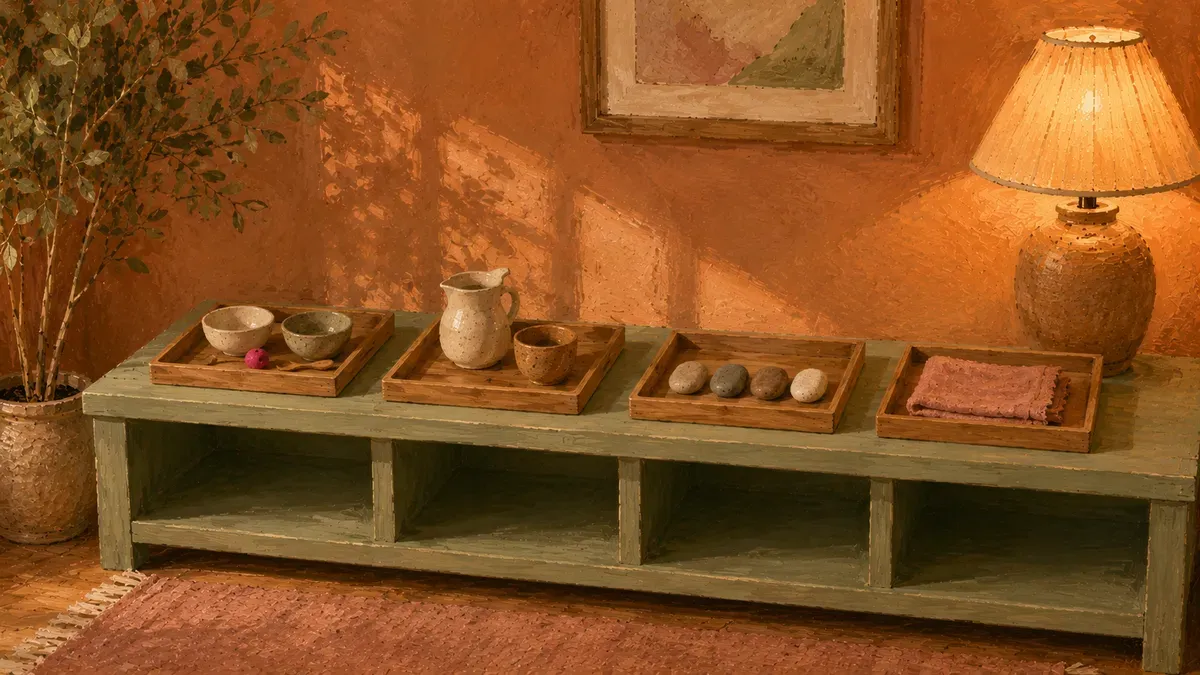
Choose Activities and Arrange Them
Three to four activities is the right number. Enough to choose from, few enough that the shelf doesn’t turn into visual noise. Aim for a spread across practical life and sensorial, the two buckets that carry most of toddler play.
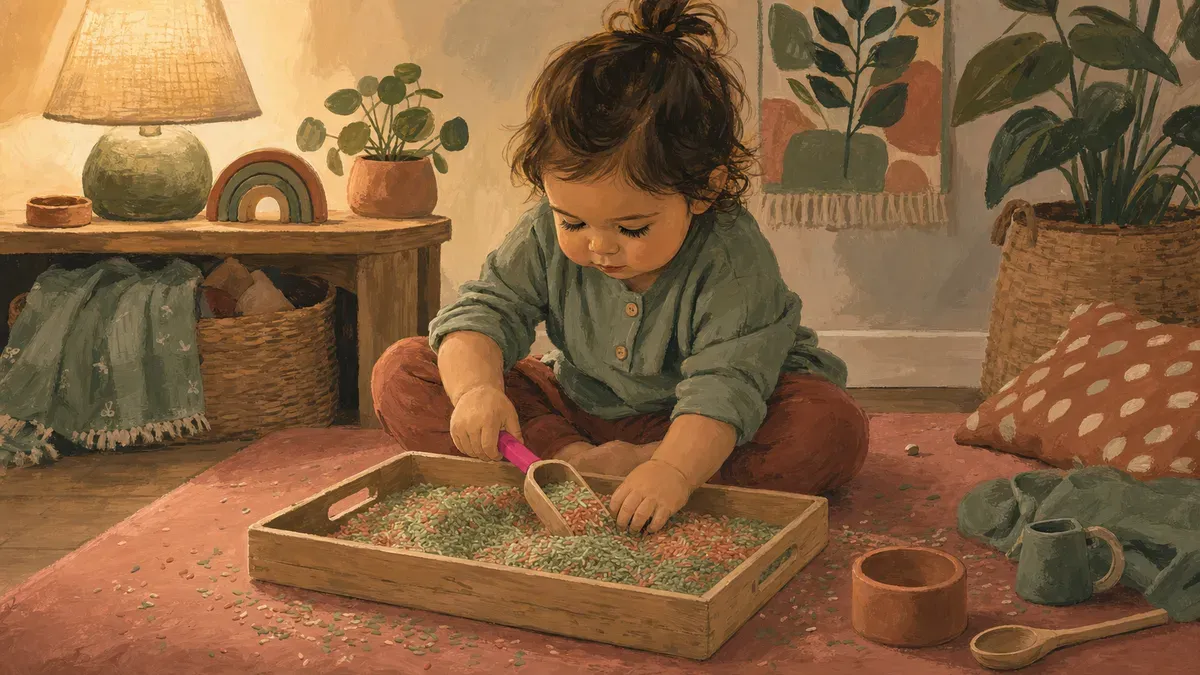
- Practical life: spooning beans between two bowls, dry-pouring rice from a small pitcher, sponging water from one dish to another, transferring pom-poms with kitchen tongs
- Sensorial: a basket of fabric scraps, a sound-matching set of filled jars, smooth stones to sort by size
Most of mine over the years came straight from the kitchen drawer, and you can pull a dozen more from our montessori practical life toys for toddlers who won’t sit still.
Now the part people skip. Give each activity its own tray or small basket, with everything it needs sitting together, so your kid can carry the whole job to a table or the floor in one trip. One tray, one task. That’s what makes hands-on learning possible without you hovering.
Arrange the trays left to right, easiest on the left, hardest on the right.
That order isn’t fussiness. A toddler reads the shelf like a path, and starting at the simple end builds the confidence to reach the trickier tray. Spooning before pouring, pouring before tongs. The shelf itself does the teaching.
Rotate Instead of Adding
A few weeks in, you’ll notice a tray your kid stops touching. That’s not a sign to buy more. That’s your cue to rotate.
Keep most of your activities in a closet bin and put only a handful out at a time. When interest in one fades, swap it for something resting in the bin. Three things happen when you rotate consistently:
- The shelf stays small and calm, not piled up.
- A forgotten tray that disappears for a month comes back looking brand new.
- Novelty costs nothing when you’re cycling through what you already own.
Follow your kid’s lead on the timing. Bored of it, mastered it, or just done for now, rotate it out and bring back an old favorite. If you want the nuts and bolts of how parents keep a shelf fresh without it becoming a chore, that’s the full guide on what are montessori toys and how rotation actually works. One shelf, a closet bin, and a swap when things go quiet. That’s the whole system.
When the Shelf Sits Untouched
You set it up, stepped back, and your kid walked right past it. Before you decide the whole thing flopped, figure out why the shelf went quiet, then make one small change and watch again.
Common Reasons a Shelf Gets Ignored
A shelf that gets ignored is almost never a sign your child isn’t “into” it. It’s usually a setup problem you can read if you sit back and watch.
The usual suspects are simple.
- Too many trays out, so nothing stands out and everything gets skipped.
- An activity that’s too hard, so the child tries once and quits in frustration.
- One that’s already mastered and boring.
- Placement: the shelf parked somewhere they never wander, with no visual order to pull them in.
And often nobody ever showed them how the tray works.
Maria Montessori called the teacher’s real job watching, not stepping in. She wrote that following how a child moves from disordered to spontaneous, ordered movement “is the book which must inspire her actions.” That’s your job here too. Be the observer.
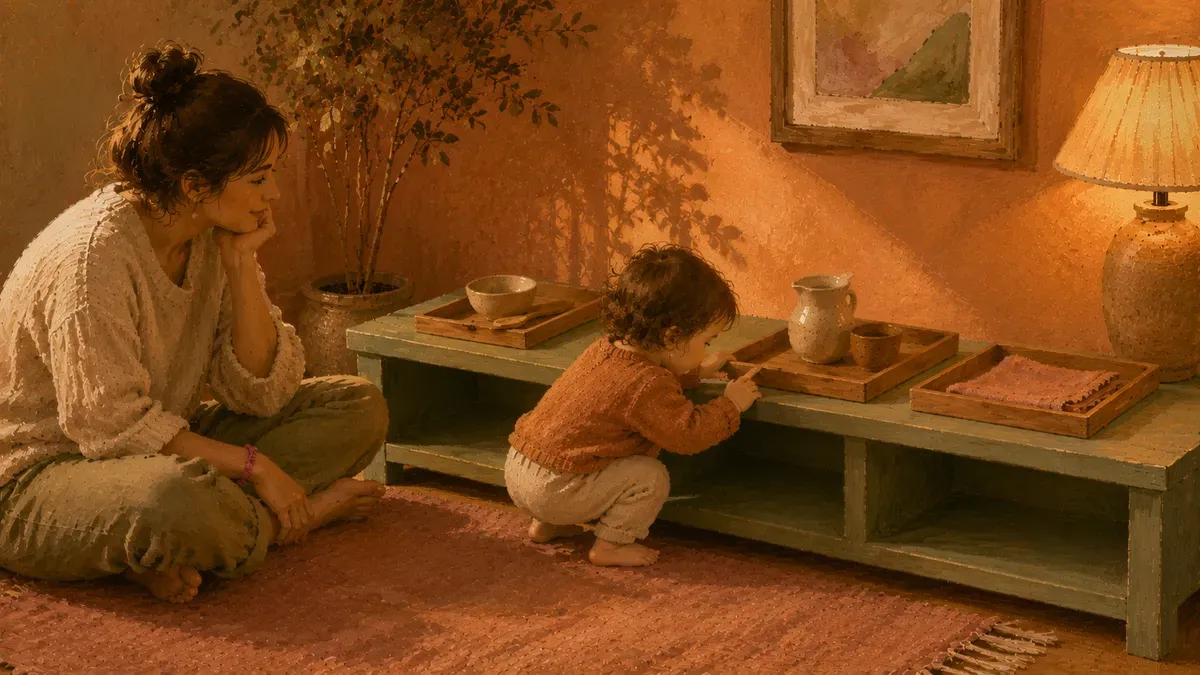
Sit a few feet back and notice without hovering. Does she glance at a tray and turn away? Too hard, or too dull. Does she dump everything in thirty seconds and bolt? Too much out. Reading the child beats guessing every time, and it tells you exactly which lever to pull. The freedom to choose only works when the choices are right.
Small Fixes That Re-Engage the Child
None of the fixes are big. That’s the point.
Start by pulling trays. Clear the shelf down to three or four things and let one win the spotlight, the same fewer-is-richer idea behind cutting toys down in the first place. Less out, more used.
Then model it once. Sit down, do the activity slowly, hands quiet, no narration, and walk away. No “now you try.” Most kids drift over the second the pressure’s gone, which is the independence you wanted all along.
Still nothing? Two more levers to try:
- Rotate in something fresh from the closet bin.
- Lower the shelf so trays sit right at eye line, reachable without help.
If it stays quiet after all that, there’s a deeper dive in why your montessori shelf sits untouched, plus our full library of Montessori activities and printables when you want fresh trays to swap in. One change at a time. Watch, adjust, try again tomorrow.
Found this useful? Save it for the next rough afternoon.
Questions parents ask me about this
How do you create a Montessori environment at home affordably?
Start with what you already own. A low shelf or cube unit at your child's eye level, three or four simple activities pulled from your kitchen or bathroom, and a cleared floor space is the whole setup. The core idea is access and intention, not a specific product line. Start with what is already in the drawer before opening a browser tab.
Do you need to buy special Montessori toys to start at home?
No. Most kitchens already have the materials for a handful of solid activities: dry goods for spooning and pouring, a small sponge, a basket, a set of measuring cups. The criteria are practical: one clear job, a natural material if possible, and something the child can use without your help. A wooden spoon and a bowl of dried pasta qualifies. A branded toy with that label doesn't automatically.
How many toys should be on a Montessori shelf at once?
Aim for three to four activities at a time, each on its own tray. That number keeps the shelf readable for a young child and reduces the overwhelm that shuts down independent play. The rest go into a closet and rotate in when interest fades, so there's always something that feels fresh without a trip to the store.
What age can you start a Montessori environment at home?
You can adapt the approach from infancy, though the shelf setup makes the most practical sense once a child is pulling to stand or cruising, usually around eight to ten months. At that point they can reach a low shelf, make a choice, and carry an object. The activities change as they grow, but the structure stays the same: a few choices at their level, accessible without asking.
How often should you rotate the toys on a Montessori shelf?
Watch the child, not the calendar. When they stop going to the shelf on their own, or when they grab something and set it down in thirty seconds, that's the cue to swap something in. For most kids that might be every one to two weeks, but some setups hold interest for a month. Novelty matters more than a fixed schedule.
Can plastic or store-bought toys be part of a Montessori environment?
Yes, with some filtering. The question isn't the material, it's whether the object does one clear thing and lets the child operate it independently. A plastic pitcher that pours well works. A toy with lights, sounds, and four different modes that entertains without requiring thought from the child doesn't fit the approach. Natural materials are preferred for feel and durability, but plastic isn't automatically disqualifying.
Written by
Nora Hayes
Mom of two and a former preschool aide. I share the screen-free sensory play and calm-down ideas I test at my own kitchen table, plus what the moms in my little meet-up swear by. A parent passing on what works, not a doctor or a therapist.
More about NoraKeep going
All Montessori-
 Montessori
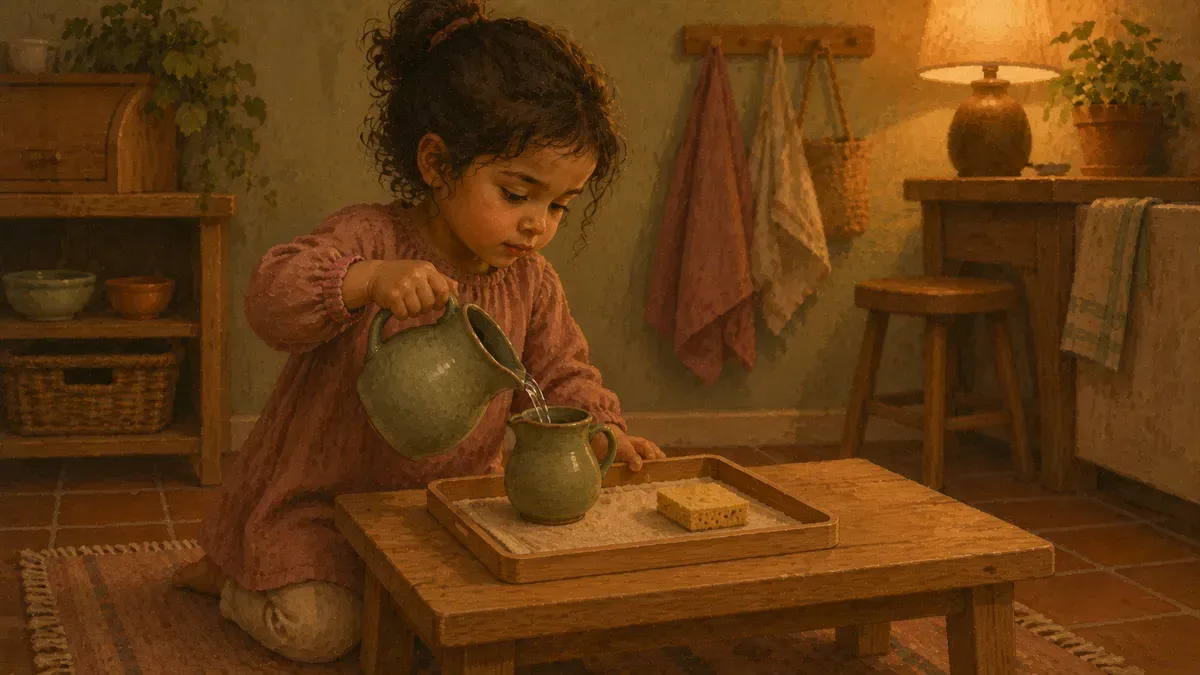
Montessori Activities for 3 Year Olds That Build Skills
At 3, kids crave real work, not toys. These Montessori activities for 3 year olds build focus, coordination, and independence. Start one today.
-
 Montessori
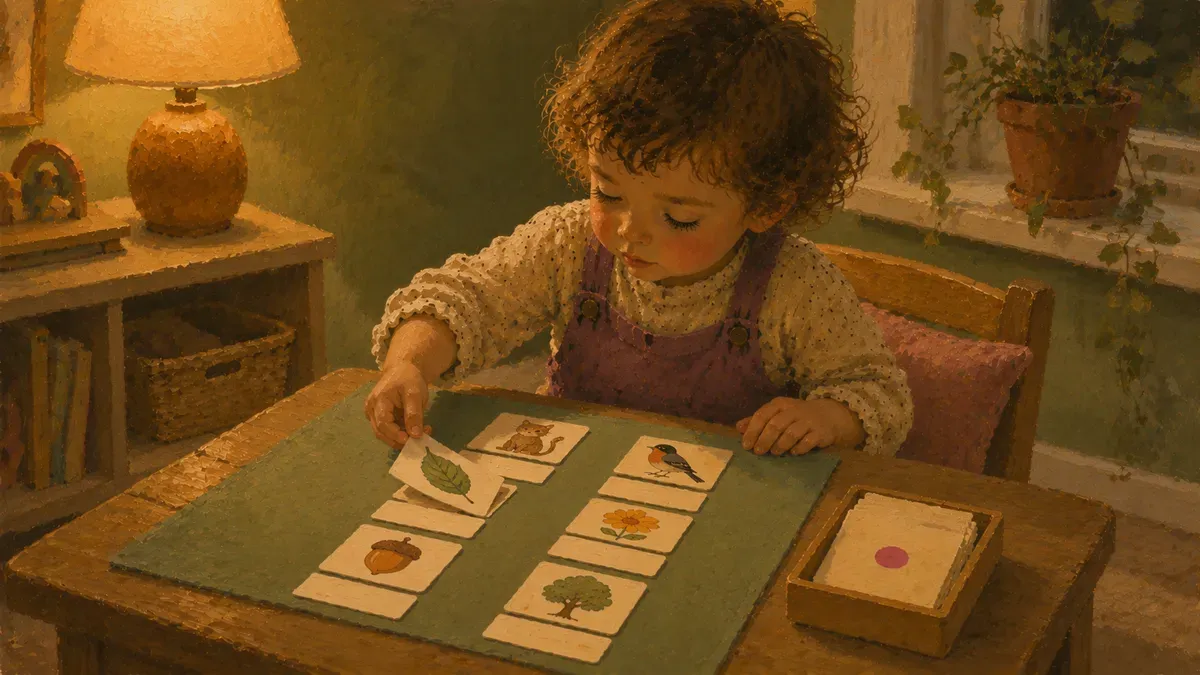
Step by Step Montessori 3-Part Cards Walkthrough
Confused by 3-part cards? This step by step Montessori walkthrough shows the exact order to present them so your child matches and self-corrects.
-
 Montessori
Sensorial Montessori Activities That Calm Toddlers
Sensory-seeking toddler heading for a meltdown? These 10 sensorial Montessori activities calm and refocus little hands fast.
-
 Montessori
Practical Life Montessori: 20 Kitchen Activities
Practical life Montessori starts in your kitchen. Get 20 no-buy activities using spoons, jars, and bowls you own. Set up a tray today.