Why We Left Montessori (Almost): 5 First-Year Mistakes

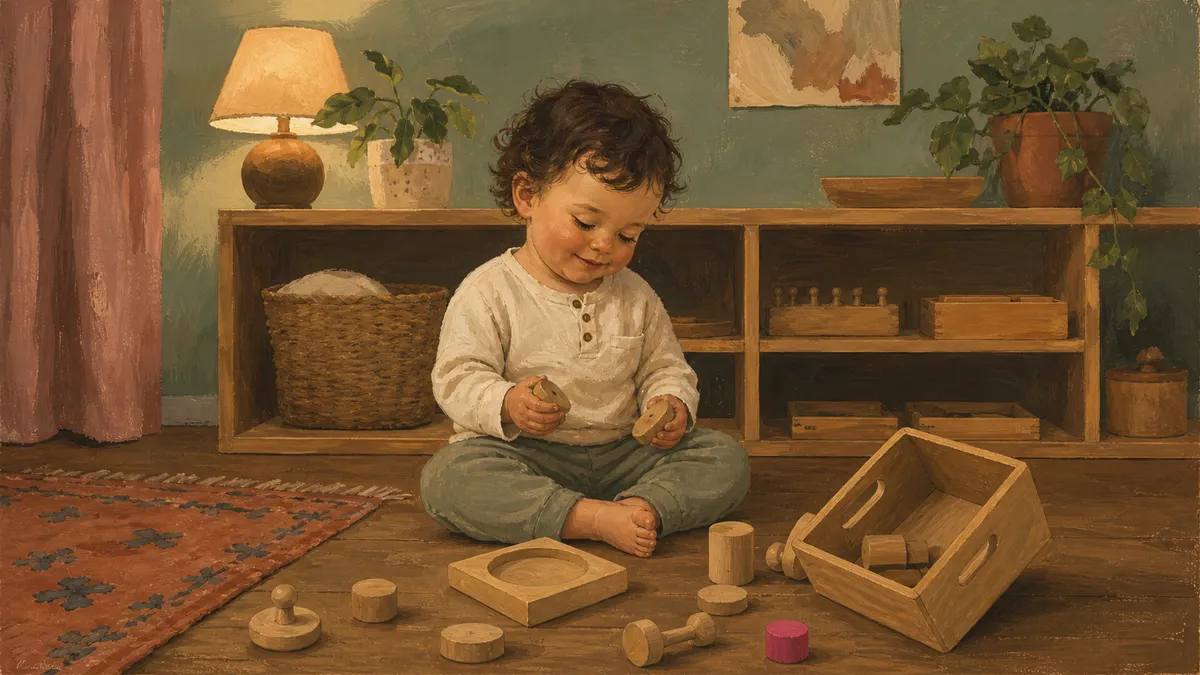
Most families who left Montessori at home didn’t leave because the method failed; they left because a few beginner mistakes piled up and wore them down. I’m Nora Hayes, a former preschool aide, and we were six months in with my autistic son and his toddler sister before I understood why it kept falling apart. Here are the five mistakes that nearly made us walk away, and why most are quick fixes, not reasons to quit.
The Real Reason Most Families Walk Away in Year One
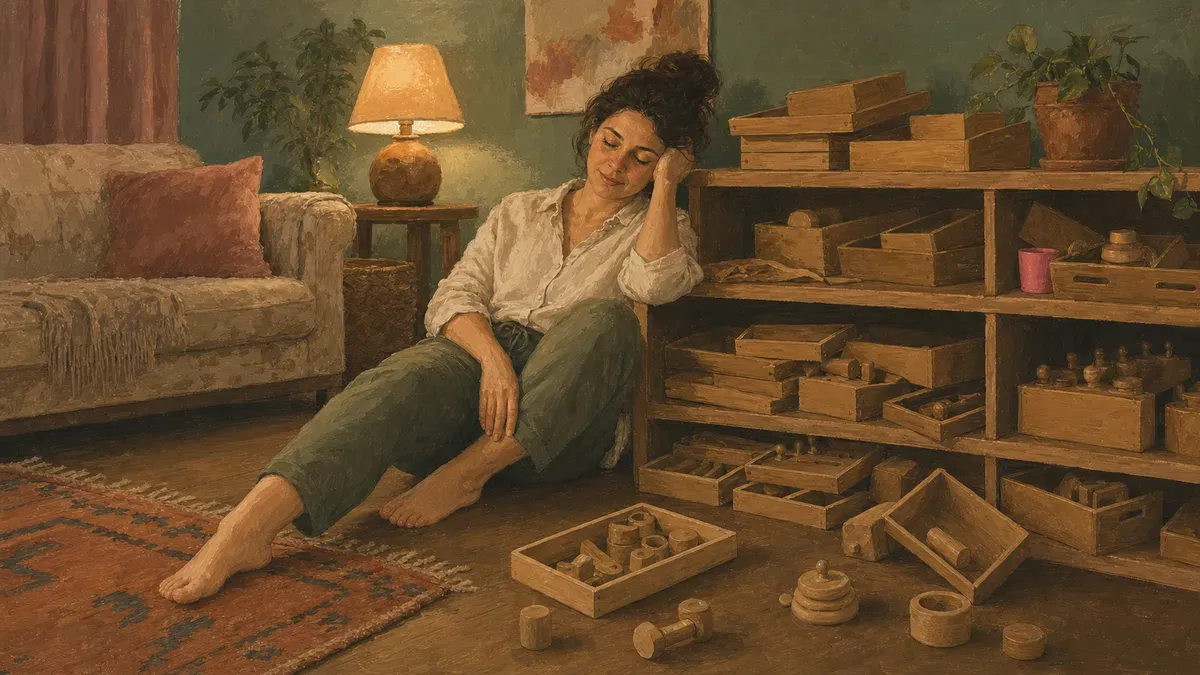
Ask why families leave, and the honest answer is almost never the Montessori method itself. Families decide to leave the school (or the method at home) because the gap between what they expected and what they’re actually living feels unbridgeable. The child-led education philosophy sounds liberating in a book. In a real living room with a three-year-old dumping sand on the dog, it can feel like controlled chaos with a fancy name.
The version most of us encountered first was the beautiful-shelf version:
- Matching wooden materials on low shelves
- Little hands reaching for exactly what they need
- Calm, purposeful work
That’s a real Montessori philosophy in action, but it’s also the finished version after years of work, not the starting point.
What nobody tells you is how much scaffolding happens before those quiet shelves run themselves. And when real life doesn’t match the ideal, most parents conclude they’re doing it wrong rather than that they’re just doing it early.
The families who stay aren’t doing it better. They tripped over the same early mistakes and figured out which ones actually matter.
That frustration is the real exit ramp. Not a flaw in the Montessori method, and not a mismatch with your child. Just a handful of beginner missteps that look fatal but aren’t. A good set of montessori activities printables can help you get back on track without reinventing everything from scratch.
Here are the five, one by one.
Mistake 1: Buying the Whole Shelf Before Watching My Child
The shelf looked perfect: twenty trays, every spot full. Eli ignored every one.
Why an Untouched Shelf Is a Setup Problem, Not a Child Problem
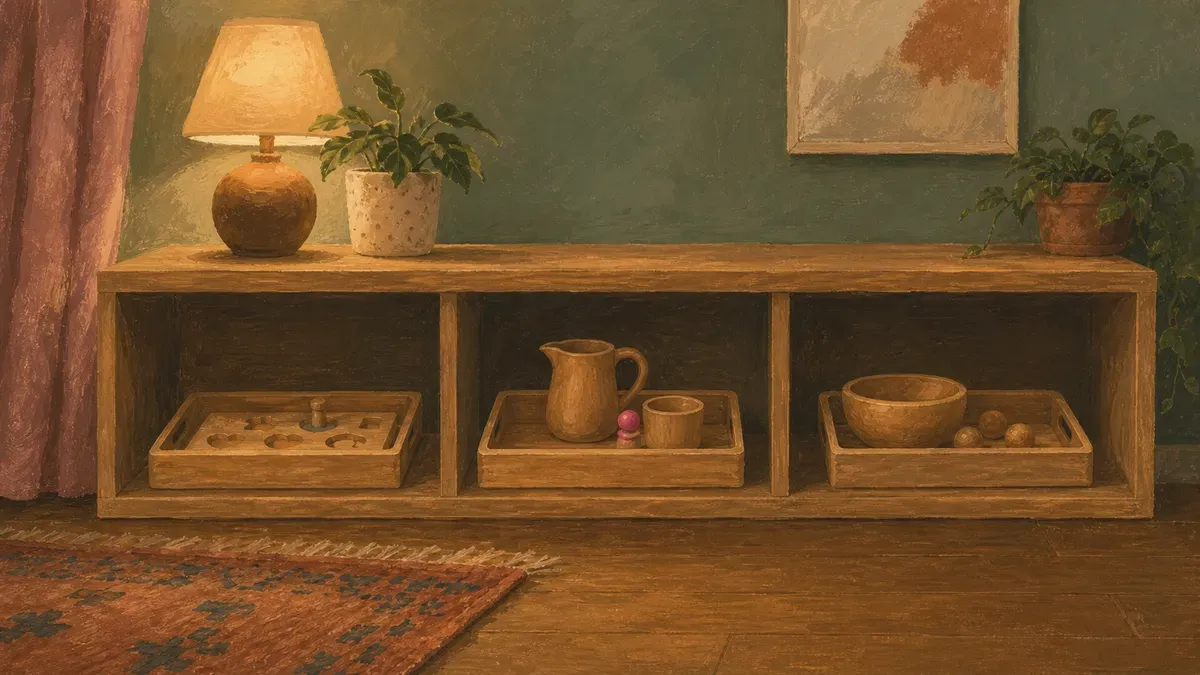
A fully loaded Montessori shelf doesn’t invite a toddler. It overwhelms one. Too many choices and the brain bounces right off all of them. That’s not a kid who rejects Montessori. That’s a setup problem.
University of Toledo research published in Infant Behavior and Development found that toddlers aged 18-30 months played twice as long with each toy, and in more sophisticated ways, when given 4 toys instead of 16. The prepared environment principle says the same thing: Guidepost Montessori describes giving children “the choice between one or two things” rather than infinite possibilities. A cluttered set of open shelves contradicts the method’s own foundation.
Start with three trays. Watch what your child picks up. That observation is the whole job at this stage, and it’s the foundation of how to set up a Montessori environment that actually gets used.
Mistake 2: Skipping Practical Life and Jumping to Pretty Materials
The shelves are set. The observation is happening. And then comes the next stumbling block: buying the pink tower and the sensorial bells before your child can pour water without flooding the table.
Start With Pouring, Sorting, and Self-Care Before Sensorial Toys
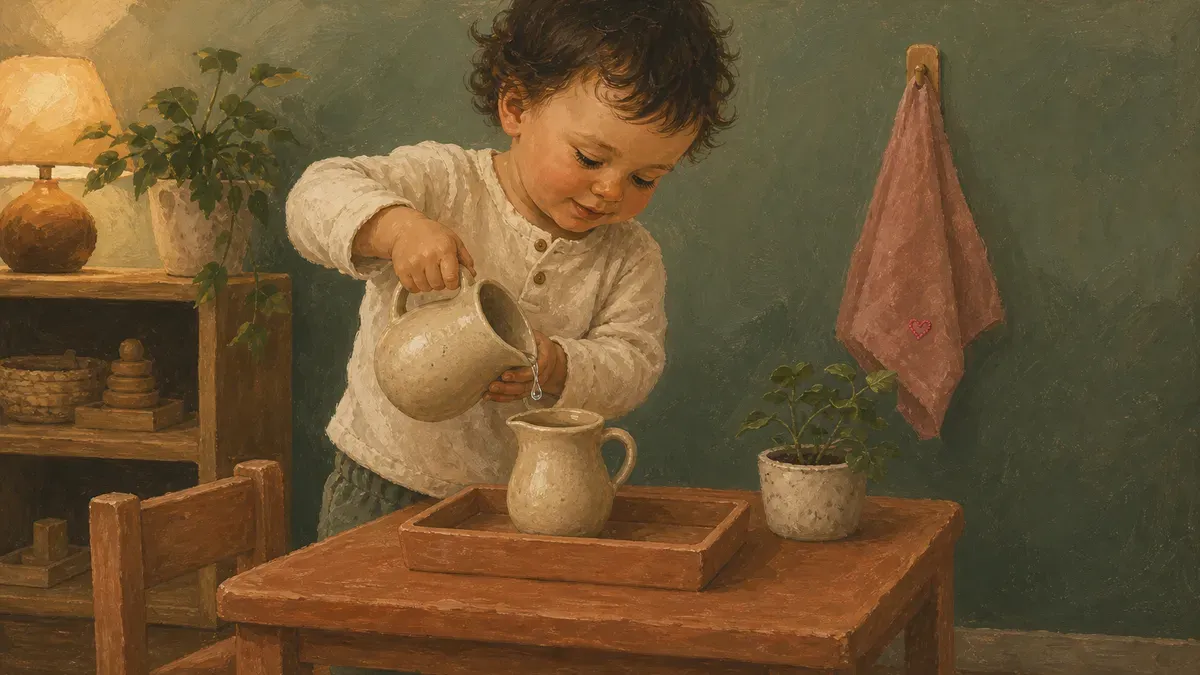
Practical life skills come first in the Montessori sequence for a reason. Pouring, sorting, scrubbing a table, buttoning a coat. These are montessori practical life activities that look ordinary but do something specific: they build concentration. Trillium Montessori describes practical life as developing concentration more than any other Montessori materials, because a child’s attention fixes on a repetitive, purposeful movement tied to a real goal.
That focused attention is what every later material depends on. When a child learns to pour without thinking about how to pour, the sensorial work stops being a physical puzzle and starts being a concept she can actually sit with. She can engage with the concept because the movement is already in her body.
Skip this stage and even the most beautiful shelf sits untouched. Or worse, it gets thrown.
Mistake 3: Reading ‘Follow the Child’ as ‘Anything Goes’
A thrown shelf is usually where this phrase gets misread. The trouble isn’t the child. It’s a misunderstanding that runs straight through the heart of what maria montessori theory really says.
Freedom Within Limits Is the Part Beginners Miss
Maria Montessori’s writing on freedom within limits makes this plain: “to let the child do as he likes when he has not yet developed any powers of control is to betray the idea of freedom.” That’s not a gentle suggestion. It’s the spine of the whole approach, and it’s the part most beginners quietly drop.
The full phrase, as Montessori sources note, is “follow the child, but follow the child as his leader.” Cut the second half and you lose the boundary. What’s left sounds like permission to do anything. But that’s not child-led education. A self-directed learner operates inside a prepared environment with consistent limits: which trays come down, how materials are handled, what happens when something is thrown.
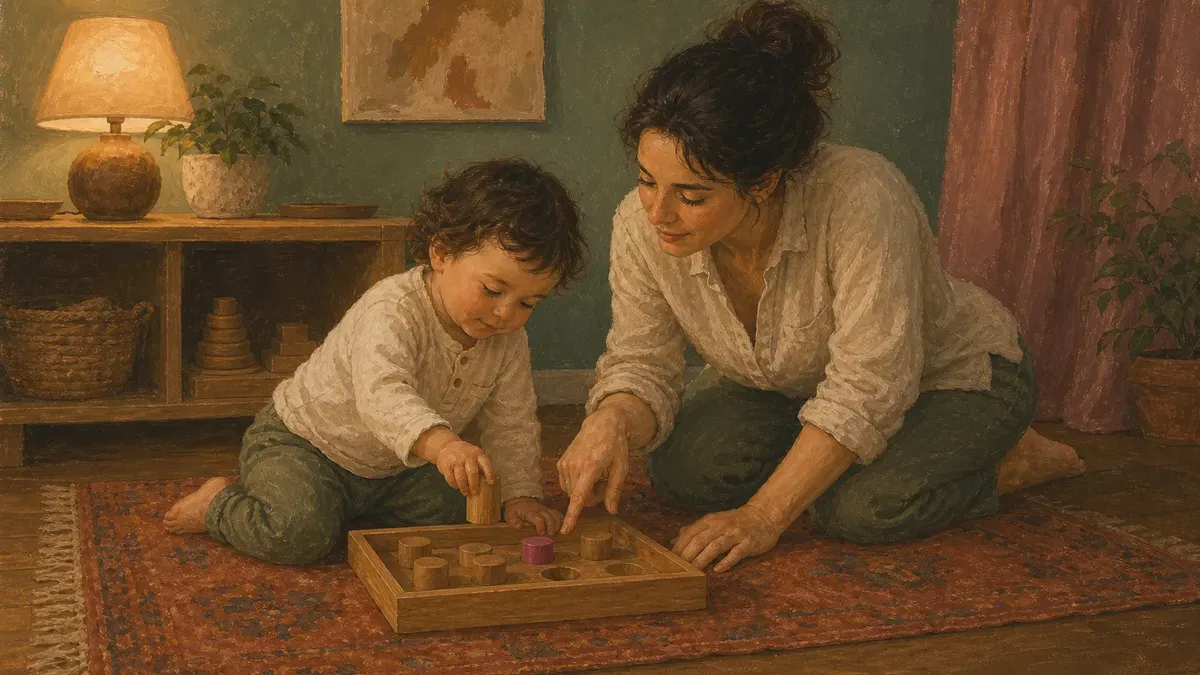
Following your child’s lead means reading what they’re drawn to, not handing them control of the room.
Mistake 4: Expecting Calm Focus From a Toddler Who Throws Materials
The throwing is not the problem. The expectation is.
Throwing and Refusing Are Developmental, Not Failure Signals
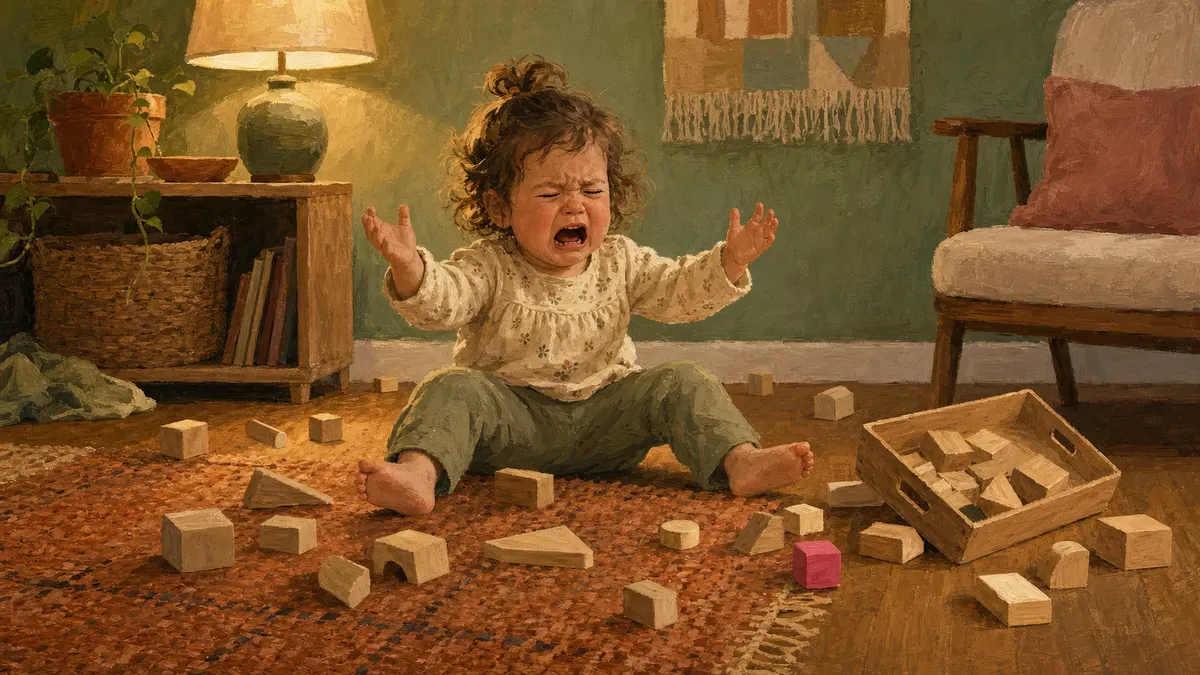
Throwing objects has a clinical name: “casting.” According to Montessori Family Center, it’s developmentally normal from around 9 to 12 months, peaking between ages one and two, as toddlers work out cause-and-effect and motor coordination. A two-year-old doing this at your shelf is not rejecting Montessori. She’s being two.
- A typical 2-year-old’s attention span is 4 to 6 minutes, per Brain Balance Centers (about 2 to 3 minutes per year of age)
- Four minutes at a tray is a full work cycle
- Short sessions and scattered blocks are not failure; they’re how toddlers work
When a child throws constantly, the most common cause is a material mismatch: the activity is too easy, too hard, or not interesting yet. For what to do in this moment, toddler throws montessori materials instead using walks through it practically. They’re signs your child is learning to focus, not just move.
Mistake 5: Comparing My Living Room to a Certified Classroom
All five mistakes in this article circle back to one trigger: measuring home Montessori against a standard it was never meant to meet. These two subsections name that standard and offer a concrete reset.
Home Montessori Is a Mindset, Not a Replica of School
Certified schools have trained lead guides, purpose-built rooms, and a full Montessori curriculum across materials most families will never own. That is the classroom. Your home is something else, and that is fine.
The Montessori Foundation is direct about what defines an authentic Montessori environment: you don’t need to replicate the classroom or buy expensive materials to foster a Montessori mindset at home. The philosophy travels. The furniture doesn’t have to.
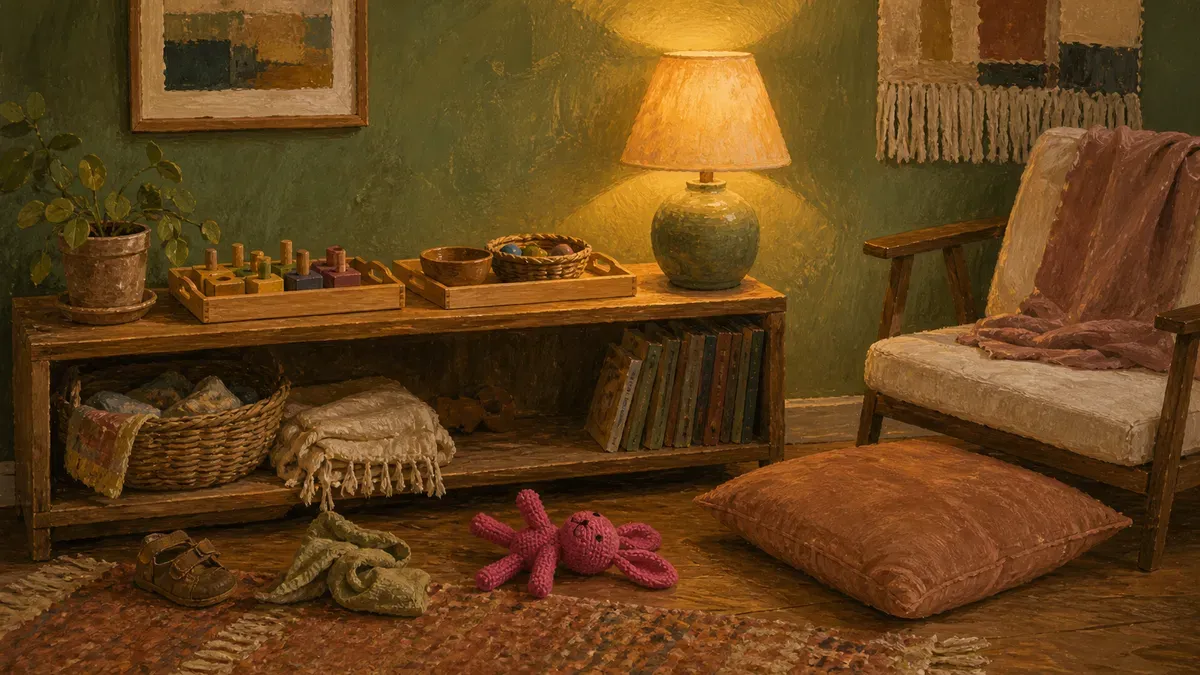
Early childhood education at home looks like a child pouring their own water, sorting laundry by color, or sweeping up a spill. None of that costs anything. All of it builds the independence the philosophy is actually after.
What to Try Before You Decide to Leave for Good
Before walking away, run these small tests for one week. Most families who do find at least one of them shifts something.
- Pull the shelf down to three trays. Watch which one your child returns to without prompting.
- Swap one sensorial material for a practical life task: pouring, folding, scooping. Notice whether engagement changes.
- Shorten sessions to 15 minutes, then end before frustration peaks. Follow the child’s actual rhythm, not a schedule.
- Leave the prepared environment messier than feels right. A child who dismantles the setup is exploring it, not breaking it.
- Read up on what is montessori at home before deciding you’re doing it wrong.
If one of those shifts something, the method isn’t failing. The setup was. Browse our full library of Montessori activities and printables for low-prep starting points that fit a real kitchen table, not a classroom shelf.
Found this useful? Save it for the next rough afternoon.
Questions parents ask me about this
Why do families decide to leave Montessori school or the method?
Most families leave because the gap between their expectations and their child's actual behavior feels too wide to bridge. They expected calm, focused work at the shelf; they got a toddler who ignores the materials, throws things, or lasts four minutes before moving on. That's not a method failure. It's a setup problem, or simply a stage.
Is Montessori good for a child with ADHD or autism?
Many families raising neurodivergent kids find Montessori principles a natural fit because the approach is built around following the child's lead, limiting overwhelming choices, and offering hands-on work that involves the whole body. That said, no method works the same for every child. For kids who need to move before they can sit, practical life activities like pouring, spooning, and transferring tend to be the right starting point. Adjust session length and shelf size to match your child's actual attention span rather than an idealized version.
How do I start Montessori at home on a tiny budget?
Start with what's already in your kitchen. Practical life activities cost nothing and build the concentration that makes later materials actually work: pouring water between cups, spooning rice from one bowl to another, wiping a table. No. No. Every Montessori material isolates one concept so a child can work through it on their own, and ordinary household objects do exactly that in the toddler years. Common kitchen items build the same skills as purpose-made materials at a fraction of the cost. Add specialized tools only once you're sure your child will genuinely use them. Nesting cups, a pitcher and bowl, a zipper pulled from an old jacket: each one targets the same coordination and focus as anything sold in a specialty catalog, for almost nothing. Buy what's already in the house first, and add purpose-made materials only once you're sure your child will genuinely use them. Observe what your child gravitates toward in free play, then build from there rather than buying the whole method upfront.
What should I do if my Montessori shelf sits untouched?
Take everything off and put out three trays. An ignored shelf almost always means too many choices, materials pitched at the wrong level, or sessions running longer than the child's attention can handle. Look at what your child does during free play and try to match that interest when you set the shelf activity. If it stays untouched after a week of simplifying, swap one material and observe again. One change at a time is the only way to know what actually made the difference.
Does leaving Montessori hurt the transition to a traditional school?
The skills that transfer most from Montessori are welcome in any classroom: completing a sequence, tidying after yourself, working through a task independently. A child who spent a year doing practical life and hands-on work has built concentration and self-direction that teachers notice. The adjustment is usually social and structural (sitting at a desk, waiting turns) rather than academic, and most kids settle in within a few weeks.
How do I introduce practical life to a toddler who says no to everything?
Stop presenting it as an activity and let them watch you do it first. Toddlers who resist direct invitations often climb in the moment an adult starts something interesting nearby. Sweep the floor, pour a drink, wipe the counter. Keep going. When they approach, hand over the sponge and step back. The invitation that works is you doing the thing, not asking them to.
Do I need certified Montessori materials to do this at home?
No. The purpose of a Montessori material is to isolate one concept and let the child work with it independently, and ordinary household objects do that just as well in the early years. Nesting cups, a small pitcher and bowl, a zipper board from an old jacket: all of it builds the same skills as purpose-made materials for much less money. Buy the pantry version first and add specialized materials only if your child is clearly ready and you've seen they'll actually use them.
Written by
Nora Hayes
Mom of two and a former preschool aide. I share the screen-free sensory play and calm-down ideas I test at my own kitchen table, plus what the moms in my little meet-up swear by. A parent passing on what works, not a doctor or a therapist.
More about NoraKeep going
All Montessori-
 Montessori
Montessori Activities for 3 Year Olds That Build Skills
At 3, kids crave real work, not toys. These Montessori activities for 3 year olds build focus, coordination, and independence. Start one today.
-
 Montessori
Step by Step Montessori 3-Part Cards Walkthrough
Confused by 3-part cards? This step by step Montessori walkthrough shows the exact order to present them so your child matches and self-corrects.
-
 Montessori
Sensorial Montessori Activities That Calm Toddlers
Sensory-seeking toddler heading for a meltdown? These 10 sensorial Montessori activities calm and refocus little hands fast.
-
 Montessori
Practical Life Montessori: 20 Kitchen Activities
Practical life Montessori starts in your kitchen. Get 20 no-buy activities using spoons, jars, and bowls you own. Set up a tray today.