Montessori Activities for 2 Year Olds, by Mess Level

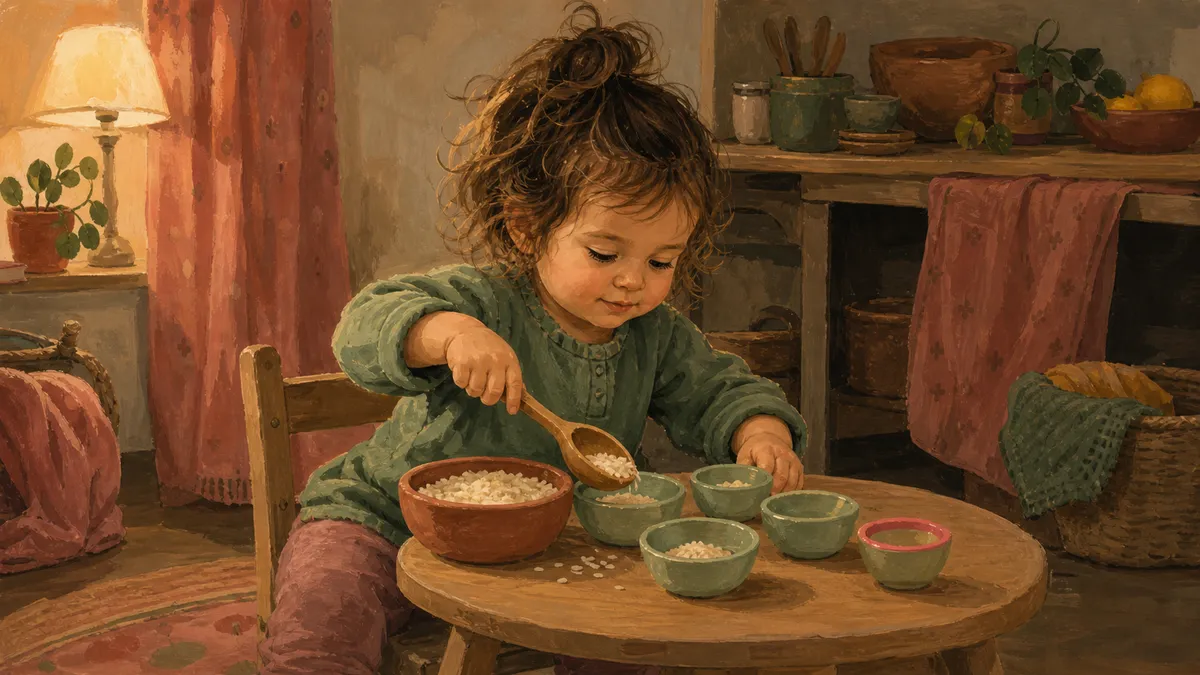
The best Montessori activities for 2 year olds at home are simple, real-life tasks your toddler does with their hands: pouring, sorting, transferring, scrubbing, with low-prep setups you can pull together from the kitchen. I’m Nora Hayes, a former preschool aide and mom of two who has run hundreds of these at home and with my local parent group; the American Montessori Society notes a child’s brain develops more rapidly from birth to age 3 than at any other time.
So I’ve sorted all 30 ideas below by how much mess they make, no-mess to soak-the-floor, so you can grab one that matches your energy and your cleanup tolerance tonight.
What Makes an Activity Montessori for This Age
The short answer: it’s a real task, sized for small hands. That’s the whole filter.
If you want to understand what is montessori at its core, it comes down to one idea: children learn by doing things that actually matter, not by playing pretend. A two-year-old pouring water from a small pitcher into a cup is a Montessori activity. A light-up toy that flashes when pressed is not.
Toddler Montessori classrooms (18 months to 3) center on four practical life areas: Care of Oneself, Care of One’s Environment, Food Preparation, and Grace and Courtesy. Real tasks, done with child-sized tools, with the adult stepping back so the child can finish.
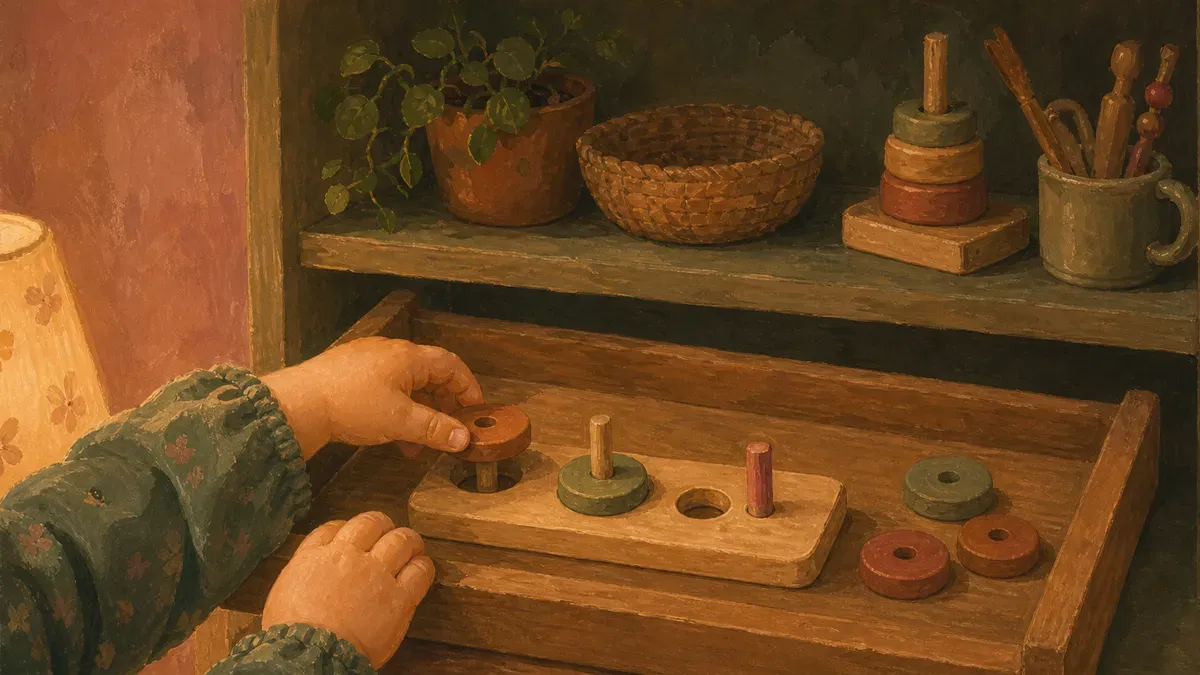
For a montessori toddler at home, that means activities built around purposeful movement, not entertainment. Spooning. Sorting. Wiping a table. Folding a washcloth. None of those need a kit from a Montessori store. They need a low shelf, a small tool, and a task the child can complete from start to finish without your hands in it.
That last part is the piece most parents miss. Montessori for 2 year olds is child-centered, which means the prepared environment does the work. You set up the tray, then you get out of the way. Independence is the goal, not the outcome of perfect execution.
No-Mess Activities You Can Set Up in Two Minutes
Some days you have nothing left, and even the word “setup” feels like too much. These are the trays you reach for then: quiet, contained, and nothing on the floor to wipe up after.
Dry Fine-Motor Trays
A dry tray is the one I keep on the lowest shelf for days that go sideways. No water, no dye, no rice escaping into the rug. Just small things to grip, twist, and drop into a slot.
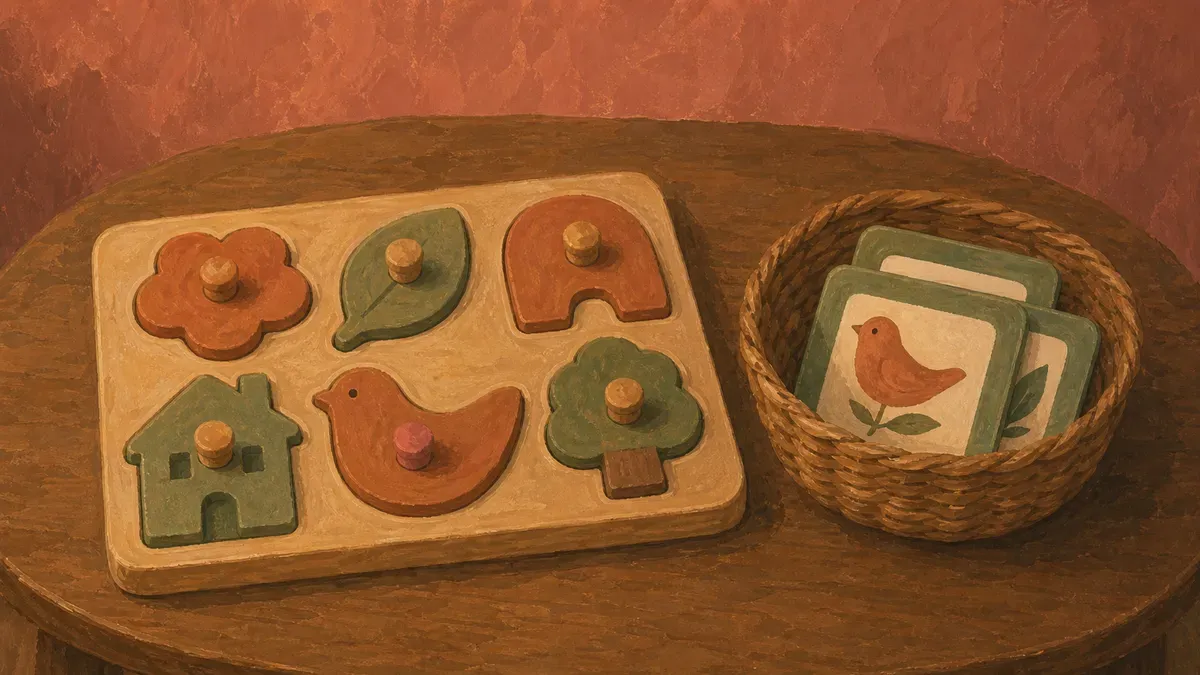
Knob puzzles are the classic starter. Those fat little pegs are sized for a pincer grip, and chasing the right hole is pure eye-hand coordination practice. June will redo the same farm-animal puzzle four times in a row, fully absorbed.
A few more that build fine motor control with zero mess:
- Threading wooden beads with large holes onto a shoelace or pipe cleaner
- Posting buttons or poker chips through a slot cut in a yogurt lid
- A toddler screwdriver board, turning chunky bolts in and out
- A simple lock box with a couple of latches to fiddle open
Threading is worth a note. The CDC’s developmental milestones list stringing large-holed beads as a skill children manage around ages two to three, so a threading tray meets your kid right where their hands are. Start with three beads, not thirty. If they thread one and walk off, that still counts. For ready-to-print versions of these trays, our montessori activities printables pack covers the setup.
Card and Object Matching
The quietest tray of all is a basket of little things and a stack of pictures. Your toddler picks up a tiny plastic cow, finds the cow card, and lays them side by side.
Two-year-olds are right in the middle of a vocabulary explosion, and Montessori shelfwork feeds that with matching activities that build language at the same time.
Start with a vocabulary basket: a few real objects from around the house, each paired with its name.
Research on toddler word learning shows that 24-month-olds reliably pick out which thing a brand-new word refers to, a skill not yet in place at 18 months, so sorting and naming real objects against labels lands right when it should. Once that clicks, swap in animal nomenclature cards or a basket of continents, and keep it to three or four pairs. Keep it to three or four pairs and let them lead.
Low-Mess Activities With Easy Cleanup
The next step up from a dry tray is one that scatters a little. These make a small spill at worst, sweep up in a minute, and split into two kinds: quiet sorting work, and the language and movement games that get a wound-up kid moving on purpose.
Sorting and Color Work
Sorting is the gateway. A 2-year-old who can tell red from blue is doing real categorization, and at this age they lean on shape before color when a word is brand new. That instinct shows up in research on early childhood developmental milestones for word learning, and a sorting tray leans right into it.
Color sorting is a good first move for a 21-month-old or older toddler just finding their footing with categories. From there, a few setups that work at this age:
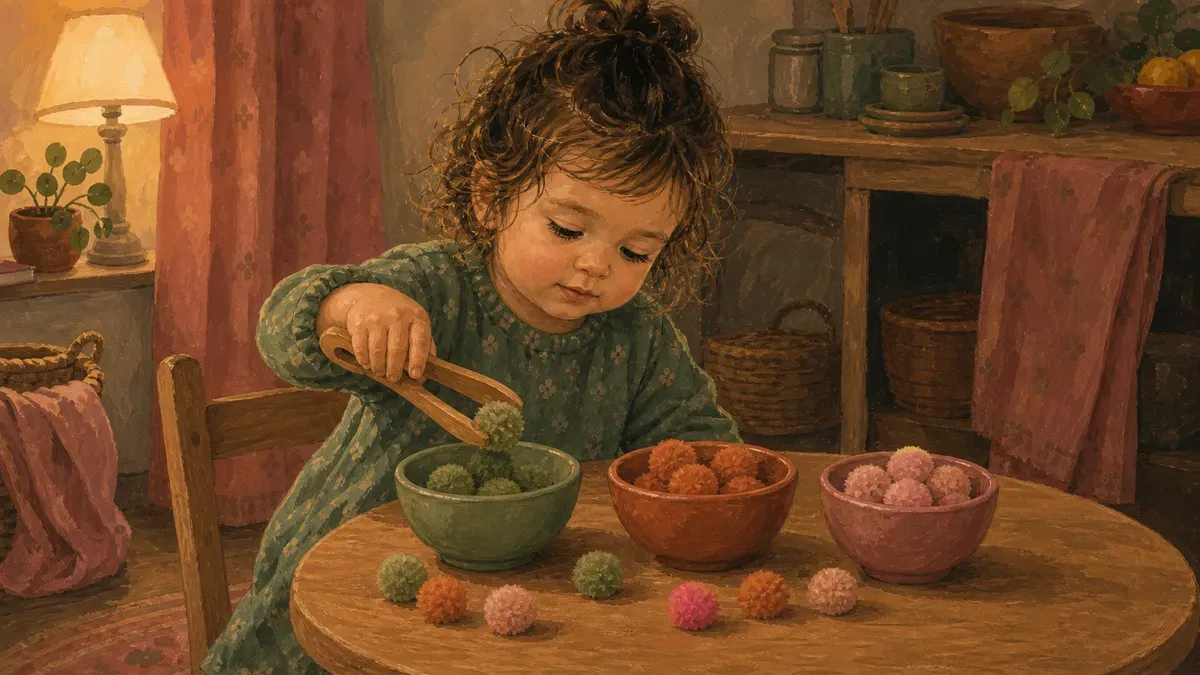
- Color sort: pompoms into two or three small bowls by color. One knocked-over bowl is the worst mess.
- Size order: nesting cups or rings, same idea, different rule.
- Tong transfer: hand them toddler tongs and a muffin tin once hand sorting feels easy.
Tongs build the pincer grip, training the sustained squeeze and release that crayon holding will later depend on. For more setups like this, my walkthrough of montessori color activities teach sorting matching breaks them down.
Language and Movement Games
Not every kid will sit. For the sensory-seeker who needs to move first, lean into language and movement together.
For letter sounds, drop two or three small objects that start with the same sound into a basket, then name them slowly. Quick activities when sitting is not on the table:
- Clap out syllables of their name or a familiar word.
- Walk a strip of painter’s tape heel to toe for balance and focus.
- Drop a few basket objects and wait for them to echo the starting sound back. Both the tape walk and the syllable game burn the wiggles before a transition, which buys you the calm you needed.
High-Mess Sensory and Water Activities
Some days you just let it get wet. These two are the messier end of the list: water activities you can do at home with what you already own, and the practical-life jobs that come with a few drips. Both are worth the towel.
Water Pouring and Transferring
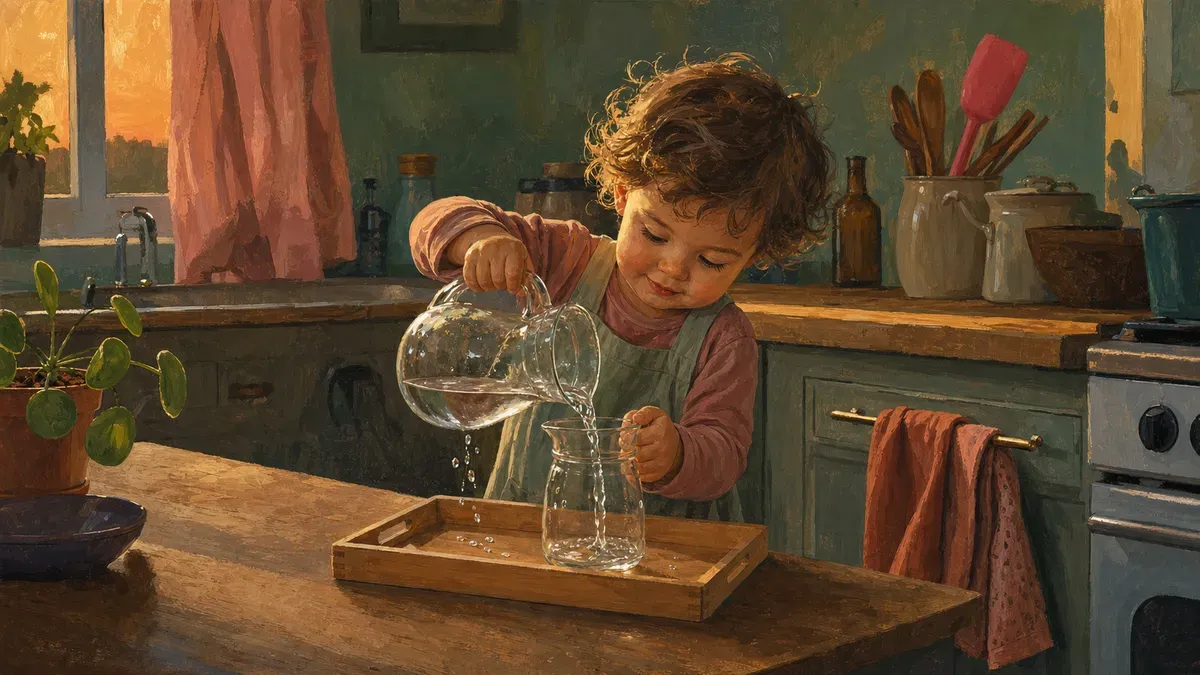
Water is the cheapest sensory material in your house, and a two-year-old will work at it longer than any toy. Set out two small pitchers and let them pour back and forth. Hand them a sponge to squeeze from one bowl to another. Float a few water beads and let them scoop with a spoon into an ice tray.
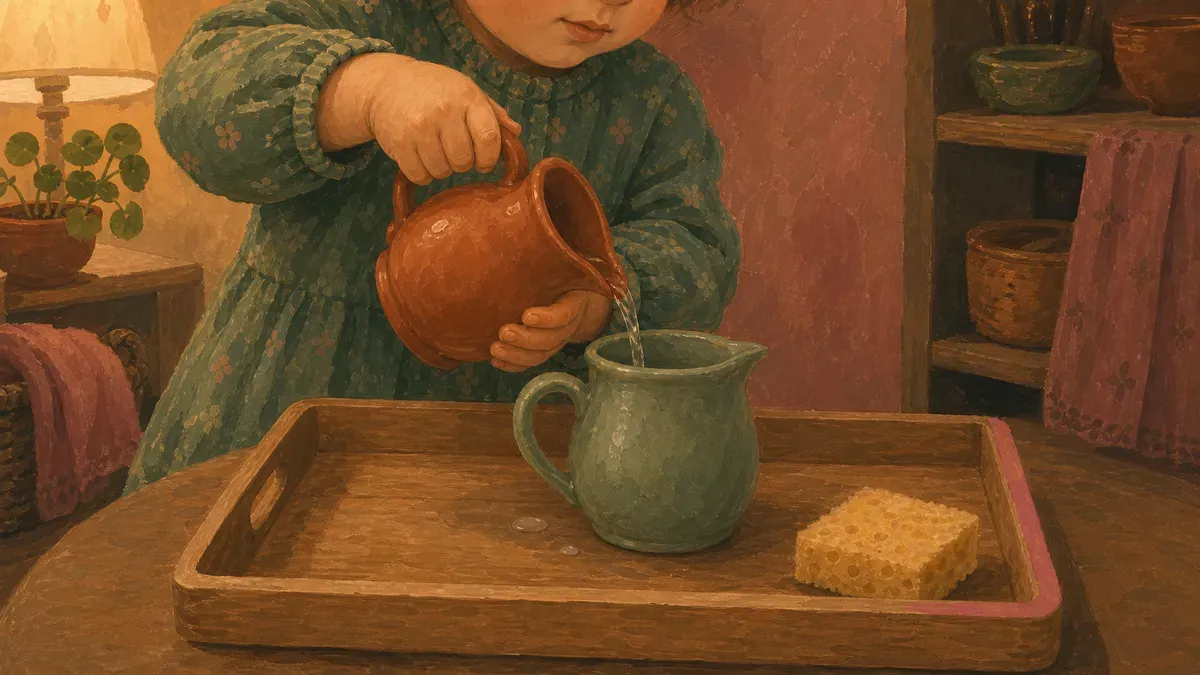
All three are pouring and transferring at heart, and that slow careful tipping is the eye-hand coordination work Montessori folds into practical life. It is sensorial too, the cool of the water, the weight shifting as the pitcher empties.
Here is the only setup rule that matters: a tray under the work and a towel on the floor. The tray catches the spills and gives the activity its edges, so a flood becomes a puddle. If you want quieter versions for a kid who needs to wind down, my sensorial Montessori calm-down ideas dial the same input way down.
Real Practical Life and Plant Care
The wettest work on this list is also the most real. The Montessori Foundation lists plant care and food preparation as core practical-life areas, the kind of daily-life jobs that build genuine independence, not pretend play.
Any of these three jobs works as an entry point: - Take a small watering can to the windowsill plant
- Hand them a butter knife and a soft banana to slice for snack
- Give them a damp cloth to wipe the table after eating Toddlers stick with this kind of work because there is a real finish line: the plant got watered, the table is clean, the banana is on the plate.
It makes a bit of mess. A slosh, banana on the floor, a wet cloth dragged sideways. That mess is the work, though, and the shelfwork of doing a real chore start to finish is what makes it stick. For more jobs that channel a kid who cannot sit, see these montessori practical life toys for toddlers.
Setting Up These Activities Without Buying Everything
You don’t need a curated shelf of wooden Montessori materials or a formal toddler program to do any of what’s in this article. Most of what you already own will do the job.
Use What You Already Own
Your kitchen is basically a Montessori materials cabinet if you look at it right. A muffin tin and a pair of tongs is a sorting tray. A cereal bowl and a ladle is a pouring station. A basket from the closet holds nature items from a twenty-minute walk (pinecones, smooth pebbles, a few acorns) and becomes a seasonal vocabulary basket by tonight.
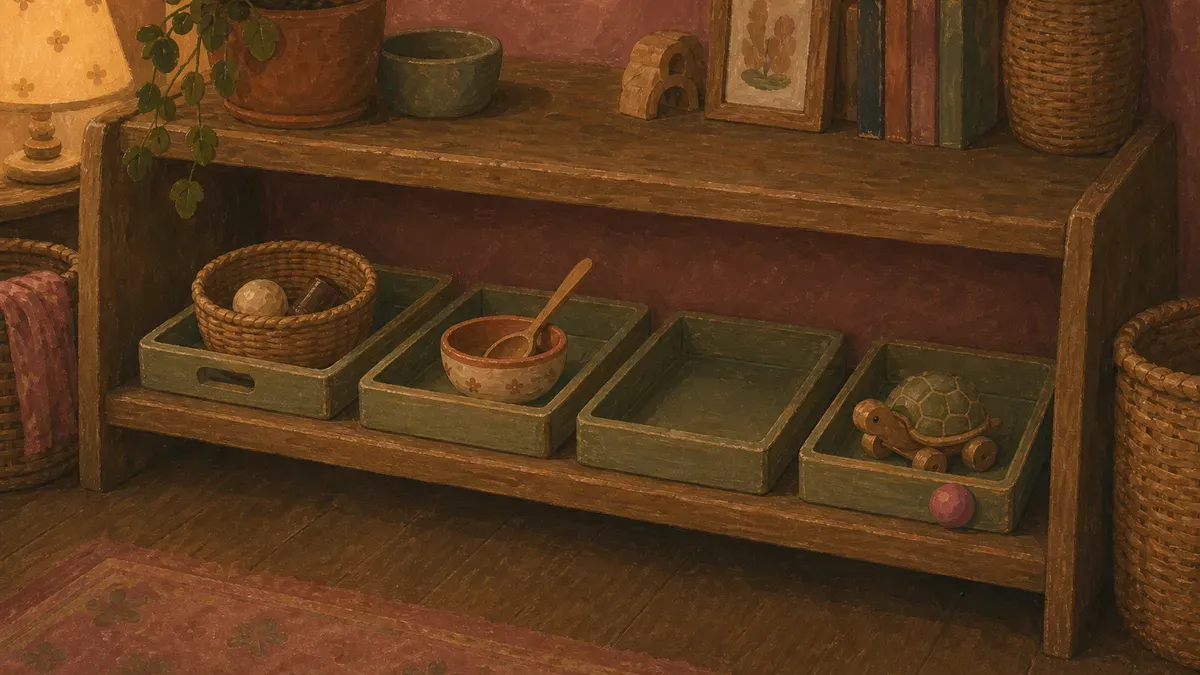
The prepared environment your two-year-old actually needs is a low surface, a few objects that are real and sized for small hands, and enough space to work without bumping into things. That’s it. Practical life doesn’t require anything purpose-built. A slotted spoon, a colander, a dry measuring cup. All of it is shelfwork waiting to happen.
Browse our full library of printable Montessori activities if you want something print-and-go. But raid the kitchen first.
Rotate to Keep the Shelf Fresh
The mistake most parents make isn’t offering too few activities. It’s offering too many at once. A University of Toledo study of 36 toddlers found that children with only 4 toys available played twice as long and in more sophisticated ways than children with 16 toys available. A sparse shelf is a feature, not a problem.
- Pull out 3 or 4 trays at a time.
- Put them on a low shelf your child can reach without asking. That child-centered access is the whole point.
- After a few days, swap one or two out for something they haven’t touched in a week. What went cold comes back fresh.
You don’t need to buy new Montessori materials to keep the prepared environment feeling new. Rotation does that work for free. When your two-year-old is ready for the next step, check out montessori activities for 3 year olds. They build naturally on everything here.
Found this useful? Save it for the next rough afternoon.
Questions parents ask me about this
What Montessori activities are best for 2 year olds at home?
Pouring, sorting, and simple matching tasks are the sweet spot for this age. Think two small pitchers of water to transfer back and forth, a muffin tin with pompoms sorted by color, or a set of cards matched to real objects on a tray. These are real tasks sized for small hands, and they're things you can pull together with stuff already in the kitchen.
How long should a Montessori activity hold a 2 year old's attention?
Two to ten minutes is normal, and two minutes still counts. At this age, concentration builds in short bursts. Don't read a quick exit as the activity failing. If your child returns to the tray a second or third time that day, that's the real sign it's working. Set it up, step back, and let them decide how long.
What should I do if my toddler throws the materials instead of using them?
Put the activity away without making it a big moment, and try again in a week. Throwing usually means the work is either too easy, too hard, or the child isn't regulated enough to sit with it right now. Heavy work first (a few minutes of pushing, carrying, or climbing) can make a huge difference before you bring out a tray.
Do I need to buy expensive Montessori materials for a 2 year old?
No. A low shelf, real objects from the kitchen, and a tray are the whole setup. A funnel, a small pitcher, a bowl, some dry rice, a muffin tin. These do the same job as most pricey Montessori materials at this age. Buy the pantry version first. You can always invest in specialty materials later if you decide you want them.
How many activities should be on the shelf at one time?
Three or four trays works well for most two-year-olds. Too many choices creates overwhelm and shorter engagement; too few and the shelf gets ignored by noon. Rotate one or two trays out every week or so to keep things fresh without buying anything new. Fewer options tends to mean longer, richer play.
Are these activities suitable for a 21 month old or a younger 2 year old?
Many of them, yes, with small adjustments. Stick to taste-safe materials for any child still mouthing things, which at this age is most of them. Start with the simplest versions: one object to post, two colors to sort, a single container to fill and dump. Follow what your child can actually do, not what the age label says.
How do I keep these Montessori activities from making too much mess?
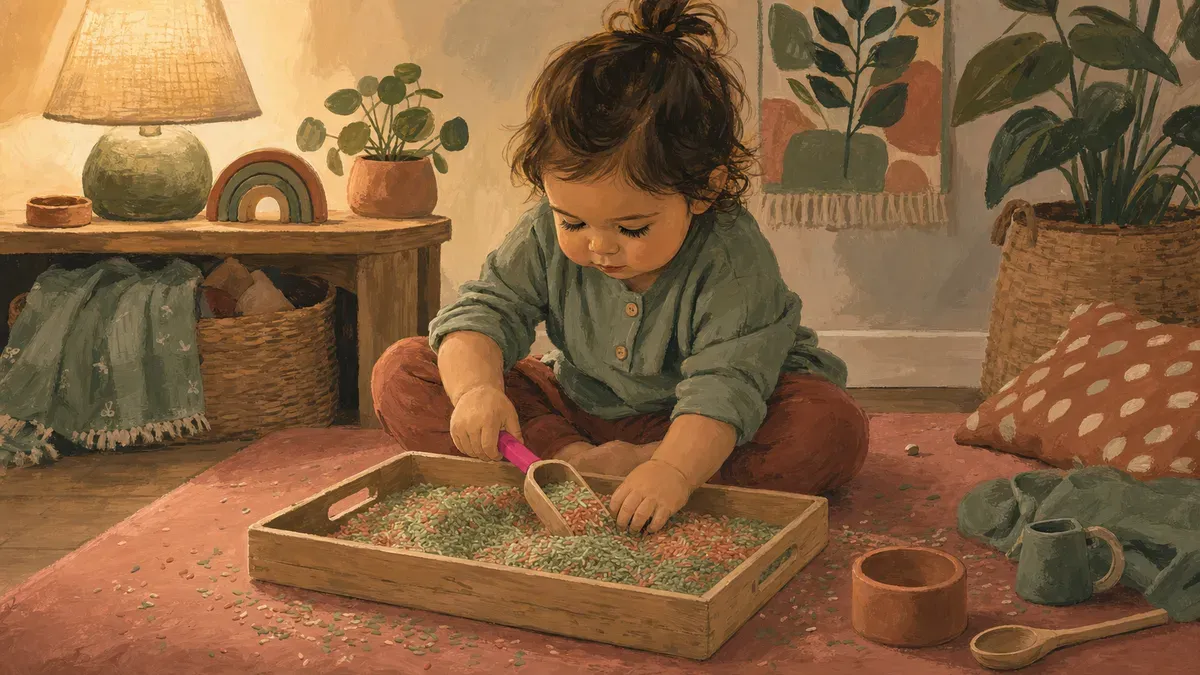
A tray under everything is the single biggest help. It contains spills and signals where the work happens. For water play, a towel under the tray and keeping pitchers small (a cup or less) limits the flood. For dry materials like rice or pompoms, work near a hard floor so cleanup is one sweep. Plan the cleanup before you set it up, and the mess stops feeling like a surprise.
Written by
Nora Hayes
Mom of two and a former preschool aide. I share the screen-free sensory play and calm-down ideas I test at my own kitchen table, plus what the moms in my little meet-up swear by. A parent passing on what works, not a doctor or a therapist.
More about NoraKeep going
All Montessori-
 Montessori
Montessori Activities for 3 Year Olds That Build Skills
At 3, kids crave real work, not toys. These Montessori activities for 3 year olds build focus, coordination, and independence. Start one today.
-
 Montessori
Step by Step Montessori 3-Part Cards Walkthrough
Confused by 3-part cards? This step by step Montessori walkthrough shows the exact order to present them so your child matches and self-corrects.
-
 Montessori
Sensorial Montessori Activities That Calm Toddlers
Sensory-seeking toddler heading for a meltdown? These 10 sensorial Montessori activities calm and refocus little hands fast.
-
 Montessori
Practical Life Montessori: 20 Kitchen Activities
Practical life Montessori starts in your kitchen. Get 20 no-buy activities using spoons, jars, and bowls you own. Set up a tray today.