Scissor Skills by Age: What's Normal at 2, 3, 4, and 5

Some links here are affiliate links. If you buy through one, I may earn a small commission at no extra cost to you. As an Amazon Associate I earn from qualifying purchases. I only point to things I'd actually use with my own two.
If your two-year-old is mangling paper and your four-year-old still can’t cut a straight line, both are usually right on track, since most kids don’t get genuinely proficient until 4 to 5 years old, according to ABC Pediatric Therapy.
I’m Nora Hayes, a former preschool aide, and after years of running scissor activities with children in our local group, the cutting concerns that bring parents here almost always turn out to be right on track for the child’s age.
Below I’ll walk you through what to expect at each stage from 2 through 5, so you know when to relax and when to pay a little closer attention.
What Scissor Skills Actually Are (and Why They Matter)
Cutting looks simple. It isn’t. Behind that first snip is a two-hand coordination task the brain learns over years, and the same skills predict how easily your kid picks up a pencil later on.
The Hidden Coordination Behind a Single Snip
Opening scissors and snipping paper is a two-hands-doing-two-different-jobs task. The dominant hand opens and closes the blades. The non-dominant hand, the helping hand, holds the paper and rotates it as the cut travels forward. Neither hand can cover for the other, and the brain has to manage both at once.
This is bilateral coordination in action: both sides of the body working together, each doing something different at the same time. According to research on fine motor development in early childhood, children begin attempting these complex two-hand tasks around age 2.5, though coordinating them smoothly takes time and a lot of practice strips.
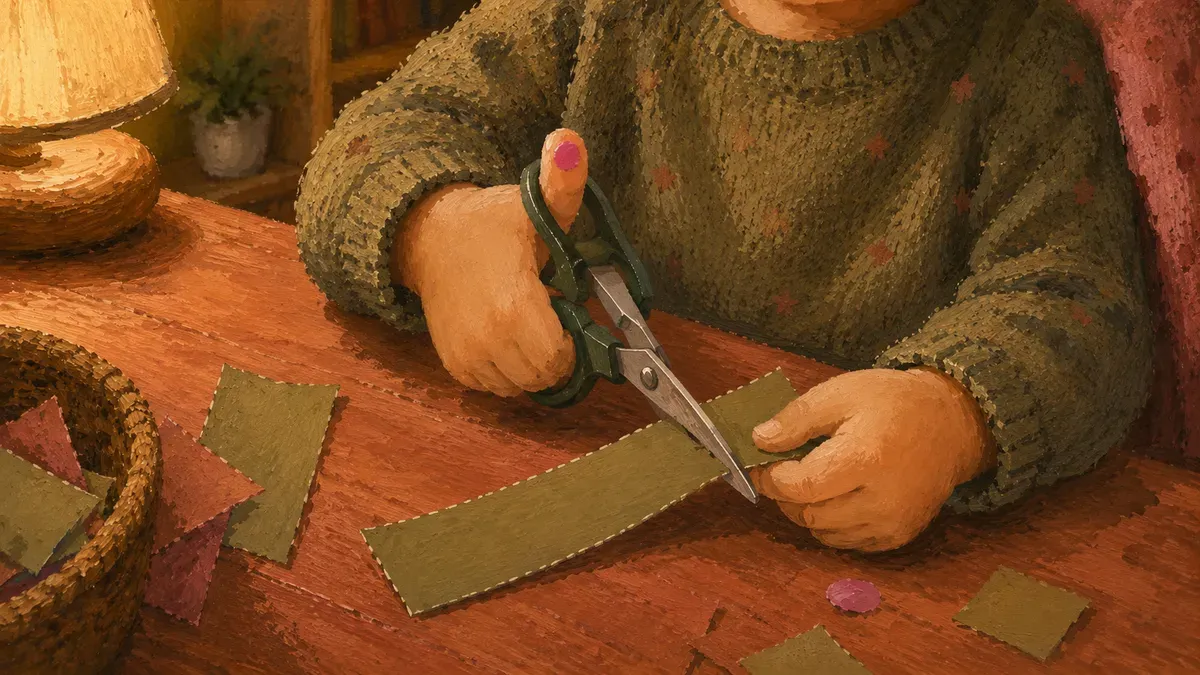
The thumb-up position on the scissor handle is the clearest visible sign that bilateral coordination is starting to click. It’s the child’s nervous system learning to manage two independent movement patterns simultaneously. That’s why a child who can’t quite get it yet isn’t struggling with scissors specifically. They’re still building the foundational coordination that makes the task possible.
Why Cutting Predicts Later Skills Like Handwriting
The connection between cutting and writing is direct. Scissor work targets the same foundational skills kids need at the writing table.
- Hand strength: squeezing the scissor handle builds the grip that later holds a pencil
- Precision grip: guiding blades through a line trains the same control used for letter formation
- Visual-motor integration: tracking where the cut is going and correcting mid-stroke is writing’s earliest rehearsal
Lwtears found that controlling small hand muscles predicts handwriting readiness more reliably than pencil grip alone. And a meta-analysis of 29 studies published in ScienceDirect found a statistically significant moderate correlation of r = 0.29 between visual-motor integration skills and handwriting performance in children.
That’s why scissor practice connects directly to fine motor tracing handwriting scissor skills. Every straight-line cut is your kid rehearsing for the writing table.
Scissor Skills by Age: What’s Normal at 2, 3, 4, and 5
Cutting shows up on a fairly predictable timeline, and knowing the rough markers takes the panic out of a kid who can’t yet snip a circle. Here’s what tends to happen at each age, from the very first snip to cutting out a shape.
Ages 2 to 3: First Snips and Holding the Scissors
At this age, the whole job is opening and closing the scissors. That’s it. Blade control (opening and closing without flipping the scissors) clicks into place around halfway through year two, and a real snip at the paper’s edge follows a few months later, per developmental milestone guidance for young children.
Snipping means one cut. Paper goes in, blades close, done. No forward movement, no line to follow.
Half the battle is the grip. Tiny thumbs flip the scissors upside down constantly, so you’ll be resetting their hand a lot. Spring-loaded training scissors earn their keep here, since the spring pops the blades back open and your kid only has to manage the squeeze. Skinny paper strips work better than a full sheet, because one snip cuts clean through and they get the satisfying snap.
At 2 to 3, a single clean snip on the edge of the paper is the win. Don’t expect a line.
Ages 3 to 4: Cutting Forward and Along a Straight Line
Now the snips start connecting. Somewhere in here, preschoolers figure out they can open, scoot the scissors forward, and close again, stringing cuts into one continuous path across the page.
This is also when following a line clicks. A 3-year-old is developmentally expected to cut along a 4 to 6 inch straight line and stay within about half an inch of it, with the non-dominant hand starting to reposition the paper as they go, per crawl walk jump run.
The real leap is hand placement. The helping hand stops just holding and starts steering, feeding the paper so the cutting hand can keep moving forward.
Draw a thick line, marker-wide, and let them chase it. Wobbly is fine. Staying near the line, not exactly on it, is the developmental milestone you’re watching for. If your 3-year-old veers off and crosses back, that’s still real cutting on the line, just early.
Ages 4 to 5: Curves, Corners, and Simple Shapes
Straight lines are old news by now. The four-and-up crowd starts turning the paper to follow curves, and that paper-rotation is the skill that unlocks everything harder.
By age 4, kids can cut along curved lines and circles at least 6 inches across, and basic shapes like a circle, square, and triangle come within reach, according to ABC Pediatric Therapy. Corners are the tricky part. A square means stopping, pivoting the paper, and starting a fresh line, which is a lot of coordination stacked into one move.
Precision tightens up too. By around 4.5 to 5, cutting out a square while staying within a quarter inch of the line is age-appropriate, not advanced.
If your kid is managing curves and corners, the foundation for scissor cutting that carries into the school years is solidly in place. Complex shapes with lots of points come later, so don’t rush the snowflakes.
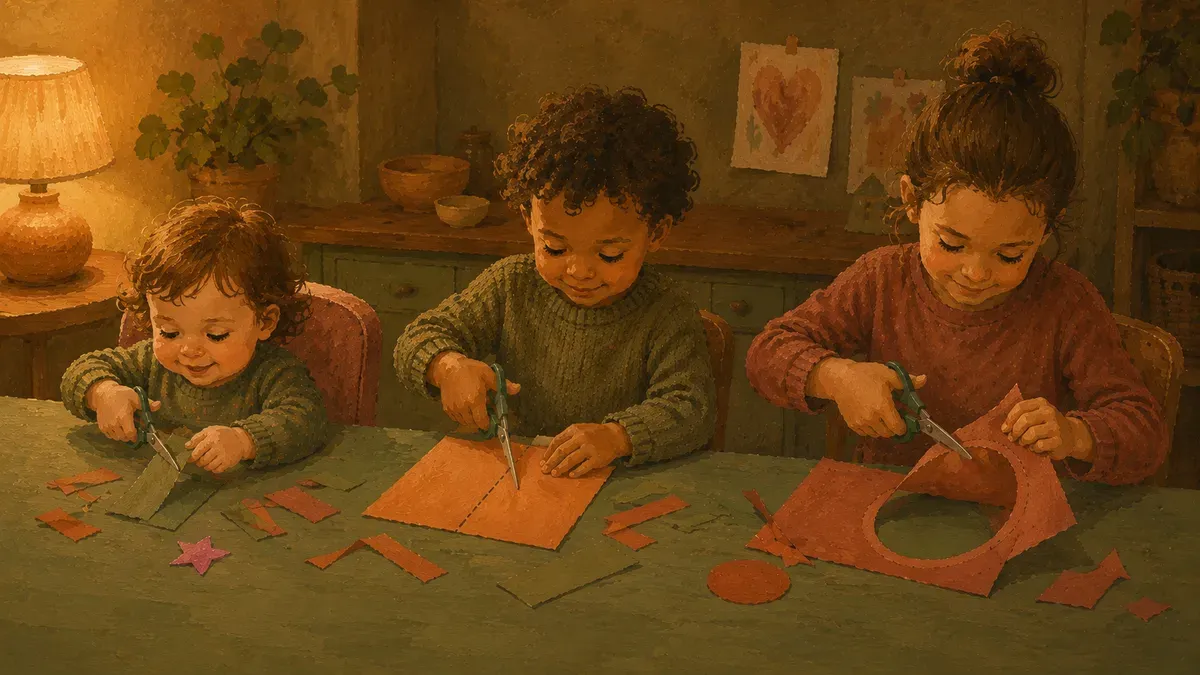
These age bands are guides, not deadlines. A kid who snips at 3 and cuts shapes at 5 is right on track, and one who lands a few months either way usually is too.
Prerequisite Skills That Make Cutting Click
Knowing the age markers is one thing. Getting a child ready to hit them is another, and it starts well before scissors ever come out. Two things have to be in place first: a body stable enough to hold still, and hands strong enough to control the blades.
Hand Strength and a Stable, Seated Posture
Scissors are a two-part problem. The hand has to squeeze and release with control, and the rest of the body has to hold steady while that’s happening. Those aren’t the same skill.
Your Therapy Source notes that stability builds from the core outward, so the neck, shoulder, and trunk muscles have to be working before the wrist and hand can control the blades through a cut. A child sitting slumped, or perching on the edge of a chair, is spending energy just staying upright instead of controlling the scissors.
A stable seated position gives the hand something to work from:
- Feet flat on the floor
- Hips back in the seat
- Elbows close to the body Without it, grip falls apart fast, no matter how much cutting practice you run.
Prerequisite skills like posture and trunk stability rarely get mentioned in scissor guides, but they’re the foundation everything else sits on.
Activities That Build Cutting Readiness Without Scissors
The good news is that you can build almost all of the hand strengthening and bilateral coordination cutting needs without touching scissors once.
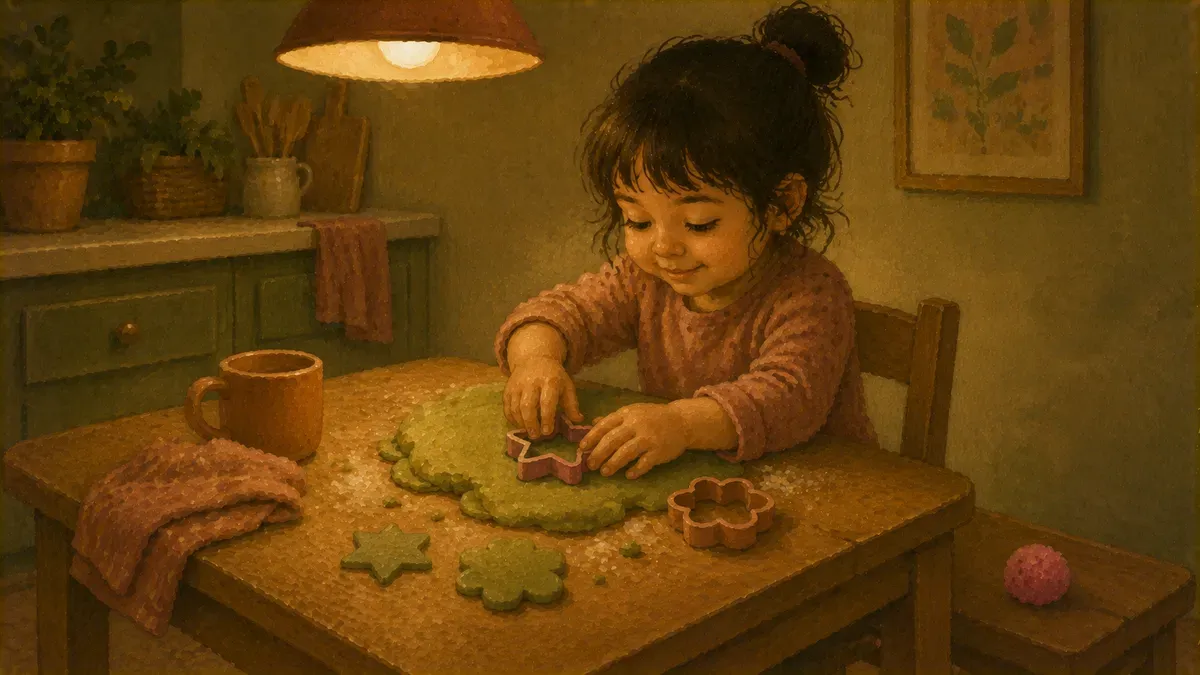
- Playdough squeezing. Rolling, pinching, and pressing builds the open-close grip strength the blades demand. Five minutes is enough, and cleanup is easy.
- Tong transfers. Moving pom-poms or pasta between bowls trains the thumb, index, and middle fingers in the graded grasp-and-release pattern cutting actually uses, per The OT Toolbox. Kitchen tongs work, but if little fingers keep slipping off, a set of training tongs with finger grooves guides the grip for them. The color-coded 12-pack (ages 2 and up, storage bin thrown in) carries a 4.8-star average from 400-plus reviews, and the sorting alone buys you a quiet ten minutes.
- Paper tearing. NAPA Center OTs recommend it as both a bilateral motor task and a finger-strengthening activity that prepares hands for scissor use.
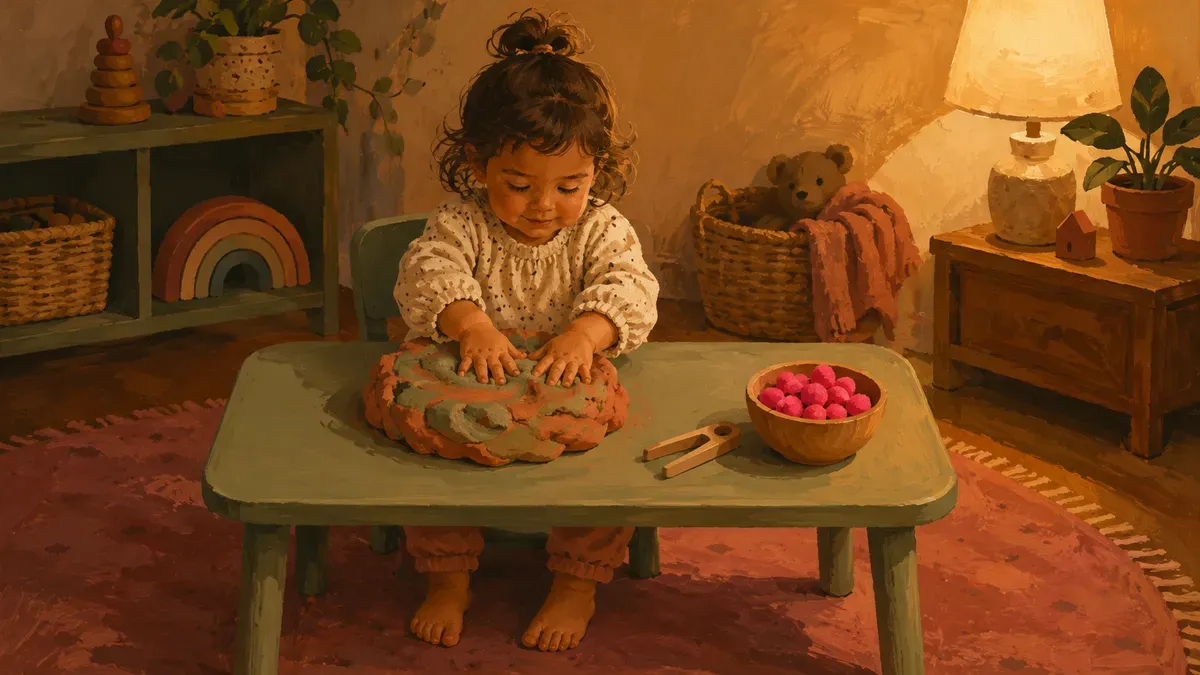
None of these need a special order. They’re the kind of fine motor activities you can drop into snack time or a ten-minute table stretch. Do them consistently for a few weeks and you’ll likely see cutting click faster when the scissors finally come out.
Choosing the Right Scissors for Each Age
The right scissors for your kid depend less on age and more on where their hands are right now. Here’s how the three types you’ll actually shop for stack up.
Spring-Back, Training, and Standard Blunt-Tip Scissors Compared
Start with what the hand can do, not the birthday on the calendar.
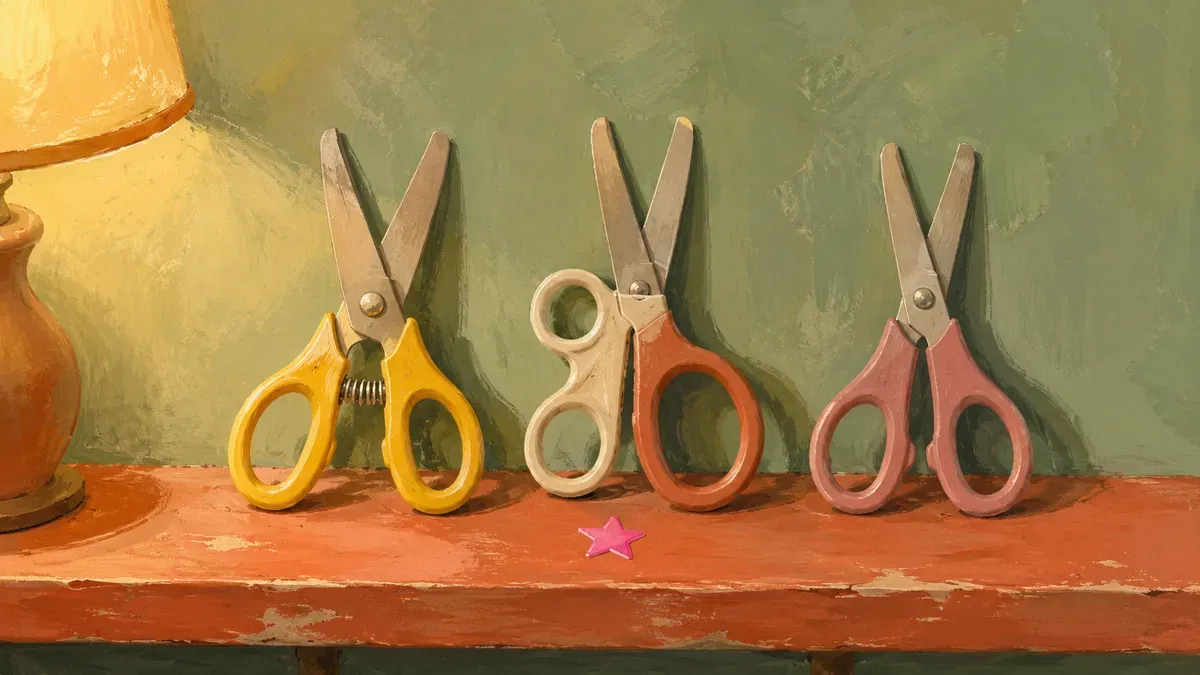
Here’s how each type matches up against age and skill stage:
| Type | Best for | Skill stage | Parents’ rating |
|---|---|---|---|
| Spring-back, self-opening | Ages ~2-3, weak squeeze | First open-close, snipping | 4.5★, 1,500+ reviews |
| Fiskars training scissors | Ages ~3-4, learning the motion | Lever spring-opens each cut, then switches off | 4.7★, 1,400+ reviews |
| Standard blunt tip | Ages ~4+, independent cutting | Lines, curves, real practice | 4.4★, 5,700+ reviews |
Two of these carry Amazon’s Choice, the Fiskars trainer and the standard blunt-tip pack, which is decent shorthand for the pairs parents keep rebuying. That Fiskars lever spring-opens after each cut, then switches off once your kid can open the blades alone, so one pair stretches across two stages instead of one.
One thing parents miss: if your kid favors their left hand, buy proper left-handed scissors. Per Pathways.org, the blades are flipped so the dominant hand can actually see the cut line, and since dominance often isn’t settled until age 5-6, matching the preferred hand helps with both safety and visibility. The red pair I steer lefties toward runs 4.8 stars across 7,000-plus reviews, so you’re not gambling on an off-brand.
For age-appropriate practice pages to pair with the right pair, my cutting worksheets sort straight by skill stage. Match the tool to the hand, and cutting stops being a fight.
Troubleshooting Common Cutting Struggles
Most cutting battles come down to a handful of fixable things, not a kid who “can’t.” Here’s how to sort the grip and hand habits first, then what to do when the problem isn’t the skill at all, it’s the resistance.
Fixing Thumb Position, Grip, and the Wandering Helping Hand
Watch the thumb. If it rolls down or sideways, the whole cut goes wobbly. The thumb up position is the single cue that fixes the most at once.
The other usual suspect is a flying elbow. The two most common grip errors, per pediatric OT notes from My Sidekick Therapy, are thumbs aiming down instead of up and elbows lifting into the air. Tuck a sheet of paper under the cutting arm and tell them not to let it drop. It pins the elbow without you nagging.
Then there’s the helping hand that just sits there, or worse, wanders off. Cutting needs both hands doing different jobs, so put a job on the quiet one: “turn the paper toward you.” Watch hand placement, low on the page near the cut.
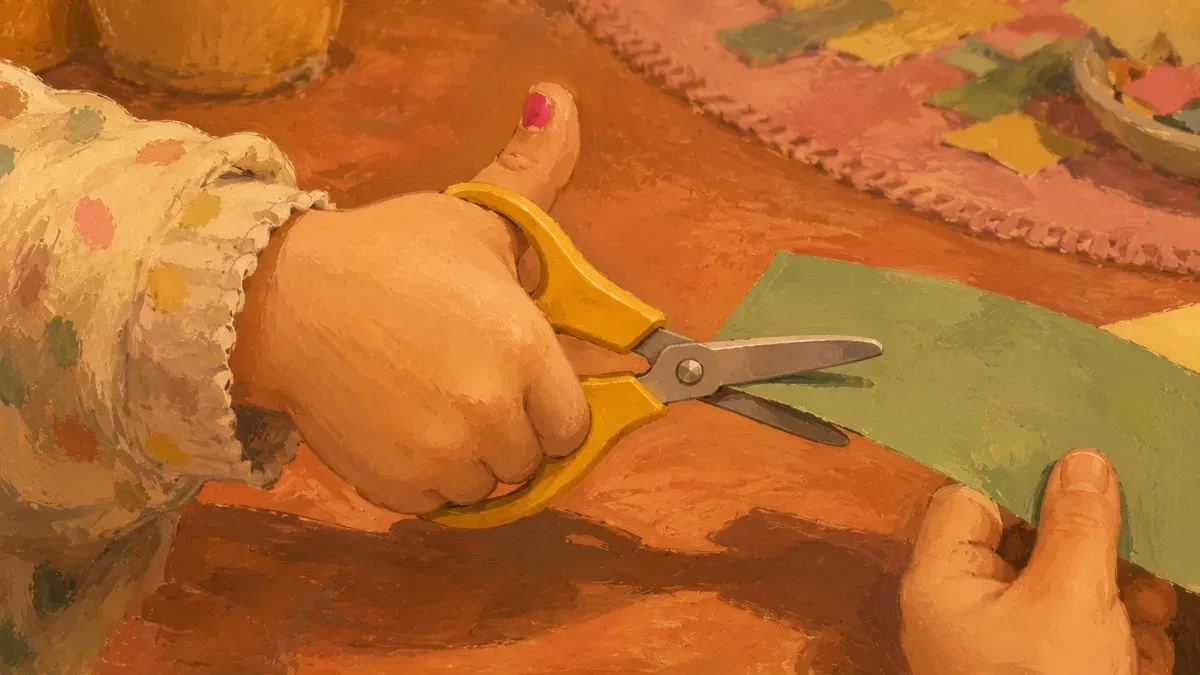
And let go of the perfect line. A jagged, off-the-line cut still built the strength and the grip. Keep it process-driven, praise the trying, and the clean cuts come on their own. For staged worksheets to practice with, my cutting practice for preschoolers pages go from easy lines to tricky ones.
Sensory and Resistance Issues When a Child Avoids Scissors
Sometimes a kid won’t pick up scissors at all, and it has nothing to do with ability. A child who is sensory-avoidant can refuse them for the feel of it, and as the Child Mind Institute notes, the resistance can also come from weak hand muscles or plain frustration. Pushing harder backfires every time.
Shrink the ask. One snip, then done. Let them cut playdough or a drinking straw before paper, since both give a satisfying pop with way less control needed. Keep it child-led: their picture, their pace, their pile of confetti.
Making cutting practice feel safe and silly does more than any drill. Less pressure, more fun, and the fine motor skills sneak in while they’re not looking.
When to Stop Worrying and When to Seek an OT Evaluation
Most of the time the answer is “keep going, they’ll get there.” But a few specific patterns are worth a second look, so here’s how to tell the everyday slow-and-steady kid from the one who could use a hand.
Normal Variation Versus Red Flags by Age
Kids land on these developmental milestones across a wide window, and that window is normal. One preschooler snips confidently at 2.5 and another barely cares until 4. Both are fine.
What I do watch for is a kid stalling well past the usual age-appropriate marks. A few specific patterns stand out:
- No snipping at all by age 3
- No clean straight-line cut by 4.5
- Constantly switching the scissors hand past age 5 (dominance usually settles by then, but worth flagging if cutting isn’t coming along either, per this pediatric OT overview)
Treat these markers as a checklist, not a verdict. A kid behind on one thing and right on track everywhere else is a different story than one struggling across the board.
What an OT Evaluation Looks At for Scissor Readiness
If those flags ring true, or your gut just says something’s off, start with your pediatrician. They can rule out the simple stuff and refer you to an occupational therapist if it’s warranted. You don’t need a diagnosis to ask.
A pediatric OT looks way past the scissors. They check the prerequisite skills underneath cutting, the hand strength, the bilateral coordination, the grasp-and-release, the whole picture of fine motor skills. Theraplatform notes that OTs use standardized tools like the BOT-2 and the Peabody scales (PDMS-2) to measure exactly that.
If you want to keep building skills at home while you wait, our full guide to fine motor and handwriting development and these OT activities for kids who resist the table both help. An evaluation isn’t a failure. It’s just more eyes on your kid.
Found this useful? Save it for the next rough afternoon.
Questions parents ask me about this
What scissor skills should kids have at each age?
Between 2 and 3, kids are figuring out how to open and close the blades and taking those first snips across a paper edge. By 3 to 4, they can usually cut forward in a continuous motion and follow a straight line to within about half an inch. Ages 4 to 5 bring curves, corners, and simple shapes like circles and squares. These are guides, not deadlines. A two- or three-month lag is normal variation, not a red flag.
At what age should a child be able to cut with scissors?
Most children can manage basic snipping around age 2.5 to 3, and straight-line cutting by 4 to 4.5. Full cutting proficiency (shapes, curves, staying close to a line) is typically in place by 5. If a child has no snipping at all by age 3, or can't cut a straight line by 4.5, it's worth mentioning to a pediatrician.
Why does my child hold scissors upside down?
The thumb goes through the smaller loop and points up toward the ceiling. When it's pointing down, the blades tilt and cutting stops working. It's one of the most common beginner mistakes, and kids usually don't notice they're doing it. A small sticker on the thumbnail gives them a visual cue to check: if you can see the sticker, you're in the right position.
Are scissors safe for a 2-year-old to use?
With supervision and the right scissors, yes. Blunt-tip, spring-back scissors designed for young children are built so the blades reopen on their own, which means kids don't need enough hand strength to do it themselves, and the blunt tips reduce the risk of injury. Keep the session short, stay close, and start with thicker paper that's easier to cut.
How do I teach a left-handed child to use scissors?
Get scissors made for left-handed use. The blades on standard scissors are reversed for a left-handed child, which means their dominant hand can't see the cut line and the blades push paper apart instead of cutting through it. Left-handed scissors flip the blade orientation so everything lines up correctly. All the same grip cues apply: thumb up, elbow in, helping hand turning the paper.
Should my child be cutting on the line before kindergarten?
Basic straight-line cutting is typically in place by around 4 to 4.5, so yes, most kids entering kindergarten can manage it. That quarter-inch level of precision is more of a mid-kindergarten goal.
How can I clean up after messy scissor practice quickly?
Cut over a tray, a baking sheet, or a plastic storage bin so the scraps stay contained. A pillowcase laid flat under the workspace catches anything that escapes. When you're done, tilt the tray into the recycling bin in one move. Thicker paper and cardstock shred into fewer, larger pieces than thin printer paper, making cleanup faster.
Written by
Nora Hayes
Mom of two and a former preschool aide. I share the screen-free sensory play and calm-down ideas I test at my own kitchen table, plus what the moms in my little meet-up swear by. A parent passing on what works, not a doctor or a therapist.
More about NoraKeep going
All Fine Motor-
 Fine Motor
Cutting Worksheets: 15 Activities Beyond Straight Lines
Bored of straight lines? These cutting worksheets and 15 activities build scissor skills fast. Grab the free printables and start today.
-
 Fine Motor
Activities to Build Fine Motor Skills With Pom Poms
The hand strength behind neat handwriting starts with play. Try 20 pom pom activities to build fine motor skills your kid will actually beg to do.
-
 Fine Motor
Fine Motor Skills Activities for Preschoolers
Ready to write? Spot the 12 readiness signs and the fine motor skills activities for preschoolers that build the hand. Start now.
-
 Fine Motor
Fine Motor Skills Activities for 3-4 Year Olds
Worried your 4-year-old still scribbles? These fine motor skills activities for 3-4 year olds bridge scribbles to real letters. Start today.