Fine Motor Skills for 3 Year Olds: What Helps

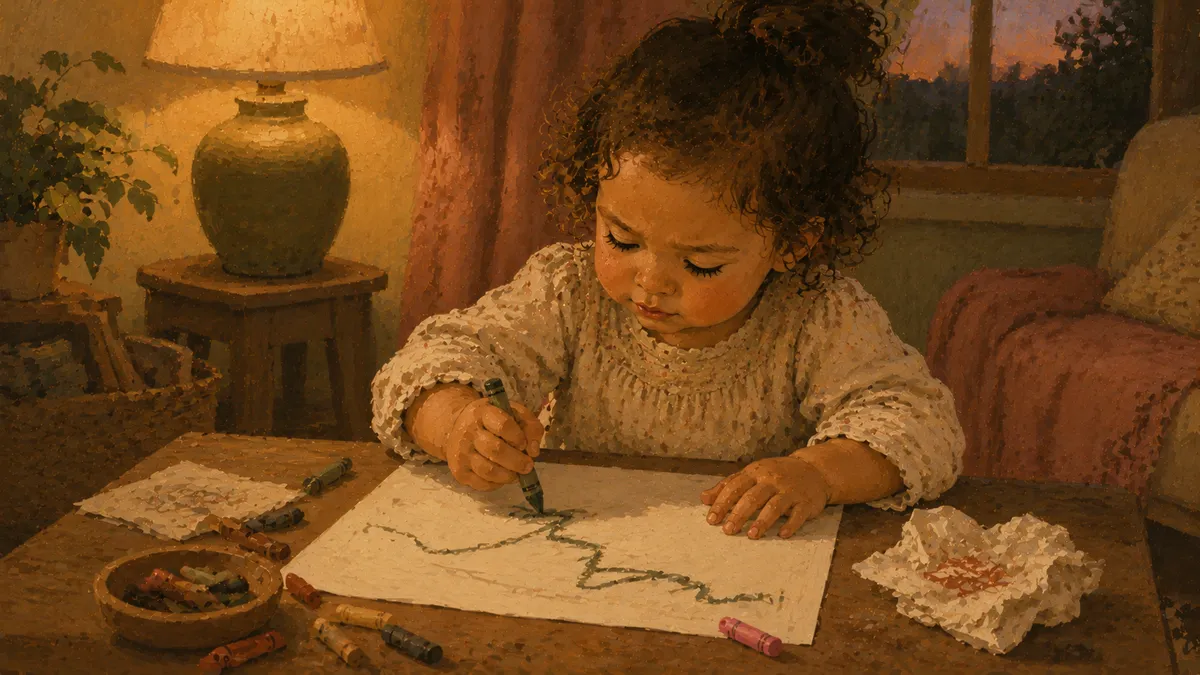
At three, the fine motor skills that actually matter are hand strength, a working pinch, and getting both hands to cooperate, which is why pushing tracing worksheets first usually backfires. I’m Nora Hayes, a former preschool aide and mom to a sensory-seeking 7-year-old and a 3-year-old, and the little hands I watch every day aren’t ready to steer a pencil until the muscles underneath are.
This guide walks through what fine motor activities for three year olds should build right now, where tracing finally fits, and how to set up a pencil grip without a single tear.
What Fine Motor Skills Look Like at Age 3
Before you hand a three-year-old a pencil, it helps to know what their hands can actually do right now. Here are the milestones most kids hit by three, and why letters are not the thing to chase yet.
The Milestones Most 3-Year-Olds Hit
At three, the hands are getting busy. Most kids can stack a small tower of blocks and string large beads or macaroni onto a lace, which the CDC’s fine motor developmental milestones for 3-year-olds lists as typical skills by this age.
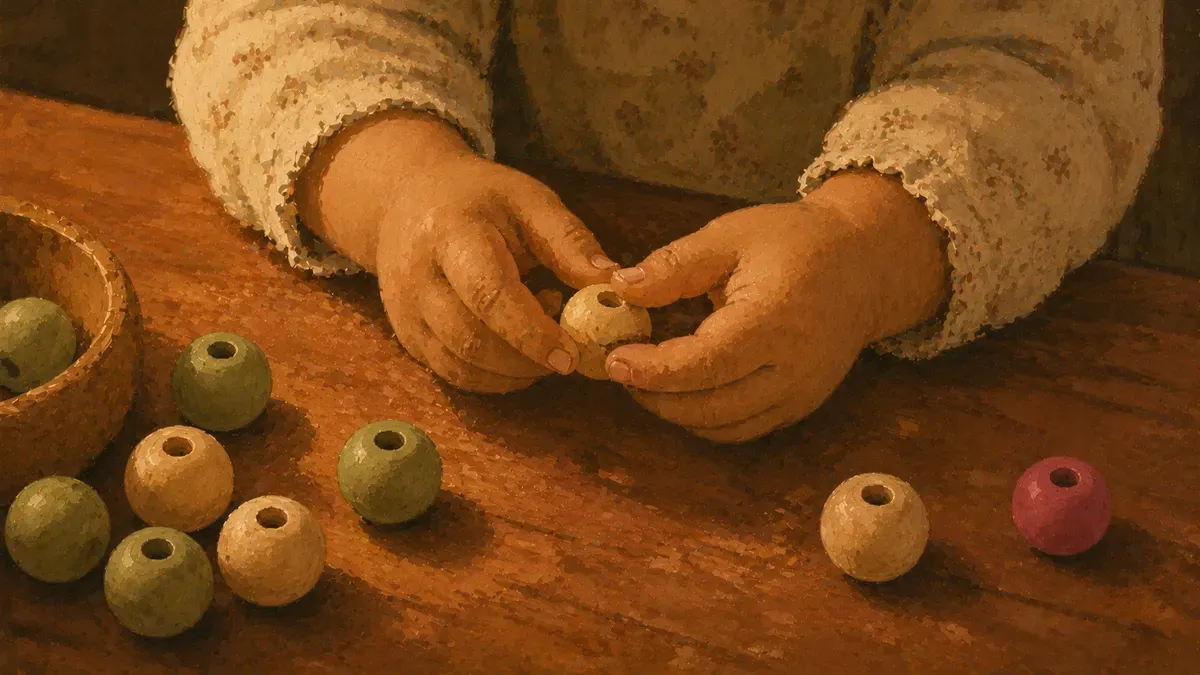
You’ll also see the grasp start to shift. The fisted, whole-hand grip of toddlerhood gives way to a pincer grasp, thumb and finger working together to pick up a single bead. That’s a big deal for hand strength and the kind of dexterity that writing leans on later.
The milestones from this stage are mostly about grasping and manipulation skills, not neat lines. Lurie Children’s Hospital puts the fine motor wins for this age as:
- Screwing and unscrewing lids
- Pushing pegs into a round hole
- Snipping with scissors
If your kid is doing two or three of these, their hands are right on track.
Why Letters Are Not the Goal Yet
A three-year-old usually doesn’t have the finger strength or the visual motor control to copy a letter, and that’s normal. The hand isn’t weak, it’s just busy building the muscles and grip control that letters will eventually sit on top of.
Pre-writing comes first. According to North Shore Pediatric Therapy, kids around 2.5 to 3 can copy vertical lines, horizontal lines, and circles, while crosses, squares, and triangles don’t usually land until 4 to 5, and formal letter writing isn’t expected until around 6.
So handwriting readiness at three looks like big shapes and strong hands, not the alphabet. If you want to see how lines and shapes feed into the real order fine motor activities develop, or how tracing eventually folds into fine motor tracing handwriting scissor skills, that sequence matters more than starting early.
Push letters now and you mostly get frustration. Build the hands first, and the writing comes easier later.
Hands-On Activities That Build Strength First
So what does building the hands actually look like? Two kinds of play do most of the heavy lifting at this age: the squeezing stuff and the threading stuff.
- Playdough, pinching, and squeezing (builds raw finger strength)
- Clothespins and tweezers (trains the tripod grasp and finger-to-thumb pinch)
- Threading, stacking, and sorting (gets both hands working together)
Playdough, Pinching, and Squeezing
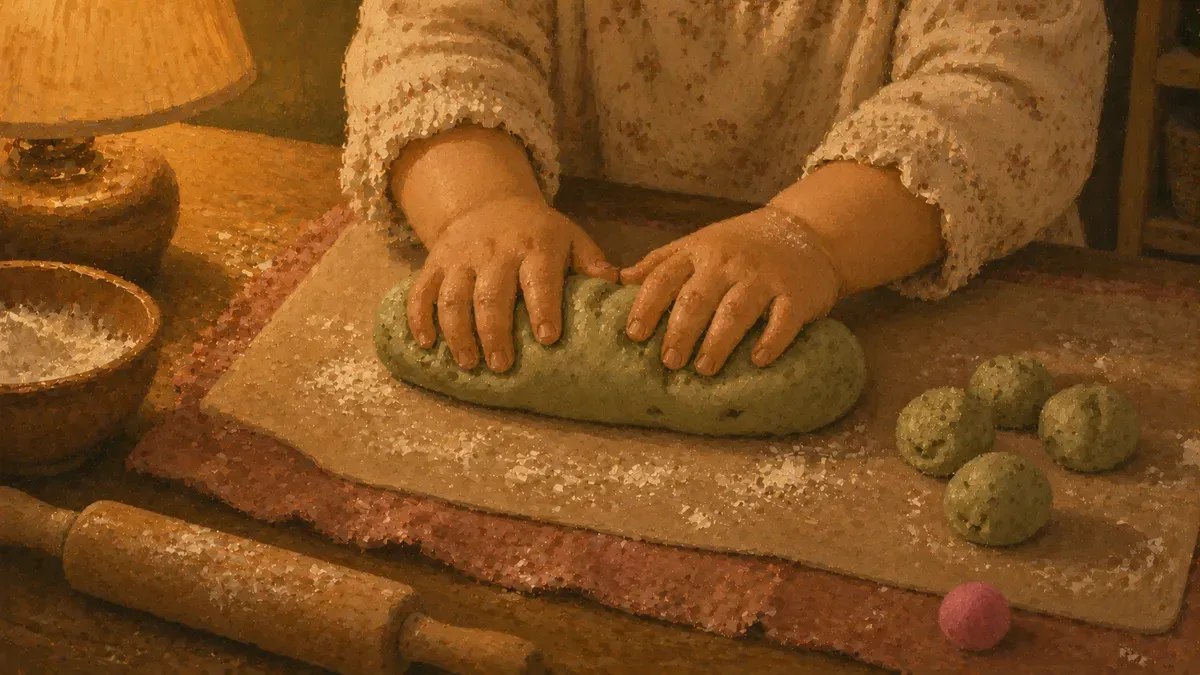
Start here, because squeezing is the cheapest strength workout you own. Hand a 3-year-old a fist-sized lump of playdough and let them smush, roll, and pull it apart. Rolling little balls works the same fingers a pencil will need later, and pressing in dry pasta turns it into a hide-and-find game that keeps them at it.
Clothespins are the sneaky-good one. Occupational therapists reach for them on purpose, because the squeeze-and-release of a clothespin builds the same tripod grasp and finger strength a child needs for scissors down the road. Clip them around the rim of a yogurt cup, let your kid pull them off, repeat. June pinched clothespins off a colander for ten quiet minutes once, which at three felt like a small miracle.
- Tweezers and pom-poms: set a bowl of pom-poms next to an ice tray and have them move each one using chunky tweezers or a simple pincer grip (slow and fiddly is exactly right) These count as fine motor activities for three year olds that need nothing you don’t already own. Want more no-prep dough ideas? Try these fine motor activities for preschoolers when the playdough comes back out.
Threading, Stacking, and Sorting
Where squeezing builds raw strength, threading teaches the two hands to work as a team. Stringing beads onto a shoelace or pipe cleaner is one of the best fine motor skills activities for 3 year olds going, and OT folks point to bead stringing as a bilateral coordination exercise precisely because one hand holds the string while the other pinches the bead. That pincer grasp, thumb meeting finger, is the exact pinch a pencil asks for.
If real beads feel like a choking-hazard headache, go bigger. Wooden beads, rigatoni, or cut-up straws on a pipe cleaner are easier to thread and safer to leave out.
Stacking and sorting do quieter work. A few things that count as manipulative play:
- Stacking blocks or cups as high as they’ll go before the crash
- Sorting buttons or pom-poms by color into a muffin tin
- Dropping poker chips through a slot cut in a yogurt lid
Each one asks for a careful release, that grab-and-let-go control most adults forget is a skill at all. Sorting by color sneaks in a little learning, but honestly the win is the fingers. If it ends in two minutes, that still counts. Set it out again tomorrow.
Where Tracing Fits for a 3-Year-Old
So where does an actual pencil come in? Tracing has a place at three, just not the place most worksheets assume. Here’s the order that works, and a couple of free pages to start with.
Lines Before Shapes Before Letters
A pencil on paper is a big ask for a hand that’s been busy squeezing dough all week. Start where the hand already is.
The progression is boring on purpose.
- Straight lines, top to bottom, then side to side
- Circles and a few simple shapes once lines feel steady
- Letters last, and not until the shapes are solid
That’s just how little hands build the visual motor control to copy what their eyes see.
The milestone order backs this up. Pediatric OT milestone data shows kids imitate a vertical line around age 2, add horizontal lines and circles by 2.5, and copy all three by age 3, with crosses and squares not landing until age 4 or 5. Letters sit on the far end of that line.
So at three, tracing a fat straight line is the goal, not a baby step to rush past. Hand-eye coordination, prewriting skill, and handwriting readiness all get built one boring line at a time.
If you want the full breakdown of why this order matters, I walk through it in my guide to pre-writing visual motor activities.
Free Tracing Starter Pages to Try
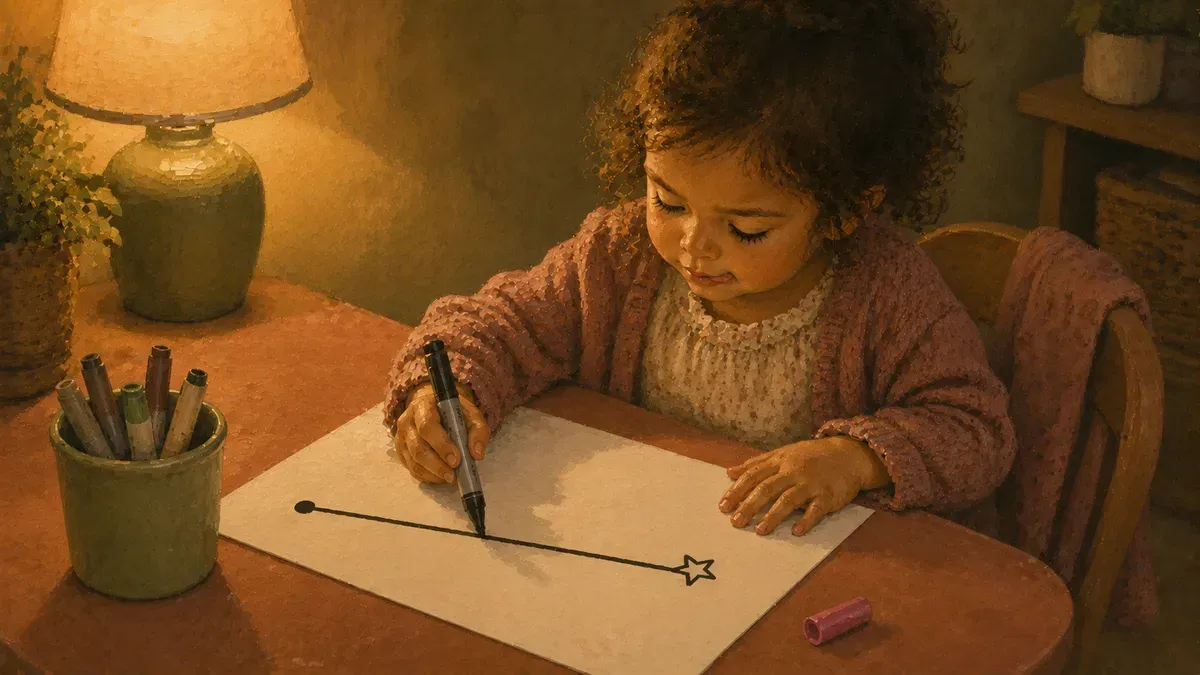
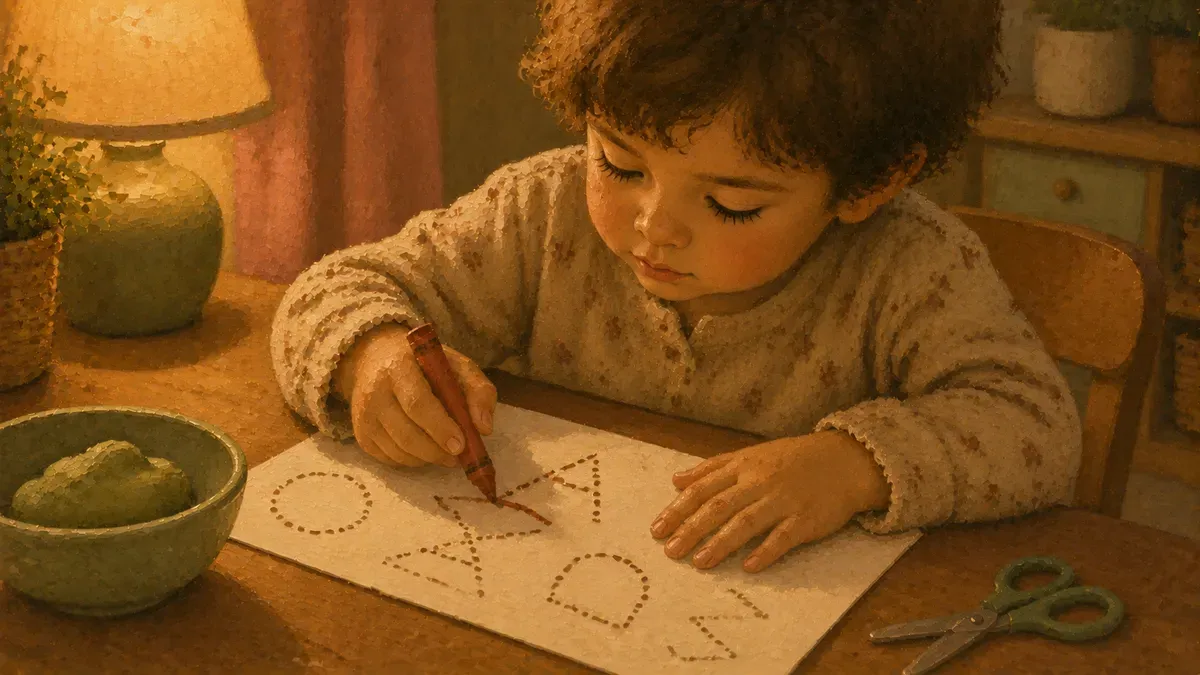
You don’t need to buy a thing to start. A fat marker and a sheet of paper with two thick lines on it does the job.
What to look for in a starter page:
- Bold, thick lines (thin guidelines wreck a 3-year-old’s grip control fast)
- Lots of white space, not a crowded grid
- Lines and circles only, no letters yet
- A start dot and an arrow so they know where to go
You can print free pre-writing line pages from teacher-share sites, or honestly just draw them yourself. Two dots, one thick line between, a little star at the end to trace toward. That’s a worksheet.
Keep the bar low. If June drags the marker off the line and clear onto the table, that’s still her eyes and hand learning to work together. Dexterity and visual motor skills don’t show up clean. They show up messy first.
Do a page, then stop while it’s still fun. Three lines and done beats a full sheet and a fight.
Helping a Pencil Grip Develop the Right Way
Before you panic about how your kid is holding that crayon, breathe. A messy grip at 3 is the starting line, not a problem, and there are quiet ways to nudge it forward without a single correction.
Fisted Grip Is Normal Right Now
If June grabs a marker in her fist like she’s about to stab a roast, that’s exactly what a 3-year-old grip is supposed to look like. The whole-hand hold has a name, and it shows up right on schedule.
Grip control matures in a known order. Per research on pencil grasp development in young children, the digital pronate grasp (fingers wrapped, palm down) lands around ages 2 to 3, and the static tripod most kids settle into comes between 3 and 4. The relaxed adult-style hold, the dynamic tripod, often doesn’t arrive until somewhere between 4 and 7.
So at 3, the fist is the milestone. Pushing for thumb-and-two-fingers now usually backfires, because the finger strength and hand strength to hold it that way aren’t there yet.
The grip follows the muscles, not the lecture.
Build the hand and the pencil hold catches up on its own.
Small Tricks That Nudge the Grip
You don’t teach a better grip. You set up the crayon so a better grip is the only comfortable option.
The oldest trick still works best: break the crayon. Oxford Health’s OT team suggests handing kids small broken pieces of crayon or chalk, because a stub is too short to fist, so the fingers tuck in toward a pincer on their own.
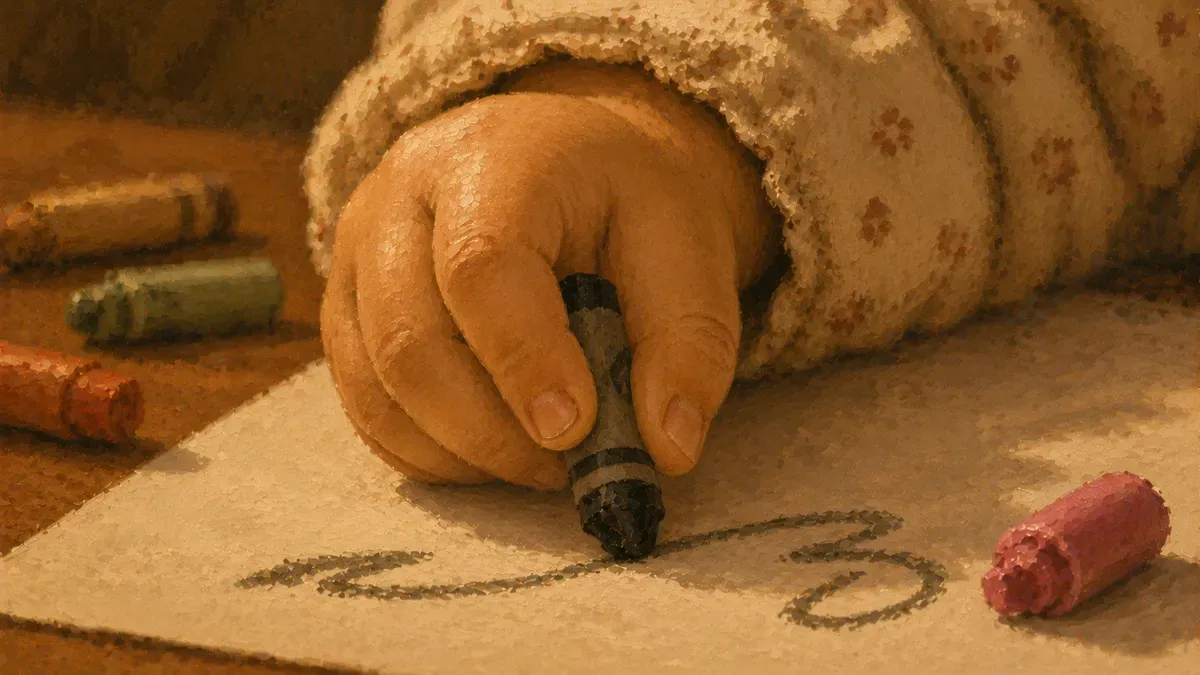
Go vertical too. The same NHS guidance points to mark-making on an upright surface, a wall taped with paper, an easel, a fridge covered in magnets, even the back of a cabinet, to fire up the shoulder and wrist and naturally promote a proper grip. Coloring on a window is dexterity work disguised as fun.
A few setups that do the nudging for you:
- Chalk on the sidewalk or a chalkboard at standing height
- Little dot stickers to peel and place, pure finger-coordination practice
None of this looks like a lesson, which is the point. If the grip still looks off in a year, that’s worth a chat with an OT, and fixing pencil grip toddlers struggle with is its own deeper rabbit hole. For now, short crayons, walls, and time.
Adapting for Lefties, Sensory Needs, and Wigglers
Not every kid comes to the table the same way, so the setup bends to fit them, not the other way around. Two adjustments cover most of it: handing a lefty the right paper angle, and giving a kid who hates mess or sitting still a version they’ll actually do.
Left-Handed and Sensory-Sensitive Kids
If your child is a lefty, the fix is mostly the paper. Tilt it clockwise, right side down and left corner up, so their hand stops dragging over what they just drew. Occupational therapy guidance on fine motor delays puts the tilt at roughly 30 to 45 degrees, which keeps the wrist straight instead of hooked and lets them see their work. Tape the page down at that angle so it doesn’t slide.
Then there’s the kid who recoils at sticky, gritty, or cold. Forcing sensory exploration backfires every time.
- A dry option: tracing in a tray of dry rice or salt, drawn with a finger
- A glove or a tool (a brush, a stick) instead of bare hands
- A standing position, which removes the seat-pressure point for kids who also struggle with sitting still
The point is play-based progress, not making them tolerate a texture they hate today.
When to Check With an OT
Mess and grip sort themselves out for most kids on their own timeline. A few patterns, though, are worth a second look.
The ones I’d flag: frequently dropping or struggling to pick up small objects, trouble holding a utensil for writing or feeding, and real avoidance or frustration around hand activities compared with same-age kids. Add one more, no progress at all over several months of regular play.
None of that means something is wrong. It means a quick chat with an occupational therapist beats another month of worrying. If you’re sorting out milestones, developmental delays, school readiness, or scissors specifically, our complete fine motor skills guide and notes on when to start scissor skills pick up where this leaves off.
Found this useful? Save it for the next rough afternoon.
Questions parents ask me about this
Should a 3-year-old be tracing letters yet?
Not really. At three, the priority is straight lines, circles, and simple curves, not letters. Pre-writing shapes are the groundwork letters are built on, and most kids aren't developmentally ready for letter tracing until closer to four or five. A fat line from one dot to another is a completely appropriate tracing target right now.
What are normal fine motor milestones for a 3-year-old?
A three-year-old is typically building a tower of blocks, turning book pages one at a time, working a simple peg puzzle, and attempting to unscrew lids or string large beads. Grasp is still shifting and scissors are just entering the picture. If your child is hitting most of those, they're in the right neighborhood.
How can I get my 3-year-old interested in fine motor activities?
Follow what they already want to touch. Kids who like scooping love a bin of rice and a spoon; kids who like building love duplo and stacking rings. The activity that holds attention for ten minutes is doing more developmental work than the perfect worksheet they won't sit through. Rotating materials every week or two keeps things fresh without buying anything new.
Is it okay for my 3-year-old to hold the crayon in a fist?
Yes, a fisted grip is completely normal at this age. The grip section above covers what actually helps.
Can a 3-year-old use scissors safely?
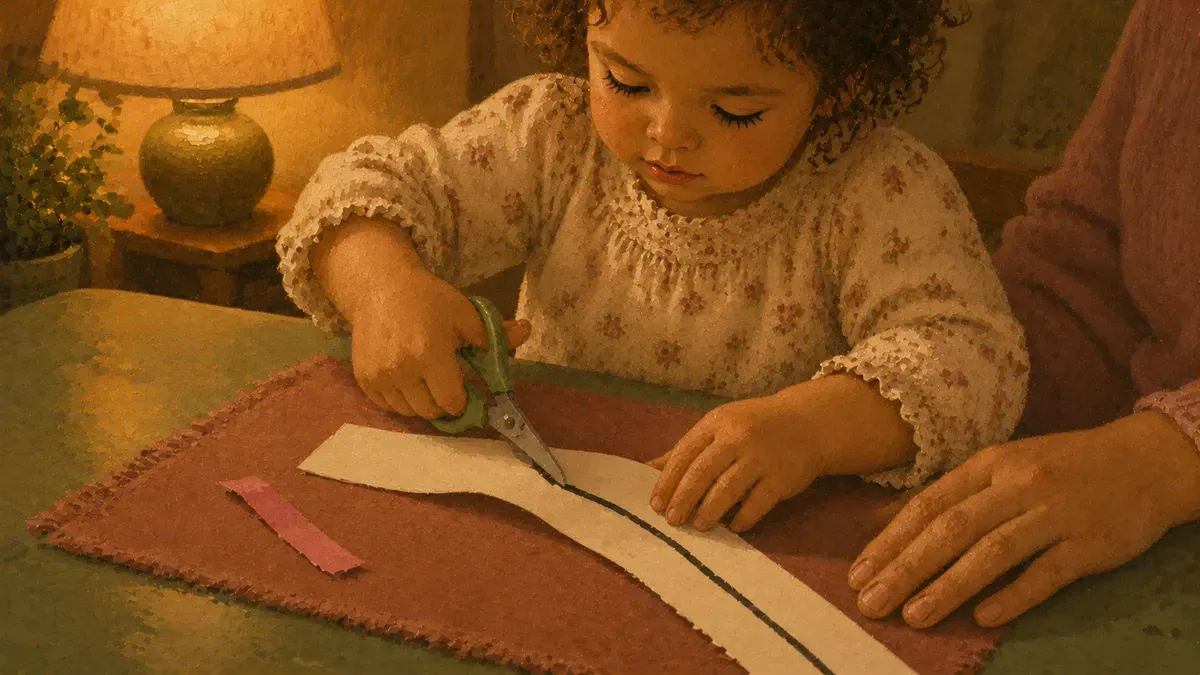
With supervision, yes. Most three-year-olds are ready to try child-safe scissors and can snip across a single strip of paper, though cutting along a line is more of a four-year-old milestone. Keep a close eye, use scissors made for small hands, and let them cut playdough or drinking straws first if the paper feels too frustrating.
How much time should a 3-year-old spend on tracing worksheets?
A few minutes is plenty, and only if they're willing. Three-year-olds do their best fine motor work through play, not seat work. Building hand strength through playdough, clothespins, and threading does more prep for future tracing than worksheets do. If your child sits happily for five minutes, great; if they push it away after two, that's fine too.
What if my 3-year-old refuses tracing and worksheets?
Skip them. Refusal usually means the activity is a mismatch for where their hands and attention are right now, and pushing it tends to build resistance rather than readiness. Playdough, painting, pouring, and sorting all build the same underlying strength without the sit-down requirement. Come back to tracing in a few months and it'll probably land a lot easier.
Written by
Nora Hayes
Mom of two and a former preschool aide. I share the screen-free sensory play and calm-down ideas I test at my own kitchen table, plus what the moms in my little meet-up swear by. A parent passing on what works, not a doctor or a therapist.
More about NoraKeep going
All Fine Motor-
 Fine Motor
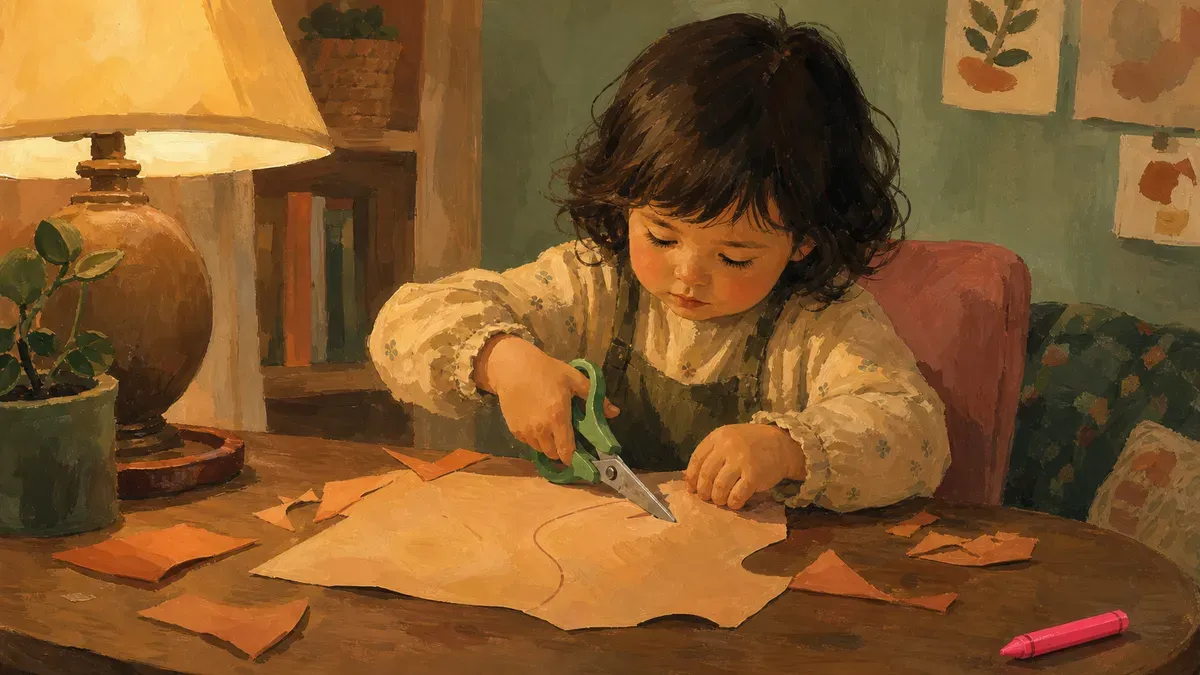
Cutting Worksheets: 15 Activities Beyond Straight Lines
Bored of straight lines? These cutting worksheets and 15 activities build scissor skills fast. Grab the free printables and start today.
-
 Fine Motor
Activities to Build Fine Motor Skills With Pom Poms
The hand strength behind neat handwriting starts with play. Try 20 pom pom activities to build fine motor skills your kid will actually beg to do.
-
 Fine Motor
Fine Motor Skills Activities for Preschoolers
Ready to write? Spot the 12 readiness signs and the fine motor skills activities for preschoolers that build the hand. Start now.
-
 Fine Motor
Fine Motor Skills Activities for 3-4 Year Olds
Worried your 4-year-old still scribbles? These fine motor skills activities for 3-4 year olds bridge scribbles to real letters. Start today.