OT Activities for Autistic Kids Who Hate Worksheets

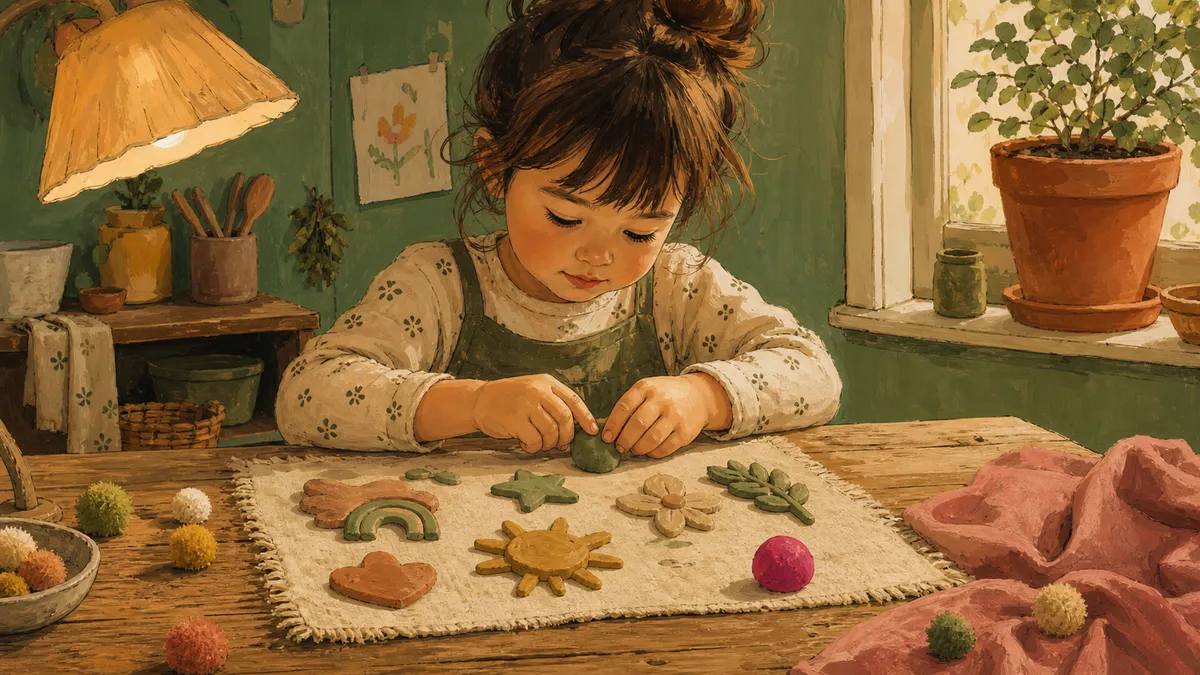
If worksheets end in a shutdown, swap the paper for play that trains the same pinch, grip, and hand strength without the resistance: tongs sorting pom-poms is a good place to start. I’m Nora Hayes, a former preschool aide and mom to an autistic sensory-seeker, and I’ve run hundreds of these sensory motor activities at my kitchen table, keeping what works and ditching the rest.
Scroll down for hands-on OT activities matched to your child’s age and sensory profile, plus how to work back toward handwriting when the time feels right.
Why Worksheets Trigger a Shutdown (And Play Doesn’t)
Most worksheets ask a kid to do three hard things at once: sit still, hold a pencil correctly, and perform on demand. For a child with sensory processing differences, that combination is a lot to manage before the pencil even touches paper.
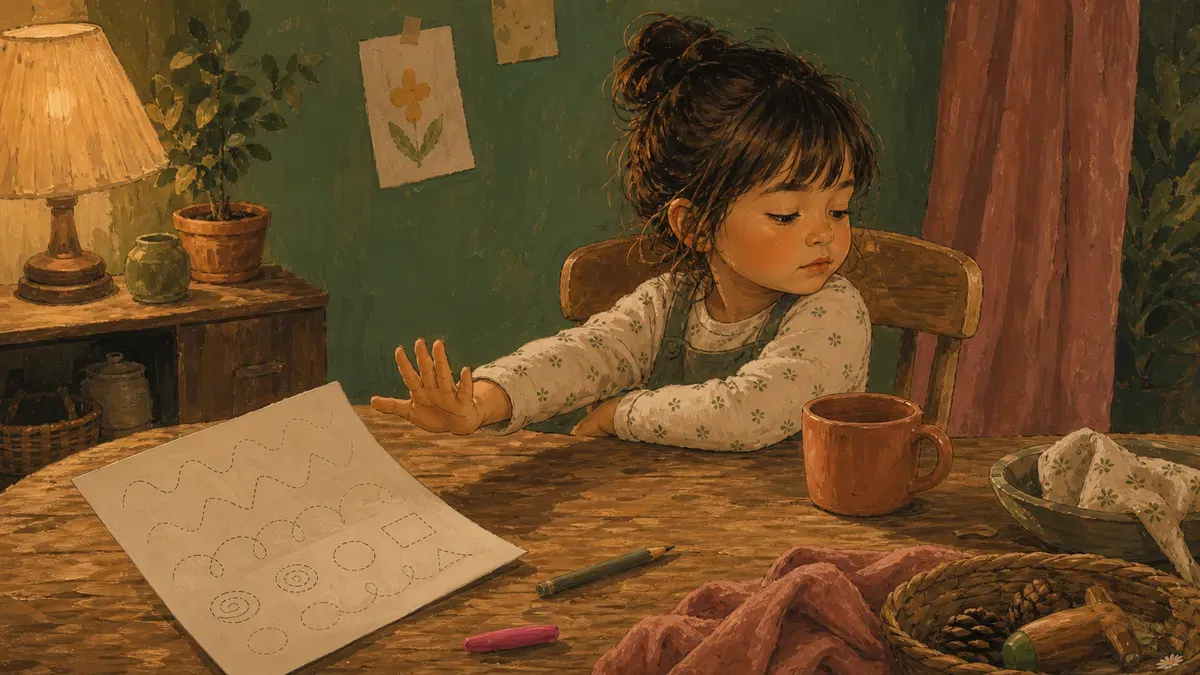
Tactile sensitivity plays a bigger role than most people expect. The grip pressure of a pencil, the texture of cheap paper, the visual busyness of a printed page: any one of those can push a sensory-sensitive child into avoidance or shutdown. The activity that looks simple to us carries friction we can’t feel.
Play works differently. A child squeezing play dough is building the same pinch strength as a tracing worksheet, but the self-regulation load is lower.
- She picked it herself, so she’s already bought in.
- She can stop when she needs to, no questions asked.
- There’s no right answer to get wrong.
Research on sensory processing in autism found that 88.8% of autistic children ages 3-4 showed at least one atypical sensory score, and those differences held steady two years later. These kids aren’t refusing to engage; their nervous systems are doing extra processing work the whole time.
The goal isn’t to skip fine motor development activities. It’s to reach the same skills through the door that’s actually open. Browse our full library of fine motor skill-building guides for the specific activities, but the “why” starts here.
Hands-On Activities That Build Fine Motor Skills Without Paper
So if the worksheet is the closed door, here’s what’s actually open: three setups that train the same little muscles a pencil does, minus the pencil. Play dough, a sensory bin, and a pile of paper your kid gets to destroy instead of write on.
- Play dough: press, pull, and pinch to build the grip strength a pencil needs.
- A rice or bean bin: scoop, pour, and sort for wrist control without a single worksheet.
- Scrap paper: rip it, ball it up, glue it down. Real hand work dressed as a craft.
Squishing, Rolling, and Pinching Play Dough
Play dough is the cheapest occupational therapy tool in the house, and your kid thinks it’s a toy. Win-win. Roll a snake, pinch it into tiny balls, squish it flat with one finger. Every one of those moves is hand strengthening dressed up as messing around.
The treasure-hunt version is the one my June asks for. Press a handful of beads or buttons deep into the dough, then hand it over and let her dig them all out. Pulling each bead free forces that thumb-and-finger pinch, the pincer grasp she’ll lean on later for a crayon.
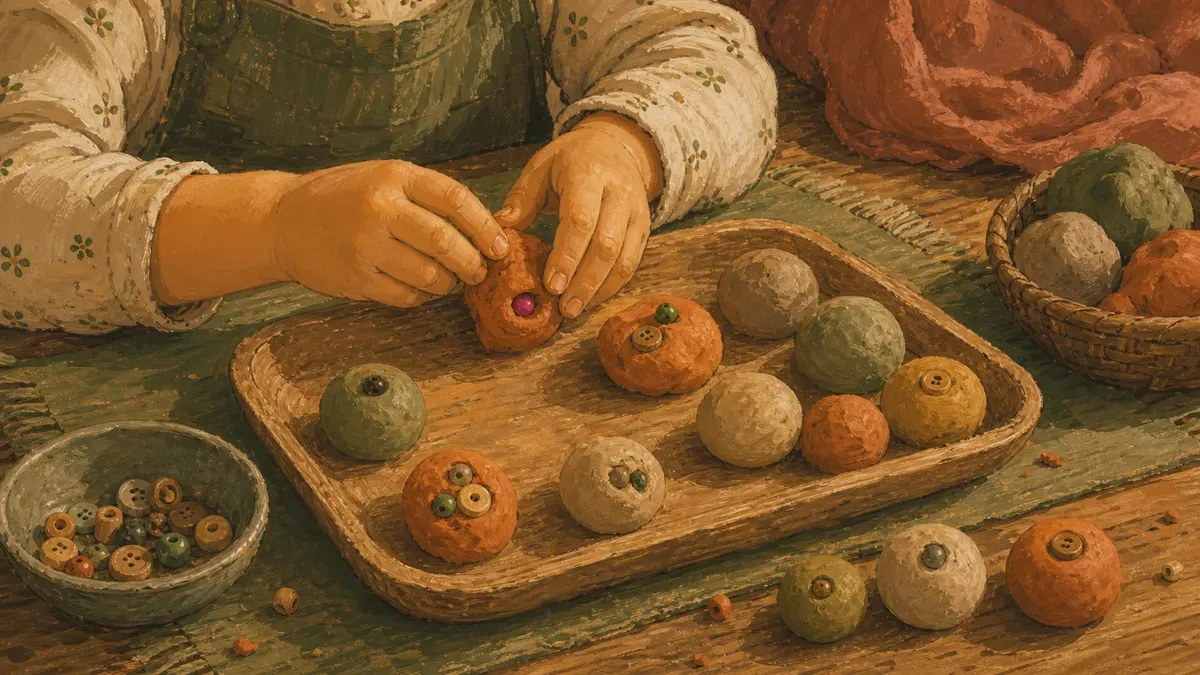
Rolling dough into small balls and placing them onto a target builds the arches of the hand and the pincer grasp, a technique NAPA Center’s occupational therapist-authored guide recommends for exactly that. No tracing line required.
Sensory Bin Scooping and Sorting
Now fill a bin with dry rice or beans and you’ve solved two problems at once. The scooping and pouring is real grasp and wrist work, and the deep, gritty feel of the rice is the input a sensory-seeking kid is already hunting for.
This is where sensory motor activities earn their keep: the hands learn while the nervous system settles. Hand a kid a scoop and a cup and the wrist rotation, the steadying grip, the careful tip-and-pour all happen without a single instruction.
Add tongs and the dexterity jumps. Sorting pom-poms by color into a muffin tin, or scooping into a cup the other hand holds steady, builds the same hand-eye coordination and bilateral control as pencil tasks, according to Tools to Grow OT. For a kid with tactile sensitivity, start with a dry, predictable filler and let them set the pace.
Tearing, Crumpling, and Sticking Paper Crafts
Here’s the plot twist. The paper isn’t the enemy, the worksheet was. Hand your kid a sheet to rip into confetti and the whole story changes.
Tearing is sneaky strong work. Each rip pulls both hands in opposite directions, which is the coordination and intrinsic hand strengthening that pencil grip actually needs. Crumpling a page into a tight ball squeezes those same small muscles even harder.
Then glue the scraps onto a shape and you’ve got a collage, plus a reason to keep going, and that engagement is half the battle. Colleen Beck of The OT Toolbox points out that tearing paper trains pinch strength, precision, and arch development, the exact fine motor skills worksheets target. Same muscles, zero meltdown. That’s the trade, and on a rough afternoon it’s the whole game. Want the dough version laid out step by step? Try these fine motor activities for preschoolers.
Movement-Based OT Activities for Kids Who Can’t Sit Still
Some kids need to move before they can do anything with their hands.
- Heavy work before tabletop tasks: fills the proprioceptive tank so the nervous system can settle and hands can follow.
- Vertical surfaces instead of a table: keeps gross motor needs met while fine motor work still happens.
Heavy Work and Animal Walks for Regulation
Proprioception is the sense that tells your body where it is in space. For sensory-seekers, it runs low fast, and when it does they hang off door frames, crash into furniture, and can’t stay in a chair for thirty seconds flat. Heavy work fills that tank.
- Bear crawls down the hallway
- Wheelbarrow walks with a parent holding their legs
- Pushing a laundry basket stuffed with books across the floor
Eli’s OT builds heavy work into every session before anything fine motor, and I can see the difference in how he sits afterward.

Vertical Surfaces and Wall Work
Put the paper on the wall.
Working upright opens the wrist into extension and activates shoulder stability without a single instruction. For a kid who needs to be on their feet, an easel or a sheet taped to the wall keeps gross motor needs met while the hands still do the work.
Research published in the American Journal of Occupational Therapy found that children moved faster and more smoothly when copying shapes on a vertical surface than on a desk, and their accuracy stayed the same.
- Window markers on the sliding glass door
- Chalk on a low section of fence outside
Both are solid fine motor activities kid cant sit through a whole table session, because the wall does not require sitting.
Matching Activities to Your Child’s Age and Sensory Profile
Age and sensory profile together cut the guesswork, and here’s a starting point for each.
Toddlers and Preschoolers Who Avoid Crayons
If a two- or three-year-old refuses crayons, they’re not behind. The fine motor developmental milestones by age show the tripod grasp often doesn’t settle until ages 5-6, and pushing pencils before then can lock in a primitive grip that’s harder to undo later.
For toddlers with tactile sensitivity, the fix is distance between the hand and the material.
- Finger-painting inside a sealed zip-lock bag (hands stay clean, pincer muscles still work)
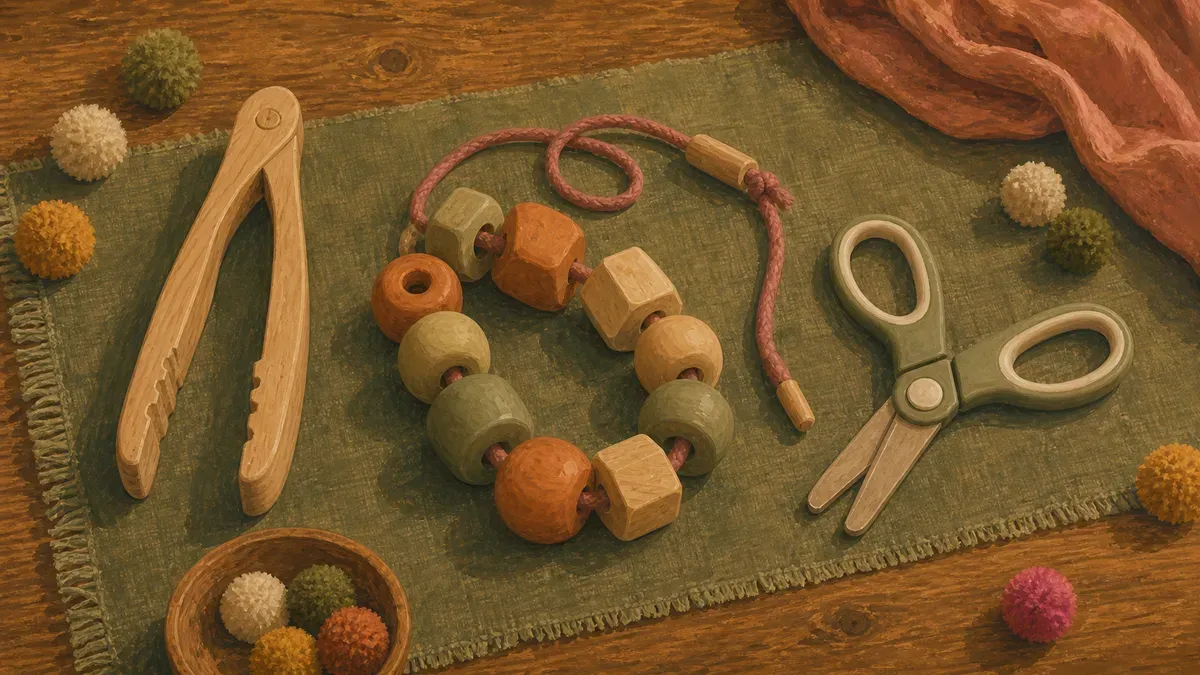
- Lacing large wooden beads onto a thick cord
- Pressing small objects like buttons or craft foam shapes into a sheet of contact paper
Let them choose: set out a dry bin (rice, dried beans) and a wet one (damp sand, cloud dough). A toddler who goes straight for the dry bin is giving you engagement data for fine motor skills planning.
School-Age Kids and Sensory Seekers vs. Avoiders
By school age, seekers and avoiders are obvious. Seekers have a high threshold and crave input; avoiders have a low threshold and shut down from too much. Per RehabMart’s breakdown of sensory seeking vs. avoiding, each profile needs opposite adaptations, so the same activity can be exactly right for one kid and wrong for another.
For seekers, add resistance and pressure.
- Playdough packed with extra cornstarch
- Lacing cards with cord they have to pull hard
- Cutting craft foam instead of paper
Their nervous system needs the self-regulation input cranked up before their hands will settle into anything precise.
For avoiders, strip everything back.
- One dry material, one tool, a tray with walls so nothing spills unexpectedly
- Predictability is the coping skill
Their sensory processing needs to stop bracing before the fine motor work can start.
Eli is a seeker, and getting that read right before school age changed a lot once pencils came into the picture. Our full guide on handwriting help autistic 7 year old is a good next step when you’re ready.
Bridging Play Activities Toward Handwriting Readiness
None of this play exists in isolation from school. The pom-pom tongs and play dough and turkey basters are doing real pre-writing work, and a 2024 systematic review in Frontiers in Sports and Active Living found a large positive correlation between fine motor skills and math achievement (r = 0.60) and a medium correlation with reading ability (r = 0.35). Those numbers aren’t an argument to drill harder. They’re a reminder that the play is the prep.
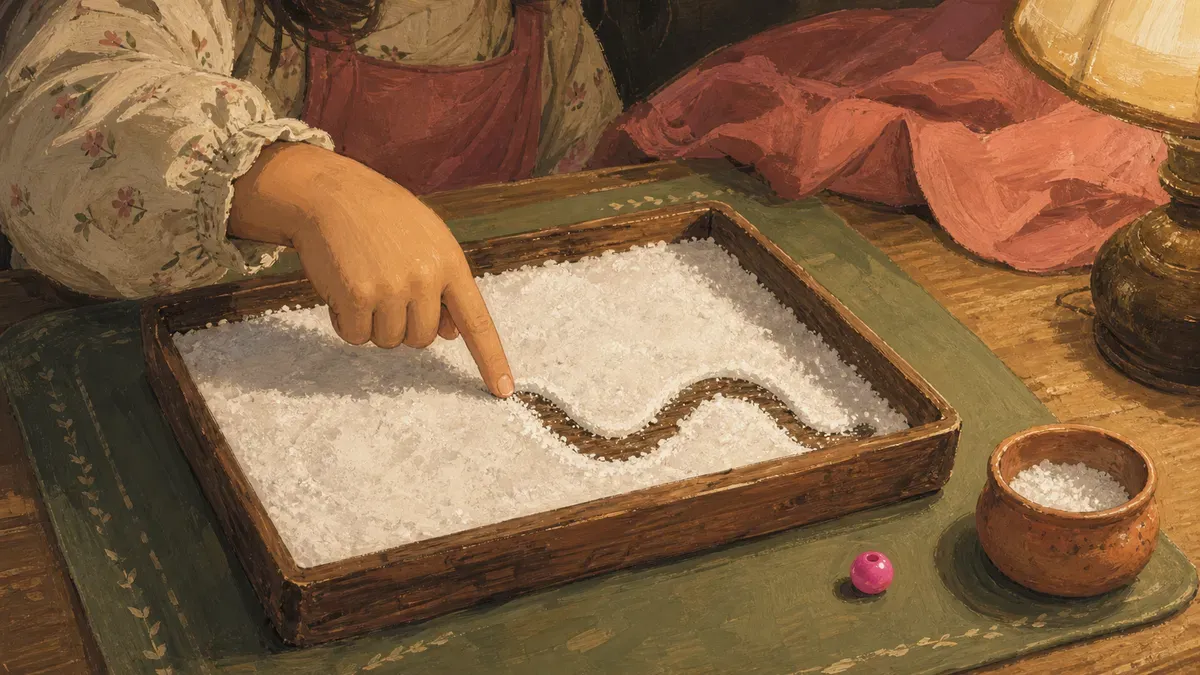
The practical bridge is simpler than most handwriting curricula make it sound. Salt tray tracing (one finger, shallow dish, any shape) builds the visual perception and motor control that pencil work needs, without the grip pressure or the paper. For a kid who tenses up the moment a pencil appears, this is the on-ramp. You’ll find more progressions in our guide to fine motor tracing handwriting scissor skills.
- Tracing on a vertical surface (window, door, chalkboard) develops wrist extension and bilateral coordination before the hand ever holds a tool.
- Push-stick drawing in cloud dough keeps the pincer pattern going without the tactile challenge of a pencil barrel.
- Dot-to-dot on a light table strips the visual noise so your child can focus on direction and sequence.
If your child needs more than a different surface, the specific accommodations worth trying first are covered in sensory friendly tracing make handwriting practice. School readiness isn’t a single skill you drill. It’s thirty small things, slowly stacking. If play is what opens the door to all of them, then play is exactly the right place to start.
Found this useful? Save it for the next rough afternoon.
Questions parents ask me about this
What OT activities help kids who resist traditional worksheets?
Anything that builds the same pinch, grip, and hand strength without the paper. Salt tray tracing, lacing cards, cloud dough push-stick drawing, hiding small objects in play dough, and scooping from a rice or bean bin all target the same fine motor foundations. The key is matching the activity to what your child can tolerate sensorially. A tactile avoider may do better with tongs and stickers than digging bare-handed into a bin.
How do OT activities build the same skills as worksheets?
Worksheets ask a child to pinch a pencil, control pressure, and track a line, all at once, while also managing whatever the paper texture, the desk, and the fluorescent lights are doing to their nervous system. Play-based activities isolate and train each component separately: tearing paper builds the same pinch-and-arch motion, pouring and scooping build wrist stability, and drawing on a vertical surface trains the wrist extension handwriting needs. The skills are identical; the self-regulation load is much lower.
How long should an OT activity session last for an autistic child?
Start shorter than you think. Two to five minutes of genuine engagement beats fifteen minutes of hovering and meltdown. Many autistic kids, especially sensory-seekers, will naturally extend an activity they like. Follow that lead. If your child consistently exits before two minutes, the activity may need to be simpler, quieter, or less tactile, not longer.
Can I do occupational therapy activities at home without a therapist?
Yes, with reasonable expectations. Play-based fine motor activities at home build real skills, and a working OT relationship moves faster when your child gets daily practice in between sessions. What a therapist brings is assessment, goal-setting, and knowing when something is a preference versus a developmental gap. Use home activities to supplement, not replace, professional support when your child needs it.
What if my child refuses every activity I offer?
First, strip it down. Some kids refuse because the activity is too complex, too messy, or being offered at the wrong moment in the day. Try offering after heavy work (animal walks, pushing a laundry basket, a few minutes outside) when the proprioceptive tank is fuller. If refusal is consistent across everything, that is useful information to bring to an OT rather than a problem to solve with a better activity.
How do I know if an activity is actually building fine motor skills?
Watch the hands, not the outcome. You want to see a pinch grip on small objects, deliberate wrist movement, and both hands working together: one to stabilize, one to manipulate. If your child is scooping with a fist or using their whole arm instead of their wrist, the activity may be too hard or they may need more time at an easier version. A child who used to dump the bin immediately but now sorts for three minutes is progressing, even if nothing looks polished.
Are these activities suitable for kids with ADHD too?
Most of them, yes. Kids with ADHD often respond well to activities with clear physical feedback. Squeezing, pouring, sorting all work because the sensory input keeps them anchored to the task. Movement-based activities and vertical surfaces tend to work especially well. Keep sessions short, match the activity to your child's current regulation state, and do not push through an obvious wall.
Written by
Nora Hayes
Mom of two and a former preschool aide. I share the screen-free sensory play and calm-down ideas I test at my own kitchen table, plus what the moms in my little meet-up swear by. A parent passing on what works, not a doctor or a therapist.
More about NoraKeep going
All Fine Motor-
 Fine Motor
Cutting Worksheets: 15 Activities Beyond Straight Lines
Bored of straight lines? These cutting worksheets and 15 activities build scissor skills fast. Grab the free printables and start today.
-
 Fine Motor
Activities to Build Fine Motor Skills With Pom Poms
The hand strength behind neat handwriting starts with play. Try 20 pom pom activities to build fine motor skills your kid will actually beg to do.
-
 Fine Motor
Fine Motor Skills Activities for Preschoolers
Ready to write? Spot the 12 readiness signs and the fine motor skills activities for preschoolers that build the hand. Start now.
-
 Fine Motor
Fine Motor Skills Activities for 3-4 Year Olds
Worried your 4-year-old still scribbles? These fine motor skills activities for 3-4 year olds bridge scribbles to real letters. Start today.