Sensory Bins for Toddlers: The Honest Beginner's Guide

Some links here are affiliate links. If you buy through one, I may earn a small commission at no extra cost to you. As an Amazon Associate I earn from qualifying purchases. I only point to things I'd actually use with my own two.
A sensory bin is a container filled with material your toddler can dig, pour, scoop, and explore, and you can build one tonight with rice and a dollar-store bin. I’m Nora Hayes, a former preschool aide and mom of two, and sensory bins calm wound-up toddlers, occupy bored ones, and build fine motor skills while you drink a hot coffee.
According to the Cleveland Clinic, over a million neural connections form every second in the first three years of life, and hands-in-rice play is one of the easiest ways to put those connections to work.
The plan in brief:
- Grab any shallow bin and fill it with one dry material (rice, oats, or dried pasta).
- Add 2-3 scooping tools and one small toy. No theme needed for the first try.
- Set a 15-minute timer, sit nearby, and let your toddler dig without redirection.
What Is a Sensory Bin (and Why Does It Actually Matter)?
A sensory bin is a shallow container filled with loose material (rice, oats, sand, water, pasta) that a toddler can dig into with both hands. There are no instructions, no right answers, no wrong moves. That open-ended quality is exactly the point: sensory play gives toddlers a low-stakes space to problem-solve, experiment, and regulate without needing your direction every thirty seconds.
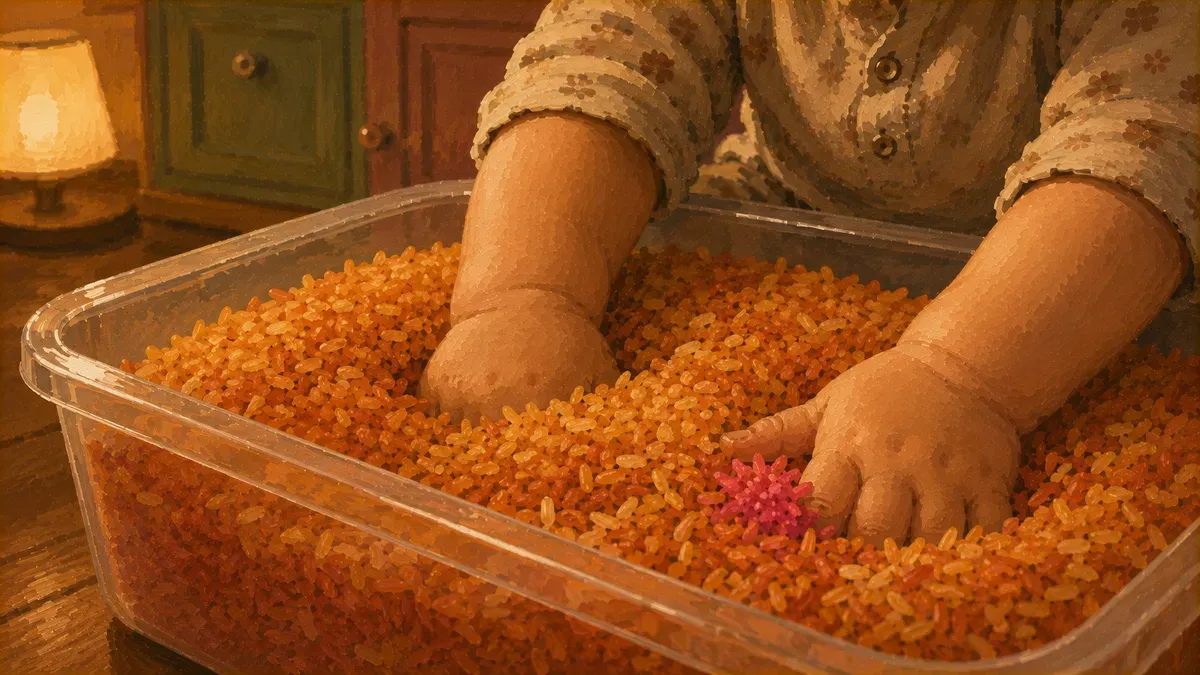
The phrase “what is sensory play” comes up constantly among new parents because it sounds complicated. It isn’t. If your toddler is squishing, pouring, scooping, or burying something with their hands, that’s sensory play. The bin is just a contained version, one that keeps the rice off the couch.
As a guide to sensory bins for toddlers, the research backs up what parents observe daily. The AOTA estimates that up to 15% of school-age children have sensory processing challenges, and occupational therapists consistently point to early tactile exploration as a foundational support for neurological development. You don’t need to be worried about sensory challenges to benefit from this. The developmental benefits apply to every toddler, every time they scoop and pour.
The occupational therapy community considers sensory bins a legitimate tool, pointing to three specific areas of early development:
- Body awareness: toddlers learn where their hands are and how much pressure they’re applying through resistance materials like rice or sand.
- Attention regulation: open-ended play with no right answer extends focus without external direction.
- Tactile discrimination: handling materials of different textures trains the nervous system to sort sensory input efficiently.
A sensory experience that looks like mess is, for a toddler’s nervous system, serious work.
How to Build Your First Sensory Bin in 10 Minutes
Once you know what a sensory bin does, building one is the easy part. Here’s the whole method in three steps. Everything for your first diy sensory bins run should already be in your kitchen.
- Pick your container: any shallow 6-12 quart bin works.
- Choose one filler: rice, oats, or dried pasta.
- Add 2-3 tools and one simple prop.
Step 1: Pick Your Container
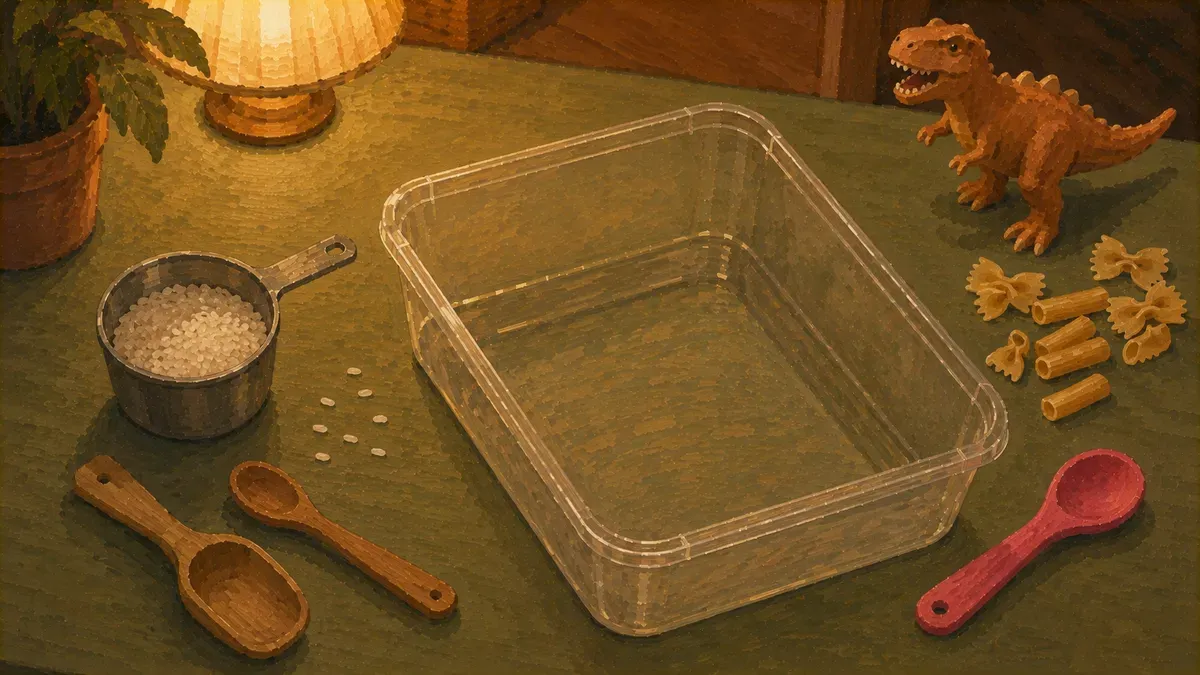
The best children’s sensory table setup doesn’t require an actual sensory table. A shallow 6-12 quart plastic storage bin does the job: low enough that a toddler can reach the bottom, high-walled enough to catch most spills, and cheap enough that you won’t wince when it gets dyed. The snap-lid bins I keep on hand come as a 12-pack and wear an Amazon’s Choice badge on 14,000-plus reviews at 4.6 stars, so you can dedicate one to sensory play, snap the lid on to save a half-dug bin for tomorrow, and keep a stack for real storage. IKEA Trofast bins are a favorite in sensory play circles because they slot into a frame, but any shallow container works. Galvanized trays too.
The bin will get dyed, scratched, and dropped, so buy the cheap one on purpose.
Daily sensory play, and tired of hauling a bin on and off the floor? One upgrade earns its keep: a stand-up table. This 3-in-1 toddler sensory table, rated 4.8 stars by 5,000-plus parents, hides the whole mess under two removable lids between sessions and ships with 13 tools to get going. Still just testing the waters? Skip it, and let the dollar-store bin prove the idea first.
Step 2: Choose One Filler
For the first bin, pick ONE dry filler and stick with it.
- Rice: fills the bin to a good depth; the kinesthetic feedback from pouring and scooping holds attention well.
- Oats: safest pick for toddlers under 18 months who still mouth things; taste-safe and recommended by occupational therapists.
- Dried pasta: sturdier and louder, good for sensory seekers who need more input.
All three cost under a few dollars and are probably already in your pantry.
Mixing fillers on the first try overloads attention. One texture at a time lets your toddler focus on the sensory activities instead of processing multiple inputs. Once your child knows what to expect from a sensory box, dyed rice and cloud dough are natural next steps.
Step 3: Add Tools and a Simple Prop
Two or three scooping tools is plenty. A muffin tin, measuring cup, and small spoon cover the core motor moves: scooping, pouring, and sorting. Measuring cups and spoons are also recommended by early childhood educators over specialty tools because they’re dishwasher-safe, cheap, and sneak in early math concepts.
Add one simple prop: a small toy dinosaur, a plastic cup, or a kitchen funnel to give the setup a loose theme.
The Best Sensory Bin Fillers for Toddlers (and What to Skip)
Now that your bin is ready, the filler is the decision that actually changes what the session feels like. Here’s what works, what’s worth skipping, and what you need to know before you open the bag.
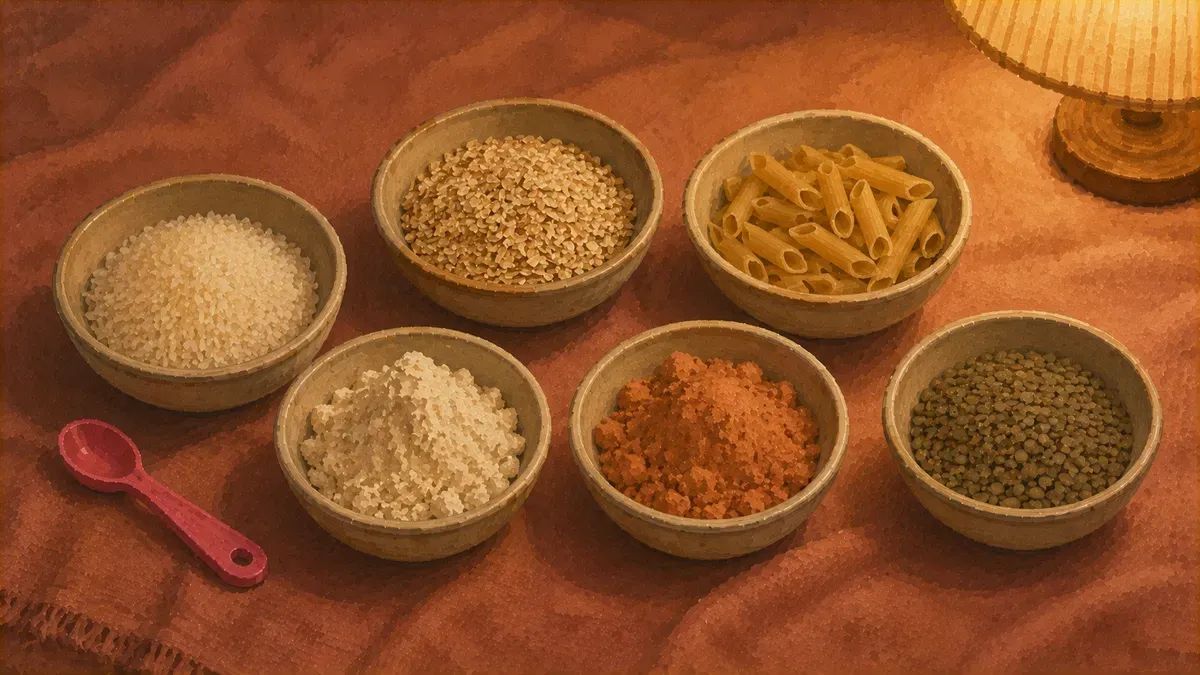
The reliable starting lineup for sensory bin ideas for toddlers:
- Dry white rice: The classic. Pours beautifully, quiet enough for a tired parent’s nerves, cheap to replace when it ends up on the floor. Dye it with food coloring and rubbing alcohol for more visual interest. Check sensory bin fillers for the full pantry list.
- Oats or rolled oats: The safest beginner filler for children under 18 months. Edible, soft, taste-safe. No worries if a handful goes in the mouth.
- Dried pasta: Louder and sturdier than rice, better sensory boxes for toddlers who need more input. Penne and rotini hold scooping tools better than smaller shapes. Safe if mouthed by older toddlers.
- Cloud dough (flour + baby oil): Moldable, soft, smells neutral. Excellent for toddlers who want to squeeze and shape. Makes a mess; do it on a drop cloth.
- Kinetic sand: Sticks to itself, never to your hands, and molds back together no matter how many times it gets smashed. The kinetic sand most parents settle on carries 19,000-plus reviews at 4.7 stars and lives in a resealable bag, which is the whole point: dig, mold, zip it shut, walk away. It runs pricier than a bag of rice and it’s rated for ages 3 and up, so save it for a sensory-seeker who’s done putting everything in their mouth. Reusable, though, so it earns the cost back over a dozen rainy afternoons; check the current price on Amazon before you buy.
- Oobleck (cornstarch + water): A science lesson in a bin. Solid when pressed, liquid when released. An unusual sensory experience worth trying once. Clean up before it dries.
A few fillers worth skipping or treating with caution:
- Water beads: Skip these for toddlers. The CPSC approved a federal safety standard in 2025 banning water bead toys that expand to more than 5mm in diameter, following approximately 6,300 ingestion injuries in U.S. emergency departments between 2017 and 2022. A separate CPSC warning flagged certain brands for acrylamide, a chemical linked to cancer. Use rice instead.
- Small beads, buttons, or marbles: Choking hazard. Not worth it under age 3.
- Slime with borax: Borax is a skin irritant, not recommended for toddlers. Commercial taste safe sensory play options exist, but read the label.
For the full guide on what’s edible, taste-safe, and toddler-tested, see taste safe sensory play.
What Sensory Play Actually Does for Toddler Development
If you’ve been telling yourself you’ll set up a sensory bin “when things calm down,” here’s the part worth knowing: this isn’t enrichment theater. The benefits of sensory play are documented and specific.
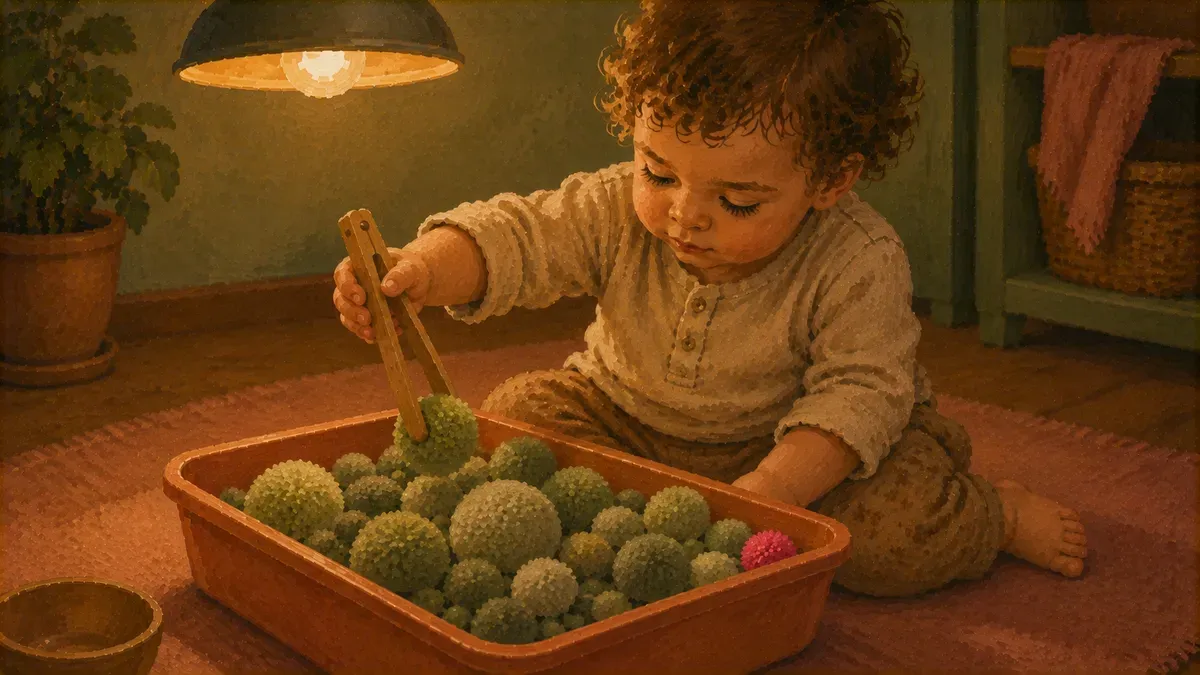
Every scoop, pinch, pour, and transfer builds hand strength and hand-eye coordination. Those are the same muscles a child needs for writing, dressing, and cutting, and a bin of rice builds them just as effectively as a specialist toy. A quasi-experimental study published in Education Sciences found significant improvements in developmental performance in children assigned to sensory-rich messy play compared to structured non-sensory activities.
Four areas of development get consistent support from sensory bin activities for kids:
- Fine motor skills: hand strength, coordination, precision grip
- Language development: vocabulary through conversation while exploring
- Cognitive development: decision-making, problem-solving, executive function
- Emotional regulation: calming proprioceptive input before transitions
The areas of the brain responsible for language are closely linked to sensory processing regions. When a toddler touches something and hears its name at the same moment, the brain wires a connection between sensation and word. Themed bins (“ocean,” “farm,” “kitchen”) accelerate vocabulary naturally, through conversation rather than drills.
Problem-solving is embedded in every open-ended sensory play experience: your toddler decides what to fill, what to empty, which tool works for which task. That’s executive function in training. A 2024 study published in Frontiers in Education found children experiencing multi-sensory learning showed 34% better engagement and retention compared to single-sense learning approaches.
When sensory bin activities help most:
- Before transitions: five minutes in the bin before lunch, nap, or leaving the house reduces meltdown risk for most toddlers.
- For regulation: the calming proprioceptive input from scooping works for all kids, not only those with processing differences.
The repetitive input from scooping and pouring has a measurable calming effect on the nervous system: proprioceptive input without the intensity of heavy work.
For children with sensory processing differences, the stakes are higher. This is a cornerstone of occupational therapy intervention. For more on that application, see our guide on sensory integration occupational therapy intervention.
Mess, Meltdowns, and Other First-Timer Problems (Solved)
You know what to put in the bin. The harder question, for most new parents, is how to survive the first session without spending forty minutes cleaning up or watching a toddler dissolve. Here’s what actually helps.
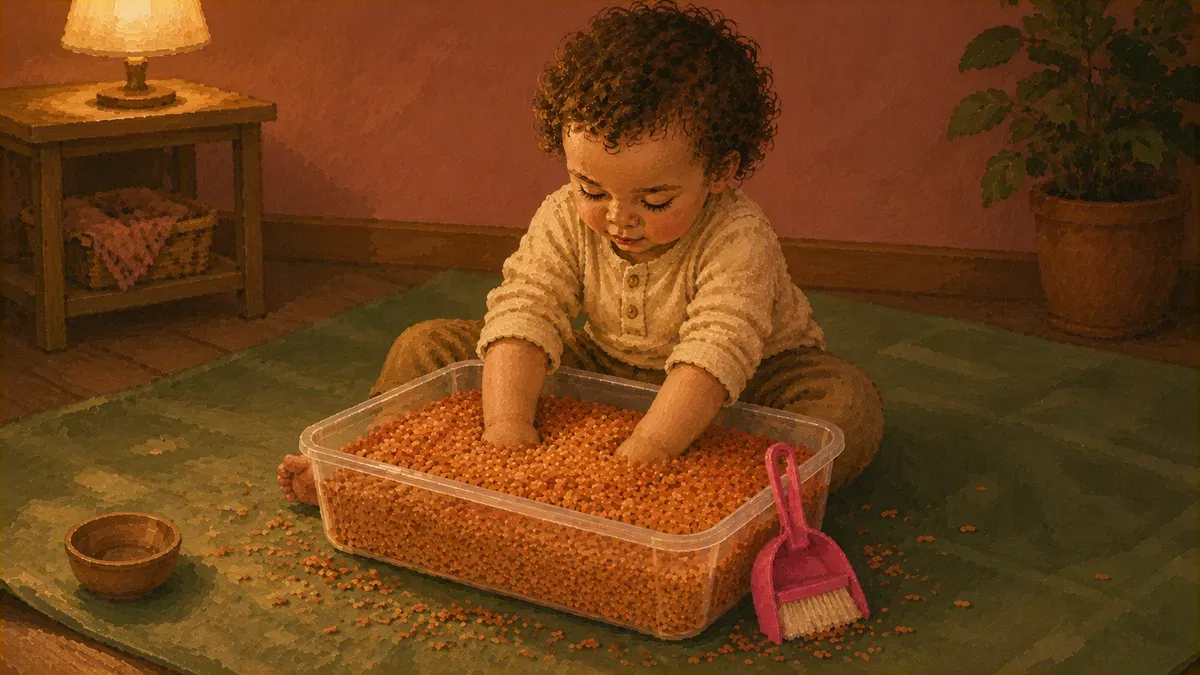
Five first-timer problems, each with a practical fix:
- Mess: use a drop cloth or move to the bathtub
- Immediate dumping: normal under age 2; refill together
- Refuses to touch the sensory crafts: model it first, give them time
- Two-minute sessions: count it as a win
- Eating the filler: switch to taste-safe options under 18 months
The mess is manageable, not optional. For toddler sensory activities, some spillage is unavoidable and part of the point, but you can contain most of it. The table below covers the three most common containment setups:
| Setup | Best for |
|---|---|
| Washable splash mat (4.6★, 2,000+ reviews) | Hard floors; wipes clean or goes in the wash |
| Shower curtain liner | Same coverage for a couple of dollars |
| Bathtub or large tray | Apartments and carpeted rooms |
Add a small dustpan and broom nearby so your toddler can help clean up at the end. It’s a game to them and teaches the expectation.
My toddler just dumps everything immediately. That’s normal toddler behavior, not a problem to fix. The dumping IS the sensory play for a lot of kids under two. They’re exploring cause and effect. Let it happen, then refill together. Over time, introduce tools that slow the dumping cycle.
- Smaller scoops
- A muffin tin to fill one cup at a time
- A funnel that makes pouring take more effort
For deeper troubleshooting on this, see our guide on stop dumping.
They won’t touch it. Some toddlers, especially sensory-avoiders, will stand at the edge of the bin and look at you like you’ve lost your mind. Don’t force contact. Start by putting their hands in YOUR hands while you touch the filler. Or get in it yourself first, narrate what you’re doing, and give them time to decide. Some kids take three sessions to warm up. That’s fine.
Resistance fades with repetition.
It ended in two minutes. Two minutes of full sensory engagement is a win for some developmental stages. Take the win. Put the lid on the bin for tomorrow. The sessions get longer on their own.
They’re trying to eat the filler. Under 18 months, assume everything goes in the mouth. Use only taste-safe, edible fillers (oats, cooked pasta, puffed rice cereal) and supervise the whole session. Non-edible cleanup materials like kinetic sand and cloud dough are for toddlers who have moved past the mouthing stage.
5 Sensory Bin Themes to Try This Week
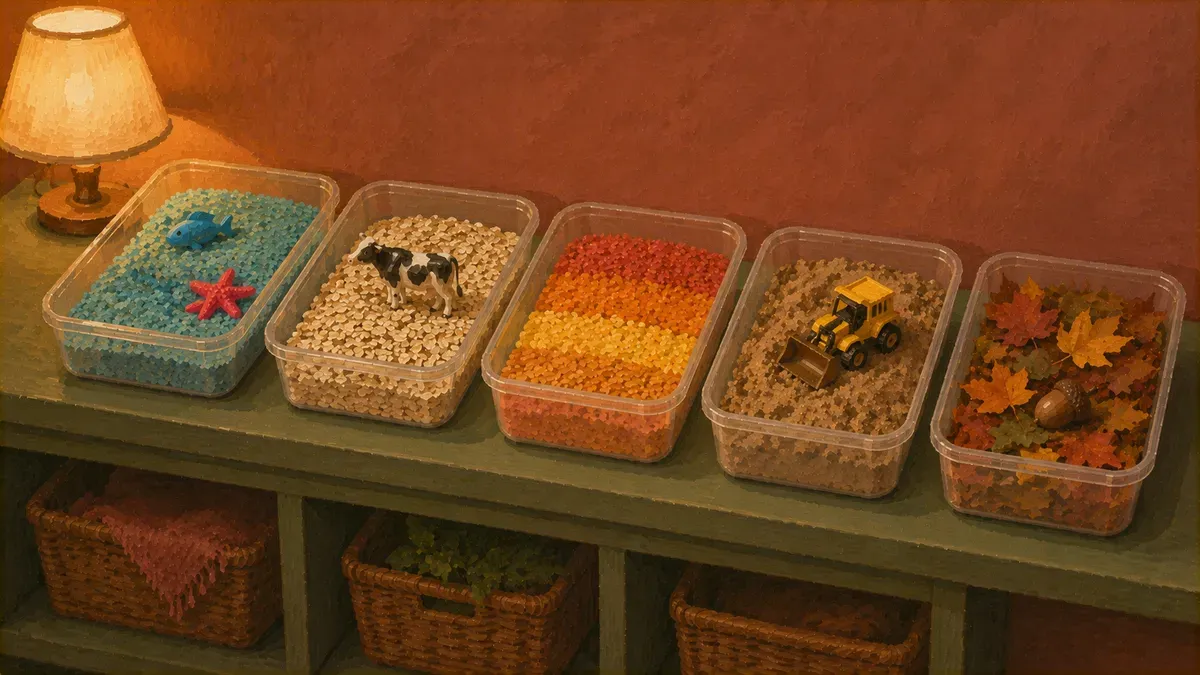
Once your toddler knows the sensory bin routine, themes stretch the activity without much extra work. Each one below works with materials you can pull together tonight. Speech-language pathologists point out that themed bins (where you name objects, describe textures, and narrate what’s happening) are a naturalistic vocabulary-building strategy that works from around 18 months up. For a full list of thirty sensory bin ideas for toddlers, see all about me sensory bin.
-
Ocean bin: Blue-dyed rice or water, a few plastic fish, a crab, a scoop and a small bucket. Narrate: “fish,” “shell,” “scoop the water.” Simple vocabulary, high engagement. Great for 18 months up.
-
Farm sensory bin: Oats or shredded paper as the base, a few small farm animals, maybe a tiny barn. Toddlers who like animals will stay in this one for a long time. Hide the animals under the filler for added hunting play.
-
Rainbow rice: Dyed rice in two or three colors in separate sections of the bin. No props needed. The colors alone hold attention for younger toddlers. Our diy sensory bins guide shows exactly how to dye rice in under ten minutes with stuff from your kitchen.
-
Construction bin: Sand or kinetic sand as the base, small construction vehicles, a ramp made from a cardboard tube. Toddlers who love trucks will move the sand with the digger for longer than you’d expect. Works for seasonal outdoor sensory activities too.
-
Autumn leaves bin: Dried leaves, small gourds or plastic acorns, and a scoop. Entirely natural, taste-safe enough for supervised older toddlers, and a good sensory bin kits alternative if you want to introduce seasonal vocabulary without buying anything. A favorite sensory play option for sensory-seeking kids.
When you’re ready to go deeper with themed bins by season, holiday, interest, and age, our sensory bin fillers hub has twenty fillers already sorted by what you have on hand.
Found this useful? Save it for the next rough afternoon.
Questions parents ask me about this
What age can toddlers start using sensory bins?
Most toddlers are ready for supervised sensory bin play from around 12 months. Under 18 months, use only taste-safe, edible fillers like oats or puffed rice cereal since mouthing is normal at that stage. By 18 months to 2 years, most toddlers can handle non-edible dry fillers like white rice under close supervision.
Are water beads safe for toddlers?
Water beads are not recommended for toddlers. The CPSC issued safety standards and warnings about the ingestion risk and chemical hazards they present to young children. Use rice, oats, or dried pasta instead, which gives similar scooping and pouring feedback without the safety concerns.
How do I stop my toddler from dumping everything out?
Dumping is developmentally normal, especially under age two. It's cause-and-effect exploration, not defiance. Let it happen, then refill together to make cleanup a routine. If you want sessions to last longer, introduce tools that slow the process: smaller scoops, a muffin tin to fill, or a funnel that makes pouring take more effort.
What do I do if my toddler eats the sensory bin material?
For toddlers still in the mouthing stage, the solution is to only use taste-safe, edible fillers: oats, cooked pasta, or puffed cereal. If your toddler ate a small amount of non-edible dry rice or pasta, it's generally not harmful, but contact your pediatrician if you're concerned. Non-edible materials like kinetic sand and cloud dough should wait until your child has moved past consistent mouthing.
How long should a toddler play in a sensory bin?
Even two to five minutes of focused engagement counts as a successful session for younger toddlers. Sessions naturally get longer as your child becomes familiar with the bin and the expected behavior. Most toddlers between 18 months and 3 years will play for 10 to 20 minutes once the routine is established.
What are the cheapest sensory bin fillers?
Rice and oats are the cheapest options, both costing under a few dollars for a bag that fills a standard bin. Dried pasta, lentils, and dried beans are similarly affordable and often already in the pantry. Kinetic sand and cloud dough cost more but are reusable, which reduces the per-session cost over time.
Do I need a special sensory table or will a plastic bin work?
A plastic storage bin works just as well for most toddlers. A 6-12 quart bin from a dollar store is all you need to start. Dedicated sensory tables are convenient for older toddlers who stand to play and for households where the activity is daily, but they're not necessary for a beginner setup.
Written by
Nora Hayes
Mom of two and a former preschool aide. I share the screen-free sensory play and calm-down ideas I test at my own kitchen table, plus what the moms in my little meet-up swear by. A parent passing on what works, not a doctor or a therapist.
More about NoraKeep going
All Sensory Bins-
 Sensory Bins
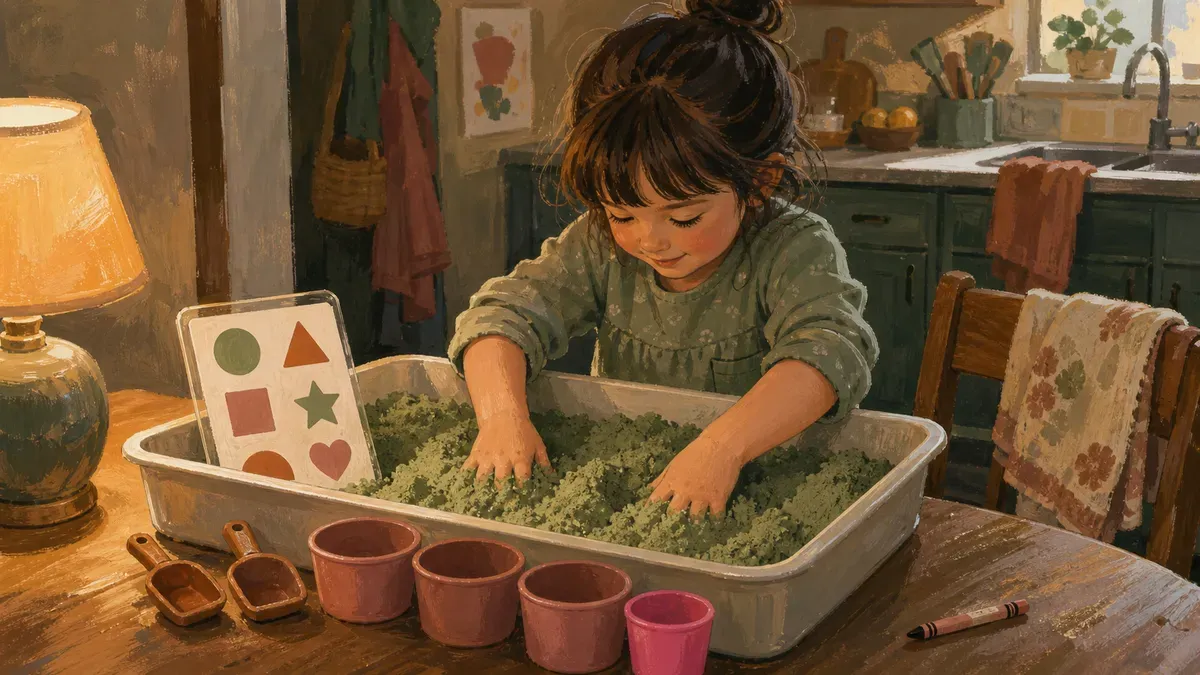
Sensory Bin Fillers: 20 Pantry Items You Own Now
Skip the craft store: 20 sensory bin fillers already in your pantry tonight, sorted by texture, mess level, and age. Start one in minutes.
-
 Sensory Bins
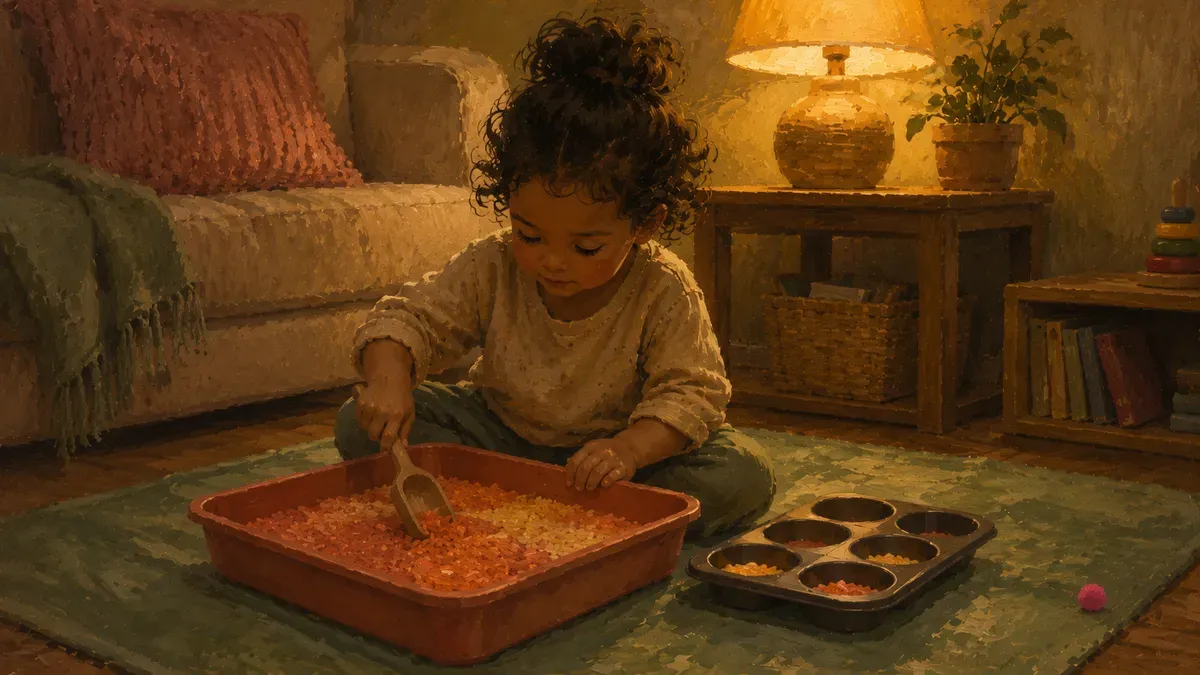
sensory integration occupational therapy intervention: ADHD
Turn sensory integration OT into a home calm-down bin for ADHD kids. Task cards, bin ideas, and a setup that works on the hard days.
-
 Sensory Bins
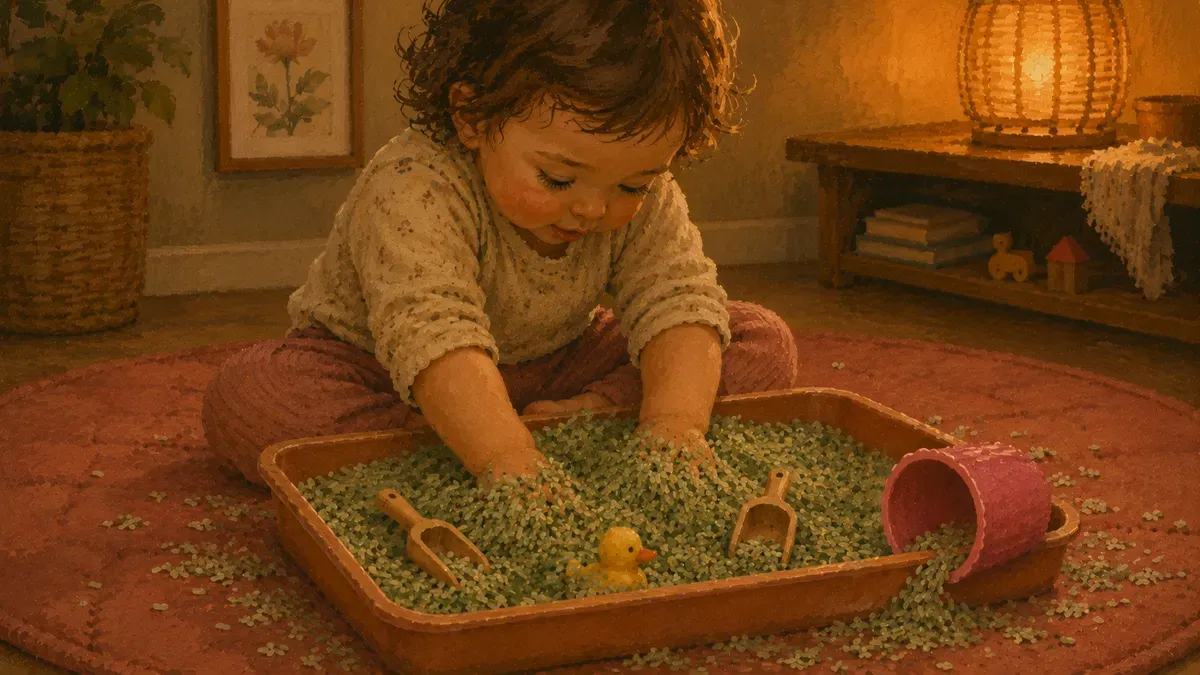
Indoor Sensory Play: 18 Low-Mess Setups That Work
Dreading the cleanup? These indoor sensory play setups stay on the mat, work in apartments, and reset in minutes. Start tonight.
-
 Sensory Bins
Sensory Play 2 Year Olds: 12 Bins That Hold Focus
Most sensory bins lose a 2-year-old in 90 seconds. These 12 sensory play ideas for 2 year olds actually hold attention. Start one tonight.