Sensory Integration Occupational Therapy Intervention for ADHD at Home


Some links here are affiliate links. If you buy through one, I may earn a small commission at no extra cost to you. As an Amazon Associate I earn from qualifying purchases. I only point to things I'd actually use with my own two.
Sensory integration occupational therapy intervention is the work an OT does to help a kid’s nervous system handle the input it usually fights, and the calming, regulating part of it is something you can echo at home with a sensory bin and a few task cards.
I’m Nora Hayes, a former preschool aide raising an autistic sensory-seeker, and I’ve watched this approach take a wound-up afternoon and turn it into one my kid could actually sit through. Below I’ll walk you through what the therapy really does, why it settles ADHD kids, and how to build the bin, add the cards, and tweak it for whatever sensory profile your child brought home.
What Sensory Integration Therapy Actually Means
Strip away the jargon and it’s this: helping a kid’s brain make sense of the input flooding in, so they can settle, focus, and join the moment. The name behind it and the body systems doing the work both explain why a plain bin of rice can calm a wound-up child.
A. Jean Ayres and the Origins of the Approach
The whole approach starts with one person. A. Jean Ayres was an occupational therapist (and an educational psychologist) who built sensory integration theory at USC back in the 1960s through the 1980s, framing how the brain organizes sensations so a child can actually do the things childhood asks of them, per research on Ayres Sensory Integration and occupational therapy.
Her big idea was the adaptive response. Ayres defined it as the ability to respond appropriately and effectively to an environmental, sensory, or task demand, and she held that producing one is inherently organizing for the brain, a foundation clinical programs still rest on.
- The win isn’t the rice or the scooping. It’s the kid meeting a small challenge and rising to it.
- Every Ayres Sensory Integration program still leans on that loop: give the brain a demand, let the body respond, repeat.
- Producing that adaptive response is inherently organizing, which is why the activity matters more than the materials.
Sensory processing isn’t a side effect of the play, it’s the point of it.
How the Vestibular and Proprioceptive Systems Drive Calm
Three systems do the heavy lifting here. The vestibular system tracks where the head is in space (spinning, swinging, tipping). Proprioception tells the body where its parts are through the muscles and joints. And the tactile system reads everything the skin touches.
Proprioception is the quiet hero. When a kid pushes, pulls, or digs both hands into a bin, that’s proprioceptive input, the same heavy-work signal that tends to settle an overloaded nervous system. Deep pressure does similar work: it nudges the body toward calm and away from fight-or-flight, which is why occupational therapists fold these activities into a sensory diet, a calming effect documented in deep pressure research.

Tactile play carries its own quieter regulation, the steady feedback of fingers moving through a texture. Stack those three together and self-regulation starts to make sense as something physical, not just a behavior chart. That’s the real reason hands-in-a-bin works, and it’s the logic running underneath these sensory bins for toddlers: give the body the input it’s hunting for, and the calm tends to follow.
Why It Helps ADHD Kids Self-Regulate
Knowing the input works is one thing. Watching a wound-up kid actually settle because of it is another, and it comes down to two pieces: what the right input does to the nervous system, and where a humble bin sits next to real clinical help.

The Link Between Sensory Input and Attention
Here is what nobody tells you when your kid bounces off the walls: telling them to calm down almost never works. The talking part of the brain is offline when the body is revved. What works is giving the body a job, something to push, scoop, or squeeze, so the nervous system has real input to organize around instead of spinning.
That organizing is the whole point. When a child’s hands are buried in rice and their focus narrows to filling one cup, the brain starts producing an adaptive response, a settled match between what the body feels and what the moment asks for. Attention follows the body, not the other way around.
- Around half of kids with strong ADHD symptoms also show sensory over-responsivity, a pattern that overlaps closely with sensory modulation disorder.
- That overlap is why a meltdown can look like defiance when the real problem is a flooded nervous system.
According to guidance on sensory processing and ADHD, a 2005 Temple University trial found 95% of ADHD children getting sensory occupational therapy showed significant improvement. When the body gets what it needs, the noise quiets, not from willpower, but because the nervous system finally has something real to work with.
Where Sensory Bins Fit Alongside Clinical Therapy
A bin on the kitchen table is not therapy, and I would never sell it as one. Think of it as the at-home stretch of a sensory diet, the scheduled menu of sensory-motor activities an occupational therapy team designs to keep a kid regulated through the day. The clinic builds the plan. You run the easy, repeatable, play-based intervention pieces between sessions, in your own sensory-friendly environment at home.
That gap matters because professional help is genuinely hard to reach. Pediatric OT runs $150 to $220 an hour out of pocket, and more than half of preschoolers with physical disabilities wait over eleven months just to start. A bin you build tonight costs a few dollars and zero waiting.
- Walk through the actual setup in our complete toddler sensory bin guide.
- The bin does not replace the OT.
- It carries the work home on the days you cannot get anywhere near a clinic.
Building a Calm-Down Sensory Bin at Home
Filler first, then setup. Get both right and you have built something that actually settles a kid. Two choices do most of the heavy lifting: what you pour in, and how you set the whole thing up.

Choosing Fillers and a Container That Soothe
Start with what you already have in the pantry. Dry rice, dried beans, and lentils are the calming sensory bin fillers I reach for first, because the texture is steady and predictable. A child running hot does not need a surprise. The one filler I’ll actually spend money on is kinetic sand: it packs and holds a shape instead of scattering across the floor, and it’s an Amazon’s Choice pick sitting at 4.7 stars across more than 19,000 reviews.
For an ADHD child who runs hot, you want quiet textures over loud ones. Dry rice running through fingers, beans that click softly, sand that packs and holds a shape. These give real tactile play without the buzz of water beads bouncing everywhere or bells that crank the volume back up.
Steady, repetitive textures soothe; chaotic, fast-moving ones over-stimulate.
The container matters as much as the filler. Go shallow and wide with a lid you can snap on, not a deep tub the contents vanish into. Shallow keeps hands visible and the mess contained, and the lid means tonight’s setup becomes tomorrow’s, no rebuild. Any under-bed storage box does the job, but if you’d rather buy one built for it, a shallow lidded sensory bin has 5,900-plus reviews at 4.4 stars behind it.
The filler choice should also track your kid’s sensory profile.
A seeker wants more resistance, so weighted sand or beans; an avoider often does better with smooth, dry rice and nothing that startles. For dozens more no-cost ideas, here are sensory bin fillers you already have that turn pantry staples into sensory-rich experiences.
Setting Up the Bin to Prevent Overwhelm
The fastest way to wreck a calm bin is to dump in everything at once. More stuff is not more fun for an ADHD kid. It is more to track, and a brain already working overtime will tip into chaos.
Keep it to one filler at a sitting. One texture, one focus. Save the swap for another day rather than mixing rice, beads, and pasta into one loud jumble nobody can settle into.
Give the bin a hard boundary. Set it on a tray or a towel, and the edge becomes the rule: filler stays inside the line. That simple frame is what makes a sensory-friendly setup regulating instead of a floor disaster.
Then limit the tools. Two or three at most:
- a scoop
- a small cup or funnel
- one container to fill and empty
That is the just-right challenge, busy enough to hold attention, simple enough that nobody feels swamped. Kitchen spoons work fine, but chunky kid-sized ones are easier for small hands to steer; a four-piece scoop and tongs set covers it, and parents rate it 4.8 stars over 1,400-plus reviews. For a full first-bin setup with photos, follow our walkthrough on diy sensory bins for a calm start. Pour one filler, draw one boundary, hand over two tools. That is the whole recipe, and it is the version that actually buys you ten quiet minutes.
Turning Chaos Into Calm With Task Cards
A bin full of rice and two tools is a good start, but for a wound-up kid it can still tip into dumping and flinging. A task card is the small piece that turns the bin into a plan, and below I’ll show you how one card guides the play, then walk a five-card sequence that winds a kid down.
How a Task Card Structures the Activity
Left to themselves, most kids dump the whole bin on the floor in thirty seconds flat. A task card hands them one job instead: “Scoop ten spoons of rice into the cup.” One instruction, one finish line, one thing to feel proud of.
That single ask is what therapists would call a just-right challenge. Not so easy it’s boring, not so hard they rage-quit. Hard enough to need focus, easy enough to actually do.
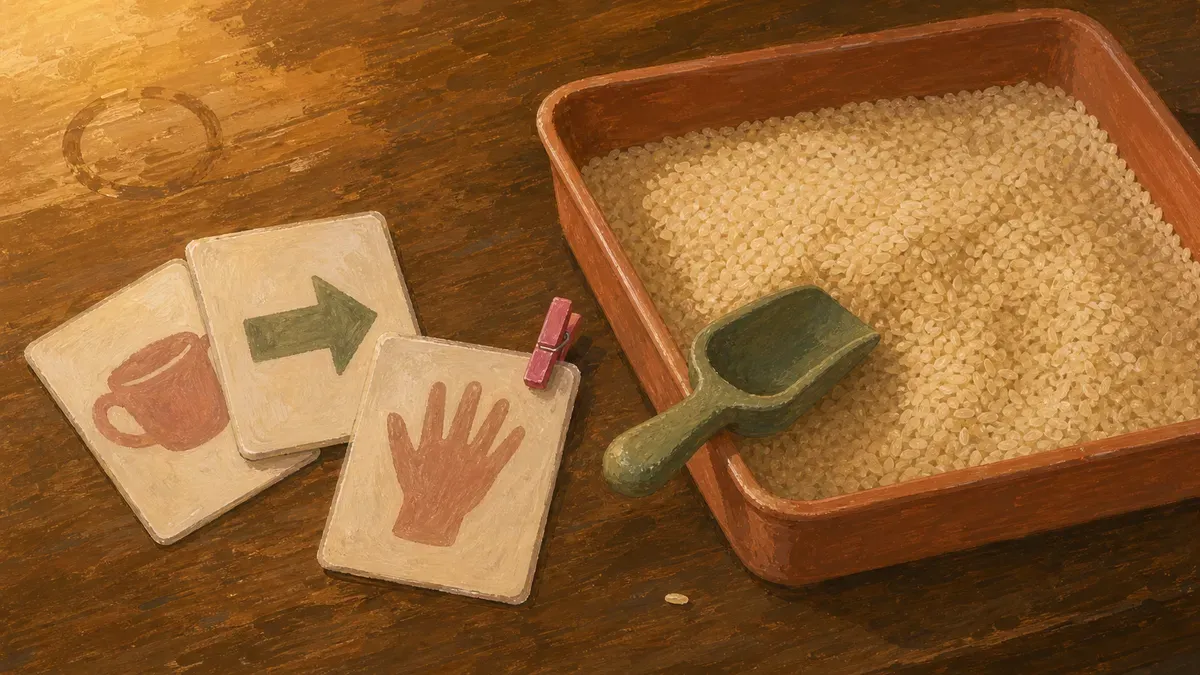
And here’s the quiet part that does the real work. When the card asks for a job and the body delivers it, that’s an adaptive response, the brain organizing itself around a goal instead of spinning out. It’s the same engine a play-based intervention runs on, just sitting on your kitchen floor.
One card at a time keeps it that way. Flip to the next only when the first one’s done. You can write your own on index cards, or grab a ready set like our actually sensory bin 25 task card set if you’d rather not laminate twenty-five of your own tonight.
A Sample Calm-Down Sequence Step by Step
Order matters more than the cards themselves. You want to open with something that burns off energy and close with something that settles the body. Here’s the five-card run we use at home, in this exact order:
- Heavy-work scoop. Big two-handed scoops of rice into a tall cup. The resistance gives the body that heavy input it’s craving first.
- Sort by color. Pull out the red bears, line them up. Slower hands, narrowing focus.
- Pour and listen. Tip the cup back into the bin slowly. Watching and listening pulls the volume down a notch.
- Find and name. Dig for three hidden objects, say each one out loud. Quiet, deliberate, almost meditative.
- The squeeze. A long bear hug or a press on a beanbag to finish. Deep pressure is the off-ramp.
Notice the shape. The first card is the most activating; each one after asks for slower hands and a quieter body until you land on stillness. That arc is the whole point.
This is a tiny sensory diet you can run in ten minutes, the same escalate-then-settle logic an OT builds into a session. It won’t end every hard day. But on the days it works, you’ve handed your kid a path from wound-up to settled, and the body remembers that path even when the words don’t.
Adapting the Bin for Different Sensory Profiles
The same five cards land completely differently depending on the kid in front of them, so the last move is matching the bin to your child’s wiring. Below, how to read the two big directions kids pull in, and why the autism overlap means one setup often covers more ground than you’d think.
Sensory Seekers Versus Texture-Averse Kids
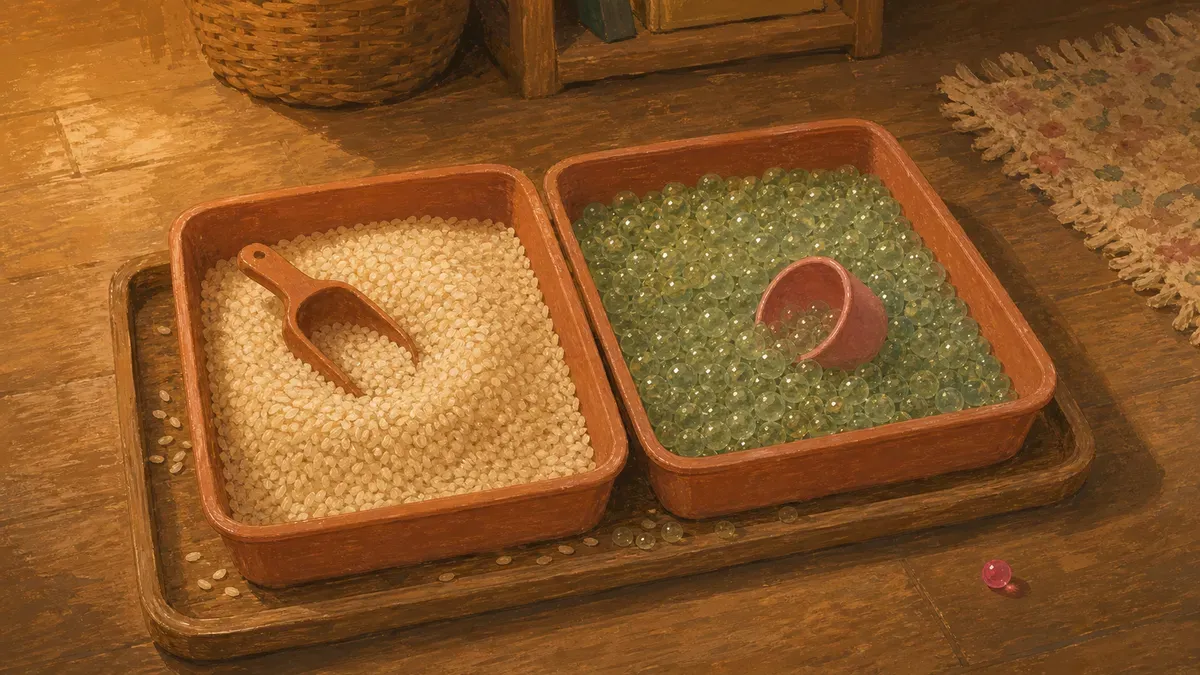
Some kids cannot get enough input, while others find touch genuinely overwhelming. Here’s how each profile reads at the bin: - Sensory seeker: Crashes, squeezes, buries both arms to the elbow. A smooth bin bores them in thirty seconds. Dial intensity up: dry beans over rice for the louder rattle, water beads for the squish, a fuller bin with more to dig through. More resistance, more crunch, more to push against. That bead set runs 4.6 stars across 2,300-plus reviews and comes with molds to press and scoop, but save it for kids well past the mouthing stage and stay in the room, because water beads swell as they soak up water and are a real choking risk for the littlest ones.
- Texture-averse kid: A fistful of cold rice can feel genuinely awful, not fussy. That’s the over-responsive end of the sensory profile. Dial it down: smoother fillers, a shallower layer, never make the mess the goal. For a kid who hates getting their hands dirty, run the whole thing tools-only: scoops, tongs, a little ladle, and the hands never have to touch the filler.
Occupational therapists use this same tools-only path for tactile defensiveness, introducing texture only at the child’s tolerance and letting them set the pace.
The bin meets your kid where they are; it never drags them somewhere they’re not ready to go.
If your child leans hard toward seeking, I’ve pulled the loud, heavy, resistance-first setups into a separate guide on sensory bins sensory seekers that goes deeper on those high-input builds.
Overlap With Autism and Co-Occurring Profiles
Here’s why none of this is wasted if you’re parenting across labels. ADHD kids and autistic kids share a huge amount of sensory ground, so the adaptations rarely need reinventing. The NCBI overview of sensory processing puts that figure at roughly 90-95% of autistic children, with about 13% of kids diagnosed with ADHD also carrying a co-occurring autism diagnosis.
What that means at the bin: the seeker-versus-avoider read you just made works the same way for an autistic child. Same profile, same dial. Beyond the seeker/avoider dial, autistic kids often need a few extra adjustments: - Predictability: Same cards in the same order, same container, fewer surprises. That sameness is calming, not rigid.
- Co-occurring SPD or dyspraxia: Slow the cards down and add more heavy work up front.
- Pacing: The setup stays the same; what shifts is how fast you move through it.
If autism is the bigger part of your child’s picture, I’ve got a fuller walkthrough on building sensory bins for autism that goes deeper on visual supports and predictability. Start there, then come back and run your five cards.
Found this useful? Save it for the next rough afternoon.
Questions parents ask me about this
How does sensory integration occupational therapy help ADHD kids?
It works through the body, not through words. A trained occupational therapist uses movement, touch, and resistance to help a child’s nervous system learn to process sensory input more efficiently. That settled nervous system is what allows attention to come online. Verbal redirection alone rarely gets there first.
Can a sensory bin replace professional occupational therapy?
No, and it is not meant to. A sensory bin carries the regulating effect of a sensory diet into daily life between sessions, not a substitute for clinical work. If your child has significant sensory or attention challenges, a referral to an occupational therapist is still the right starting point. If you are not sure how to start that conversation, telling your pediatrician "my child has significant sensory or attention challenges affecting daily routines" is usually enough to get an OT referral on the table.
What should I do if my child keeps dumping the sensory bin?
Dumping is a sensory-seeking behavior, and fighting it usually makes things worse. Try introducing one task card at a time so there is a clear, built-in finish line that gives the brain something to organize around. A shallow, wide container also limits how much can go over the edge in one go. If the dumping continues, the filler may not be providing enough resistance; switching to beans or a heavier texture gives the body more to push against.
How long should an ADHD calm-down sensory bin session last?
Aim for about ten minutes. That is enough time to work through a short sequence of task cards, get the regulating input the nervous system needs, and land somewhere calmer. Some kids tap out in five minutes and that is still a win. You are not trying to fill an hour; you are trying to shift the body’s state before the next transition.
What fillers are safest if my toddler still mouths everything?
Stick to food-safe pantry staples: dry rice, dry beans, dry lentils, and plain water are all taste-safe choices. Avoid anything that swells when wet, anything with dyes or fragrances that are not food-grade, and anything small enough to be a choking hazard. When in doubt, run the sniff test and the crunch test yourself before it goes in the bin.
How do I store and clean up a sensory bin between sessions?
A lidded, shallow container is the whole solution. When the session is done, the lid goes on and the bin slides under a bed or onto a shelf, filler and all. Lay a towel or a rimmed tray under the bin during play to catch spillover, and the cleanup is lifting the towel over the bin. Dry fillers like rice and beans last for weeks; just check for moisture before reusing.
At what age can a child start using sensory bins?
Most kids can start exploring a sensory bin once they are sitting up independently and showing interest in touching and manipulating objects, which is typically around six to eight months with direct supervision. For babies and toddlers under two, keep every filler taste-safe because everything will go in the mouth. Task cards and structured sequences come later, around age two to three, when a child can follow a simple one-step instruction.
Written by
Nora Hayes
Mom of two and a former preschool aide. I share the screen-free sensory play and calm-down ideas I test at my own kitchen table, plus what the moms in my little meet-up swear by. A parent passing on what works, not a doctor or a therapist.
More about NoraKeep going
All Sensory Bins-
 Sensory Bins
Sensory Bin Fillers: 20 Pantry Items You Own Now
Skip the craft store: 20 sensory bin fillers already in your pantry tonight, sorted by texture, mess level, and age. Start one in minutes.
-
 Sensory Bins
Indoor Sensory Play: 18 Low-Mess Setups That Work
Dreading the cleanup? These indoor sensory play setups stay on the mat, work in apartments, and reset in minutes. Start tonight.
-
 Sensory Bins
Sensory Play 2 Year Olds: 12 Bins That Hold Focus
Most sensory bins lose a 2-year-old in 90 seconds. These 12 sensory play ideas for 2 year olds actually hold attention. Start one tonight.
-
 Sensory Bins
Sensory Activities for Preschoolers Bored of Rice
Sensory activities for preschoolers bored of plain rice: fresh fillers, themed bins, and skill-building twists. Try one today.