Sensory Bins for Autism: Calm Setups for Toddlers


Sensory bins for autism work best when they give a toddler one quiet texture, a small contained space, and zero pressure to perform. That setup matters because the right bin turns a wound-up afternoon into ten regulated minutes, while the wrong one tips straight into a meltdown.
I’m Nora Hayes, former preschool aide and mom of an autistic sensory-seeker, and I’ll walk through the calming setups that worked at my house, tweaks for texture-shy and seeking kids, taste-safe rules for the youngest ones, and how to read your child so you can end bin time before it falls apart.
Why Sensory Play Helps Autistic Toddlers Self-Regulate
A sensory bin gives an overstimulated kid a small, predictable job for their hands, and that job is often enough to settle the whole nervous system. Here’s what’s happening underneath, and the window when it works best.

What a Sensory Bin Actually Does for the Nervous System
When the world feels like too much at once, an autistic toddler can’t filter the noise, the light, and the itchy tag all competing for attention. A bin shrinks that flood to one thing.
- Rice running through fingers, beans dropping into a cup: the same texture, on repeat.
- That repetition gives a kid a controlled way to organize the sensory stimuli coming at them.
- Predictable input replaces the swamp with something manageable.
It matters more for these kids than most. Research on sensory processing in autism found that about 60% of autistic individuals show altered tactile sensitivity, so touch lands differently and a steady, repeatable texture becomes a tool for self-regulation rather than one more thing to manage.
With my son Eli, scooping dry lentils for ten quiet minutes does more for his sensory processing than any toy I’ve bought. Hands busy, body still.
The Calm-Down Window Most Parents Miss
Most of us reach for the bin too late, after the screaming’s already started. By then it’s a lost cause.
The trick is offering it earlier, in that fidgety, whiny, off-the-rails phase before the storm. The Organization for Autism Research calls that first stretch the rumbling phase, and it’s the moment a calming activity can actually head off a full meltdown instead of just riding one out.
Sensory play and autism go together best as prevention, not rescue. Watch for the early signs, slide a bin over while your kid can still choose it, and you’re working with their emotional regulation instead of against it.
These small, low-mess sensory experiences are also the easiest place to start. Our roundup of sensory bins for toddlers walks through the setups that travel well from a meltdown-prone Tuesday to a calmer one.
Calming Bin Setups for the Kid Who Gets Overwhelmed
A calming bin does one job, and the setup decides whether it lands calm or chaotic. Two things matter most: what you put in it, and how much structure sits around it.
Low-Stimulation Fillers That Soothe Instead of Overload
Loud bins backfire on an already-flooded kid. Rainbow rice, glitter, ten scoops, a dozen toys, all of it reads as more chaos, not less. So for the kid teetering toward overwhelm, I strip it down to one quiet filler.
The filler materials that reliably settle Eli:
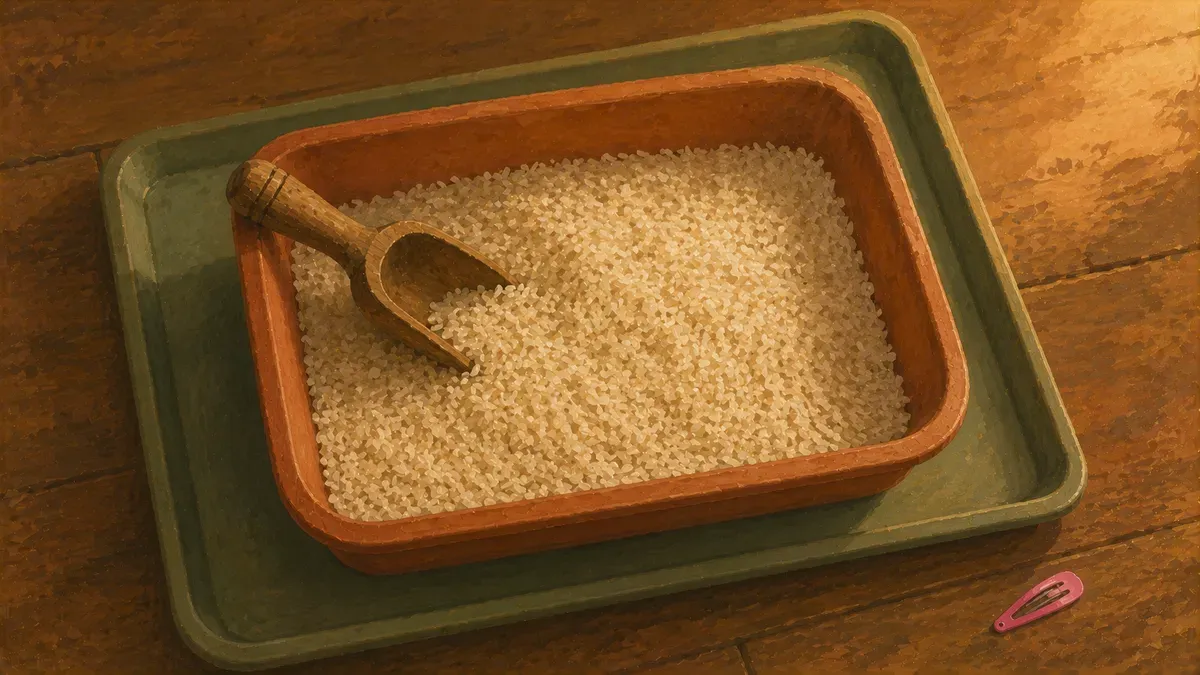
- Plain dry rice, undyed
- Kinetic sand, the muted tan kind
- Dry beans or lentils
- Cool water, nothing added
One texture, one muted color, full stop. The point is to give the hands a single predictable job instead of a buffet. When I swapped our bright blue tub for natural-tan kinetic sand, Eli’s shoulders dropped inside a minute. These quiet sensory play activities work for autism precisely because they ask the nervous system to process less, not more. Skip the color, skip the mix-ins.
Adding Structure: Containers, Boundaries, and One Tool
Filler is half of it. The container and the routine do the rest.
I set a deep dishpan on a cookie tray, which catches spills and quietly marks where the rice lives and where it doesn’t. That tray edge is a boundary a two-year-old reads without a single word, the start of a structured environment they can trust.
- One tool: a single scoop, nothing else to choose or fight over
- A predictable routine: bin comes out, we play, bin goes away on the shelf
That tiny ritual keeps even themed bins from sprawling, and it leaves room for child-led play inside a frame an overwhelmed toddler can lean on. If your kid still shoves the whole setup away, the trouble is usually texture, and these sensory bins texture averse kid hates at first are worth a closer look. Same calm filler, gentler on-ramp.
Introducing a Bin to a Texture-Averse or Sensory-Seeking Child
Two kids, two opposite problems: one recoils from the filler, the other dumps it on the floor to feel it harder. The setup that calms each one looks nothing like the other, so let’s split them.
Easing In a Child Who Hates the Mess
Never put a texture-shy kid’s bare hands in the bin first. Hand them a tool instead, a wooden spoon or a chunky scoop, so there’s distance between skin and filler. Start dry and low-stick: plain rice or dry oats, nothing that clings. Then you just sit nearby and scoop your own pile. No instructions, no “try it,” no hovering.

Sensory tolerance gets built one calm session at a time, not in one brave afternoon. When Eli was three he’d only poke our dry-rice bin with the handle end of a spoon for the first week. By the third or fourth sit he had a fingertip in. I cheered that fingertip like he’d scored a goal. That kind of low-key, genuine positive reinforcement is what keeps sensory exploration feeling safe instead of forced.
Channeling the Sensory Seeker Who Wants More
A seeker isn’t being difficult. The shallow calming bin just doesn’t give enough back, so they go hunting for more input. Go deeper and heavier. Swap the dishpan for a tall tote, fill it with dried pinto beans, and let them plunge both arms in to the elbow. Heavy resistance and big movement is the whole point for this kid.
For more setups built around that craving, this guide to sensory bins sensory seekers goes deeper on safe high-input play. Let them pour, bury, and squeeze. That tactile exploration and gross-motor reach is real sensory integration, and the sensory experiences land harder because the input finally matches the want.
Safety and Taste-Safe Materials for Toddlers
Before any filler goes in a bin, it has to pass one test: what happens if it ends up in your kid’s mouth. Two things keep a toddler bin safe, and they split into what to keep out and what to swap in.
Choking Hazards and the Mouthing Toddler
Here’s the part nobody likes to sit with. Toddlers explore by mouth, and a lot of autistic kids keep mouthing well past the age the charts say they should stop. That changes the whole filler conversation.
The big one is water beads. The CPSC’s toddler choking hazard safety guidance ties water beads to roughly 6,300 emergency-room ingestion injuries from 2017 to 2022, and one death of a 10-month-old in 2023. They swell inside the body. I keep ours zipped in a high cupboard until Eli’s well past four.
Until the mouthing fades, skip small beads, pick large-piece autism-friendly filler materials, and stay within arm’s reach the whole time.
If it fits inside a toilet-paper tube, it’s too small.
Taste-Safe Filler Options That Still Feel Good
For the kid who still tastes everything, go edible and stop bracing. Taste-safe doesn’t mean boring sensory experiences. These pantry fillers each offer a different texture:
- Cooked pasta: slippery, cool, great for squishing
- Plain oats: pour like sand, fine for mouthy toddlers
- Rinsed chickpeas: roll and clatter, satisfying to scoop
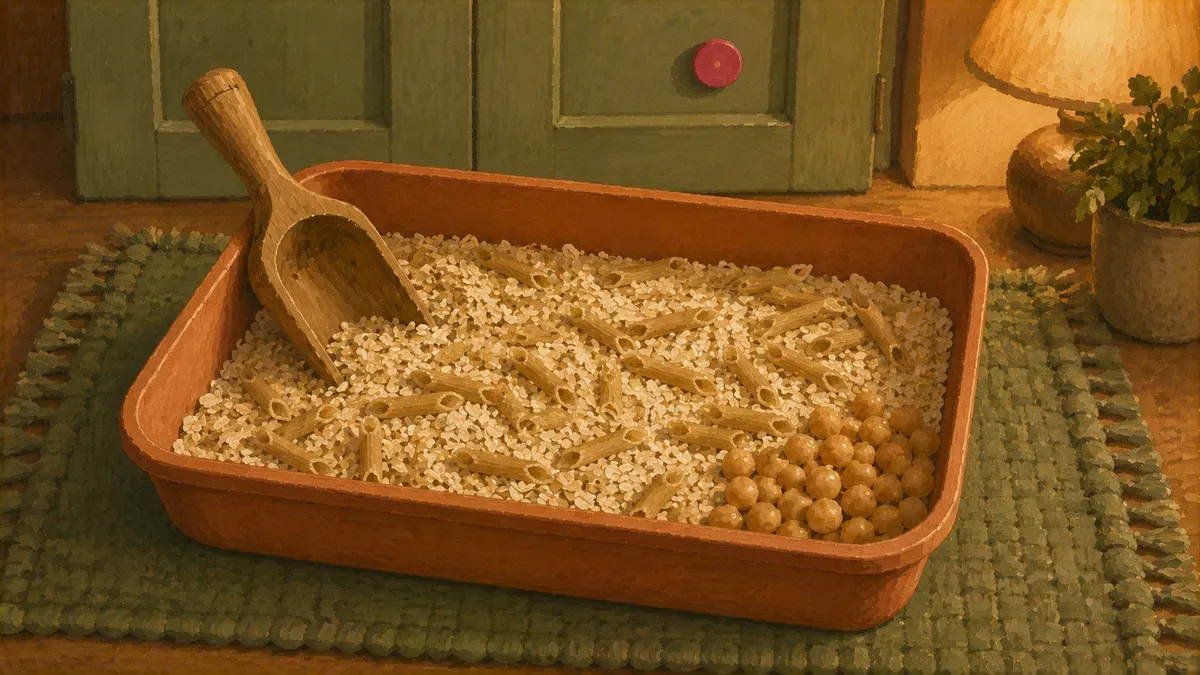
These fillers feel genuinely good in small hands, and they swap straight for rice or kinetic sand the day mouthing stops. For more pantry setups that pass the mouth test, here’s our guide to taste safe sensory play. When in doubt, edible wins.
Reading the Signs and Ending Bin Time Smoothly
The trick to a good bin session is knowing when to call it, and how to land the plane without a crash. Here’s how I read my kid’s cues, and how we close out so nobody melts down over a tray of rice.
Signs the Bin Has Become Too Much
Good sensory play for autism has a window, and once it closes, the same bin that calmed your kid starts to wind them up. Watch the body, not the clock. Medical News Today flags the early tells of sensory overload to watch for:
- Stims that speed up or get more forceful
- Hands going to ears or eyes
- Pulling away from the tray
- Speech that slows or drops out
With Eli, the giveaway was always the dumping. Gentle scooping turned into fast, hard pours over the edge, and that was my one-minute warning. Catch those cues and your calming strategies actually work, because you’re supporting his self-regulation before emotional regulation tips into a full meltdown.
When the play turns frantic, the bin has done its job. Wind it down.
A Predictable Transition Out of Play
The jarring part for an autistic toddler usually isn’t the cleanup, it’s the surprise. So I never yank the bin away. A visual timer goes on, then a clear verbal heads-up, then we scoop together.

That structured environment is what makes the ending land. A 2012 review in Focus on Autism and Other Developmental Disabilities (Lequia et al.) found visual schedules reliably cut transition-related problem behavior, which tracks with what a little caregiver engagement at cleanup does in my kitchen. Making the scoop-back a game keeps it play, not punishment.
Want more low-stakes setups? Try our full sensory bin guide for toddlers or these ideas for sensory play for 1 year olds who won’t sit still. Some days a clean ending is the whole win.
Found this useful? Save it for the next rough afternoon.
Questions parents ask me about this
What sensory bins work best for autism in toddlers?
For a toddler who gets overwhelmed easily, start with one muted-color filler in a small, contained space. Dry rice, plain oats, or beans give consistent texture without a lot of visual noise. A sensory-seeking toddler who needs more input will do better with deeper bins and heavier fillers like pinto beans or kinetic sand that push back when you dig in.
Are sensory bins only good for autistic children?
Not at all. Any toddler can benefit from the focused, tactile exploration a bin offers. The reason sensory bins show up so often in conversations about autism is that many autistic kids have stronger-than-typical sensory needs, so a well-matched bin can be a genuinely useful regulation tool for them. But a neurotypical three-year-old digging through rice and hiding toy animals is getting the same developmental value.
How do I stop my autistic toddler from dumping the sensory bin everywhere?
Fast, hard dumping is often a sign the bin is missing something. The filler might not be giving enough input, or the setup is too big and open-ended. Try a deeper dishpan with a cookie sheet underneath to catch spills and define the play space, offer one tool instead of a pile of options, and give a one-minute warning before ending the session. If the dumping happens immediately on contact, the bin might just not be the right activity for that day.
What if my child eats the sensory bin filler?
Stop the session and switch to a fully edible filler: cooked pasta, plain oats, or rinsed chickpeas are all fair game. Under two, assume everything goes in the mouth and keep the bin to taste-safe materials only. Water beads are the one filler to keep completely out of reach until mouthing fades, because they swell significantly inside the body and are a serious hazard. The rule is simple: if you wouldn't be fine with them swallowing it, it doesn't go in the bin.
How long should a sensory bin session last for an autistic toddler?
Watch your child, not the clock. When you see the signs (faster stimming, covering ears, pulling away), that's your cue to end it, not push through. Give a calm one-minute heads-up, put a transition activity within sight, and let them step away feeling okay rather than overwhelmed. A five-minute session that ends well is worth more than a twenty-minute one that ends in meltdown.
Can sensory bins help with speech and language for autistic kids?
Sensory bins aren't a speech therapy tool, and I'd never frame them that way. What a well-matched bin can do is lower a child's arousal level so they're in a calmer, more available state. Some parents notice more vocalization or labeling during play when a child is regulated, but that's a side effect, not a goal to engineer. If speech and language is a priority, an SLP is the right person to guide that.
How often should I rotate or change the sensory bin?
When your child stops engaging with it. Some kids play happily with the same rice bin for weeks; others want something new every few days. A good starting rhythm is swapping fillers every one to two weeks, or whenever you notice the bin gets ignored after the first minute. If the current bin is working, leave it alone.
Written by
Nora Hayes
Mom of two and a former preschool aide. I share the screen-free sensory play and calm-down ideas I test at my own kitchen table, plus what the moms in my little meet-up swear by. A parent passing on what works, not a doctor or a therapist.
More about NoraKeep going
All Sensory Bins-
 Sensory Bins
Sensory Bin Fillers: 20 Pantry Items You Own Now
Skip the craft store: 20 sensory bin fillers already in your pantry tonight, sorted by texture, mess level, and age. Start one in minutes.
-
 Sensory Bins
sensory integration occupational therapy intervention: ADHD
Turn sensory integration OT into a home calm-down bin for ADHD kids. Task cards, bin ideas, and a setup that works on the hard days.
-
 Sensory Bins
Indoor Sensory Play: 18 Low-Mess Setups That Work
Dreading the cleanup? These indoor sensory play setups stay on the mat, work in apartments, and reset in minutes. Start tonight.
-
 Sensory Bins
Sensory Play 2 Year Olds: 12 Bins That Hold Focus
Most sensory bins lose a 2-year-old in 90 seconds. These 12 sensory play ideas for 2 year olds actually hold attention. Start one tonight.