3 Year Old Schedule: From Pointing to Doing It

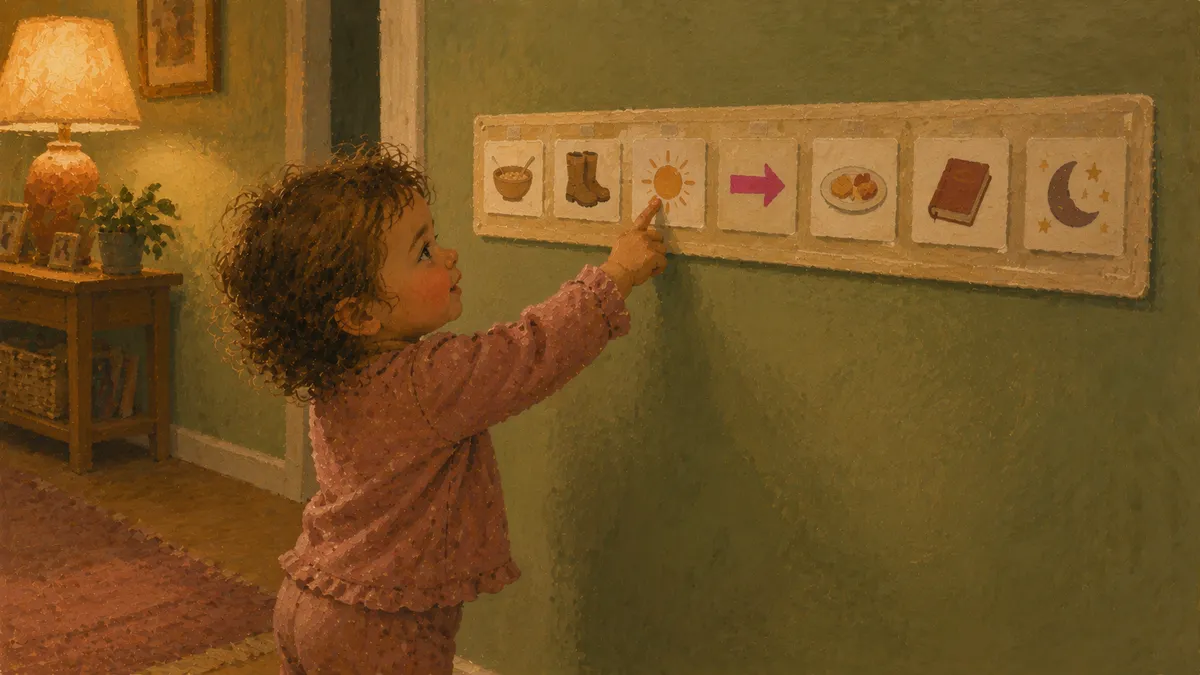
A visual schedule for a 3-year-old turns your daily routines into picture cards your child can actually follow, no clock-reading required. I’m Nora Hayes, a former preschool aide and mom of two, and putting our day on a picture board cut our chaotic transitions down to almost nothing. Here you’ll find the daily routines for 3 year olds worth keeping, how to build the board, and how to hand it over so your kid runs it.
The plan in brief:
- Map your real day into 6 to 8 picture cards, wake to bedtime
- Run the board with your child at every transition for two weeks
- Step back card by card until they check it without you
What a Good Day Looks Like at Age 3
Before you build a board, you need to know what you’re putting on it. Here’s a real day to copy, then the why behind it so you can stretch and shrink it to fit your own kid.
A Sample Hour-by-Hour Timeline
Forget the clock for a second. The sequence matters more than the exact minute. A 7:00 wake might slide to 6:40 one morning and 7:20 the next, and that’s fine. What matters is that the parts come in the same sequence.
Here’s a sample daily schedule you can lift straight onto your cards:
| Time | What’s happening | Why it earns a card |
|---|---|---|
| 7:00 | Wake, potty, get dressed | Same first three, every morning |
| 7:30 | Breakfast | Anchors the whole day |
| 9:00 | Outdoor playtime | Burns the early-morning fuel |
| 11:30 | Lunch | Predictable hunger beats meltdowns |
| 12:30 | Naptime or quiet rest time | The reset that saves your afternoon |
| 2:30 | Snack, free play indoors | Low-key after the rest |
| 4:00 | More outdoor playtime | Second wind, before dinner crank |
| 5:30 | Dinner | |
| 6:30 | Bath, books, calm | The wind-down runway |
| 7:30 | Bedtime | Same ending, every night |
If your June (mine’s 3) skips the nap, that 12:30 block becomes quiet rest time, not a battle.
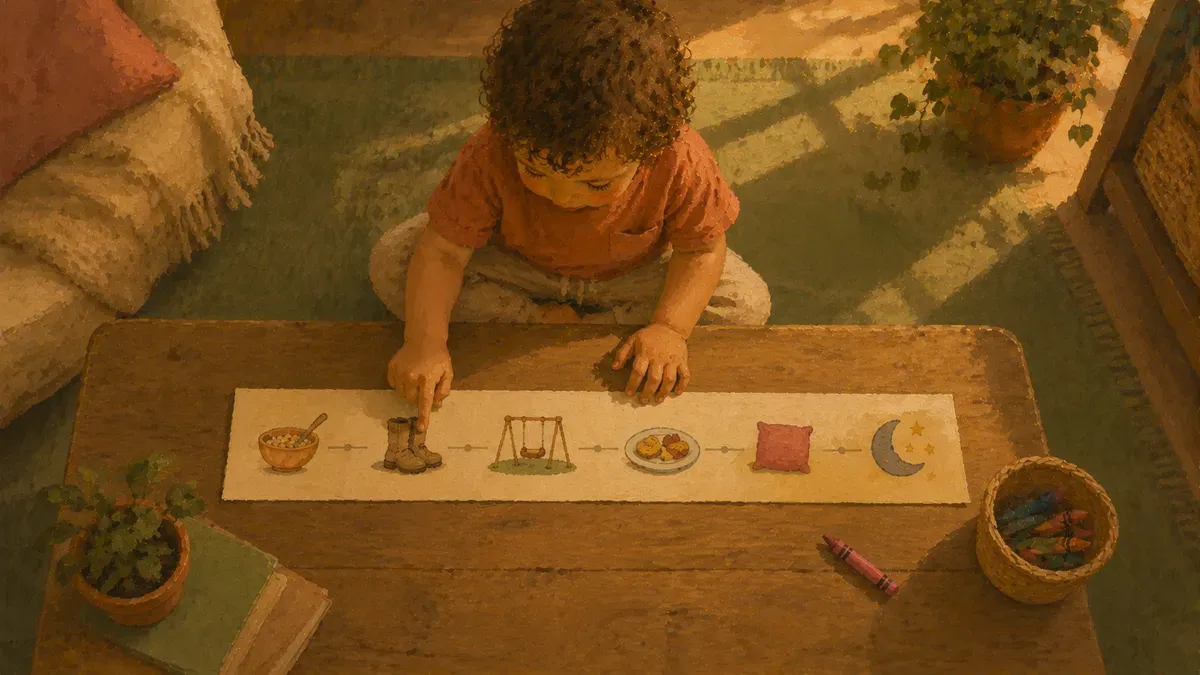
How Much Sleep, Play, and Downtime They Need
Those blocks aren’t random. They’re built around what a 3-year-old body needs, and knowing the numbers lets you slide your own timeline around with confidence.
Start with sleep, because everything else bends to it. The recommended sleep amounts for toddlers from the American Academy of Sleep Medicine land at 10 to 13 hours per 24 hours for ages 3 to 5, naps counted. Short that, and you’ll see it in attention, mood, and a shorter fuse all afternoon. A long night plus a midday rest usually gets you there.
By 3, plenty of kids drop the nap, but the body still needs the downtime, so that block becomes quiet time on the board.
- Books in a cozy spot or a tent
- A sensory bottle, lights dimmed
- Not asleep, just off
Then play, and a lot of it. The U.S. Physical Activity Guidelines for Americans suggest preschoolers be active throughout the day, with adults aiming for around 3 hours of active play across light, moderate, and vigorous bursts. That’s why two outdoor blocks beat one long one: their tank empties and refills.
A rested, run-around 3-year-old is a regulated one, and a regulated one actually uses the schedule.
The last piece is independent play, the stretch where they’re busy and you’re not the entertainment. If you’re starting younger, the rhythm scales down with them, and our visual schedule guide for 2-year-olds covers that earlier stage.
Turn the Schedule Into a Board They Can Read
A timeline in your head does nothing for a 3-year-old who can’t read a clock. So you make the day visible: pick the moments that matter, turn them into pictures, and run the board together until it sticks.
- Choose 6 to 8 daily hinge points and skip the rest.
- Print or make picture cards, laminate them, and mount a Velcro strip at eye level.
- Check the board together at each hinge point for two weeks, until your child starts reading it on their own.
Pick the 6 to 8 Moments That Anchor the Day
Don’t card every single thing your kid does. You’ll end up with thirty pictures and a child who tunes out. Pick the 6 to 8 transitions that actually anchor the day, the hinge points where one thing ends and another begins.
Think about where your mornings and bedtimes already snag. Wake up, breakfast, get dressed, play, lunch, outside, quiet time, bath, books, bed. That’s the skeleton. Pull the moments that match your real family routine and leave the rest off the board.
The morning routine and the bedtime routine are usually where the friction lives, so those earn their cards first. A 3-year-old can hold a handful of steps in mind, not a dozen.
Card the transitions that cause the most pushback, not the ones that already run smooth.
If snack never causes a fight, it doesn’t need a card. If leaving the park ends in a meltdown every time, that picture is doing real work. You’re building a map of the day, not a documentary of it.
Make the Cards and Set Up the Board
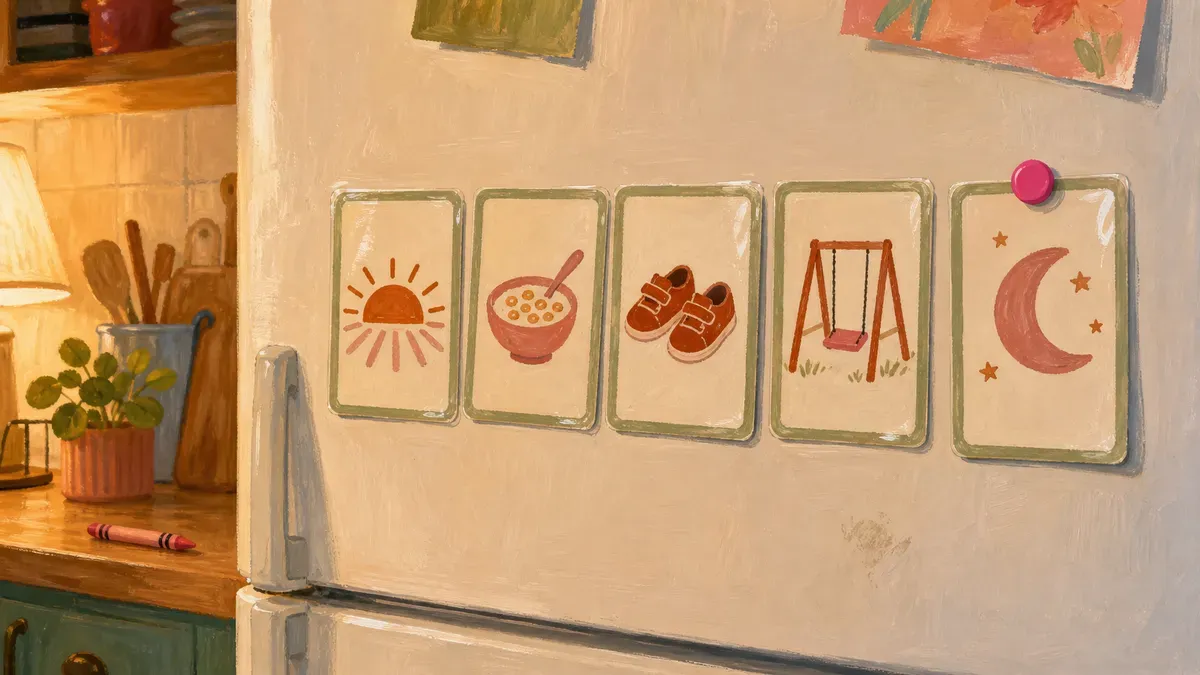
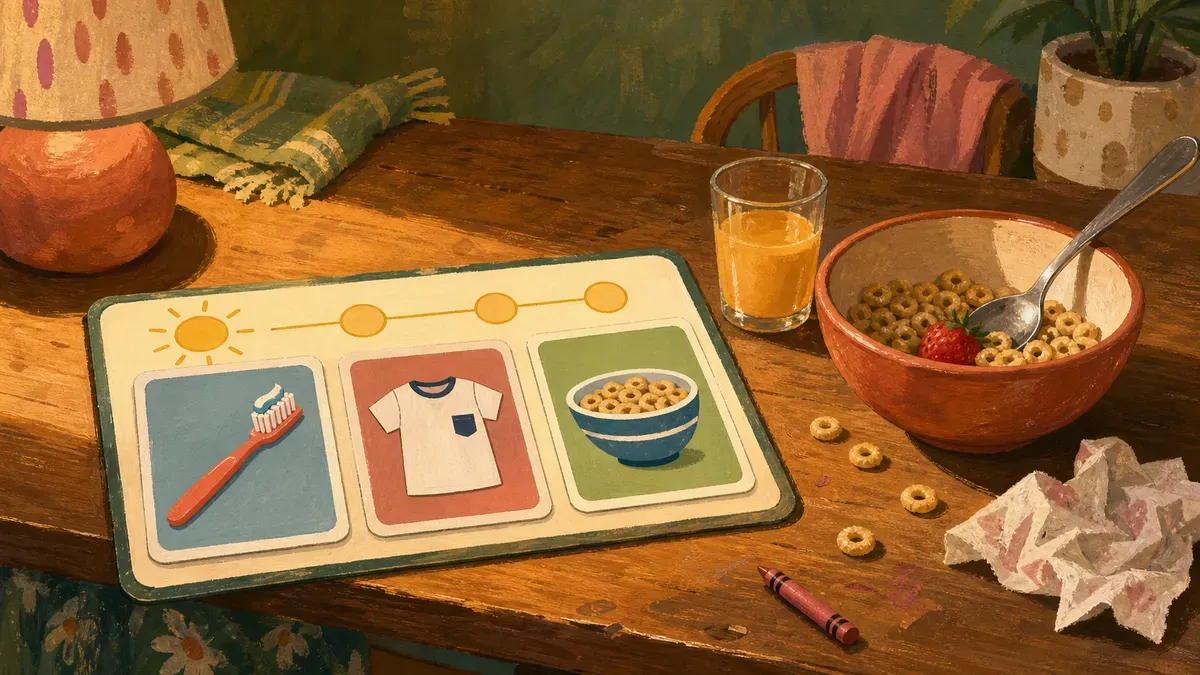
Now make it something little hands can touch. Each picture card gets one clear image and one or two words: a photo of their actual cereal bowl, their boots, their bed. Real photos beat clip art at this age because recognition comes faster when it’s their own stuff.
Keep it cheap and sturdy. Print the cards, laminate them or cover them in packing tape, and stick a strip of Velcro on the back. Mount a felt or Velcro strip on the wall at their eye level, low enough that they can reach up and pull a card down themselves. If you’d rather skip the cutting, a ready-made visual schedule template gives you the cards already sized and labeled.
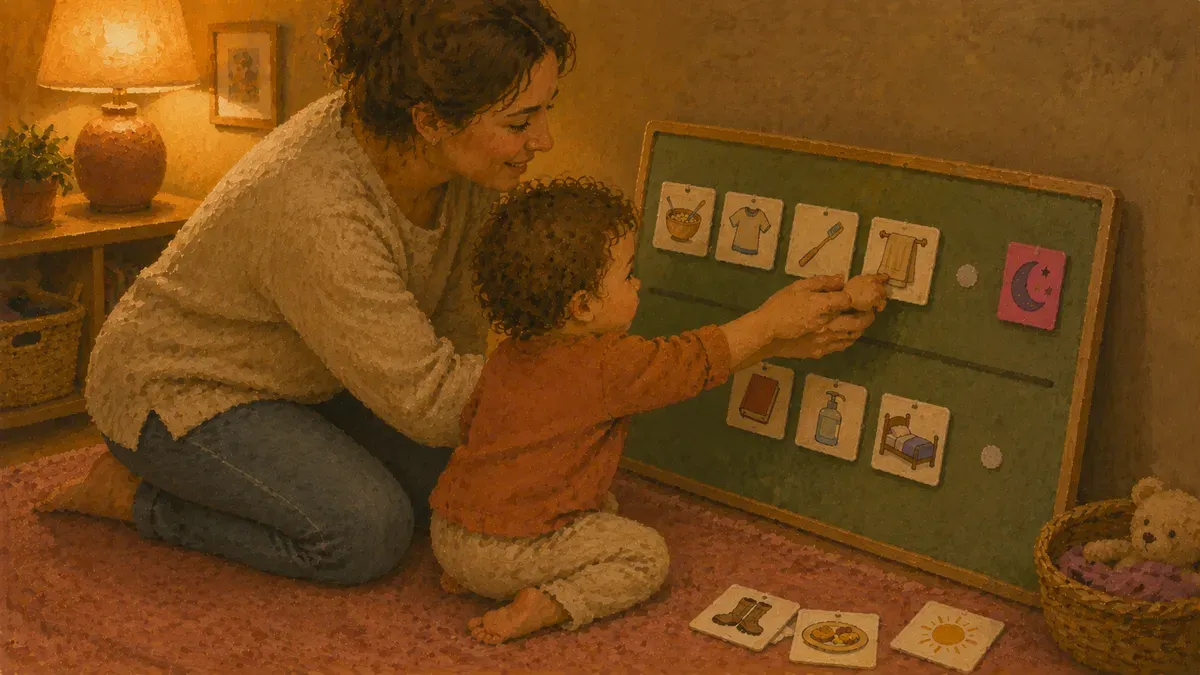
Order the cards top to bottom or left to right, whichever way your kid’s eye travels. Read it aloud together the first few times like a story. That read-aloud is where the recognition and skill building start: they learn the pictures mean their day.
Run It Together Every Transition for Two Weeks
The board only works if you walk it. Every transition, you go to it together: “Breakfast’s done, what’s next?” They look, they find the card, they move it to the done pocket or flip it over. Then you do the thing.
Do this at every single hinge point for two weeks straight. It feels repetitive because it is. That consistent routine is the whole point, because a 2024 literature review in Behavioral Interventions found that systematic use of picture-based schedules reduces transition-related problem behaviors in young kids.
Two weeks of consistent check-ins builds two things: - The habit: they know to look at the board when one activity ends and another is coming.
- The anticipation: they stop getting blindsided by transitions because they can see what’s next. For more layouts, first-then boards, and ways to adapt the system as they grow, our full guide to visual schedules routines goes deeper.
By the end of two weeks, you’ll catch them checking the board before you even ask. That’s the signal you’ve been waiting for. That’s when you get to step back.
Hand the Routine Over to Your Child
Watching them check the board is one thing. Getting them to run it without your voice in their ear is the real goal, and it happens in two moves: fade your own prompting, then let the board carry the weight you’ve been carrying.
Fade Your Prompts One Card at a Time
You don’t drop the narration all at once. You shrink it, one card at a time, so your kid never notices the training wheels coming off.
Start with the transition they’ve got down cold. Maybe it’s the bath card. Instead of “okay, bath time, let’s go check the board,” you just walk them over and tap it. Next week, you point. The week after, you say their name and glance toward the wall. Then nothing. That card now runs on its own picture, and you’ve handed over a little piece of the day.
Work backward from your kid’s strongest moments to the wobbly ones. The smooth transitions build the recognition and the habit; the hard ones borrow that confidence later.
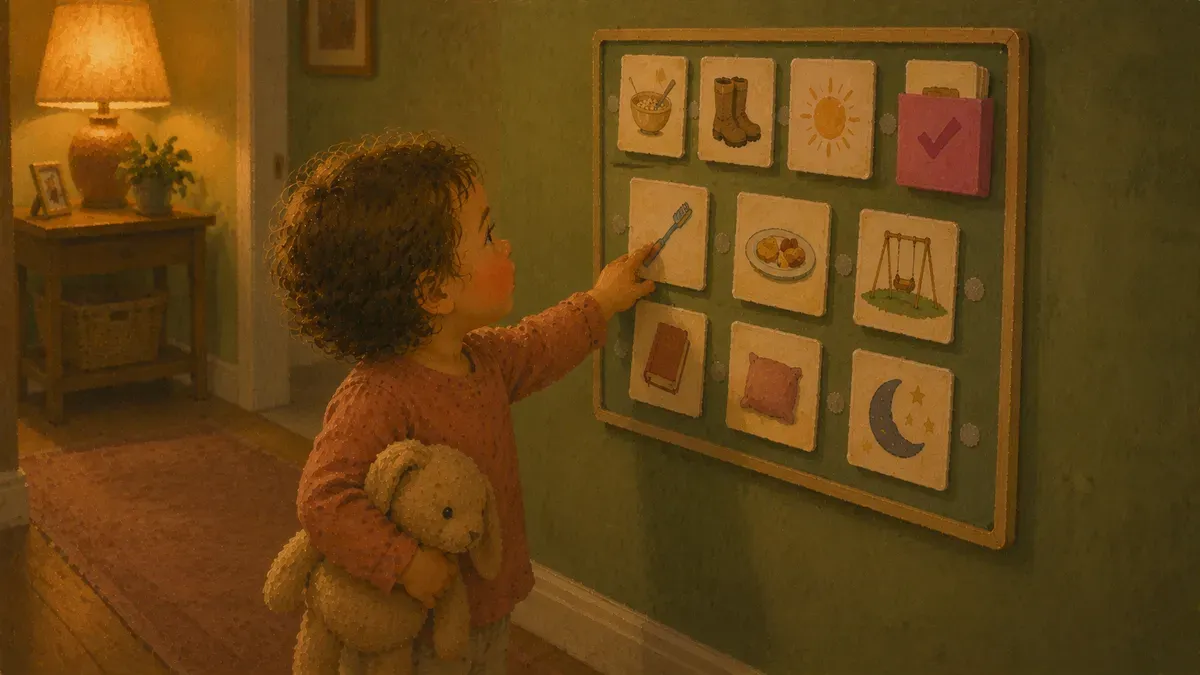
The quiet part is the win. When a kid moves to the next card with nobody telling them to, that’s self-efficacy you can see. If it falls apart one morning, back up a step and try again tomorrow. Fading isn’t a straight line.
Let the Board Be the Boss, Not You
The day you stop being the schedule, the power struggles start to drain out of it.
Here’s what changes. Your three-year-old whines that they don’t want to put shoes on. Old you repeats the instruction, louder, three times, until somebody’s crying. New you points at the wall and says, “What does your board say comes next?” Now it’s not you versus them. It’s both of you looking at the same picture.
That small shift does a lot. The card becomes the authority, so you’re no longer the nag, and your kid gets to be the one who figures out what’s next. A board on the wall makes this dead simple, because the answer is always right there instead of buried in an argument.
- Say “Check your board” the same way every time, no variations, no repeated instructions
- Let the wall answer; you just point and step back
- The consistent line is what builds the habit, not the negotiation
You’re not handing off the parenting. You’re handing off the reminding, and that’s the part that wears you out.
Fit Real Life Into the Schedule
A clean board is easy. Real life is potty accidents, the tablet, dinner that runs late, and a daycare that does its own thing. Here is how to fold all of it in without rebuilding your whole system.
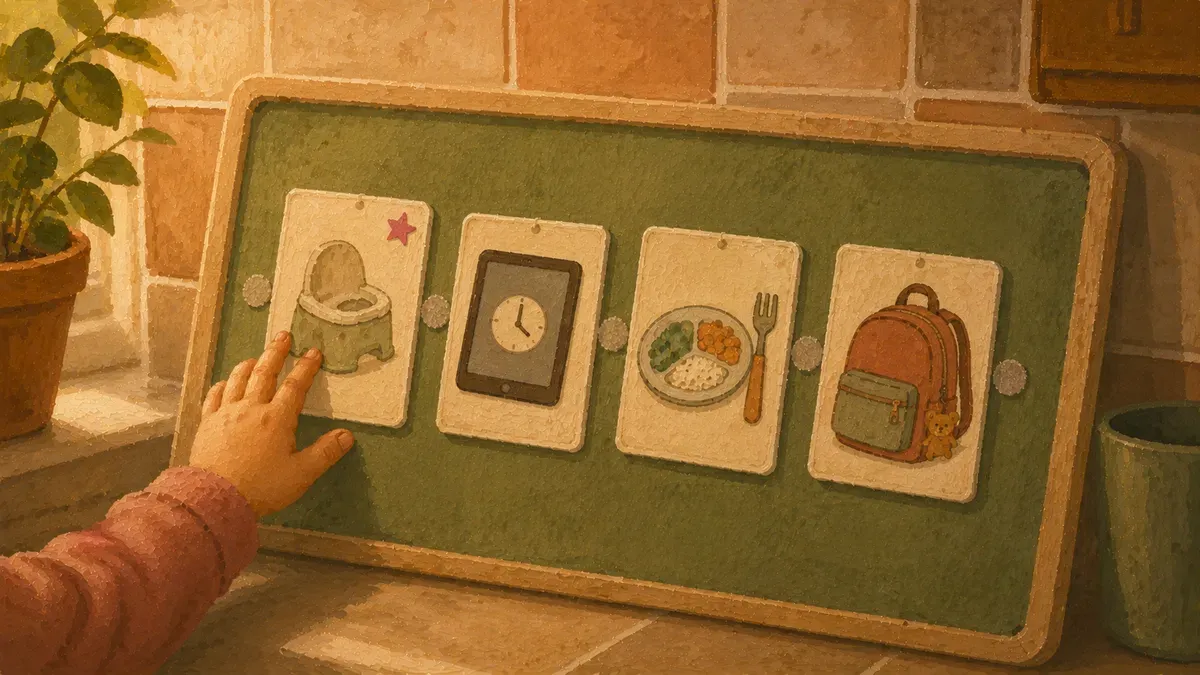
Potty Training, Screen Time, and Meals
The stuff that derails a 3-year-old’s day is the stuff worth its own card. Potty training is the big one. A 3-year-old practicing on the board is right on schedule, too. The AAP’s toilet-training guidance puts the typical start between ages 2 and 3, with most kids in control by 4.
Screen time gets a card too, and the card is what ends the show, not you. When the tablet picture flips to the next one, the screen goes off. That swap defuses the meltdown because the board called it, not the bad guy holding the remote. A clear daily cap helps here: the American Academy of Child and Adolescent Psychiatry suggests keeping non-educational screens to about an hour on weekdays for preschoolers.
- Breakfast, lunch, snack, and dinner already happen at consistent times, so they anchor the whole day
- Slot them in first; the messier habits build around them
Matching the Schedule to Daycare or Preschool
A kid who runs on a board at home and walks into chaos at daycare loses the thread fast. So get the two talking.
Then mirror it.
- Ask your provider for their daily flow: the real order of circle time, snack, outside play, nap, and pickup
- Build a short “school day” strip your child checks before drop-off, using the same picture style in both places
- Match the words exactly. If daycare says “rest time,” you say rest time, not nap
The payoff is one consistent routine across two buildings. A preschooler who sees the same predictable order at home and at school spends less energy bracing for the next thing and more energy just doing it. For the front end of that handoff, my children’s morning routine chart plugs straight into the school-day strip.
You will not match every minute, and you do not need to. Line up the big transitions, share the same family routine language, and let the small stuff differ. Same shape, two places. That is the whole goal.
When the Schedule Falls Apart
It will fall apart. A stomach bug, a week at Grandma’s, one rough Tuesday where nothing goes right, and the board you built so carefully gets ignored for days. That is normal, and here is how to get back on track without starting from scratch.
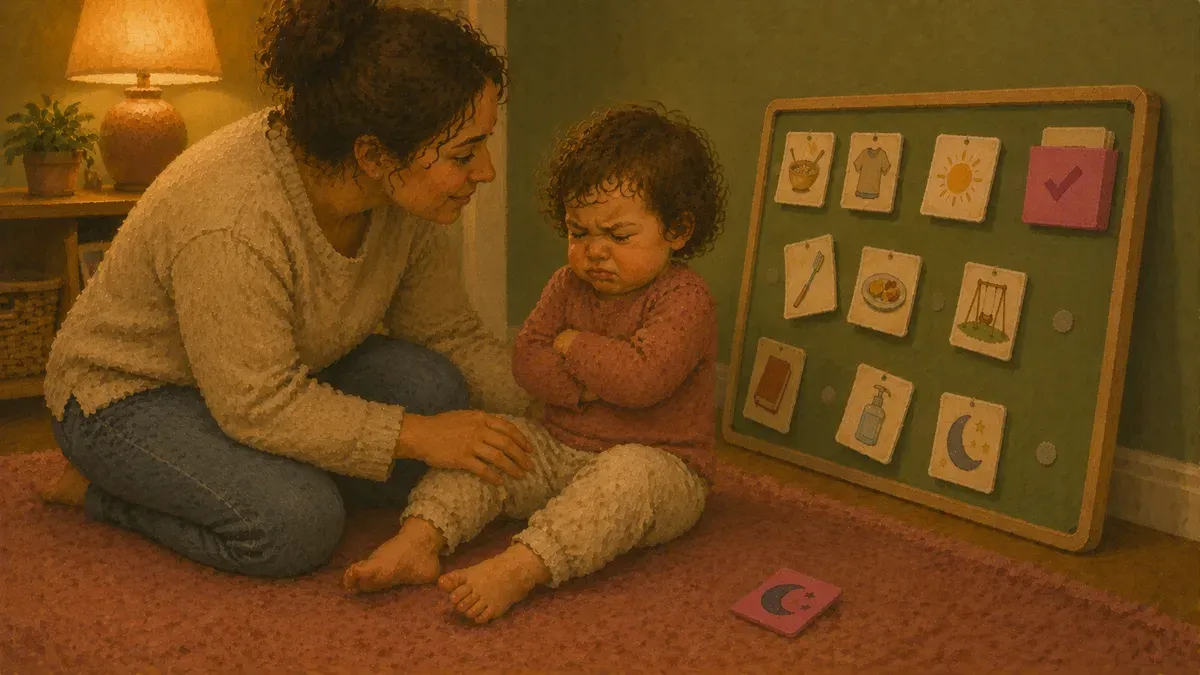
Resets After Travel, Sickness, or a Bad Week
A few off days do not erase the work. The order is still in their little body, even when the board has been collecting dust on the fridge. So when life settles, do not relaunch the whole thing at once.
Pick the easiest win and rebuild from there:
- Start with one anchor point, usually the bedtime routine, and run just that part of the board for a couple of days
- Add the morning back next, since waking up is the other moment they crave a familiar shape
- Layer the middle transitions in last, one at a time, until the full family routine is humming again
Go back to walking the board together at each step, the way you did at the very beginning. Two or three days of that and the consistent routine usually clicks back into the habits you already built. Bedtime tends to unravel first and bounce back fastest, and the bedtime routines for 3 year olds guide walks through rebuilding that piece step by step.
Sensory and Special-Needs Adaptations
Some kids need the board to ask less of them, not more.
- Fewer cards, not more: if a busy fridge triggers a meltdown, strip the board to a first-then pair so the next switch is the only thing in view
- Big, clear picture cards over a crowded grid; a real photo of your kid doing the thing speeds up recognition faster than clip art
- A movement card before hard switches gives a sensory-seeker a chance to jump or push before sitting still
- A countdown card or small timer between cards softens the jolt for a child who needs warning before transitions
That kind of low-pressure repetition is where the habit of self-regulation actually takes root.
Visual supports are not a niche hack here. The National Clearinghouse on Autism Evidence and Practice named visual schedules an evidence-based practice for autism, useful from early childhood onward. For deeper adaptations and more board layouts, our complete guide to visual routines goes further than I can fit here.
Whatever you change, change one thing and watch what it does. The right board is the one your kid will actually use, falls-apart weeks and all.
Found this useful? Save it for the next rough afternoon.
Questions parents ask me about this
What does a good daily schedule for a 3-year-old look like?
A good daily schedule runs on rhythm and predictable order, not a strict clock. The backbone is anchor transitions: wake-up, meals, outdoor play, quiet rest time, and bedtime. Keep those consistent, and the smaller moments in between can flex. Kids this age do best when they know what's coming next, not when every minute is pinned down.
How many pictures should a 3-year-old's visual schedule have?
Start with 6 to 8 cards. That's enough to cover the main turning points of the day without overwhelming the board or the child. Focus the cards on transitions that cause friction, not the ones that already go smoothly. You can always add a card later once the routine feels solid.
What time should a 3-year-old wake up and go to bed?
There's no single right answer, but most 3-year-olds need between 10 and 13 hours of sleep over 24 hours, including any nap. Work backward from your morning: if wake-up is around 7:00 AM and your child naps, bedtime in the 7:00 to 8:00 PM range usually fits the math. Consistency in the wake-up time matters more than the exact hour you pick.
Does a 3-year-old still need a nap?
Some do, some don't. Many do drop it this year, so keep the block as quiet rest time so the afternoon doesn't fall apart.
How long before a 3-year-old follows the schedule on their own?
Give it about two weeks of walking the board together at every transition before you expect independent use. Some kids start checking the board unprompted sooner; others take a bit longer, especially if they're managing big feelings around transitions. Fade your prompts gradually rather than stepping back all at once, and hold off on fading a card until that transition is consistently smooth.
What if my 3-year-old refuses to follow the visual schedule?
Check whether the card matches what's actually happening. A card that says "nap" when your child stopped napping months ago will get ignored every time. Also try swapping clip art for a real photo of your child doing the activity. If refusal happens at one specific transition, that's a sign that spot needs its own fix first, whether that's a movement break before it or a first-then card that shows what comes after.
How do I keep the schedule going on weekends and days off?
You don't have to match the clock, but try to keep the order the same. If daycare runs lunch before outdoor play on weekdays, run that same sequence on Saturday. Big anchor points like wake-up and bedtime are worth protecting even on off days, since they anchor the whole day's rhythm. Let the middle flex, and your child will adjust faster than you expect.
Written by
Nora Hayes
Mom of two and a former preschool aide. I share the screen-free sensory play and calm-down ideas I test at my own kitchen table, plus what the moms in my little meet-up swear by. A parent passing on what works, not a doctor or a therapist.
More about NoraKeep going
All Visual Schedules-
 Visual Schedules
Visual Schedule Printable: 20 Picture Cards + Free PDF
Visual schedule printable with the 20 picture cards every toddler home needs. Free PDF to download, print, and start using tonight.
-
 Visual Schedules
Visual Schedules: A Beginner's Guide for Parents
Most visual schedules fail before day three. Learn how they work and build your first board in 5 steps your child will actually follow. Start today.
-
 Visual Schedules
Toddler Schedule: Build One With Picture Cards
Your 2-year-old can't read a clock yet. Build a toddler schedule with picture cards in 5 steps that stop nap fights and meltdowns. Start today.
-
 Visual Schedules
Free Printable Daily Routine Chart Kids Will Follow
Grab a free printable daily routine chart your child will actually follow, plus picture cards and tips to make any routine stick. Download now.