Chore Chart for Kids by Age, What Each Age Can Do

Some links here are affiliate links. If you buy through one, I may earn a small commission at no extra cost to you. As an Amazon Associate I earn from qualifying purchases. I only point to things I'd actually use with my own two.
A good chore chart for kids matches the job to what their little hands can actually pull off: a 2-year-old tosses dirty clothes in the hamper, a 4-year-old feeds the dog, and by 5 or 6 they’re setting the table without being asked twice.
I’m Nora Hayes, a former preschool aide and mom of two who’s run hundreds of these routines (including with my autistic sensory-seeker), and yes, even your toddler can help. Below you’ll find what each age can really handle from 2 through the tween years, plus the charts worth your money and how to make one actually stick.
Why Chores Build More Than a Tidy House
Chores teach a kid that they belong to the family, not just live in it. The folded towels are a bonus. What you’re really handing over is responsibility, in doses small enough that a three-year-old can carry it without dropping it.
That’s not a feel-good guess. A University of Minnesota study by Marty Rossmann tracked the same children from preschool into their mid-20s, and the kids who started chores at three and four turned out to be the best bet for finishing school, launching a career, and building solid relationships. Earlier beat later. The toddler who carries a cup to the sink is rehearsing the adult who handles their own life.
There’s a brain piece too. An Australian study on childhood chores found two specific gains in kids who pitched in at home:
- Stronger working memory
- Better impulse control, the skill of pausing before doing the not-great thing
Wiping a spill, it turns out, is also practice in stopping yourself.

The part you’ll feel at home is the self-esteem. The first time June, my three-year-old, dragged her step stool over to put cups away by herself, she stood back and looked at them like she’d built a cathedral. Kids chores hand a child a job they can actually finish, and finishing is where the pride lives.
None of it works without two things: the right job for the right age, and showing up with it more days than not. A developmentally appropriate task plus a little consistency turns home chores into real life skills instead of a power struggle. That’s the difference a chore chart makes versus nagging, and why a steady setup like reward chore charts beats winging it every morning.
What to Look For Before You Pick a Chart
Before you click buy on the cutest design, three things separate chart ideas that stick from ones that end up in the junk drawer by Thursday: the tasks fit your kid, the format fits how they read, and the whole thing survives your kitchen. Here’s what to check.
- Are the jobs on it something your kid can finish today?
- Can they read it solo, or do they need pictures?
- Will it hold up on your fridge for more than a week?
Match Tasks to Developmental Stage
The one factor that makes or breaks a chart is whether your kid can actually finish the jobs on it. A task they can’t do yet isn’t a chore, it’s a daily reminder they failed, and the chart ends up in the junk drawer by Thursday.
Keep the jobs developmentally appropriate and you get the opposite: a kid who finishes something real and stands a little taller. Independent tasks build that. The American Academy of Child and Adolescent Psychiatry lays out age-appropriate chores by stage, from putting toys away at 2-3 to clearing the table by 4-5, so you’re not guessing. Pick from your kid’s real stage, not the one you wish they were in.
Pictures vs. Words for Pre-Readers
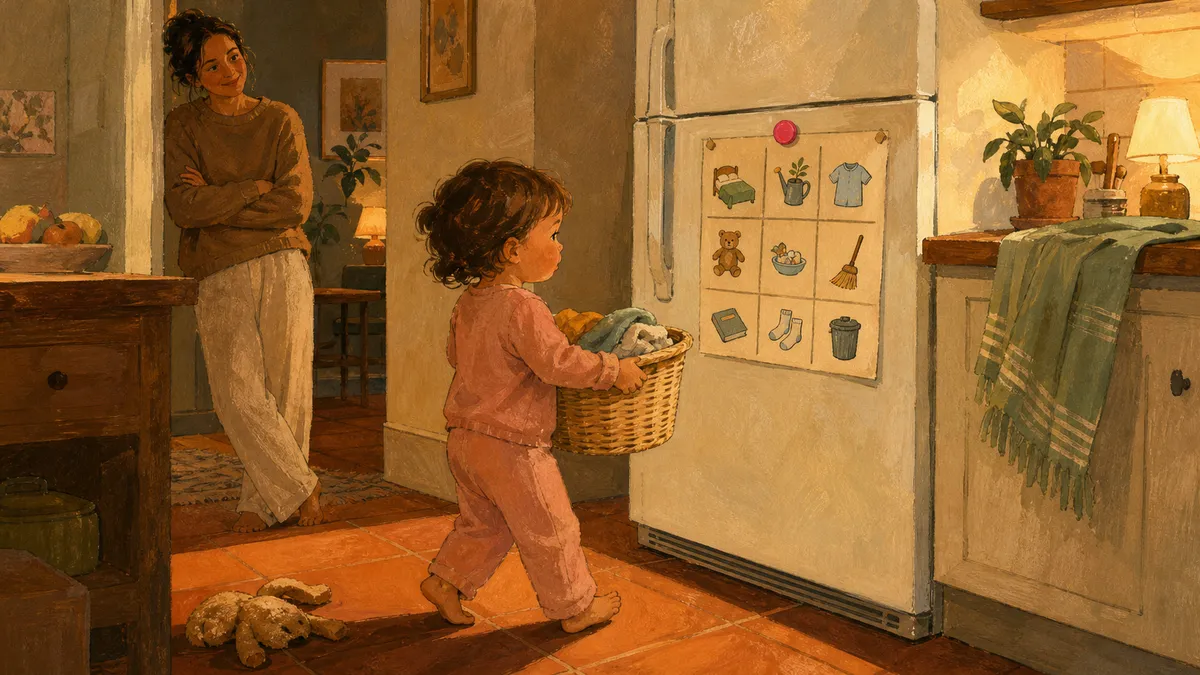
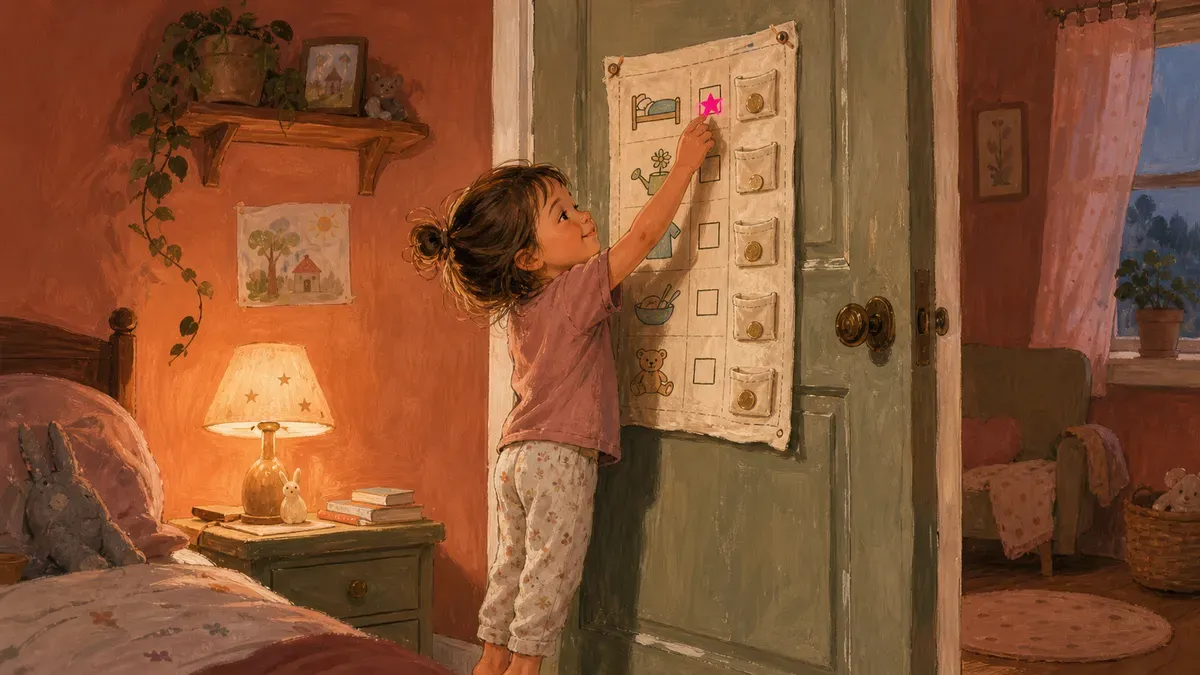
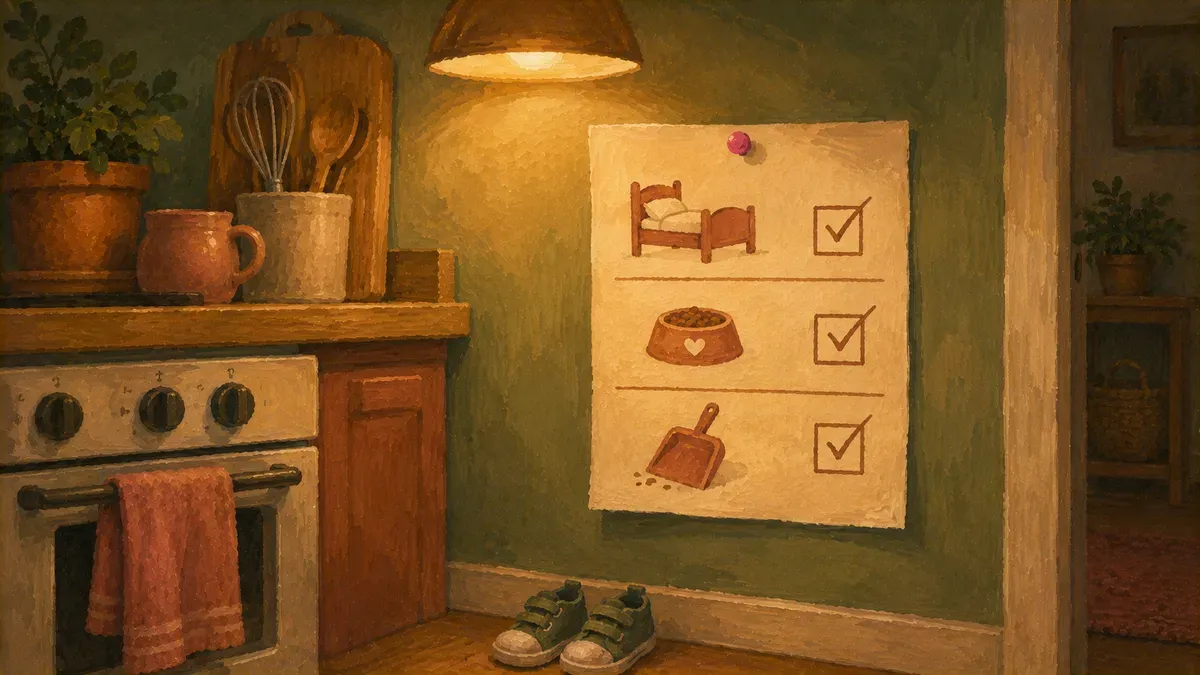
A three-year-old can’t read “make your bed,” so a wall of words is just decoration to them. Pre-readers need a picture or icon for every task: a little bed, a toothbrush, a basket of toys. A visual schedule lets them check the chart and know what’s next without you reading it aloud forty times.
This is why I keep a picture-based version taped to the fridge. If you want one ready to go, our childrens chore chart printable for pre-readers uses icons so a toddler can run it solo. A good free printable graduates with them too: picture-only at 3, picture-plus-word around 4-5, then a plain written checklist once reading clicks.
Format: Magnetic, Printable, or Sticker
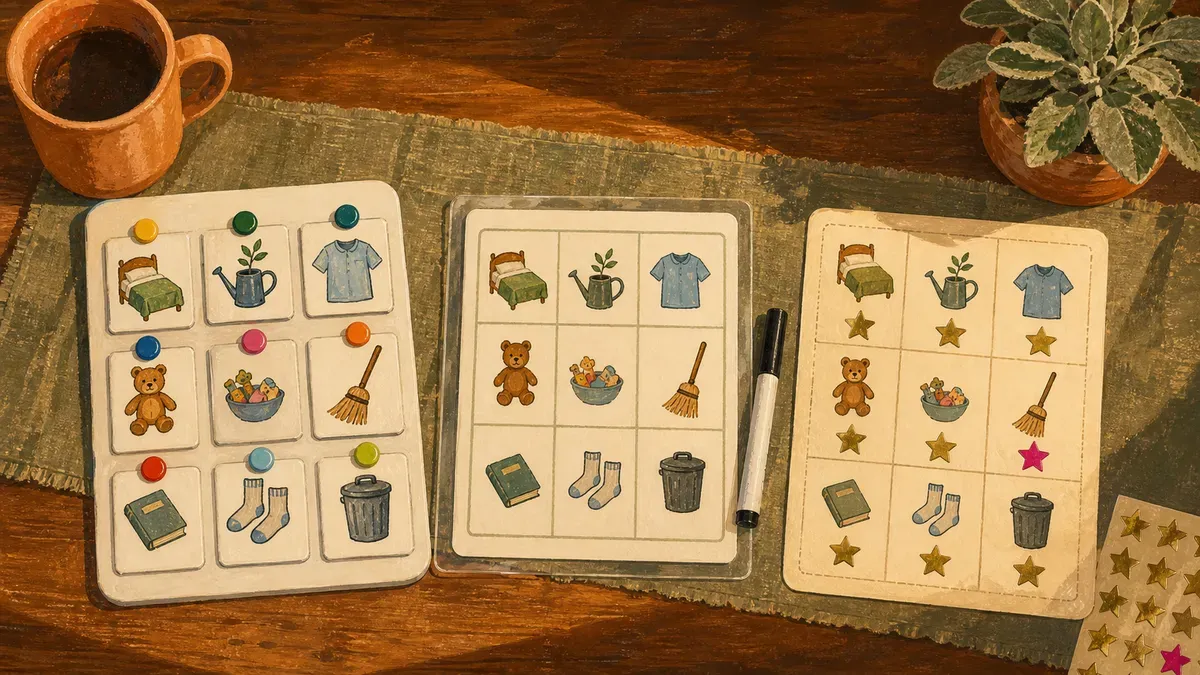
The last call is physical format, and it comes down to your kitchen, your budget, and your kid’s age. Here’s how the three stack up:
| Format | Best for | Cost | Reusable? |
|---|---|---|---|
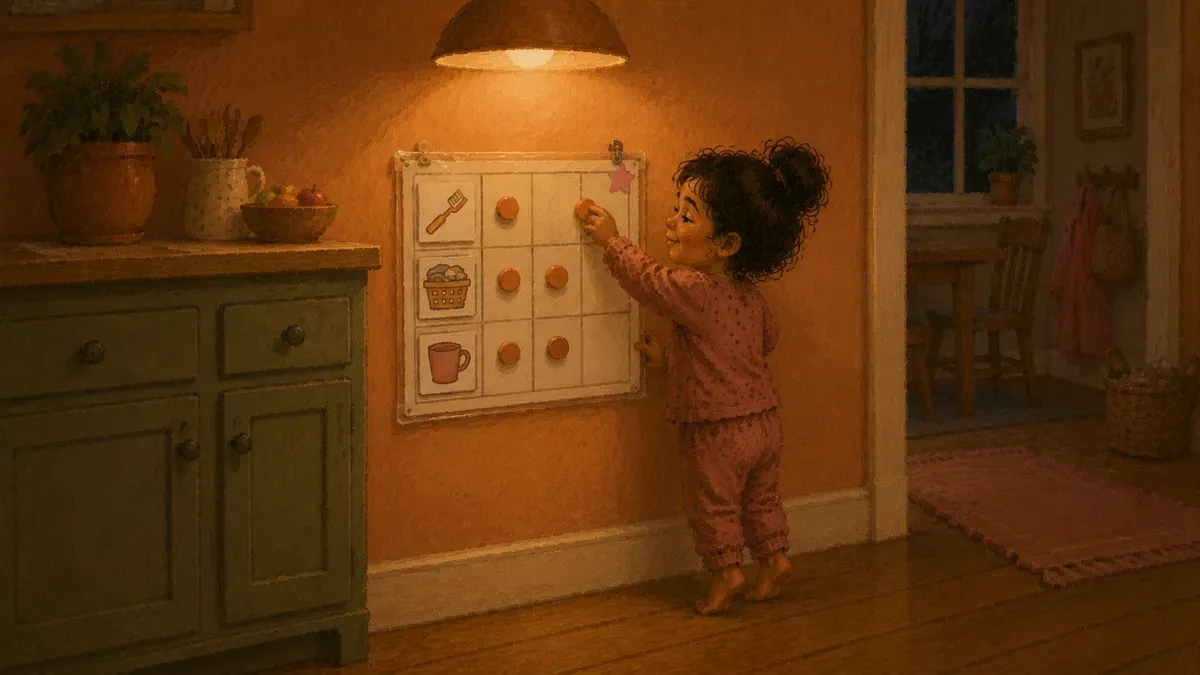
| Magnetic chore chart | Fridge-front, daily reset, ages 4+ | Higher upfront | Yes, wipe and re-sort |
| Printable chore board | Customizable, instant, any age | Lowest | Reprint or laminate |
| Sticker chart / chore calendar | Little kids who love placing a sticker | Low, ongoing stickers | One sheet at a time |
My honest pick for most tired parents: start with a laminated printable. We ran a weekly chore chart in a dollar-store frame with a dry-erase marker for months, and it cost pocket change to tweak when a task got too easy. Go magnetic once the routine is locked, and save the sticker chart for the kid who needs that little hit of reward to get started.
Age-by-Age Chore Lists From Toddler to Tween
The chart only works if the jobs on it fit the kid holding the marker. Here’s what’s actually doable at each stage, from the two-year-old who lives to dump things to the ten-year-old who can run a load of dishes.
Toddlers Ages 2 to 3
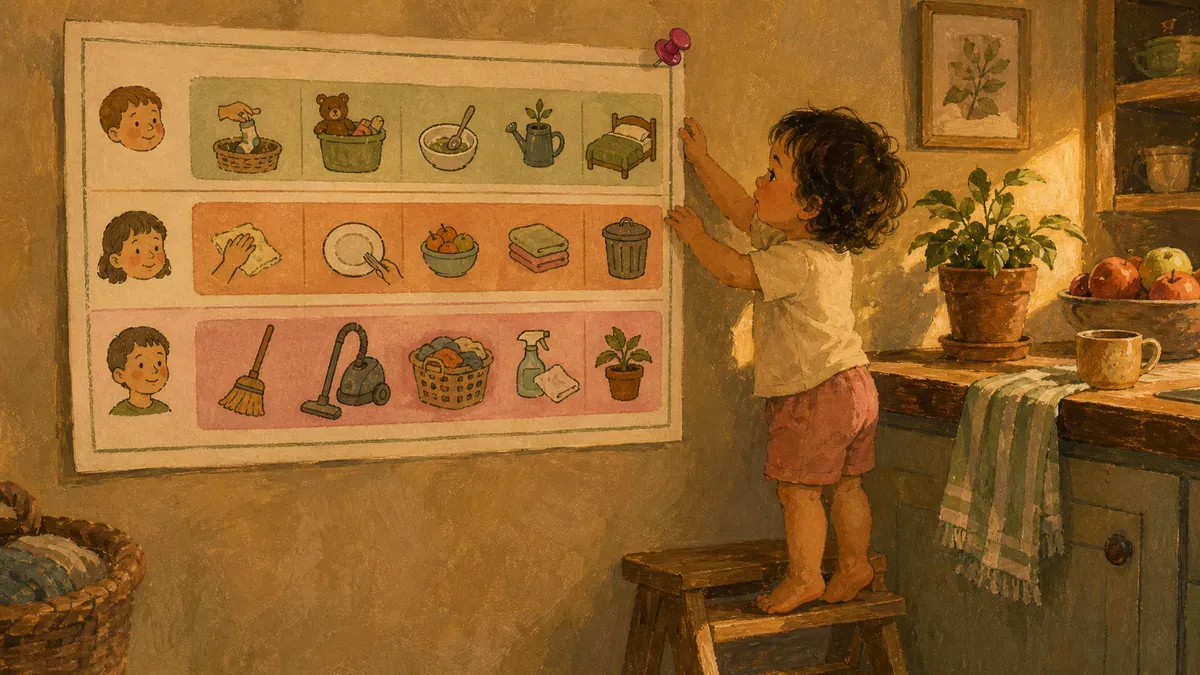
Most chore lists start at five, which is exactly the problem. By three your kid has watched you tidy for two years and wants in on it. Skip these years and you miss the easiest buy-in you’ll ever get, because a toddler still thinks chores are a game.
Keep it to one step.
A 2- or 3-year-old can toss dirty clothes in the basket, put toys back in a bin, wipe a spill with a cloth, or feed the dog from a pre-filled scoop. At this age, putting toys and groceries away and getting dressed with a little help are genuinely within reach.
A short list of everyday jobs looks like this:
- Throw laundry in the hamper
- Put toys in their bin
- Wipe up a small spill
- Carry the unbreakable cups to the counter
- Set out the dog’s bowl
These are developmentally appropriate independent tasks, not real help yet. My June “sweeps” by pushing crumbs in three directions and calling it done. Doesn’t matter. A picture-only kids chore chart at this age is about the habit, not the spotless floor. For a fuller starting point, see our breakdown of age appropriate chores for 3-year-olds.
Preschool and Kindergarten Ages 4 to 6
Four is where it shifts from cute to genuinely useful. Preschoolers and kindergartners can follow a two-step job and finish it without you hovering over every move. This is the stretch that builds real independence, and it lines up neatly with the self-help skills that make kindergarten go smoother.
Good jobs for 4-, 5-, and 6-year-olds:
- Set the table, forks and napkins first
- Feed pets at the same time each day
- Make the bed, even if it’s lumpy
- Match socks from the clean pile
- Clear their own plate after dinner
- Water a houseplant
Making beds, setting tables, dusting, and clearing their spot are the chores for this age that build self-esteem and teach kids to pull their weight as a family.
Right here is where a picture-plus-word chore chart earns its keep for kindergarteners, because most of these jobs can stick without a parent reminding them.
The chores for 6 year olds especially can graduate to a small written checklist, which is exactly the readiness you want before first grade.
Elementary and Tween Ages 7 to 10
By seven the training wheels come off. Elementary kids can handle a multi-step job, remember it without a nudge, and take pride in something that genuinely lightens your load. This is also the age where chores start trading for allowance or a later bedtime, and that real responsibility lands.
What a 7- to 10-year-old can own:
- Load and unload the dishwasher
- Vacuum a room
- Take out the trash and recycling
- Pack their own school lunch
- Help prep a simple meal, washing veggies or stirring
- Strip and remake their bed with fresh sheets
The AACAP lists loading the dishwasher, helping cook, and packing lunch as right for ages 7 to 9. For the daily load, the Children’s Hospital of Philadelphia suggests elementary-age kids spend 10 to 20 minutes helping each day, which is plenty for chores for 7 year olds through chores for 10 year olds without it feeling like a job.
At our house, the recycling bin is Eli’s job. No reminder needed once it’s on his written list.
The chores for 8 year olds and chores for 9 year olds in between are about stacking small jobs into a routine he reads and checks off himself.
Chore Charts Parents Actually Recommend
A written checklist works once a kid can read it. Before that, the chart you buy matters more than the chore on it, because a toddler will only run a board they understand at a glance. These are the ones our living-room group keeps reaching for, tested across a stack of fridges in real, sticky-handed kitchens.
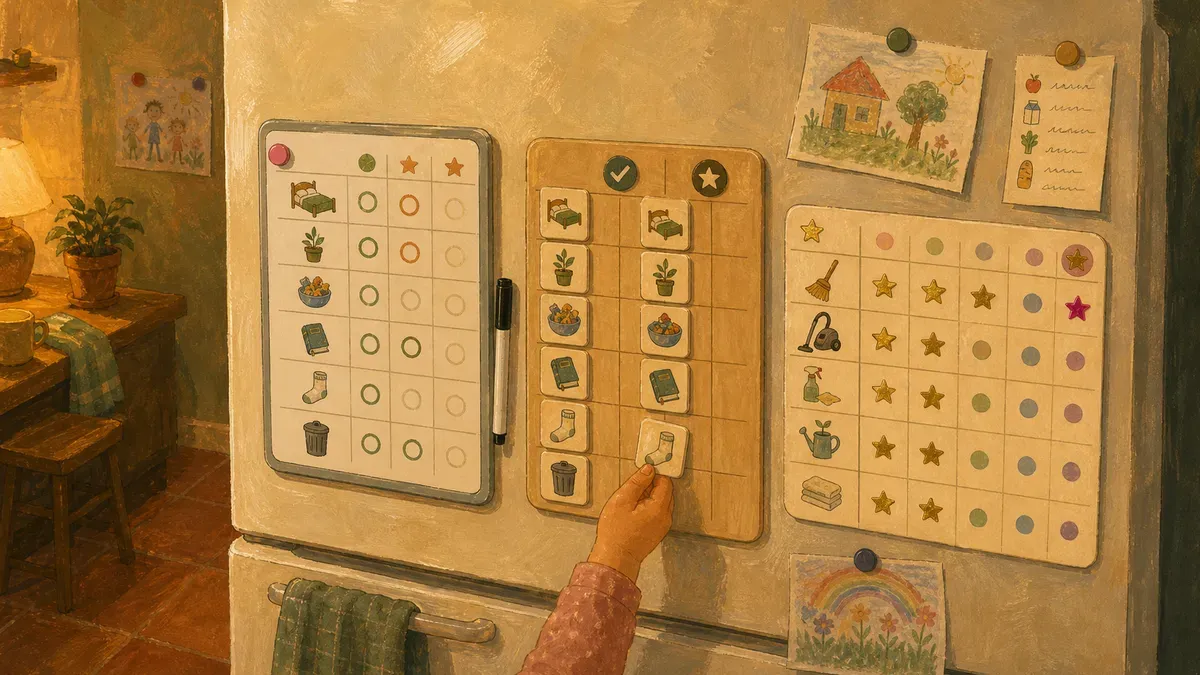
Here’s how they compare on who they fit, how they work, and what other parents think:
| Chart | Best for | How it works | Parents’ rating |
|---|---|---|---|
| Magnetic Dry-Erase Fridge Chart | Most families, daily reset | Write and wipe, your own rules | 4.7★, 2,400+ reviews |
| Melissa & Doug Magnetic Responsibility Chart | Pre-readers ages 3+ | Slide a picture magnet to done | 4.7★, 5,600+ reviews |
The Magnetic Dry-Erase Fridge Chart sticks straight to the fridge, no frame, no tape. I write June’s three jobs down the left side and reset it Sunday night. It carries an Amazon’s Choice badge and 2,400-plus parent reviews, which tracks, because it’s the one I’d hand most parents first.
- 14.5″ × 11″ of nano-erase film on a magnetic backing
- Comes with six markers, so nobody’s hunting for a pen at 7am
- Nothing pre-loaded: you write the jobs that fit and reset whenever you want
For the under-fives who can’t read a word yet, the Melissa & Doug Magnetic Responsibility Chart earns its spot. A three-year-old slides a picture magnet into place, so the chart runs without you narrating it forty times. A mom in our group swears by the little clunk her pre-reader gets moving a magnet over to done, and with 5,600-plus reviews behind it, her kid clearly isn’t the only one hooked.
- Wooden board with two fabric-hinged dry-erase panels
- 89 magnets in the box, roughly 15.6″ × 11.7″ of surface
- Best for pre-readers around 3 and up who can move the pieces solo
If you only buy one chore board, make it the fridge chart, and save Melissa & Doug for a genuine pre-reader who needs pictures over words. Got a house full of star-chasers, or three kids fighting over one chart? A plain sticker sheet or a free printable does that job for pennies. Honestly, on the broke weeks a printable in a dollar-store frame beats both of these, and that’s a perfectly fine place to start.
Turning a Chart Into a Daily Habit
A chart on the fridge does nothing on its own. Three things turn it into a habit your kid runs without nagging: hooking chores to the routines you already have, rewarding the right way, and dodging the mistakes that kill charts by week two.
Anchor Chores to Morning and Evening Routines
The trick is to stop treating a chore like a separate event. Bolt it onto something that already happens. Shoes go on, then they feed the cat. Teeth get brushed, then she drops her cup in the sink. The existing daily rhythm carries the chore, so nobody has to remember it cold.
Mornings and evenings are the easiest hooks because they repeat daily and anchor the weekly rhythm without extra planning. A typical list of home chores for mornings might run: get dressed, make the bed, feed the dog. An evening routine: toys in the bin, pajamas, one book.
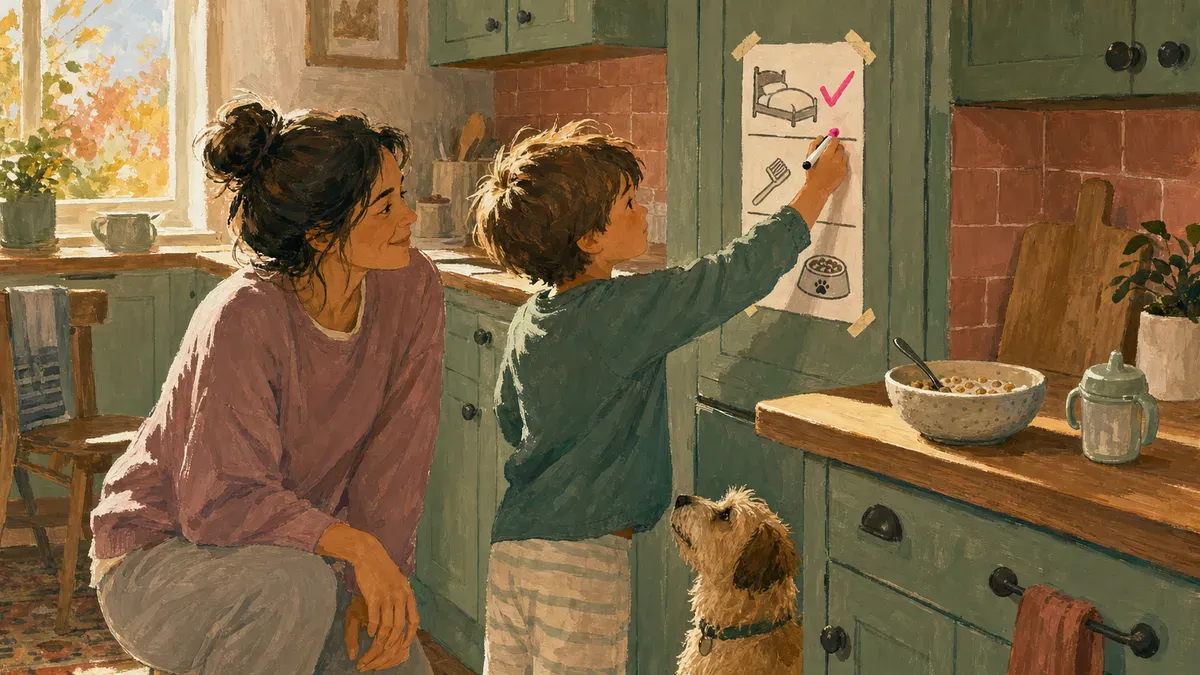
Consistency is the whole game. Same order, same time, every day, until the kid runs it on autopilot and you’re barely in the room. For the full setup, here’s our full guide to reward and chore charts.
Rewards, Praise, and Allowance
A sticker is plenty for a three-year-old. A three-year-old still lights up over a foil star, and a PubMed systematic review found that positive reinforcement like a sticker chart increases kids’ follow-through, with the effect holding for months after. The reward system works, but how you praise matters more than the prize.
Name the specific thing. “You put every cup away, that’s a real help” lands harder than a vague “good job.” You’re pointing at the effort, not buying the behavior.
Allowance is optional, and best saved for older kids who get the trade. For toddlers, skip the cash. If you want a low-stakes version that hooks a little one fast, try this make reward chart toddler cant wait approach.
Common Mistakes and When to Phase It Out
Most charts fail for boring reasons. Too many chores at once is the big one.
- Loading on five jobs when one or two would stick (overwhelmed kids quit)
- Skipping days, so the routine never sets
- Picking tasks above the kid’s stage, which only breeds a power struggle
That same PubMed review notes charts work best aimed at one or two specific behaviors, and once a habit holds, you fade the reward so the kid does it on their own. That’s the goal. Lighter stickers, then a casual check-in, then nothing but the routine itself.
Running one board for several kids? Keep it simple with a family chore chart for the whole household. Start small, stay consistent, and let the chart quietly work itself out of a job.
Found this useful? Save it for the next rough afternoon.
Questions parents ask me about this
What should a chore chart for kids include by age?
For toddlers (2-3), stick to one-step jobs like tossing laundry or picking up toys. Preschoolers and kindergartners (4-6) can handle setting the table, feeding pets, or making a simple bed. Elementary kids (7-10) are ready for dishwasher duty, taking out recycling, and light meal prep. The chart itself should match how the child reads: pictures for pre-readers, picture-plus-word as they learn, and a written checklist once they're reading confidently.
What chores can a 2-year-old do?
More than most parents expect. A 2-year-old can toss dirty clothes in the hamper, carry a plastic plate to the sink, put toys in a bin, wipe up a spill with a cloth, or help scoop food for a pet. The key is one-step tasks with zero ambiguity. Keep the expectation small: starting and finishing something on their own is the whole point, not the quality of the outcome.
Should kids get allowance for doing chores?
For younger kids, sticker charts or small non-cash rewards work better than money, since the concept of saving and spending doesn't click yet. Most families find allowance makes more sense once kids are 7 or older and can connect earning to spending decisions. Many parents separate baseline chores (part of living in a family) from optional extras that can earn money, so kids understand some responsibilities aren't optional.
How many chores should a child have each day?
For toddlers and preschoolers, one or two tasks is plenty. Elementary kids can handle three to five tasks spread across morning and evening, but those shouldn't add up to more than 10 to 20 minutes of actual effort on a school day. The goal is building the habit, not filling their afternoon. A chart that piles on eight tasks usually gets abandoned by week two.
How do I make a chore chart for a child who can't read yet?
Use pictures or icons instead of words. A photo of the hamper next to a pile of socks tells a 3-year-old exactly what to do without anyone reading it aloud. Magnetic picture charts work well because the child can physically move a magnet to show the job is done. That small action gives them a payoff, which keeps them coming back to the chart.
Where can I find a free printable chore chart?
A search for free printable chore chart will turn up plenty of options on activity and parenting blogs. Slipping a laminated printout into any basic picture frame turns it into a reusable dry-erase board. It's worth starting with a free version to see what layout your family actually uses before buying a magnetic board.
How do I keep my child motivated to do chores?
Praise that names the action ("you cleared your whole plate") sticks more than a general compliment. Anchor the chores to routines that already happen, like right after breakfast or right before bath, so the chart becomes a cue rather than a reminder. Sticker rewards work well in the early weeks; once the habit holds, you can quietly phase them out and the behavior usually sticks.
Written by
Nora Hayes
Mom of two and a former preschool aide. I share the screen-free sensory play and calm-down ideas I test at my own kitchen table, plus what the moms in my little meet-up swear by. A parent passing on what works, not a doctor or a therapist.
More about NoraKeep going
All Reward & Chore Charts-
 Reward & Chore Charts
Age Appropriate Chores by Age (Toddler to Teen)
Most kids handle real chores younger than you think. Get age appropriate chores by age, from 3-year-olds to teens, and start building habits today.
-
 Reward & Chore Charts
Allowance Chore Chart: How to Start With Little Kids
Set up an allowance chore chart that ties money to effort: paid-vs-unpaid rules, prices by age, 100 chore ideas, and the best charts. Start today.
-
 Reward & Chore Charts
Childrens Chore Chart Printable with Pictures
Pre-readers can't follow word lists, but they can follow pictures. Free printable chore chart for toddlers and preschoolers, ready to laminate.
-
 Reward & Chore Charts
Chore Chart vs Reward Chart: Which One Your Kid Needs
Chore chart, reward chart, or responsibility chart? Find out which fits your child's age, build one in 5 steps, and snag a free template.