Chore Chart vs Reward Chart vs Responsibility Chart

Some links here are affiliate links. If you buy through one, I may earn a small commission at no extra cost to you. As an Amazon Associate I earn from qualifying purchases. I only point to things I'd actually use with my own two.
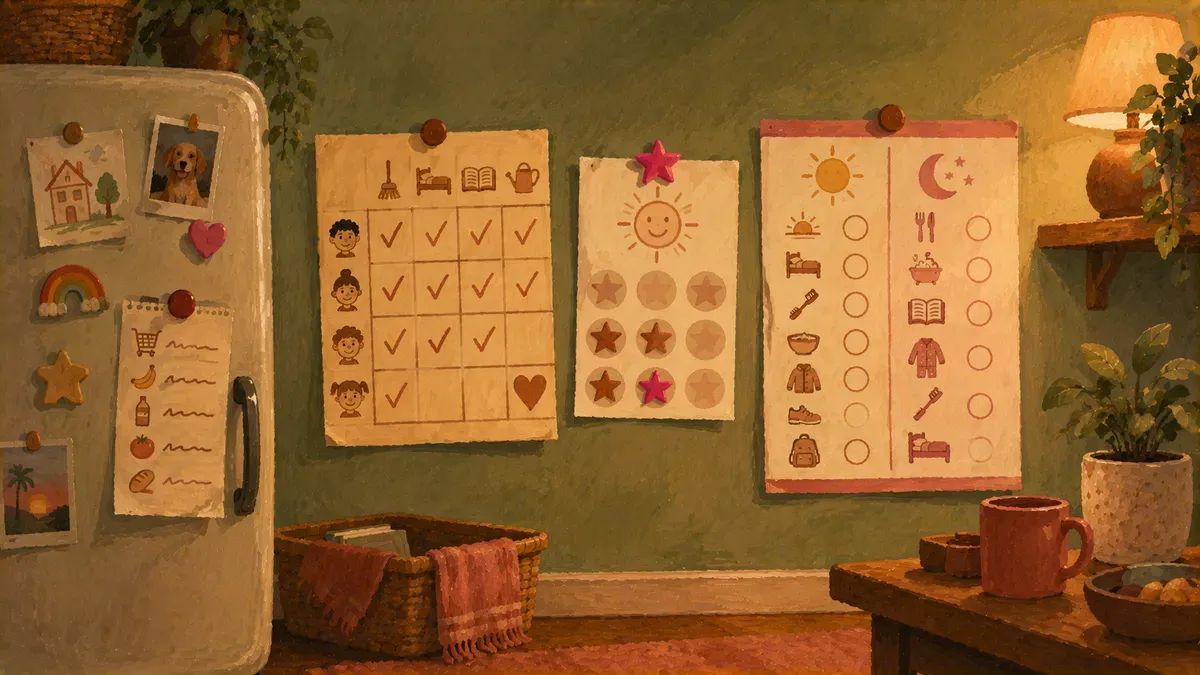
Three charts, three jobs: a chore chart tracks tasks, a reward chart trains one new habit, and a responsibility chart runs your kid’s whole daily routine. Picking the right one matters because the wrong fit is exactly why most charts end up forgotten on the fridge by week two.
I’m Nora Hayes, a former preschool aide and mom of a sensory-seeking kid and his little sister, and below I’ll walk you through what sets the three apart, how to build one step by step, which tasks fit which age, and how to choose a format your child will actually stick with.
The plan in brief:
- Pick the chart type by goal: chore chart for tasks, reward chart for one habit, responsibility chart for daily routines.
- List 3 to 5 age-appropriate tasks and grab a free printable template to map them out.
- Run it for 2 weeks, mark progress daily, and adjust rewards before motivation drops.
Chore, Reward, and Responsibility Charts: What Sets Them Apart
Picking the wrong one is the quiet reason charts die by week two, so before you laminate anything, know which job each chart is actually built for. Here’s how the three differ at a glance, with a well-reviewed ready-made pick for each if you’d rather buy one than build your own:
| Chart type | Tracks | Best for | Lifespan | Parents’ rating |
|---|---|---|---|---|
| Chore chart | Recurring tasks | Sharing the household load | Ongoing | 4.7★, 2,400+ reviews |
| Reward chart | One behavior | Building a single new habit | Short-term | 4.6★, 600+ reviews |
| Responsibility chart | Full daily routine | Growing independence | Ongoing | 4.7★, 5,600+ reviews |
Match the chart to the goal, not the cutest design, and you have already won half the battle.
Chore Charts: Tracking Recurring Tasks
A chore chart gives every recurring task an owner, so nobody argues about who feeds the dog or clears the table.
You can run it as daily jobs (bed made, dishes cleared) or stretch to weekly ones like watering plants. The American Academy of Child and Adolescent Psychiatry recommends school-age kids pitch in with jobs like clearing up, because a shared chore system teaches cooperation. The system just makes the sharing visible.
Rather buy than DIY? The magnetic dry-erase board in the table wipes clean every week and ships with its own fine-tip markers, and it’s carried an Amazon’s Choice tag across 2,400-plus parent reviews.
Reward Charts: Motivating One Behavior at a Time
The positive reinforcement is the engine: a sticker or star lands immediately after the behavior, which is exactly when a young kid’s brain connects action to reward. That tight focus is why a childrens reward chart works best as a short-term push, not a permanent fixture.
The positive reinforcement keeps motivation high while the habit is new. Single-behavior chart guidance from Empowering Parents suggests adding a second behavior only after the first sticks, usually after 3 to 4 weeks of steady follow-through. Stack two expectations too soon and the chart loses its power.
If printing your own feels like one more thing, there’s an 80-pack of paper charts that shows up with a frankly ridiculous 2,160 star stickers, enough to outlast the habit twice over. Six hundred-plus parents give it 4.6 stars.
Responsibility Charts: Building Daily Routines
Blending self-care, behavior, and household tasks in one place means the daily routine becomes the goal, not any single checkmark. You are building a family routine that grows independence and self-reliance over time.
Morning might run brush teeth, get dressed, make bed, kind words. That blend of life skills and accountability is what makes a family routine tracker stick on a busy fridge. Grab our free responsibility chart template inside our reward chore charts hub if you want a head start. It carries more weight than a sticker page because independence, not the prize, is the point.
The buy-it version here is the Melissa & Doug wooden magnetic board, 89 little magnets for chores and rewards, made for ages 3 and up. It’s the most-reviewed of the three by a wide margin, north of 5,600 ratings at 4.7 stars.
How to Make a Chore Chart in 5 Steps
The whole thing comes together in one short sitting, no laminator required. 1. Decide what you want to track and agree on the jobs that go on it.
- Settle on how it lives in your home, then start from a template instead of a blank page.
- Attach a reward, run the whole thing for two weeks, then swap what isn’t working.
Choose the Chart Type and Tasks
Start with the goal, not the grid. Want one habit to stick? That’s a reward chart. Want a full morning routine to run itself? That’s responsibility. For everyday recurring jobs, you’re building a chore system, plain and simple.
Then list 3 to 5 tasks. Not ten. Five tops, because a kid who sees twelve boxes shuts down before breakfast. Keep them age-appropriate and matched to where your child actually is, not where the developmental stage chart says they should be.
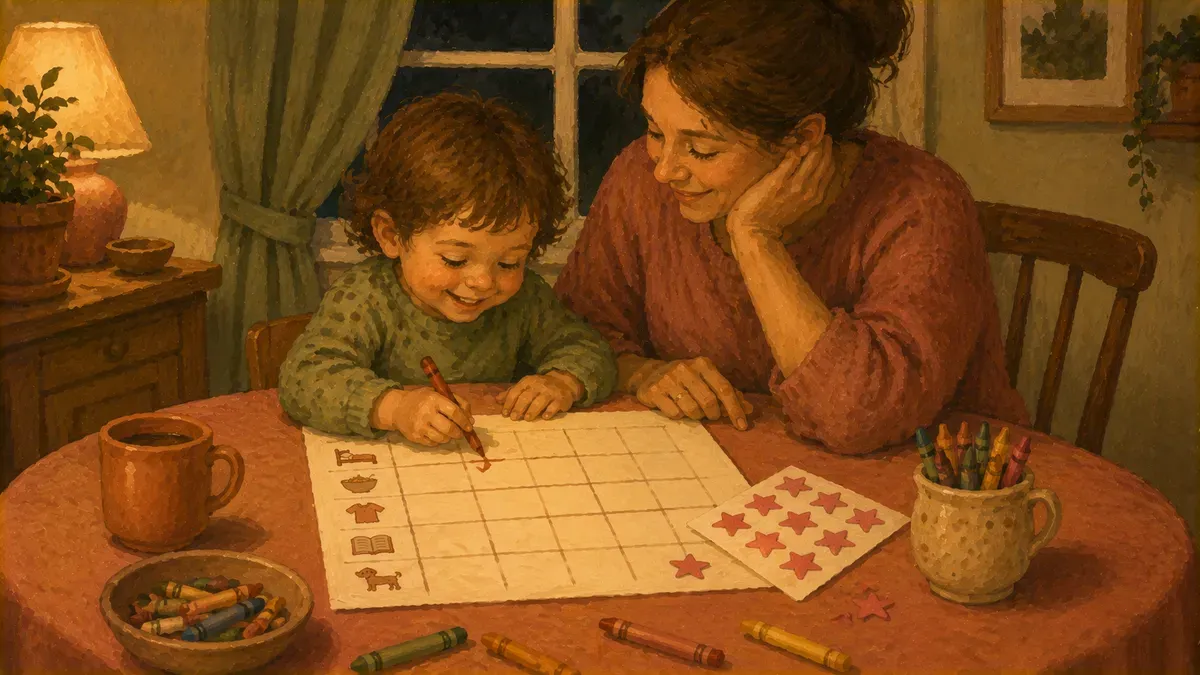
Do the listing together. A two-minute family meeting where your kid picks two of the jobs means buy-in, and buy-in means fewer morning standoffs and a much better shot at the task actually getting done. The task assignment they chose themselves is the one they’ll actually do.
Pick a Format and Grab a Template
Now choose how it lives. Three formats work: printable, whiteboard, or digital.
Whatever you pick, do not build it from scratch at 9pm. Start from a chore chart template that’s already laid out, then swap in your tasks. A good chore template chart hands you the rows, the days, and the checkboxes, so you just fill the blanks.
Download a ready-made chore list template, print it, and you’ve turned a project into a five-minute job. If you want the boxes mapped to ages, a chore chart for kids by stage saves you the guesswork on what goes where. One chore template, your daily chores and weekly chores already slotted, the whole family routine on a single page.
Set Rewards, Run It, and Adjust
Pair the chart with something. For little ones, a sticker is plenty of positive reinforcement. For older kids, tie it to allowance, screen time, or a Friday treat. The reward is the spark, not the engine.
Then run it two weeks before you judge it. Week one is shiny and easy. Week two is where motivation dips and you learn what’s real.
If a task keeps getting skipped, it’s too hard or too boring, so swap it. Stale incentives? Change the reward. The chart isn’t a contract. It’s a draft you tweak until it sticks.
Matching Chores to Your Child’s Age
A chart only sticks when the jobs actually fit the kid. Here’s a quick map by age, from the toddler who hides spoons to the teen who can run the laundry.
Toddlers and Preschoolers
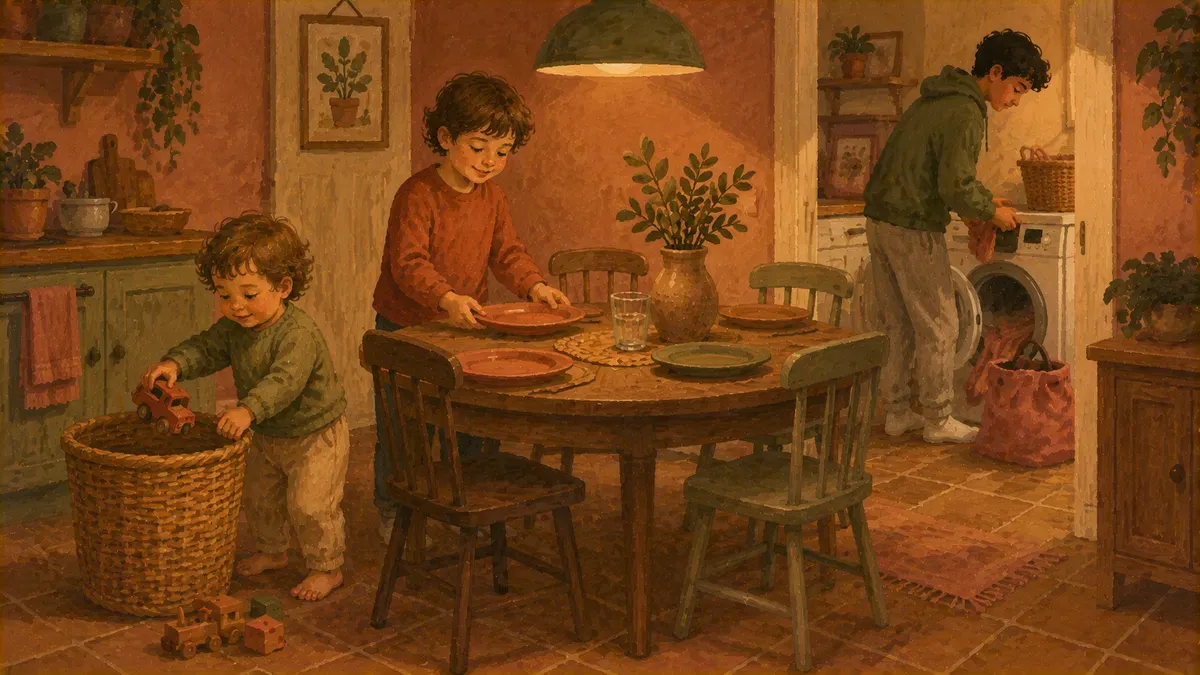
Ages 2 to 5 can do real chores, just tiny ones. Think toys into a bin, clothes into the hamper, their plate carried to the counter, a scoop of food into the dog bowl with you right there. The American Academy of Child and Adolescent Psychiatry notes that 2- and 3-year-olds can put away toys and groceries and even dress with help, so you have more options than you’d guess.
The trick at this developmental stage is going picture-based. A pre-reader can’t tick off “tidy room,” but they can match a photo of toys-in-a-bin to the real thing. Use a chart with little pictures, point, cheer when it’s done. That cooperation and that bit of positive reinforcement is the whole win right now, not a spotless floor.
School-Age Kids
The jobs grow as they do. By the 6-to-12 stretch, kids can own a chore start to finish without you hovering, and most want the responsibility more than you’d expect. AACAP lists wiping surfaces, sweeping, and putting away laundry for the 6-7 set, then vacuuming, helping cook dinner, and walking the dog by 8-10.
Daily chores that tend to land well at this age:
- Setting and clearing the table
- Feeding pets and refilling water bowls
- Making the bed and tidying their own room
- Sorting or folding laundry
- Taking out the trash or recycling
These are the years to fold in real life skills. A kid who packs their own lunch or runs a load of dishes is building self-reliance one repeated task at a time. Tie each job to the chart and let them check it off themselves.
Teenagers
A chore chart for teens looks more like a roommate agreement than a sticker board. Teenagers can handle the heavy stuff: full loads of laundry, cooking a simple dinner, mowing the yard, washing the car. AACAP ties these jobs straight to independent living skills, which is the real reason a chore list for teens earns its place now.
This is also where money gets interesting. Plenty of families connect a teenager chore chart to allowance, building money habits before the kid moves out. Greenlight reports that 32% of U.S. teens get an allowance specifically for chores, with the average weekly teen allowance on its app at $13.15 in 2025.
- Flat weekly rate for the whole chore list
- Per-task pay for extras beyond the baseline
Either way, chores for teenagers double as a low-stakes lesson in earning and budgeting. For more on where this all starts, see our guide to age appropriate chores for the youngest crew.
Chore Charts and Checklists for Every Household
Charts work for kids, but the same logic applies to adults. Here’s how to build a solid task list for any age group living under one roof.
A Master Household Chores Checklist
Before you build a family chore chart (or any chart at all), you need a working list of what actually needs doing. Most homes run on four task frequencies:
- Daily: dishes, beds, trash, wiping counters
- Weekly: vacuuming, laundry, cleaning bathrooms, mopping
- Monthly: windows, blinds, closets, appliances
- Seasonal: deep carpet cleaning, garden prep, decluttering
Start from that structure. Pick the domestic chores that apply to your home, then sort by room or by person. This becomes your household chore list to pull from whenever you build or refresh a chart. You do not need every item on a single chore list template. Just the ones that actually happen in your house. Most free chore checklist templates are a starting point, not a prescription. A shorter list of real tasks beats a comprehensive list nobody touches.
Charts for Adults and Roommates
Roommates and partners run into the same problem kids do: everyone assumes someone else handled it. A shared adult chore chart makes the invisible work visible.
Pew Research Center data from the American Time Use Survey found that 59% of women in couples report doing more household chores than their partner, while 46% of men believe chores are split equally. That gap is exactly where household conflict lives.
A roommate chore chart solves this with a simple structure: list every chore to do around the house, assign a name to each, and rotate monthly so no one gets permanently stuck scrubbing the bathroom. That monthly swap is where a wipe-clean board pays off, and the magnetic pick from the comparison up top works for a roommate rotation as well as a kid’s chore list. For adults, the chart is not about motivation. It is about agreement. Post it somewhere everyone sees it, check tasks off weekly, and revisit the split every few months.

Choosing a Chart Format That Sticks
The best system in the world fails if the chart ends up behind the toaster by week three. Format matters, and it comes down to two questions: how much upkeep you’ll actually do, and where in the house your kid will see it.
Printable and Whiteboard Charts
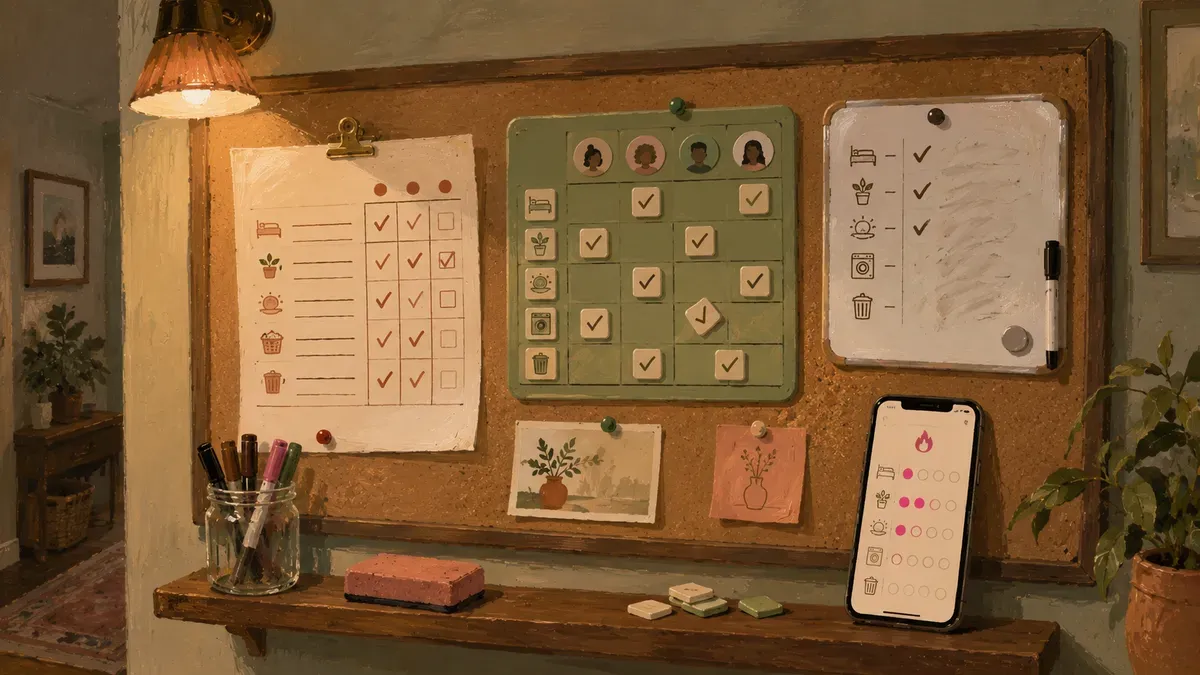
Paper printables cost next to nothing and take five minutes to set up; once a task is checked, the sheet is done and you print a new one next week. If you’d rather not reprint weekly, a dry erase board or whiteboard wipes clean in seconds.
For pre-readers, the fours and fives, a childrens chore chart printable with pictures beats a word list every time. HealthyChildren.org specifically recommends picture-based charts for ages 4-5 because most kids that age can’t read task labels yet. Stick it at their eye level on the fridge.
At a glance, here’s how the main formats stack up:
- Paper printable: low cost, fresh start each week, no special supplies
- Dry erase or whiteboard: reusable, wipes clean, no reprinting needed
- Magnetic board: interactive tiles or name magnets kids flip themselves
- Picture-based: best for pre-readers ages 4 and 5
- App or digital: built-in reminders and streaks, works best for tweens and teens
Digital and App-Based Charts
Some apps track completions and show a streak, which gives kids a reason to care beyond the sticker. One catch: younger kids won’t check an app on their own.
A six-year-old does not check an app unprompted. Picking the right responsibility chart template or tracking style is worth a few minutes of thought. Browse our complete guide to reward and chore charts if you want a deeper look at which format fits your kid’s age and your household’s style.
Found this useful? Save it for the next rough afternoon.
Questions parents ask me about this
What is the difference between a chore chart and a reward chart?
A chore chart tracks recurring household tasks your child is responsible for completing (think dishes, laundry, taking out the trash). A reward chart focuses on one specific behavior or habit you're trying to build, like brushing teeth without a fight, and stops once that habit sticks. Use a chore chart for ongoing household accountability and a reward chart as a short-term spark for a single new habit.
At what age should a child start using a chore chart?
Most kids are ready for simple chores around age two or three, putting toys in a bin or tossing dirty clothes in the hamper. At that age, skip the chart and just work alongside them. A visual chart (picture-based for pre-readers) starts making sense around four or five, when they can follow a posted routine without you prompting every step.
Should I pay my child for completing chores?
That depends on your goal. Paying for extra or optional tasks teaches kids that effort gets rewarded without making basic responsibilities feel transactional. If you tie allowance to a flat weekly rate rather than a per-task count, you avoid the "I don't feel like earning money today" problem. Either approach works. Pick the one that matches what you want your kid to learn about money and contribution.
How do I keep my kid motivated when the chart stops working?
Swap out stale tasks or rewards after about two weeks. Novelty does more work than most parents expect. If the reward has lost its pull, ask your child what would feel exciting now rather than guessing. Sometimes the chart itself just needs a physical refresh: a new color scheme, a different spot on the wall, or a dry-erase board instead of paper.
What should I do when my child does a chore imperfectly?
Let most of it go. A six-year-old folding towels into lumpy rectangles is still a six-year-old who folded the towels. Correct the one thing that matters most and leave the rest alone. Correcting everything trains them to stop trying, and the goal is a kid who does the chore independently, not one who does it to your standard.
How do I make a chore chart fair between siblings?
Fair does not mean identical. Assign tasks by what each kid can genuinely manage at their age and developmental stage, then rotate monthly so no one is permanently stuck with the worst job. Involve the kids in choosing from a list of age-appropriate options. If one kid always grabs the shortest job on the list, give each child two picks and a veto, so no one ends up with both easy slots.
Can chore charts work for kids with special needs or neurodivergence?
Yes, with the right setup. Visual picture-based charts work especially well for kids who struggle with reading or verbal instructions. Breaking a task into single steps rather than listing a broad item like "clean your room" reduces overwhelm fast. Short lists with immediate, concrete rewards tend to hold attention better than a week-long sticker accumulation. If the standard chart keeps failing, adjust the format before you give up on the chart entirely.
Written by
Nora Hayes
Mom of two and a former preschool aide. I share the screen-free sensory play and calm-down ideas I test at my own kitchen table, plus what the moms in my little meet-up swear by. A parent passing on what works, not a doctor or a therapist.
More about NoraKeep going
All Reward & Chore Charts-
 Reward & Chore Charts
Age Appropriate Chores by Age (Toddler to Teen)
Most kids handle real chores younger than you think. Get age appropriate chores by age, from 3-year-olds to teens, and start building habits today.
-
 Reward & Chore Charts
Allowance Chore Chart: How to Start With Little Kids
Set up an allowance chore chart that ties money to effort: paid-vs-unpaid rules, prices by age, 100 chore ideas, and the best charts. Start today.
-
 Reward & Chore Charts
Childrens Chore Chart Printable with Pictures
Pre-readers can't follow word lists, but they can follow pictures. Free printable chore chart for toddlers and preschoolers, ready to laminate.
-
 Reward & Chore Charts
Chore Chart for Kids by Age: What Each Age Can Do
A 2-year-old can really help. See what a chore chart for kids should include at every age, plus charts that stick. Start today.