Routine Chart Holiday Survival: Beat Christmas Chaos

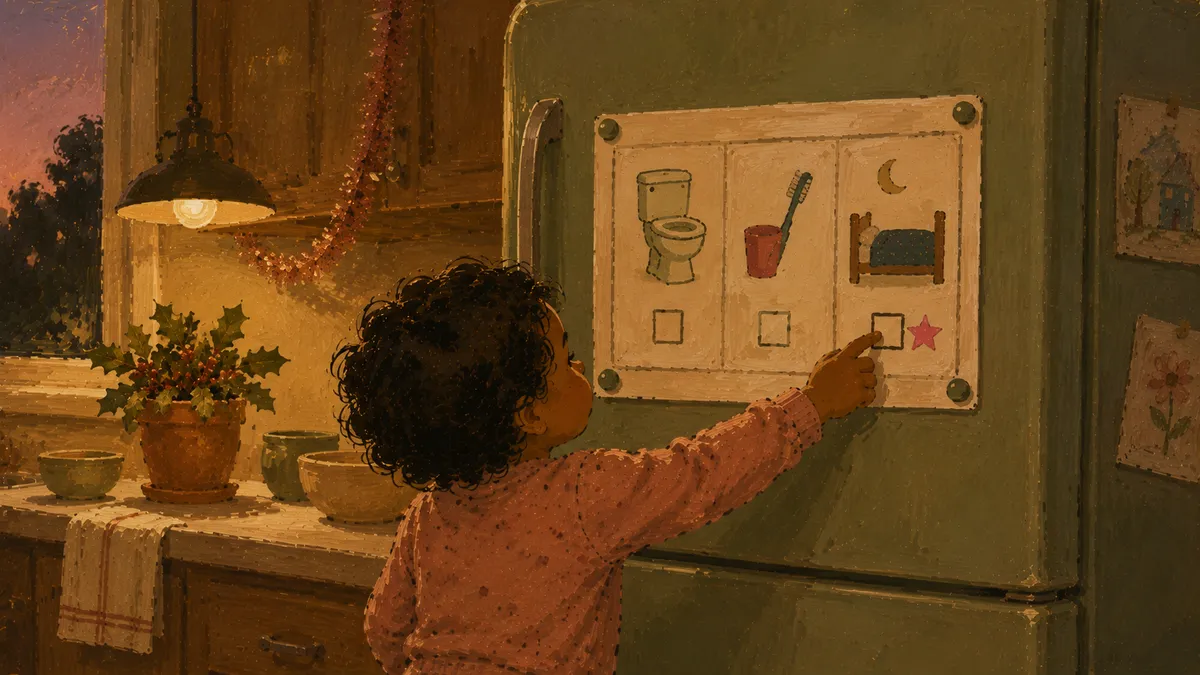
Cut the chart down to three things that cannot slide, potty, teeth, and bedtime, and your kid keeps the habits even when the rest of December goes sideways. I’m Nora Hayes, a former preschool aide and mom to a sensory-seeking 7-year-old, and the holidays wrecked our chart every single year until I stopped trying to run the whole thing on the road.
This walks you through the four steps that keep the chart alive through Christmas, how to protect the potty and bedtime wins while you’re at grandma’s, and how to get the full routine back on track once you’re home.
The plan in brief:
- Shrink the chart to 3 non-negotiable tasks: potty, teeth, bedtime.
- Pack a laminated travel copy and a dry-erase marker for grandma’s house.
- Restart the full chart within 48 hours of getting home, no guilt.
Why Holidays Break Even a Solid Routine Chart
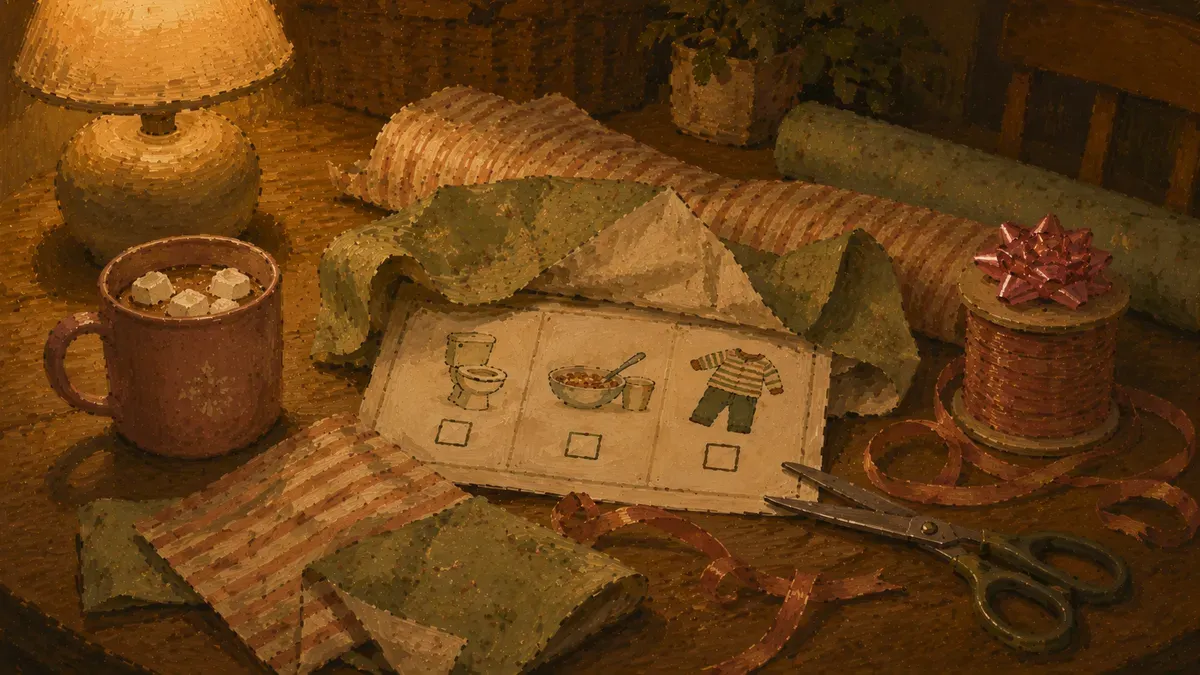
Here’s the thing about Christmas: the chaos doesn’t announce itself. It creeps in through a cousin’s sleepover and a late night watching holiday movies, and by day three your kid has no idea what comes next. That’s when the meltdowns show up.
Routine charts work because they make structure visible. A chart gives a kid three things:
- See what’s coming next, so they’re not caught off guard
- Check off what’s done, so they feel the progress
- Move through the day without having to ask every five minutes
Holidays don’t erase the chart. They erase the schedule the chart was built around.
When wake time shifts by two hours and there’s no school run anchoring the morning, the chart loses its context. Even kids with solid reward chore charts at home hit a wall when the sequence of the day disappears. It’s not a behavior problem. It’s a structure problem.
The other thing that trips parents up is over-correcting. They toss the chart entirely because “it’s the holidays” and figure they’ll restart in January. That habit gap is part of why a childrens reward chart falls apart after a break. The habit formation gap gets too wide to bridge easily. Two weeks off is long enough to undo weeks of momentum.
Keep the Chart Alive Through Christmas in 3 Steps
So you don’t have to bridge that gap in January, you keep the chart breathing through the chaos. Three small moves do the work: shrink it, pack it, and re-anchor it.
- Cut the chart to potty, teeth, and bedtime (the three that can’t slide).
- Print and laminate a pocket copy so consistency travels with you.
- Tie each task to what happens next in the day, not a clock time.
Trim It to Three Non-Negotiables
A full chart with twelve boxes is the first thing to collapse when family is in town and the day has no shape. So don’t ask it to survive. Cut the holiday checklist down to the three habits you actually care about: potty, teeth, bedtime.
Everything else (made the bed, fed the dog, got dressed before noon) goes on a shelf until January. Nobody’s tracking screen limits on Christmas Eve.
The reason three works is winnability. On a chaotic day, a kid who’d never finish a twelve-task list can still hit three and feel like they nailed it. That little win is what keeps a child cooperating with the potty training routine and the bedtime routine when everything around them is loud and off-schedule.
On the days the wheels come off, three checkmarks still count as a full chart.
Make a Laminated Travel Copy
The chart that lives on your fridge does nothing for you at grandma’s house. So make a second one built to travel.
Print a pocket-size version of your visual schedule, those same three tasks, and run it through a laminator (or two strips of packing tape if you don’t own one). Toss a fine-tip dry erase marker in the bag with it. That’s the whole kit.
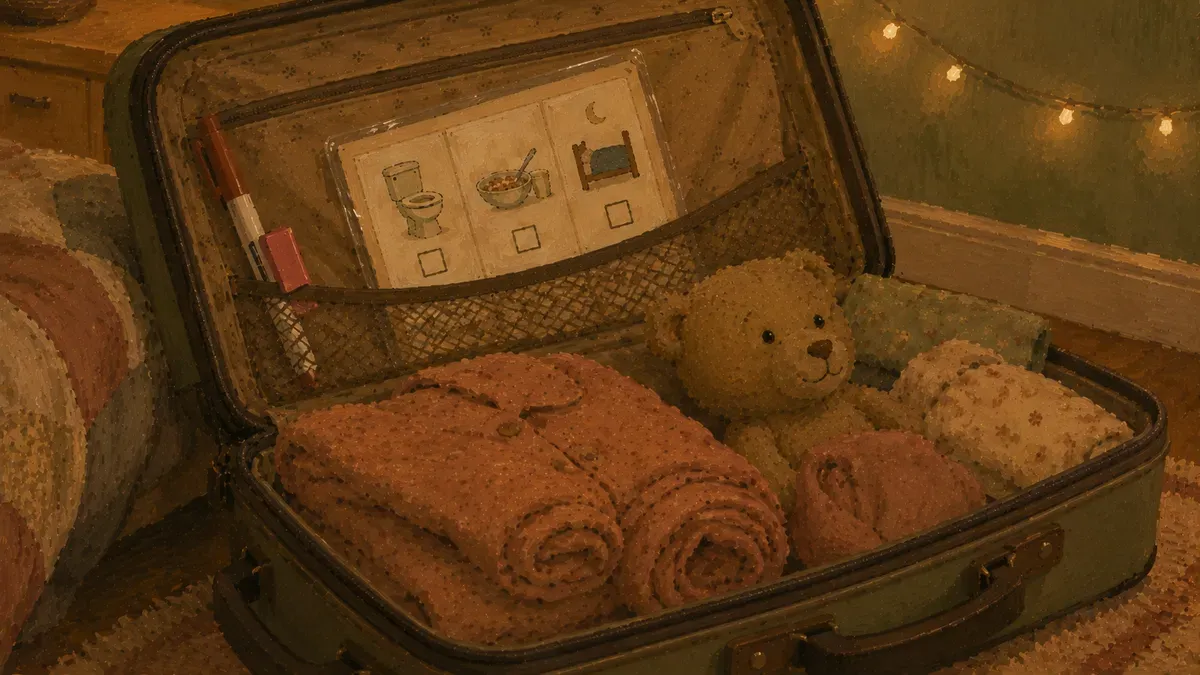
Laminated means it wipes clean every night and survives juice spills, car floors, and a toddler’s pocket. The printable becomes the constant: same pictures, same three steps, whether you’re in a hotel or on the air mattress in your sister’s basement. If you’re still sorting out how a daily routine chart differs from a sticker-reward setup, here are the differences between a chore chart and a routine chart laid out plainly.
Anchor Tasks to Holiday Events, Not the Clock
“Brush teeth at 7:30” means nothing on a day where dinner lands at 9 and presents happen whenever Grandpa wakes up. The clock breaks first. So stop tying tasks to it.
Anchor each one to something that still happens, in order, no matter how late it runs. Teeth come after pajamas. Bedtime story comes before the lights go out. Potty comes before presents.
Young kids don’t read a clock anyway. They read sequence, the way they know snack follows the park, and that’s why guidance on how habits form in young children leans toward event order over set times at this age. Lean into it. When the schedule goes sideways, the structure your kid trusts isn’t the hour, it’s the habit of what comes next. Keep the order intact and the consistency survives the holiday, even when nothing else about the day does.
Protecting Potty and Bedtime During Travel
Two habits crack the fastest on the road: the potty and the bedtime. Here’s how the travel chart holds both together when you’re three states from home and sleeping in someone else’s guest room.
Guard the Potty Routine on the Road
A long car trip is where weeks of potty progress quietly unravel, because the bathroom stops your kid relied on at home suddenly vanish for four hours straight. Pampers suggests a mandatory bathroom pit stop at least every two hours of car or plane travel, and turning that into a chart task keeps the rhythm your kid already knows.
- Car or plane: schedule a potty stop every two hours as a chart task (“first gas station, then potty”).
- At grandma’s: show them the bathroom the moment you walk in. A strange toilet and a kid who’d rather keep playing is the usual trouble.
- Pack the potty seat and keep the same self-care order on the travel copy so the sequence feels familiar.
If an accident happens, let it go. The American Academy of Pediatrics notes that potty-training regression after a routine change usually clears up within a few days or weeks once things settle. Staying consistent on the small stuff is what shortens that window.
Keep Bedtime Resilient in a Strange Bed
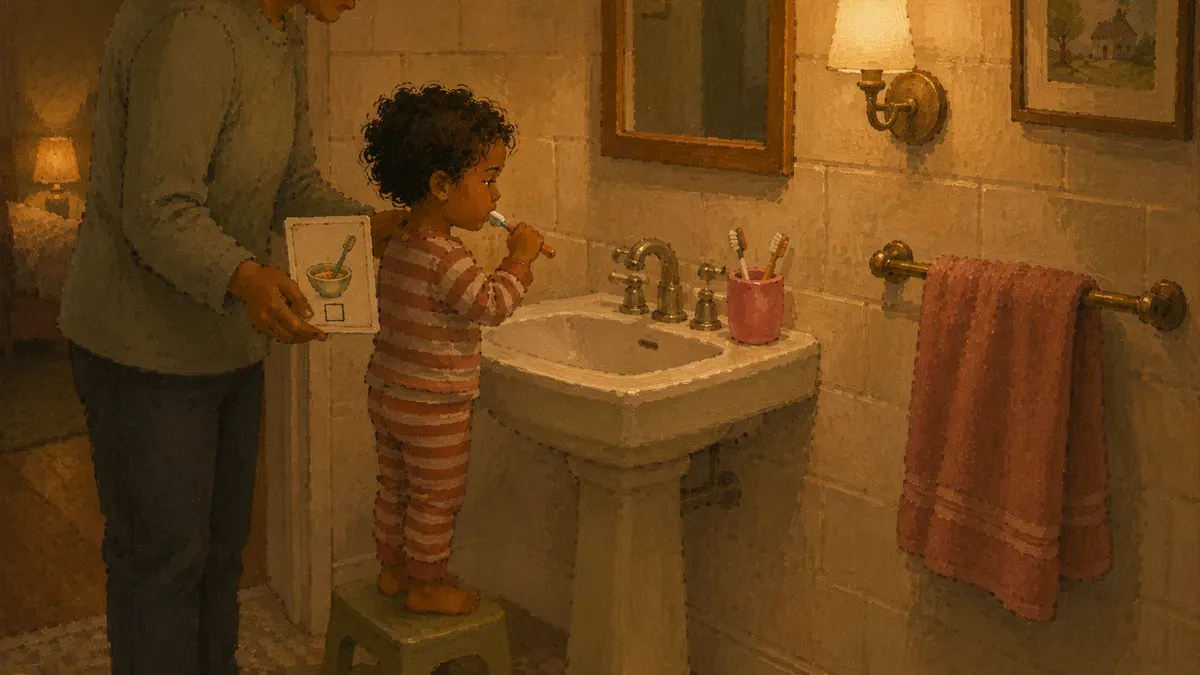
An unfamiliar room throws off the kid who sleeps fine at home. New shadows, a different mattress, the hum of someone else’s furnace. The chart can’t make the room familiar, but it can make the bedtime sequence familiar, and that sequence is what your kid is actually anchored to.
Run the same steps in the same order, even in a strange room:
- Bath
- Pajamas
- Teeth
- Two books
- Lights
The night routine off the laminated copy tells an anxious kid that even here, the world still works the way it should. Bedtime steadies fast when you keep it consistent. One sleep study of 405 young children found a steady bedtime routine improved how quickly kids fell asleep within about three weeks, roughly the length of a long holiday stretch.
If the meltdown still comes because everyone’s overtired and off-schedule, that’s normal, not failure. For the big nighttime feelings, using a kindergarten behavior chart for big feelings gives your kid a calmer way to name what’s going on before sleep.
Restarting the Routine Chart After the Break
The chart didn’t break. The holiday just paused it, and a pause is fixable.
Research on habit formation from UCL found that real-world habits take anywhere from 18 to 254 days to form, with an average of 66 days. A two-week break doesn’t erase what your kid built over months. It needs a little re-entry, not a full restart.
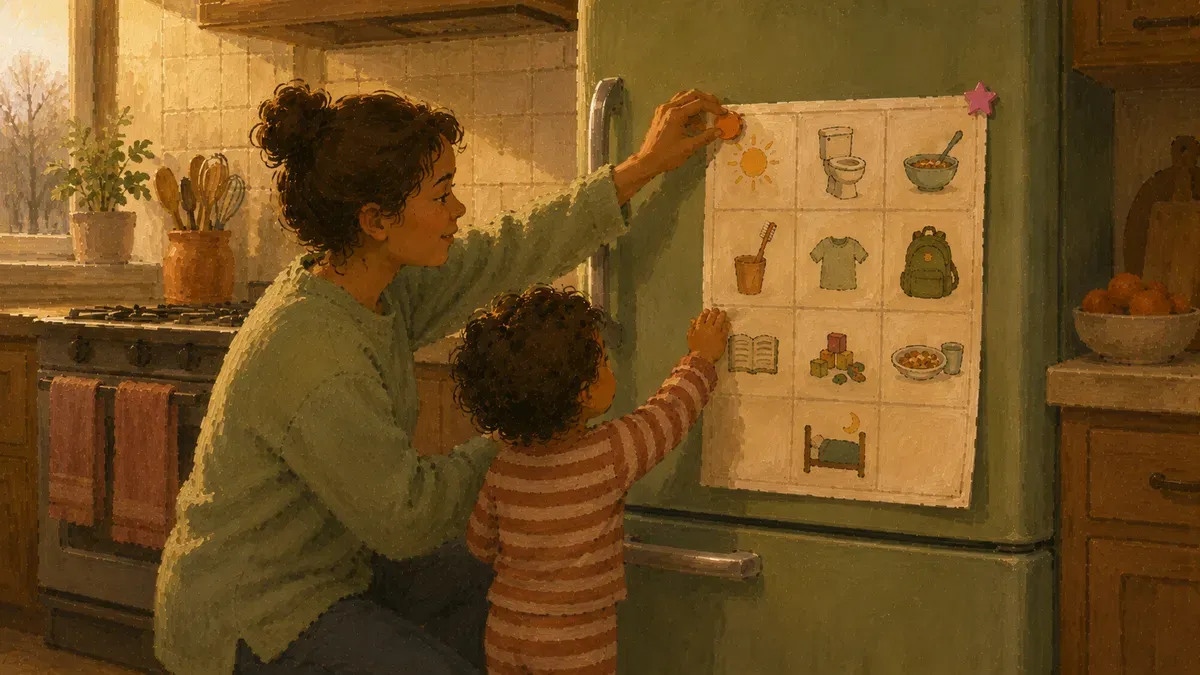
The first morning back, bring the chart out visibly. Put it back on the fridge or wherever it lived before. Make a thing of it: “Hey, our chart is back.” That’s it. No speech, no explanation, just the signal that daily structure is back in place.
Expect two or three days of friction. They’ll push back on the morning routine, resist bedtime, forget the order of things. That’s not regression, it’s their nervous system adjusting. Hold the consistency without making it a battle.
- Day one: set the chart in its usual spot and say something brief to mark it.
- Keep the routine steady through the first few days of resistance.
- Shrink the chart temporarily if the full version is too much right now.
- Add one task at a time until you’re back to the original.
- Reset to the holiday three-task version if the full chart feels like too much
- Add tasks back one at a time over the first week
- Catch the first win loudly: “You remembered teeth without me asking!”
Once they’re moving through the steps without prompting again, read up on phase sticker chart once habit sticks. That’s the goal anyway.
Adapting the Chart for Multiple Kids and Summer Breaks
The same chart that carried you through Christmas stretches further than one kid and one season. Here’s how to run it across siblings, and how to flip it into a summer setup when school stops doing the structuring for you.
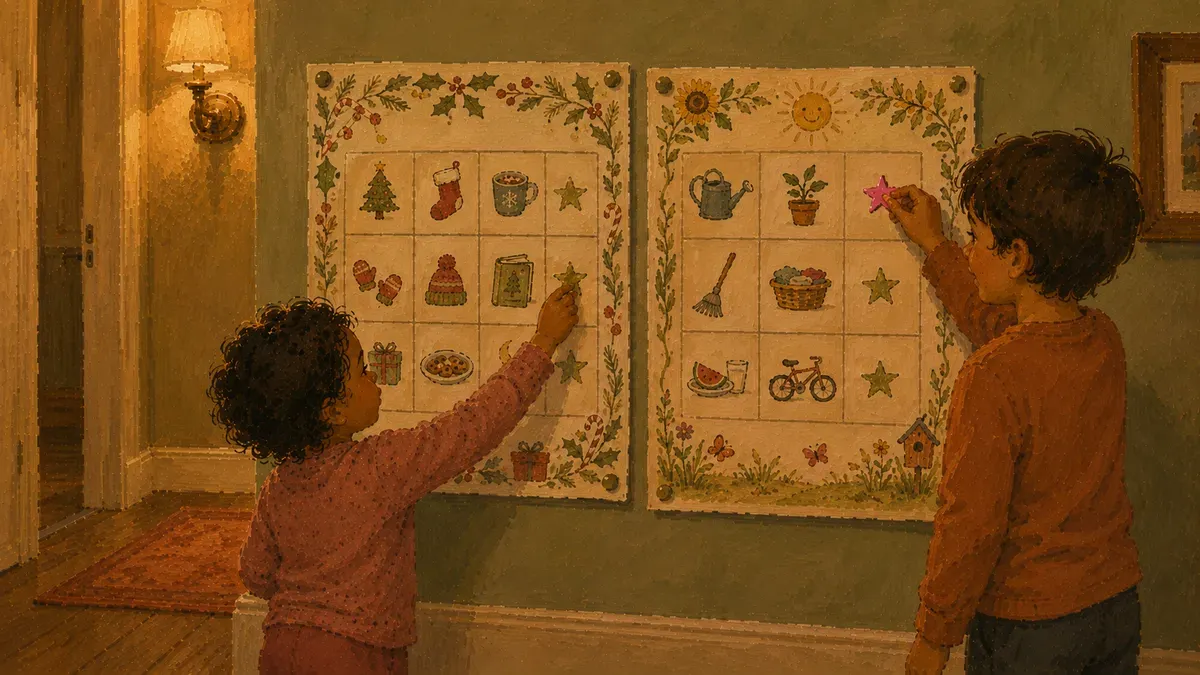
Run One Chart Across Several Kids
Don’t make a chart per child unless you love laminating. One board, a column per kid, same tasks down the side. Each one moves their own marker or sticker, and the wall does the nagging instead of you.
The trick is age-matching the rows. Age-match the rows so each kid’s tasks fit where they actually are.
- 3-year-old: shoes on, coat on, cup to the sink
- 7-year-old: backpack packed, lunch in bag, homework folder signed
Sameness is the point. When everyone’s working off one kids schedule, the morning stops being five separate negotiations.
Give each kid one task that’s only theirs, a small piece of responsibility nobody else touches. It heads off the “that’s not fair” before it starts. If you want the full multi-kid setup, here’s how to build a family chore chart that covers three jobs without it collapsing into chaos.
Swap In a Summer Chore Chart When School’s Out
Summer pulls the floor out from under the routine. No bus, no bell, no built-in shape to the day, and suddenly your solid chart has nothing to hang on.
Keep the format, change the contents. The morning routine rows stay. Swap the school tasks for a short summer chore list:
- Water the plants
- Feed the dog
- Ten minutes of tidy-up
A summer chore chart isn’t a new system, it’s the same board wearing different tasks.
There’s a real payoff to handing kids that small daily responsibility. Psychology Today tracked nearly 10,000 kindergartners and found that the ones who did more chores scored higher on academics, friendships, and life satisfaction three years later. Independence is the long game; a calmer summer is the part you feel now. For more formats, see our complete guide to chore and reward charts.
Keep the chart, change the season, and the daily routine survives the break.
Found this useful? Save it for the next rough afternoon.
Questions parents ask me about this
How do I keep kids on a routine chart during the holidays?
Shrink it. Pick the three tasks that matter most (potty, teeth, bedtime) and let everything else flex. Anchor those tasks to the event sequence of the day (after breakfast, after bath) rather than a clock time, because the holiday schedule rarely runs on schedule. Keep the chart visible wherever you land, and mark it every single day.
Should I drop the routine chart completely over Christmas?
No, and that's the one mistake that makes January harder than it has to be. Two weeks off the chart is long enough to create a real friction gap when you restart. Keeping even three tasks active through the break means you're holding the habit, not rebuilding it from scratch.
How long does it take to rebuild a routine after a holiday break?
For most kids, two to three days of normal friction is all it is: grumbling, stalling, forgetting the order. Kids re-enter routines, they don't lose them. If the chart stayed active through the break at its trimmed version, the reset is faster. Kids who went fully chart-free for two or more weeks may take a week or two to settle back in.
What's the best way to handle a routine chart while traveling?
Bring a laminated pocket copy of the chart and a dry-erase marker. The physical chart traveling with you is what signals continuity to your kid, not the house or the room. Use the same task sequence you use at home, and keep the non-negotiables: potty timing, the self-care order, the bedtime steps.
Can I use the same routine chart for toddlers and older kids?
Yes, with one adjustment: give each child their own column or row matched to their age and ability, and make sure each kid has at least one task that belongs only to them. A toddler's chart might have three pictures; an older child's has five tasks written out. The shared chart works as long as no child is doing the same three steps as their sibling. That overlap undercuts the ownership that makes charts stick.
How do I stop holiday treats from derailing the reward part of the chart?
Decouple the chart from candy or food rewards before the holidays hit. A sticker on the chart, a check mark, a small privilege: those hold their value when sugar is everywhere and candy has lost its scarcity. If your current system uses treats as the reward, swap in something the holiday season can't compete with: extra story time, choosing the movie, a later lights-out. Keep the chart itself as the win; the reward is the icing.
Written by
Nora Hayes
Mom of two and a former preschool aide. I share the screen-free sensory play and calm-down ideas I test at my own kitchen table, plus what the moms in my little meet-up swear by. A parent passing on what works, not a doctor or a therapist.
More about NoraKeep going
All Reward & Chore Charts-
 Reward & Chore Charts
Age Appropriate Chores by Age (Toddler to Teen)
Most kids handle real chores younger than you think. Get age appropriate chores by age, from 3-year-olds to teens, and start building habits today.
-
 Reward & Chore Charts
Allowance Chore Chart: How to Start With Little Kids
Set up an allowance chore chart that ties money to effort: paid-vs-unpaid rules, prices by age, 100 chore ideas, and the best charts. Start today.
-
 Reward & Chore Charts
Childrens Chore Chart Printable with Pictures
Pre-readers can't follow word lists, but they can follow pictures. Free printable chore chart for toddlers and preschoolers, ready to laminate.
-
 Reward & Chore Charts
Chore Chart vs Reward Chart: Which One Your Kid Needs
Chore chart, reward chart, or responsibility chart? Find out which fits your child's age, build one in 5 steps, and snag a free template.