Childrens Chore Chart Printable for Kids Who Cant Read Yet

Some links here are affiliate links. If you buy through one, I may earn a small commission at no extra cost to you. As an Amazon Associate I earn from qualifying purchases. I only point to things I'd actually use with my own two.
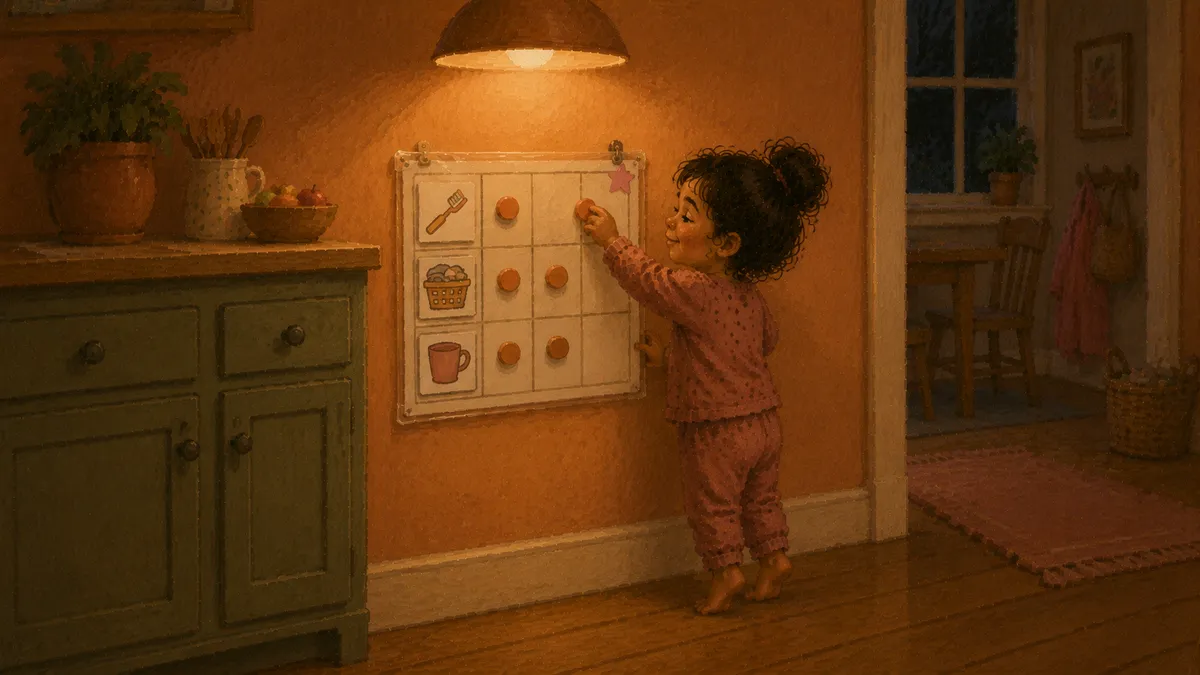
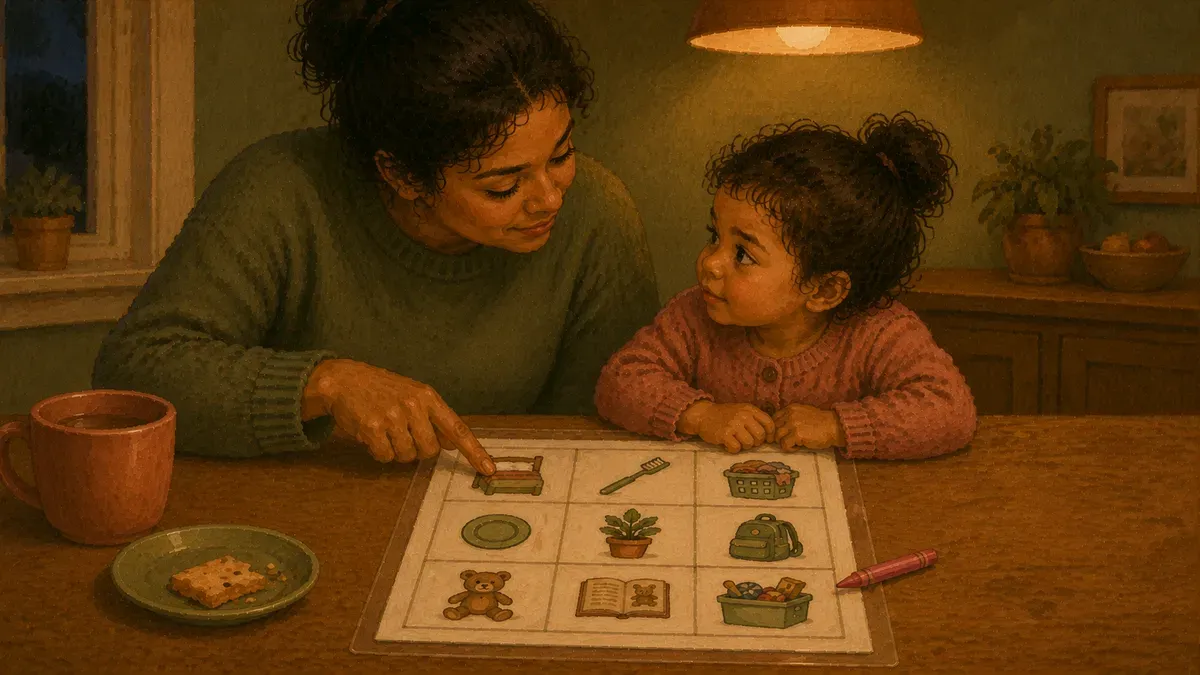
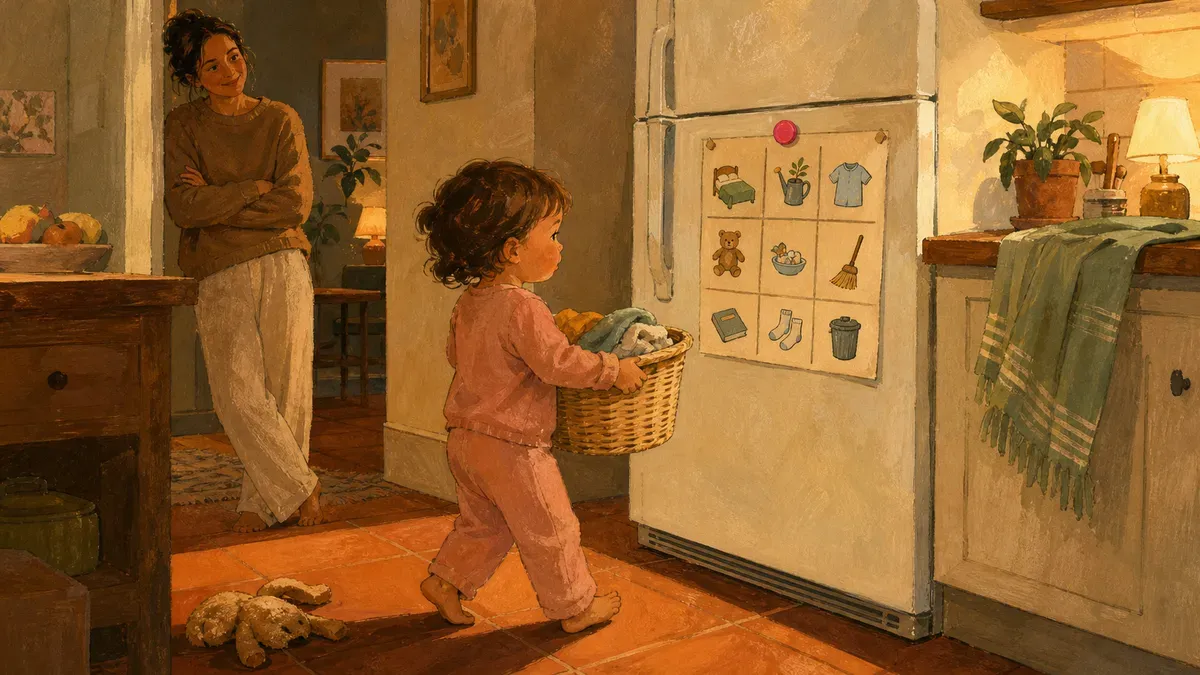
Childrens chore chart printables designed for toddlers use picture icons instead of words, and that one change makes it possible for kids as young as two to work through their tasks on their own. This guide covers how to print and laminate the chart, pick the right check-off method for your child’s age, and build a task list that sticks.
The plan in brief:
- Print a picture-based chore chart with one clear icon per task. No words needed.
- Laminate it and let your child check off or move magnets as they finish each chore.
- Start with just 3 age-appropriate tasks and add one new chore every two weeks.
Why Pictures Work Better Than Words for Young Children
At two and a half, my daughter June stared at the laminated word list I had taped to the bathroom mirror, then went back to splashing water on the floor. That list was mine to read, not hers. What that means for a picture checklist:
Research on visual learning backs up what any preschool teacher already knows. According to research on visual learning in early childhood, even pre-literate children use pictures to read intent and sequence, picking up on facial expressions, object recognition, and positional cues long before phonics enters the picture.
What that means for a chore chart:
- Toothbrush image = brush teeth (no reading needed)
- Hamper image = put clothes away
- Cup-at-sink image = bring dishes to the kitchen
The American Academy of Pediatrics notes that children aged 2 to 3 can put toys away and dress themselves with help, tasks they can identify independently on a picture chart before they can sound out a single word.
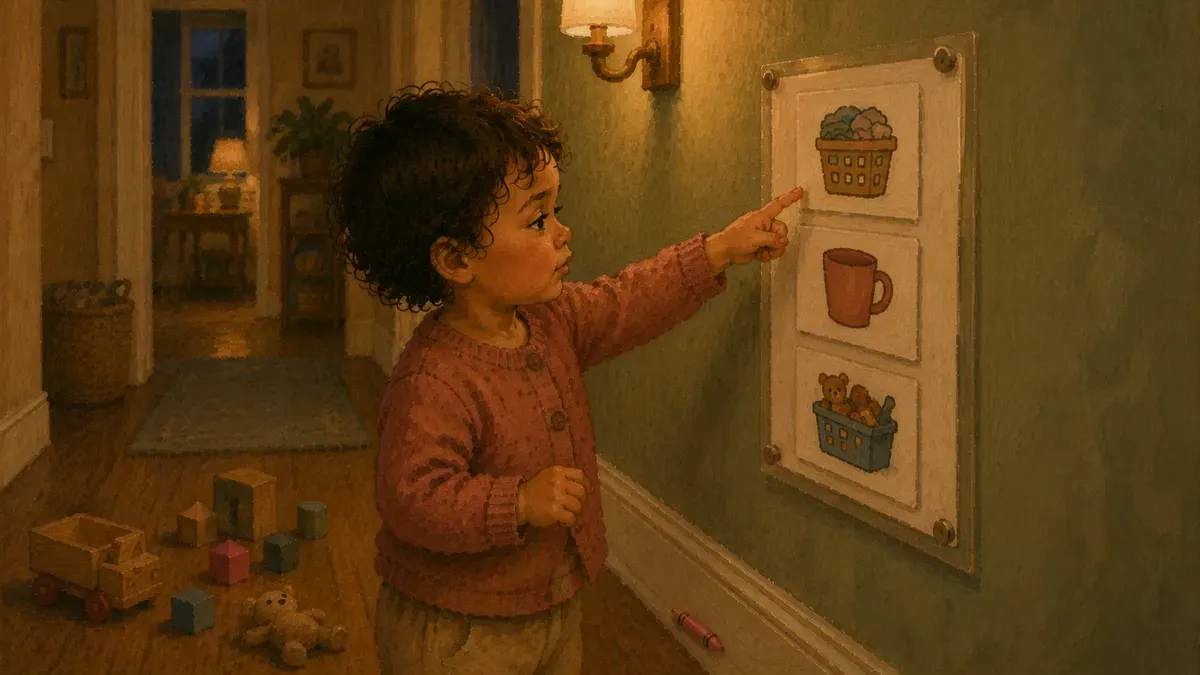
The practical payoff is real: a picture-based printable chore chart for kids means your child checks off their own tasks without waiting for you to read the list aloud. That’s not a small thing at 7am when you’re also making breakfast and packing a bag. Self-sufficiency, even for a two-year-old, starts with being able to read their own environment. For a pre-reader, that means pictures.
How to Set Up Your Picture-Based Chore Chart Printable
Setup takes about fifteen minutes the first time, and the result lasts for years. Here are the three steps:
- Print and laminate the chart
- Choose a check-off method your child can manage independently
- Hang it at child eye level
Print and Laminate the Chart
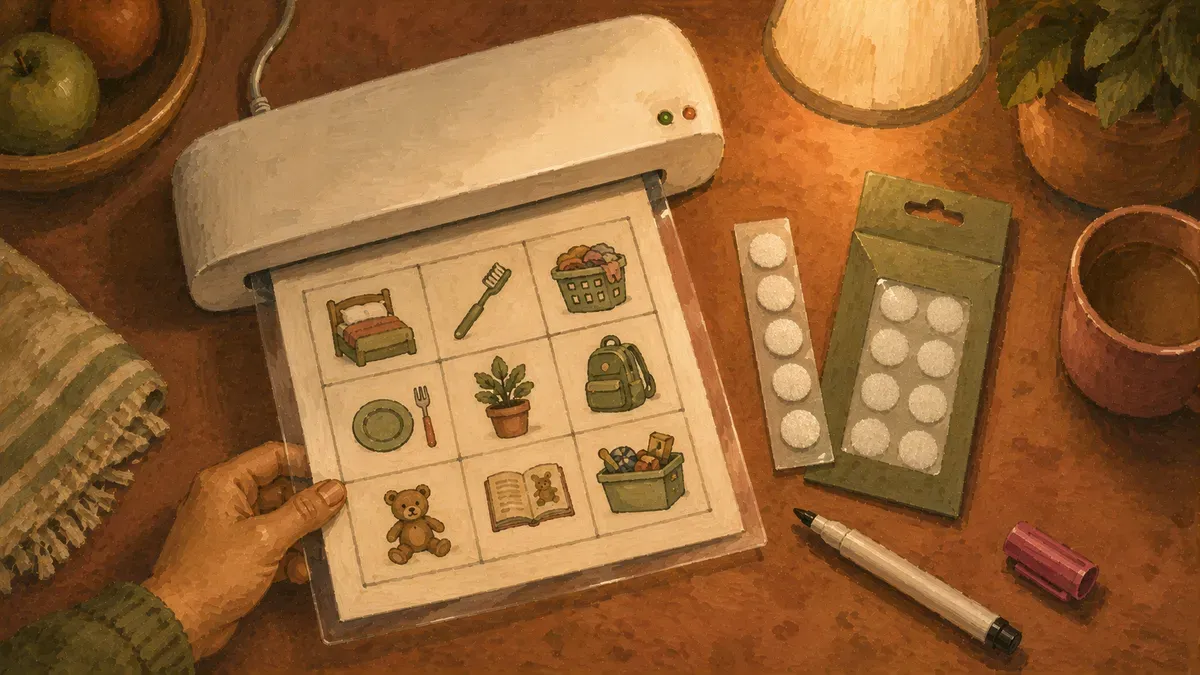
Print your free editable printable chore chart template on regular printer paper (cardstock if you have it, but it is not required). The key step is lamination. A basic thermal laminator feeds the chart between two heated rollers, and out comes a wipe-clean surface that survives sticky hands and morning chaos. The one I keep in the craft closet ships with 50 pouches, so you’re not hunting refills mid-project. It holds a 4.4-star average across 3,000-plus reviews, mostly parents doing this exact thing. Check the current price on Amazon.
One printout, used daily for two or three years. No laminator, no problem: a teacher supply store or copy shop will do it for a couple of dollars a page, and most libraries laminate for free. Look for a blank chore chart or a children’s chore list printable that exports as a PDF so you can print it at any size.
Choose Your Check-Off Method
Three methods work for different ages and mount styles:
| Method | Best for | Parents’ rating |
|---|---|---|
| Dry erase markers | Ages 4+ with fine motor control | 4.6★, 96,000+ reviews |
| Magnetic strip roll | Toddlers who love physical tasks | 4.0★, 2,400+ reviews |
| Velcro dots | Sensory seekers, tactile satisfiers | 4.8★, 8,300+ reviews |
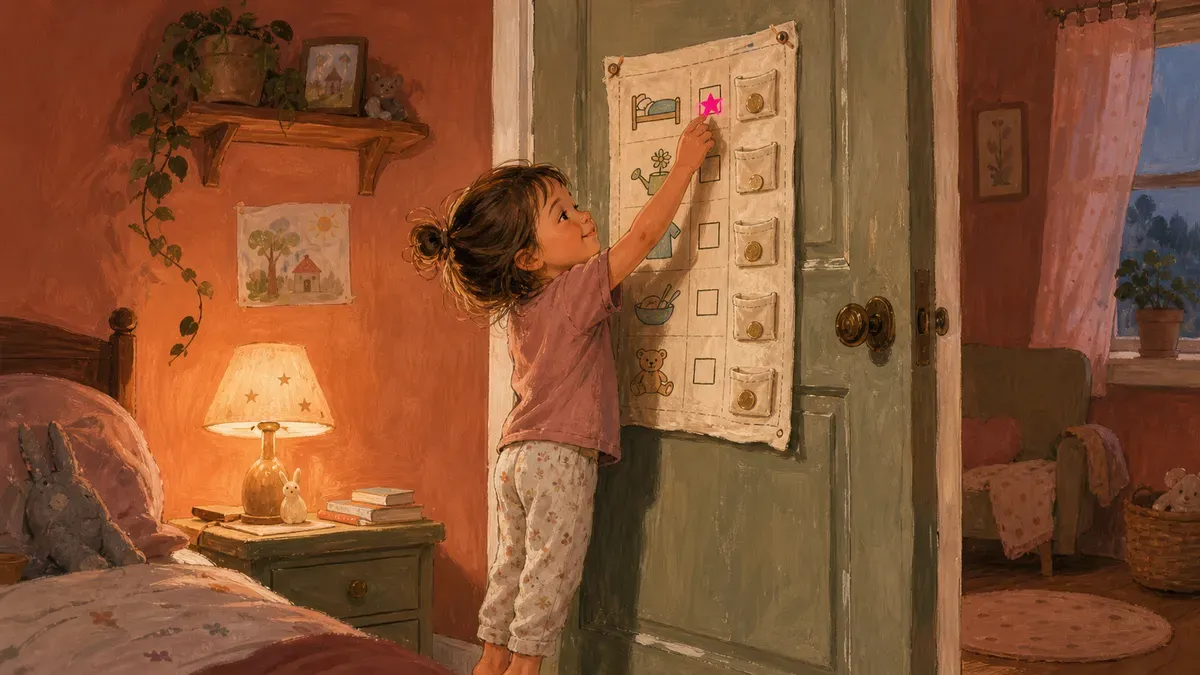
Dry erase is the simplest. Your child marks an X over each icon, and you wipe the whole thing clean at night. A fine-tip set keeps the mark small enough to sit inside a printed box. The eight-color pack I use is an Amazon’s Choice, low odor too. Magnets suit the kid who has to move something to believe it’s done: each card starts in the to-do column, then slides right when the chore is finished. A self-adhesive roll snips down to whatever length a card needs, sticky side already handled. Velcro is the sensory favorite. Cards peel off and re-stick to a done column, and one 200-pack of sticky-back dots outlasts a chart or three. See how to make reward chart toddler cant wait when you’re ready to add incentives.
Pick one method and commit for at least two weeks before you switch.
Hang It at Child Height
The height of the chart is the difference between a child who checks tasks on their own and one who waits for you.
For a toddler, that is usually around 24 to 30 inches from the floor. A small strip of painter’s tape or a single command hook is enough to position it.
Age-Appropriate Chores for Toddlers and Preschoolers
The most common mistake is starting with too many tasks, or tasks that are too hard. Three chores, done consistently, beats eight chores that collapse after a week. The task ranges below come from pediatric developmental guidance on age appropriate chores, which I have used with both Eli and June.
Ages 2 to 3: Tiny Tasks That Build Big Habits
At this age, you’re not after a clean house. You’re after the habit of participating. At two and three, the task list is short by design: putting things away, simple wiping, and carrying small items. Build your children’s chore chart printable around these:
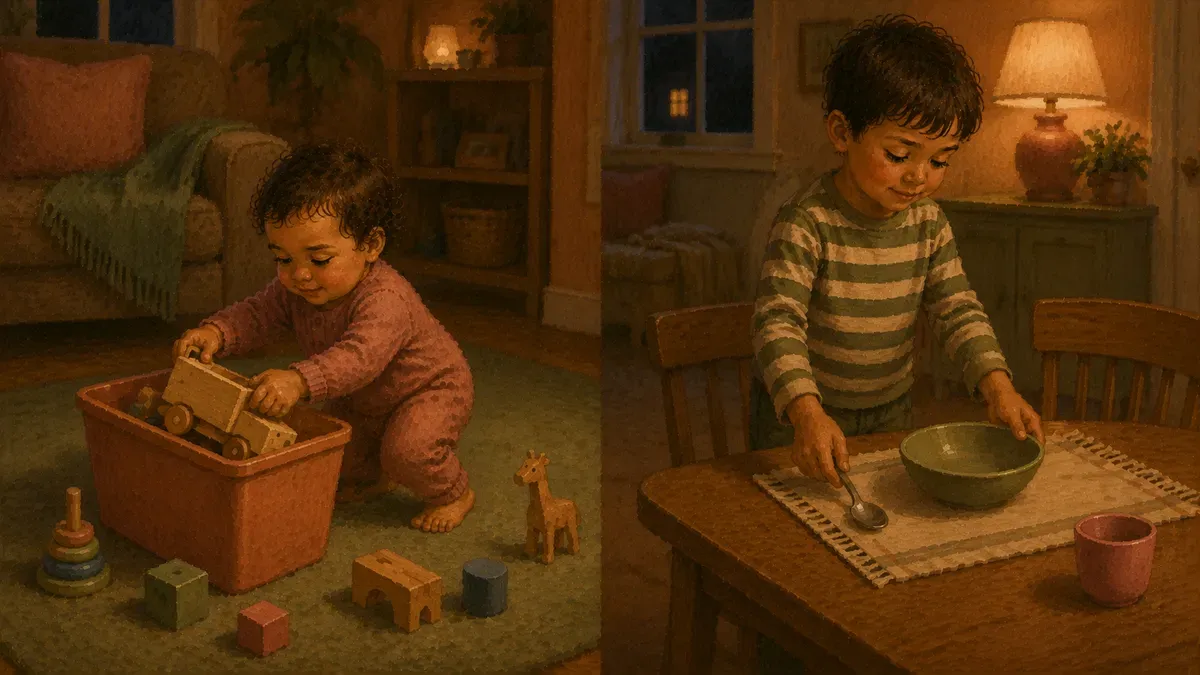
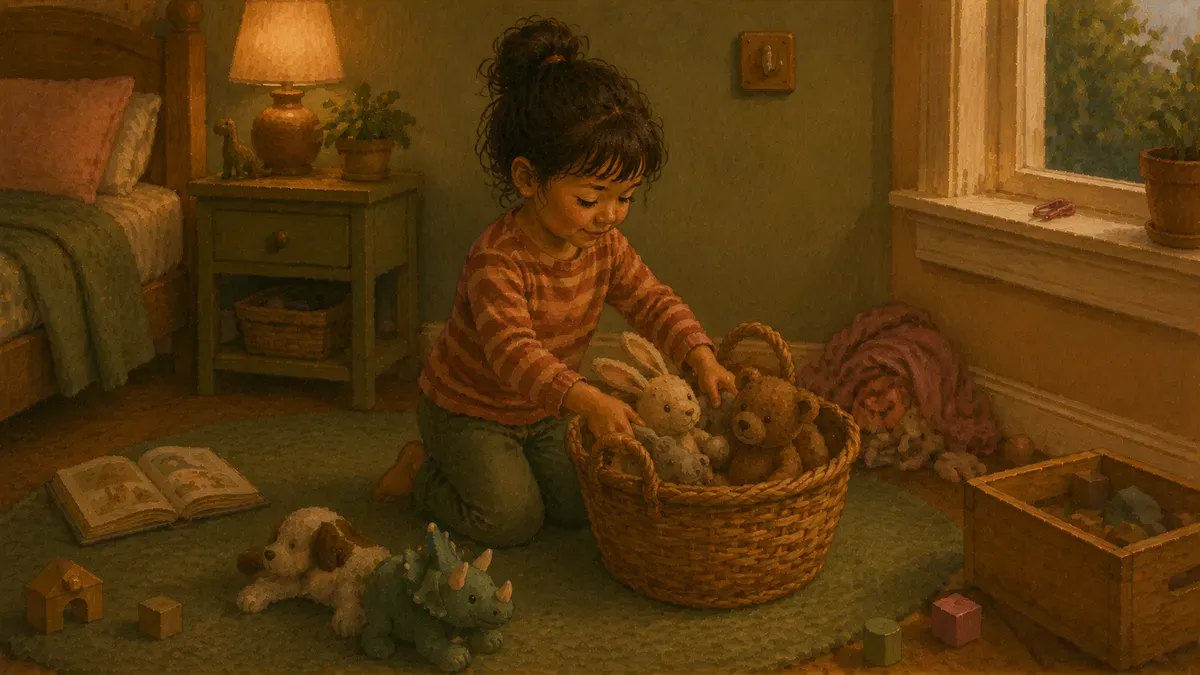
- Put toys in the bin after playtime
- Carry their cup or plate to the kitchen sink
- Put dirty clothes in the hamper
- Wipe up a small spill with a cloth (with help)
- Put away one category of groceries (canned goods on a low shelf)
The AACAP notes that even toddlers doing these small tasks feel the boost to self-esteem that comes from genuinely helping. Start with two items on the chart, not five. Add a third in two weeks if they’re consistent.
Ages 4 to 5: Adding Responsibility Without Overwhelm
Four and five year olds can handle sequences, and that’s the key shift. Two-step tasks are now within reach: their working memory can hold a sequence, so the printable chore chart for kids can reflect that. Pediatric guidelines add feeding pets, making their own bed, and helping clear the table to the list.
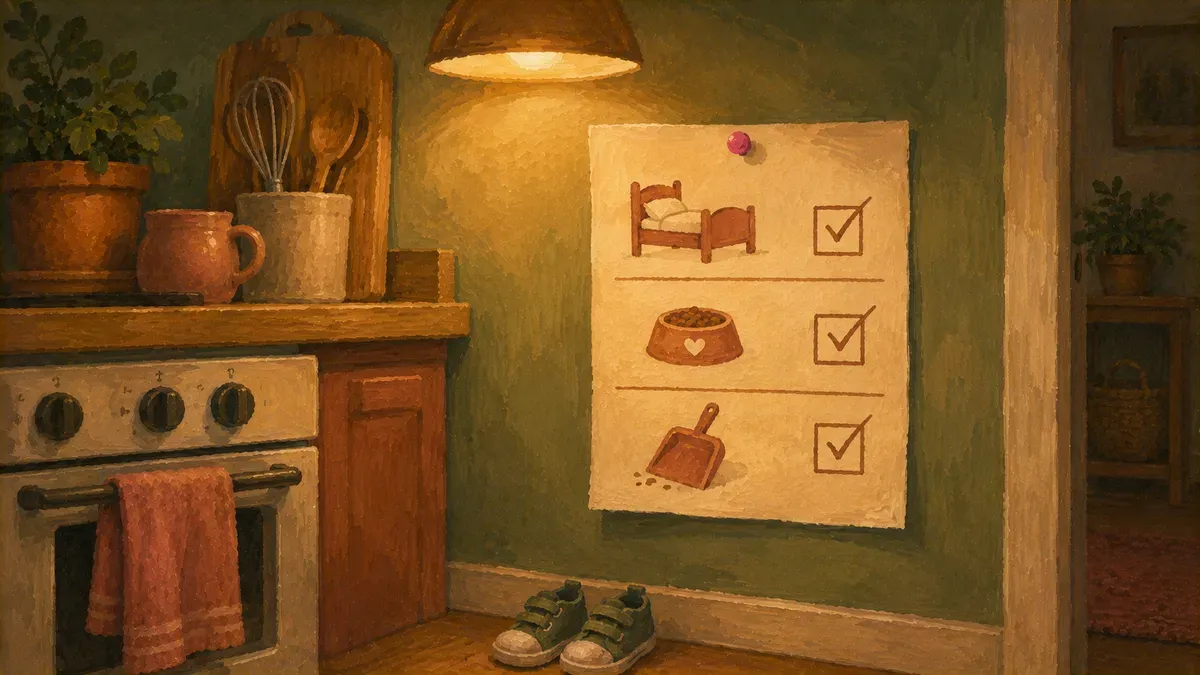
- Feed the pet (then wash hands, those two steps connect)
- Make their bed (it won’t look right, and that’s fine)
- Set or clear their place at the table
- Wipe down the bathroom sink with a damp cloth
- Sort laundry by color
- Water a plant with a small watering can
Free printable chore charts that let you customize the sequence are worth choosing over rigid pre-printed ones: an icon for “put bowl in sink” next to one for “rinse with water” teaches the two-step habit visually.
What to Do When Your Child Ignores the Chart
Every picture-based chore chart hits a wall around week three. The novelty drops, and suddenly the chart is invisible. Here’s what actually works, in the order to try it.
-
Scale back to one task. If the chart has five items and your child is ignoring it, that’s too many. Drop everything and anchor on one. “Put your cup in the sink” only. When that’s automatic after two weeks, add the second. The chart only works if there are fewer tasks than your child’s working memory can hold.
-
Swap effort praise for outcome praise. Research on positive reinforcement consistently shows that toddlers respond better to praise for trying than for finishing. “I saw you walked over to the chart and checked it” beats “Good job doing your chores.” Preschoolers (ages 3 to 4) start to respond to activity reinforcers (“you finished your chart, you pick the book tonight”), which is more durable than sticker rewards that lose their novelty quickly.
-
Do it with them once a day for a week. Kids this age still need modeling. Walk through the chart with your child in the morning for five days straight, not correcting, just doing it alongside. Then on day six, take one step back and let them start it. That parallel structure is part of what reward chore charts research supports as the fastest path to independent behavior.
-
Check the check-off method. If you chose dry erase and your child doesn’t have the fine motor control for a marker yet, the method is the problem, not the child. Switch to magnets or velcro for a week and watch whether engagement returns. Toddlers and younger preschoolers need a physical action (moving something) more than they need to make a mark.
-
Let a bad week be a bad week. If your child is sick, overtired, or just had a rough patch, the chart can pause. Free printable weekly chore chart grids are easier to restart than monthly ones: tear off the old week and start fresh on Monday. Childrens reward charts that rely too heavily on streak-keeping tend to collapse the moment a streak breaks; build in a reset from the start.
When to Retire the Chart and Phase It Out
The chore chart is a scaffold; it is supposed to come down eventually. Developmental guidance on household chores describes them as a system where expectations grow with the child. The chart is the training wheels, not the bicycle.
The signal to start pulling back is not age but automaticity. When your child completes their three tasks without glancing at the chart, the chart has done its job for those tasks. That is usually three to four months of consistent daily use.
How to phase it out gradually:
- Remove one picture icon and leave the others
- Watch for a week: if the removed task continues, it’s a habit
- If the task disappears, the picture is still doing work, so put it back
- Repeat until each icon is gone
For kids around five who are starting to read simple words, a hybrid approach works well: keep the icon but add a one-word label underneath (“SHOES”, “BRUSH”, “BIN”). This bridges the picture chart to an eventual word-only list and lets them practice reading in a context where they already know what the word means. Free printable weekly chore list templates with icon-plus-word layouts make this transition easy. To phase sticker chart once habit sticks, the same gradual method applies.
What you’re building toward is a child who walks into a room and knows what needs doing without being told. A chore chart free printable version gets you there faster than verbal reminders alone, because the child owns the process from the start. That shift happens faster than most parents expect.
Found this useful? Save it for the next rough afternoon.
Questions parents ask me about this
Where can I find a printable chore chart for young children?
Search for "free printable chore chart with pictures" or "children's chore chart printable" on parenting blogs and family resource sites. Look for charts with one clear icon per task, a small number of slots (three to five tasks), and a design that fits on a standard sheet of paper so you can laminate it at home.
What age should a child start using a chore chart?
Most children can start with a two- or three-task picture chart between ages two and three. At that age, they won't do it independently at first; they need you to walk through it with them for a few weeks. The chart's job at two is to make the routine visible; independent use comes around three to four.
How many chores should a 3-year-old have on their chart?
Start with three tasks and stay there for at least a month before adding more. Three is enough to build a routine without overwhelming a child whose working memory is still developing. Common starting tasks: put toys away, carry their cup to the sink, and put dirty clothes in the hamper.
Can I use a chore chart with a child who has sensory processing differences?
Yes, and picture charts often work especially well for children with sensory differences, autistic children, or kids with ADHD, because they make expectations explicit and consistent. The chart doesn't change tone or mood the way a verbal reminder can. For children who also need the tactile experience, the velcro dot method (physically moving a picture card to a "done" column) adds a sensory component that reinforces the habit.
Do I need a laminator to make a picture chore chart work?
No, but lamination makes the chart last significantly longer. Without it, the paper tears within a week of daily toddler use. If you don't own a laminator, a copy shop or teacher supply store can laminate a single page for under two dollars, and most public libraries offer lamination as a free service. A laminated chart can be wiped clean and reused for two or three years.
Should I connect the chore chart to an allowance for toddlers?
Not at toddler age. Under three, an allowance connection adds a layer of abstraction that doesn't land yet. The intrinsic reward of moving a magnet or checking a box is more motivating at two than money is. The body's section on age-appropriate chores recommends adding allowance connection around age five to six, once the habit is established and the concept of earning is starting to make sense.
What happens when my child finishes all their picture chores? Do they get a reward?
A brief acknowledgment ("You did your chart this morning") is enough for most toddlers and preschoolers. Research on positive reinforcement with young children shows that effort-based verbal praise (noting that they did it) is more durable than object rewards like stickers or treats, which lose their pull quickly. A natural reward also works well: "You finished your tasks, so we have time for the park" ties the chart completion to something the child already wants.
Written by
Nora Hayes
Mom of two and a former preschool aide. I share the screen-free sensory play and calm-down ideas I test at my own kitchen table, plus what the moms in my little meet-up swear by. A parent passing on what works, not a doctor or a therapist.
More about NoraKeep going
All Reward & Chore Charts-
 Reward & Chore Charts
Age Appropriate Chores by Age (Toddler to Teen)
Most kids handle real chores younger than you think. Get age appropriate chores by age, from 3-year-olds to teens, and start building habits today.
-
 Reward & Chore Charts
Allowance Chore Chart: How to Start With Little Kids
Set up an allowance chore chart that ties money to effort: paid-vs-unpaid rules, prices by age, 100 chore ideas, and the best charts. Start today.
-
 Reward & Chore Charts
Chore Chart vs Reward Chart: Which One Your Kid Needs
Chore chart, reward chart, or responsibility chart? Find out which fits your child's age, build one in 5 steps, and snag a free template.
-
 Reward & Chore Charts
Chore Chart for Kids by Age: What Each Age Can Do
A 2-year-old can really help. See what a chore chart for kids should include at every age, plus charts that stick. Start today.