Potty Training Regression Age 3 After a New Baby

Some links here are affiliate links. If you buy through one, I may earn a small commission at no extra cost to you. As an Amazon Associate I earn from qualifying purchases. I only point to things I'd actually use with my own two.
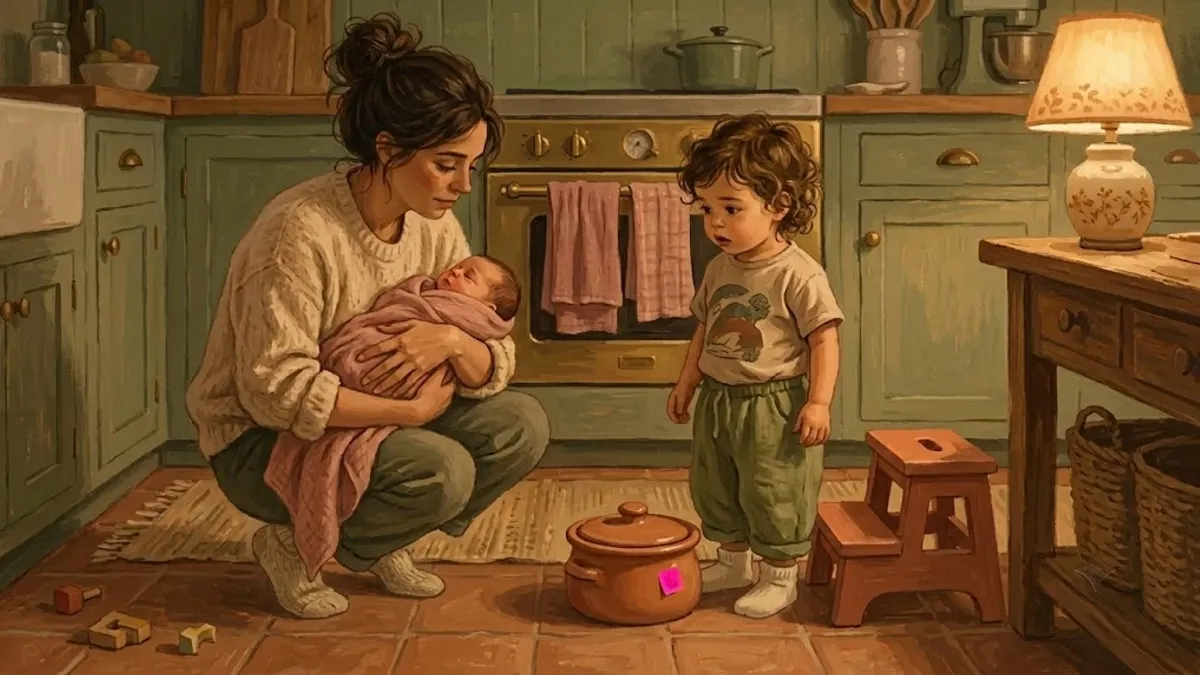
When a newly trained 3-year-old starts having accidents within weeks of a sibling coming home, you’re almost never looking at a setback you caused, you’re looking at a stress response, and the American Academy of Pediatrics names a new baby among the most common triggers for potty training regression, right alongside moving and starting daycare.
I’m Nora Hayes, a former preschool aide and mom of two, and I’ve watched this play out at my own kitchen table and in the parent group I’ve run for six years.
This guide walks you through telling a real regression from ordinary accidents, the week-by-week moves that pull a kid back on track, and when the accidents are worth a call to the doctor.
The plan in brief:
- Rule out a UTI or constipation first, and book a pediatrician check if the accidents come with pain or straining.
- Restart the old reward chart and carve out 10 to 15 minutes of one-on-one ‘big-kid’ time every single day.
- Give it 2 to 4 weeks of calm, no-punishment consistency before you let yourself worry.
Is It a Real Regression or Just Accidents?
A few puddles on the kitchen floor are not the same as your kid forgetting the whole thing. The difference matters, because they need different responses.
Accidents are the normal noise of a recently potty training graduate. One miss after a long car ride or a too-good game. The kid still asks for the toilet most of the time and stays mostly dry.
A real regression looks like a pattern. Your potty trained three-year-old who was nailing it for weeks suddenly wants pull-ups again, holds it until they leak, or has three or four accidents a day with zero warning. That backslide, not the occasional puddle, is what people mean by regressing potty training.

The tell I watch for is whether they still care. A kid mid-accident who shrugs and keeps playing has checked out of toilet training for now. A kid who’s upset they didn’t make it is just overwhelmed and still trying.
Three or more accidents a day, for more than a few days, after weeks of staying dry: that’s a regression, not a bad afternoon.
Name which one you’ve got before you change anything. Steady accidents from a kid who’s clearly back to square one is a regression in potty training. A rough day is just a rough day.
Your Week-by-Week Plan to Get Back on Track
Once you’ve named it as a real setback, you stop guessing and start working a plan. The next three days, then the next two, then the slow stretch after each do a different job: first you rule out anything physical and reset the routine, then you bring back the rewards and the one-on-one time, and from week two on you just hold the line, calm and consistent, until it sticks.
Days 1-2: Rule Out Pain and Reset the Routine
Start here before you change one other thing. If peeing hurts, your kid will hold it, and holding it makes everything worse. Watch for the tells: straining, tiny dribbles, going every ten minutes, a sudden fear of the potty, or hard, infrequent poops. Those point to a UTI or constipation, not stubbornness.
Urine-holding during toilet training is its own trap. A peer-reviewed urology overview notes that UTIs affect as many as 5% of girls in childhood, and the holding kids do while training lets bladder stasis set in. If anything looks off, call your pediatrician before you push. A quick medical evaluation rules out the easy fixes.
Once pain is off the table, rebuild the potty routine. Don’t wait for them to ask. Put them on every couple of hours and right after meals.
- After they wake up
- 15 to 30 minutes after each meal
- Before you leave the house
Keep it light, keep the potty training reward chart in sight, and let the body relearn the rhythm.
Days 3-5: Revive Rewards and One-on-One Time
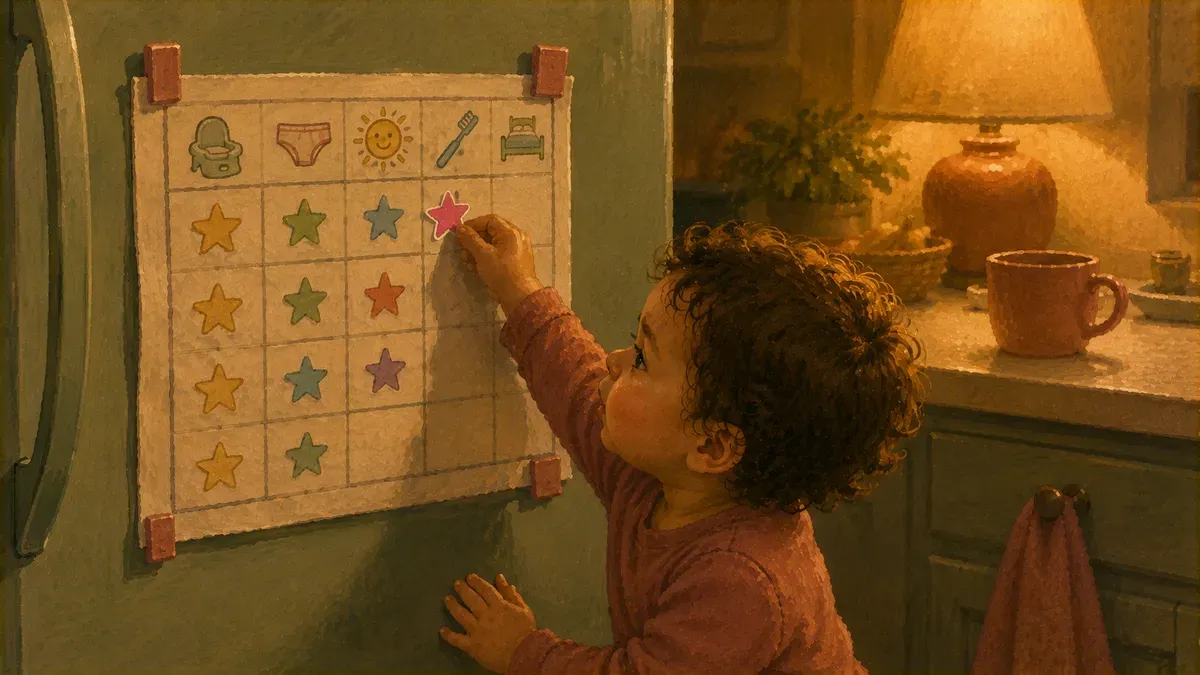
The pain check came back clear, the routine’s back in place. Now bring back the sticker chart.
Not a brand-new system, the exact one that got your kid dry the first time. Same stickers, same chart on the fridge, same little fuss when they earn one. The familiarity does half the work. A kid drowning in new-baby change grabs onto what they already know, and a reward system they remember feels like solid ground.
If the old chart got recycled months ago, a fresh potty training sticker chart does the same job, and letting your kid pick the next sticker can pull a wobbly one back in. The one I hand friends is an Amazon’s Choice at 4.8 stars across 600-plus reviews, and its 315 stickers will outlast this regression and the next one.
Pair it with 10 to 15 minutes of one-on-one time a day, just you and your big kid, doing what they pick. Most wet-pants accidents during training are really a bid for attention that walked out the door with the new sibling. Ten unhurried minutes pours some of that spotlight back.
What that looks like:
- Let them choose the activity, no phone in your hand
- Lay the praise on thick for every potty win, even the near-misses
- Skip the prize if the praise is landing; some kids just want you
That daily window is the real reward. The sticker is just the receipt.
Week 2 and Beyond: Stay Consistent and Calm
Progress will zigzag. A dry Monday, three accidents Tuesday, then four good days in a row. That’s normal recovery, not backsliding. Your job now is to hold the routine you rebuilt and let time do the rest.
Most regressions settle within about two weeks once you’ve handled the cause, though the Cleveland Clinic says to call your pediatrician if it drags past that. So keep going steadily for the full two to four weeks before you panic.
A few things to hold onto:
- Keep the same potty breaks and the same chart. Sameness is the medicine.
- No punishment, no big sighs, no “you’re a big kid now.” Shame makes accidents worse.
- Jot down when accidents happen. Naptime? In front of the baby? During play? Patterns tell you where to add a reminder.
Your composure is the whole strategy. Stay boring and patient. The accidents get fewer, and then there are no more.
Why a New Baby Triggers Setbacks
Knowing why the wheels came off makes it a lot easier to stay calm while you fix it. A new baby hits a toddler from two directions: the emotional gut-punch of suddenly sharing you, and quieter physical stuff that rides along with all that upheaval.
Attention-Seeking and Feeling Replaced
Picture it from your toddler’s side. For three years they were the whole show, and now there’s a tiny loud thing soaking up every lap, every late-night wake-up, every “just a minute, honey.” An accident gets you across the room fast.
Those accidents a potty-trained toddler is having “on purpose” are almost never defiance. They’re a bid for attention when a new sibling has rearranged everything. Pediatric guidance on potty training regression ties this backslide to big life changes like a new baby, when emotional needs outrun the routine.
Watch for the tells:
- Accidents that land right when you’re feeding or holding the baby
- Asking for a diaper “like the baby has”
- Wetting after a stretch of perfectly dry days

None of it is manipulation, and it’s very different from the signs your child is not ready for potty training in the first place.
Medical Causes You Should Rule Out
Before you read a single accident as a cry for attention, rule out the body.
Three physical culprits are worth a quick check:
- A UTI. Burning, dribbles, sudden potty fear, or peeing constantly. Painful enough that a kid avoids the toilet altogether.
- Constipation. A backed-up belly presses on the bladder and triggers leaks. Cleveland Clinic notes a constipated toddler typically has fewer than two bowel movements a week, so count the poops.
- Skin irritation. A raw, chafed bottom makes wiping and sitting hurt, and kids hold it to dodge the sting.
If you spot any of these, call your pediatrician before you assume it’s emotional.
If your kid is melting down over the whole thing, a short break is a fair call, not a failure.
When Sleep and Nighttime Regression Hit Too
A new baby wrecks everyone’s sleep, and a kid running on broken sleep loses skills fast. So when a sleep regression and potty training collide after a sibling shows up, you often get both at once: midnight wake-ups and a wet bed by morning. They feed each other. An overtired toddler has less in the tank to hold it, and nighttime accidents pull them out of bed all over again.

Here’s the part that takes the pressure off. Staying dry overnight is a separate, later skill than staying dry during the day. Bedwetting at that age is more common than most parents realize, and it keeps dropping on its own as the bladder matures. A potty trained toddler having accidents at night, in the middle of all this upheaval, is not failing. The bladder follows its own clock, and stress only slows it down.
So pick one front. Dry by day but soaking the sheets at night? That’s normal range, not a project. Park night training until the new-baby dust settles and sleep steadies.
What helps in the meantime:
- A waterproof mattress pad turns a soaked bed into a two-minute swap instead of a 3am crisis, and the soft microfiber one on our bed is an Amazon’s Choice with more than 19,000 reviews behind it
- A pee right before lights-out, baked into the bedtime potty routine
- No waking them to pee, which just trades one disruption for another
Once the baby sleeps in longer stretches and your toddler’s days are steady again, you can circle back to how to night train potty on purpose. Until then, protect the mattress and let the calendar do the work.
Age Matters: 3-Year-Olds vs 4-Year-Olds
A wet 3-year-old and a wet 4-year-old are not the same problem, even with the same new baby at home. The age changes how your kid feels about the accident, and that changes what works.
At three, the regression is mostly raw. The AAP’s HealthyChildren.org notes that around three is when kids start to feel discomfort, or shame, about doing something they know is wrong. Before that point, an accident barely registers. So a younger toddler often shrugs and moves on, and your job is patience plus the routine you already rebuilt.
By four, that shame has teeth. If the question in your head is “why is my potty trained 4 year-old suddenly having accidents,” the answer is usually not readiness. A child this age knows the rules cold, so the regression is almost always emotional, and the embarrassment can make it worse.
Here’s the trap with the older kid:
- They feel the shame, so they hide wet underwear instead of telling you.
- Calling it out in front of the baby, or grandma, lands as humiliation, not a lesson.
- A 4-year-old having accidents at home but not at school, or the reverse, often points to where the stress lives, like the friction of daycare potty training stacked on top of the new sibling.

For potty training regression at age 4, stay even quieter than you would at three. Clean it up without a flinch, name nothing in front of an audience, and protect their dignity while the routine does its slow work.
How Long Regression Lasts and When to Call the Doctor
Most of the time, this clears up faster than the worry says it will. Once you’ve ruled out pain and rebuilt the routine, the accidents taper off on their own over a couple of weeks of calm. Some kids snap back in days. Others zigzag for a bit longer, and that’s still inside normal range.
Give the routine a solid two to four weeks to take hold, most kids turn a corner somewhere in that window. If accidents are still steady past the four-week mark with no sign of improvement, that’s when I’d call:
- Still having accidents past the four-week mark with the routine steady and no shaming
- Pain peeing, straining, or backed-up stool
- Something feels physical and your gut says don’t wait
The AAP’s HealthyChildren.org guidance lines up: regression running past a month means loop in your pediatrician, and use that visit to honestly ask whether your child was fully ready for training when you started.
Readiness isn’t a failure word. A new baby on top of shaky developmental readiness is a lot to ask of a small body, and a pediatrician can sort the patience-it-out cases from the ones needing a closer look.
If poop is the culprit, our notes on potty training constipation walk through the tells.
For the full picture of starting over once life settles, our complete potty training guide covers it step by step. A regression is a detour, not the end of the road.
Found this useful? Save it for the next rough afternoon.
Questions parents ask me about this
How do I handle potty training regression in a 3-year-old?
First rule out pain. A quick pediatrician check for a UTI or constipation comes before anything else, because a kid who hurts can't train. Once the body is clear, restart the exact reward chart that worked the first time and add 10 to 15 minutes of one-on-one big-kid time a day. Calm and consistent is the mode for the next two to four weeks, with no punishment for accidents. At three, the regression is usually more confusion than defiance, so patience plus the old routine does most of the work.
How long does potty training regression after a new baby usually last?
Most regressions settle within about two weeks once you've handled the cause and kept the routine steady. Give it two to four weeks of calm consistency before you start worrying, and expect uneven, zigzag progress rather than a clean line. Some kids snap back in days. If accidents are still constant well past that window, that's when to call your pediatrician.
Why is my potty trained toddler having accidents on purpose?
It's almost never spite. A new sibling makes a toddler feel pushed aside, and an accident is a fast, reliable way to pull a parent back to them when the baby is soaking up all the attention. It's a bid for connection and a grab at control, not defiance. Treat it as a request to still be the big kid: more one-on-one time, zero drama at cleanup, and the behavior usually fades.
Should I put my child back in diapers or pull-ups during regression?
For daytime, try not to. Going back to diapers tells an already-overwhelmed kid that the big-kid step is off the table, and it can stretch the regression out. Keep them in underwear, expect some accidents, and stay matter-of-fact about cleanup. Nighttime is different: a waterproof mattress pad and a calm reset are fine, since staying dry overnight is a separate skill that arrives later.
Is it bad to take a break from potty training after a regression?
Not at all. If your child is melting down and clearly overwhelmed, a short pause is a fair, sensible call, not a failure. Stepping back lowers the pressure for both of you and often makes the eventual restart smoother. Just keep the basics steady (calm reminders, easy bathroom access) and circle back when life with the new baby settles a bit.
When should I see a doctor about potty training accidents?
Call right away if you see any sign of pain: burning while peeing, straining, dribbles, sudden fear of the potty, or hard, infrequent poops. Those point to a UTI or constipation and shouldn't wait. Without pain signs, give it two to four weeks of consistency first. If the regression is still going strong after a month, check in with your pediatrician so they can rule out anything physical and talk through readiness.
Does potty training regression happen differently for boys and girls?
The emotional triggers are the same for both: a new baby, big changes, and the pull for attention land on boys and girls alike. The main difference is timing, since girls often train a little earlier on average and the medical odds tilt a bit (UTIs, for instance, are more common in girls). The fix doesn't change with gender. Rule out pain, rebuild the routine, stay calm, and give it time.
Written by
Nora Hayes
Mom of two and a former preschool aide. I share the screen-free sensory play and calm-down ideas I test at my own kitchen table, plus what the moms in my little meet-up swear by. A parent passing on what works, not a doctor or a therapist.
More about NoraKeep going
All Potty Training-
 Potty Training
Potty Training Reward Chart: 20 Ideas Under $3
Skip the toy aisle: build a potty training reward chart with 20 ideas under $3 you already own. Grab the plan that motivates a stubborn toddler.
-
 Potty Training
How to Potty Train a Boy (and How a Girl Differs)
How to potty train a boy in 3 to 6 months: the readiness signs, the step-by-step method, and the small things that differ for girls.
-
 Potty Training
Potty Training Sticker Chart Printable (Free Download)
Free potty training sticker chart printable that survives travel and routine resets. Print, sticker, reward, reuse anywhere. Download now.
-
 Potty Training
Potty Training Certificate: A Just-Do-This Guide
Charts skip the finish line. Make a potty training certificate that gets your toddler over the line for real. Print yours tonight.