Calm Down Corner at Home: A No-Cost Setup Guide

I am a parent sharing what worked at my house, not medical advice. For anything to do with your child's development or sensory needs, talk to your OT or doctor.
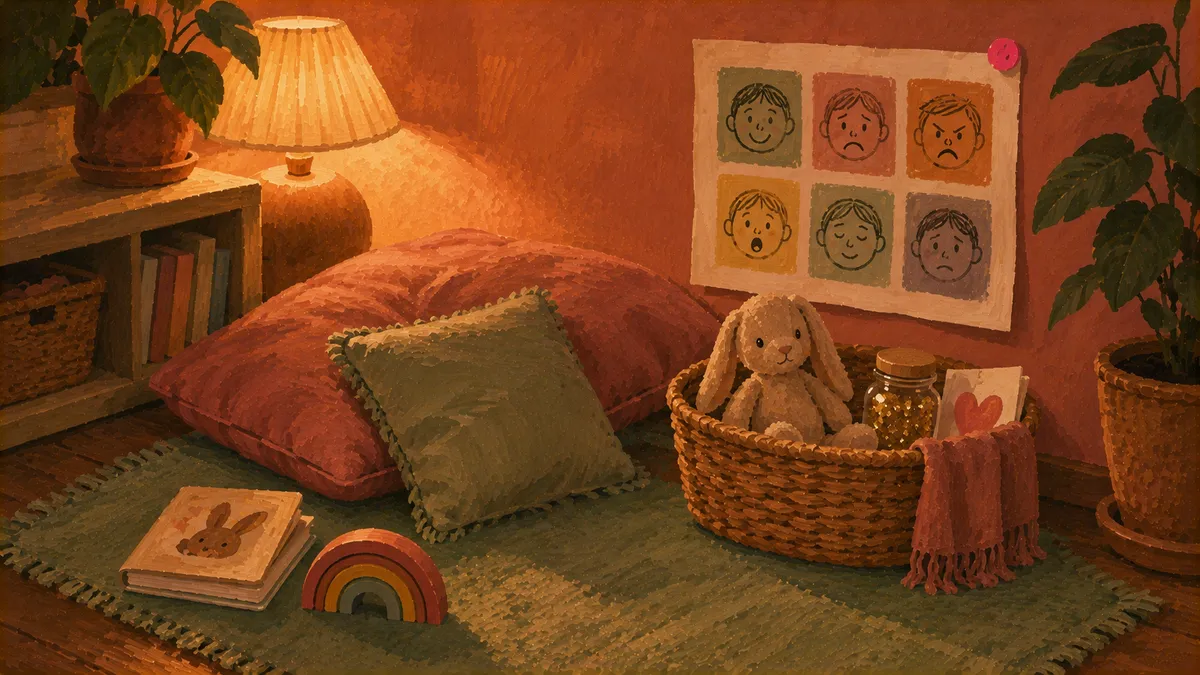
A calm down corner is a cozy spot your kid heads to before a meltdown hits full force, and you can build one tonight with a rug, a soft seat, and stuff already in your house. I’m Nora Hayes, a former preschool aide raising an autistic sensory-seeker, and the version that actually works is the one you didn’t spend a dime on.
I’ll walk you through what this little space really is, the five steps to set it up, the free items that fill it, how to tweak it by age, and what to do when it flops.
The plan in brief:
- Pick a low-traffic corner and define it with a rug or a taped-off floor square.
- Add three things you already own: a soft seat, one soothing object, and a feelings chart.
- Walk your child through it once while calm, before the next big emotion hits.
What a Calm Down Corner Actually Is
Those three items do the job, but only if your child knows what the space is actually for. Not a consequence. A tool.
The Purpose Behind the Space
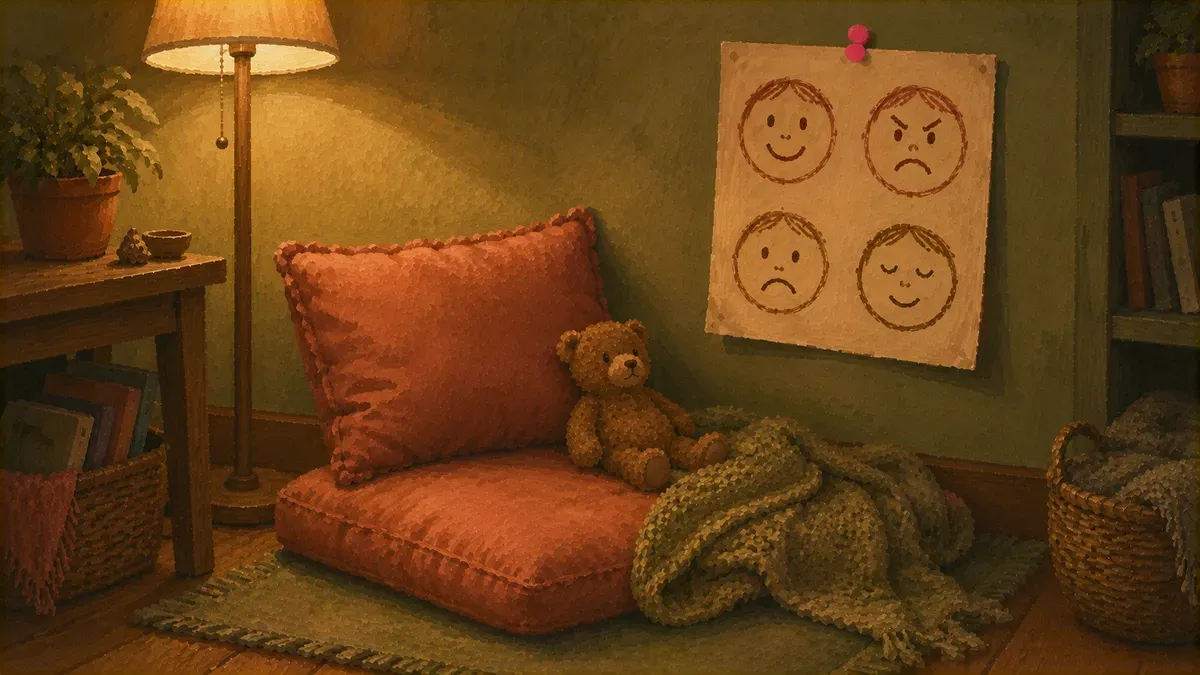
A calming corner is a small, designated spot where a child goes to practice getting their feelings back under control. The key word is practice. Self-regulation doesn’t arrive fully formed. It builds slowly, through repetition and through a calm adult close by.
That last part matters more than any pillow or sensory bottle. Research on childhood self-regulation from Child Mind Institute explains that children need a caregiver to co-regulate with them before they can do it on their own. You’re the anchor. The corner is just where you both do that work together.
Introduce it during a calm moment, not when everything’s already unraveling. Over time, your child starts to associate the space with safety, and the corner starts to do some of the heavy lifting. That gradual shift toward independent emotional regulation is what the emotional regulation corner guide covers in detail.
Why It Beats a Time-Out
The difference between a calm room and a punitive time-out comes down to one question: does the child feel abandoned or supported?
A time-out sends a kid to a corner alone, at peak distress, with no coping strategies and no company. IU Health’s pediatric review on time-out notes that this approach can increase emotional dysregulation and fails to teach distress tolerance. The child isn’t learning to handle the meltdown; they’re just waiting it out.
A peaceful corner flips that entirely. The goal is not isolation. It’s “come here, let’s breathe, here are your tools.” A feelings card, a squeeze ball, a quiet safe space. The child learns to reach for those things before escalating.
That’s a skill that stays with them.
Set Up Your Calm Down Corner in 3 Steps
Here’s the whole thing in one breath: pick a quiet spot, mark it off, fill it with soft stuff and a soothing object, then show your kid how to use it while nobody’s crying. You can do all of them tonight.
- Scout the quietest patch of your home and mark it off with a rug or tape.
- Raid a closet: pillows, a stuffed animal, a DIY glitter bottle.
- On a good day, sit there together and walk your kid through what the spot is for.
Choose and Define the Spot
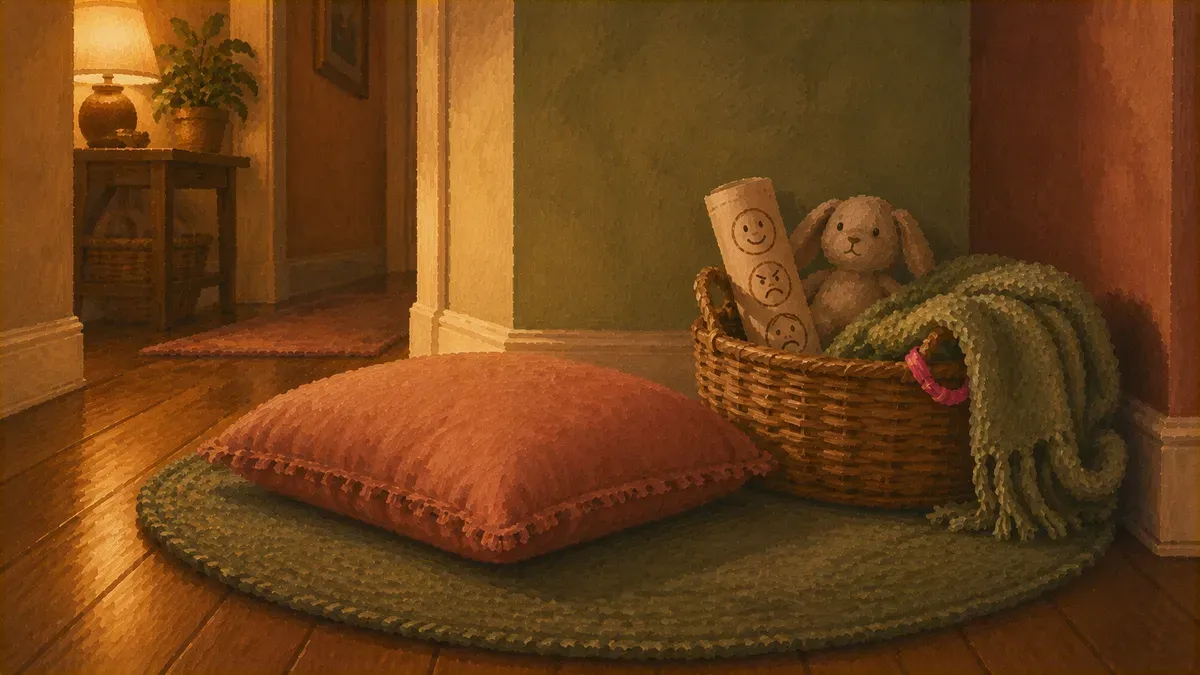
Find the most boring patch of your house. A quiet corner of the living room, the end of a hallway, a nook behind the couch. You want low traffic and low noise, somewhere your kid can turn their back on the chaos. Skip the spot right next to the TV or the front door.
Then mark the edges of the area so it reads as its own little zone.
- A small rug
- A strip of painter’s tape on the floor
- A low shelf turned sideways
June’s corner at our house is just a bath mat against the wall, and that bath mat is the whole “room” to her.
The point of a defined cozy space isn’t decoration. It’s a clear signal: cross this line and you’ve arrived somewhere different, somewhere with comfortable seating and softer rules. Kids settle faster when the boundary is something they can see.
Fill It With What You Own
Walk your house before you buy a single thing. Almost everything a corner needs is already sitting in a closet or a toy bin.
Grab these:
- Two or three throw pillows and a blanket for a soft landing
- A favorite stuffed animal that already calms your kid
- A hand-drawn feelings chart, just faces and words on paper
- A couple of fidget toys from the bottom of the toy box
- A homemade glitter bottle (water, glue, glitter, lid glued shut)
That glitter bottle is the part stores charge you twenty dollars for. Make one in five minutes and watch your kid stare at the swirl until their breathing slows. Same job, no receipt. A glitter bottle does most of the soothing work a boxed kit promises.
If you’ve got a heavier throw, a weighted blanket dupe, even a folded comforter on a lap can do the deep-pressure thing some kids crave. Skip the bean bags and the store kits for now. Your homemade supplies cost nothing and they’re already the ones your kid trusts. Want more pantry-and-closet swaps? You can explore more calm corner ideas once the basics are in.
Introduce It to Your Child
Do this part on a good day, never mid-meltdown. Teach the routine before a crisis hits, not during one, because a stressed-out brain can’t take in anything new.
So sit in the corner together while everyone’s calm. Show them the pillows, shake the glitter bottle, point to the feelings chart. Name it plainly: “This is your cozy spot. When you feel big and stuck, we come here and breathe.” Lean on those visual supports to walk through one feeling and one tool that helps.
Then practice going there for fun, not just for hard moments. That’s the co-regulation part, you with them, before you ask them to do it alone. Run through it a few times this week.
Now it belongs to them before they ever need it.
No-Cost Items to Stock Your Corner
You don’t need a single trip to the store. The two things that calm a kid in that corner are a body object and a mind anchor, and you almost certainly have both already.
Soothing Sensory Objects
For a chilling corner that actually works, the body has to settle first.
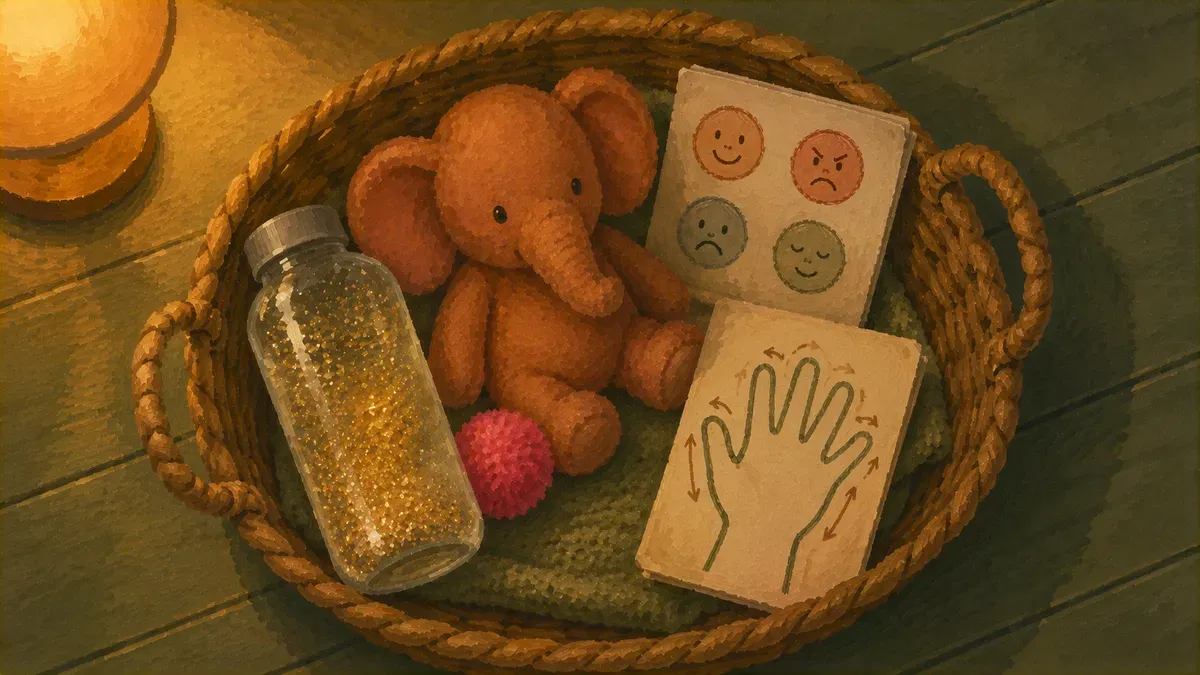
- A stuffed animal: something to squeeze, something familiar, something with a smell they know
- A scrap of soft fabric, a fleece remnant, or an old pillowcase for the tactile piece
- The glitter bottle from the previous section: shake it for the proprioceptive hit in the arms, then watch the glitter settle
- A sock stuffed with dry rice and tied off at the end, for squeezing
If you’re weighing options before you shop, reading about putting together a DIY calm down corner kit first will save you money and a return trip.
Visual and Breathing Supports
Calming corners need at least one thing for the mind. Kids in the middle of a big feeling often can’t find words, so giving them a picture instead of a question can shift everything.
Here’s how to make the feelings chart:
- Draw four to six faces on an index card: happy, sad, mad, scared, worried, calm
- Label each one
According to research published in Frontiers in Psychology drawing on Izard et al. (2001), emotion knowledge predicts stronger social competence and fewer behavior problems. A hand-drawn card on the wall is a low-bar entry point to that skill.
For breathing exercises, draw a hand on paper: trace each finger up for an inhale, down for an exhale. A child can work through that alone, no reading required. Research filed in ERIC (ED661504) found that a few deep breaths measurably reduce children’s physiological stress.
If you use Zones of Regulation at home or school, a hand-drawn zones poster fits here too. But the feelings chart and the breathing card are enough to get started with these visual supports.
Adapt the Corner for Your Child’s Age
What goes in the corner depends heavily on who’s using it. A two-year-old and a seven-year-old need fundamentally different setups.
Toddlers and Preschoolers
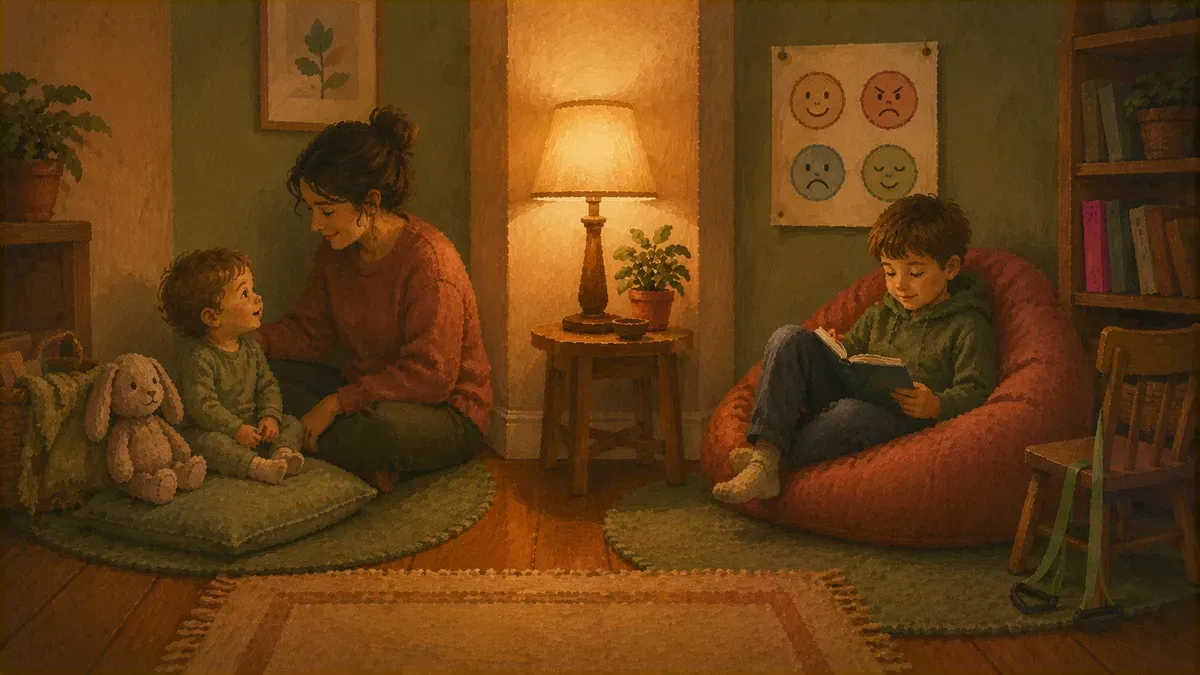
Toddlers cannot regulate alone. That’s not a parenting failure; it’s developmental fact. Child development milestones for emotional regulation show that inhibitory control improves gradually between ages 3 and 6, but the prefrontal cortex’s capacity stays limited well into early childhood. Practically, this means your toddler needs you in the corner with them, not just a pretty spot on the floor.
For this age, the corner is a co-regulation space. Keep the seating low enough that you can both fit, and keep the tools simple:
- A floor cushion, a folded blanket, or a beanbag you already own
- One soothing object: a stuffed animal or a soft scrap of fleece
- Nothing else for now
Skip the feelings chart for now; they’ll stare at it blankly. What helps is you sitting beside them, breathing slowly, saying: “You’re upset. I’m right here.”
Taking sensory breaks together builds the habit before they need it alone. For a simple walkthrough of the whole process, read how to teach toddler use calm down corner.
School-Age Kids and Beyond
By school age, kids can start running the corner themselves. Research on self-management interventions finds that when kids self-monitor and self-evaluate their own coping strategies, they take more ownership and are more likely to use those strategies when it counts.
The setup shifts to match that autonomy. Add movement breaks they can reach for on their own:
- A resistance band looped around a chair leg to push against with their feet
- A few jumping jacks in place before sitting back down
- A short walk to the kitchen and back
These heavy work activities burn off the physical charge before the emotional one spirals. Then they can sit and breathe, instead of being asked to breathe while still buzzing.
Let them help choose what goes in. Eli tried three different setups before landing on a small tent with a white noise machine; that one lasted two years. A kid who built the space will actually go to it.
When the Corner Isn’t Working
Even a corner your child helped build can hit a wall. Here’s how to handle two different situations: refusal and the slow fade.
If Your Child Refuses to Go
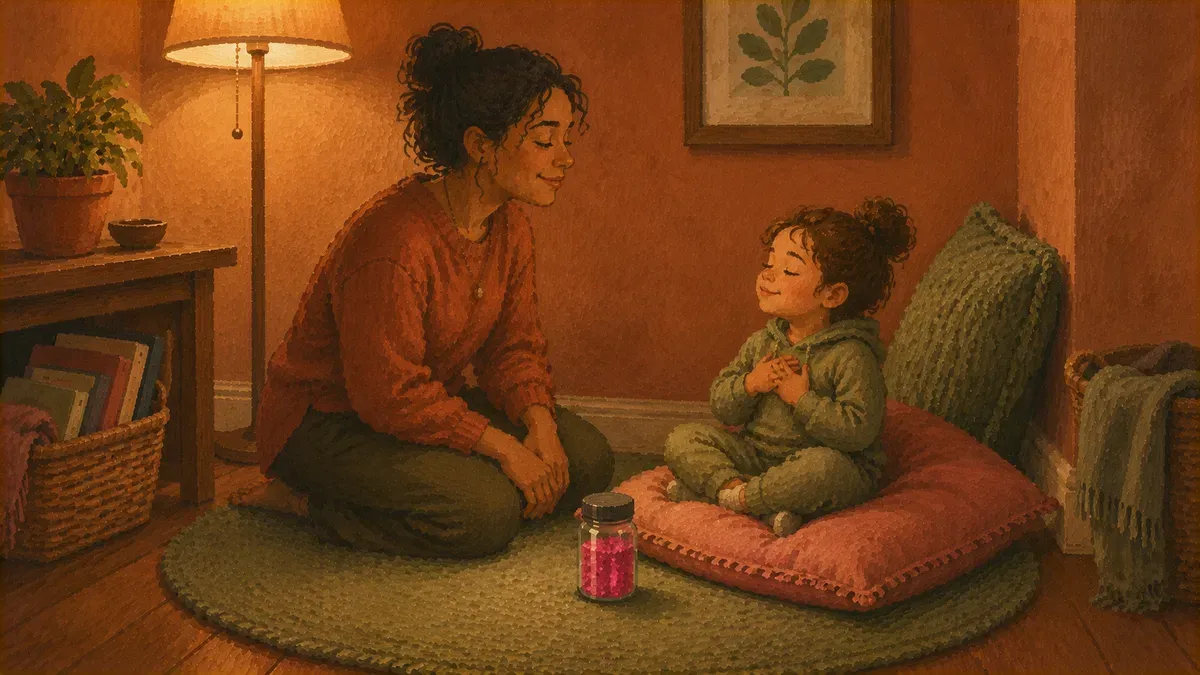
Never force it. A child pushed into the corner during a full meltdown will treat that safe space the same way they’d treat a timeout spot, which is not at all useful. The corner only works if going there feels like a choice.
- Go to the corner yourself.
- Sit down, take a few slow breaths.
- Say out loud what you’re feeling: “I’m feeling frustrated, so I’m going to my calm spot for a minute.”
Co-regulation works this way: adults have to handle their own stress response first before a child can follow that lead.
Invite, don’t command. “Want to come sit with me?” lands completely differently than “Go to your corner.” For a deeper look at what to do when your kid refuses go calm down corner, that shift from command to invitation is the whole game. Over time, it becomes a habit they reach for before a meltdown, not during one.
Troubleshooting a Corner That Falls Flat
A corner that got heavy use in month one and now collects dust isn’t broken. It’s stale. Kids habituate fast.
Start by swapping one item. Not everything, just one. A new fidget toy, a different feelings card, a small picture of something they love. That single change is often enough to make the corner feel worth visiting again.
- Check placement. If the household got louder or a sibling claimed the spot for play, the corner lost its signal.
- Revisit the introduction. Do a relaxed practice run on a calm afternoon, not after a hard moment.
- Refresh one calming tool at a time so self-regulation builds back gradually.
Our complete guide to emotional regulation at home has a walkthrough for reintroducing the space without pressure. Sometimes kids just need a reminder that their coping strategies and the corner itself are still theirs.
Found this useful? Save it for the next rough afternoon.
Questions parents ask me about this
How do I set up a calm down corner at home?
Pick a low-traffic spot, mark the boundary with a rug or tape, add soft seating and one soothing object, and introduce it on a calm day before any meltdown. You don't need to buy anything special. A folded blanket and a stuffed animal on a bedroom floor already qualifies. The setup takes about five minutes; the practice of introducing it calmly is what makes it actually work.
What is the difference between a calm down corner and a time-out?
A time-out is a consequence handed down by an adult, and it's about stopping a behavior. A calm down corner is a tool the child chooses to use, and it's always framed as a good thing, never a punishment. The goal is to teach coping skills, not to isolate, so a child should never be forced into it. Over time, kids start going there on their own before a meltdown escalates.
What should I put in a calm down corner without spending money?
Throw pillows, a soft blanket, a stuffed animal, a homemade glitter bottle, and a simple feelings chart drawn on an index card cover the basics at zero cost. A finger-tracing breathing card (just a hand outline that guides slow inhales and exhales) is another free addition kids respond well to. Skip the specialty kits; pantry and craft-drawer versions do the same job.
At what age can a child start using a calm down corner?
You can set one up from toddler age, but toddlers and preschoolers can't use it independently because their developing brains aren't ready for solo regulation yet, so a parent or caregiver sits with them. Under about six, think of it as a co-regulation spot, not a self-regulation tool. School-age kids, especially those who have practiced the calming strategies ahead of time, can start using it on their own.
Where is the best place in the house for a calm down corner?
A low-traffic, visually calm spot works best: a bedroom corner, the end of a hallway, or any area that isn't the center of household activity. Busy common areas compete with whatever the child is trying to regulate away from. The corner doesn't need to be large; a taped square or a small rug in an otherwise boring spot is enough.
How do I keep a calm down corner working over time?
Swap one item occasionally to keep it feeling fresh. A new feelings card, a different sensory object, or a seasonal soft toy all work. If the corner stops getting used, revisit the introduction on a calm day rather than during a hard moment, and check whether the location still feels low-stimulus. Children's needs shift, so the tools that worked at three may need updating by five.
Written by
Nora Hayes
Mom of two and a former preschool aide. I share the screen-free sensory play and calm-down ideas I test at my own kitchen table, plus what the moms in my little meet-up swear by. A parent passing on what works, not a doctor or a therapist.
More about NoraKeep going
All Calm & Big Feelings-
 Calm & Big Feelings
Emotional Regulation Activities for Kids That Work
Most calming tricks fail mid-meltdown. These emotional regulation activities for kids work when nothing else does. Find the one that fits your child.
-
 Calm & Big Feelings
Calm Corner Ideas: 25 Picks Under Your Coffee Budget
Skip the $200 setups. These 25 calm corner ideas cost less than a latte and soothe big feelings. Build one your kid loves this week.
-
 Calm & Big Feelings
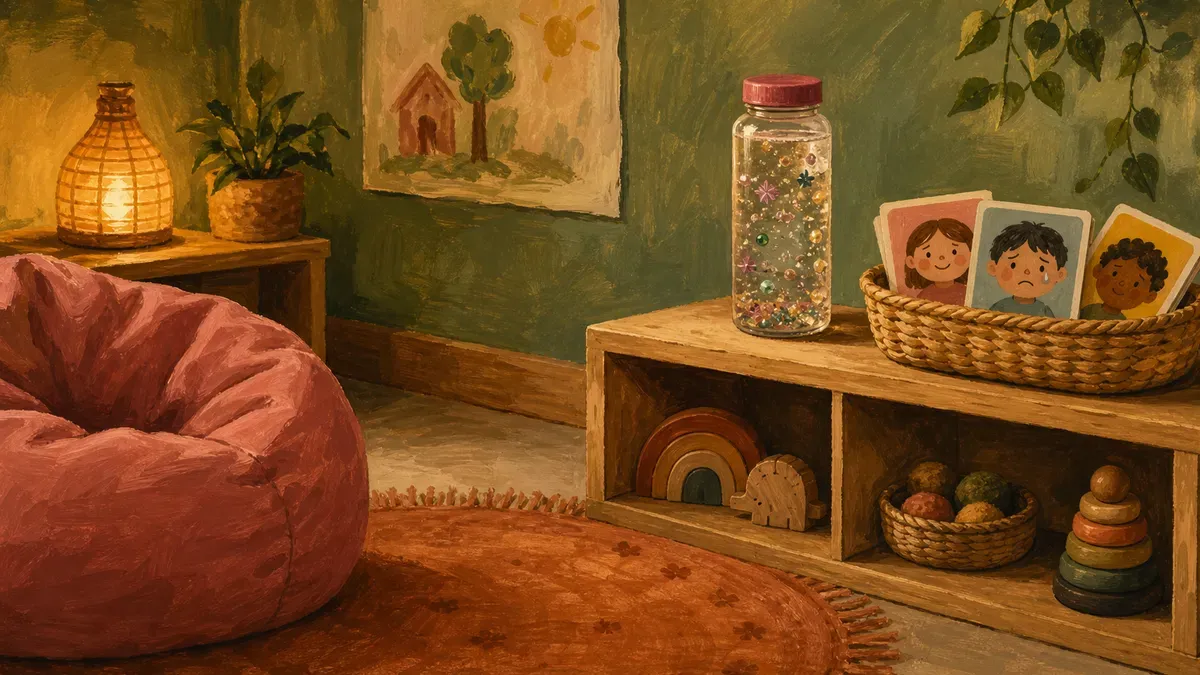
Cozy Corner Preschool: Calm Down Ideas for Throwers
Throwing the calm-down tools? Build a cozy corner preschool space that survives big feelings, with throw-proof tools and steps that work.
-
 Calm & Big Feelings
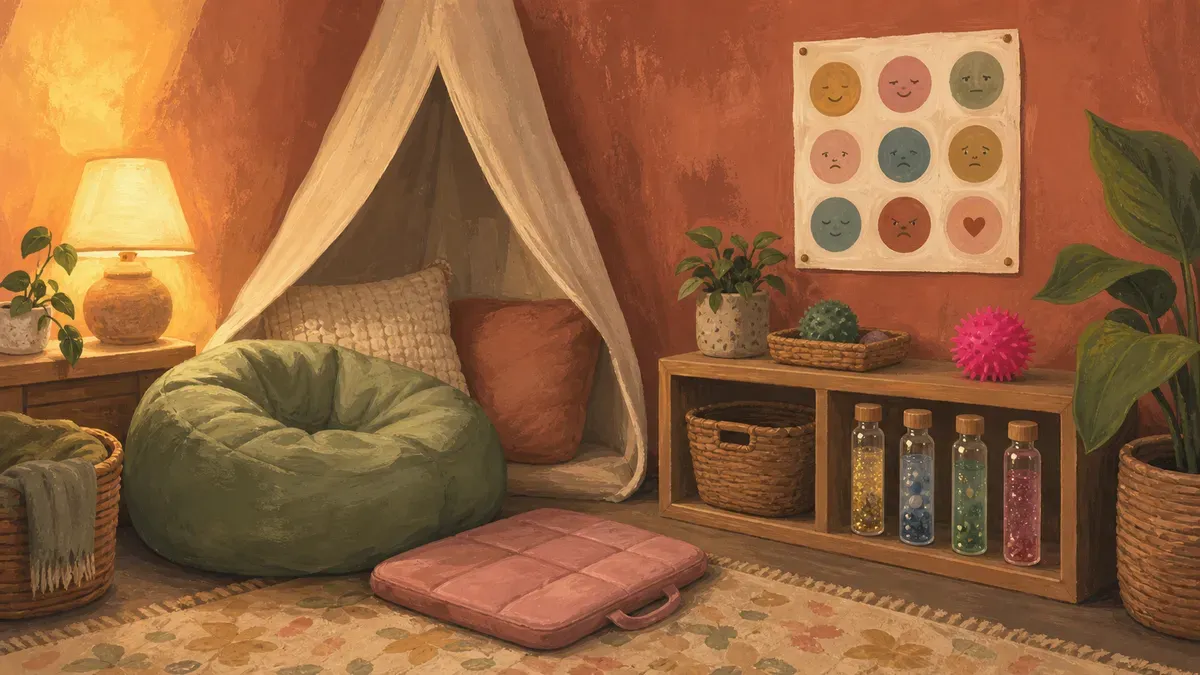
Calm Corner Classroom Setup for Autistic Kids
Most calm corners fail autistic kids because they skip the sensory profile. Build a calm corner classroom that works in 5 steps. Start here.