Colours for Childrens: The Best Order to Teach First

Some links here are affiliate links. If you buy through one, I may earn a small commission at no extra cost to you. As an Amazon Associate I earn from qualifying purchases. I only point to things I'd actually use with my own two.
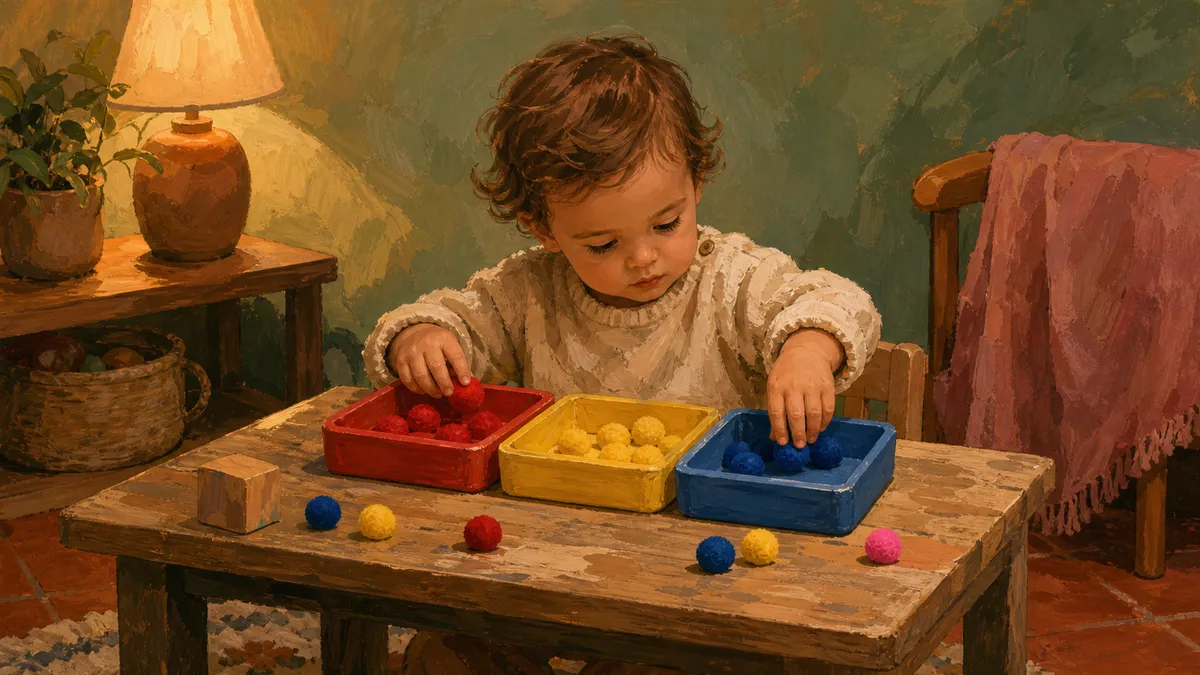
Red, blue, and yellow are the best first colours to teach young children, one at a time, roughly a week each. Teaching look-alike colors back to back, like blue and green, blurs them into one fuzzy concept a young brain can’t sort out yet. I’m Nora Hayes, a former preschool aide, and here’s the exact sequence I use with my own kids and our weekly play group, plus the activities that make each color stick and the pairings to skip.
Here is the method, fast:
- Teach red, blue, then yellow, one colour per week
- Separate look-alike shades (blue, green) by several weeks
- Introduce secondaries only after the primaries are solid
Teach Colours in This Order, One at a Time
The order above isn’t random, and neither is the one-at-a-time pace. Here’s how to actually run it: which colour to lead with, which ones to keep apart, and when it’s safe to bring in the mixed colours.
- Red (start here, the loudest and most distinct)
- Blue
- Yellow
- One secondary colour at a time, once the primaries are locked in
Red, Blue, Yellow First
Start with red. It’s the loudest colour in a toddler’s world, the fire truck, the apple, the stop sign, so it lands fast. Then blue, then yellow. Those three are the primary colours, and they look nothing like each other, which is exactly why they make a clean first set.
Give each one roughly a week. Not a worksheet week, a real-life week. Red week means pointing it out on whatever your kid touches:
- The red cup at breakfast
- The red sock you’re putting on their foot
- The red car rolling past the window
Do it enough and your kid starts beating you to it.
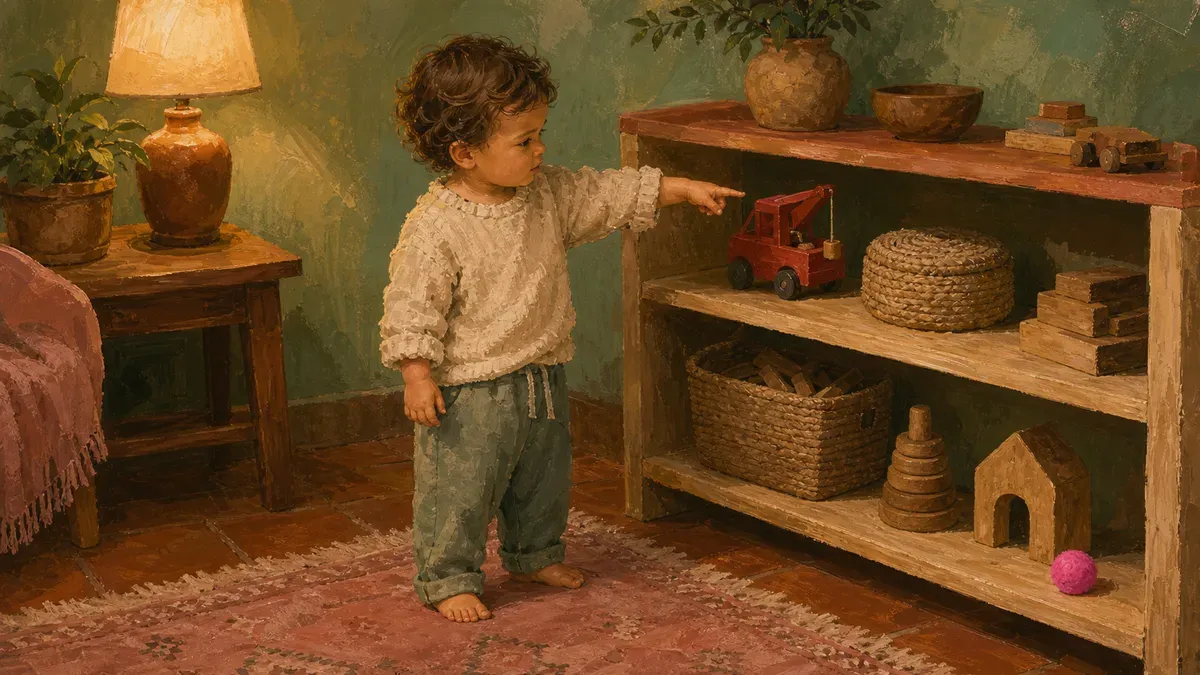
And it’s not just stubborn parents who landed on this sequence. The Montessori Color Tablets Box 1, the classic material for ages three to six, holds exactly red, yellow, and blue and nothing else until those are solid. Same three primaries, same logic.
Spacing Out Look-Alike Colours
Here’s where a lot of well-meaning charts trip kids up. They put every colour out at once, and the shades that sit close together blur into one. Blue and green are the usual culprits. To a two-year-old still building colour vocabulary, they’re nearly the same word for nearly the same thing.
So keep them apart in the lineup. Teach blue, let it settle for a week or two, then teach something that looks nothing like it before green ever shows up. Same goes for red and orange, yellow and orange.
Never introduce two look-alike colour shades back to back, no matter how full your colour chart looks.
The goal is contrast. When the next colour is obviously different, recognition clicks. When it’s a near-twin, you’ve just handed your kid a guessing game. If you want a deeper walk-through of how toddlers sort this out, here’s a guide to learning colours for 2 year olds that breaks down the why.
Adding Secondary Colours Later
Once red, blue, and yellow are locked in, the fun part opens up. Green, orange, and purple are your secondary colours, and the best way to introduce them isn’t a flashcard. It’s a colour mixing demo your kid does with their own hands.
The NAEYC mixed-up colour-mixing activity does this beautifully: hand a preschooler eyedroppers and the three primaries, let blue drip into yellow, and green appears like a magic trick.
- Blue + yellow = green
- Red + yellow = orange
- Red + blue = purple
Suddenly the secondaries aren’t new facts to memorise, they’re things your kid built.
Here’s the part worth spending on: the dropper, not the dye. Squeezing one is real pincer-grip work, the same hand muscles the sorting builds, so a mixing session doubles as fine motor practice without anyone noticing. A set of toddler-sized droppers, the food-grade silicone kind small hands can actually squeeze, is an Amazon’s Choice pick at 4.4 stars from 390+ parents, and twenty to a pack means the one that rolls under the fridge doesn’t end the game.
That’s also where colour talk gets richer. From there you can drift into tertiary colours, the in-betweens like blue-green, but only if your kid’s curious, never as a checklist.
Do it in this order and the colours stick because each one had room to breathe. Skip ahead, and you’re back to the guessing game. Slow is the shortcut here.
Why This Order Works for Toddlers
The slow-and-one-at-a-time approach isn’t just parenting patience. It’s matched to how colour vision and colour vocabulary actually develop in the first three years.
How Colour Vision Develops
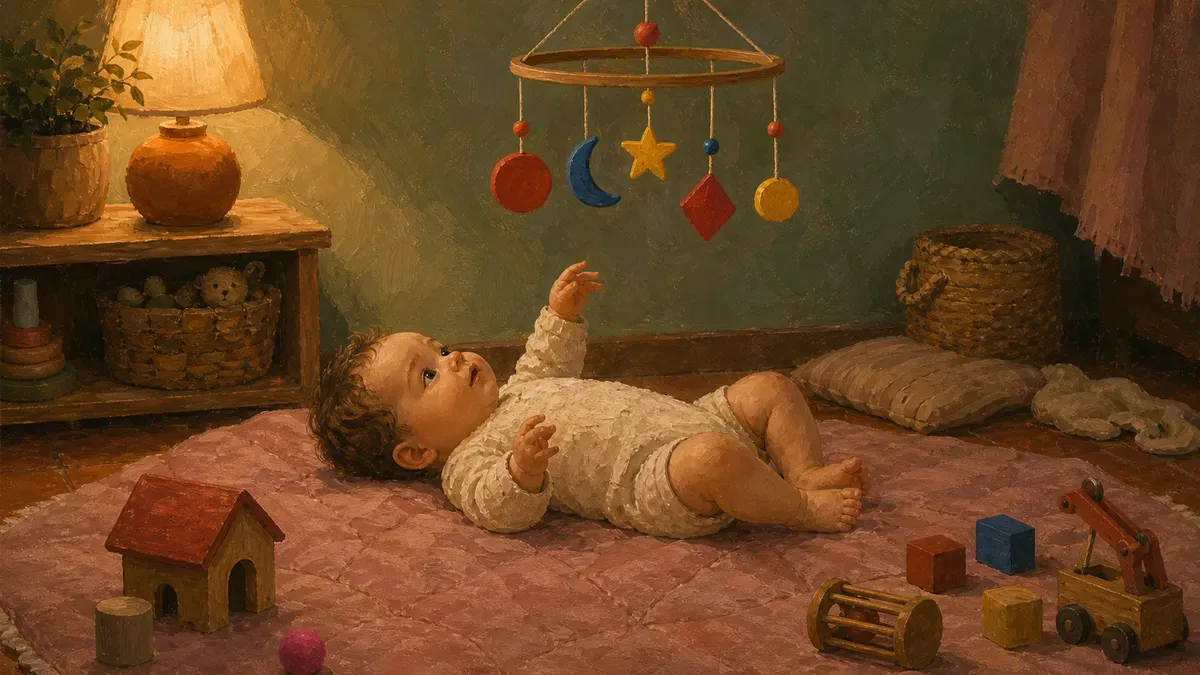
Vision development in the first year-and-a-half follows a predictable arc.
- Newborn to 1 week: Barely distinguishes light from shadow; colour detection begins within the first week, per Nationwide Children’s Hospital, moving from high-contrast shapes toward richer hues.
- Around 6 months: Full colour vision arrives. Infants fixate longer on vivid reds and blues than on soft pastels, per NVision Centers.
- By 12 to 18 months: Toddlers see the full spectrum.
But their brain is still building the vocabulary map that turns “that thing” into “red.” Distinct, bold primary colours give them the clearest signal to attach a word to. Muted shades and near-lookalikes blur that signal, which is the real reason starting with the most vivid red you own beats the dusty rose in the crayon box. These are not arbitrary teaching preferences; they track developmental milestones.
Recognising vs Naming a Colour
Michigan State University Extension’s guidance on how toddlers learn colours breaks colour learning into three sequential stages.
- Stage 1: Matching colours, with no naming required at all.
- Stage 2: Pointing to a colour when you say its name.
- Stage 3: Naming colours independently.
That last stage typically doesn’t arrive until around age three.
This is the part that trips a lot of parents up. If your two-year-old can pull the red block out of a pile when you ask but can’t say “red” on demand, she’s not behind. She’s in stage two. Colour recognition is running ahead of colour vocabulary, which is exactly how it’s supposed to work.
If she points, she’s learning. Naming comes later.
You can dive deeper into the difference between identifying colors and naming them if the gap has you second-guessing the whole approach.
For preschoolers in that pointing-and-matching window, repetition-based activities carry enormous weight. Try learning colors do a dot for low-prep repetitions that land squarely in the stage where toddlers actually are, not the stage we’re impatient for them to reach.
Activities That Make Each Colour Stick
Knowing the order is half of it. The other half is repetition that doesn’t feel like a lesson, so here are three ways I rotate through at my house: sorting, sensory play, and find-it games.
- Sorting and matching: pull the week’s colour out of a mixed pile.
- Hands-on sensory play: finger paint, dyed rice, a tray and their hands.
- Find-it games and books: spot the colour on a walk, read the same favourite again.
Colour Sorting and Matching
Sorting is the workhorse.
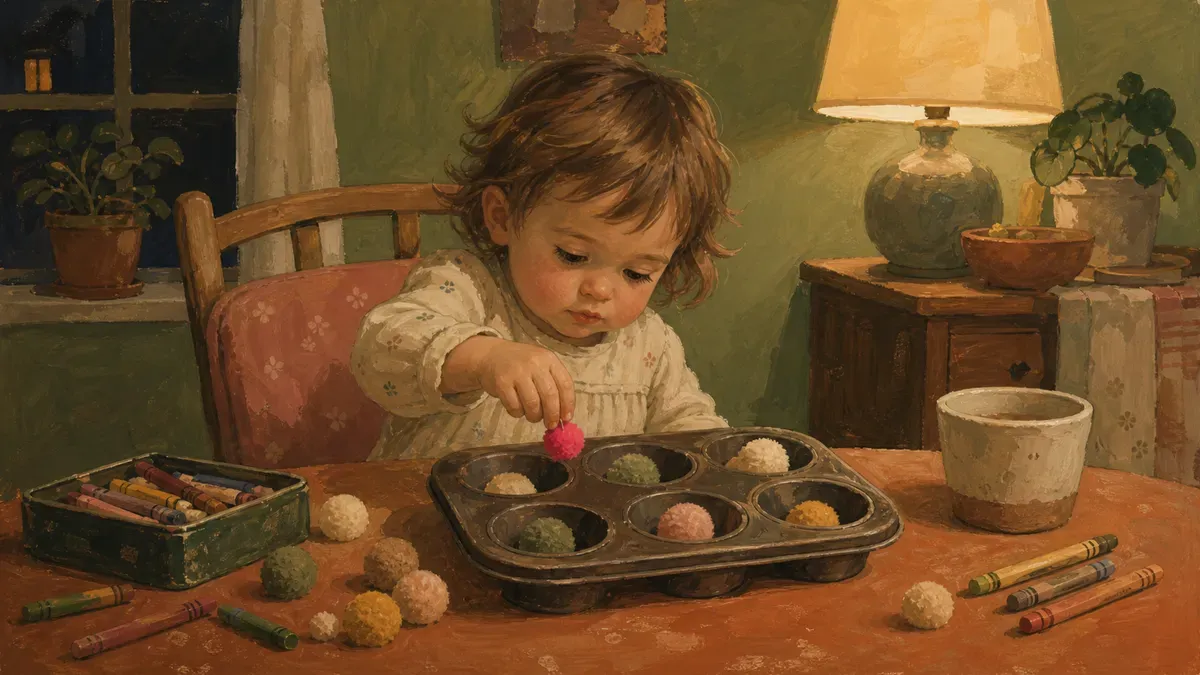
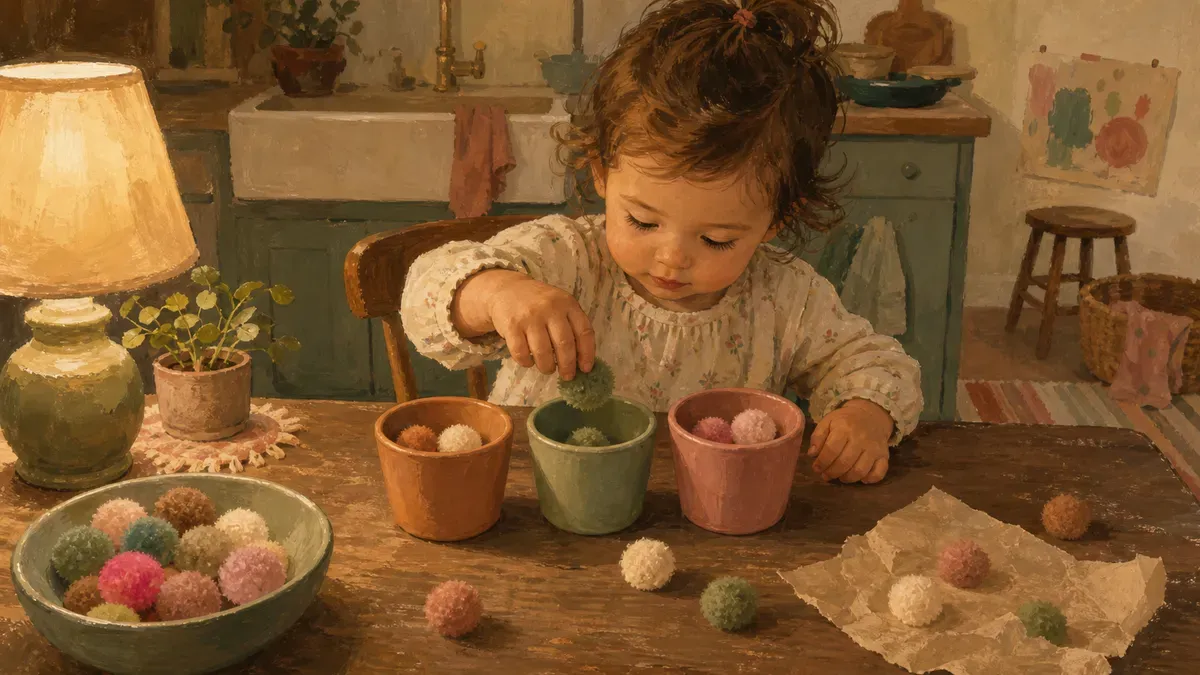
Use what you own. Pom poms, bottle caps, blocks, dried pasta, odd socks. June sorts plastic bear counters at the kitchen table while I make dinner, and that’s the whole setup.
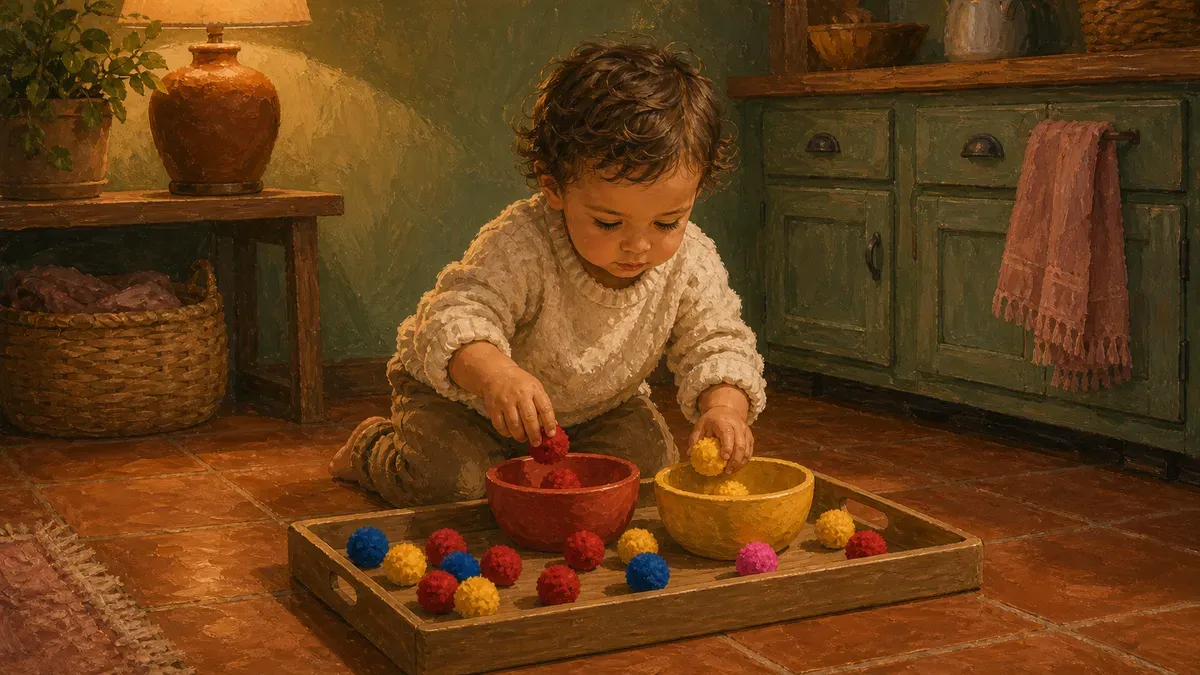
The quiet bonus is in their hands. Colour sorting that uses a tripod grasp, like poking straws into the holes of a parmesan shaker, builds the same finger strength and control kids later lean on for holding a pencil, as the OT Toolbox lays out in its fine motor sorting work.
Matching games stack on top: line up paint chips, ask your kid to find the cap that matches. Same colour, new container, fresh ten minutes.
You don’t need to buy a thing for this, and most days I don’t. But if hunting down loose parts is one job too many this week, a wooden ball-and-cup sorting set hands you twelve balls and twelve matching cups ready to go, sized for hands from about a year up. It’s a smaller crowd of reviewers, 280-odd of them, but a steady 4.5 stars, and it lines up with what I see at the table: the one-ball-per-cup idea clicks faster than you’d expect.
Hands-On Sensory Play
Sorting is tidy. This is the messy one, and the mess is the point.
Finger painting ties a colour to a feeling. Squeeze red onto a tray, let them smear it around, and the word “red” lands with cold paint on their palms instead of a flashcard. The cold paint on their palms, the drag of fingers through something goopy, the red still on their hands after. That’s what makes the word land instead of slide off.
Buy the washable kind and mean it, it’s the whole difference between yes and not today. The washable finger paints I keep under the sink come in six basic colours in squeeze bottles, wipe off skin and most surfaces, and they carry an Amazon’s Choice badge at 4.8 stars from 8,000+ parents. For a paint that ends up on the walls, that kind of rating is a small miracle.
Sensory bins do the same low-pressure job. Dye a cup of rice red with a splash of vinegar and food colouring, add a scoop, and let them dig. No right answer, no pressure, just the colour everywhere they look.
The dye is the whole trick, and a little carries a long way. I reach for a pack of natural food-colouring drops, non-toxic and made from natural ingredients, which I care about when a scoop of dyed rice ends up an inch from a mouth. It’s a 36-count set at 4.4 stars from 3,700+ buyers, and the same bottles handle the mixing demo from earlier.
Repetition is what makes a colour stick, and sensory learning gives a tired kid something they’ll actually repeat.
For a few more no-prep ideas on the same theme, these color activities for toddlers keep creative play down to almost zero setup.
Find-It Games and Books
Some days you’ve got no setup in you at all. That’s what find-it games are for.
While you walk, cook, or wait out a grocery line, ask your toddler to spot the colour of the week. “Find me something red.” The car, the door, an apple. You’re stitching colour vocabulary into the day without a single prop.
Children’s books do the heavy lifting on words. A colour-focused picture book hands you the same line over and over, and that repetition is exactly how the name sinks in. Picture books also pull in richer language than everyday chatter does, exposing toddlers to words two to three times more likely to be the rarer ones, according to Read Brightly.
If you want one to start the rotation, a lift-a-flap colour board book is hard to beat: the flaps give a wiggly kid a reason to turn the page, and the naming sneaks in on its own. It sits at 4.9 stars across 5,000+ ratings, about as close to unanimous as toddler books ever get, and the board pages shrug off being gummed and dropped.
Keep a couple of bright ones in rotation, read the same favourite for the tenth time, and let your kid call out the colours before you do. That’s the win.
Primary Colours in Preschool Settings
When kids move from home to a classroom, colour teaching does not suddenly need to get fancier. If anything, the group setting makes simplicity more important, not less.
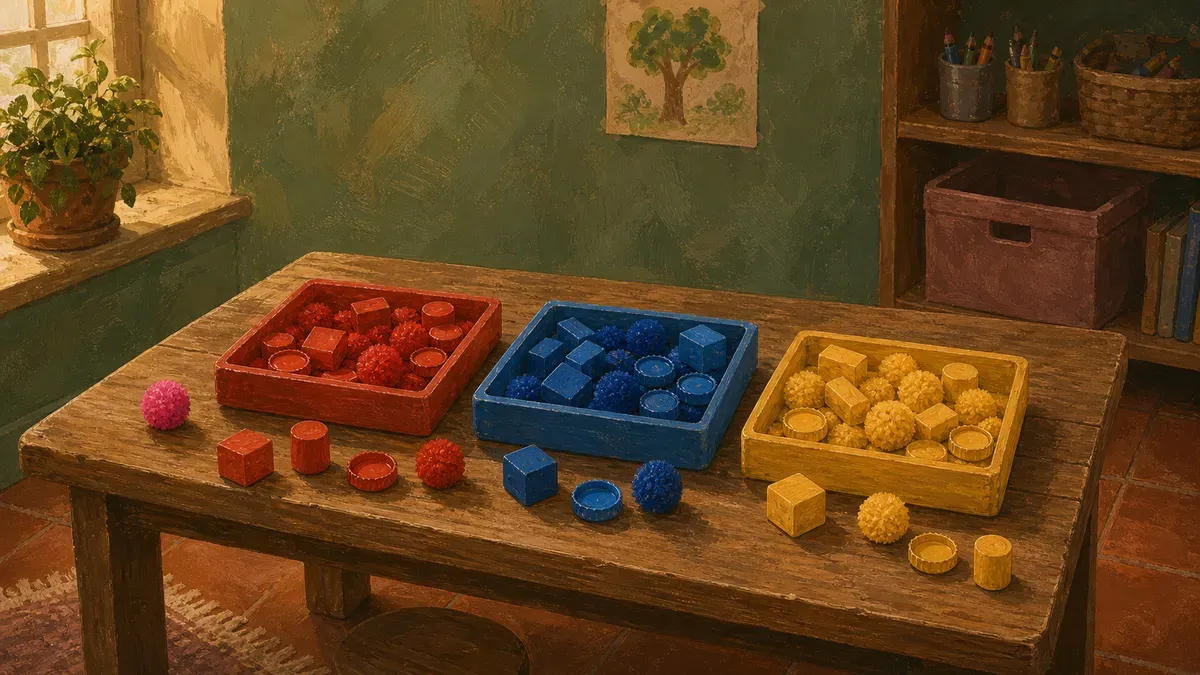
Preschool teachers work with primary colours all day because they anchor everything else. Red, blue, and yellow show up on name-tag stickers, paint cups, sorting baskets, and calendar time. That constant ambient exposure does a lot of the heavy lifting before a teacher ever runs a structured activity.
The mistake worth avoiding: mixing too many shades into the same activity. Four different blues on one table stalls a three-year-old who is still learning that sky blue and navy are the same category, so pick one clear shade and hold off on the variations until that base word is solid.
- Sorting trays: one colour per tray, objects from around the room (red blocks, blue bottle caps, yellow craft pom-poms). Quick to set up, easy to reset for the next group.
- Single-colour paint day: if the whole class paints with only yellow that session, the word gets repeated naturally without any drill.
- Snack sorting: colour the day’s snack cups to match the focus colour. Even a quick “put the red grapes in the red cup” lands the word ten times in two minutes.
For Montessori-style rooms, the same logic applies: one focused colour in the work cycle, not a full rainbow at once. Creative play with a single colour beats a multi-colour project that gives kids no anchor.
Spacing matters in a group setting just as it does at home. Follow the rule for teaching colors that confuse easily when you sequence your weeks. Blue and green back to back will lose half the class.
Common Mistakes and How to Avoid Them
Sequencing your weeks correctly gets you halfway there. The other half is what happens inside the lesson.
- Testing before they’re ready. “What colour is this?” puts a toddler on the spot before they’ve had enough repetition to answer confidently. Give them more time with pointing and matching before you ask them to name anything.
- Using too many shades at once. Dark blue, sky blue, and turquoise look like three different colours to a toddler. One saturated shade per colour until the word is solid, then branch out slowly.
- Missing the small moments. Colour vocabulary builds in the everyday: the red cup at breakfast, the yellow coat by the door. Weaving a simple learn color game into a regular walk costs nothing and adds the repetition that makes it stick.
- Assuming every child sees colour the same way. A study published in Ophthalmology found that 5.6% of Caucasian boys struggle with colour tasks regardless of instruction, according to guidance on screening children for colour blindness. A child who keeps mixing up red and green after weeks of solid work is not behind. They may need a vision screen.
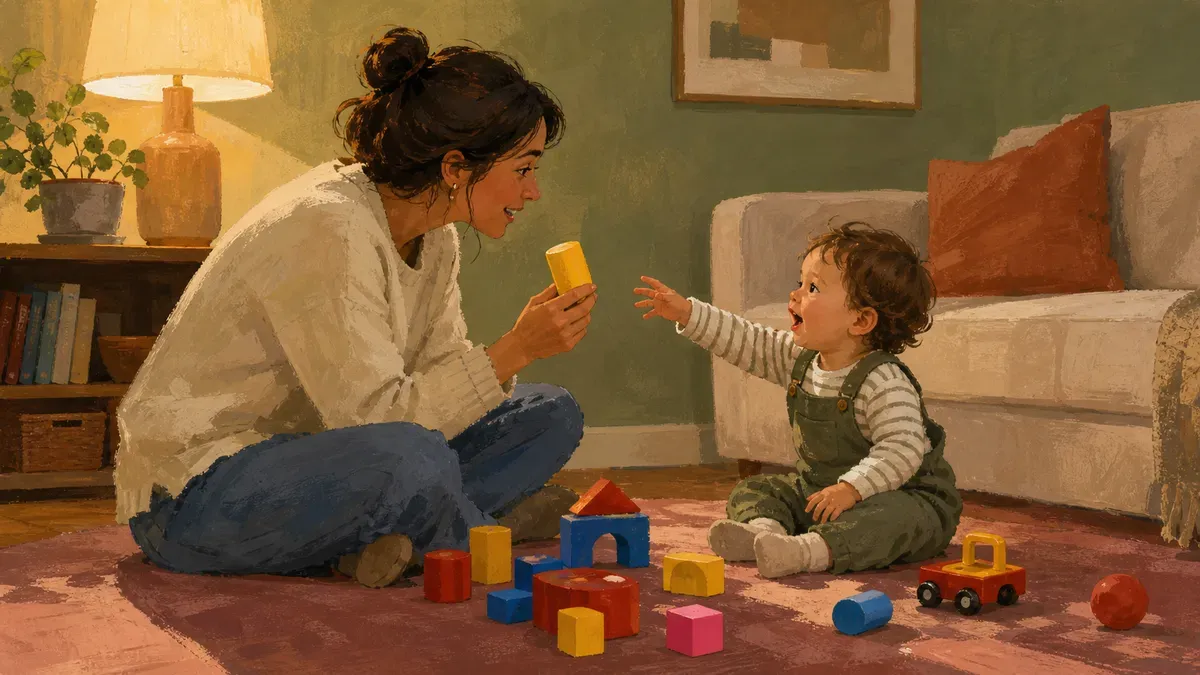
Most of these come down to the same thing: moving faster than the child needs. Slow it down, keep it playful, and let our full colour-learning guide fill in the gaps.
Found this useful? Save it for the next rough afternoon.
Questions parents ask me about this
Which colours should I teach children first and in what order?
Start with red, then blue, then yellow, one at a time, roughly one week each. These three primary colours are the most visually distinct from each other, which makes them easier to tell apart. Once all three are solid, you can layer in green, orange, and purple through hands-on mixing activities.
At what age can a toddler start learning colours?
Colour vision is fully developed by around six months, so babies can see colours well before they can name them. Casual colour talk during everyday moments ("your red cup", "the blue bowl") can start as early as twelve months. Formal teaching with sorting and matching works best around age two or two and a half, when a child can follow a simple one-step instruction.
How long does it take a toddler to learn one colour?
A week of consistent, relaxed repetition is a reasonable window for most toddlers. "Learning" a colour in practice means they can match objects of that colour reliably; naming it out loud comes later. Recognition almost always comes before naming, and that lag is completely typical until around age three.
Why does my toddler still mix up colours?
Most often they mix up colours that look similar: blue and green, red and orange. Space those pairs apart in your teaching sequence so you are not asking the brain to separate shades that are visually close. It is also worth knowing that a small share of children, particularly boys, have some degree of colour vision difference, which a paediatrician can assess if confusion persists across all colours over many months.
How do I teach colours to a child with learning differences?
Keep the same one-colour-at-a-time approach and slow the pace down. Pair colour labels with movement and texture (sorting objects into coloured bins, finger painting in a single colour), because hands-on repetition builds the connection faster than drilling cards. Follow the child's lead: if red is landing, stay on red another week before moving on.
Should I use flashcards to teach colours?
Flashcards are not the fastest route for toddlers. Most children lock in colour names through real-life repetition, pointing out the red apple at breakfast and sorting blue toys into a blue bin, rather than drilling abstract cards. Save structured cards for later, once a child already recognises a colour in context and you want to practise naming it on demand.
Written by
Nora Hayes
Mom of two and a former preschool aide. I share the screen-free sensory play and calm-down ideas I test at my own kitchen table, plus what the moms in my little meet-up swear by. A parent passing on what works, not a doctor or a therapist.
More about NoraKeep going
All Learning Colors-
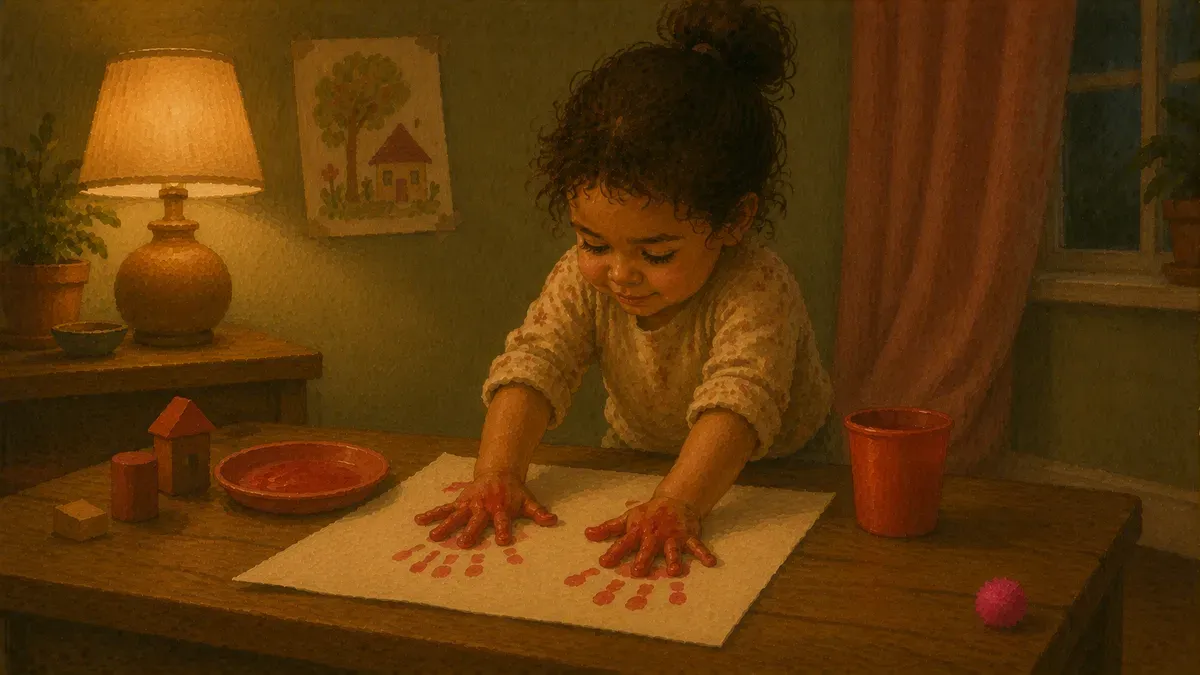 Learning Colors
Color Activities for Preschool That Actually Stick
Most color lessons fail because they teach too many at once. These color activities for preschool use one color at a time so it sticks. Start today.
-
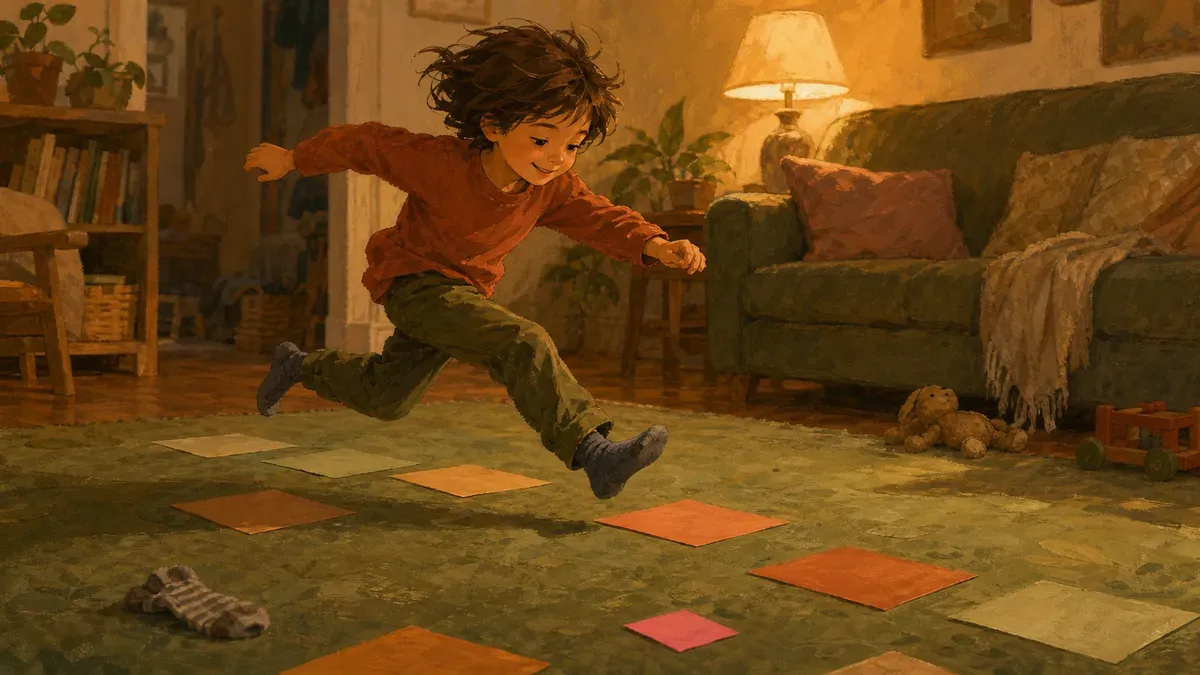 Learning Colors
Color Activities for Kindergarten Kids Who Hate Sitting
Got a kid who won't sit still? These 10 color activities for kindergarten get them moving, learning, and laughing. Try them now.
-
 Learning Colors
Color Activities: 20 No-Buy Ideas From Your Home
Color activities you can set up in 2 minutes with household stuff. 20 no-prep sorting, matching, and mixing ideas kids love. Try one today.
-
 Learning Colors
Color Activity That Clicked for My 2-Year-Old
This 5-minute color activity finally clicked for my 2-year-old when nothing else did. See the setup, why it works, and what to try when it flops.