Color Activities: 20 to Set Up at Home

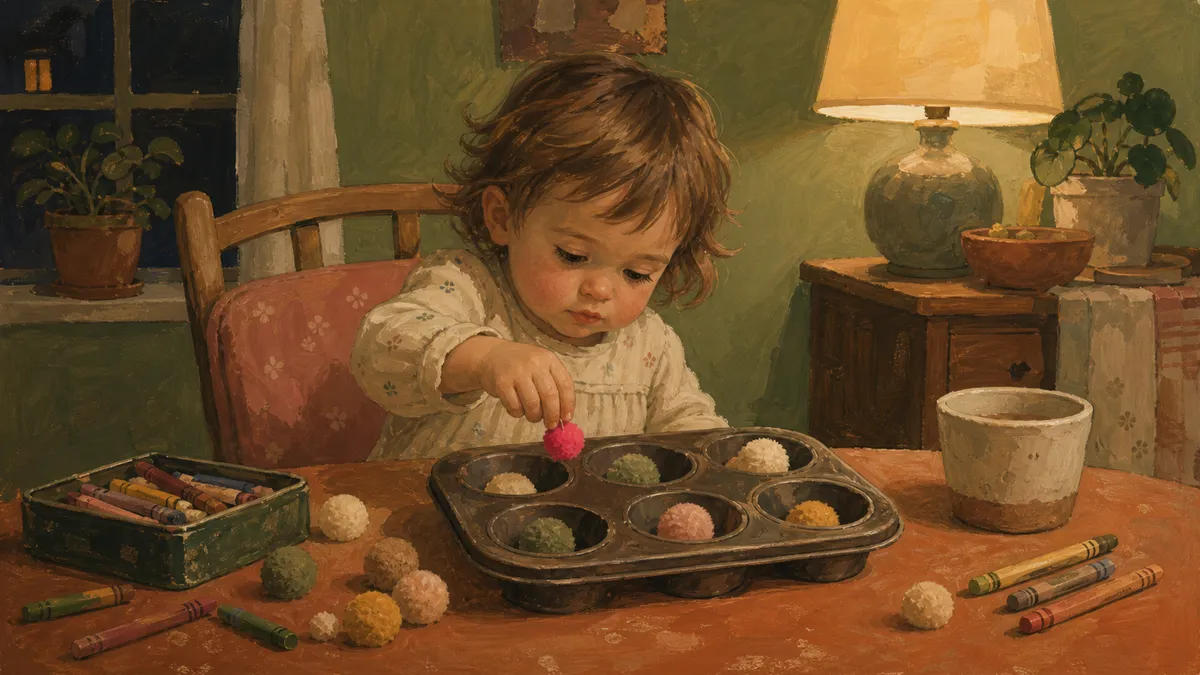
Color sorting activities are some of the easiest toddler wins you can pull off with stuff already in your house. Sorting by color gives little kids a concrete way to practice matching and focus without needing instructions they can’t follow yet. I’m Nora Hayes, a former preschool aide raising two sensory kids in small-town Ohio, and below you’ll find 20 no-prep color sorting ideas sorted by age.
The plan in brief:
- Grab one color of household objects (pom poms, blocks, socks) and a matching cup or bowl.
- Say the color name once as your child drops each item in, then move to a second color.
- Keep the first session under 5 minutes and stop while they still want more.
Set Up a Color Activity in Three Quick Moves
The whole setup takes about as long as it does to read this: grab one color, name it as your kid sorts, and quit before they’re done. Here’s each move.
- Collect a handful of same-color objects and set a matching cup beside them.
- Say the color word once per item as they work, no quiz, just narration.
- Wrap it at the four-minute mark, before attention runs out.
Pick One Color and One Container
Grab everything red you can find in five minutes. Pom poms, a couple of blocks, a plastic spoon, two crayons, a sock. Dump it all on the table with one red cup or bowl beside it, and the whole task tells itself: red things go in the red cup.
That’s a color activity at its simplest. You’re using everyday objects you already own, so there’s nothing to buy and nothing to prep.
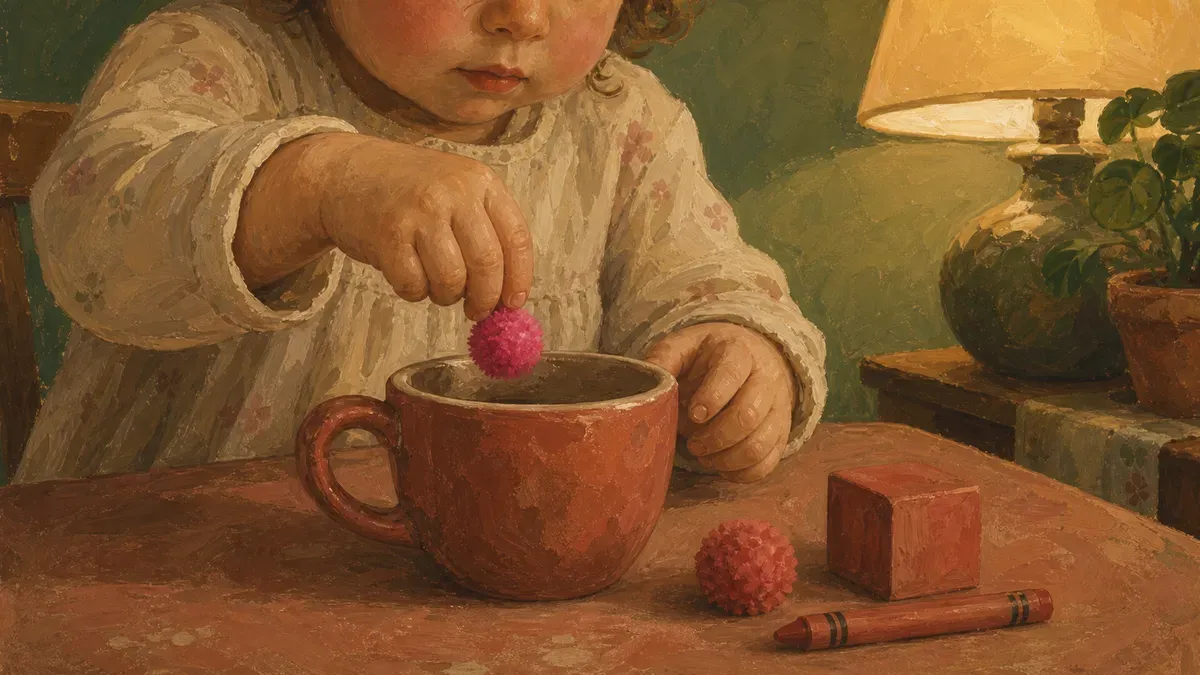
Start with one color because color matching is really just classification, and one category is the easiest classification there is. June got it the first try at three. Eli, my sensory-seeker, needed the pile spread out so he could grab and drop. Two kids, same red cup, totally different setups.
Name the Color Once as They Sort
Resist the urge to quiz. “What color is this? Are you sure? Say it with me” turns a calm moment into a pop test, and a wound-up toddler shuts down fast.
So do the opposite. As each object lands in the cup, say the word once, plain: “red.” Next one, “red.” That’s it. You’re modeling clean color vocabulary, not extracting answers.
Color recognition is downstream of hearing the word in context, over and over, with zero pressure. Their job is to sort. Your job is the soundtrack. That steady drip of the word in context, repeated on every drop, does more than any drill.
Stop Under Five Minutes
End it while they still want more. A 2-year-old’s attention runs roughly four to six minutes anyway, so you’re not cutting anything short.
Quit on a high note and the activity becomes a thing they ask for, not a thing you nag them into. That’s the whole point of this play-based learning, and it’s exactly the rhythm behind this 5-minute color activity we keep coming back to.
Watch what they do, not whether they’re “right.” The dumping, the studying, the regrouping, that’s the readiness. When you want a no-mess version, the learning colors do a dot printables run on the same short, win-on-a-high-note pattern.
20 Color Activities Using Only Household Items
None of these need a craft-store run or a printer. Open a cabinet, grab one bin, and you’ve got a sorting setup, a mixing tray, or a color hunt ready in under five minutes.
Sorting and Matching Setups
Sorting is the easiest place to start because the task explains itself. Dump a pile, give them somewhere to put each color, and they get it without a single instruction from you.
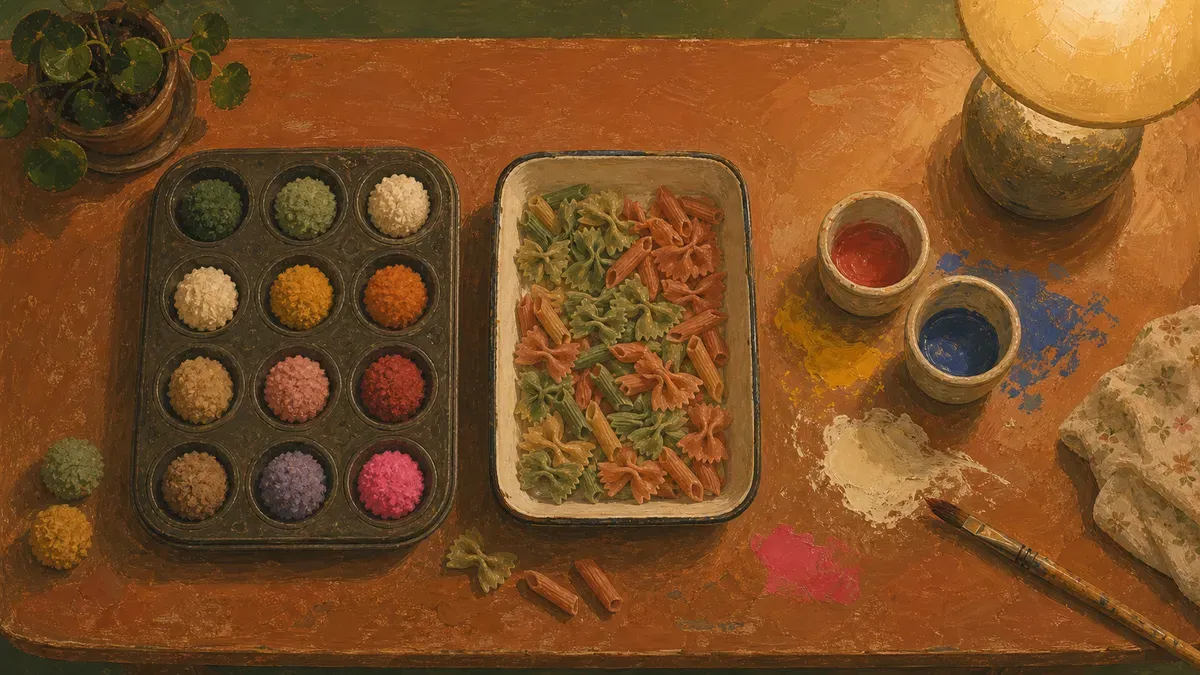
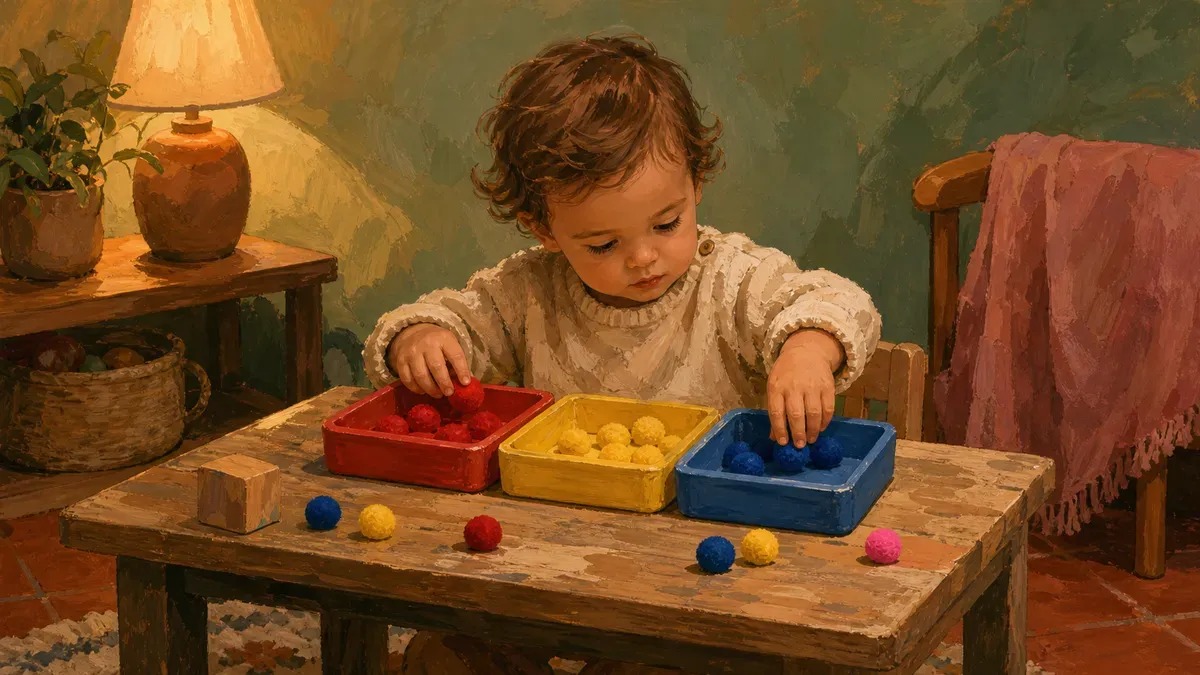
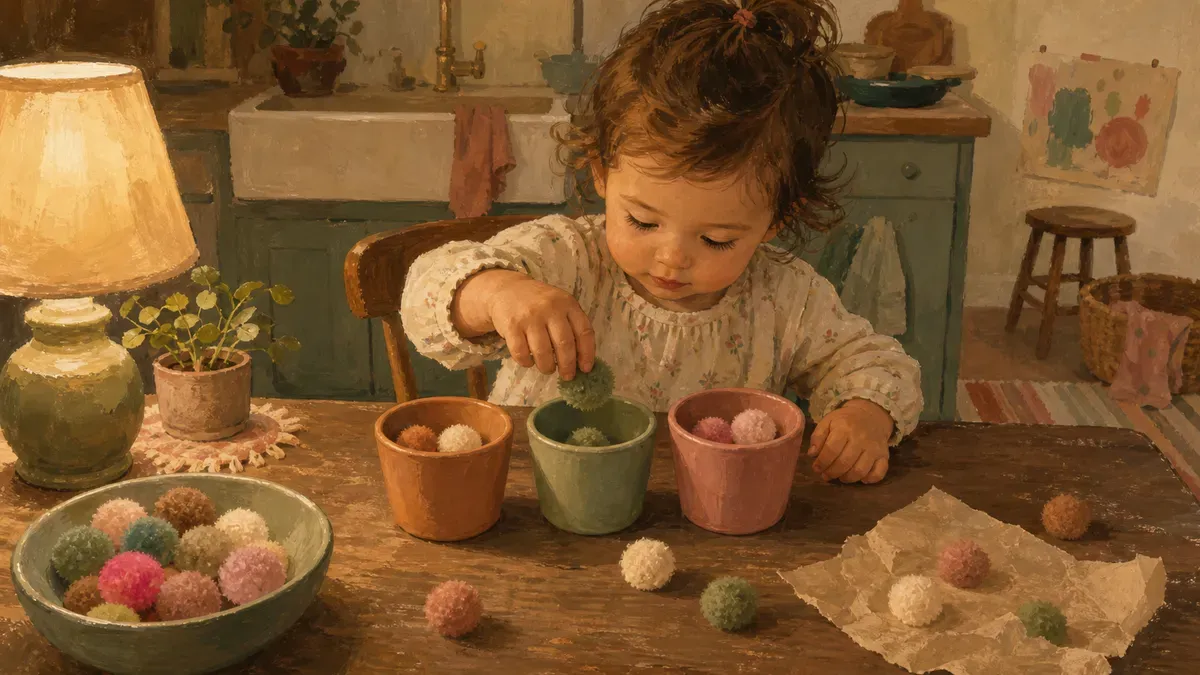
The pom pom one is the classic for a reason. Tip a bag into a bowl, set out a muffin tin, and let them drop each fuzzy ball into the right cup. If you want a fuller walkthrough plus a few twists, my color sorting pom poms guide breaks it down. Tongs or a spoon turn it into fine motor work too.
No pom poms? Raid the rest of the house. Most of these run on the same idea: one pile, a few containers, sort by color.
- Building blocks into a row of bowls, one shade per bowl
- Mismatched socks from the laundry basket, paired up by color
- Bottle caps saved over a couple weeks, dropped into an egg carton
- Crayons sorted back into their box by family, reds with reds
- Dry pasta or beans scooped into colored cups
- Toy cars parked in lanes you tape on the floor
The quiet skill underneath all of it is visual discrimination, telling near-shades apart, which is the same classification muscle that shows up later in early math. You don’t have to teach that part. Sorting everyday objects by color does it on its own. Name the color as they place each one, and stop while they’re still into it.
Sensory and Mixing Play
Sorting is dry and tidy. This is where it gets wet, and where color stops being a label and starts being something they can change with their own hands.
Start with food coloring in water. A few drops in clear cups, a couple of pipettes or a turkey baster, and they’ll move tinted water between cups for ages. The magic moment is the first time blue meets yellow and turns green in front of them. That’s primary colors making secondary colors, no lecture required, just “watch what happens.”
For the painters, give them red, yellow, and blue and nothing else. Watching them discover orange and purple on their own beats any pre-mixed set. These color crafts work for preschool ages and down, and they’re the kind of mess you plan for, not dodge.
- Dyed pasta or rice in a sensory bin, scooped and poured by color
- Playdough in two colors, smooshed together to make a third
- Shaving cream with a squirt of food coloring, swirled on a tray
- Ice cubes frozen with color, melting into a puddle that mixes
- Cotton balls dipped in colored water, then squeezed out
Put a towel down and let it be messy. The mixing is the lesson here, and you can’t get it from a worksheet. When they ask to do it again tomorrow, you’ve found a keeper.
Active and Outdoor Color Hunts
For the kid who can’t sit, color goes mobile. Pair it with running, climbing, and grabbing, and you reach the sensory-seeker who needs to move before anything sticks.
The color scavenger hunt is the workhorse. Call out a color and send them tearing around the room or yard to bring back something that matches. “Find me something red, go!” It turns recognition into a sprint, and it works indoors on a rainy afternoon or out in the yard.
Outside, the world is already sorted for you. Hand them an egg carton and let them fill each cup with a leaf, a petal, a pebble that matches the dot you drew inside. Nature does the color supplying.
- Color walk around the block, spotting one shade the whole way
- Toy toss into colored buckets from a few steps back
- Sidewalk chalk rainbow they run up and add to
- Sticky-note hunt with matching objects stuck around the house
- Beanbag sort tossed onto colored paper plates
This is where observation skills and gross motor land in the same game, and it’s the most creativity-friendly of the three because there’s no wrong answer, just “what else is green?” Let them lead. The day you’ve got nothing left, the find-me-something-red game costs zero setup and buys you a loud, happy ten minutes.
Match the Activity to Your Child’s Age
The same red-pom-pom bin that thrills a two-year-old will bore your five-year-old in about thirty seconds. So before you set anything up, peg the activity to where your kid actually is, not the grade they’re heading toward.
Toddlers Aged 18 Months to 2 Years
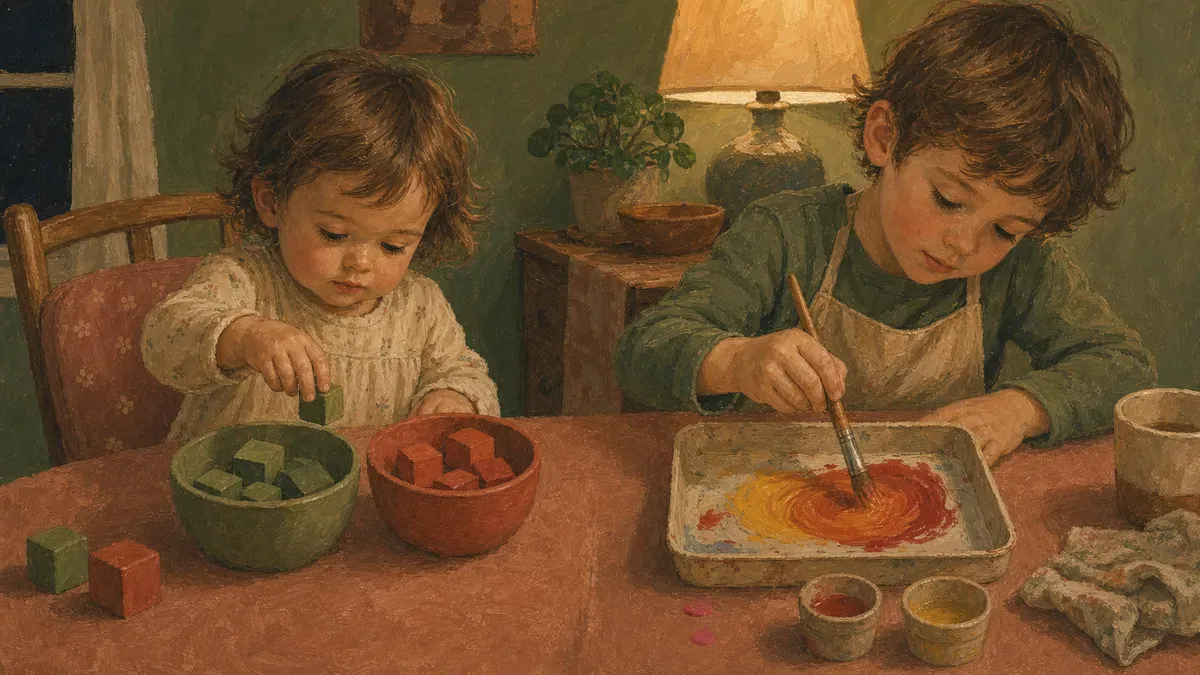
Start small and start loud. For learning colours, 2 year olds and the under-twos do best with just two colors picked far apart on the wheel so they pop, red and blue, or yellow and blue. Skip the rainbow. Two high-contrast piles is plenty for a brain still building visual discrimination.
At this age, matching comes way before naming. Hand your toddler a red block and a red cup and a blue cup, and let them figure out where it goes. That’s it. You’re not quizzing, you’re modeling.
That order isn’t me guessing. Matching and sorting are the first way kids learn color, a sequence laid out in color recognition developmental milestones from Michigan State University Extension, with recognizing and then naming coming later. So if your toddler sorts a pile perfectly but can’t tell you “red,” that’s not a gap. That’s the developmental progression doing exactly what it should.
Preschoolers Aged 3 to 5 Years
Now you can open it up. Three- to five-year-olds can name the colors, mix them, and sort more than two at a time, so color activities for preschool age lean into talking and discovery instead of plain matching.
Hand them a paint tray and let primary colors run together. Blue into yellow makes green, and that live gasp teaches the word “green” in a way no amount of flashcard drilling ever could.
- Sort the laundry by six colors.
- Build a color wheel from snack-bin scraps.
This is also where it quietly counts for school. Color naming shows up on the Bracken School Readiness Assessment as one of five core subtests, so the colors you’re naming over a paint tray are a real slice of academic readiness, not just a rainy-afternoon win. If you want a few more structured ideas at this stage, our roundup of color activities for preschool kids walks through them.
Meet the kid where they are and the right activity picks itself.
Adapt Color Play for Every Kid
The activity itself rarely needs to change for a neurodivergent kid. The setup does, and these three tweaks cover most of what I get asked about: the kid who can’t sit, the kid who’s overwhelmed, and the kid who sees color differently.
ADHD and High-Energy Kids
Sitting still to sort pom poms is a losing battle for a mover, so don’t fight it. Turn the sort into a sprint. Put the red cup across the room and have them run one object over at a time, then back for the next. You’ve made color matching games for ADHD kids without buying a thing, and you’ve added the gross motor activities that burn off the wiggle.
Keep the rounds short. Breaking a task into quick chunks with movement between them is a known way to help restless kids stick with it, a documented classroom approach for ADHD. So sort five caps, do a lap, sort five more.
- Toss bean bags into matching-color bins instead of dropping pom poms in a cup
- Hide colored objects around the room for a find-and-return hunt
- Stack the sort on top of a movement they already love (jumping, climbing)
Those multisensory activities, color plus motion, hold a high-energy kid far longer than a tray ever will.
Autism and Sensory Sensitivities
For a kid who gets overwhelmed easily, less on the table is more. Reducing visual clutter and putting materials in trays or containers is a structured strategy recommended for autistic children to cut overwhelm and keep them engaged. One color, one tray, plain background, nothing extra competing for attention.
Predictability does the rest. Same spot, same order, same words every time, so the task feels safe instead of surprising. And lean on what they already love. If it’s dinosaurs, sort the dinosaurs by color before you ever reach for generic blocks.
A favorite object lowers the bar more than any new toy. For setups built around this, our full guide to teaching colors autistic kid goes deeper, and it’s worth looping in your child’s occupational therapist for sensory play that fits their plan.
Color Vision Differences
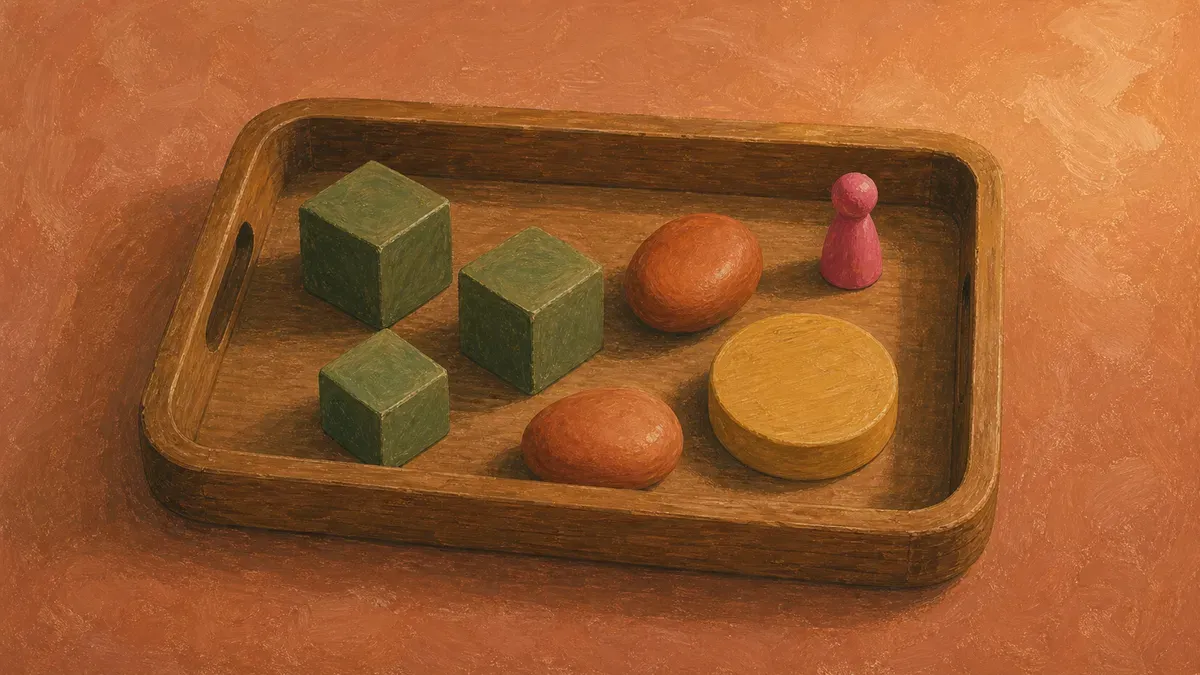
Some kids see color differently, and color blindness is more common than most parents expect, especially in boys. ScienceDaily reported it in 5.6% of Caucasian boys in a California preschool study, versus next to none in girls.
So don’t build a task on color alone. Pair every color with a word and a texture, smooth red, bumpy blue, so naming and visual discrimination aren’t riding on the hue. Reach for high-contrast pairings over close shades, and let color identification lean on more than the eyes. A kid who can’t tell two greens apart can still feel the difference and learn the names just fine.
Make Color Activities Actually Stick
A bin of dyed rice buys you twenty minutes, but it doesn’t make colors stick. What does: keeping the lesson tiny, reading the right kind of progress, and folding color into the stuff you already do every day.
Teach Two Colors at a Time
Pile six colors in front of a toddler and you’ve handed them a puzzle, not a lesson. Their eyes bounce, nothing lands, and you both quit frustrated.
Start with two. Guidance on early color learning suggests opening with two or three high-contrast colors like red and blue, because they’re distinct enough that a young kid won’t mix them up. Save the close cousins (blue and green, red and orange) for after the first pair is locked in.
Two colors gives the brain a clean comparison. Red is red because it is not blue. That contrast is what sharpens visual discrimination and gets color recognition to click, and it’s the difference between color vocabulary that sticks and a kid who guesses every time.
Master one pair, then add a third. Never the whole rainbow at once.
We break this down further in our deep dive on teaching colors that backfire when paired.
Separate Recognition From Naming
Here’s the trap that makes good parents panic: your kid won’t say “yellow,” so you assume they don’t know it. Usually, they do.
Kids understand color words long before they can say them. According to Michigan State University Extension, a child can point to the right color when you ask well before they can produce the name on their own, the same gap you see across early language. Receptive comes first. Productive follows.
So split the two when you check in. Instead of “what color is this?” (a quiz that puts a quiet kid on the spot), try “point to the green one.” It’s a low-pressure way of identifying colors that doesn’t require a child to produce a name.
- Naming lagging behind recognition is the normal developmental arc, not a delay.
- The quiet kid and the struggling kid look identical from across the room; the point tells you which is which.
- If the finger lands right, they’re already there. If it doesn’t, that’s where extra reps actually help.
Weave Color Into Daily Routines
The color practice that actually compounds isn’t a setup. It’s a habit. You don’t need a bin or a printable, just everyday objects and the running narration you’re half-doing already.
Name colors out loud as life happens:
- Snack: “Want the red apple or the green one?”
- Laundry: “Toss me all the blue socks.”
- Getting dressed: “Yellow shirt today, yellow like your duck.”
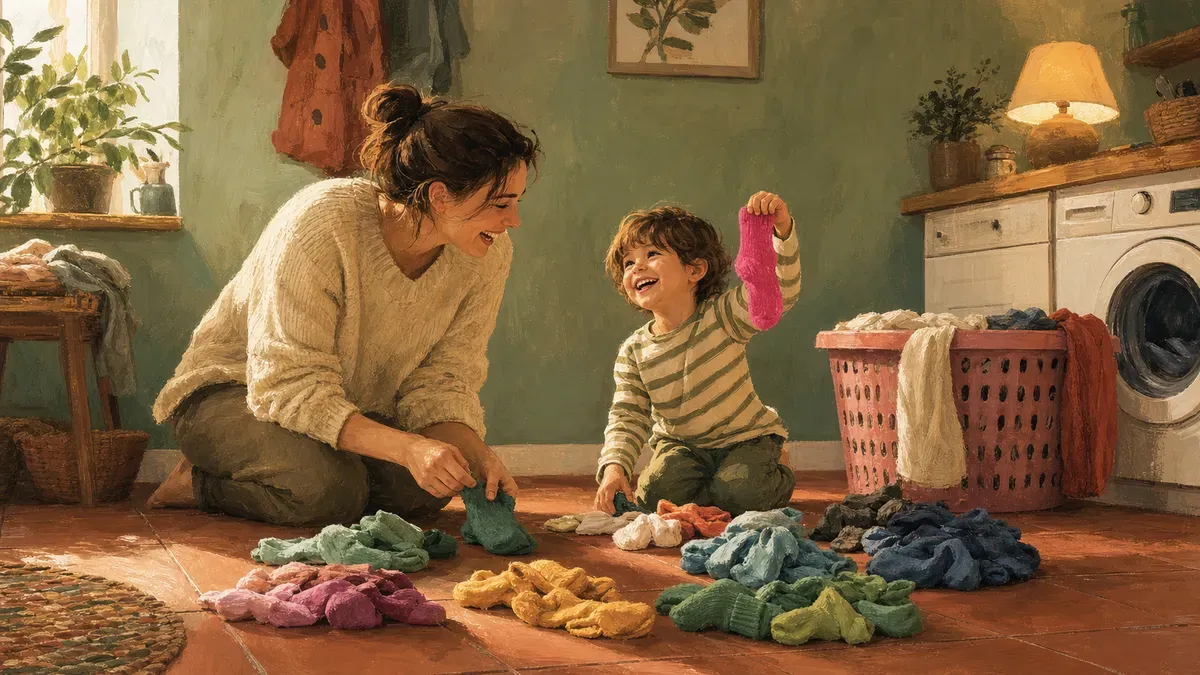
Five seconds, zero prep, ten times a day. That repetition sticks because it’s tied to a real object the kid already wants. This is play-based learning at its laziest and most effective.
Want the whole progression in one place? Start with our full color learning hub and pick the next activity from there.
Found this useful? Save it for the next rough afternoon.
Questions parents ask me about this
What color activities can I do with my toddler at home?
The easiest one costs nothing: gather a handful of household objects in two colors, set out two cups, and name each color as your toddler drops things in. Pom poms, socks, blocks, crayons, even random bottle caps all work. You don't need to buy anything. The whole setup takes about two minutes.
At what age should a child know their colors?
Most kids can reliably name colors somewhere between three and four years old, with matching typically coming before naming. Color naming shows up on school-readiness assessments around kindergarten entry, so there's a wide window of normal before that point. If your child is four-plus and still confused on most colors, bring it up with their pediatrician.
Is it normal for a 3 year old to still mix up colors?
Completely normal. Three-year-olds are often still building the connection between the color word and the specific hue, and they'll swap "blue" and "green" or "orange" and "yellow" regularly. Keep naming colors in everyday moments, during snack, laundry, and dressing, and it usually clicks without any drilling. Give it time before worrying.
Which two colors should I teach my child first?
Start with two high-contrast colors like red and blue, or yellow and blue. High contrast makes the visual difference obvious, which helps with matching before naming. Once those two are solid, add a third rather than dumping the whole rainbow at once.
How do I keep color sorting going with two kids at once?
Give each child their own tray or container and their own pile to sort. Older kids can sort more colors or get a harder challenge, while the younger one handles just two. Side-by-side works better than turn-taking at this age because neither child ends up waiting and bored.
Do I need to buy special supplies for color activities?
No. Everything on this list is already in your house: socks, blocks, crayons, pasta, dried beans, plastic cups, sticky notes. Food coloring and water gets you color mixing. A scavenger hunt needs nothing at all. Save the budget for things you'll actually use more than once.
How long should a color activity last for a toddler?
Toddler attention spans are short, and that's fine. Aim for under five minutes and stop while they're still interested. If the whole thing lasts two minutes and they walk away happy, that counts as a win.
Written by
Nora Hayes
Mom of two and a former preschool aide. I share the screen-free sensory play and calm-down ideas I test at my own kitchen table, plus what the moms in my little meet-up swear by. A parent passing on what works, not a doctor or a therapist.
More about NoraKeep going
All Learning Colors-
 Learning Colors
Colours for Childrens: The Order to Teach Them
Teaching colours in a random order slows toddlers down. Get the exact order to teach colours for childrens, plus activities that stick. Start today.
-
 Learning Colors
Color Activities for Preschool That Actually Stick
Most color lessons fail because they teach too many at once. These color activities for preschool use one color at a time so it sticks. Start today.
-
 Learning Colors
Color Activities for Kindergarten Kids Who Hate Sitting
Got a kid who won't sit still? These 10 color activities for kindergarten get them moving, learning, and laughing. Try them now.
-
 Learning Colors
Color Activity That Clicked for My 2-Year-Old
This 5-minute color activity finally clicked for my 2-year-old when nothing else did. See the setup, why it works, and what to try when it flops.