The Color Activity That Finally Clicked

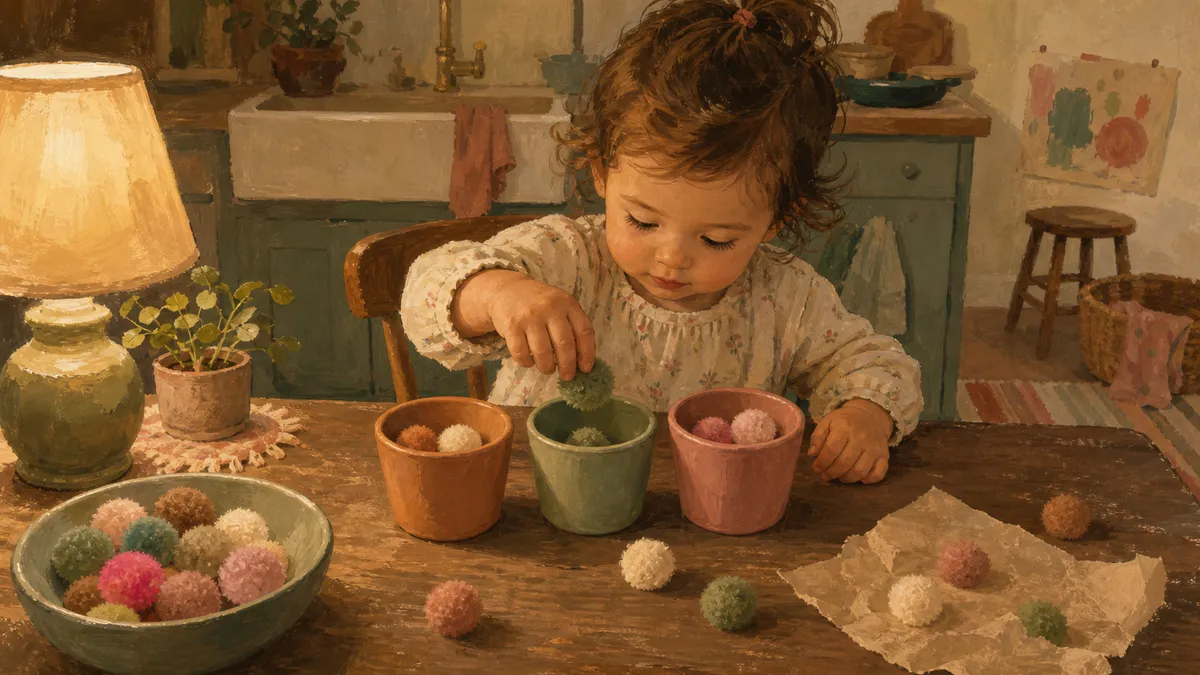
Sorting colored pom-poms into matching cups is the color matching activity that finally clicked at my house: five minutes of setup, stuff from the junk drawer, and my 2-year-old June was actually into it. Matching a color is so much easier than naming one, which is why this works when flashcards and color books go ignored.
I’m Nora Hayes, a former preschool aide and mom of two, and below I’ll walk you through the exact setup, why it landed when other approaches flopped, what to do when your kid shrugs at it, and easy ways to keep the game going.
The Moment It Finally Clicked
June was 26 months old and had zero interest in her color books. She’d flip one page, toss it, walk away. Same with the foam puzzle tiles we’d arranged in a color gradient on the floor. Color recognition was just not happening.
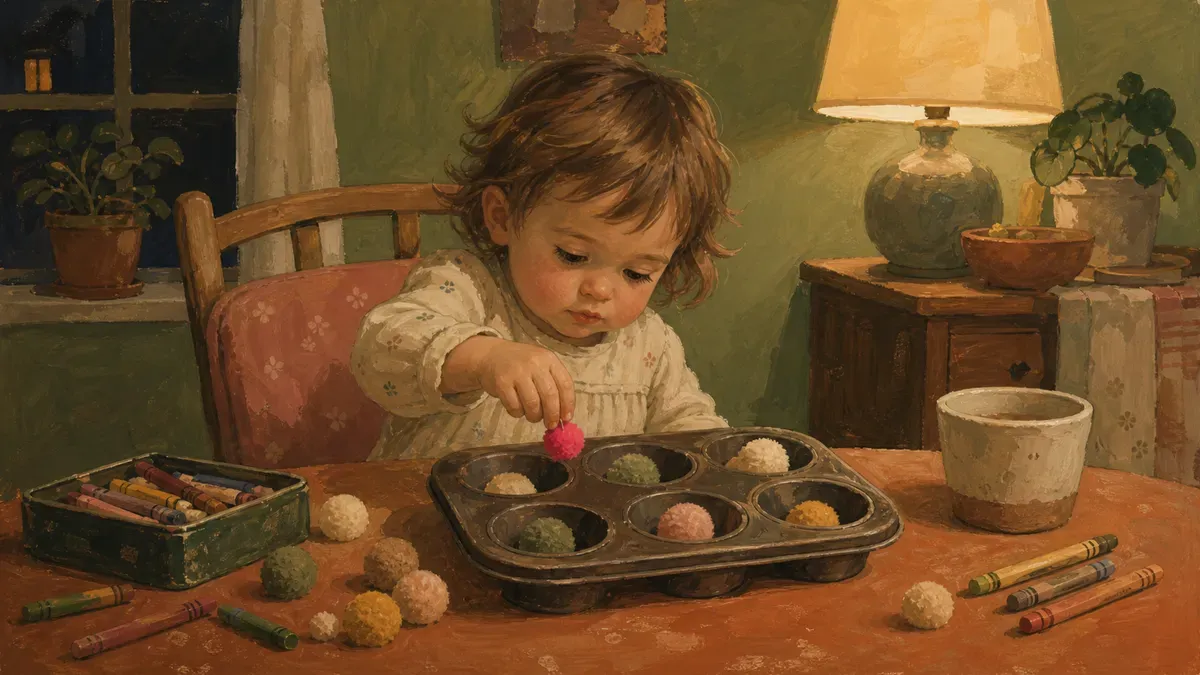
Then one afternoon, out of sheer desperation, I dumped a bag of pom-poms on the kitchen table and set four plastic cups next to them. A red pom-pom next to the red cup. Go.
She sorted for fourteen minutes straight.
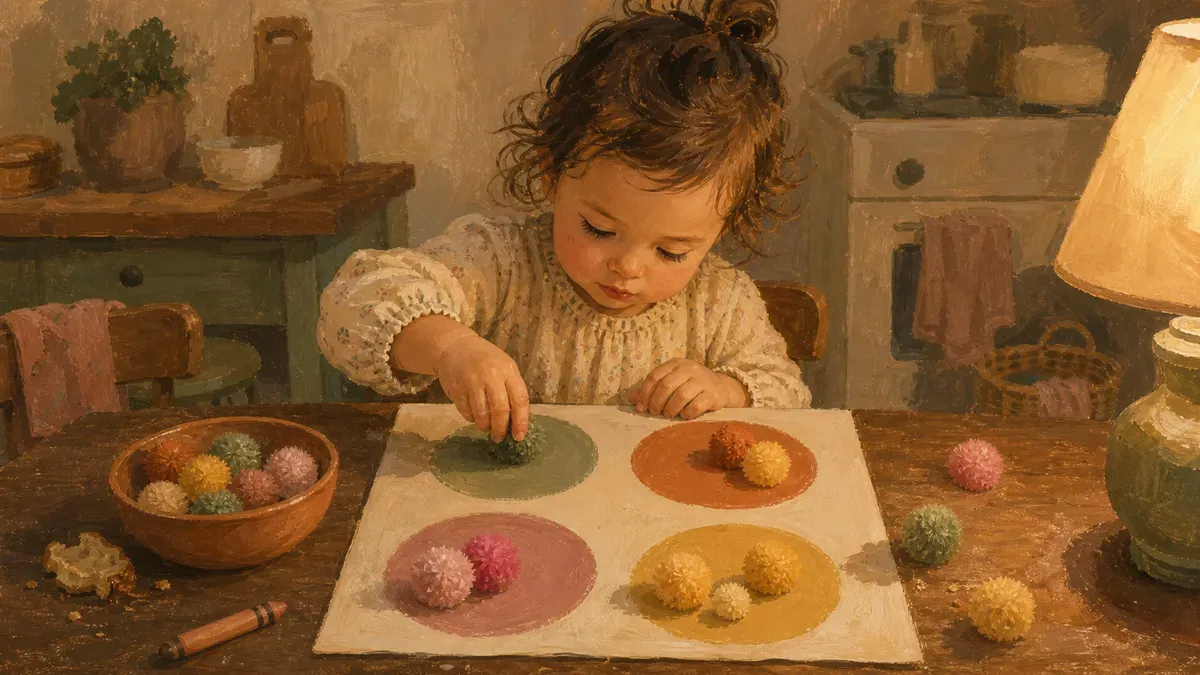
That’s when I understood the difference. Every book and puzzle had asked her to name a color before she’d built any real sense of what color even was. The pom-pom sorting asked something simpler: does this one look the same? That’s a color matching task, not a vocabulary task, and toddler development doesn’t move in a straight line from “I see red” to “I can say red.”
Screen-free early learning doesn’t need to be elaborate. Sometimes it needs to be tactile, hands-on, and low enough stakes that a toddler can feel the win.
The 5-Minute Color Matching Setup
Here’s exactly what you grab and how you run it, so you can go from zero to sorted pom-poms before the next meltdown lands.
What You Need (Nothing Fancy)
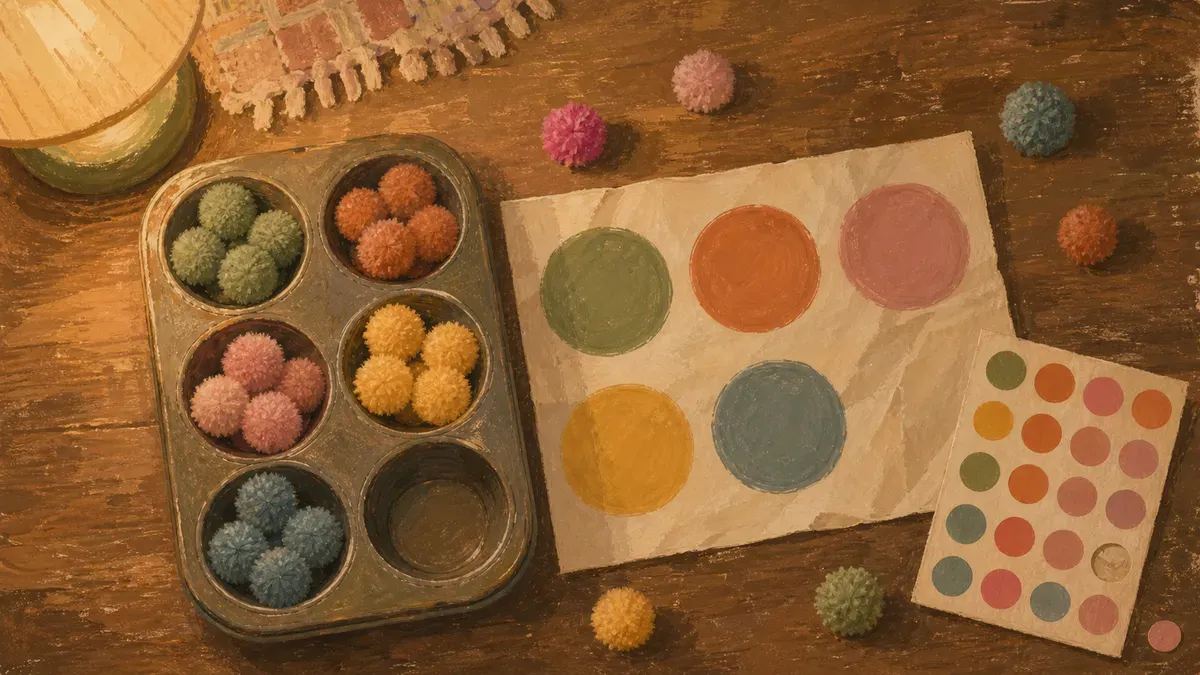
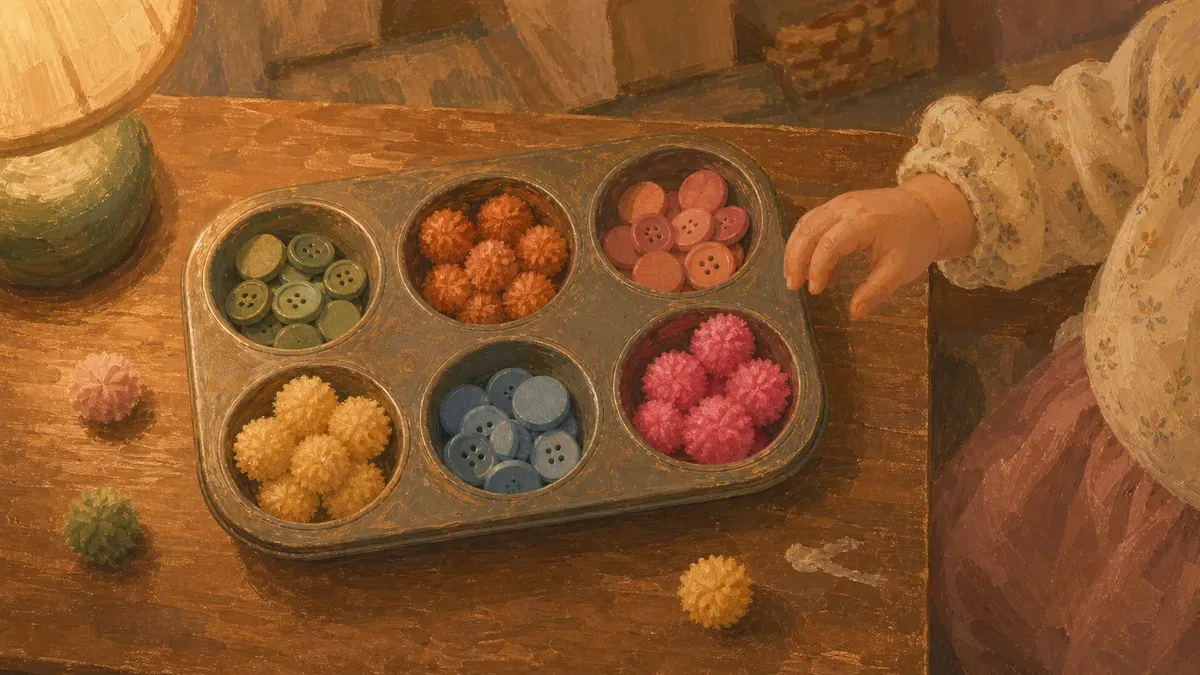
One muffin tin (the six-cup cupcake pan hiding in your cabinet) and a handful of pom-poms in matching colors. That’s the core of it. Nemours BrightStart’s at-home pom-pom color sort activity for 18-to-23-month-olds uses exactly this combination, no specialty materials required.
If you want to stretch the activity, add dot stickers and a simple printed color mat. The dot stickers give little fingers something to peel and press, which layers in fine motor skills without any extra effort from you. A simple color mat — just a grid of colored circles you can draw in two minutes on a blank sheet of paper — turns the muffin tin into a self-correcting game: each cup gets a matching circle on the mat so your toddler knows right away where each pom-pom belongs.
For more color activities for toddlers, these same materials carry across a dozen variations. The whole setup fits in a gallon zip bag.
How to Run It in Five Minutes
Set the muffin tin on the floor or a low table. Drop one pom-pom into each cup so your toddler can see the color before they start. Put the rest in a small bowl next to it.
Then step back. Point to a pom-pom, point to the matching cup, and let them go. Most kids find the picking-up-and-dropping motion satisfying enough that they keep sorting without any coaching from you.
According to Expressable’s guide on toddler attention spans, typical focus runs 3 to 6 minutes for toddlers aged 20 to 24 months. This activity is built for exactly that window. Done in four minutes and wandering off? That’s a win.
For a different take on the same concept, learning colors do a dot swaps the pom-poms for dot stickers on a printable page, a solid next step for color sorting fans who’ve worked through the basic game.
Why This Worked When Everything Else Flopped
The setup matters less than whether the activity fits where your toddler actually is developmentally. Two things made this one land: the skill it asked for, and the format it asked for it in.
Matching Before Naming
Lovevery’s child development research confirms that at 18-24 months, toddlers can match green with green long before they can accurately say “green.” They understand color words receptively (pointing to the right one when you name it) before they can produce the name on their own. Scientific American, citing peer-reviewed research, also notes that color naming carries more cognitive load than learning shape labels, which is why kids make more errors with colors than with shapes.
The muffin tin removed the naming pressure entirely. Drop the red pom-pom on the red. No wrong answer to say out loud. That’s the difference between identifying colors and naming them, and for learning colours with 2 year olds, identifying is the right place to start.
Short, Hands-On, and Screen-Free
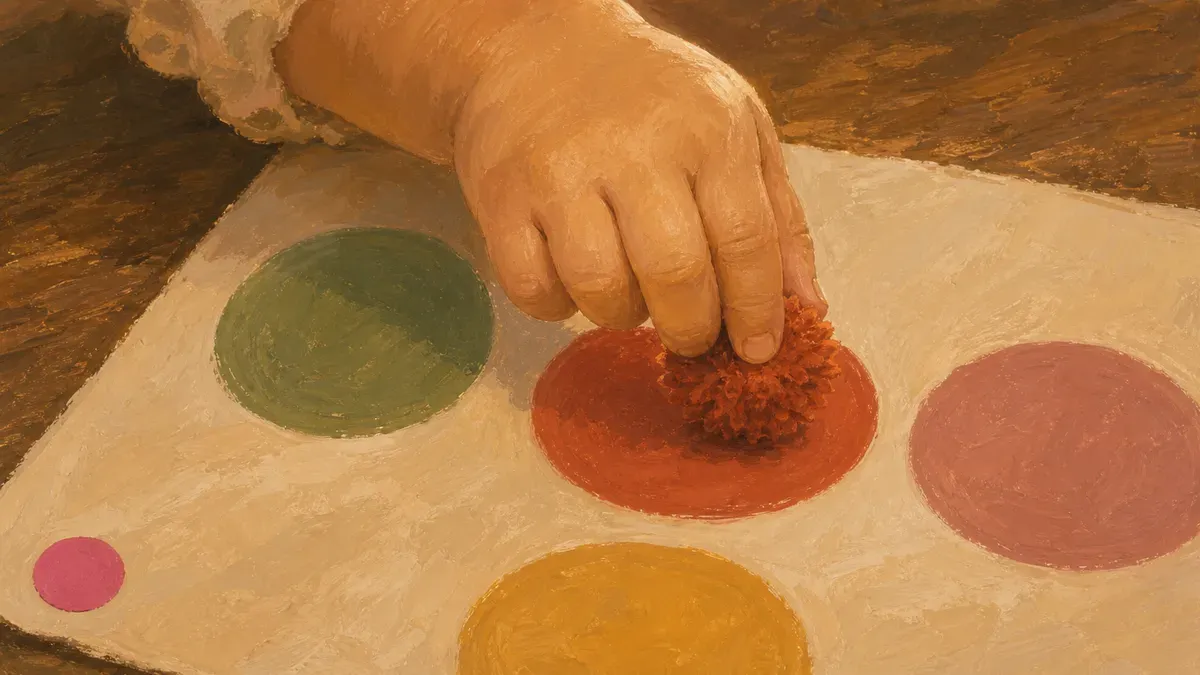
The worksheets failed for a different reason. Sitting still and pointing at a page is a lot to ask of a toddler who wants to touch, move, and do.
Two activities work well here: - Pom-pom sorting: pick up, match by color, drop in a cup. Lovevery notes the pincer grasp develops around 8-12 months and keeps strengthening through toddlerhood, so at two, kids are in the sweet spot for this kind of fine motor work.
- Dot stickers: peel, place, press. Same grip, even lower mess.
The American Academy of Pediatrics is clear that under-2s learn best from hands-on exploration with other people, not screens. Five minutes, something they can hold and sort, no device. That matches both the attention span and the AAP guidance on hands-on learning over screens. Which is exactly why engagement held here when longer, passive formats didn’t.
When Your Toddler Just Isn’t Into It
Sometimes the setup is perfect and your kid still walks away after thirty seconds. That’s not failure. That’s a two-year-old. Two small fixes cover most of the situations where color work stalls out.
Start With Just Two Colors
If the muffin tin is loaded with six colors and your toddler looks overwhelmed and wanders off, the problem isn’t them. Six is too many choices for a brain still wiring up visual discrimination between red and orange.
Start with just two. Red and blue. Yellow and green. Pick a high-contrast pair that’s easy to tell apart at a glance, because why teaching colors two at a time works better is rooted in how toddlers actually build color vocabulary: one clear win first, then expand.
Skip confusable pairs like blue and purple, or red and orange, until the first two are solid. As Psychology Today notes, primary colors are especially appealing to young children because their brightness makes them easier for young eyes to process. That natural pull toward red, yellow, and blue gives you a ready-made starting point for observation skills.
- Two cups
- Two colors of pom-poms
- One easy win
Follow Their Lead, Not the Worksheet
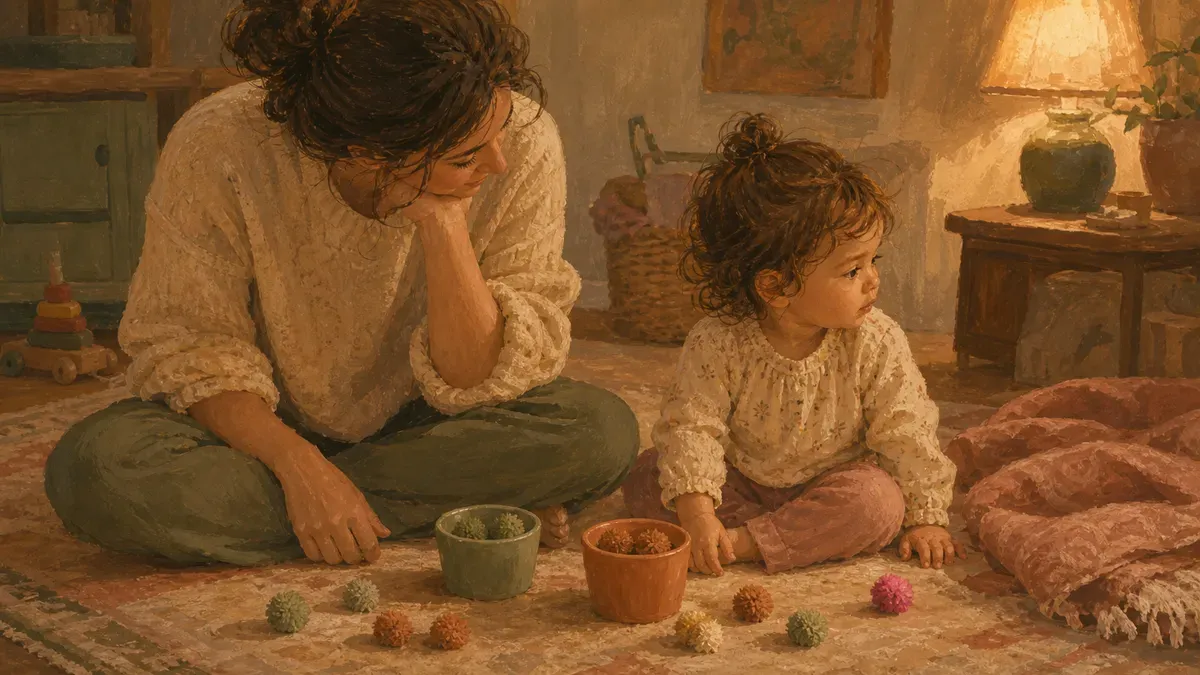
Nemours’ own guidance on this activity says: let the child spend as much time as they want just exploring the materials. Nemours BrightStart puts it plainly: maybe he’ll sort, maybe he won’t, and either way is okay.
That’s worth reading twice. Most of us set up the activity expecting a tidy ending. A toddler practicing color recognition might sort three pom-poms, then squeeze them all, then dump the cups. That’s still learning. Hands-on, age-appropriate play doesn’t require a finished product.
Wandering attention at this age is normal toddler development, not a sign early learning isn’t happening. If they’re touching, moving, and noticing the pom-poms at all, colors are registering. Put the worksheet idea down. Follow what they’re actually doing with the materials, and you’ll find more chances to name a color naturally than any forced run-through would give you.
Easy Ways to Keep the Color Game Going
Color practice doesn’t have to stay at the table. Two moves keep the skill growing without buying anything new or setting anything up.
Take It Around the House
Once matching feels comfortable, this find-me-something-red learn color game is the easiest next step. No materials, no setup, no cleanup. You say “find me something red” and your toddler walks the room looking. That’s it.
It works because the house is already full of early learning material you’ve never had to organize. The red couch pillow, the orange juice carton, the blue bowl on the counter. Color vocabulary grows when kids connect words to real objects they already know, not just pom-poms in a bin. You’re also pulling in observation skills and a little movement for free.
Keep it low-pressure. One or two colors per round. If they bring you the wrong thing, name it (“that one’s orange, let’s find red together”) and keep going. Three minutes of this is a solid hands-on activity.
Build Up to Sorting and Crafts
When color matching feels easy, there are a few natural next steps that take almost no prep:
- Color sorting bins (small containers, mixed objects, bigger version of the muffin tin idea)
- Sticker color sorts: dot stickers on paper, grouped by color. Fine motor practice built right in.
- Process art (one color, one brush, done when they say they’re done)
For simple color crafts preschool kids love, keep the focus on process over product. One color at a time still applies. The skill builds gradually, and any version of noticing and sorting color counts as progress.
You’ll find more ideas organized by skill and season in our full hub of color learning activities.
Found this useful? Save it for the next rough afternoon.
Questions parents ask me about this
What is a quick color activity that works for 2 year olds?
Pour a handful of colored pom-poms into a bowl and set out a muffin tin with dot stickers on each cup, one color per cup. Show your toddler how to drop one pom-pom into the right spot, then step back. Most two-year-olds can sort two or three colors with no instruction beyond that first demo. Setup takes under five minutes and you probably already have everything you need.
At what age do toddlers usually start recognizing colors?
Most toddlers begin matching colors somewhere between 18 and 24 months. Actually naming colors reliably comes later, usually closer to 3. The two skills develop on different timelines, so a child who can sort a red pom-pom into a red cup but calls it "blue" is right on track.
Should I teach my 2-year-old to name colors or just match them first?
Matching first, naming second. Sorting comes easier at this age, so start there and let the words follow through everyday conversation.
How long should a color activity last for a toddler?
For most toddlers under two and a half, three to six minutes is a realistic window. If your child finishes in four minutes and walks away, that counts as a complete activity. Attention spans are genuinely short at this age, and forcing a longer session usually just creates frustration. A short, successful round beats a long, miserable one every time.
What materials do I need for a color matching activity?
A muffin tin and a bag of colored pom-poms is all you need to get started. Dot stickers on the cups help label each color spot without any words required. A printed color mat works if you have one, but it is not necessary. The muffin tin alone does the job. Start with two colors, then add more once your toddler gets comfortable.
Is it normal for a 2-year-old to mix up colors?
Yes, completely normal. Color recognition develops gradually, and even kids who can sort correctly often assign the wrong name. Red and orange are especially easy to confuse, as are blue and purple. If your toddler mixes them up, just name the color casually without making a correction feel like a test. The repetition over weeks is what builds the connection.
Which colors should I teach my toddler first?
Start with the primary colors: red, yellow, and blue. They are visually distinct and the least likely to be confused with each other. Once those feel solid, add green, then orange and purple. Pairs like red and orange or blue and purple look similar enough to slow down a toddler who is just learning, so there is no rush to introduce them together early.
Written by
Nora Hayes
Mom of two and a former preschool aide. I share the screen-free sensory play and calm-down ideas I test at my own kitchen table, plus what the moms in my little meet-up swear by. A parent passing on what works, not a doctor or a therapist.
More about NoraKeep going
All Learning Colors-
 Learning Colors
Colours for Childrens: The Order to Teach Them
Teaching colours in a random order slows toddlers down. Get the exact order to teach colours for childrens, plus activities that stick. Start today.
-
 Learning Colors
Color Activities for Preschool That Actually Stick
Most color lessons fail because they teach too many at once. These color activities for preschool use one color at a time so it sticks. Start today.
-
 Learning Colors
Color Activities for Kindergarten Kids Who Hate Sitting
Got a kid who won't sit still? These 10 color activities for kindergarten get them moving, learning, and laughing. Try them now.
-
 Learning Colors
Color Activities: 20 No-Buy Ideas From Your Home
Color activities you can set up in 2 minutes with household stuff. 20 no-prep sorting, matching, and mixing ideas kids love. Try one today.