Play Doh for 2 Year Olds: Setups That Hold Focus

Some links here are affiliate links. If you buy through one, I may earn a small commission at no extra cost to you. As an Amazon Associate I earn from qualifying purchases. I only point to things I'd actually use with my own two.
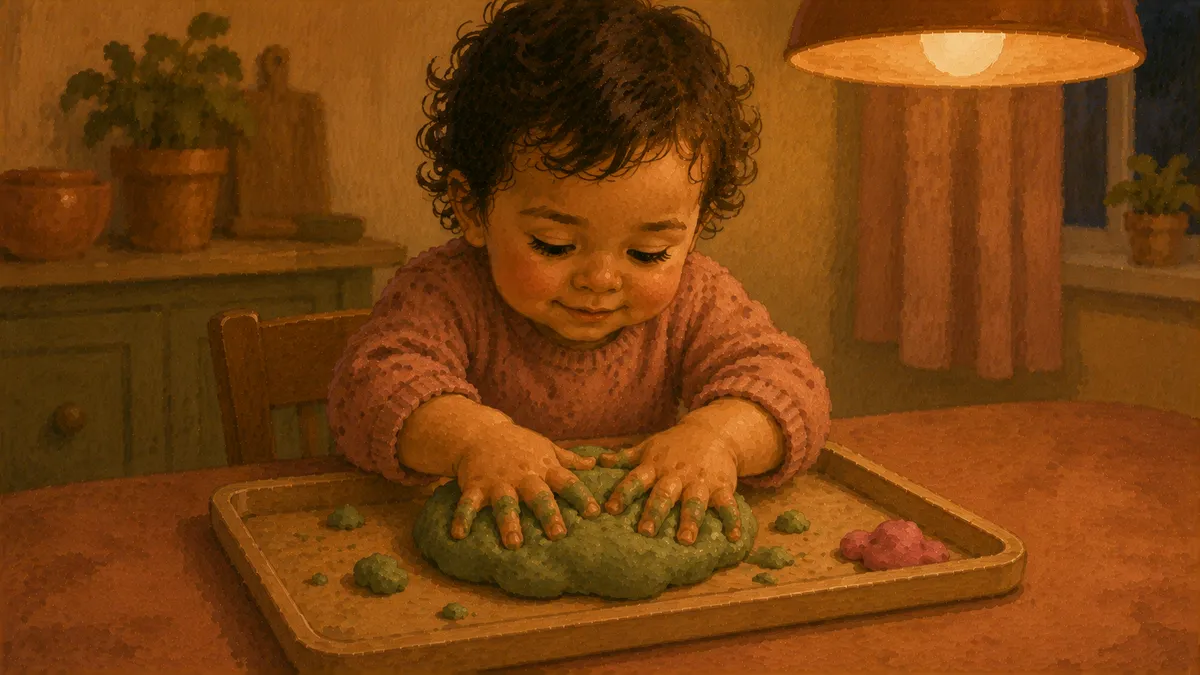
Yes, Play-Doh works for a 2-year-old, as long as you set it up small and stay close while they figure out it’s not a snack. I’m Nora Hayes, a former preschool aide who’s run hundreds of these sessions with my own two kids, and the trick was never the dough, it was how I handed it over.
Here you’ll find the safety call, a no-fuss first setup, the activities that actually hold a toddler’s attention, what they’re quietly learning, and whether the store tub or a homemade batch wins at this age.
Three moves make the difference.
- Start with one bare ball, no tools
- Add exactly two props once they settle
- Pack it away at 10 minutes, before the wall hits
Is Play Doh Safe for a 2-Year-Old?
With you sitting right there, yes. Play Doh is fine for most two-year-olds, and the real question isn’t the dough, it’s whether your kid can resist eating it long enough to squish it.
The Mouthing Reality at This Age
At two, everything still goes in the mouth, so plan for it instead of fighting it. A nibble won’t hurt much. The Illinois Poison Center classifies Play-Doh as ‘minimally toxic’, and per their guidance on toddler choking hazards, a small amount usually causes no symptoms, though a big mouthful can mean vomiting or constipation.
It isn’t a choking hazard the way a grape is, but it isn’t non-toxic candy either. Poison Control notes Play-Doh contains wheat, so watch closely if your kid reacts to gluten.
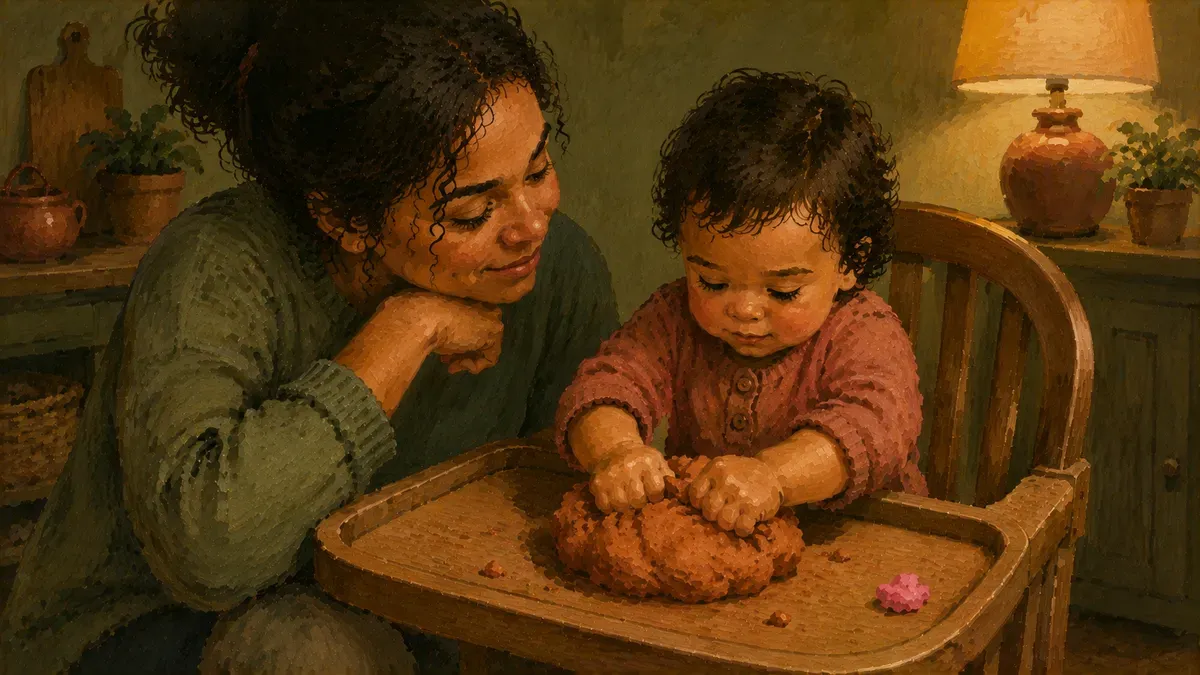
The simplest fix for a determined mouther is a taste-safe homemade batch. June at two would happily gum a fistful, so I kept a flour-and-salt dough on the counter and stayed parked beside the high chair tray the whole time. Eat-it-and-it’s-fine beats a tub of the real stuff you’re constantly prying out of their teeth.
When to Hold Off a Few Months
Some two-year-olds just aren’t ready, and that’s not a failure. Mouthing usually eases between two and three as kids hit new milestones and find other ways to explore, so if yours only ever eats the dough and never pokes or rolls it, put it away and try again in a month or two.
Watch for two signals: nonstop eating, and zero interest in shaping. Both mean the timing’s off, not the kid. Switch to a taste-safe recipe for now, or read up on the right play doh age to start so you’re introducing it with supervision that actually has a chance of sticking. A few months is nothing.
How to Set Up Their First Playdough Session
The setup is the whole game at this age. Hand it over wrong and you get two minutes of chaos, so here’s the order I run with June: one ball first, two props once she’s settled, and a hard stop before the wheels come off.
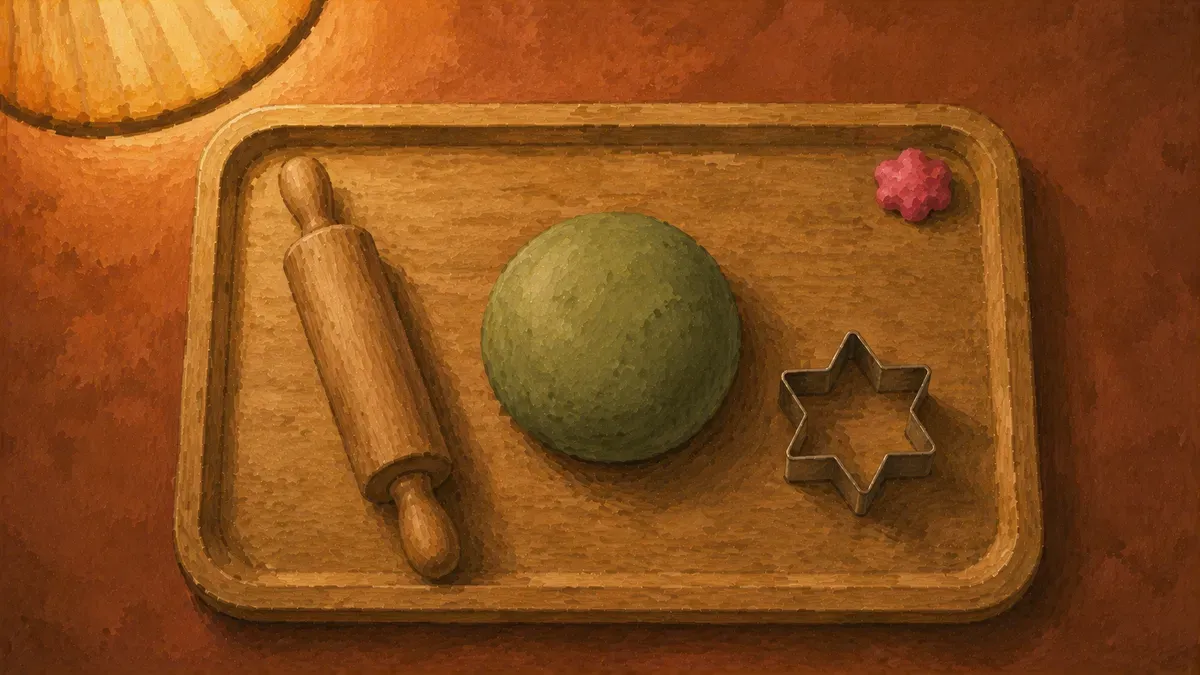
- Drop one ball in front of them, nothing else attached, and walk away a step.
- When the squishing slows, slide over two props and watch what they do with them.
- Call time at 10 minutes, before anyone hits the wall.
Step 1: Start With One Ball, No Tools
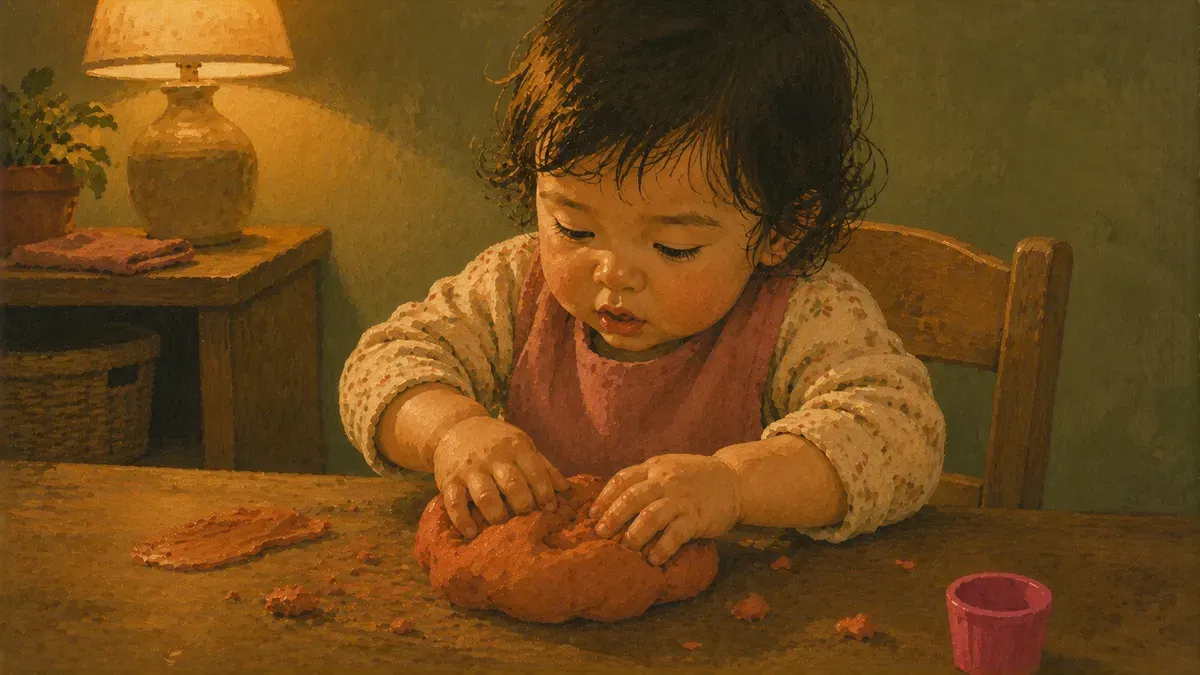
Give them a single fist-size ball and nothing else. No roller, no cutters, no stamps, just dough and ten bare fingers.
This is the part people skip, and it’s the part that matters. A 2-year-old doesn’t need props to be busy. They need to find out what this strange squishy thing does, and they do that by poking, pressing, and pulling it apart.
The first time I introduced it to June at her high chair, I put down a roller too, and she ignored the dough completely to bang the roller on the tray. Lesson learned. One ball, bare hands, totally open-ended. Let the squishing be the whole activity.
Step 2: Add Two Simple Props
Once they’ve settled into the dough and the novelty of squishing wears off, hand over two props. Not the whole tub of tools. Two.
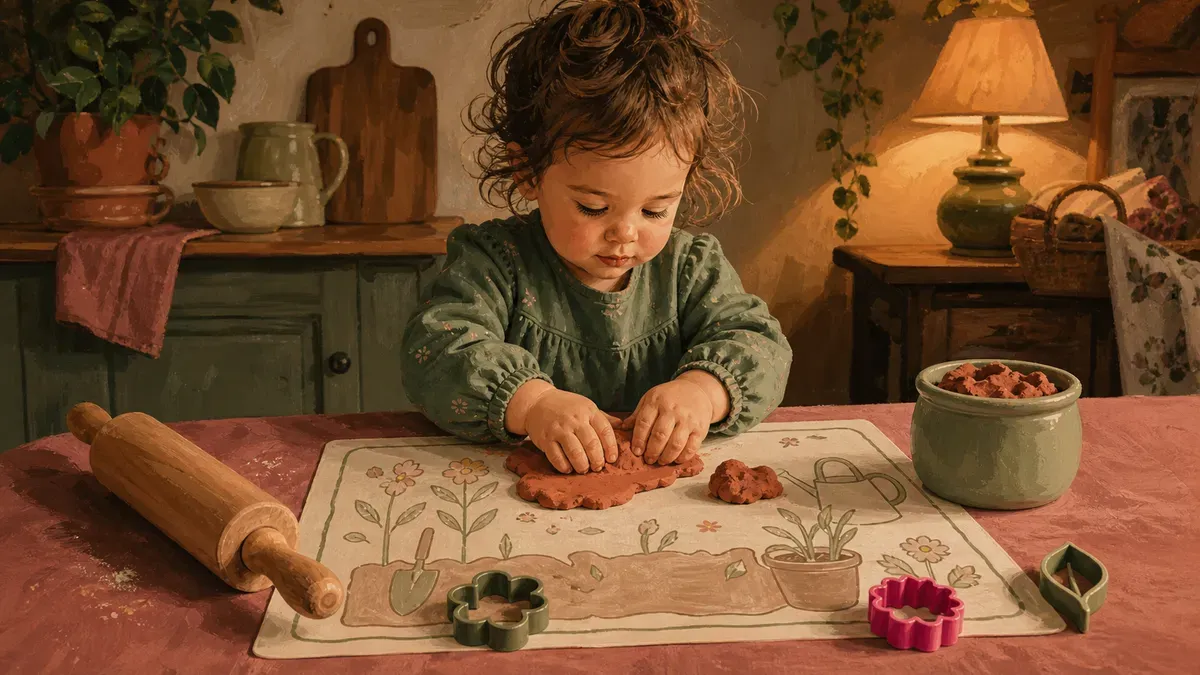
I go with a small rolling pin and one cookie cutter, usually a star or a heart because the shape reads clearly when it’s pressed in. Two is the sweet spot. One thing gets boring fast, but dump five tools in front of a toddler and they’ll dump all five on the floor and cry about it.
Keep it open-ended even here. Don’t demo “make a star.” Just show the rolling motion once, then let them figure out their own use for it. Half the time June rolls the pin across the empty tray, and that’s fine.
Step 3: Set a Short Time Cap
Keep these first sessions to 10 to 15 minutes and pack it away while they still want more. That’s the trick almost nobody does.
A 2-year-old’s attention runs about 4 to 6 minutes per task, per the California Childcare Health Program, so a 10-minute window with your supervision is already a stretched, good run. Ending on a high note is what builds the habit. Pack up before the meltdown, and they come back to the dough wanting more next time.
That’s the groundwork that turns into real independent stretches later. By the time you’re setting up play doh for 3 year olds, the milestones stack up: they’ll sit longer, share the tray, and play without you parked beside them the whole time.
The shopping list stays short too. A two-year-old needs their hands first, then two or three plain tools, and honestly nothing else. Skip the giant tool kits. Here’s what earns a spot on the tray:
| Tool | What it does | Parents’ rating | When to add it |
|---|---|---|---|
| Toddler rolling pin | Fat handles sized for a fist, easy to push and roll | 4.6★, 4,500+ reviews | First prop, once bare-hand squishing gets old |
| Toddler-safe cookie cutter set | One clear shape to press in, a star or dinosaur reads best | 4.8★, 3,000+ reviews | Right after the roller, just one shape to start |
| Silicone muffin tin | Food-grade cups for sorting dough balls by color, wipes clean | 4.8★, 600+ reviews | Once color-sorting clicks, closer to two-and-a-half |
The rolling pin and the cutter set are both Amazon’s Choice picks, which is the closest thing to a shortcut when you just want the ones that work.
Simple Activity Ideas That Hold Their Attention
The trick at two isn’t a clever project, it’s matching the setup to what their hands can actually do yet. These three go from the bare minimum to a tray that runs itself, plus the fix for the kid who treats every ball like a snack.
Squish-and-Poke Starters
Before a toddler can roll a snake or shape a ball, they can squash. So start there. That’s the whole activity, and it holds them longer than anything fancier.
- Flatten a patty, poke it full of fingerprints
- Bury small objects and let them excavate
- Pinch off pieces and stick them back on
None of this needs a plan. The squishing IS the point, and these open-ended starters work precisely because there’s no right answer to get wrong.
Setups That Buy You Ten Quiet Minutes
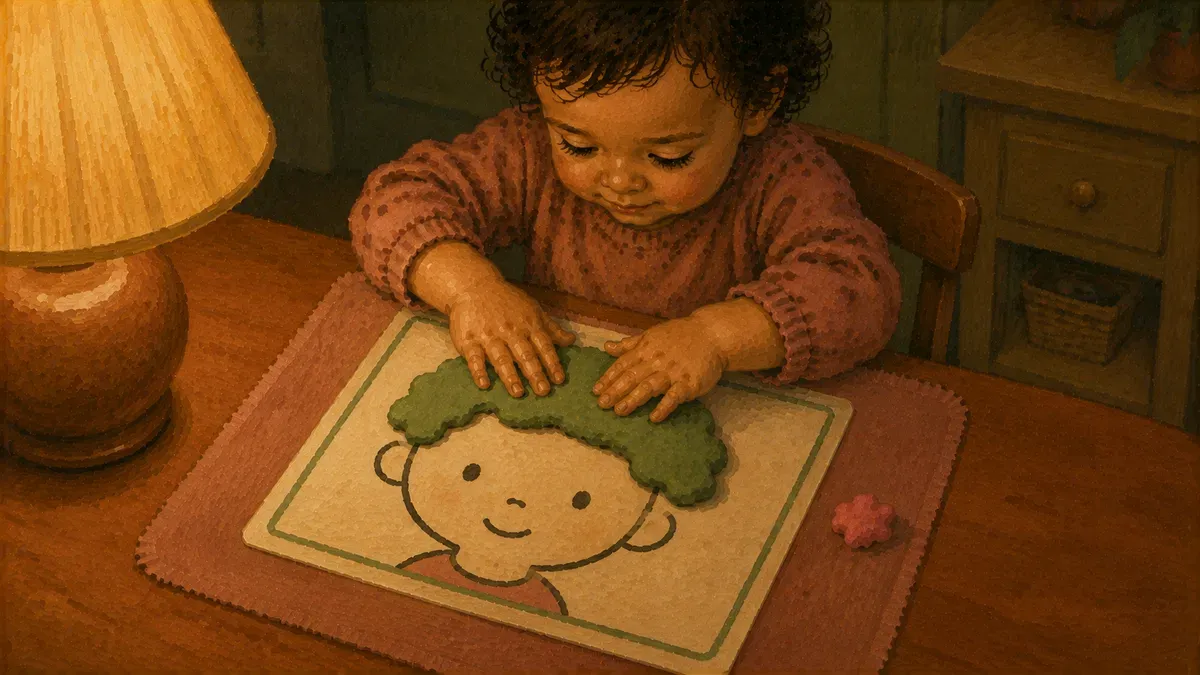
The self-running setups are the ones worth knowing, because they let you step back and start the dishes. A printed mat is the easiest. Print a face with a blank head, hand over the dough, and they fill in hair and a mouth on their own. I keep a stack of laminated playdough mats activities by the table for exactly these afternoons. If running the laminator feels like one more job, a 3-pack of reusable silicone playdough mats does the same thing straight out of the pack, wipes clean after, and has 800-plus parents backing it.
A muffin tin is the other one I reach for. Six wells, six little balls to sort by color, and a two-year-old will park there longer than you’d think.
These scale up beautifully too. The same mat that’s pure squishing now becomes counting and letter-forming for a preschooler, which is why themed preschool playdough sets and mats made for preschoolers tend to grow with the kid rather than get outgrown. If you want more, here’s a list of play dough things to make that hold a toddler’s focus.
When Your Toddler Only Eats the Dough
Some days the dough goes straight in the mouth and stays there. The fix isn’t more supervision, it’s giving the hands a job. Pair the dough with one clear task, hiding beads or filling a muffin cup, so eating has to compete with doing.
The second half of the fix is a taste-safe batch, so a stray nibble is just a nibble. With a sensory job to chase and nothing scary if it lands on the tongue, the eating usually fades on its own. If it doesn’t, pack it away and try again next week.
What Playdough Builds at Two
Once the eating settles, the quiet work starts. Two things grow at the high chair tray: stronger little hands, and a brain getting a steady drip of calming input.
Hand Strength and Fine Motor Skills
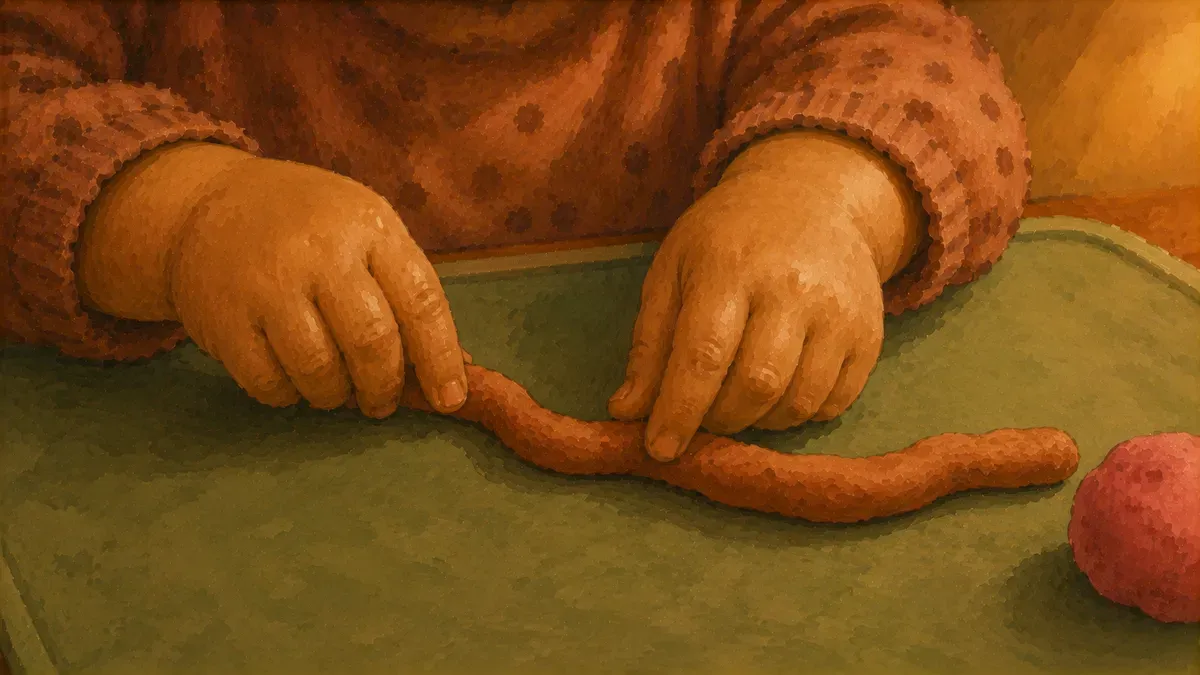
Every pinch, roll, and squeeze is a tiny workout. When June rolled a flour-and-salt ball into a wobbly snake, she was firing up the exact thumb-and-finger grip she’d later need to hold a crayon.
NAEYC credits playdough with building the pincer grasp, hand strength, finger isolation, and hand-eye coordination kids draw on for years. ABC Pediatric Therapy adds that pinching dough into a snake with index finger and thumb works that grip directly, and pressing pre-writing shapes into flat dough helps the motor pattern stick.
That’s the long game. If you want the nitty-gritty, here’s how playing with playdough fine motor skills develop over the toddler years.
Sensory Input and Early Learning
The other half of the win happens in the brain. That cool, squishy texture is steady sensory input, the kind that settles a wound-up two-year-old without a single instruction from you.
Cleveland Clinic occupational therapist Suzanne Messer says sensory play helps build the nerve connections that let kids tackle harder, more complex tasks down the road. So the squishing isn’t just busywork.
And it’s a low-pressure place to sneak in early learning. I never quizzed June. I just narrated: “red ball, squish it flat,” “roll the blue one.” No flashcards, no right answers. The colors and the words land while her hands stay busy, and that’s the only kind of cognitive lesson a two-year-old actually keeps.
Store-Bought or Homemade for This Age?
Both work at two, and the right pick comes down to one thing: how much your kid still puts in their mouth. Here is how I decide between the tub and the stovetop.
Why Homemade Wins for Mouthers
If your two-year-old still treats every new thing as a snack, homemade is the safer default. Hasbro’s own product safety information says Play-Doh is non-toxic but not meant to be eaten, with the salt being the concern in larger amounts, so for a determined mouther I cook a batch instead.
I keep an easy playdough recipe for preschool age taped inside my pantry door for exactly these stretches.
Mouther at two? Cook the dough. A taste-safe recipe turns a nibble into a shrug.
When Store-Bought Makes Sense
Once June stopped grazing on her dough around two and a half, store-bought Play-Doh earned its place back. With close supervision and a kid past the everything-goes-in-the-mouth phase, the classic ten-pack of little cans is honestly easier, and with 68,000-plus reviews behind it, it’s the tub most parents already keep in a cupboard.
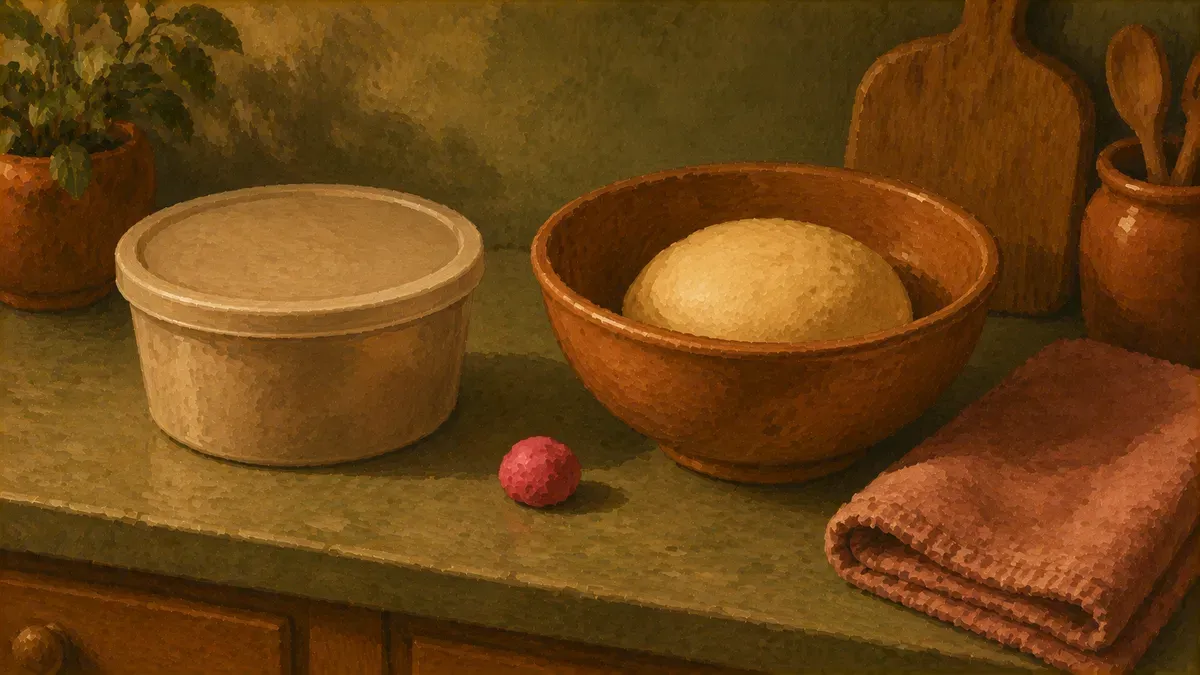
Use the tub when you are watching closely and the mouthing has eased; cook a batch when it hasn’t.
Homemade:
- Taste-safe: flour, salt, water, oil means a nibble is a non-event
- Pennies per batch
- Ten minutes start to finish
Store-bought:
- No stovetop involved
- Vivid colors straight from the tub
- Sealed lid keeps it good for months
- Saves your energy for the days you have it
Either way, pair it with a setup from our full library of playdough setups and you are set.
Found this useful? Save it for the next rough afternoon.
Questions parents ask me about this
Is Play-Doh safe and appropriate for 2-year-olds?
Yes, with close supervision and a small setup. The main variable is mouthing: if your two-year-old still puts everything in their mouth, use a taste-safe homemade batch instead of store-bought. Once mouthing has eased, the tub is fine for short, watched sessions.
How long should a playdough session last for a 2-year-old?
Most two-year-olds stay engaged for about four to six minutes before interest drops. Aim for ten to fifteen minutes total, and put the dough away while they still want more. Short sessions that end well build longer attention over time.
What playdough tools are worth buying for a 2-year-old?
Start with a rolling pin and one cookie cutter. That is genuinely all they need at this age. A muffin tin is useful once color sorting makes sense to them. Save the big tool sets for preschool; a two-year-old's hands are the real tool.
How do I clean up playdough and keep the mess manageable?
Let any stray bits dry completely before sweeping or vacuuming. A silicone mat under the work area catches most crumbles. If a piece gets pressed into carpet, let it dry hard and then flake it off. Damp scrubbing grinds it in deeper.
How should I store playdough so it lasts between sessions?
Airtight is everything. An airtight container or the original tub works better than a bag with air inside. A small pinch of water kneaded in will revive dough that has started to stiffen. Homemade batches usually last two to three weeks at room temperature when sealed.
Are there allergy-safe playdough options for toddlers?
Store-bought Play-Doh contains wheat, so it is not safe for kids with a gluten sensitivity or wheat allergy. A homemade batch lets you swap the flour for a gluten-free alternative or oat flour. There are also commercially made gluten-free doughs, though checking the label for your child's specific allergy is always the first step.
Is playdough good for 3 and 4 year olds too?
Absolutely, and it gets better with age. By three, kids can intentionally roll snakes and cut shapes; by four, they start making recognizable figures and using tools with more purpose. The same dough that a two-year-old squishes becomes a preschooler's full creative session.
Written by
Nora Hayes
Mom of two and a former preschool aide. I share the screen-free sensory play and calm-down ideas I test at my own kitchen table, plus what the moms in my little meet-up swear by. A parent passing on what works, not a doctor or a therapist.
More about NoraKeep going
All Playdough-
 Playdough
What Is a Play Dough? Beginner's Guide to Mats
What is play dough, and how do mats turn squishing into real learning? Plain-English answers plus age-by-age starter ideas.
-
 Playdough
Playing With Playdough Fine Motor Skills That Last
Playing with playdough fine motor skills do more than entertain - they build the exact hand strength kids need to hold a pencil. See how, and try it.
-
 Playdough
Play Doh Age: Signs Your Toddler Is Really Ready
Most parents wait too long. Play doh age starts at 2, but one readiness sign matters more than the number. Learn when and how to start today.
-
 Playdough
Play Dough Creations: 10 Fresh Mat Themes to Try
Bored of the same three setups? These 10 play dough creations and mat themes pull kids back to the table. Pick one and prep tonight.