What Is a Play Dough? A Beginner's Mat Guide

Some links here are affiliate links. If you buy through one, I may earn a small commission at no extra cost to you. As an Amazon Associate I earn from qualifying purchases. I only point to things I'd actually use with my own two.
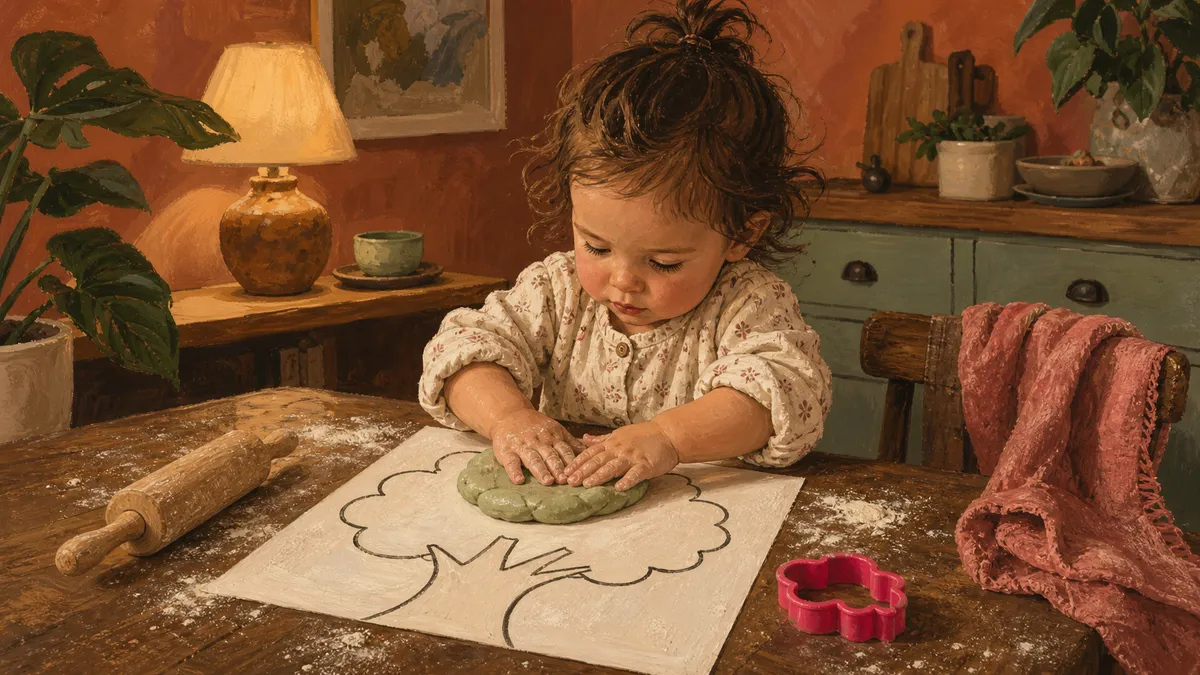
Playdough mats are what this guide is about, and the idea is simple: a printed picture kids fill in with dough, like a coloring page you build instead of color.
I’m Nora Hayes, former preschool aide and mom of two, including a sensory-seeker who showed me what actually holds a small kid’s attention, and the mat is what turns ten minutes of squishing into counting, letters, and steady little fingers.
This guide walks you through what’s inside the dough, how mats sneak in learning, what to pick by your child’s age, easy first activities to try, and keeping the whole thing safe and fresh.
What Play Dough Actually Is
Before we get into mats and activities, it helps to know what you’re actually working with.
The Simple Definition
Think of it as a soft, pliable lump that little hands press flat, roll into snakes, and squish into whatever shape they feel like. That’s the whole thing. No special skill required, no right answer, no wrong shape.
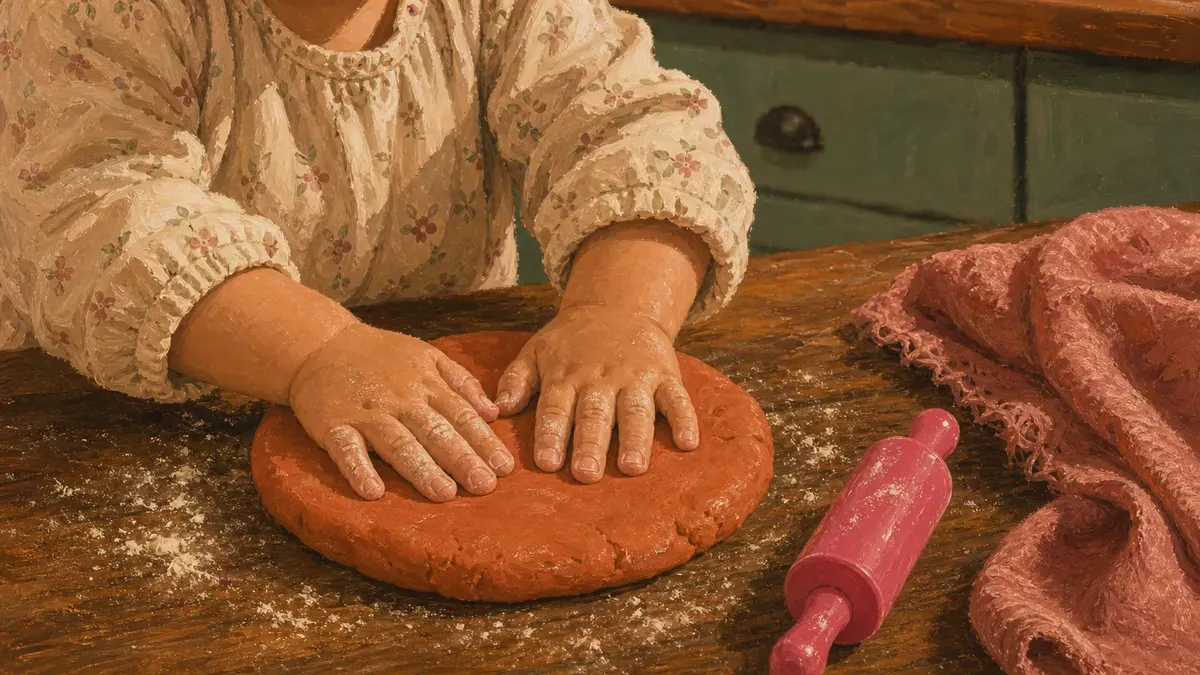
The brand most people picture is Play-Doh, which Hasbro has sold since the 1950s. It comes in those little tubs, it has a distinctive smell, and it’s the soft dough most of us grew up with. But store-bought isn’t your only option.
Homemade batches with flour, salt, water, and a little oil work just as well, and they’re the version most parents reach for when they want to control the ingredients, skip the artificial dye, or mix up something taste-safe for a toddler who mouths everything.
Both work on playdough mats. Both do the same job: give little hands something to push against.
Playdough or Play-Doh? Sorting Out the Spelling
If you’ve typed it three different ways in one search session, you’re not alone.
Play-Doh is Hasbro’s trademarked brand name, capital P, capital D, hyphen included. Trademark records show Hasbro first used the name in May 1955, and it’s been their registered trademark since. When you’re talking about that specific product, that’s the correct spelling.
Playdough and play dough are the generic terms for any modeling compound that isn’t Hasbro’s. One word or two, they mean the same thing, and both spellings are widely used. Hasbro’s own consumer page describes their product as primarily a mixture of water, salt, and flour, which is almost identical to a basic homemade recipe.
For search purposes, all three versions point to the same idea. So however you’ve been spelling it, you’ve been looking in the right place.
What’s Inside the Dough
Play dough is barely more than pantry staples, which is the first nice surprise. Here’s what each one does, and how a quick batch at home stacks up against the tub from the store.
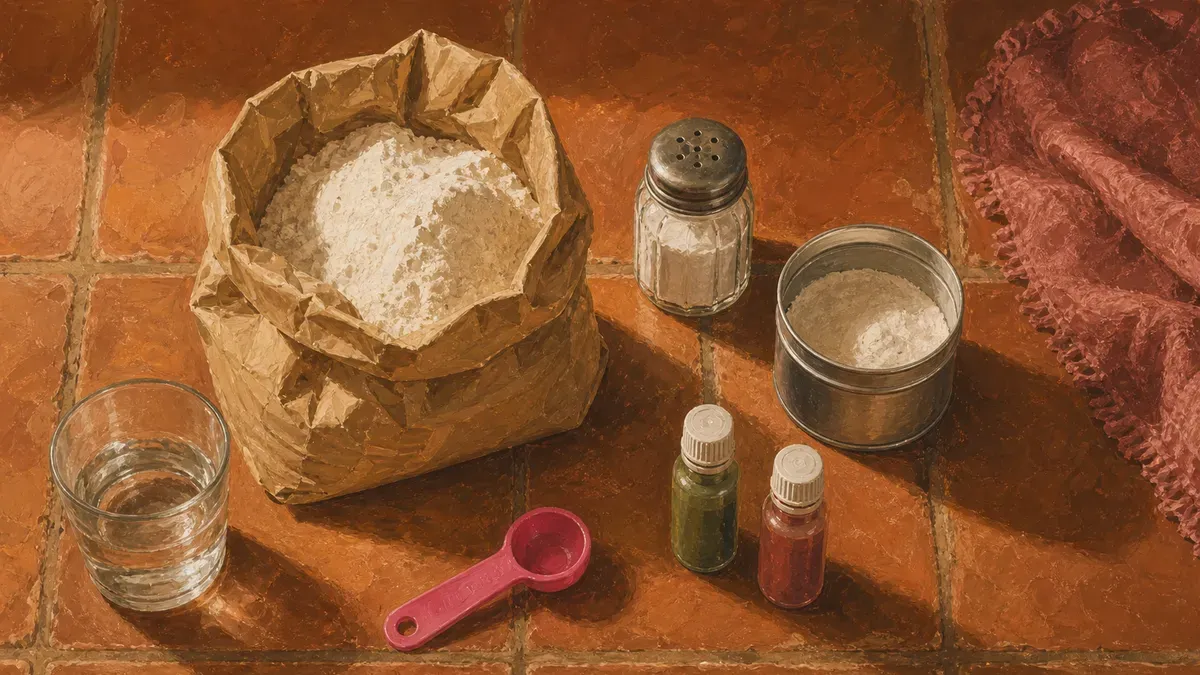
The Core Ingredients and Why They Matter
Four or five things, all already in your kitchen. Each one earns its spot.
- Flour is the body. The starch and gluten give the dough something to hold onto, so it stretches instead of crumbling.
- Salt is the quiet workhorse. According to a Yale Teachers Institute chemistry unit on the role of cream of tartar in dough, salt prevents or reduces the growth of mold, which is why a homemade ball lasts weeks and not days.
- Water brings it together and hydrates the flour proteins, the step that triggers the gluten matrix and lets the whole thing turn squishable.
- Cream of tartar is the secret to that soft, stretchy feel. The same Yale unit notes it keeps the salt from crystalizing, so the dough stays smooth and elastic instead of grainy.
- Food coloring does nothing for texture. It’s purely the fun part, and you control how bright or how muted it gets.
Skip the cream of tartar and your dough still works, it just feels a little stiffer and grainier. Everything else is non-negotiable.
Homemade Versus the Store-Bought Tub
So do you make it or buy it? Both are fine, and I’ve leaned on each depending on the week.
The store-bought tub wins on zero effort. You twist the lid and you’re playing in ten seconds, no stove, no measuring. That’s the whole appeal on a fried-brain day. When I buy instead of make, it’s a 36-can pack of Play-Doh, an Amazon’s Choice that more than 28,000 reviewers keep restocking, and one box lasts us a rainbow’s worth of mat sessions.
Homemade wins on three things.
- Cheap: a batch costs pennies from pantry staples and makes far more dough than a dollar can of Play-Doh.
- Controllable: you know exactly what’s in it, which matters when your kid still mouths everything.
- Softer: fresh homemade dough, especially with cream of tartar worked in, is noticeably more pliable the day you make it.
The tradeoff is fifteen minutes at the stove and a pot to wash. If that sounds worth it, here’s our playdough recipe for preschool to make your own, plus the right airtight container to keep it soft after. Start with whichever one gets you to playtime tonight.
How Playdough Mats Turn Squishing Into Learning
Once the dough is soft and ready, a mat is what turns aimless squishing into something with a tiny bit of direction. Here’s what a mat actually is, the skills hiding inside the play, and why I laminate every single one.
What a Playdough Mat Is
A playdough mat is a printed sheet your kid fills in or builds over with dough. Picture a coloring page, except instead of crayons they’re pressing balls of dough onto five apples on a tree, or rolling a snake to trace the letter S. The print gives the play a starting point so a bored kid isn’t staring at a blank lump.
That’s the whole trick. The mat does the thinking when you’ve got none left.
The National Association for the Education of Young Children calls these “jumping off points for playdough play,” a way to sneak in a little learning while hands stay busy.
- The dough underneath stays open-ended: the mat is a starting point, not a script.
- Some kids ignore the prompt entirely, and June has built nests, snakes, and a dog she insists is a dog right on top of the page.
A mat invites small world play without demanding it, and that’s exactly why it works across a wide range of moods.
The Skills Hiding in the Play
Here’s the part nobody at the table is thinking about: all that pressing and rolling is quietly building real hand strength.
When a kid pinches a tiny ball of dough or rolls a long snake, they’re working the little muscles in their fingers and palms. Michigan State University Extension puts it plainly: rolling, poking, and squishing “builds strength in the little muscles in their fingers and hands,” the same muscles a kid later uses to cut with scissors.
The mat sneaks the work in: filling ten dots means ten pinches, and that’s ten reps of fine motor skills dressed up as fun.
The focus piece matters just as much. A mat gives a clear, finishable goal, fill the tree, cover the number, so a wiggly kid stays with one thing a few minutes longer than they would with a plain ball of dough. It’s sensory play and concentration practice wearing the same costume. If you want the longer version of how this works, I dug into how playing with playdough fine motor skills add up over time, but the short answer is: the squishing is the lesson.
Why Print and Laminate Them
Laminate your mats. I mean it.
A bare paper mat survives about four minutes before damp dough turns it to mush. Slide that same sheet into a laminator pouch or a cheap sheet protector and it wipes clean with one swipe, ready for the next round. If mats turn into a habit at your house, a home laminator earns its keep fast: mine came with a hundred pouches in the box and hasn’t jammed once, which squares with 1,600-plus reviews at 4.6 stars. No machine? Sheet protectors get you most of the way for pocket change. Early childhood teachers do exactly this so one printed sheet gets reused across session after session, sometimes for years.
That’s what makes mats so cheap next to most single-use crafts. You print once, protect it, and one apple-tree page outlasts a whole stack of craft-kit projects that hit the recycling by dinner. It also means you can build a real library of themes for the price of paper and ink, swapping seasons and letters and numbers without buying a thing.
Want ready-made themes to print tonight? Start with these playdough mats activities and build out from there.
Choosing Mats and Dough by Your Child’s Age
The right mat depends less on the picture and more on the hands holding the dough. Here’s how I match the setup to where a kid actually is, from the everything-goes-in-the-mouth toddler to the preschooler proudly building a wobbly letter B.
Toddlers and the Two-Year-Old Stage
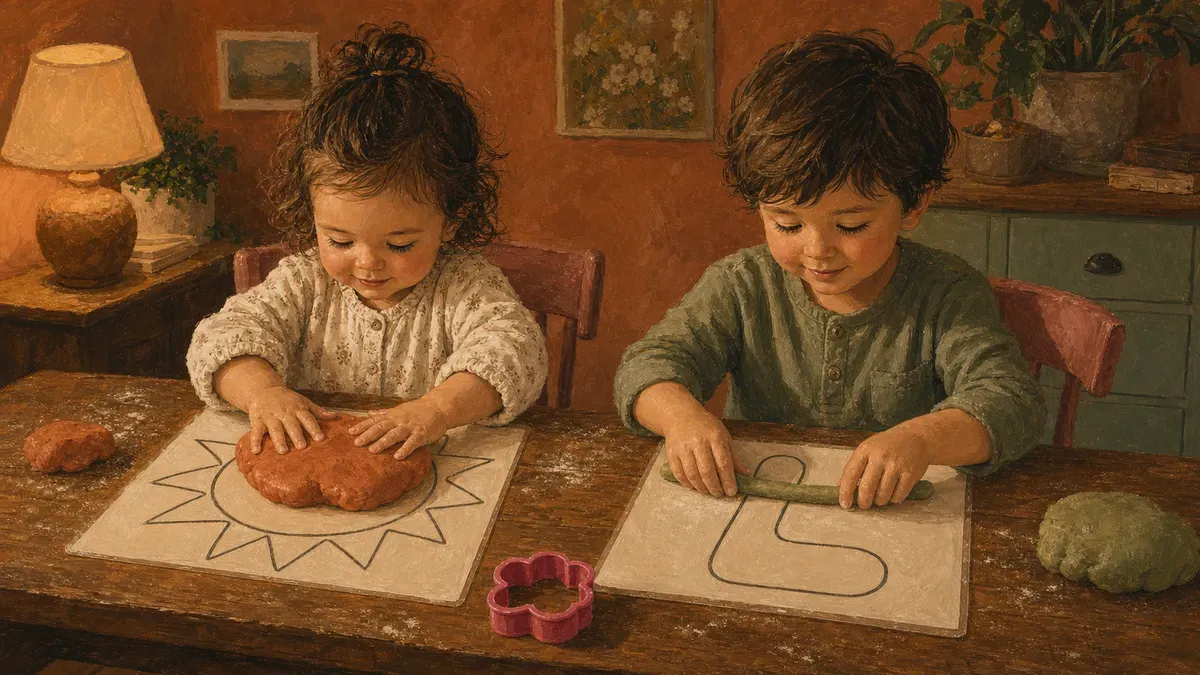
Under two, the dough is mostly a snack they haven’t eaten yet. So toddler play is about big, simple, supervised squishing, not a finished picture. Skip the busy alphabet sheets and reach for high-contrast mats with one bold shape: a fat caterpillar to fill, a sun to press dots onto, a single circle to flatten. Less to track, more to grab.
Keep an eye on the mouthing, because it’s coming. Poison Control notes that Play-Doh is labeled safe for children two and older and isn’t recommended under two, mostly because of the mouthing and choking risk.
Under two, taste-safe dough and a hand on the table, every time.
For the kids right at that two-year line, the rules shift a little, and I’ve pulled the specifics into a separate guide on play doh for 2 year olds so this stays beginner-simple. At this stage the win isn’t the finished mat. It’s ten minutes of poking, a little sensory play, and a parent who gets to drink coffee while it’s still hot.
Preschoolers and Beyond
Three, four, five, and suddenly the picture matters to them. By preschool, hand strength has caught up, the pincer grasp is steadier, and a mat with a job to do holds their attention instead of getting wadded into a ball.
Alphabet, number, and open-ended theme mats all earn their keep at this stage.
The letters and counting layer in early academics without it feeling like a worksheet. The open-ended play matters just as much: hand a preschooler a blank pizza mat and they’ll invent toppings you’d never think of. All that rolling, pinching, and squishing is quietly building the same fine motor skills they’ll lean on for holding a pencil. The mat gives the goal. Their hands do the work.
Easy First Activities and Mat Themes to Try
The goal is set and the hands are willing, so now you just need a sheet your kid actually wants to fill. Here are the themes that hook a beginner fast, plus a few cheap tools that stretch the play.
Themes That Hook Beginners
Start with whatever your kid is already obsessed with. That’s the whole trick. A dinosaur-mad three-year-old will press dough along a stegosaurus’s spine for ten solid minutes; a worksheet would last ten seconds.
A few starter themes that pull their weight:
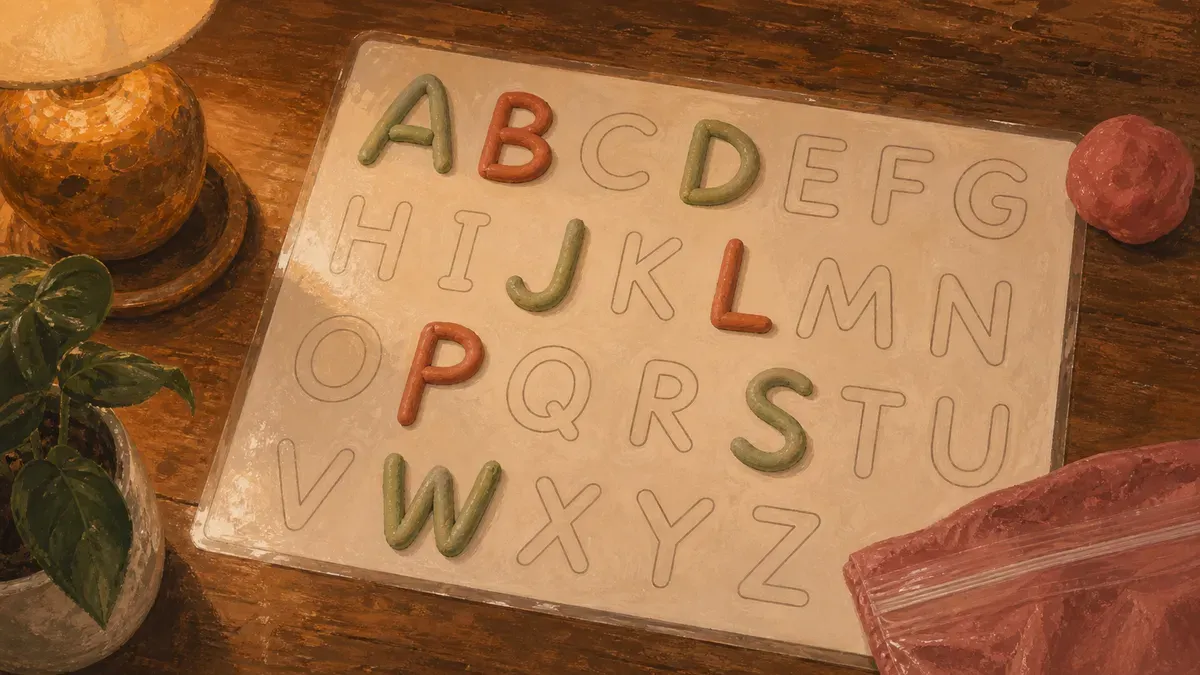
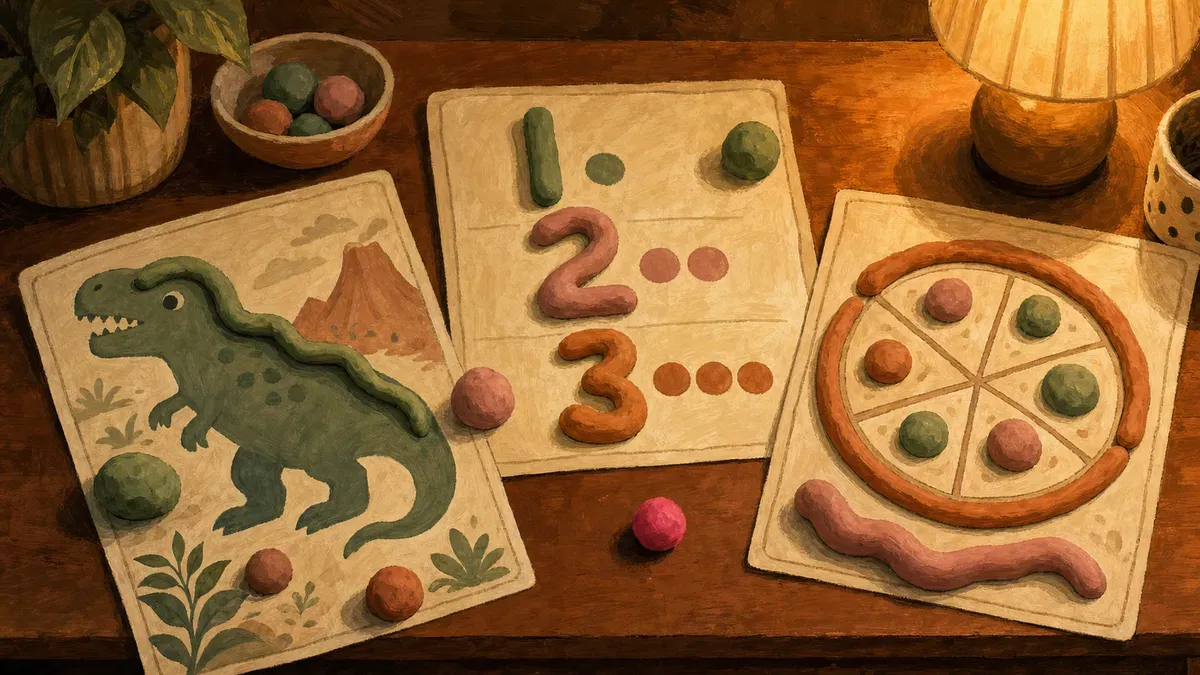
- Alphabet and number mats build letter and shape recognition while little fingers roll snakes to trace a wobbly A or stack three dough balls on the 3.
- Dinosaur, animal, and bug mats invite open-ended play, where the mat is a jumping-off point and your kid adds a swamp, a roar, a whole backstory.
- Food mats (pizza, ice cream cones, a lunch plate) slide easily into small world play, dishing up pretend slices to whoever’s nearby.
Don’t overthink the first set. Pick two themes, watch which one holds them, and lean that way. For more, raid our full library of mat ideas.
A Few Tools Worth Adding
Once the dough is out, a couple of cheap extras keep a kid going past the first squish. Nothing fancy, mostly stuff already rattling around your kitchen drawer. No junk drawer to raid? A 20-piece playdough tool set bundles the cutters and rolling pins in one box, an Amazon’s Choice pick with 2,600-plus reviews behind it. Cheaper than replacing the good scissors after they vanish into a dough blob.
The ones that earn their spot:
- Plastic cookie cutters for stamping shapes onto a mat or punching out free-form ones.
- A small rolling pin (or a clean jar) so they can flatten dough before filling in a picture.
- Loose parts like buttons, googly eyes, and dried pasta to top off a finished mat and spark a little more pretend.
Want ideas beyond the mat itself? We rounded up a pile of play dough things to make that hold a wiggly toddler.
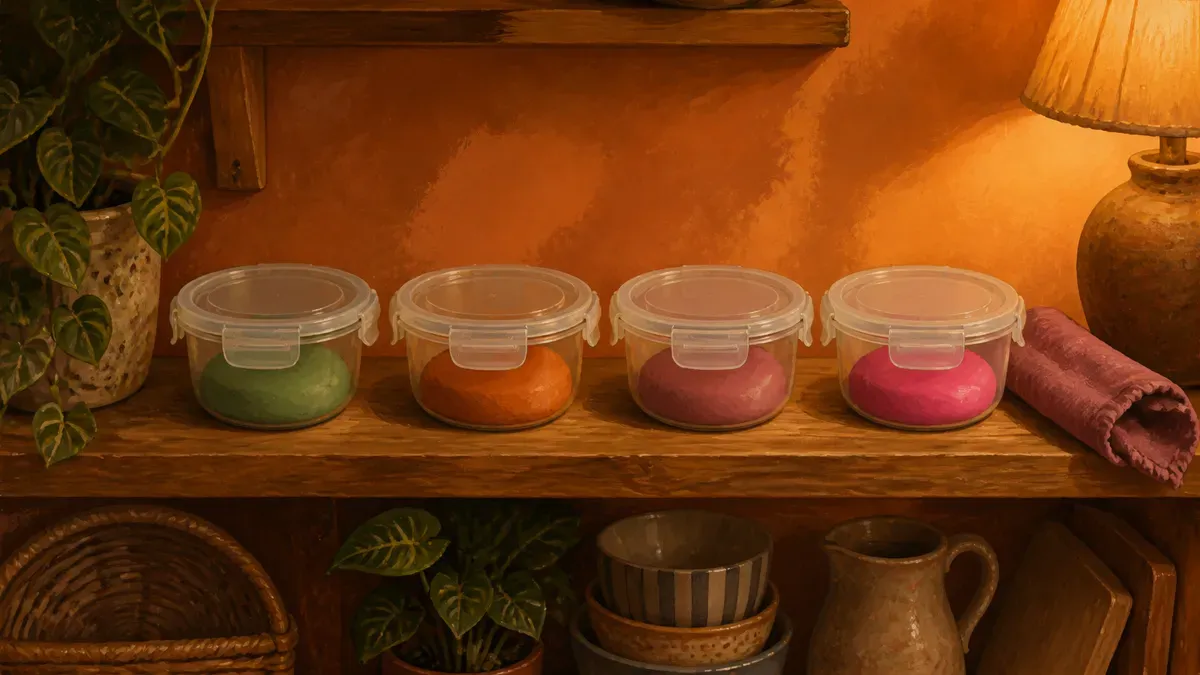
When you’re done, scrape the dough off and tuck it into an airtight container so it stays soft for next time. Dried-out crumbs are the fastest way to kill the magic. Keep it fresh, and one little set earns its keep for weeks.
Keeping Play Dough Safe, Clean, and Fresh
Most play dough problems aren’t about the activity, they’re about the setup around it. Handle three things well and you’ll use the same batch for weeks without a fight.
Safety. Store-bought dough is labeled safe for kids two and up, mainly because of the salt content:
- A small taste isn’t dangerous, just terrible-tasting, so most kids stop on their own.
- For anyone younger, the salt levels and the choking hazard are real concerns.
- Check out the right play doh age if you have a little under two; they need a taste-safe recipe instead.
Cleanup. Put a silicone mat or a sheet of parchment under the play area. Let any stray bits dry before you wipe. Dried dough lifts off surfaces far easier than fresh dough. A damp cloth handles whatever stays behind. The non-stick two-pack I keep under our table is dishwasher-safe and backed by 32,000-plus reviews at 4.7 stars, which is why our tabletop survives us.
Freshness. The airtight container is everything. Homemade dough already has salt acting as a natural preservative, so it holds two to three weeks at room temperature and longer in the fridge. Store-bought lasts even longer sealed. The BPA-free tub I settled on seals tight, holds 2.5 quarts, and rinses clean in the dishwasher, with 3,000-plus reviews at 4.8 stars vouching that it keeps dough soft.
A few habits that keep it usable:
- Squeeze out the air before closing the lid
- Keep it away from heat (a sunny windowsill is where dough goes to die)
- Knead in a tiny pinch of flour if it turns sticky
- Toss it when it smells off or grows anything fuzzy
One batch, stored right, outlasts the novelty of half the toys in the playroom.
Found this useful? Save it for the next rough afternoon.
Questions parents ask me about this
What is play dough and how do playdough mats work?
Play dough is a soft, moldable material that holds its shape just enough for small hands to roll, poke, and press into things. A playdough mat is a printed sheet you lay flat so your child can build directly on top of it, rolling worms onto letter outlines, pressing balls onto counting dots, or filling in a dinosaur's spikes. The mat gives the play a starting point without turning it into a worksheet.
How do you spell playdough?
Playdough, play dough, and play-doh all point to the same thing, so use whichever spelling you like. Play-Doh with a capital P and a hyphen is Hasbro's trademarked brand name. Playdough and play dough are the generic spellings for any version, homemade or store-bought.
Is play dough safe if my toddler eats it?
Store-bought dough made for kids is not toxic, but it is salty and not meant to be eaten. Under two, assume everything goes in the mouth, so use taste-safe homemade dough (flour, water, salt, and a little oil) if your child is still mouthing everything. For kids two and up, regular store-bought dough is considered safe, though it tastes unpleasant enough that most children stop after one try.
What age can a child start playing with playdough mats?
Most kids are ready for supervised playdough play starting around two. Before that, the main concern is mouthing and the salt content in commercial dough, so stick to taste-safe recipes and skip the mats until they have a little more hand control. Two-year-olds do best with simple, high-contrast mats that have one big shape per section. By three and four, alphabet and number mats work well as hand strength builds.
How do I laminate a playdough mat at home?
A home laminator with standard pouches works fine and costs less than a dinner out. Slide the printed mat into a pouch, run it through, and you are done. No laminator? A self-adhesive laminating sheet from any craft store works almost as well. The laminated mat wipes clean with a damp cloth and lasts for years of repeat play.
How long does homemade play dough last?
Salt is what keeps homemade dough from growing mold, which is why every scratch recipe calls for more of it than you'd expect.
Why does my play dough turn sticky?
Sticky dough usually means it picked up humidity or got a little warm. Knead a small pinch of flour into it and it should firm back up within a minute. If it is damp from hands, let it sit uncovered for a few minutes first, then add the flour. Storing dough away from heat and sunlight helps it stay the right consistency between sessions.
Written by
Nora Hayes
Mom of two and a former preschool aide. I share the screen-free sensory play and calm-down ideas I test at my own kitchen table, plus what the moms in my little meet-up swear by. A parent passing on what works, not a doctor or a therapist.
More about NoraKeep going
All Playdough-
 Playdough
Play Doh for 2 Year Olds: Setups That Run Themselves
Most 2-year-olds eat play doh before they shape it. Here's how to set up play doh for 2 year olds so they play. Start in 3 steps.
-
 Playdough
Playing With Playdough Fine Motor Skills That Last
Playing with playdough fine motor skills do more than entertain - they build the exact hand strength kids need to hold a pencil. See how, and try it.
-
 Playdough
Play Doh Age: Signs Your Toddler Is Really Ready
Most parents wait too long. Play doh age starts at 2, but one readiness sign matters more than the number. Learn when and how to start today.
-
 Playdough
Play Dough Creations: 10 Fresh Mat Themes to Try
Bored of the same three setups? These 10 play dough creations and mat themes pull kids back to the table. Pick one and prep tonight.