Infant Busy Book: A Safe First Quiet Book

Some links here are affiliate links. If you buy through one, I may earn a small commission at no extra cost to you. As an Amazon Associate I earn from qualifying purchases. I only point to things I'd actually use with my own two.
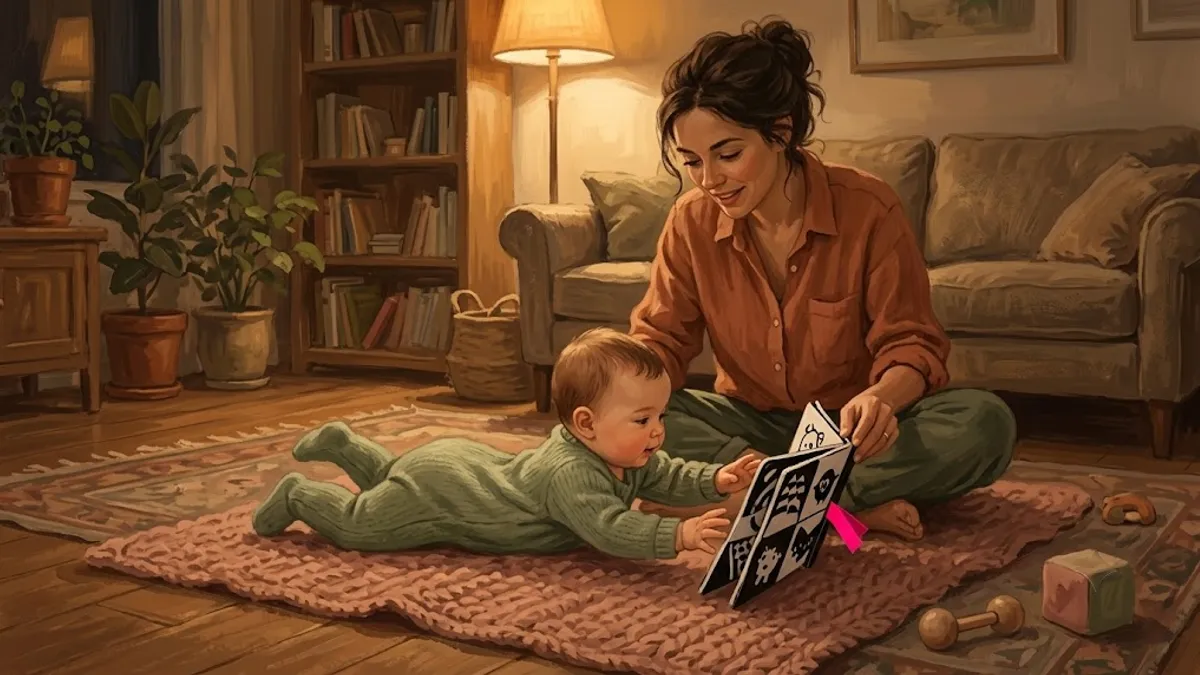
A genuine infant busy book is built for a baby who still mouths everything and can barely see past your face, so it skips the small buttons and loose felt pieces that make a toddler version a choking hazard and leans on high-contrast pages a newborn can actually focus on.
That gap matters because at birth a baby focuses best on things about 1 foot away, the same distance as your face during a feed, which is exactly why a hand-me-down toddler book does almost nothing for a two-month-old.
I’m Nora Hayes, a former preschool aide, and I’ve spent years running sensory play with my own kids and our living-room group, so below I’ll walk you through what makes a baby activity book safe, the features worth looking for in a first pick, and the one book I’d hand a new parent.
What an Infant Busy Book Is (and How It Differs From a Toddler One)
A busy book made for a baby isn’t a stripped-down version of the felt activity boards you’ve seen on Pinterest. It’s a different animal, and the difference comes down to two things: what it’s made of, and what it shows.
Quiet Book vs Busy Book for Babies
People use “quiet book” and “baby busy book” to mean the same thing, and for an infant, honestly, they do. The naming gets blurry, so don’t stress over it. If you want the full breakdown of where the labels split, I dig into quiet books busy books elsewhere.
What actually matters is the build.
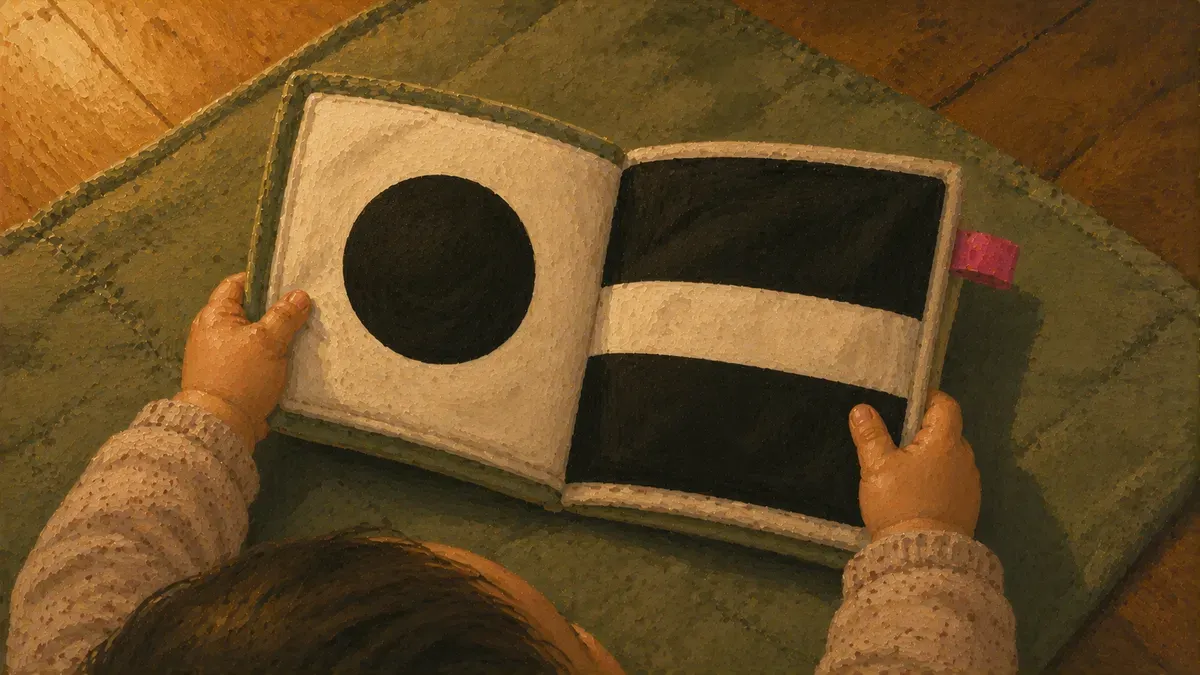
When June was a few weeks old I handed her one of Eli’s old felt boards by mistake, and she stared right past it; the soft cloth book with bold pages was the only one she’d actually track.
A real baby book is soft cloth, sewn from one piece. No buttons to pull off, no Velcro shapes that come loose, nothing that ends up in a tiny mouth.
The difference between a baby book and a toddler one comes down to the parts:
- Baby books: soft cloth pages, nothing removable, safe to chew and grab
- Toddler busy boards: snaps, zippers, small interactive pieces to move
Why High-Contrast Pages Matter for Newborn Vision
Newborns don’t see color the way we do. In the first months their world is fuzzy, and they lock onto sharp black, white, and red far more than soft pastels. Research on newborn high-contrast vision shows acuity sits around 20/400 in those early weeks, so bold shapes register where gentle gradients just don’t.
That’s why a good infant book leads with high-contrast pages, not a riot of colorful illustrations. The fun pastel spreads can wait.
It’s also what makes the early pages real sensory play, not just decoration. A baby staring hard at a black-and-white target is doing visual work, and that focused looking feeds early cognitive development. Lead with contrast, save the rainbow for later. Their eyes will catch up.
How to Choose a Safe First Busy Book for Your Baby
Contrast pages get a newborn looking, but a book that ends up in the mouth has to survive that too. Three things sort the safe picks from the rest: what could come loose, what it’s made of, and the little features that earn their keep.
Safety Checks for Babies Under 6 Months
Under six months, everything is a chew toy, so the first rule is simple: nothing should be able to break off. Run your fingers over every page before it goes near your baby and check the basics.
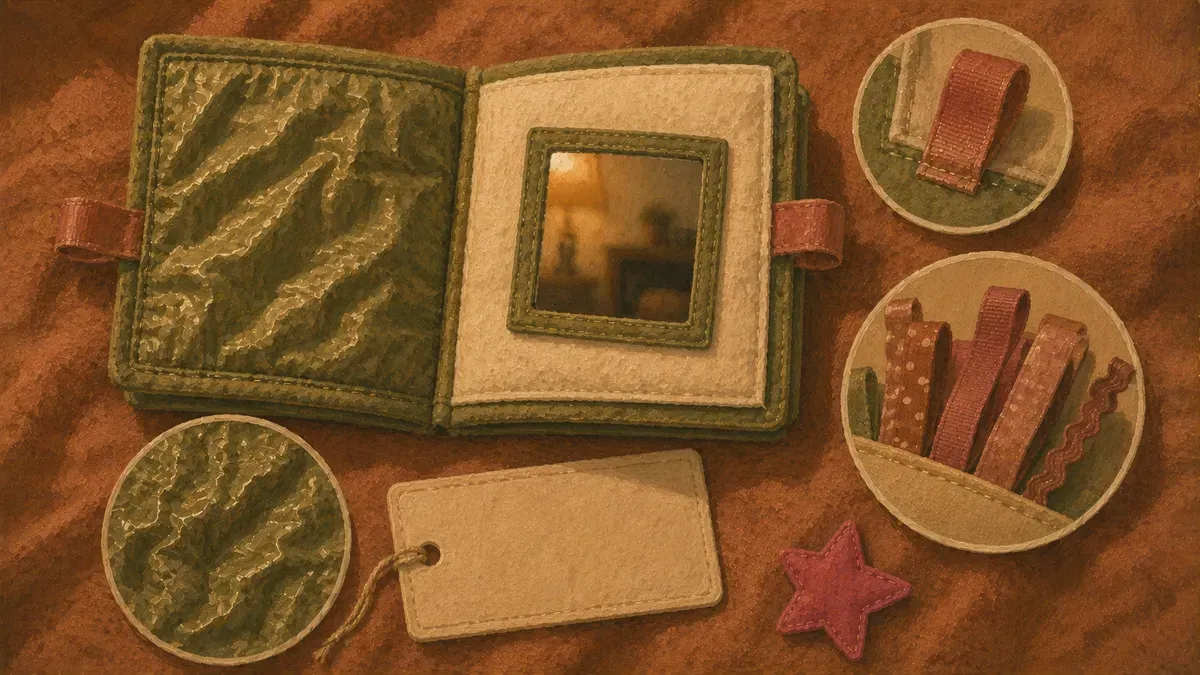
- No detachable small parts. Buttons, beads, jingly bits sewn on as decoration are a no.
- Every felt shape, tag, or ribbon stitched down on all sides, not just glued.
- Non-toxic dyes, because it’s going in the mouth, not on a shelf.
- Reinforced stitching at the spine and edges where little hands pull hardest.
Compliance Gate puts a number on loose-piece risk: the CPSC test cylinder is 2.25 inches long and 1.25 inches wide, roughly a child’s throat, and if a piece fits inside it, it’s a banned small part for under-3s. The age-appropriate version for an infant strips that down to soft fabrics and tactile elements with zero loose bits. These books should pass a real tug before you hand one over, and the U.S. toy safety standard is the rule behind that check.
Materials, Washability, and Eco-Friendly Options
Whatever it’s made of, assume it gets drooled on by lunchtime. So pick for the wash, not the photo.
The first book that lasted at our house was a machine-washable fabric one, soft cotton, the kind you throw in a cold cycle and air-dry flat. The ones with foam padding or stiff cardboard inserts crumpled after two washes and never sat flat again. Look for soft fabrics that bounce back.
If you want a cleaner-material option, OEKO-TEX Standard 100 is worth knowing. Its strictest tier, Product Class 1, covers products for babies up to age 3 and screens textiles against more than a thousand harmful substances. Organic cotton and that certification cost a little more, but for the thing your baby gnaws on daily, I think it’s the upgrade worth making.
Features That Build Early Fine Motor Skills
The gentle interactive activities are where a cloth book earns its name. Crinkle pages reward a squeeze with sound, fabric tags give little fingers something to grab, and soft ribbons or buckles invite pulling and tucking.
Those tiny actions are real fine motor skills practice, building hand-eye coordination through the kind of sensory play babies repeat for ages. Around two to three months, reaching and grasping start clicking into place, and a crinkle page set down during tummy time gives those developmental skills somewhere to land.
If you’re weighing fabric against print-and-laminate, our felt busy book breakdown covers both, and if you’re handy, you can make your own quiet book with the same safe-feature checklist. Either way, soft and snag-free wins.
The Best Infant Busy Books Compared
You’ve got the safety checklist down, so here’s where it pays off. These three lean a little older than the soft newborn cloth books. They’re the ones I reach for once a baby is grabbing, mouthing, and heading into toddler territory. Sorted by tactile pick, budget, and self-directed play so you can stop scrolling and choose.
Top Tactile Pick
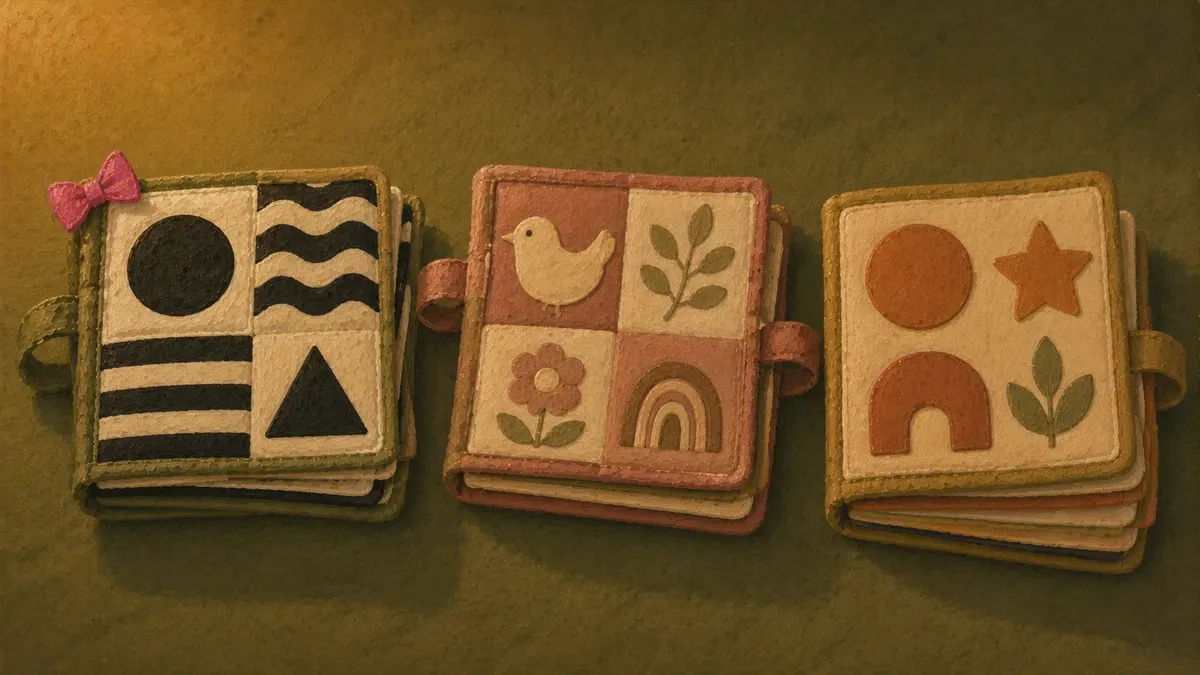
Once a baby is grabbing at everything, I reach for the Taf Toys Busy Book for Toddlers 1-3. It packs 12 sensory activities onto soft polyester pages, the kind that shrug off a wet mouth and a wipe-down, so busy hands always have something to squeeze, pull, or turn.
It’s an Amazon’s Choice pick sitting at 4.5 stars across 600-plus ratings, which matches what I’ve seen at home: babies go for the crinkle and the textures long before they care what’s printed on the page. The catch is the age. It’s built for 18 to 36 months, so it’s a grow-into book, not a day-one newborn one. No loose parts, nothing to pull off, made to be chewed.
The Value Pick and the Self-Directed One
Want a familiar name on the shelf? My First Busy Book from The World of Eric Carle is the easy value pick. It’s a chunky board book, 12 pages of the caterpillar art everyone already knows, aimed at 1 to 2 years, and parents clearly trust it at 4.8 stars and 700-plus reviews. This is the one I’d grab as a low-stakes gift or a starter book you don’t mind getting drooled on.
For a baby who likes to figure things out solo, the hahaland Busy Book (Farm) wins. It’s a fabric book crammed with 20 farm-themed activities: flaps to lift, tabs to pull, buckles to fuss with, all baby-paced with no flashing or noise. Another Amazon’s Choice, and the reviews back it harder than the rest, 4.8 stars from 2,500-plus parents. It suits self-directed learning the way a good educational toy should, letting a kid discover one thing at a time. Our roundup of montessori busy book page ideas runs on the same logic.
Here’s how the three stack up at a glance:
| Book | Best for | Parents’ rating | Age range |
|---|---|---|---|
| Taf Toys Busy Book for Toddlers 1-3 | Tactile exploration | 4.5★, 600+ reviews | 18-36 months |
| My First Busy Book (Eric Carle) | Budget, gifting | 4.8★, 700+ reviews | 1-2 years |
| hahaland Busy Book (Farm) | Self-directed play | 4.8★, 2,500+ reviews | 1-3 years |
Prices bounce around, so check the current price on Amazon before you buy. The day they start poking at everything on purpose, reach for the fabric farm book.
Introducing the Book and Caring for It
The right book in your hands is only half of it. How you bring it out, then how you keep it clean and safe, decides whether it lasts past the first week.
First Introductions and Tying Pages to Milestones
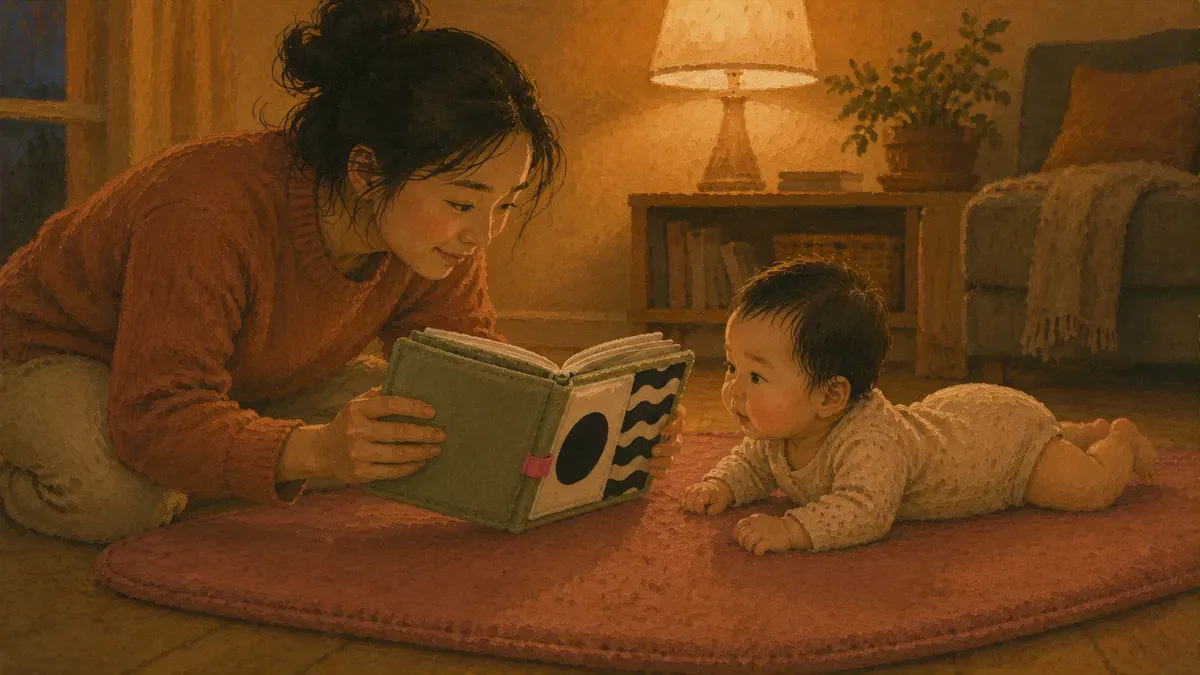
Don’t hand it over and expect magic. Lay your baby on their belly, prop the book open in their sightline, and let them stare. That’s the whole start.
Tummy time is the easiest on-ramp. The American Academy of Pediatrics suggests starting from the first day home with 2 to 3 sessions of 3 to 5 minutes a day, building toward 15 to 30 minutes a day by 7 weeks. A high-contrast page in front of them gives a reason to lift the head.
Then match the page to the moment.
- Newborn: locks onto the black-and-white spread.
- 2 to 3 months: a crinkle page rewards the first swat, hand-eye coordination showing up in real time.
- Lap play: the day they reach and grab on purpose is the start of independent play and the real sensory payoff.
For where it goes after the baby stage, here’s our busy book for 1 year old guide on growing those developmental skills.
Keeping a Fabric Book Clean and Safe
It will get drooled on. A fabric book earns its keep by being washable, so check the tag first, then run most machine washable cotton ones cold on gentle and air-dry flat. Skip the dryer; heat warps the crinkle insert and frays the soft fabrics fast.
Ours lived in June’s tummy-time basket and went through the cold cycle most weeks for a year, and the only thing that ever wore out was a corner tag I caught loose during a seam check at about six months.
Safety isn’t one-and-done. Every few washes, tug on any sewn-on tag, ribbon, or mirror to make sure nothing has worked loose. A seam that held at three months can split by six. For the full rundown, see our complete guide to quiet and busy books.
Found this useful? Save it for the next rough afternoon.
Questions parents ask me about this
What is a good quiet book for infants?
For newborns and young infants, the best pick is a one-piece cloth book with high-contrast black-and-white pages, no small removable parts, and a crinkle or mirrored element. Babies under six months can't manipulate loose pieces, so a book that works through texture and contrast alone is the right fit. Machine-washable construction matters more than how pretty it looks on a shelf.
At what age can a baby start using a busy book?
From day one, as long as the book is designed for that stage. Newborns respond to high-contrast pages held about eight to twelve inches from their face, which is the distance at which infant vision is sharpest. Tummy time sessions starting in the first weeks are a natural window to prop a bold-patterned page in your baby's sightline. Around two to three months, when reaching and grasping start to click, a crinkle page gives them something to bat at and eventually grab.
Are busy books safe for babies under 6 months?
A fabric book designed specifically for infants can be safe from birth, but check a few things before handing it over. Every ribbon, tag, mirror, and sewn-on element should be firmly secured with no give when you tug it. There should be no detachable small parts, and look for non-toxic dye certification or an OEKO-TEX Standard 100 Class 1 label, which screens for harmful substances in textiles made for babies.
Can you wash a fabric infant busy book?
Most fabric infant books are machine washable, but always check the tag first. Cold water on a gentle cycle is the safest bet, and air-drying flat keeps the book from warping. After washing, run your fingers along every seam, sewn-on ribbon, mirror panel, and tag to make sure nothing has loosened. A quick check every few washes catches small problems before they become safety problems.
What is the difference between a quiet book and a busy book?
For infants, the two terms are used interchangeably and describe the same thing: a soft fabric book that engages a baby through texture, contrast, and simple sensory features. With toddlers, some people draw a distinction, using quiet book for sewn felt books with small interactive pieces and busy book for board-based activity books. For babies under twelve months, neither of those versions is appropriate anyway, so the distinction doesn't matter yet.
How do high-contrast pages help a newborn?
Newborn vision is blurry and drawn almost entirely to edges and sharp tonal shifts, which is exactly what black-and-white and bold patterns provide. A high-contrast page gives a newborn's developing visual system something it can actually lock onto and track, the earliest form of visual attention. Color pages come later, once the visual cortex has had a few months to develop, but in those first weeks bold contrast is what gets and holds a baby's gaze.
Written by
Nora Hayes
Mom of two and a former preschool aide. I share the screen-free sensory play and calm-down ideas I test at my own kitchen table, plus what the moms in my little meet-up swear by. A parent passing on what works, not a doctor or a therapist.
More about NoraKeep going
All Quiet & Busy Books-
 Quiet & Busy Books
Toddler Activity Book: 25 Quiet Page Ideas to Make
25 toddler activity book page ideas your kid will actually sit still for, plus the felt, Velcro, and binder-ring steps to build each one at home.
-
 Quiet & Busy Books
Quiet Book Patterns: A Beginner's First Felt Page
New to felt? These beginner quiet book patterns walk you through your first page step by step, with real costs and rookie mistakes. Start today.
-
 Quiet & Busy Books
Quiet Book DIY: How to Make One From Scratch Fast
Make a quiet book from scratch this weekend, even if you've never sewn. Get the materials, page count, and step-by-step build. Start today.
-
 Quiet & Busy Books
Montessori Busy Book Picks That Follow the Child
A Montessori busy book should match your child, not an age label. See which pages fit each stage and the pick parents keep coming back to.