Carole Gray's Social Story Method, Step by Step

I am a parent sharing what worked at my house, not medical advice. For anything to do with your child's development or sensory needs, talk to your OT or doctor.
A social story is a short, first-person script, built on Carole Gray’s method, that walks your child through one specific situation before it happens. I’m Nora Hayes, a former preschool aide raising an autistic 7-year-old, and the version that sticks is the one you actually read every single day. This guide gives you the six steps to write one, a full sample to copy page by page, and the small fixes that make it land.
The plan in brief:
- Gather the facts: watch the situation, note what confuses or scares your child, and write down what they need to know.
- Draft in first person using mostly descriptive sentences and one coaching line per page, then add real photos.
- Read it daily for two weeks, watch how your child reacts, and revise the wording that isn’t landing.
What Carol Gray’s Social Stories Actually Are
Before you write one, it helps to know why a story does what a sticker chart can’t, and what separates the real method from a script you scribbled on a napkin. Two things make the difference: who invented it, and the quiet trick of describing instead of demanding.
The method Carol Gray invented
The method came from a classroom, not a clinic. She built social stories in 1991 while working with autistic students who kept getting blindsided by everyday social context, the lunch line, the fire drill, the substitute teacher.
What she made wasn’t just “a story about behaving.” She wrapped it in a real framework, with 10 defining criteria that tell you whether what you wrote is an actual Social Story or just a polite list of rules.
Those criteria cover the goal, the voice, the sentence mix, the format. You can read the official defining criteria for social stories if you want the full breakdown.
Put simply: it’s a neurodiversity-affirming learning tool built around description, not correction. It meets the child where they are and walks them through a moment, instead of standing over them with a list.
Why a story changes behavior when a rule doesn’t
Here’s the part that surprised me when Eli’s OT first explained it. A rule comes at your kid from the outside. “Sit down.” “Be quiet.” “Stop hitting.” It tells them what you want, and nothing about what’s coming.
A social story does the opposite. It’s written in first person, from the child’s perspective, so it reads like their own inside voice describing the routine before it happens.
Most kids don’t melt down because they’re defiant. They melt down because they didn’t know what was about to hit them.
When a story tells a child “after snack, we clean up, then we go outside,” the unknown shrinks, and so does the anxiety riding on it. You’re handing over information, not orders.
The framework’s whole point is clarity, predictability, and support for a tricky moment, delivered in a patient, respectful, non-directive way. Lower the anxiety, and the behavioral expectations you were fighting over tend to follow on their own.
How to Write a Social Story in Six Steps
Six steps, but only three places people get stuck: knowing your kid before you start, balancing the sentences right, and the picture-and-revise pass that makes a draft actually land. Here is how I work through each one at my own kitchen table.
- Watch the moment that keeps going wrong and jot down what you see
- Write mostly descriptive sentences, with a few gentle coaching lines
- Match a real photo to each page, read it aloud, and fix what lands wrong
Gather information before you write a word
The story is the last thing you make, not the first. Before a single sentence, watch the moment that keeps going sideways. When does the trouble start, who is around, what happens right before the wheels come off?
The discovery phase is built into the method on purpose. The NCBI clinical reference describes a two-step discovery phase: you gather information about the child first, their learning style, attention span, comprehension, and reading ability, before you write anything. That sounds formal. In practice it is just paying attention.
- What happens: the order of events, start to finish
- Who and where: the people, the room, the noise
- The snag: the one moment things fall apart
Making a social story your child trusts starts here, with notes, not pretty pages. Get the real situation on paper and the writing gets easy.
Build the story with the right sentence types
Now you write, and the balance is everything. Two types of sentences do the work:
- Descriptive sentences (most of the page): what happens, who is there, and why, in calm plain words
- Coaching sentences (a handful): gentle suggestions your child can try (“I can take a deep breath,” not “I must sit still”)
Nottinghamshire’s NHS guidance puts it at five descriptive or perspective sentences for every one that coaches, so the page describes the world rather than barking commands at the kid living in it.
Write it in first person, in your child’s voice and vocabulary. If they say “big mad,” the story says big mad. If they call the hand dryer “the loud box,” so does the page. The same guidance is worth a read for writing in a child’s perspective, because borrowed grown-up words are the fastest way to lose them.
The story should sound like your kid narrating their own day, not you lecturing them.
If you would rather start from a frame and fill in your own situation, ready-made social story templates give you the sentence slots and you supply the details from your notes.
Add pictures, then review and revise
Pictures anchor each page, and real beats cute. A photo of your actual bathroom, your actual dentist, your kid’s actual face does more than any clip-art smiley. Gray and Garand first wrote these for verbal kids who read well, but the guidelines were updated to add visual supports, photographs of the people, peers, and places involved, so the stories reach a wider range of learners. The PMC research review lays out that shift.
One clear image per page. Snap the real spot, or use a simple drawing if a photo is too busy. The picture should match the sensory details on the page, the real loud box, the real waiting chair.
Then the step everyone skips: read the whole thing out loud to your child before you call it done.
- Watch their face on every page
- Note any word that confuses or upsets them
- Cut or rewrite that line on the spot
Review and revise is not a polish, it is the test. If a page makes your kid tense up, the wording is wrong, not your kid. Fix it, read it again, and you have a story ready for real implementation tomorrow.
A Complete Social Story Example, Page by Page
The six steps make more sense once you watch them turn into actual pages. So here is a finished story you can copy tonight, broken down sentence by sentence, plus a few shorter ones for other situations.
Walking through a haircut story line by line
Haircuts wreck a lot of kids. The cape, the buzzing clippers, a stranger touching your head. A social story example for this one walks through every part before it happens, so nothing is a surprise.
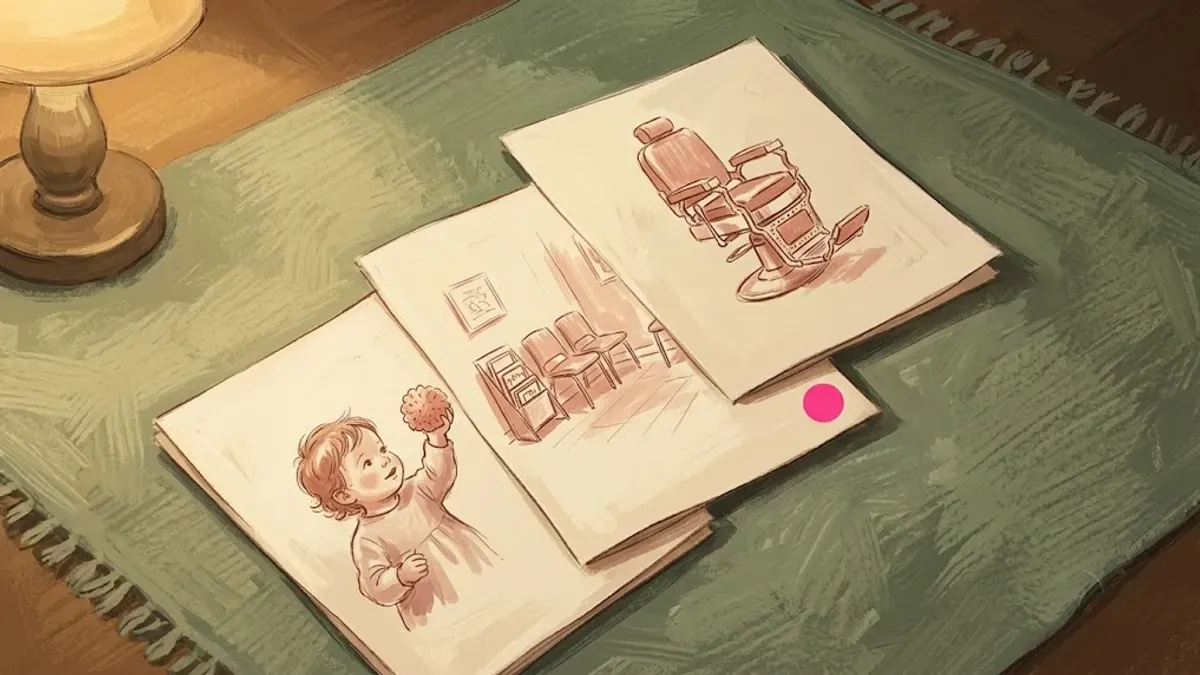
Here is the haircut story, page by page, with each line labeled so you can see the pattern:
- “Sometimes my hair gets long and I get a haircut.” (descriptive)
- “We go to the barber shop. It has big chairs and a mirror.” (descriptive)
- “The barber puts a soft cape around me to catch the hair.” (descriptive)
- “The clippers make a buzzing sound. The buzzing is okay. It will not hurt me.” (descriptive)
- “I can hold my squishy ball while I sit in the chair.” (coaching)
- “When the haircut is done, my hair is shorter and tidy.” (descriptive)
- “I can tell Mom if I need a break.” (coaching)
Notice the ratio. Most lines just describe what is going to happen, calm and matter-of-fact, in first person. Only two lines coach, and even those suggest rather than order. That is the whole engine of a sample social story working in plain sight.
Swap in your own photos where you can: your barber shop, the chair, the cape. Read it three or four times before the appointment so the routine is familiar, not new. This is exactly the haircut social story finally got us through it without the usual standoff at the door.
More social stories examples to model yours on
The same skeleton bends to almost any situation. Swap the subject, keep the structure: mostly describing, a little coaching, all in the child’s voice. Here are three short social stories examples to riff on.
- The dentist: “At the dentist, I sit in a chair that leans back. The dentist counts my teeth with a tiny mirror. It tickles a little. I can squeeze my hands if I feel wiggly.” Plain description of the routine, one gentle coaching line at the end.
- Daycare drop-off: “In the morning, Mom walks me to my classroom. I hang up my bag. Mom gives me a hug and says goodbye. Mom always comes back at snack time.” That last line carries the whole social context, the worry sitting under the goodbye.
- Sharing a toy: “My friend wants a turn with the truck. I can finish my turn, then hand it over. Taking turns means we both get to play.” These social scripts lean a bit more on naming what to do, but still frame it kindly instead of demanding.
Line them up and the formula is obvious. Pick the moment that trips your kid up most, write the descriptive sentences first, then add one or two coaching lines. That is your next story, ready to go.
Reading the Story So It Actually Sticks
Writing the story is the easy half. The part that decides whether it works is how, and when, you actually read it together.
When and how often to read it
Read it cold, not hot. The story is a warm-up before the situation, not a tool you wave around mid-meltdown when your kid can’t hear a word anyway. Sit down somewhere calm, maybe at bedtime or after breakfast, and read it the way you’d read any other book together.
Then do it daily. A small pilot trial published on PubMed Central (social stories read once a day for two weeks) found real gains in how well kids understood the situation, and the study authors suggested two weeks is a sensible length to aim for.
Keep the routine boring and the same. Same spot, same time, same calm voice. You’re lowering anxiety by making the script familiar, so the words are already in their head before the real moment arrives and the routine doesn’t land as a surprise.
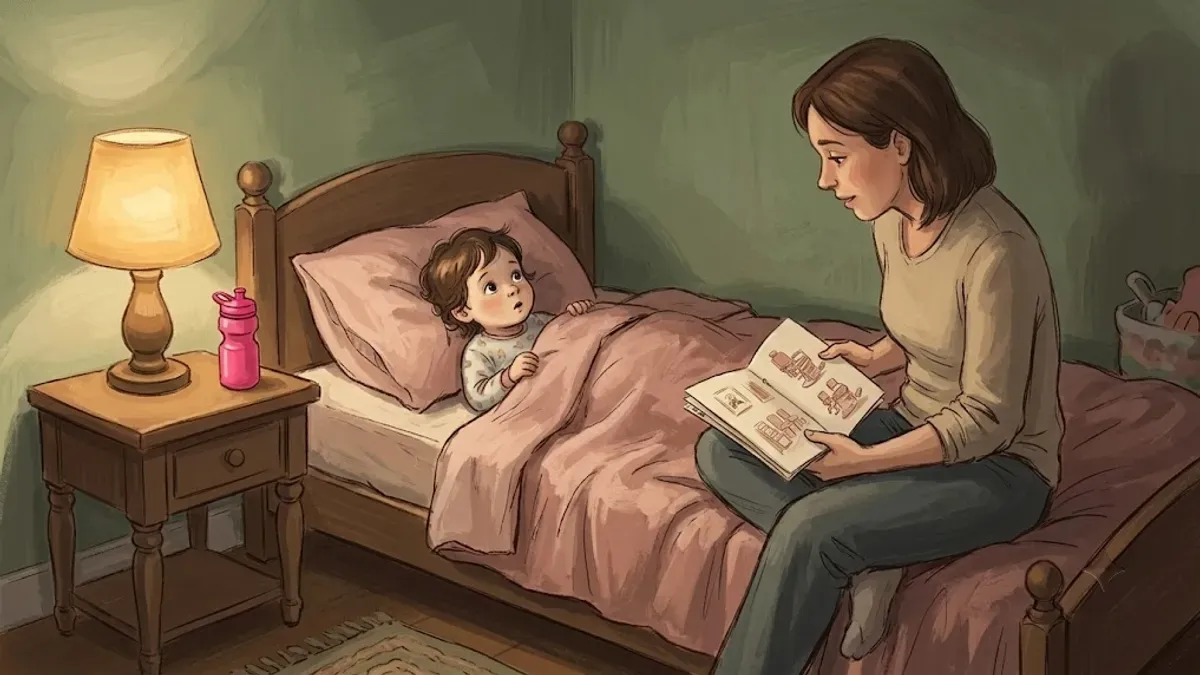
A few things that help the daily read go smoothly:
- Let your kid hold the pages or turn them
- Don’t quiz them after, just read and move on
What to do when the child refuses or it stops working
Some days they’ll push the book away. Don’t force it. A refused story isn’t a failure, it’s information, so back off and try again tomorrow when things are calmer. If the words seem to bother them, that’s your cue to review and revise, swapping a sentence for one that fits their perspective better. For the deeper troubleshooting, here’s a guide to read social story sticks when the first try flops.
What about when it works? Sheffield Children’s NHS guidance says don’t toss the story once your kid has mastered the situation. Keep it around as a quiet visual prompt they can glance at. Keep watching whether it’s still doing its job. If the behavior stalls, here’s what to try:
- Rewrite the page that isn’t landing, not the whole story
- One clunky page is usually the problem
- Fold the revised story back into the daily routine and give it another stretch
Tailoring Stories to Your Child’s Needs
The same six steps work for a 3-year-old and a 9-year-old, but the wording, the length, and the pictures have to bend to fit the kid in front of you. Here’s how I shift things for age and ability, then how a story plays nice with the other supports your child already has.
Adjusting for age, autism, and reading level
Match the story to the child, not a template.
- Toddler (2-4): three or four pages, big real photos, one short sentence per page in their own words
- School-age (5+): fuller page of text is fine; let them read it back to you
- Slow decoder: shorten every sentence and lean on the pictures, so the image carries the meaning when the words get heavy
Autism spectrum disorder doesn’t change the method, just the inputs. A sensory-seeker needs the story to name what their body will feel; a kid who melts down at surprises needs every step spelled out in order.
Carol Gray’s earliest guidance reserved these stories for verbal, higher-functioning kids, but that has shifted, and research on social stories and autism describes photos and digital formats now used to adapt them for nonverbal and lower-functioning neurodivergent learners.
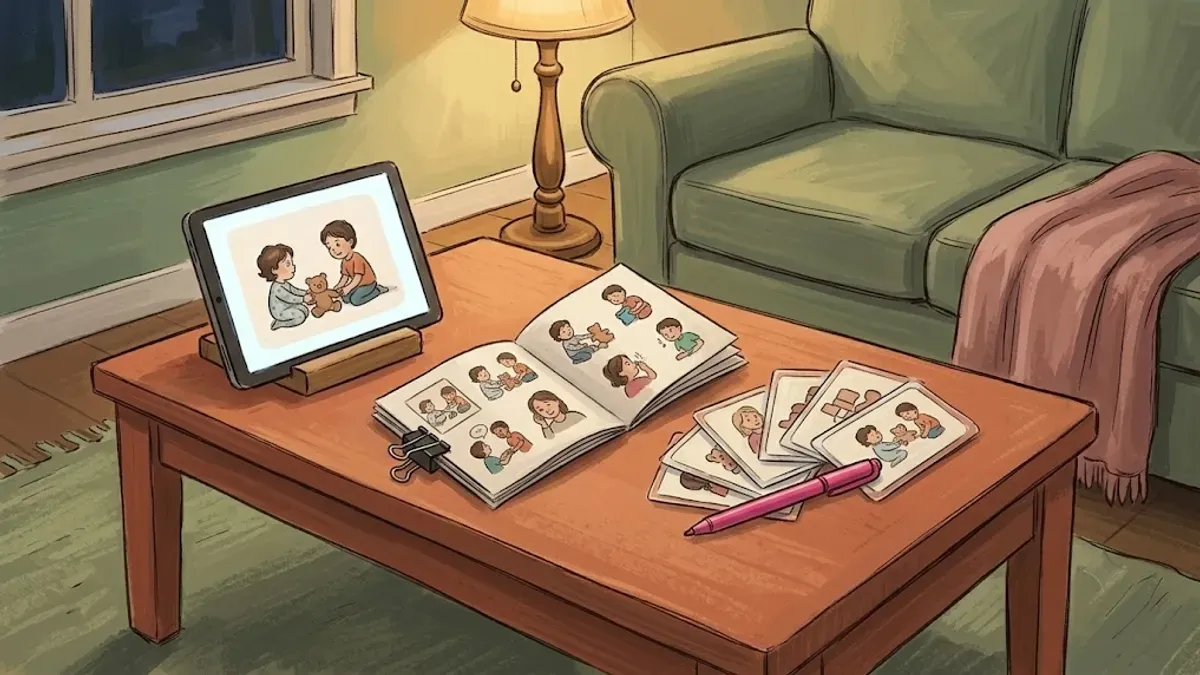
Pairing social stories with therapy and other supports
A social story supports what your child already has in place. It doesn’t replace any of it.
If your kid sees an OT, a speech therapist, or a school team, the story is a perfect place to reuse their exact language. A speech goal and a visual schedule fold in the same way, reinforcing the same goals the team is already working on.
- OT: borrow the exact calm-down phrases from sessions and drop them into the story
- Speech therapist: match the vocabulary targets your child is practicing
- Visual schedule: slot the story into the same routine so it lands in a familiar spot
Loop in a professional when the story stalls for weeks, when the situation touches safety, or when you just want a second read. The Raising Children Network notes that OTs, psychologists, and speech pathologists can teach parents to write these stories, which means they’re built to support specialist work, not replace it.
When you’re ready to build a shelf of them, browse our full library of social stories, and if you’re still finding your footing, here’s how to make story social moments easier for beginners without the overwhelm. One story tonight is plenty. Build the rest as your kid needs them.
Found this useful? Save it for the next rough afternoon.
Questions parents ask me about this
What is the Carol Gray social story method for writing stories?
The method describes a social situation from the child's own point of view rather than issuing instructions, which is what separates it from a rules chart. Each story uses a specific sentence mix: mostly descriptive sentences that explain what happens and why, with a small number of coaching sentences that gently suggest what the child might do. The goal is to reduce anxiety by making an unfamiliar situation feel familiar before it happens.
How long should a social story be before you see results?
Most families see a shift within one to two weeks of daily reading, but that assumes you're reading the story consistently, at a calm moment, before the situation arises. If nothing is shifting after two weeks, the wording or length usually needs adjusting rather than scrapping the whole story. One story read the same way every day tends to work faster than switching between several at once.
What is the difference between a descriptive sentence and a coaching sentence?
A descriptive sentence explains what is happening, who is there, and why things occur the way they do. A coaching sentence suggests what the child might try, using soft language like "I can try" or "I might." The ratio matters: roughly five descriptive sentences for every one coaching sentence keeps the story feeling like information rather than a list of demands. Too many coaching sentences and it reads like a rules chart, not a story.
Can social stories help neurotypical children too?
Yes. Any child who finds a new or unpredictable situation stressful can benefit from a short story that walks them through what to expect. Starting preschool, a new baby at home, a trip to the dentist: these are situations where advance context helps most kids, regardless of whether they are neurodivergent. The method was created with autistic children in mind, but the underlying idea (reduce uncertainty before the moment) is broadly useful.
Should I write a social story myself or buy a pre-made one?
Write it yourself when you can, especially for situations specific to your child's life, your family's routines, and your child's exact vocabulary. Pre-made stories can work as a starting point but often need tweaking to match what your child actually calls things. Real photographs of your child's real environment are more effective than generic illustrations, which is something a pre-made story cannot provide.
How many sentences should a social story have?
For a toddler or younger child, one short sentence per page and three to five pages total is a reasonable target. Older kids can handle more. If your child loses attention before you reach the coaching sentence, the story is too long and needs trimming. Short wins over thorough every time.
Written by
Nora Hayes
Mom of two and a former preschool aide. I share the screen-free sensory play and calm-down ideas I test at my own kitchen table, plus what the moms in my little meet-up swear by. A parent passing on what works, not a doctor or a therapist.
More about NoraKeep going
All Social Stories-
 Social Stories
Social Stories for Kids With Autism: 20 Essentials
Social stories for kids with autism, made simple. Master the 6-step method and build the 20 essentials every autistic child needs.
-
 Social Stories
Social Story Templates: Edit Them to Truly Fit Your Kid
Free PDF social stories rarely fit your child. Learn to edit social story templates in minutes so every word, photo, and step is truly yours.
-
 Social Stories
No Hitting Social Story for Hands That Won't Listen
Hands that hit, bite, and push aren't bad, they're overwhelmed. This no hitting social story teaches safe hands and what to do instead.
-
 Social Stories
Personal Space Social Story: Teach Hugs & Asking First
Hug by rule or by choice? This personal space social story teaches kids to ask first, say no, and read body bubbles. Start using it today.